Free Shipping on US Orders!
 Dermatologist Approved
 Designed for Maximum Sun Protection



Your glasses fog up the moment you step outside Changi Airport. By the time you reach the taxi stand, your cotton t-shirt is soaked through. The weather app says 32°C — but it feels closer to 40°C. This isn't just "hot"; it's a profound physiological challenge.
Welcome to Singapore, where an average of 90% humidity turns ordinary heat into an oppressive, relentless force your body has likely never encountered. Most visitors pack for "hot" — the dry heat of Arizona or the Mediterranean sun of Spain. They bring breathable cotton shirts and standard black rain umbrellas, unaware that both can be detrimental here.
This comprehensive guide dives deep into why Singapore's unique tropical climate demands a completely different approach to sun protection and heat management. We'll uncover why your normal sun protection strategy will fail, explore the science behind Singapore's "Sauna Effect" and "Cloud Burn," and reveal what gear truly keeps you cool, comfortable, and protected when the very air itself is working against your body's natural cooling mechanisms. As a melanoma survivor, UV-Blocker founder Ron Walker understands the critical importance of effective sun defense, especially in such high-risk environments.

Quick Reference Summary: Navigating Singapore's Climate
Here’s what you need to know to stay protected and comfortable in Singapore:
- Combat the "Sauna Effect": High humidity disables sweat evaporation, making 32°C feel like 40°C. Prioritize active cooling and portable, reflective shade.
- Beware the "Cloud Burn": Singapore's UV Index often exceeds 11 (Extreme), even on cloudy days. Clouds block visible light but let up to 80% of dangerous UV rays pass through.
- Ditch Dark Umbrellas: Standard black umbrellas absorb heat, creating a "heat dome." Opt for a reflective, UPF 50+ UV umbrella with Solarteck® technology.
- Pack Smart Fabrics: Choose moisture-wicking synthetics or merino wool. Cotton stays wet and traps heat.
- Hydrate Constantly: Drink water even if you don't feel thirsty, as dehydration can sneak up in humid climates.
- Strategic Sightseeing: Plan outdoor activities for early mornings or late afternoons, and seek air-conditioned breaks frequently.
Why Singapore Sun Protection Requires Different Gear
You check the weather: 32°C (90°F). "That's manageable," you think. Then you step outside and it hits — a heavy, oppressive wall of moisture that makes the temperature feel significantly hotter than the number on your screen. This phenomenon is commonly referred to as the "Sauna Effect," and it’s the primary reason why conventional heat management strategies fail in Singapore.
Your body's primary cooling mechanism is sweating. As sweat evaporates from your skin, it draws heat away, effectively cooling you down. However, in Singapore's tropical climate, the air is consistently saturated with moisture, often exceeding 90% relative humidity. This high humidity dramatically reduces the rate at which sweat can evaporate. Instead of cooling you, your sweat simply sits on your skin, trapping heat and making you feel far hotter and stickier.
Scientists quantify this with the "Wet Bulb" temperature effect. A 32°C day in a dry climate like Las Vegas might feel exactly like 32°C. But a 32°C day in Singapore, with its extreme humidity, can have a Wet Bulb temperature that feels closer to 40°C (104°F) or even higher. Prolonged exposure to these conditions can lead to rapid onset of heat exhaustion and even heat stroke. According to the CDC, seeking shade is one of the most effective ways to lower your body temperature and reduce both heat stress and harmful UV exposure, especially when evaporative cooling is compromised. This means relying on external cooling mechanisms and creating your own microclimate. Given that your body's primary cooling mechanism has been disabled by the climate, you need more than just a hat and sunglasses; you need portable, active shade that doesn't just block light, but actively reflects heat away.
The "Cloud Burn" Phenomenon: Singapore's Hidden UV Trap
"I can't get sunburned today, it's cloudy." This dangerous myth sends thousands of unsuspecting tourists and even residents to local clinics with severe sunburns every year. Singapore, situated just one degree north of the Equator, experiences intense solar radiation year-round. The UV Index here regularly reaches 11+ ("Extreme") on sunny days, but what truly catches visitors off guard is how quickly and severely UV radiation can penetrate cloud cover.
Clouds are highly effective at blocking visible light, making the sky appear gray and leading people to feel a false sense of security. However, clouds are much less effective at blocking ultraviolet (UV) radiation. Studies show that up to 80% of UVA and UVB radiation can still penetrate light cloud cover. Furthermore, scattered clouds can sometimes even intensify UV exposure by reflecting UV rays, acting like a lens that focuses sunlight. The difference between UVA and UVB rays is crucial here: UVA contributes to aging and skin cancer, while UVB is the primary cause of sunburn. Both are potent in Singapore.

The danger of the "Cloud Burn" is twofold: you don't feel the sun's intense heat on your skin, so you're less inclined to seek shade or reapply sunscreen, while high-intensity UV radiation continues to do real, unseen damage to your skin cells. This significantly increases your risk of sunburn, premature skin aging, and contributes to the development of skin cancers, a reality that deeply motivated Ron Walker to found UV-Blocker. Standard sun advice, which often relies on visual cues like bright sunlight, fails catastrophically here. In Singapore, you cannot rely on your eyes or immediate skin sensation to tell you when UV is dangerous. You need consistent, physical protection that performs equally well, regardless of whether the sky is bright blue or heavily overcast.
Rain Umbrella vs. UV Umbrella in Singapore: The Solarteck® Advantage
It rains about 167 days a year in Singapore — nearly every other day, with frequent, intense tropical downpours. So, packing an umbrella is a given. The critical question, however, is *which* umbrella you pack, as this choice significantly impacts your comfort and safety.
Most travelers instinctively bring a compact, often dark-colored, rain umbrella. While it will competently handle a sudden 20-minute thunderstorm, a common mistake occurs when the storm passes and the sun blazes back with renewed intensity (which happens almost immediately). Tourists often keep their dark umbrellas up for shade, believing they are protected. This is a fundamental error in a high-humidity environment.
Black or dark-colored fabrics absorb sunlight and, crucially, heat. In Singapore's stagnant, humid air, that absorbed heat radiates downwards, creating a stifling "heat dome" directly over your head and shoulders. Instead of cooling you, you're effectively walking around with a portable heater above you, exacerbating the "Sauna Effect" and accelerating heat stress. In 90% humidity, you simply cannot afford any additional, self-generated heat source.
Reflect, don't absorb: The UV-Blocker Solarteck® Difference
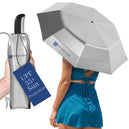
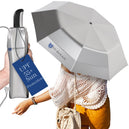
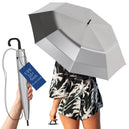
A UV-Blocker Silver Umbrella, featuring our patented Solarteck® technology, is engineered specifically to counteract these tropical challenges:
- Reflective Outer Layer: The distinctive silver Solarteck® surface is designed to reflect 99% of both UVA/UVB rays and solar heat away from you. This proactive reflection prevents heat absorption, eliminating the "heat dome" effect of traditional umbrellas. Our materials are rigorously tested and are Melanoma International Foundation (MIF)-approved, guaranteeing their efficacy.
- Cooling Inner Layer: The dark blue interior serves a critical purpose: it absorbs any scattered UV radiation that might bypass the outer layer, preventing it from reflecting onto your face or body. This dual-layer approach ensures comprehensive protection.
- Certified UPF 50+: Every UV-Blocker umbrella is certified UPF 50+, the highest rating achievable. This means it blocks over 99% of the sun's harmful UVA and UVB rays, providing a physical barrier equivalent to wearing SPF 50+ sunscreen, without the need for reapplication.
The result of this advanced design is a portable microclimate up to 15°F cooler than the outside ambient air. It's not just a shadow; it's a physical, cooling barrier against the relentless heat and invisible UV. And because our umbrellas are fully waterproof and incorporate wind-vented designs, they seamlessly handle sudden tropical squalls with gusty winds just as effectively as they protect from the sun. It's truly one essential tool, perfectly designed for Singapore's dual weather extremes.

Singapore Sun Protection Packing Essentials for Extreme Humidity
When packing for Singapore, every item in your suitcase needs to actively fight humidity and heat, not just look good. Here’s the tropical survival kit, optimized for peak comfort and protection:

1. Moisture-Wicking, Lightweight Fabrics
Leave your favorite cotton t-shirts at home. Cotton absorbs moisture and holds it, meaning your shirt will be soaked through in minutes and stay uncomfortably damp and heavy all day, hindering your body's ability to cool. Instead, prioritize performance fabrics:
- Synthetics: Look for lightweight polyester or nylon blends specifically designed for activewear. These materials are engineered to pull moisture away from your skin (wicking) and promote rapid evaporation.
- Merino Wool Blends: While often associated with cold weather, lightweight merino wool is excellent in heat. It naturally wicks moisture, resists odor, and has surprisingly good breathability.
- Loose-Fitting, Light-Colored Clothing: Opt for baggy, light-colored garments that allow air circulation and reflect rather than absorb solar radiation. Consider long sleeves and pants made from UPF-rated fabrics for additional skin protection without overheating.
2. Portable Neck Fan or Handheld Fan
Singapore's air is often remarkably still, especially within urban canyons or lush gardens. This lack of air movement further impedes sweat evaporation. A small, battery-operated neck fan or handheld fan is incredibly effective. It creates a personal breeze, significantly enhancing the evaporation process and providing immediate relief. This small device can make a huge difference in your comfort levels during extended outdoor excursions.
3. UPF 50+ UV Umbrella for Portable, Cooling Shade
This is arguably the most critical item. While Singapore boasts beautiful architecture and parks, consistent natural shade is not always available, particularly during peak sun hours. A UV-Blocker Compact Umbrella or UV-Blocker Sport Umbrella provides instant, portable shade with the added benefit of Solarteck® heat reflection. It fits easily into a day bag or purse. When Singapore's notoriously fickle weather flips from a sudden downpour to scorching sun – which happens constantly – you are instantly prepared for both extremes. Its UPF 50+ rating ensures you're blocking over 99% of UVA/UVB rays, giving you peace of mind beyond what sunscreen alone can offer, especially given the "Cloud Burn" risk.
4. Wide-Brimmed Hat and Sunglasses
While an umbrella offers broad coverage, a wide-brimmed UPF 50+ hat provides continuous protection for your face, ears, and neck, especially when you can't hold an umbrella. Coupled with UV400 or 100% UV protective sunglasses, you protect your eyes and delicate facial skin from direct and reflected glare and harmful UV radiation. Look for lightweight, breathable hat materials.
5. Broad-Spectrum SPF 50+ Sunscreen
Even with an umbrella and clothing, exposed skin needs protection. Choose a broad-spectrum, water-resistant SPF 50+ sunscreen. Reapply frequently, especially after sweating heavily, which will be often. Don't forget often-missed spots like the tops of your feet if wearing sandals, ears, and the back of your neck.
6. Reusable Water Bottle with Electrolytes
Dehydration is a constant threat in Singapore's humidity. You'll be sweating profusely, even if you don't feel it evaporating. Always carry a reusable water bottle and refill it at public water stations or cafes. Consider adding electrolyte tablets to your water to replenish essential minerals lost through sweat, preventing muscle cramps and fatigue. Staying adequately hydrated is paramount for managing heat stress.
Surviving Gardens by the Bay in Peak Heat: A Strategic Approach
Gardens by the Bay is a must-see, but its vast outdoor spaces and iconic Supertrees offer limited natural shade during the hottest parts of the day. To fully enjoy this magnificent attraction without succumbing to the heat and UV, a strategic approach is essential.
Timing is Everything: Plan your visit for early morning (opening at 9 AM) or late afternoon (after 4 PM). The heat and UV are significantly less intense before 11 AM and after 4 PM. This allows you to explore the outdoor gardens, Skyway, and Supertree Grove in relative comfort. The Supertree Grove comes alive with light shows in the evening (7:45 PM and 8:45 PM), offering a cooler, magical experience.
Seek Climate-Controlled Relief: The two cooled conservatories, the Flower Dome and the Cloud Forest, are your sanctuaries. Plan to spend the hottest midday hours (11 AM - 3 PM) exploring these incredible indoor ecosystems. The Cloud Forest, with its mist-shrouded mountain and waterfall, is particularly refreshing. These conservatories are not only beautiful but also provide much-needed air-conditioned breaks to regulate your body temperature.
Portable Shade is Key: When venturing outdoors, especially across the open spaces, a UV-Blocker umbrella is your best friend. Its Solarteck® reflective surface will create a cool microclimate, making the walk between attractions far more bearable. Don't underestimate the sun's intensity, even if it feels breezy near the water or on the elevated Skyway.
Hydrate and Ventilate: Carry ample water and utilize a portable neck fan. Even when strolling through the shaded areas under the Supertrees, the humidity can be overwhelming. Frequent sips of water and a personal fan will help manage your core temperature. Look for water fountains strategically placed throughout the gardens.
Best Times for Singapore Outdoor Attractions to Minimize Heat Stress
Maximizing your enjoyment of Singapore's outdoor wonders requires careful planning around its relentless climate. Strategic timing can significantly reduce your exposure to peak heat and UV, making your experience far more pleasant.
Early Mornings (7:00 AM - 10:00 AM): This is the golden window for most outdoor activities. The air is at its coolest, the humidity is slightly less oppressive, and the UV Index is building but not yet at its peak.
- Singapore Botanic Gardens: Enjoy a tranquil walk through this UNESCO World Heritage site, including the National Orchid Garden, before the crowds and heat descend.
- MacRitchie Reservoir Park: Ideal for a nature walk or a visit to the TreeTop Walk. Start early to avoid the midday sun on the forest trails.
- Zoo, River Wonders, Night Safari: While these are mostly shaded, arriving early helps you beat the heaviest crowds and enjoy the cooler morning temperatures, especially at the Singapore Zoo.
Late Afternoons/Evenings (4:00 PM onwards): As the sun begins its descent, temperatures gradually drop, and the light becomes softer, perfect for photography and more comfortable exploration.
- Sentosa Island: Head to the beaches or explore attractions like Universal Studios Singapore in the late afternoon. The beach resorts become lively as evening approaches.
- Marina Bay Sands SkyPark Observation Deck: Experience breathtaking panoramic views as the city transitions from day to night. The cooler air makes the open-air deck more enjoyable.
- Hawker Centers: While technically not an "attraction," dining at outdoor hawker centers like Lau Pa Sat is a quintessentially Singaporean experience best enjoyed in the cooler evening air.
Midday (10:00 AM - 4:00 PM): This period should be reserved for indoor, air-conditioned activities.
- Museums: Explore the National Gallery Singapore, ArtScience Museum, or Asian Civilisations Museum.
- Shopping Malls: Singapore boasts world-class shopping centers like ION Orchard, VivoCity, and Marina Bay Sands Shoppes. These provide a cool respite and a chance to escape the humidity.
- Food Halls/Cafes: Take extended lunch breaks in air-conditioned establishments.
Frequently Asked Questions
Why does 90% humidity make Singapore's heat feel so much worse?
High humidity hinders your body's natural cooling mechanism. Normally, sweat evaporates from your skin, carrying heat away. In 90% humidity, the air is already saturated with moisture, so your sweat can't evaporate efficiently. It simply sits on your skin, trapping heat and making you feel much hotter and stickier, a phenomenon known as the "Sauna Effect" or "Wet Bulb" effect. This significantly increases the risk of heat exhaustion.
Can I get sunburned in Singapore on a cloudy day?
Absolutely, and this is a common and dangerous misconception. Singapore is located near the equator, where the UV Index consistently reaches "Extreme" levels (11+). While clouds block visible light, they are much less effective at blocking ultraviolet (UV) radiation. Up to 80% of harmful UVA and UVB rays can penetrate cloud cover, leading to what's often called "Cloud Burn." You don't feel the heat, but the UV damage is still occurring, making consistent UPF 50+ protection essential.
What's the difference between a regular rain umbrella and a UV-Blocker Solarteck® umbrella?
A standard dark rain umbrella absorbs sunlight and heat, radiating that heat downwards and creating a stifling "heat dome" directly over you in high humidity. A UV-Blocker Solarteck® umbrella, on the other hand, is specifically engineered with a reflective silver outer layer that reflects 99% of UVA/UVB rays and heat away. This creates a personal microclimate up to 15°F cooler. Additionally, it has a UPF 50+ rating, blocking over 99% of UV rays, making it a superior dual-purpose solution for both sun and rain protection.
What does UPF 50+ mean, and why is it important for Singapore?
UPF stands for Ultraviolet Protection Factor, measuring a fabric's effectiveness against both UVA and UVB radiation. A UPF 50+ rating is the highest achievable, meaning the fabric blocks over 99% of the sun's harmful UV rays. In Singapore's extreme UV environment, UPF 50+ protection, like that offered by UV-Blocker umbrellas and clothing, is crucial for preventing sunburn, premature skin aging, and reducing the risk of skin cancer. It offers a consistent, physical barrier against radiation that sunscreen alone can't always guarantee, especially with sweat and reapplication challenges.
Is sunscreen enough for sun protection in Singapore?
While broad-spectrum SPF 50+ sunscreen is essential for exposed skin, it is not enough on its own in Singapore. The extreme UV index, combined with intense heat and humidity causing heavy sweating, means sunscreen needs constant reapplication and can easily wash off. For comprehensive protection, sunscreen should be combined with physical barriers like UPF 50+ clothing, a wide-brimmed hat, sunglasses, and critically, a UV-Blocker umbrella for portable, cooling shade.
What are the signs of heat exhaustion and heat stroke I should watch for?
In Singapore's climate, it's vital to recognize heat-related illnesses. Signs of heat exhaustion include heavy sweating, cold/clammy skin, fast weak pulse, nausea, dizziness, fatigue, and muscle cramps. If you experience these, move to a cool place, lie down, loosen clothing, and drink water. Heat stroke is a medical emergency with symptoms like a high body temperature (above 103°F), hot red dry or damp skin, strong rapid pulse, confusion, and loss of consciousness. Call emergency services immediately if you suspect heat stroke and try to cool the person while waiting for help.