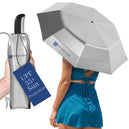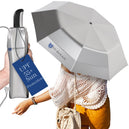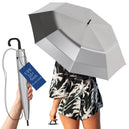
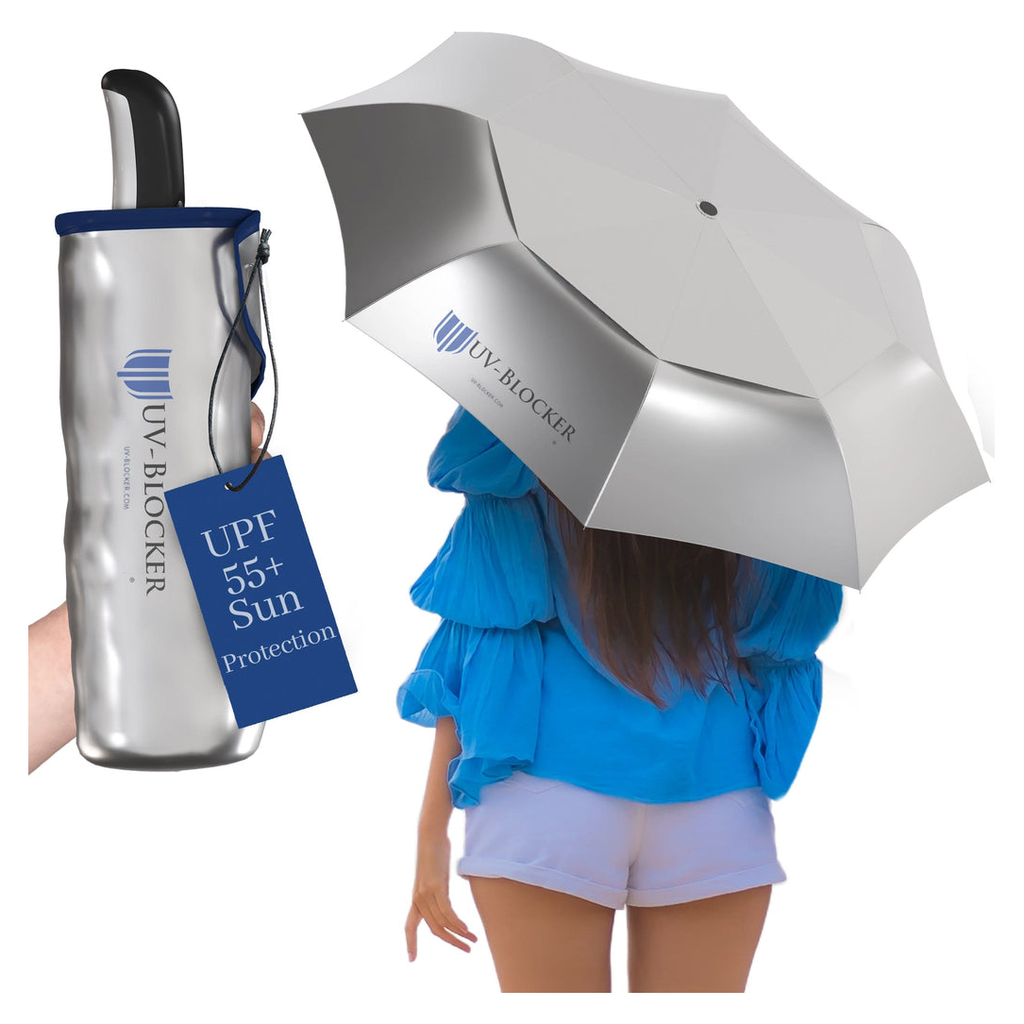


TL;DR: What to Look for in a Travel UV Umbrella
- Most airport umbrellas fail you: Generic umbrellas provide UPF 10-15 (poor protection); quality UV protection umbrellas provide UPF 50+ (99%+ blocking)
- Focus on Weight-to-Protection Ratio: An extra 8 oz for medical-grade protection is worth it
- Fabric density beats canopy size: A smaller UPF 50+ umbrella with quality fabric outperforms a larger cheap one
- Durability matters: Fiberglass ribs + vented canopy = survives travel abuse and coastal winds
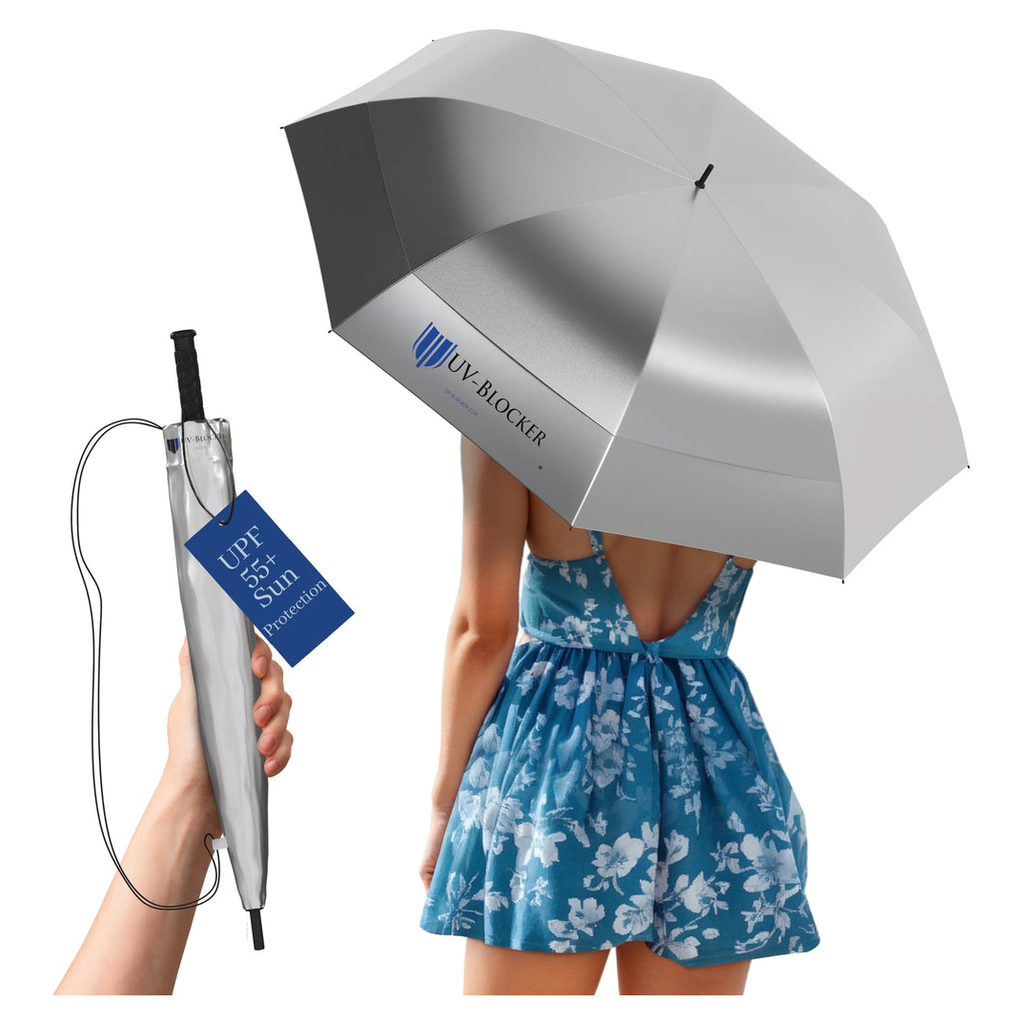
- Compact is key: A quality UPF 50+ umbrella folds to 12 inches, fits in any bag, and weighs about 1 lb
The Carry-On Traveler's Dilemma
I have a rule for carry-on travel: if I cannot lift my bag with one finger, something has to go.
We have all been there—standing in the living room, staring at an open suitcase, bargaining with ourselves. Do I really need that extra pair of shoes? What about the "just in case" rain jacket? Usually, a portable UV umbrella is the first casualty. It feels bulky, unnecessary, and frankly, a bit of a hassle.
But then you land in Rome, or Bali, or Phoenix. You step out of the airport, and the sun hits you like a physical weight. By day two, you are exhausted, your shoulders are turning a painful shade of lobster red, and you are realizing that "traveling light" should not mean traveling exposed.
Most of us compromise. We grab a cheap, flimsy compact umbrella at the airport convenience store. It weighs nothing—which is great—until it flips inside out at the first gust of wind or lets UVB rays cook you right through the thin nylon.
You do not need a massive golf umbrella to be safe. You just need to understand the Weight-to-Protection Ratio when selecting a portable sun umbrella.
The Weight-to-Protection Ratio for a Travel UV Umbrella

In the world of technical backpacking, hikers obsess over "warmth-to-weight" ratios for down jackets. Why don't we do the same for sun protection?
Think of it as the Weight-to-Protection Ratio: How much UV blocking power are you actually getting per ounce of gear?
The Math That Matters
A standard drugstore compact umbrella weighs about 6 to 8 ounces. It feels like nothing in your bag. But standard nylon is porous to UV radiation. Unless it is incredibly thick (and heavy) or pitch black, it often provides a UPF of less than 15. You are essentially carrying 6 ounces of shade that still lets you burn.
Compare that to a quality UPF 50+ compact umbrella. It weighs roughly 1 lb (16 oz). For that extra half-pound, you get medical-grade protection (UPF 50+).
| Umbrella Type | Weight | UPF Rating | Protection Level |
|---|---|---|---|
| Generic Compact | 6-8 oz | 10-15 | ~90-93% UV blocked |
| Travel UV Umbrella (UV-Blocker) | 16 oz | 50+ | 99%+ UV blocked |
The most expensive umbrella you own is not the one you bought for $50. It is the one you leave in the hotel room because it is too heavy to carry, leaving you to pay the "cost" of a ruined, sunburned vacation.
According to the Skin Cancer Foundation, just five blistering sunburns before age 20 increases your melanoma risk by 80%. That one sunburned vacation matters more than you think.
The Big Misconception: Size vs. Density
"But isn't a bigger umbrella always better?"
This is the most common myth we see. People assume that to block the sun, you need a massive 62-inch canopy like a golfer.
Here is the physics reality: Fabric Density beats Canopy Size.
Why Material Matters More Than Size
UV rays do not just come from straight above; they scatter. However, the most damaging burns happen to the head, neck, and shoulders—the areas directly under the canopy. If the fabric itself is inferior, the size does not matter. You are just walking under a larger, leaky roof.
Quality UPF-rated sun umbrellas use specialized fabrics with:
- Tight weave construction: Closes microscopic gaps that let UV through
- Reflective coatings: Bounces UV and heat away before absorption
- Multi-layer design: Silver exterior reflects; dark interior absorbs ground-bounce
The result? A 42-inch compact umbrella with SolarTek fabric outperforms a 62-inch cheap umbrella for actual UV protection.
The Cooling Advantage
It is not just safer; it is cooler. 15F cooler, to be exact.
A generic large umbrella might trap heat, turning your personal shade into a sauna. A reflective compact UV umbrella acts as a heat shield, keeping you cool even if the footprint is smaller.
Research from the Journal of Solar Energy Engineering confirms that reflective surfaces can reduce perceived temperature by 10-15F compared to absorptive dark surfaces under identical sun conditions.
"But Will It Break?" The Durability Question

The second reason I used to ditch umbrellas? "It is just going to break anyway."
You know the scene. You are walking down a windy street—maybe Chicago, or the coast of Ireland—a gust hits, and SNAP. Your umbrella is now a piece of abstract art, and you are scrambling to trash it in the nearest bin.
Compact folding umbrellas have a structural disadvantage: to fold down small, they need more joints. More joints usually mean more failure points.
The solution is not to make the frame stiff; it is to make it flow.
Fiberglass vs. Aluminum
Cheap umbrellas use aluminum ribs. Aluminum is rigid. When wind hits it, it bends, creases, and snaps.
Quality compact sun umbrellas use fiberglass ribs. When wind hits fiberglass, it flexes. It absorbs the energy and springs back. It handles the chaos of travel—being shoved in overhead bins, jammed in totes, and battered by coastal winds—without permanently deforming.
The Vented Canopy Advantage
This is the game-changer for travelers.
A solid canopy acts like a sail. If the wind catches it, the force has nowhere to go but into the frame (breaking it) or your arm (flipping it).
A vented canopy system allows the wind to pass through the umbrella while keeping the sun out. It does not fight the wind. It outsmarts it.
For more on wind-resistant design, see our guide on wind-proofing your shade.
TSA and Air Travel Considerations for Your Travel UV Umbrella
Good news for travelers: compact UV protection umbrellas are TSA-approved for carry-on luggage. According to TSA guidelines, umbrellas are permitted in both carry-on and checked bags.
Travel tips:
- Pack in an outside pocket for quick security screening access
- Choose 12-inch or shorter folded length to fit standard bag compartments
- Avoid sharp metal tips that might draw scrutiny
- Carry in a protective sleeve to prevent fabric snags
International Considerations
Some countries have stricter security regulations. Generally:
- Most European airports: no issues with compact UV umbrellas
- Asian airports: widely accepted (umbrellas are culturally common)
- High-security venues (stadiums, government buildings): may need to be stored
What to Look for in a Travel UV Umbrella

Non-Negotiable Features
- UPF 50+ rating: Accept nothing less for serious protection
- Fiberglass ribs: Flexible = durable
- Vented canopy: Wind-resistant design
- Reflective exterior: 15F cooler underneath
- Compact fold: 12 inches or under
Nice-to-Have Features
- Auto-open button for one-handed deployment
- Protective carry sleeve
- Wrist strap for hands-free carrying
- Dark interior lining (absorbs ground-bounce UV)
Weight Guidelines for a Travel UV Umbrella
- Under 12 oz: Likely too flimsy for wind or effective UV blocking
- 12-16 oz: Sweet spot for travel durability and protection
- Over 20 oz: May be overkill for carry-on prioritization
The One-Bag Traveler's Solution
Quality portable UV protection umbrellas are designed for the minimalist traveler who refuses to compromise on safety.
Key specifications:
- Packability: Folds to 12 inches—fits camera bags, totes, backpack side pockets
- Speed: Auto-open button for instant protection stepping off the plane
- Protection: Same UPF 50+ rating as full-size beach umbrellas
- Durability: Survives airport handling, coastal winds, and daily use
You are not downgrading your safety to upgrade your mobility. You are optimizing both.
Conclusion: Your Packing List Just Got Smarter
Travel is about freedom. Freedom to explore ancient ruins at noon, freedom to walk down the beach without fear, and freedom from the weight of heavy luggage.
You do not have to choose between traveling light and staying safe. By focusing on the Weight-to-Protection Ratio, you can pack a travel UV umbrella that pays for its space in your bag a thousand times over.
Do not let the sun dictate your itinerary. Pack smart, and travel on your own terms.
Ready to upgrade? Check out our compact travel UV umbrellas designed for serious travelers. For medical-grade protection comparisons, see our UV-Blocker vs G4Free guide.
Frequently Asked Questions About Travel UV Umbrellas
Q: Can I bring a travel UV umbrella on an airplane as carry-on?
Yes. TSA allows umbrellas in both carry-on and checked bags. Compact UV protection umbrellas (12 inches folded) easily fit in standard carry-on luggage. Check airline size requirements for carry-on items.
Q: How much does a quality travel UV umbrella weigh?
Quality compact UV protection umbrellas weigh 12-16 oz (about 1 lb). This is slightly heavier than cheap alternatives but provides dramatically better UV protection and durability.
Q: Are compact umbrellas as effective as full-size ones for UV protection?
For UV protection, yes—if the fabric quality is equal. UPF rating depends on fabric, not size. A 42-inch UPF 50+ compact umbrella provides better protection than a 62-inch UPF 15 large umbrella.
Q: What is the difference between UPF and SPF for umbrellas?
UPF (Ultraviolet Protection Factor) measures fabric UV blocking; SPF (Sun Protection Factor) measures sunscreen effectiveness. Look for UPF 50+ for umbrella ratings.
Q: How do I test if my UV umbrella actually blocks UV rays?
The flashlight test: In a dark room, shine your phone flashlight on the outside of the canopy. Look from inside. If significant light passes through, UV rays can too. Quality UV fabric blocks almost all light.
Q: Will my compact UV umbrella survive being shoved in overhead bins?
If it has fiberglass ribs and quality construction, yes. Fiberglass flexes without permanently bending. Avoid cheap aluminum-ribbed umbrellas that crease and break under pressure.
Q: Do I need a different umbrella for tropical vs. temperate destinations?
Not necessarily. UPF 50+ protection works everywhere. For tropical destinations with higher humidity and wind, prioritize vented canopy design for durability in sudden weather changes.