

TLDR:
- Colorado UV is 20-45% stronger than sea level depending on elevation
- Snow reflects up to 90% of UV rays, making winter skiing a high-exposure activity
- Mountain counties report melanoma rates 2-3x higher than Denver
- Effective protection requires layered defense: sunscreen, UPF clothing, sunglasses, and portable shade
- Sunscreen alone falls short at altitude because wind and sweat strip it faster
Colorado's 300 days of sunshine hide a dangerous truth. At 5,280 feet, Denver's UV radiation is roughly 25% stronger than a coastal city at the same latitude. Drive two hours west to Breckenridge, and that number jumps to 45%.
The state ranks among the highest in the nation for melanoma incidence. Mountain counties like Gunnison and Ouray report rates exceeding 45 cases per 100,000 residents, more than double the statewide average of 21 per 100,000. The reason isn't complicated. It's altitude.
How Much Stronger Is UV Radiation in Colorado?
UV radiation in Colorado is 20-45% stronger than at sea level because intensity increases 4-5% for every 1,000 feet of elevation, according to NOAA data.
The mechanism is straightforward. Higher elevation means less atmosphere between skin and sun. That thinner air filters fewer UV-A and UV-B rays before they reach the ground. At sea level, the full column of atmosphere absorbs a baseline amount of ultraviolet radiation. Remove a mile of that column, and substantially more UV gets through.
For context, consider the difference between Denver and Washington, D.C. Both cities sit near the same latitude (39°N). But Denver's 5,280-foot elevation means residents absorb roughly 25% more UV during an identical amount of outdoor time. Someone who spends a July afternoon gardening in Denver gets the UV equivalent of an extra 15 minutes per hour compared to the same activity in D.C.
This effect compounds dramatically in the mountains. At Aspen (7,908 feet), UV is approximately 37% stronger than sea level. At Breckenridge (9,600 feet), it jumps to roughly 45%. Hikers summiting a fourteener at 14,000 feet encounter UV that's 55-70% more intense than what beachgoers experience at the coast.
Colorado's 300+ days of sunshine amplify the cumulative effect. Overcast days are relatively rare here compared to Pacific Northwest or Mid-Atlantic cities, which means fewer natural breaks from UV exposure throughout the year.
What Is the UV Index in Colorado's Major Cities?
Colorado cities range from UV Index 8 in Denver to 10+ in mountain towns like Breckenridge and Telluride during summer, with all cities exceeding the EPA's "Very High" threshold.
Every major Colorado city surpasses the EPA's "Very High" UV Index classification (8-10) during summer months. Several mountain towns regularly hit "Extreme" (11+). The table below breaks down elevation and UV intensity across six popular Colorado locations.

| City | Elevation | Summer UV Index | UV vs. Sea Level |
|---|---|---|---|
| Denver | 5,280 ft | 8-11 | ~25% stronger |
| Boulder | 5,430 ft | 8-11 | ~26% stronger |
| Colorado Springs | 6,035 ft | 8-11 | ~28% stronger |
| Aspen | 7,908 ft | 9-11+ | ~37% stronger |
| Telluride | 8,750 ft | 9-11+ | ~40% stronger |
| Breckenridge | 9,600 ft | 9-12 | ~45% stronger |
UV vs. Sea Level percentages based on NOAA's 4-5% increase per 1,000 feet, using midpoint (4.5%).
The county-level melanoma data reinforces this pattern. Denver County reports 15.9 melanoma cases per 100,000 people. Gunnison County (elevation 7,700 feet) reports over 45 per 100,000. That's nearly three times Denver's rate in a county where residents live, work, and recreate at significantly higher elevation.
These numbers hold consequences for anyone spending time outdoors in Colorado, not just mountain residents. A Denver family driving to Breckenridge for a weekend ski trip moves from 25% elevated UV to 45% elevated UV in two hours. Most people don't adjust their sun protection accordingly.
Can You Get Sunburned Skiing in Colorado?
Yes. Ski resort elevations amplify UV by 40-55%, and fresh snow reflects up to 90% of UV rays, creating summer-level skin exposure even in cold weather.
Winter skiing in Colorado presents a UV double threat that catches most people off guard. The altitude effect (40-55% stronger UV at resort elevations) combines with snow's extraordinary reflectivity. Fresh powder reflects up to 90% of UV radiation back upward, hitting the face, neck, and underside of the chin from below.
For comparison, sand reflects 15-25% of UV. Water reflects 10-20%. Snow's 80-90% reflection rate creates a near-total UV environment where radiation strikes from every angle.
This is why ski patrollers report sunburns inside their nostrils, a spot that almost never burns in non-snow environments. The upward-reflected UV reaches skin surfaces that normally face away from the sun.
Why Spring Skiing Is the Most Deceptive Season
March and April deliver the worst combination of UV factors in Colorado. The sun angle climbs higher as spring approaches, intensifying direct UV. Meanwhile, significant snowpack remains on the slopes. At 10,000+ feet in late March, the UV Index can reach 7-9, equivalent to a July beach day at the Jersey Shore.
Cool temperatures and spring breezes create a false sense of security. Skiers feel cold, assume UV risk is low, and skip reapplication. By the end of a six-hour ski day, the accumulated UV dose can exceed what a lifeguard receives during a summer shift at sea level.
Which Colorado Activities Carry the Highest UV Risk?
Skiing, hiking above treeline, and attending outdoor concerts at venues like Red Rocks carry the highest UV risk because they combine sustained exposure with altitude and limited natural shade.
Skiing and Snowboarding
At resort elevations of 9,000-12,000 feet, skiers face 40-55% stronger UV compounded by snow reflection. A full ski day delivers 6-8 hours of sustained exposure. Face, neck, and ears take the worst of it.
Hiking Above Treeline
Colorado's treeline sits at approximately 11,500 feet. Above that elevation, hikers lose all natural canopy shade. Popular fourteener routes like Quandary Peak, Grays Peak, and Longs Peak require 6-10 hours above treeline. UV at 12,000+ feet is over 55% stronger than sea level, with no shade relief.
Outdoor Concerts at Red Rocks
Red Rocks Amphitheatre (6,450 feet) is an open-air venue with zero overhead cover. Evening shows that begin at 7 PM follow hours of afternoon sun exposure during tailgating and pre-show activities. A typical concert day delivers 4-6 hours of cumulative UV at elevation.
Trail Running and Mountain Biking
Sustained cardio at altitude produces heavy sweating that strips sunscreen faster. Colorado's dry wind compounds the problem by accelerating evaporation. A two-hour trail run at 8,000 feet can break down a full sunscreen application in under 60 minutes.
Everyday Outdoor Time
Even casual outdoor time carries more risk at altitude. A two-hour patio brunch in Boulder delivers 26% more UV than the same meal at a sea-level restaurant. Weekend gardening, dog walking, and playground visits in the Front Range add up over weeks and months. Colorado sun protection matters for everyday activities, not just backcountry adventures.
What Is the Best Sun Protection Strategy for Colorado's Altitude?
The most effective colorado sun protection uses a layered approach: SPF 50+ sunscreen reapplied every 80 minutes, UPF 50+ clothing, UV-blocking sunglasses, and portable shade for sustained outdoor time.
No single product handles Colorado's intensified UV alone. Dermatologists recommend stacking multiple protection layers, especially above 6,000 feet.
Layer 1: Sunscreen (SPF 50+ Broad-Spectrum)
Apply SPF 50+ broad-spectrum sunscreen 15 minutes before going outside. At altitude, reapply every 80 minutes rather than the standard two hours. Colorado's dry air and persistent wind accelerate sunscreen degradation. Water-resistant formulas hold up better during high-altitude activities where sweat is unavoidable.
Layer 2: UPF 50+ Clothing
UPF-rated fabrics block UV regardless of sweat, wind, or reapplication schedules. Long-sleeved shirts, wide-brim hats, and neck gaiters are standard gear for experienced Colorado hikers and outdoor workers. Clothing doesn't degrade during a long day the way sunscreen does.
Layer 3: UV-Blocking Sunglasses
Photokeratitis (snow blindness) is a genuine risk at altitude, particularly during spring when snow and high sun angles combine. Wraparound UV-blocking sunglasses protect the eyes and the delicate skin around them.
Layer 4: Portable Shade
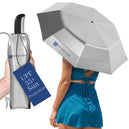
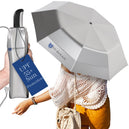
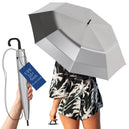
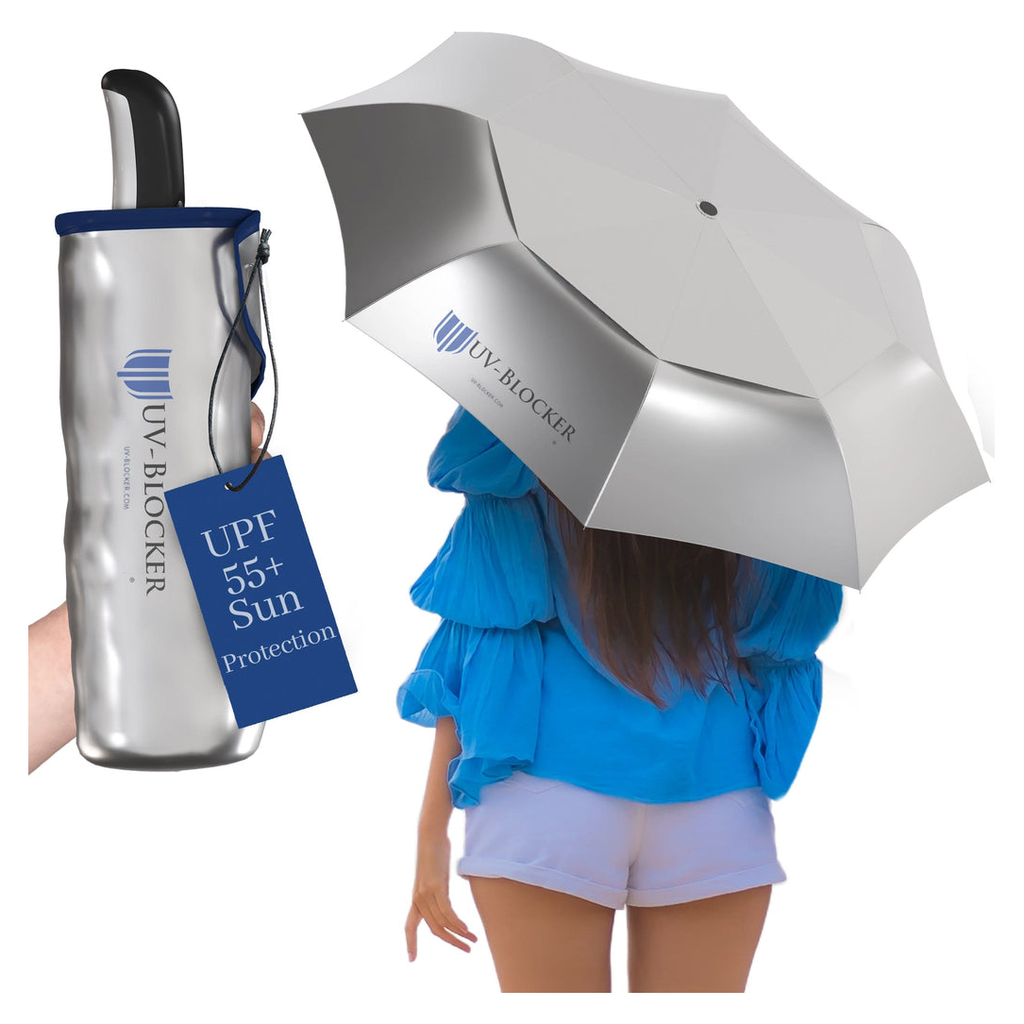
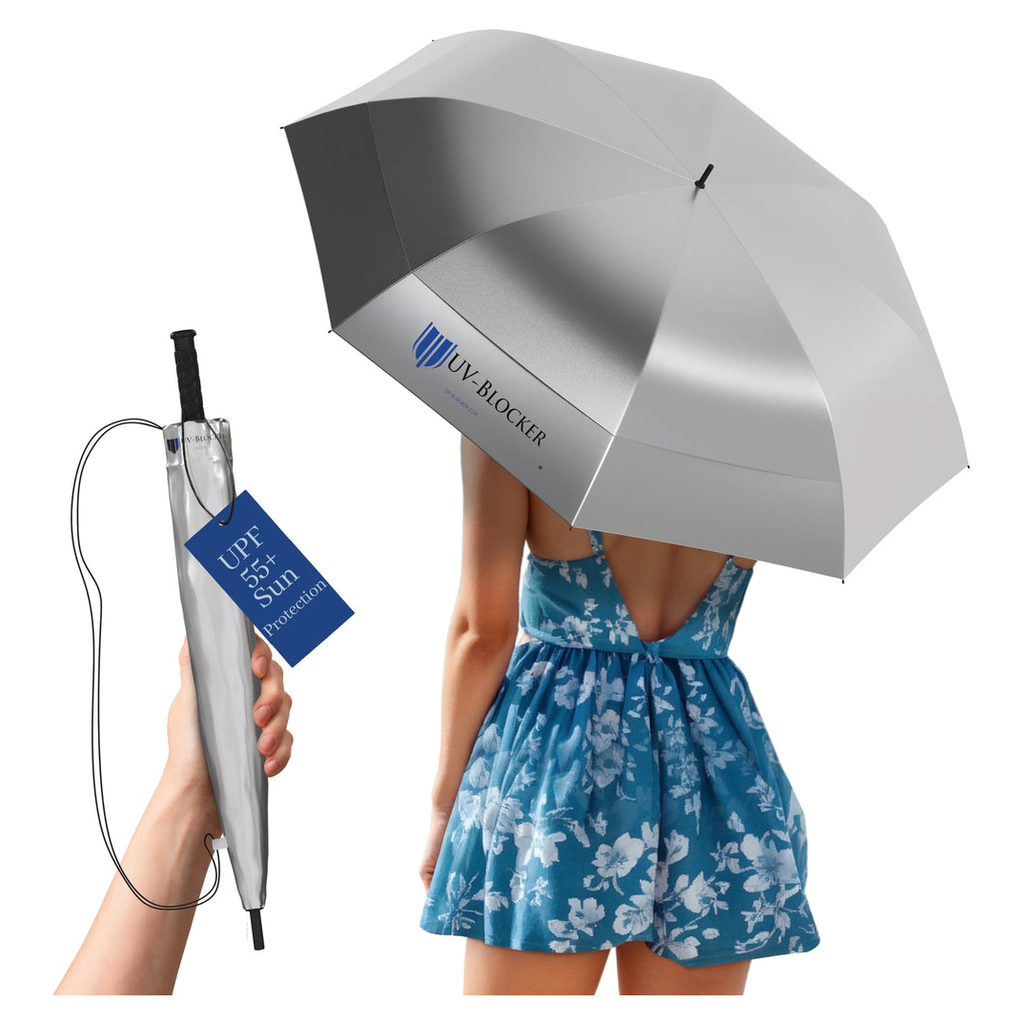
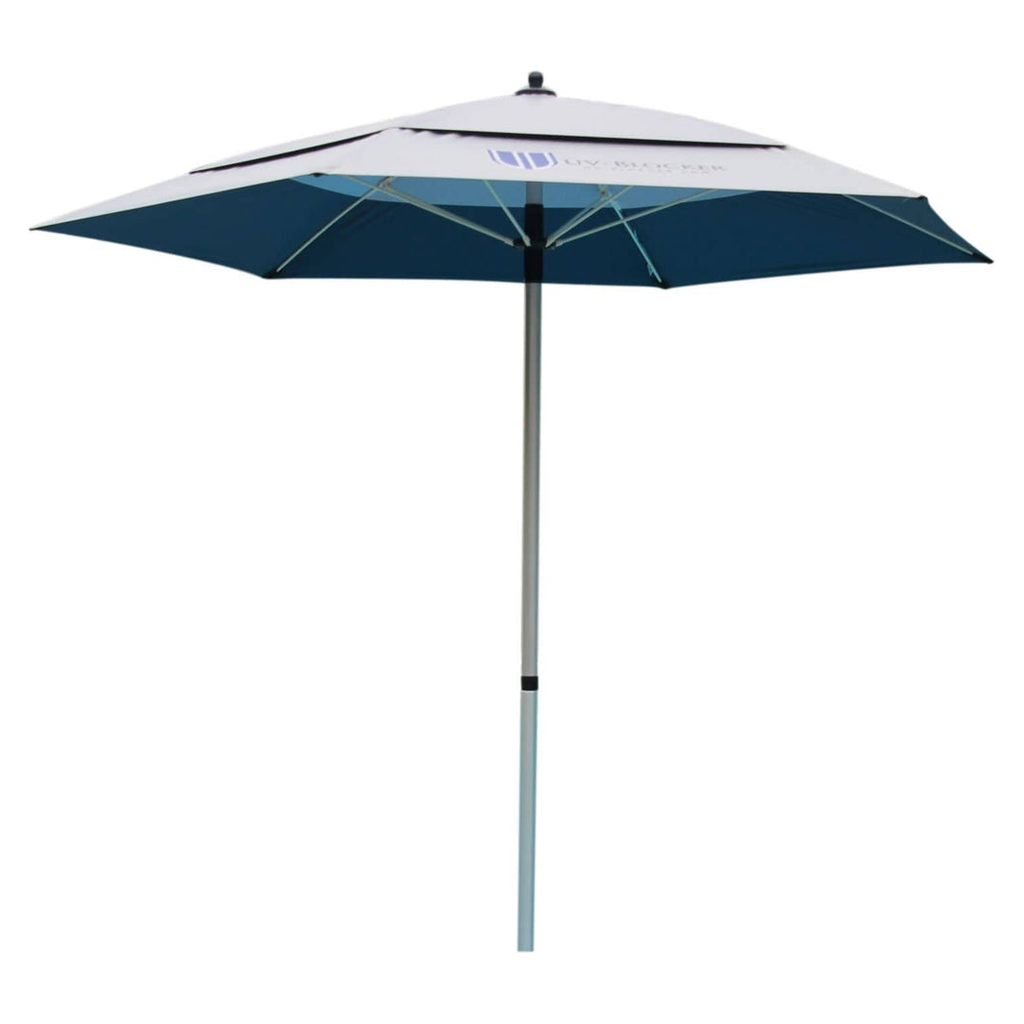
Above treeline, on exposed ski slopes, at outdoor events, and on Denver patios, natural shade simply doesn't exist. A UPF 50+ UV umbrella fills this gap by providing on-demand shade that blocks 99% of UV rays and keeps the air underneath up to 15°F cooler.
UV-Blocker's Compact UV Umbrella ($59.95) weighs just 15 ounces and fits in a daypack. The Travel UV Umbrella ($59.95) adds a sturdier frame and deeper dome profile for extended outdoor use. Both are AATCC TM183-2020 tested for UPF 50+, blocking 100% of UV-B and 99.97% of UV-A.
Colorado is windy. UV-Blocker's patented vented mesh system lets gusts pass through the canopy instead of inverting it, a design feature that matters on exposed ridgelines and Front Range afternoons. More on wind resistance in the best windproof UV umbrella guide.
For hikers planning sustained time above treeline, the sun protection for hiking guide covers additional altitude-specific strategies.
Frequently Asked Questions About Colorado Sun Protection
Colorado's altitude creates UV conditions that catch even experienced outdoor enthusiasts off guard. These answers address the most common questions about sun safety at elevation.
How much stronger is UV in Colorado than at sea level?
UV in Colorado is 20-45% stronger depending on elevation, because UV intensity increases 4-5% per 1,000 feet according to NOAA data.
Denver at 5,280 feet receives roughly 25% stronger UV than a sea-level city at the same latitude. Mountain towns like Breckenridge at 9,600 feet are approximately 45% stronger. Fourteener summits (14,000+ feet) can reach 55-70% stronger than sea level.
Can you get sunburned skiing in Colorado in winter?
Yes. Ski resort elevations amplify UV by 40-55%, and fresh snow reflects up to 90% of UV rays, creating extreme exposure even in freezing temperatures.
Cool air masks the UV risk. Ski patrollers frequently report sunburns on typically shaded areas like the underside of the nose and chin. For more on UV in unexpected conditions, see can you get sunburn on a cloudy day.
What SPF do you need at high altitude in Colorado?
Dermatologists recommend SPF 50+ broad-spectrum sunscreen at altitude, reapplied every 80 minutes because wind and sweat strip protection faster at elevation.
SPF 30 blocks 97% of UV-B at sea level. But at 9,600 feet where UV is 45% stronger, the 3% that gets through carries substantially more energy. SPF 50+ provides a wider margin of safety for sustained altitude exposure.
Does cloud cover protect from UV in the Colorado mountains?
No. Clouds block only 20-40% of UV radiation, meaning up to 80% still reaches skin even on overcast mountain days.
Thin high-altitude clouds common in Colorado's mountains offer even less protection than dense coastal cloud cover. A cloudy day at 10,000 feet can still deliver a higher UV dose than a sunny day at sea level.
What is the UV Index in Denver during summer?
Denver's UV Index reaches 8-11 during summer months, classified as "Very High" to "Extreme" by the EPA, peaking in June and July.
This is higher than many beach cities at the same latitude because Denver sits at 5,280 feet. A sunny July afternoon in Denver delivers roughly the same UV intensity as a summer day in Miami, despite being 1,300 miles farther from the equator.
Why does Colorado have such high melanoma rates?
Colorado's combination of high elevation, 300+ days of sunshine, and an active outdoor culture creates sustained UV exposure that drives melanoma rates above the national average.
Mountain counties illustrate the connection clearly. Gunnison County reports melanoma rates exceeding 45 per 100,000, more than double the statewide average of 21 per 100,000. Higher elevation correlates directly with higher melanoma incidence across Colorado's counties.
Conclusion
Colorado's altitude transforms everyday sunshine into a serious UV hazard. The numbers are clear: 25% stronger UV in Denver, 45% stronger in Breckenridge, and up to 90% UV reflection off winter snow. Mountain counties where residents live and recreate at the highest elevations report melanoma rates nearly three times higher than the Front Range.
Effective colorado sun protection at altitude requires more than a single tube of sunscreen. The layered approach (SPF 50+, UPF clothing, UV sunglasses, and portable shade) accounts for the conditions that make altitude UV so relentless: thinner air, stronger wind, faster sunscreen degradation, and limited natural shade.
Start today: Check the UV Index for your Colorado city before your next outdoor activity. If it reads 6 or above, apply SPF 50+ and bring a shade solution. For sustained outdoor time at any Colorado elevation, browse the UV-Blocker umbrella collection for AATCC-tested, wind-resistant portable shade that blocks 99% of UV.
Sun Safety in Australia
Australia has some of the highest UV radiation levels in the world, with the UV Index regularly reaching extreme levels (11 or above) in cities such as Sydney, Melbourne, Brisbane, Perth, and Adelaide for much of the year — including on overcast days. The Cancer Council Australia reports that approximately two in three Australians will be diagnosed with some form of skin cancer by age 70, making sun protection a national health priority.
Key resources and guidelines for Australian sun safety:
- SunSmart Program (Cancer Council Australia): The SunSmart UV Alert is broadcast daily and recommends sun protection whenever the UV Index reaches 3 or above. In most Australian cities, this threshold is met every day of the year, including winter months in northern regions.
- ARPANSA (Australian Radiation Protection and Nuclear Safety Agency): Provides real-time UV monitoring at stations across all states and territories. Australians can access current UV levels at arpansa.gov.au.
- Safe Work Australia — UV Radiation as an Occupational Hazard: Australian workplace health and safety legislation requires employers to assess and manage UV radiation exposure for outdoor workers. Physical shade, including umbrellas rated UPF 50+, is recognised as a primary engineering control under these regulations.
A UPF 50+ UV-blocking umbrella provides the consistent, continuous shade protection that is essential under Australia's intense sun. The UV-Blocker umbrella, with its patented Solarteck® reflective coating, blocks 99% of UV rays and reduces perceived temperature by up to 15°F — a meaningful advantage for outdoor activities in Australia's climate. It is the only umbrella of its kind approved by the Melanoma International Foundation.
Sun Safety in Canada
Canada experiences meaningful UV exposure throughout the year, with UV Index levels regularly reaching 8–10 or higher during summer months in cities such as Vancouver, Calgary, Toronto, and Ottawa. Health Canada and Environment and Climate Change Canada publish daily UV Index forecasts and recommend protective measures whenever the index exceeds 3 — a threshold reached on most clear days between May and August across the country.
Key resources for Canadian sun safety:
- Health Canada UV Index: Published daily via the Environment and Climate Change Canada weather portal (weather.gc.ca). Canadians can track UV levels by city and receive alerts when protection is recommended.
- Canadian Cancer Society: Recommends UPF 50+ clothing, hats, sunscreen, and shade-seeking as primary sun protection strategies. Physical UV barriers — such as UPF 50+ umbrellas — are emphasized for prolonged outdoor exposure.
- Canadian Dermatology Association: Endorses broad-spectrum sun protection strategies, including shade structures and UV-blocking accessories, especially for individuals with fair skin or a personal or family history of skin cancer.
For Canadians spending extended time outdoors — whether working, playing sports, or enjoying recreational activities — a UV-blocking umbrella rated UPF 50+ provides continuous, reapplication-free protection. The UV-Blocker umbrella, independently tested and approved by the Melanoma International Foundation, blocks 99% of UV rays and keeps users up to 15°F cooler — making it a practical and reliable companion for Canadian summers.
Key Takeaways
- Colorado Sun Protection has specific geographic, atmospheric, and seasonal factors that affect UV intensity.
- The UV Index (UVI) is a 0–11+ scale measuring UV radiation intensity at ground level.
- Yes.
- Water sports (reflection amplifies UV by up to 100%), snow activities (snow reflects 80% of UV), beach activities (sand reflects 25%), and any outd...
Frequently Asked Questions
What makes UV exposure particularly intense in Colorado Sun Protection?
Colorado Sun Protection has specific geographic, atmospheric, and seasonal factors that affect UV intensity. Latitude, altitude, proximity to reflective surfaces (water, sand, snow), and cloud cover all play roles. UV Index data from NOAA shows significant variation even within a single state. Checking the daily UV index at your specific location is the only reliable way to gauge actual risk.
What is the UV Index and how should I use it for sun safety planning?
The UV Index (UVI) is a 0–11+ scale measuring UV radiation intensity at ground level. 0–2: Low risk. 3–5: Moderate — use sunscreen. 6–7: High — seek shade. 8–10: Very High — limit midday exposure. 11+: Extreme — avoid outdoors. NOAA provides daily UV Index forecasts by zip code at weather.gov. UV-Blocker recommends checking the index every morning before outdoor planning.
Is sun protection necessary year-round in this region?
Yes. UV radiation can cause skin damage even on cloudy days and throughout all seasons. UVA rays (which penetrate clouds and glass) are relatively consistent year-round, even when visible sunshine is low. While UVB intensity peaks in summer, dermatologists recommend daily SPF 30+ moisturizer as a year-round habit regardless of season or weather.
What activities put people at highest UV risk in this region?
Water sports (reflection amplifies UV by up to 100%), snow activities (snow reflects 80% of UV), beach activities (sand reflects 25%), and any outdoor activity between 10am–4pm. High altitude activities are particularly dangerous — UV intensity increases ~10–12% per 1,000 feet of elevation. A UPF 50+ umbrella provides reliable portable shade for any of these activities.
How do local residents protect themselves from the sun effectively?
Long-term residents of high UV regions tend to adopt comprehensive sun habits: UPF 50+ protective clothing as daily wear, wide-brim hats, window tinting, avoiding peak sun hours, and SPF 50+ sunscreen applied daily (not just at the beach). Portable UV-blocking umbrellas have become increasingly popular for everyday sun protection during outdoor dining, sports spectating, and commuting.
Sun Safety Best Practices for Colorado Sun Protection Residents
- Bookmark the NOAA UV Index forecast for your Colorado Sun Protection zip code — check it each morning before planning outdoor time
- Apply SPF 30+ sunscreen every morning as part of your daily routine, not just on beach days
- Use window film rated for UV blocking in your home and car — much UV exposure happens indoors
- Keep a UV-blocking umbrella in your car — it's useful for street parking, outdoor dining, and events
- Schedule outdoor physical activity before 10am or after 4pm to avoid peak UV hours
- Annual skin cancer screenings are especially important for long-term residents of high UV regions
Key Takeaways
- Colorado Sun Protection has specific geographic, atmospheric, and seasonal factors that affect UV intensity.
- The UV Index (UVI) is a 0–11+ scale measuring UV radiation intensity at ground level.
- Yes.
- Water sports (reflection amplifies UV by up to 100%), snow activities (snow reflects 80% of UV), beach activities (sand reflects 25%), and any outd...
Frequently Asked Questions
What makes UV exposure particularly intense in Colorado Sun Protection?
Colorado Sun Protection has specific geographic, atmospheric, and seasonal factors that affect UV intensity. Latitude, altitude, proximity to reflective surfaces (water, sand, snow), and cloud cover all play roles. UV Index data from NOAA shows significant variation even within a single state. Checking the daily UV index at your specific location is the only reliable way to gauge actual risk.
What is the UV Index and how should I use it for sun safety planning?
The UV Index (UVI) is a 0–11+ scale measuring UV radiation intensity at ground level. 0–2: Low risk. 3–5: Moderate — use sunscreen. 6–7: High — seek shade. 8–10: Very High — limit midday exposure. 11+: Extreme — avoid outdoors. NOAA provides daily UV Index forecasts by zip code at weather.gov. UV-Blocker recommends checking the index every morning before outdoor planning.
Is sun protection necessary year-round in this region?
Yes. UV radiation can cause skin damage even on cloudy days and throughout all seasons. UVA rays (which penetrate clouds and glass) are relatively consistent year-round, even when visible sunshine is low. While UVB intensity peaks in summer, dermatologists recommend daily SPF 30+ moisturizer as a year-round habit regardless of season or weather.
What activities put people at highest UV risk in this region?
Water sports (reflection amplifies UV by up to 100%), snow activities (snow reflects 80% of UV), beach activities (sand reflects 25%), and any outdoor activity between 10am–4pm. High altitude activities are particularly dangerous — UV intensity increases ~10–12% per 1,000 feet of elevation. A UPF 50+ umbrella provides reliable portable shade for any of these activities.
How do local residents protect themselves from the sun effectively?
Long-term residents of high UV regions tend to adopt comprehensive sun habits: UPF 50+ protective clothing as daily wear, wide-brim hats, window tinting, avoiding peak sun hours, and SPF 50+ sunscreen applied daily (not just at the beach). Portable UV-blocking umbrellas have become increasingly popular for everyday sun protection during outdoor dining, sports spectating, and commuting.
Sun Safety Best Practices for Colorado Sun Protection Residents
- Bookmark the NOAA UV Index forecast for your Colorado Sun Protection zip code — check it each morning before planning outdoor time
- Apply SPF 30+ sunscreen every morning as part of your daily routine, not just on beach days
- Use window film rated for UV blocking in your home and car — much UV exposure happens indoors
- Keep a UV-blocking umbrella in your car — it's useful for street parking, outdoor dining, and events
- Schedule outdoor physical activity before 10am or after 4pm to avoid peak UV hours
- Annual skin cancer screenings are especially important for long-term residents of high UV regions