
TLDR: Yes, But Quality Matters
- Yes, UV umbrellas work—high-quality models block up to 99% of UVA and UVB rays
- Standard umbrellas provide only ~50-77% UV reduction according to research, leaving significant exposure
- The difference: UPF-rated fabric with specialized coatings, not just shade
- Key metric: Look for UPF 50+ (blocks 98%+) or UPF 50+ (blocks 99%)
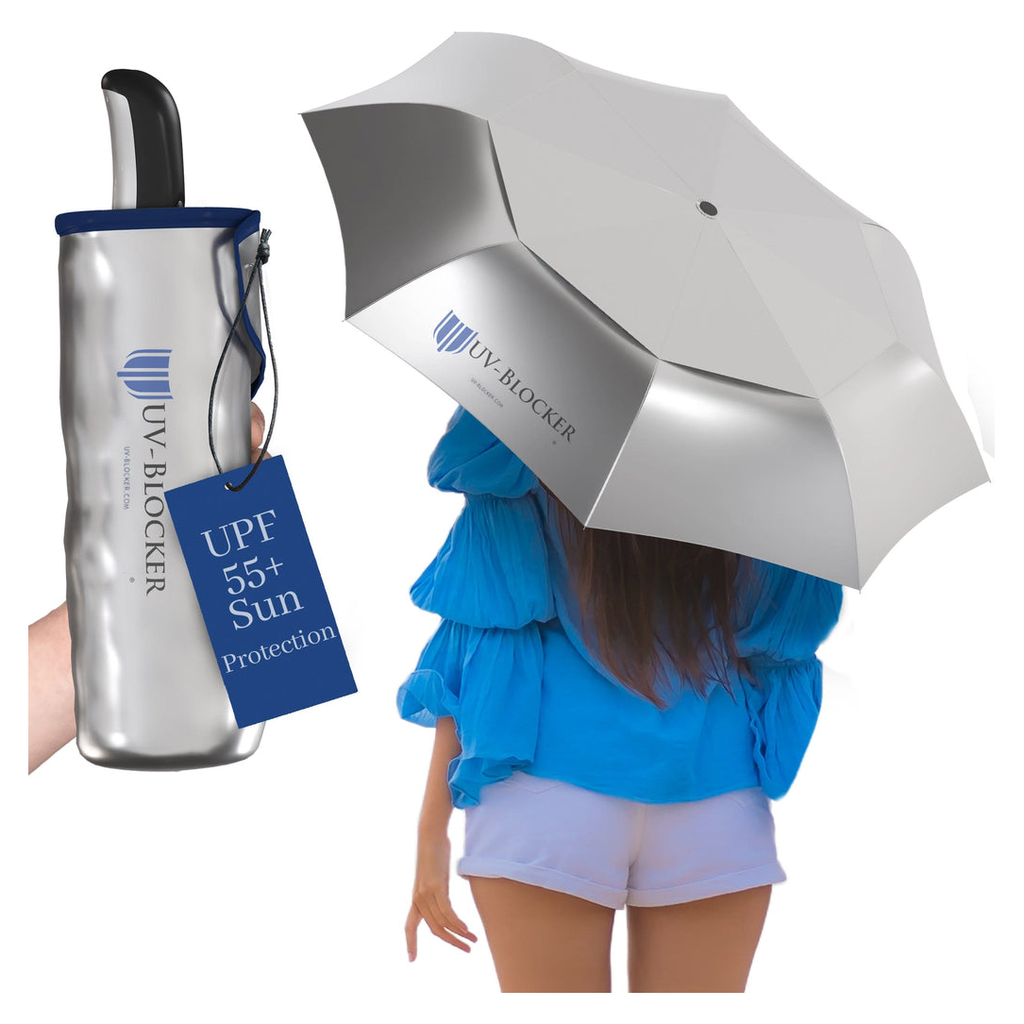
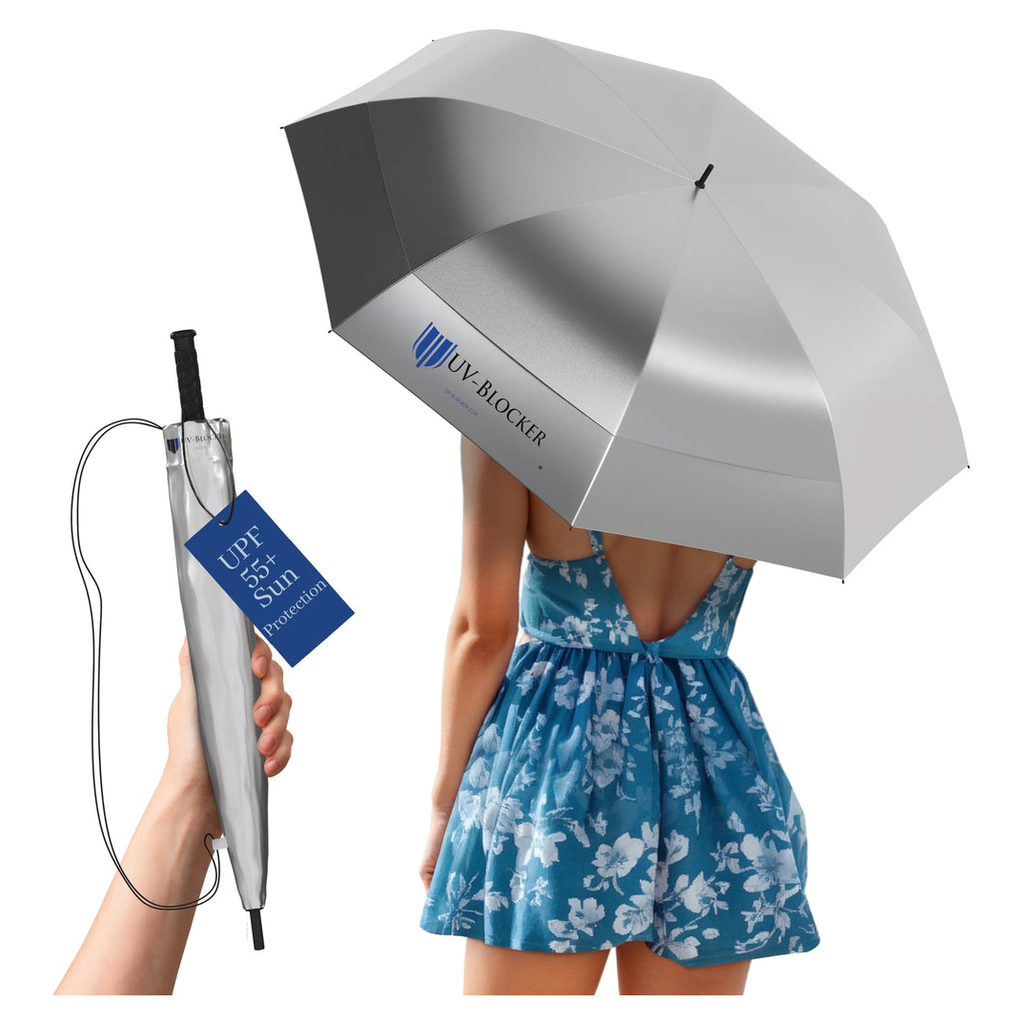
- UV-Blocker umbrellas are independently tested to UPF 50+ standards
- Bonus benefit: Silver-coated umbrellas also keep you 15°F cooler
The Question Everyone Asks
"Do UV umbrellas actually work, or is it just marketing?"
It's a fair question. After all, any umbrella provides shade. Why pay more for one that claims to block UV rays? Is there a real difference, or is "UV umbrella" just a buzzword?
The short answer: Yes, purpose-built UV umbrellas work significantly better than regular umbrellas—but only if they meet specific standards.
The long answer requires understanding what UV radiation actually is, how it interacts with fabric, and why not all shade is created equal.
Understanding UV Radiation
Ultraviolet radiation is invisible energy from the sun that causes real biological effects. There are three types:
| Type | Wavelength | Effect | Blocked By Atmosphere? |
|---|---|---|---|
| UVC | 100-280nm | Most dangerous but... | Yes (99%+) |
| UVB | 280-315nm | Causes sunburn, surface skin damage | Partially |
| UVA | 315-400nm | Penetrates deep, causes aging and DNA damage | No |
UVA and UVB are the concerns. UVA is particularly insidious because you can't feel it—there's no heat or burning sensation—but it penetrates deeper into the skin and contributes to premature aging and skin cancer risk over time.
This is why simple shade isn't enough. UVA radiation is diffuse; it scatters in the atmosphere and bounces off surfaces. Even under a tree or a standard umbrella, you're still exposed to indirect UVA.

How UV Umbrellas Are Different
A true UV umbrella isn't just a shade device—it's a radiation barrier. Here's what sets them apart:
1. Specialized Fabric Weave
The tightness of a fabric's weave determines how much UV passes through. Standard umbrella fabric (often cheap nylon or polyester) has a loose weave that prioritizes water resistance, not UV blocking. Light—and UV—passes right through the gaps.
UV umbrella fabrics are woven with higher thread density and often use thicker yarns, creating a physical barrier that blocks radiation.
2. UV-Absorbing or Reflecting Coatings
This is the key technology. UV umbrellas are treated with one of two types of coatings:
- Absorbing coatings (like titanium dioxide or carbon black): These absorb UV energy and convert it to heat, preventing it from reaching you.
- Reflective coatings (like silver or aluminum): These bounce UV radiation back into the atmosphere before it's absorbed.
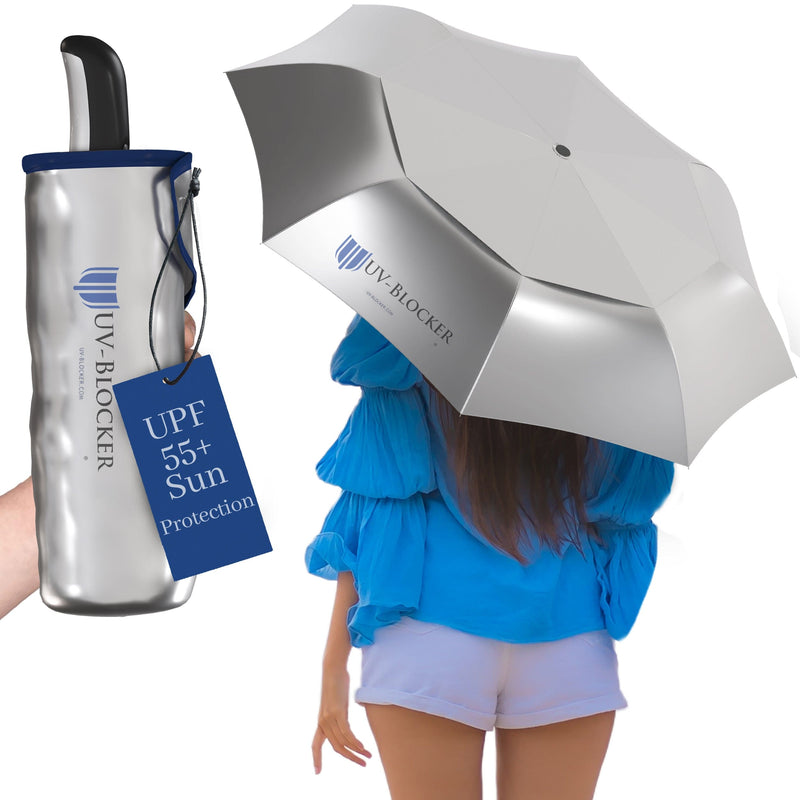
UV-Blocker uses Solarteck™ fabric with a silver reflective exterior and dark absorbing interior—a dual-layer approach that handles both direct and ground-reflected UV.
3. UPF Certification
UPF (Ultraviolet Protection Factor) is to fabric what SPF is to sunscreen. It measures how much UV radiation penetrates a material.
| UPF Rating | UV Blocked | Protection Level |
|---|---|---|
| UPF 15-24 | 93-96% | Good |
| UPF 25-39 | 96-97% | Very Good |
| UPF 40-50 | 97.5-98% | Excellent |
| UPF 50+/55+ | 98-99%+ | Maximum |
A UPF 50+ umbrella like UV-Blocker blocks 99% of UV radiation—meaning only 1/55th of rays (less than 2%) get through.
What Does the Research Say?
Scientific studies have directly compared UV umbrellas to standard shade solutions.
Study: Hand-Held Umbrellas and UV Protection
A 2012 study published in JAMA Dermatology found that standard umbrellas reduced UV exposure by only 50-77% depending on fabric type and color. That means 23-50% of UV radiation was still reaching the skin.
In contrast, umbrellas specifically designed with UV-blocking fabric reduced exposure by over 95%.
Study: Shade Quality Matters
Research from the American Academy of Dermatology confirms that not all shade provides equal protection. Beach umbrellas and standard canopies often transmit significant UV, especially UVA, because they weren't designed as radiation barriers.
The takeaway: The type of shade matters as much as being in shade at all.
Regular Umbrella vs. UV Umbrella: Direct Comparison
| Factor | Regular Umbrella | UV-Blocker Umbrella |
|---|---|---|
| UV Blocking | 50-77% | 99% (UPF 50+) |
| Heat Reduction | Minimal (absorbs heat) | 15°F cooler (reflects heat) |
| Fabric Type | Thin nylon/polyester | Solarteck™ dual-layer |
| Coating | None or basic water repellent | Silver reflective + dark interior |
| Certified | No standard | Lab tested, MIF approved |
| Wind Resistance | Often poor | Vented canopy, fiberglass ribs |
Who Needs a UV Umbrella? (More People Than You Think)
UV umbrellas aren't just for beach vacations. They're valuable for:
High-Risk Groups
- Melanoma survivors and those with skin cancer history
- Lupus patients and others with photosensitive conditions
- People on photosensitizing medications (antibiotics, some blood pressure meds, retinoids)
- Fair-skinned individuals with higher burn risk
- Those with a family history of skin cancer
Everyday Users
- Commuters walking to work in summer
- Golfers spending 4+ hours on exposed courses
- Parents protecting young children (babies under 6 months can't use sunscreen)
- Travelers visiting sunny destinations
- Anyone who wants reliable, no-reapplication protection
The Cooling Advantage: Why Silver Matters
Beyond UV protection, a properly designed umbrella provides a thermal benefit that regular umbrellas can't match.
Black or dark umbrellas absorb solar energy and re-radiate it as heat—directly onto your head. You're out of the light, but you're baking under a heat source.
Silver-coated umbrellas work differently:
- Reflection: The silver exterior bounces solar radiation (UV + visible light + infrared heat) back into the atmosphere before it's absorbed.
- No Secondary Heat: Because energy is reflected rather than absorbed, the canopy stays cooler.
- Passive Airflow: UV-Blocker umbrellas include vented double canopies, allowing hot air to escape.
The result: Approximately 15°F cooler than standing in direct sun. This isn't just comfort—it reduces heat stress, slows dehydration, and makes outdoor time more sustainable.
Common Myths About UV Umbrellas
Myth 1: "Any umbrella blocks UV"
Reality: Standard umbrellas block 50-77% of UV. That leaves up to 50% reaching your skin—equivalent to no protection at all by UPF standards.
Myth 2: "Darker colors block more UV"
Reality: Yes for absorption, but silver reflection is superior because it doesn't heat up. UV-Blocker uses a silver exterior (reflection) with a dark interior (absorption of ground-reflected UV)—the best of both.
Myth 3: "I don't need an umbrella if I wear sunscreen"
Reality: Why not both? Sunscreen requires reapplication, misses spots, and washes off. An umbrella provides consistent, chemical-free coverage for your head, face, and shoulders—areas sunscreen often misses.
Myth 4: "UV umbrellas are flimsy"
Reality: Cheap UV parasols often are. But UV-Blocker uses fiberglass ribs (not aluminum or steel) that flex without breaking and resist corrosion. The vented canopy design handles wind that would flip standard umbrellas inside out.
How to Choose an Effective UV Umbrella
Not all "UV umbrellas" are equal. Here's what to verify:
Must-Have Features
- [ ] UPF 50+ minimum (UPF 50+ preferred for 99% blocking)
- [ ] Reflective exterior coating (silver is optimal)
- [ ] Dark interior (absorbs ground-reflected UV)
- [ ] Vented canopy (wind resistance + heat release)
- [ ] Fiberglass or carbon fiber ribs (durability without rust)
UV-Blocker Models That Meet All Standards
| Model | Arc Size | Best For |
|---|---|---|
| Compact UV Umbrella | 42" | Daily use, commuting |
| Travel UV Umbrella | 39" | Vacations, light carry |
| Large Folding UV Umbrella | 48" | More coverage, still portable |
| Golf UV Umbrella | 62-68" | Maximum shade, sports |
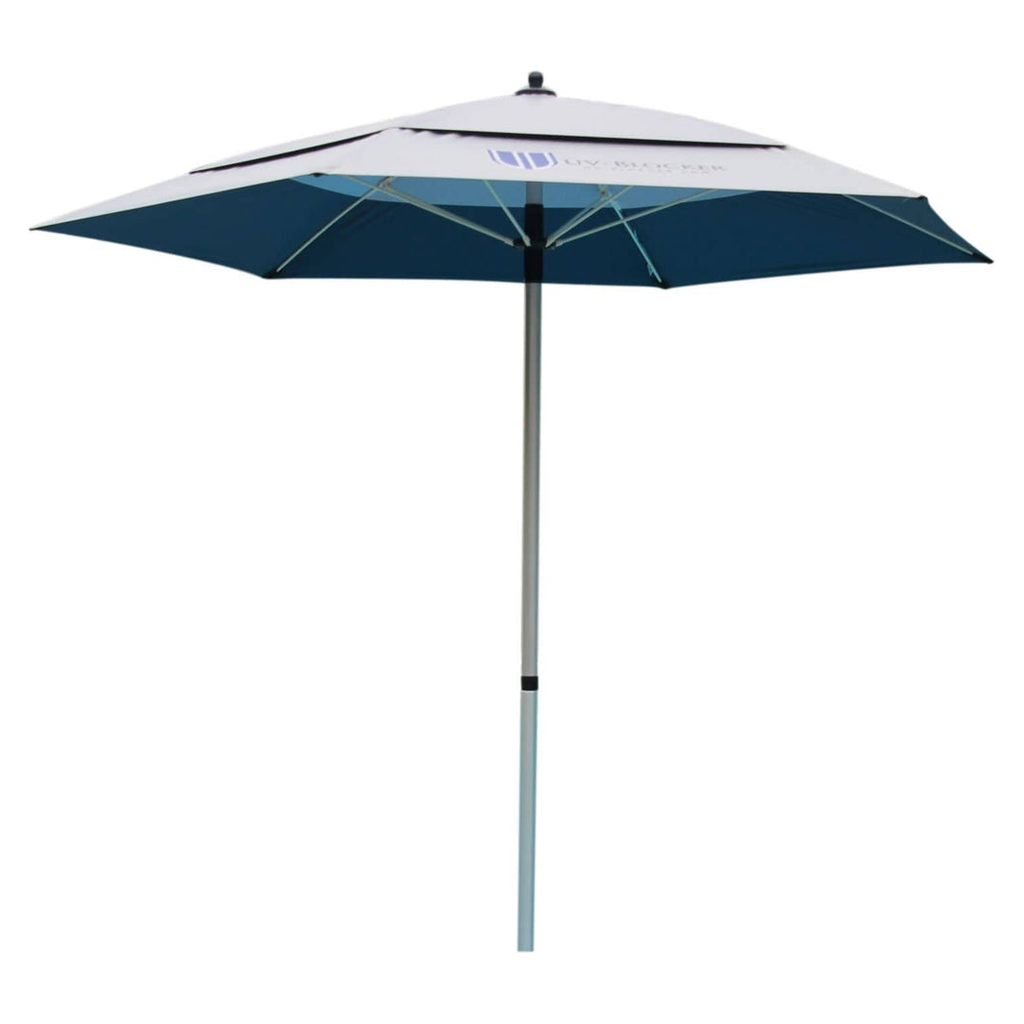
| Beach UV Umbrella | 60" | Stationary beach/pool use |
All UV-Blocker umbrellas feature: - UPF 50+ Solarteck™ fabric - Melanoma International Foundation approved - 15°F cooling effect - 5-year warranty
FAQ: UV Umbrella Effectiveness
Do UV umbrellas work better than hats?
Both serve different purposes. Hats protect your scalp and face but trap heat and don't shade your shoulders/body. UV umbrellas create a larger shade zone and allow airflow around your head. Ideally, use both together.
How long does UV protection last?
With quality fabric like Solarteck™, UV protection remains effective for years. The coating is integrated into the fabric, not sprayed on. Avoid storing wet, and protection will last the life of the umbrella.
Can I use a UV umbrella in the rain?
Absolutely. UV-Blocker umbrellas are fully waterproof and wind-resistant. They function as premium all-weather umbrellas.
Do I still need sunscreen with a UV umbrella?
For maximum protection, yes—especially for hands, legs, and any skin not under the umbrella's shade. The umbrella protects your head, face, neck, and shoulders; sunscreen covers the rest.
Are transparent UV umbrellas effective?
Some are, if they use UV-blocking coatings. However, they don't provide the cooling benefit of reflective silver umbrellas and may transmit more infrared heat.
How do I know if my umbrella actually blocks UV?
Look for the UPF rating on the label. If there's no rating, assume it's a standard umbrella with limited UV protection. All UV-Blocker products display their UPF 50+ certification.
The Verdict: They Work—When Properly Made
Do UV umbrellas work? Yes, definitively—but only high-quality, purpose-built models with verified UPF ratings.
A cheap "UV umbrella" with thin fabric and no certification may be no better than a standard umbrella. But a properly engineered UV umbrella with reflective coating, UPF 50+ fabric, and vented design provides:
- 99% UV blocking (vs. 50-77% for standard umbrellas)
- 15°F cooler environment
- Chemical-free protection that doesn't require reapplication
- Coverage for your most vulnerable areas (face, head, neck, shoulders)
If you're serious about sun protection—whether for medical reasons, skin cancer prevention, or just staying comfortable outdoors—a UV umbrella is one of the most effective tools available.
Ready to experience the difference? Explore our complete UV protection umbrella collection.
Do UV Umbrellas Work? The Science Behind Sun Protection: Frequently Asked Questions
How much more effective is a specialized UV umbrella compared to a standard rain umbrella?
While standard rain umbrellas may only block around 75% of UV radiation, UV-Blocker umbrellas utilize Solarteck® technology to achieve a UPF 50+ rating, blocking 99% of UVA and UVB rays. This significant difference is crucial because UVA rays penetrate deeper into the skin, contributing to premature aging and DNA damage. The specialized multi-layered fabric ensures that even invisible radiation is reflected rather than absorbed.
Can a UV umbrella protect against rays reflecting off surfaces like sand or water?
An umbrella primarily blocks direct overhead radiation, but surfaces like sand can reflect up to 15% of UV rays, while water reflects about 10%. UV-Blocker umbrellas are designed with a large canopy and a dark underside to help minimize the impact of this indirect 'scattered' radiation. For the highest level of safety, the Melanoma International Foundation recommends using these umbrellas in conjunction with high-SPF sunscreen to address 360-degree exposure.
Does a UV umbrella provide any cooling benefits beyond just providing shade?
Yes, the reflective Solarteck® coating on UV-Blocker umbrellas does more than block radiation; it also reflects the infrared rays responsible for heat. Clinical testing and field use show that the temperature under a UV-Blocker canopy can be up to 15 degrees cooler than the surrounding ambient air. This temperature regulation helps prevent heat exhaustion while maintaining a UPF 50+ barrier against skin damage.
What certifications should I look for to ensure a sun umbrella is medically effective?
You should prioritize products that have earned the seal of approval from the Melanoma International Foundation and carry a certified UPF 50+ rating. UV-Blocker umbrellas meet these rigorous standards, ensuring the fabric has been laboratory-tested to remain effective even after significant wear. This clinical validation distinguishes professional sun protection tools from generic umbrellas that lack standardized UV-reflective properties.