

TLDR
- Babies under 6 months can't use sunscreen—the AAP recommends shade as primary protection
- UPF-rated umbrellas block 99% of UV rays and are the most effective single-product sunscreen alternative
- Physical barriers don't require reapplication unlike sunscreen's 2-hour rule
- UV-Blocker umbrellas are MIF-approved and dermatologist-recommended for medical-grade protection
- The best approach is layered protection: umbrella + clothing + hat for complete coverage
Your dermatologist says protect your skin from the sun. But you can't use sunscreen.
Maybe your baby is under six months old. Maybe you're allergic to oxybenzone. Maybe you have lupus and need protection that doesn't require constant reapplication. Or perhaps you're headed to Hawaii, where chemical sunscreens are banned for reef protection.
Whatever the reason, you're not alone. Millions of people need sun protection alternatives—and the good news is that physical barriers can be just as effective as sunscreen, sometimes more so.
Our founder, Ron Walker, knows this firsthand. After being diagnosed with Stage 1 melanoma in 2003, he discovered that sunscreen alone wasn't enough. He founded UV-Blocker in 2005 to create medical-grade sun protection that doesn't rely on chemicals.
This guide covers everything you need to know about protecting your skin without sunscreen—backed by science, recommended by dermatologists, and proven in real-world conditions.
Why Some People Can't Use Sunscreen
If you've ever had a sunscreen rash or watched your infant squirm away from that white paste, you understand the frustration. Sunscreen isn't an option for everyone.
Babies Under 6 Months
The American Academy of Pediatrics is clear: sunscreen is not recommended for infants under 6 months. Their skin is too sensitive, and the chemicals can be absorbed more readily. The AAP's recommendation? "Keep babies out of direct sunlight. Shade is the primary protection."
This leaves new parents scrambling for alternatives during summer walks, beach trips, and outdoor family gatherings.
Chemical Sunscreen Allergies
Oxybenzone, avobenzone, and octocrylene are among the most common causes of contact dermatitis from sunscreen. If you've experienced redness, itching, or hives after applying sunscreen, you're likely sensitive to one of these active ingredients.
Mineral sunscreens (zinc oxide, titanium dioxide) are an option, but many people find them difficult to apply and prone to leaving white residue.
Photosensitivity Conditions
For people with lupus, polymorphous light eruption (PMLE), or rosacea, sun exposure isn't just uncomfortable—it can trigger serious flares. These conditions require reliable, constant protection that doesn't degrade in sunlight or wash off with sweat.
Medication Interactions
Certain medications dramatically increase sun sensitivity:
- Retinoids (Accutane, tretinoin)
- Some antibiotics (doxycycline, ciprofloxacin)
- Diuretics
- NSAIDs
For people on these medications, standard sunscreen may not provide enough protection, and physical barriers become essential.
Environmental Concerns
Hawaii, Palau, the U.S. Virgin Islands, and parts of Mexico have banned oxybenzone and octinoxate to protect coral reefs. If you're traveling to these destinations, you need reef-safe alternatives—either mineral sunscreen or physical barriers.
The good news? Sunscreen isn't your only option. And for many situations, it's not even the best one.
The 5 Best Sunscreen Alternatives (Ranked by Effectiveness)
Not all sun protection is created equal. Here's how the alternatives stack up, from most effective to least:

1. UPF-Rated Umbrellas (Best Overall)
Protection level: Blocks 99% of UVA and UVB rays
Coverage area: Head, shoulders, upper body (largest single-product coverage)
Reapplication: Never required
A quality UPF-rated umbrella is the most effective single product for sun protection. Unlike hats or clothing that protect only what they cover, an umbrella creates a zone of complete shade.
The key is the UPF rating. A standard rain umbrella might block 77% of UV rays. A purpose-built UV umbrella with UPF 55+ blocks 99%—the same protection level as SPF 100+ sunscreen, but covering a much larger area.
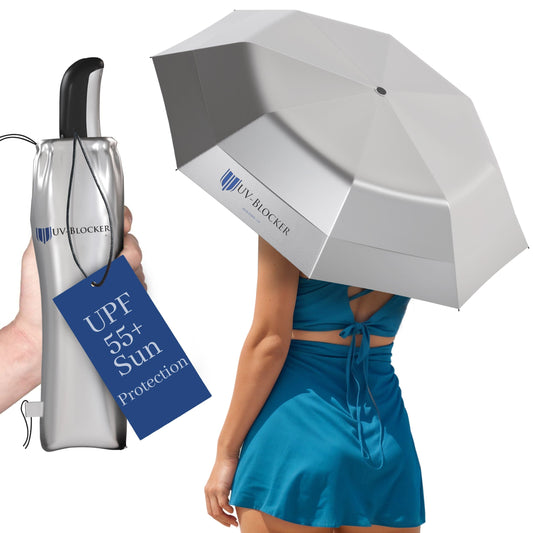
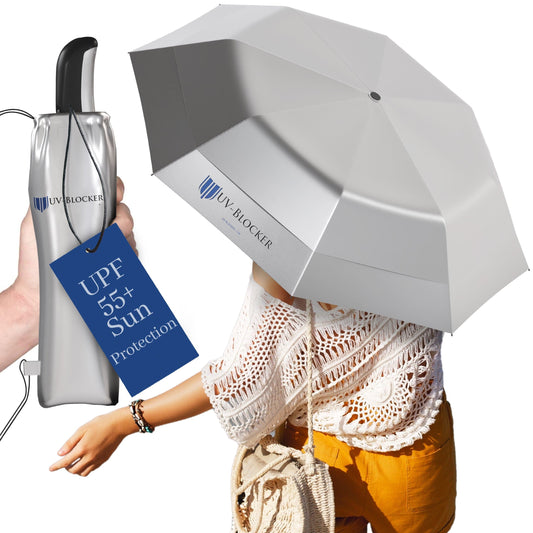
UV-Blocker umbrellas use Solarteck™ fabric with a reflective silver outer layer that bounces UV radiation away while a Cool Blue inner layer absorbs any rays that penetrate. The result: 99% UV block and temperatures up to 15°F cooler underneath.
Best for: Everyone—medical patients, parents with infants, outdoor workers, athletes, travelers
2. UPF-Protective Clothing
Protection level: Varies by garment (UPF 50+ blocks 98%)
Coverage area: Whatever the clothing covers
Reapplication: Never required
UPF clothing has come a long way from the loose, heavy shirts of a decade ago. Modern sun-protective garments are lightweight, breathable, and stylish.
Look for UPF 50+ rated items. Standard cotton t-shirts typically provide only UPF 5-7, meaning they let through significant UV radiation.
Limitations: Clothing doesn't protect your face, hands, or any exposed skin. And in hot weather, covering up can be uncomfortable.
3. Wide-Brim Hats
Protection level: Varies by brim width
Coverage area: Face, ears, neck (with 3"+ brim)
Reapplication: Never required
A wide-brim hat (3 inches or more) provides meaningful protection for your face, ears, and neck—the areas most prone to skin cancer.
Limitations: Hats don't protect shoulders, arms, or legs. They're part of a complete protection strategy, not a standalone solution.
4. Seeking Natural Shade
Protection level: Varies by source (trees, buildings, awnings)
Coverage area: Depends on shade source
Reapplication: Never required
Natural shade is free and accessible. Trees, buildings, awnings, and covered patios all reduce UV exposure.
Limitations: You can't control shade. It's not always available, the angle changes throughout the day, and it doesn't travel with you.
5. Smart Timing
Protection level: Reduces overall exposure
Coverage area: N/A
Reapplication: N/A
The UV index is highest between 10 AM and 4 PM. Scheduling outdoor activities for early morning or late afternoon significantly reduces your cumulative UV exposure.
Limitations: Not practical for all-day events, work requirements, or vacations. Useful as a supplementary strategy, not a primary one.
Quick Comparison
| Method | UV Block | Coverage | Reapplication | Portability |
|---|---|---|---|---|
| UPF Umbrella (55+) | 99% | Head + upper body | Never | ★★★★☆ |
| UPF Clothing (50+) | 98% | Covered areas only | Never | ★★★★★ |
| Wide-Brim Hat | 50-70% | Face, neck, ears | Never | ★★★★★ |
| Natural Shade | Variable | Depends on source | N/A | ★★☆☆☆ |
| Smart Timing | Reduces exposure | N/A | N/A | ★★★★★ |
The Science: Why Physical Barriers Beat Chemicals for Some Users
Here's something most people don't realize: SPF ratings only measure protection against UV-B rays. Sunscreen's SPF 30 blocks about 97% of UV-B, but says nothing about UV-A.
Physical barriers—umbrellas, clothing, hats—block both UV-A and UV-B simultaneously.
UV-A vs. UV-B: What's the Difference?
- UV-B: Causes sunburn. Blocked by most sunscreens.
- UV-A: Penetrates deeper. Causes aging, wrinkles, and contributes to skin cancer. Not fully blocked by all sunscreens.
When you see "broad spectrum" on sunscreen, it means some UV-A protection—but the level isn't standardized like UV-B.
UPF ratings for fabrics measure total UV protection. UPF 50+ means the fabric blocks 98%+ of both UV-A and UV-B rays. No guessing, no variability.
The Reapplication Problem
Sunscreen effectiveness degrades. The FDA recommends reapplication every 2 hours, and immediately after swimming or sweating. Studies show most people apply only 25-50% of the recommended amount, reducing actual protection significantly.
Physical barriers don't degrade. An umbrella blocks the same amount of UV at hour four as it does at minute one.
The Absorption Question
A 2019 FDA study published in JAMA found that four common sunscreen ingredients—avobenzone, oxybenzone, octocrylene, and ecamsule—were absorbed into the bloodstream at levels exceeding FDA thresholds after just one application.
Physical barriers have zero absorption concern. They work by blocking UV rays from ever reaching your skin.
The Cooling Advantage
Standard umbrellas provide shade but trap heat. UV-Blocker's Solarteck™ fabric uses a reflective silver coating that bounces infrared radiation (heat) as well as UV rays. The result: temperatures up to 15°F cooler underneath compared to direct sunlight.
This isn't just comfort—heat exhaustion is a real risk during extended outdoor activities.
Who Needs Sunscreen Alternatives Most
Different situations call for different approaches. Here's how to match protection to your specific needs:
Parents with Infants (Under 6 Months)
The AAP is clear: babies under 6 months shouldn't use sunscreen. Their developing skin absorbs chemicals more readily, and shade is the recommended primary protection.
Solution: A UV umbrella attached to your stroller provides constant, reliable shade without chemicals touching your baby's skin. UV-Blocker's Stroller Holder pairs with any of our Travel, Large Folding, or Golf umbrellas for hands-free protection during walks.
Melanoma Survivors
For those who've already faced skin cancer, sun protection isn't optional—it's life or death.
Our founder Ron Walker was diagnosed with Stage 1 melanoma in 2003. Sunscreen alone wasn't enough peace of mind. He founded UV-Blocker in 2005 to create protection that leaves nothing to chance: verified UPF 55+ rating, Melanoma International Foundation approval, and dermatologist recommendations.
"It's not just shade," Ron says. "It's medical-grade protection."
Lupus and Photosensitivity Patients
For lupus patients, sun exposure can trigger disease flares—joint pain, fatigue, rashes, and worse. Protection must be absolute and constant.
UV-Blocker umbrellas provide the reliability that photosensitive patients need. No reapplication, no gaps, no degradation. Just consistent 99% UV blocking from the moment you open the umbrella until you're back indoors.
Golfers and Outdoor Athletes
A round of golf means 4-5 hours in direct sunlight. Tennis matches, fishing trips, and endurance sports involve similar exposure.
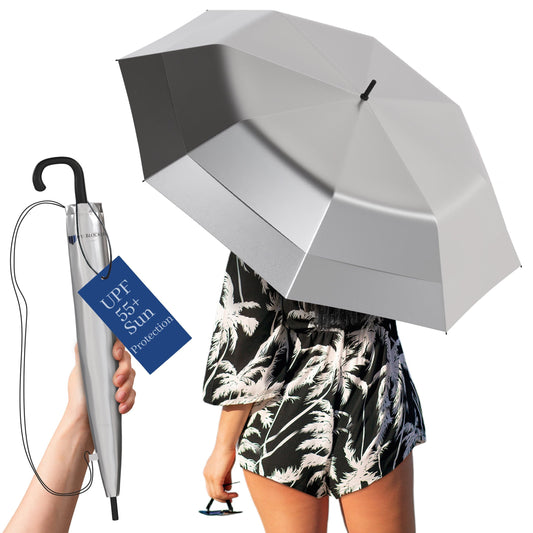
Reapplying sunscreen every 2 hours disrupts your game and rarely happens consistently. A 62" or 68" Golf Umbrella provides continuous protection between shots while keeping you cooler—a performance advantage on hot days.
Travelers to Reef-Safe Destinations
Hawaii, the U.S. Virgin Islands, Palau, and parts of Mexico and Australia have banned oxybenzone and octinoxate sunscreens to protect coral reefs.
You have two options: mineral sunscreen (zinc oxide) or physical barriers. Many travelers find that a combination—UV umbrella for the beach, mineral sunscreen for swimming—provides complete protection without prohibited chemicals.
How to Build Your Complete Sun Protection System
The most effective approach is layered protection. Here's how to build your personal sun defense system:

The Four Layers of Physical Sun Protection
- Overhead: UPF umbrella for maximum coverage
- Body: UPF clothing for arms, legs, torso
- Head: Wide-brim hat (3"+) for face and neck
- Eyes: UV-blocking sunglasses (look for UV 400)
Activity-Specific Recommendations
| Activity | Primary Protection | Secondary | Recommended Umbrella |
|---|---|---|---|
| Beach day | Beach umbrella | UPF swimwear | 6 ft Personal Beach |
| Golf | Golf umbrella | UPF polo, hat | 62" Golf |
| Stroller walks | Travel umbrella + holder | Baby hat | Travel 44" |
| City commuting | Compact umbrella | Hat, sunglasses | Compact 42" |
| Outdoor events | Large folding | UPF clothing | Large Folding 58" |
What About Exposed Skin?
Physical barriers protect what they cover. For exposed hands, face (if not under umbrella), and feet, consider:
- Mineral sunscreen: Zinc oxide provides broad-spectrum protection without the absorption concerns of chemical filters
- The right angle: Position your umbrella to maximize shade coverage
- Additional clothing: UPF gloves for driving, UPF socks for sandal-wearers
The best sun protection system is the one you'll actually use consistently. Start with an umbrella—it provides the most coverage with a single product—then add layers based on your activities and comfort.
FAQ: Sunscreen Alternatives
Can you really protect your skin from the sun without sunscreen?
Yes. Physical barriers like UPF umbrellas, clothing, and hats block UV rays just as effectively as sunscreen—often more so. The American Academy of Dermatology recommends shade as the first line of defense against sun damage.
What is the best alternative to sunscreen?
A UPF-rated umbrella provides the broadest coverage with a single product, blocking up to 99% of UV rays without any skin contact or reapplication. Look for umbrellas with a UPF 50+ rating verified by independent testing.
Are UV umbrellas effective?
Yes. A JAMA study found that UV-blocking umbrellas reduce UV exposure by 77-99% depending on fabric quality. UV-Blocker umbrellas with UPF 55+ rating block 99% of UVA and UVB rays—equivalent to SPF 100+ sunscreen protection.
What do dermatologists recommend instead of sunscreen?
Dermatologists recommend physical barriers: shade, UPF clothing, wide-brim hats, and UPF umbrellas. Dr. David A. Kasper says he "highly recommends" UV-Blocker umbrellas "for its compactness, durability, coolness."
How do you protect a baby from the sun without sunscreen?
The AAP recommends shade for babies under 6 months rather than sunscreen. Use a stroller with canopy, dress your baby in lightweight long sleeves and a hat, and attach a UPF umbrella to the stroller for additional coverage.
Is UPF the same as SPF?
No. SPF measures sunscreen protection against UV-B rays on skin. UPF measures fabric's ability to block both UV-A and UV-B rays. UPF 50+ blocks 98%+ of all UV radiation—both types.
Can I use an umbrella instead of sunscreen?
An umbrella can replace sunscreen for covered areas, providing 99% UV protection without chemicals or reapplication. For maximum protection near water or sand (which reflect UV rays), combine umbrella shade with mineral sunscreen on exposed areas.
What are natural ways to block UV rays?
Natural UV-blocking methods include seeking shade, wearing physical barriers (hats, clothing, umbrellas), and timing outdoor activities outside peak UV hours (10 AM - 4 PM). These methods work by preventing UV rays from reaching your skin.
Why UV-Blocker Umbrellas Are the Dermatologist's Choice
Not all UV umbrellas are created equal. Here's what sets UV-Blocker apart:
Medical-Grade Certification
UV-Blocker is approved by the Melanoma International Foundation—the same organization that reviews and recommends products for skin cancer survivors. This isn't marketing language; it's third-party verification that our products meet the highest standards for UV protection.
Dermatologist Endorsements
- Dr. Andrea Buck, Medford, NJ: "The first items we pack are our UV-Blocker Beach Umbrellas."
- Dr. Aradhna Saxena, Ft Washington, PA: "One of the most effective defenses against actinic keratosis."
- Dr. David A. Kasper, Lansdale, PA: "I highly recommend it... for its compactness, durability, coolness."
The Solarteck™ Difference
Our patented Solarteck™ fabric isn't just treated cloth—it's engineered from the ground up for sun protection:
- Silver reflective outer layer: Bounces UV and infrared radiation away
- Cool Blue inner layer: Absorbs any UV that penetrates
- Result: 99% UV block (UPF 55+) and 15°F cooler temperatures
Built for Real Conditions
The patented Vented Mesh System™ allows wind to pass through the canopy rather than flipping it inside out. Whether you're on a breezy beach or a windy golf course, UV-Blocker umbrellas stay put.
See which UV-Blocker umbrella fits your lifestyle →
Conclusion
Sun protection without sunscreen isn't just possible—for many people, it's preferable.
Physical barriers like UPF umbrellas, clothing, and hats provide consistent, reliable protection without chemicals, reapplication anxiety, or absorption concerns. They work from the moment you deploy them until you're back indoors.
Your next steps:
- Identify your primary use case: Beach? Golf? Commuting? Stroller walks?
- Choose the right umbrella size: Compact for portability, Golf for maximum coverage
- Layer your protection: Add UPF clothing and a wide-brim hat for complete coverage
The best sun protection is protection you actually use. Start with one quality umbrella—the single most effective product for UV defense—and build from there.
Founded by a melanoma survivor. Approved by the Melanoma International Foundation. Trusted by dermatologists.