
TLDR: Key Takeaways
- Fading, small tears, or sticky mechanisms are signs your umbrella needs attention—not necessarily replacement
- Regular cleaning with mild soap and fully drying before storage extends umbrella life significantly
- UV protection can degrade even when the umbrella looks fine—fabric thinning reduces UPF effectiveness
- Replace when: fabric is see-through, multiple ribs are broken, or the umbrella won't stay open
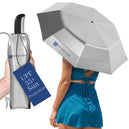
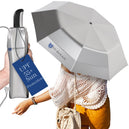
- UV-Blocker umbrellas are built with UPF 50+ Solarteck™ fabric and fiberglass ribs for lasting durability
- A quality replacement often costs less than repeated repairs on a deteriorating umbrella
Why UV Umbrella Wear Matters More Than You Think
Your UV umbrella is more than a shade accessory—it's a critical layer of sun protection. Unlike regular umbrellas designed only to block rain, UV umbrellas use specialized fabrics and coatings to block harmful ultraviolet radiation. When that protection degrades, you may be exposed to more UV than you realize.
The challenge: UV protection can decline before visible damage appears. Fabric that looks fine may have microscopic degradation that reduces its UPF rating—meaning more radiation reaches your skin even when you're "protected."
Studies show that fabric UV protection decreases with sun exposure, washing, and physical wear. A 2019 study in the Journal of the American Academy of Dermatology found that some sun-protective fabrics lost up to 20% of their UPF rating after extended outdoor use.
This is why understanding wear signs—and knowing when to act—is essential for anyone who relies on their umbrella for consistent sun protection.
Common Signs of Wear in Your UV Umbrella
Not every sign of wear means your umbrella is done. Some issues are cosmetic; others compromise protection. Here's how to tell the difference:
Visual Indicators
Fading or Discoloration Sun exposure bleaches fabric over time. While cosmetic fading doesn't immediately destroy UV blocking, it can indicate that the fabric's protective coatings are breaking down. Silver-coated umbrellas like those using Solarteck™ fabric are more resistant to this degradation.
Tears or Holes Even small tears compromise your coverage. UV radiation passes directly through holes, and wind stress can quickly expand minor damage into major failures. Check your canopy regularly, especially around stress points where ribs connect.
Rust or Corrosion Metal frames—especially steel—are susceptible to rust from moisture exposure. Rust weakens structural integrity and can make the umbrella difficult or impossible to operate. Beach and pool use accelerates corrosion due to salt and chlorine exposure.
Functional Issues
Sticking or Difficult Operation If your umbrella is hard to open or close, the mechanism is wearing out. This might be from dirt buildup, metal fatigue, or bent components. Forcing a stuck umbrella can cause sudden failure—potentially dangerous in windy conditions.
Loose or Wobbly Ribs Ribs should hold the canopy taut and stable. If they feel loose, rattle, or don't snap into position properly, the umbrella's structural integrity is compromised. A wobbly umbrella provides inconsistent shade and may collapse unexpectedly.
Won't Stay Open If the locking mechanism fails and your umbrella collapses on its own, it's no longer functional as sun protection. This is a common failure point in cheaper umbrellas with plastic locking components.
How to Extend the Lifespan of Your UV Umbrella
With proper care, a quality UV umbrella can provide years of reliable protection. These maintenance habits make the difference:
Cleaning Best Practices
Regular Gentle Cleaning Wipe your umbrella with a soft cloth dampened with warm water and mild soap. Focus on edges, joints, and areas where dirt accumulates. Avoid harsh chemicals, bleach, or abrasive scrubbing—these can damage UV-protective coatings.
Remove Salt and Chlorine After beach or pool use, rinse your umbrella with fresh water to remove salt, chlorine, and sand. These substances accelerate both fabric and frame deterioration. Even a quick rinse extends lifespan significantly.
Clean the Mechanism Occasionally spray the opening mechanism with a silicone-based lubricant (not oil-based, which attracts dirt). This keeps operation smooth and prevents the sticky, grinding feel that signals premature wear.
Storage Guidelines
Always Dry Completely Before Storing This is the single most important maintenance habit. Storing a damp umbrella creates conditions for mold, mildew, and fabric rot. Let your umbrella air dry fully—in shade, not direct sun—before closing and storing.
Store Indoors During Off-Season Extreme temperatures stress both fabric and frame. Store your umbrella in a climate-controlled space when not in regular use. Avoid car trunks, where summer heat can exceed 150°F.
Use a Protective Sleeve A fabric cover prevents scratches, dust accumulation, and accidental damage. Most quality umbrellas include a sleeve—use it.
Operational Care
Open and Close Gently Snapping an umbrella open or forcing it closed stresses the mechanism and ribs. Take an extra second to operate it smoothly, ensuring it locks properly at each position.
Avoid Excessive Wind Even wind-resistant umbrellas have limits. If gusts are sustained above 25-30 mph, consider folding your umbrella rather than letting it fight the wind. Repeated wind stress weakens frame joints over time.
Don't Force Repairs If a rib bends, don't try to straighten it by force—this often snaps the rib entirely. Professional repair or replacement is usually more effective than DIY fixes for structural damage.
When to Repair vs. Replace Your UV Umbrella
Knowing the line between repairable issues and replacement triggers saves both money and frustration.
Worth Repairing
- Minor fabric tears: Small holes (under 1 inch) can sometimes be patched with UV-protective repair tape
- Loose screws or rivets: Tightening or replacing hardware is simple and inexpensive
- Dirty or sticky mechanism: Cleaning and lubricating often restores smooth operation
- Single bent rib: One minor bend may be livable if it doesn't affect canopy tension
Time to Replace
| Sign | Why It's a Dealbreaker |
|---|---|
| Fabric thin or see-through | UV blocking is compromised regardless of appearance |
| Multiple broken ribs | Structural failure is inevitable; risk of collapse |
| Non-functional locking mechanism | Umbrella cannot provide consistent shade |
| Umbrella won't stay open | Completely unusable for sun protection |
| Repeated repair failures | Cumulative damage means the umbrella is at end-of-life |
The Hidden Cost of "Good Enough"
A deteriorating umbrella that sort of works creates false security. You think you're protected, but degraded fabric and failing structure mean UV radiation is reaching you. The cost of a quality replacement is almost always less than the cumulative cost of sun damage from inadequate protection.
Choosing a Replacement That Lasts
If it's time for a new umbrella, investing in quality pays dividends in longevity and protection.
What to Look For
UPF 50+ Rating UPF ratings indicate how well fabric blocks UV radiation. UPF 50+ blocks 98% of UV—the "excellent" threshold. UV-Blocker umbrellas exceed this at UPF 50+, blocking 99% of harmful rays.
Durable Frame Materials Fiberglass ribs flex without breaking and resist corrosion. UV-Blocker umbrellas use fiberglass rather than steel or aluminum, providing wind resistance without rust concerns.
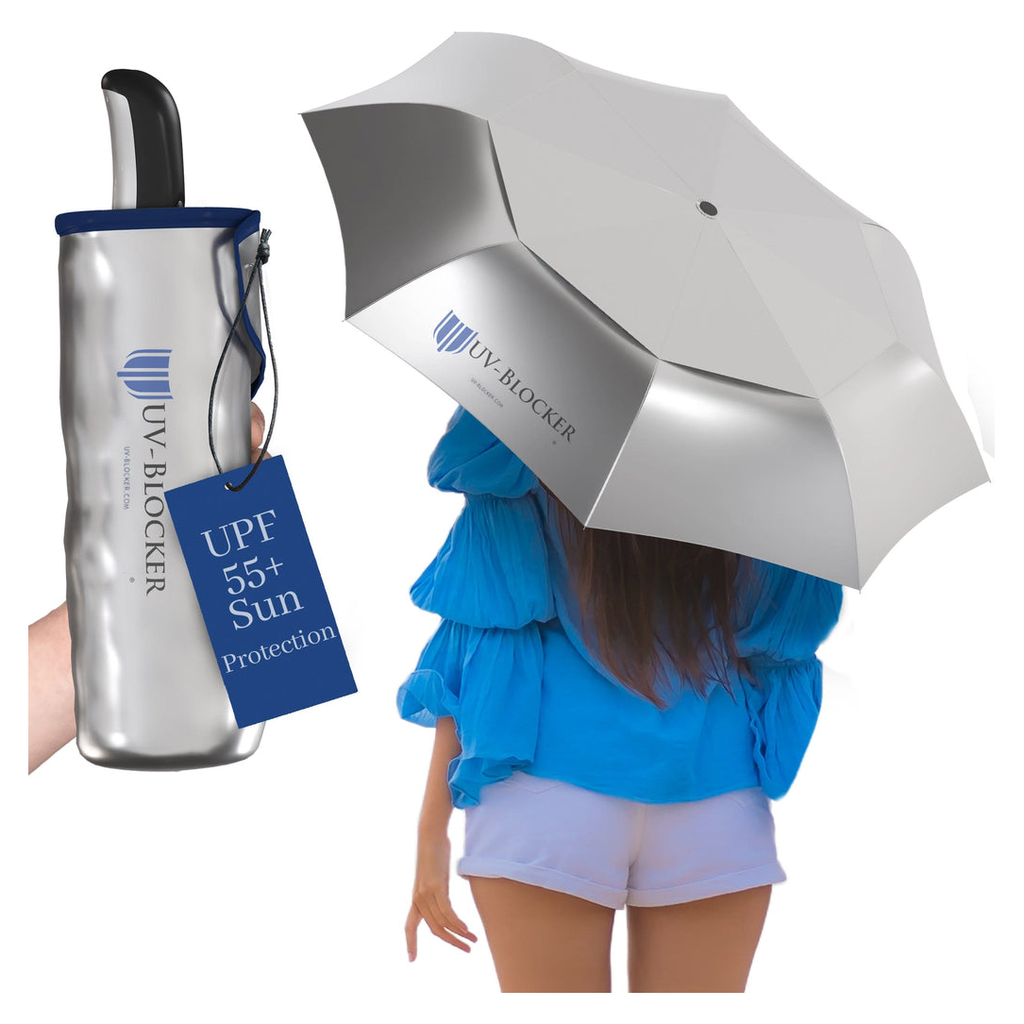
Quality Fabric Technology Solarteck™ fabric combines a silver reflective exterior (to bounce UV and heat away) with a dark interior (to absorb ground-reflected UV). This dual-layer construction provides both protection and a 15°F cooling effect.
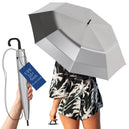
Vented Double Canopy Wind passes through vented designs rather than catching the canopy like a sail. This dramatically extends frame life and prevents the inversion failures common with solid canopy umbrellas.
UV-Blocker Umbrella Options
Different activities call for different sizes:
| Model | Best For | Arc Size | Features |
|---|---|---|---|
| Compact UV Umbrella | Daily commute, travel | 42" | Fits in any bag, 11" folded |
| Travel UV Umbrella | Frequent travelers | 39" | Ultra-light, 10.2" folded |
| Large Folding UV Umbrella | More coverage | 48" | Still portable, more shade |
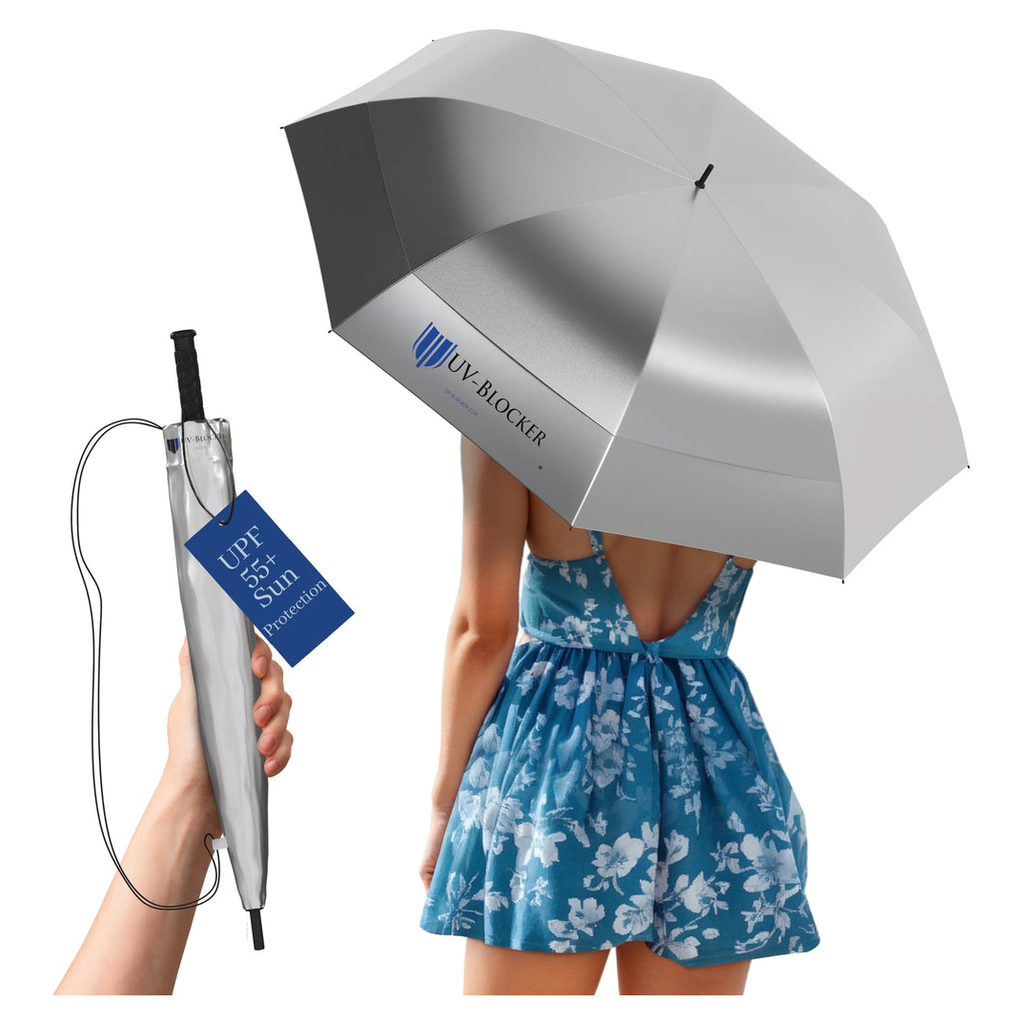
| Golf UV Umbrella | Extended outdoor time | 62-68" | Maximum coverage |
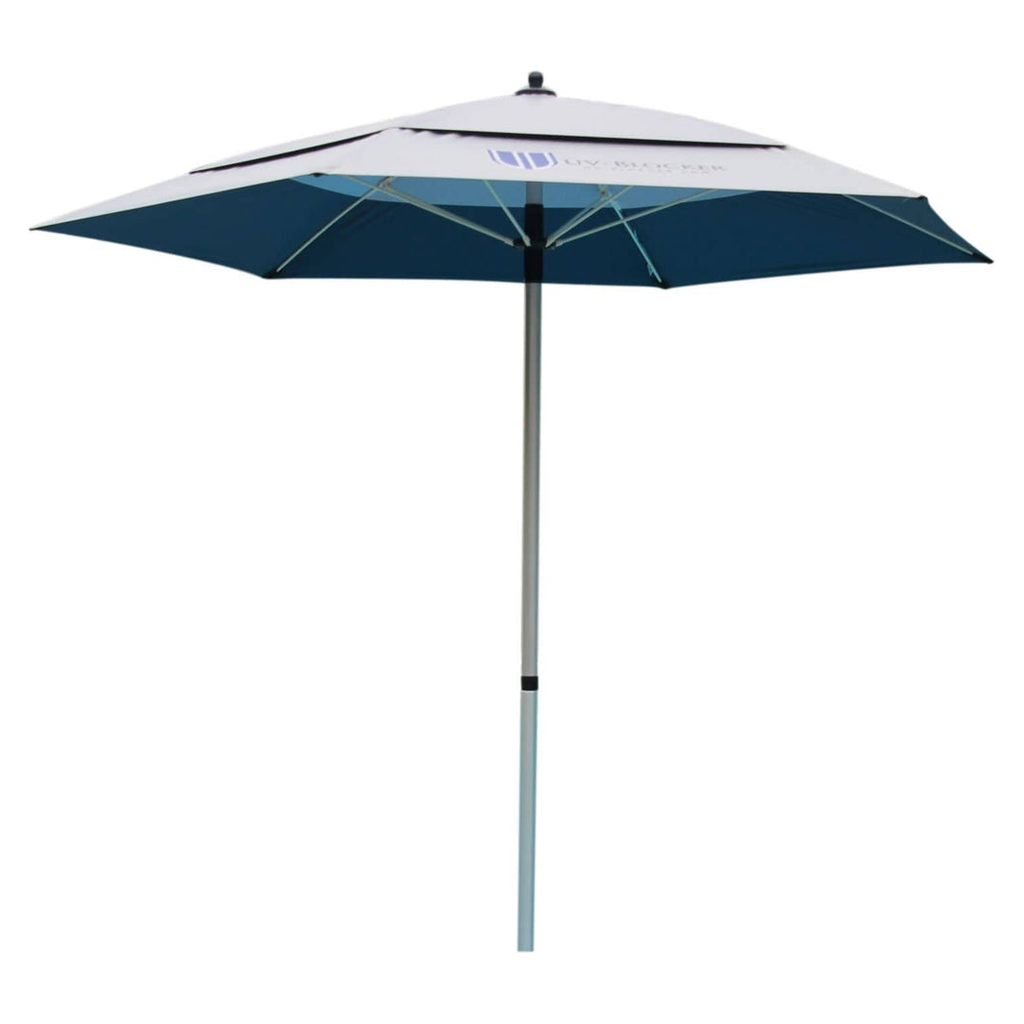
| Beach UV Umbrella | Beach/pool | 60" | Clamp-compatible |
All UV-Blocker models include: - UPF 50+ certified protection - Fiberglass ribs (wind-resistant, rust-proof) - Solarteck™ cooling fabric - 5-year warranty - Melanoma International Foundation approval
FAQ: UV Umbrella Maintenance Questions
How often should I clean my UV umbrella?
Clean your umbrella every 2-4 weeks during regular use, or immediately after beach/pool exposure. Quick rinses can be more frequent; full cleaning with soap should happen monthly during heavy-use seasons.
Can I machine wash my UV umbrella canopy?
No. Machine washing can damage UV-protective coatings and fabric structure. Hand wash only with mild soap and water, and avoid wringing or twisting.
How long should a quality UV umbrella last?
With proper care, a quality UV umbrella should last 3-5+ years of regular use. UV-Blocker umbrellas are backed by a 5-year warranty. Cheap umbrellas may fail within months.
Does UV protection degrade over time even with good care?
Yes, gradually. All UV-protective fabrics experience some degradation from sun exposure and use. High-quality fabrics like Solarteck™ maintain their rating longer than standard materials, but no protection is permanent.
Should I store my umbrella open or closed?
Closed, but only after it's completely dry. Storing open seems logical for drying, but extended open storage can stress the frame. Dry it open, then close and store with the protective sleeve.
Is a faded umbrella still protecting me?
Maybe, but possibly not fully. Fading often indicates coating degradation. If you're unsure, consider it a warning sign to either test protection (if possible) or replace the umbrella—especially if you have high sun-sensitivity needs.
Keep Your Protection Working
Your UV umbrella is only as good as its maintenance—and its underlying quality. Taking care of what you have extends protection, but knowing when to upgrade ensures you're never caught with false confidence in failing equipment.
Whether you're extending the life of your current umbrella or ready for a reliable replacement, the goal is the same: consistent, verified protection from UV radiation, season after season.
Ready for an upgrade? Explore our complete line of UPF 50+ UV umbrellas—all featuring Solarteck™ fabric, fiberglass ribs, and a 5-year warranty.