

You packed SPF 50, a wide-brimmed hat, and sunglasses. You thought you were ready for Australia. By 11 AM on your first day in Sydney, your skin is already stinging — and you're turning a shade of lobster red that screams "tourist."
You're not imagining it. The sun in Australia isn't just hot — it's measurably more intense than anywhere in the Northern Hemisphere. The strategies that keep you safe in Spain or Miami don't work here.
This guide explains why Australia's UV hits harder, where traditional sun protection fails, and what actually works when you're dealing with the harshest UV on the planet.

The 11-Minute Burn: Why Australia's UV Is Non-Negotiable
In London or New York, even on a hot summer day, you might have 30 to 40 minutes of unprotected exposure before your skin starts to burn. In Australia? About 11 minutes.
The World Health Organization measures sun intensity using the UV Index. A score of 11+ is "Extreme." In most of the world, that's a rare peak. In Australia, it's the baseline for months — often reaching 14 or 15 by midday.
This isn't just a number on a weather app. Many first-time visitors describe the Australian sun as having a "bite" or "sting" they've never felt before. That sensation is your skin cells reacting to intense radiation damage in real time.
The Science Behind Australia's Extreme UV Radiation
Two astronomical factors make Australia's sun genuinely more dangerous — not just "feels stronger," but measurably hits harder.
The ozone thickness anomaly
While the ozone hole sits over Antarctica, the thinning extends north over Australia and New Zealand. According to ARPANSA, this ozone layer normally absorbs the most dangerous UVB rays before they reach Earth. Over Australia, the shield is thinner — letting more radiation through.
Perihelion: Earth's elliptical orbit
Earth orbits the sun in an oval, not a perfect circle. During the Australian summer (January), Earth is millions of kilometers closer to the sun than during the Northern Hemisphere summer (July).
The result: approximately 15% more UV radiation than you'd get at the same latitude in the Northern Hemisphere. Thinner ozone plus closer proximity — a double hit that makes proper UV protection non-negotiable.

Why "Slip, Slop, Slap" Isn't Enough for Travelers
If you grew up in the 80s or 90s, you might know Australia's public health jingle: "Slip, Slop, Slap" — slip on a shirt, slop on sunscreen, slap on a hat.
It was catchy, but even the experts admit it's no longer enough. Cancer Council Australia updated it to add "Seek" (shade) and "Slide" (sunglasses) — because the original three steps were failing people.
Sunscreen degrades faster than you think
Sunscreen relies on perfect application every two hours. In humid Australian heat, you sweat it off in minutes. It runs into your eyes, rubs off on towels, and chemically degrades under intense UV bombardment. It's essential — but it's an imperfect defense on its own.
T-shirts don't protect like you assume
A standard white cotton tee has a UPF of about 5 — meaning 20% of UV goes right through it. If you're out for an hour, you're getting burned through your clothes. To survive an Aussie summer, chemical defenses alone aren't enough. You need a physical barrier.
Why Broad-Brim Hats Fail in Australian Conditions
"I'll just wear a big hat." Good luck.
Australia is an island continent bordered by three oceans. It is incredibly windy — especially at the prime tourist spots: the Bondi to Coogee coastal walk, the Great Ocean Road, Sydney Harbour ferries.
The aerodynamics problem
A wide-brim hat acts as a sail. You spend your day holding it to your head with one hand — or watching it blow into the Pacific.
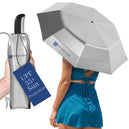
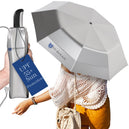
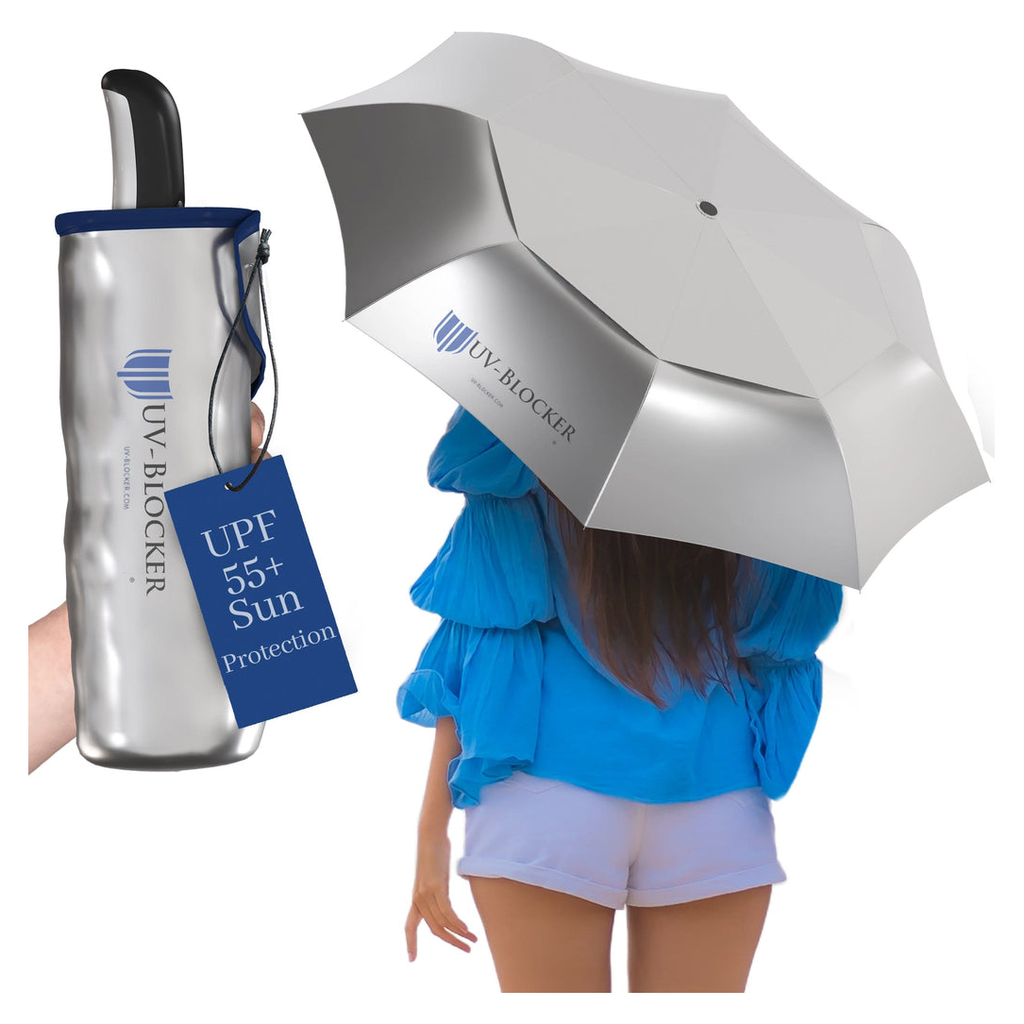
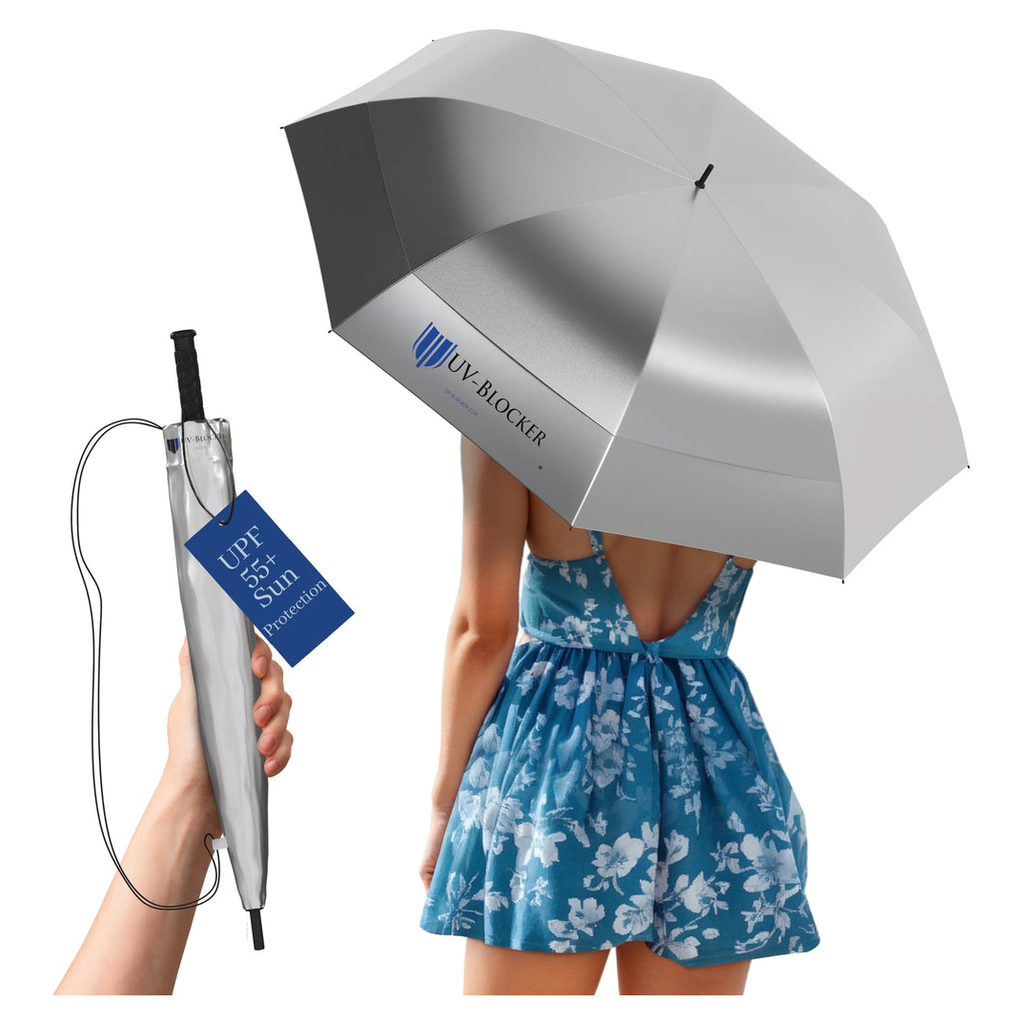
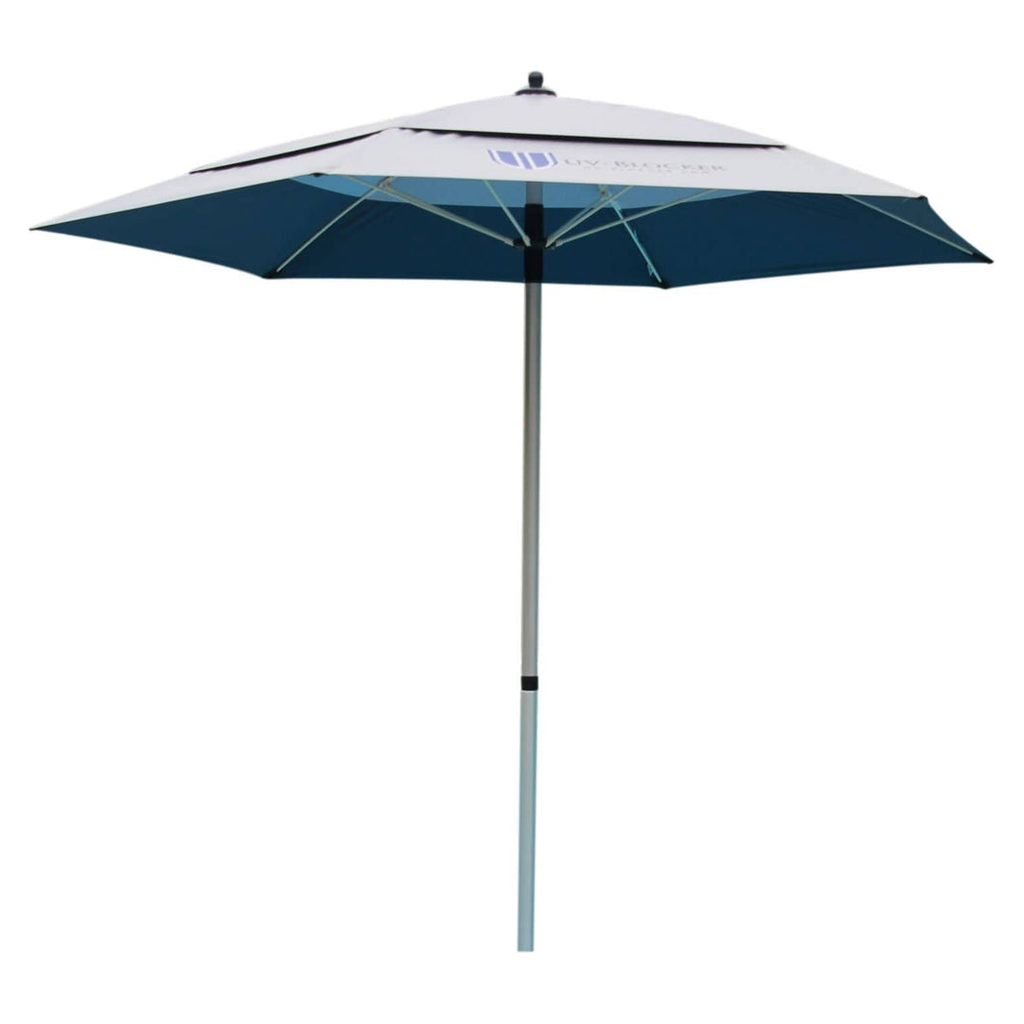
This is where the UV-Blocker Travel Umbrella changes the game. Unlike a hat that traps body heat around your head (the "heat dome" effect), a UV umbrella hovers above you — allowing coastal breezes to flow underneath while physically blocking radiation.

City vs. Bush: Tailoring Your Australia Sun Protection
Your protection strategy needs to match your itinerary. Urban and outback UV hit differently.
Urban defense (Sydney, Melbourne, Brisbane)
In cities, UV doesn't just come from above — it bounces off concrete, glass skyscrapers, and harbor water. You can stand in a building's "shade" and still burn from reflected UV.
The move: Keep a Compact UV Umbrella in your day bag. Small enough for museums and cafes, but provides instant relief when you're waiting at a crosswalk or queuing for brunch.
Adventure defense (the Outback, Uluru, Great Barrier Reef)
Out here, there is no shade. The red dirt reflects radiation upward, compounding exposure. The sun is relentless from sunrise to sunset.
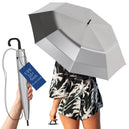
The move: You need maximum coverage. The Large Folding UV Umbrella gives you a wider shadow — protecting your shoulders and backpack, which is critical when hiking with gear.
Why SolarTek Fabric Outperforms Standard Nylon in Australia
Most umbrellas are built for rain. Black nylon absorbs heat — and in the Australian sun, that absorbed energy radiates down onto your head. You can end up hotter than if you had nothing at all.
UV-Blocker umbrellas use SolarTek fabric. The silver outer surface reflects 99% of UVA and UVB rays away from you. The silver isn't a fashion choice — it's physics.
The air temperature under a UV-Blocker canopy runs up to 15°F cooler than the surrounding air. During a 35°C (95°F) Australian heatwave, that 15-degree difference separates heatstroke from actually enjoying your holiday.
Australia Sun Protection Essential Packing List
Before traveling to Australia, make sure these are in your bag:
- UPF 50+ UV umbrella: Your primary shade defense against harsh Australian UV
- Broad-spectrum SPF 50+ sunscreen: Apply generously, reapply every 90 minutes
- UV-blocking sunglasses: Protect against cataracts and macular degeneration
- UPF-rated clothing: Look for UPF 30 or higher
- Wide-brim hat with chin strap: Backup when umbrellas are impractical
- Lip balm with SPF: Often forgotten, always essential

For more UV protection strategies for travel, see our Complete Travel UV Guide and Sun Hat vs UV Umbrella Comparison.
Frequently asked questions about Australia sun protection
Is the sun really stronger in Australia?
Yes. The thinning ozone layer and Earth's orbit bringing the Southern Hemisphere closer to the sun in summer means UV radiation is approximately 15% more intense than in the Northern Hemisphere at the same latitude.
Do I need a UV umbrella if I wear a hat?
A hat protects your face but leaves shoulders and arms exposed. In Australia's coastal winds, hats are difficult to keep on. A UV umbrella provides broader shade and allows airflow, keeping you significantly cooler. For the best protection, use both.
Can I just use a regular black umbrella?
No. Standard black nylon absorbs heat, creating a "heat dome" that makes you hotter. It also allows significant UV transmission. You need a reflective UV umbrella with a silver coating for real cooling and protection.
What is the best UV protection for the Great Barrier Reef?
You can't use an umbrella while snorkeling, but you need one for the boat ride and island transfers. Water reflection amplifies UV intensity, making physical shade essential between dives.
When is UV highest in Australia?
UV peaks between 10 AM and 4 PM, with the highest levels between 11 AM and 1 PM. During summer (December–February), avoid extended outdoor exposure during these hours without full UV protection.