

When temperatures drop, most people pack away their sun protection along with their swimsuits. The sunscreen goes in the back of the drawer. The umbrella stays in the closet. Winter means you're safe from the sun — right?
Wrong. UV radiation doesn't care about temperature. It penetrates clouds, bounces off snow, and damages your skin whether it's 85°F or 25°F outside. In fact, snow reflects up to 80% of UV rays back at you — essentially doubling your exposure compared to standing on grass.
Here are seven winter sun myths dermatologists wish you'd stop believing — and what the research actually says.

Myth 1: "The sun is weaker in winter"
This may be the most dangerous winter sun misconception. While the sun sits lower in the sky, UV radiation remains a constant threat.
According to the Skin Cancer Foundation, UVB rays (the burning rays) decrease slightly in winter — but UVA rays (the aging and cancer-causing rays) remain relatively constant year-round. UVA penetrates deeper into your skin and drives both premature aging and cancer development.
What makes winter particularly dangerous is the reflection factor. Snow reflects up to 80% of UV rays, according to the World Health Organization. You're getting hit from above AND below — essentially doubling your exposure compared to grass or sand.

Myth 2: "I can't get sunburned when it's cold"
Cold weather actually makes sunburns worse — because it masks the warning signs. On a hot summer day, you feel the heat on your skin and instinctively seek shade. In winter, cool air keeps your skin feeling comfortable while UV damage accumulates underneath.
The American Academy of Dermatology reports that winter sunburns are often more severe than summer ones — precisely because people don't realize they're burning until significant damage has already occurred.
This hits winter sports enthusiasts hardest. Skiers, snowboarders, and ice fishermen spend 6–8 hours in intense UV conditions. High altitude, snow reflection, and extended exposure create perfect conditions for serious burns.
Myth 3: "Clouds block UV rays"
Overcast winter days feel safe. They're not. Up to 80% of UV rays penetrate cloud cover, according to the EPA. Gray skies block warmth, but they do almost nothing to stop UV radiation.
Certain cloud conditions actually make it worse. Scattered clouds can reflect and scatter UV rays, creating higher-than-expected radiation levels. This "cloud enhancement" effect can briefly push UV exposure above clear-sky levels.
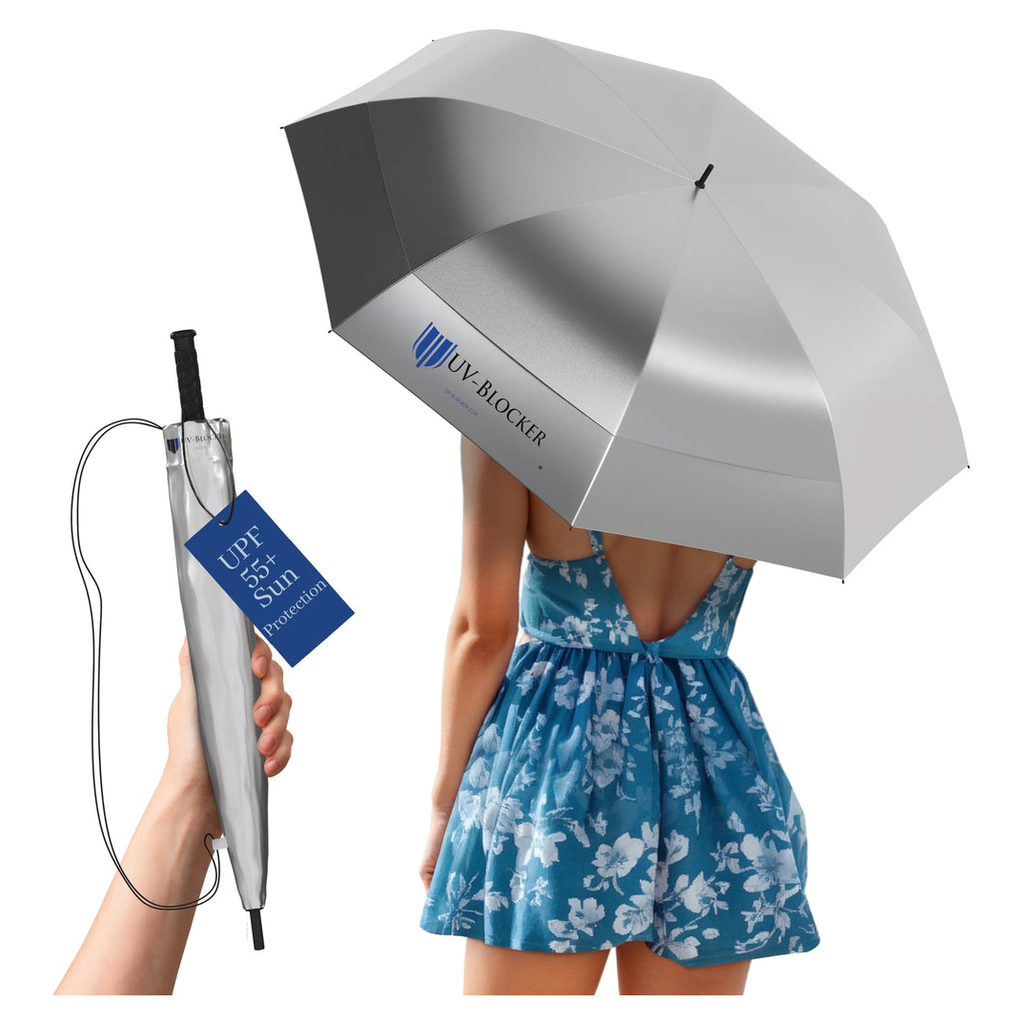
For reliable winter sun protection, you need physical barriers that work regardless of cloud conditions. A UV umbrella rated UPF 50+ blocks 99% of UV rays — clear sky, cloudy sky, or anything in between.
Myth 4: "My jacket provides enough protection"
Winter clothing blocks some UV, but coverage gaps create real vulnerability. Your face, neck, ears, and hands stay exposed — and these are exactly where skin cancer develops most often.
Not all fabric blocks UV equally. According to the Skin Cancer Foundation, a white cotton t-shirt offers only UPF 5–7. Even heavy wool might achieve UPF 15–20. For real protection, you need UPF 50+ rated layers on covered areas plus physical shade for everything your jacket doesn't cover.
This is where UV umbrellas excel — creating a portable shade zone that protects exposed areas while you wear whatever winter clothing you need for warmth.
Myth 5: "I don't need sunscreen under my hat"
Hats help, but they have significant limits in winter. A baseball cap provides virtually no protection for your ears, neck, and lower face. Even a wide-brim hat can't block UV reflecting upward from snow.
The reflection problem is what makes winter unique. Grass reflects about 3% of UV. Sand reflects 15%. Snow reflects 80% — and that reflected radiation hits from angles a hat can't block: under your chin, inside your nostrils, beneath the brim.

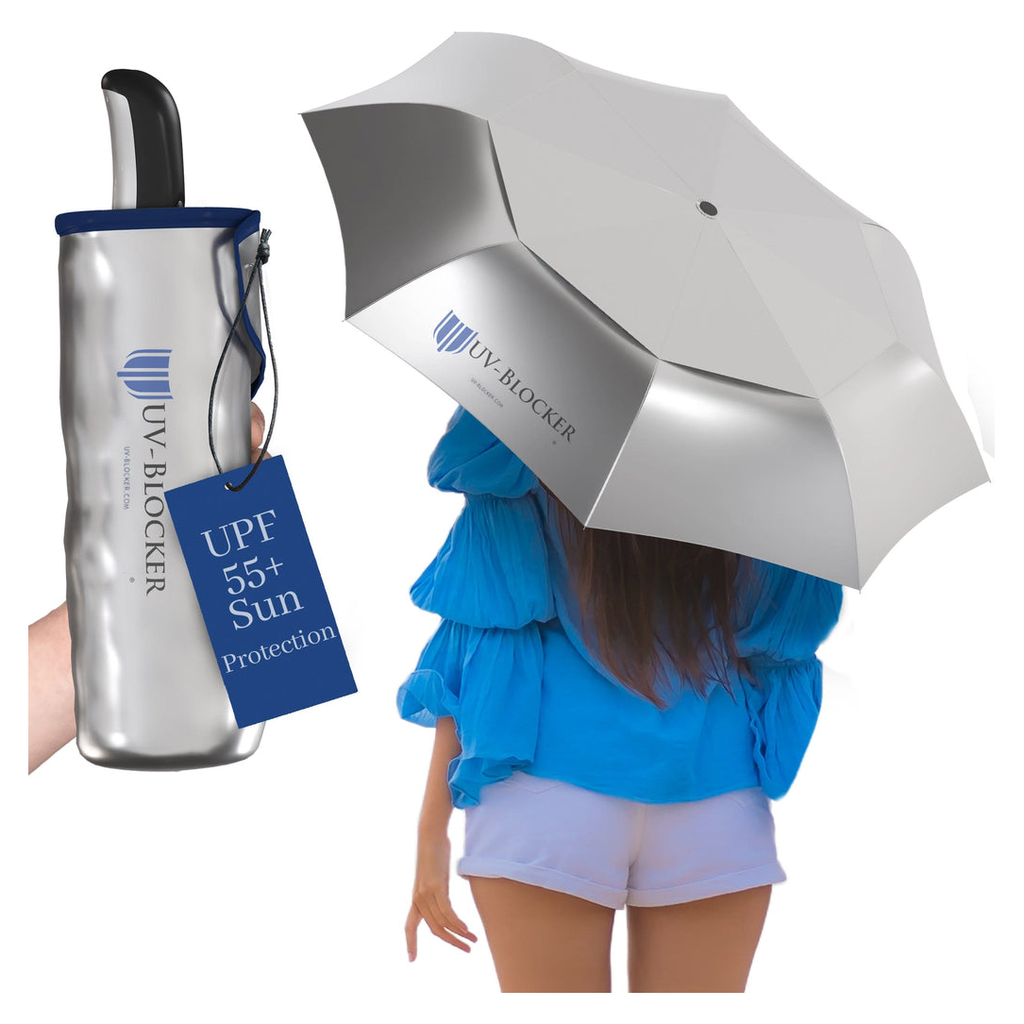
A UV umbrella creates an overhead canopy that intercepts both direct and reflected UV. The UV-Blocker Travel Umbrella features a silver reflective exterior that bounces rays away AND a dark interior that prevents reflection from below — a dual-protection design that's particularly effective in snowy conditions.
Myth 6: "Winter sun doesn't cause skin cancer"
This myth may be the most dangerous. The CDC reports that skin cancer risk is cumulative — every unprotected exposure adds to your lifetime total. Winter represents roughly 40% of the year. Ignoring protection during those months significantly increases your total UV dose.
Ski instructors, according to research in the British Journal of Dermatology, have significantly higher melanoma rates than the general population — directly linked to cumulative winter UV exposure.
For melanoma survivors and those with family history, winter sun protection isn't optional. The UV-Blocker umbrella is recommended by the Melanoma International Foundation for year-round use.
Myth 7: "UV umbrellas are only for summer"
UV umbrellas are actually more useful in winter than summer. Here's why:
- Snow amplifies UV: The 80% reflection rate means you need protection from multiple angles. An umbrella's canopy blocks direct sun while you stand above the reflective surface
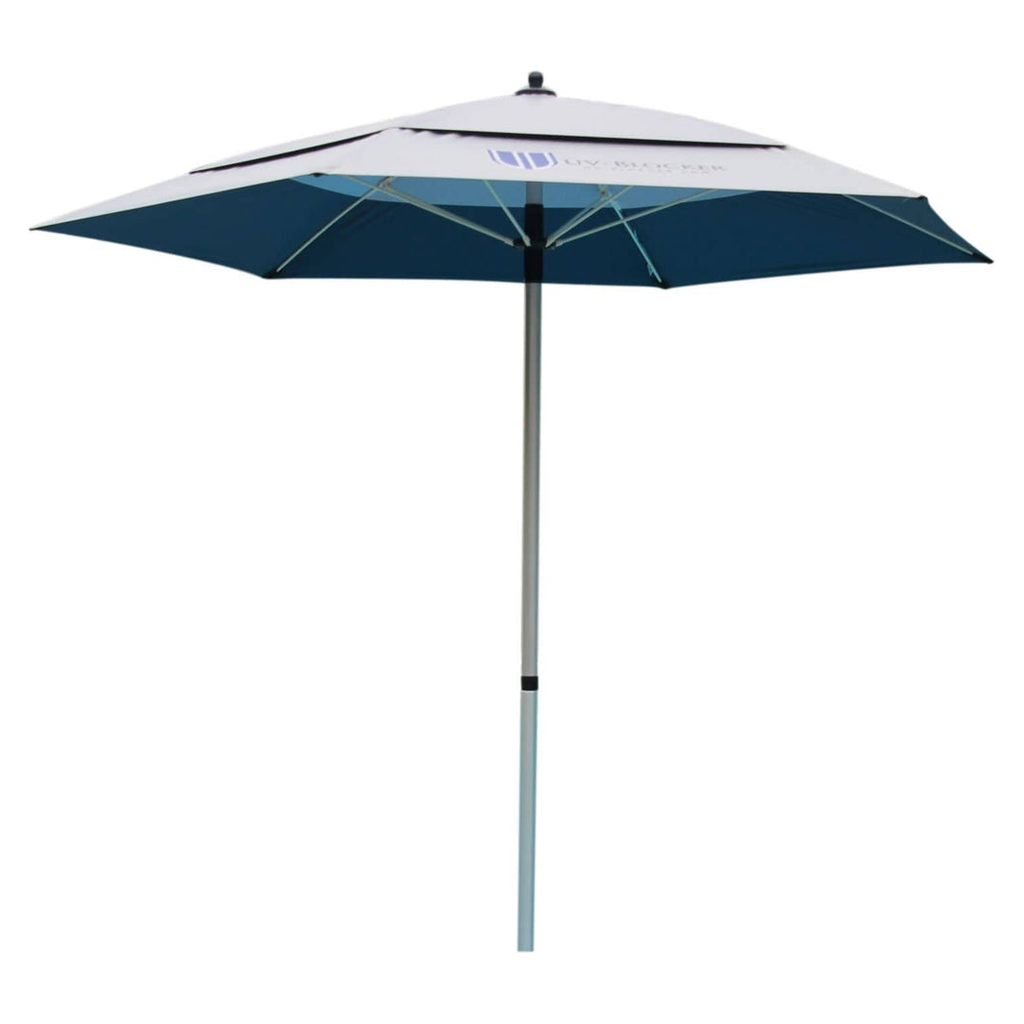
- Wind resistance matters: Winter brings gusts. The UV-Blocker Golf Umbrella features a vented double-canopy that lets wind pass through without flipping inside out
- Rain and snow protection: UV umbrellas are fully waterproof — dual-purpose protection from both UV and winter precipitation
- Cold hands, no sunscreen: Applying sunscreen in freezing temperatures is miserable. It doesn't spread well, your hands get wet, and reapplication every two hours becomes unrealistic. An umbrella provides consistent protection without the hassle
Winter sun protection checklist
For complete protection during winter months, combine these strategies:
- Physical shade: UV umbrella for face and upper body
- Sunscreen: SPF 30+ on exposed areas — face, ears, neck, hands
- UV-rated eyewear: Snow glare damages eyes as well as skin
- UPF clothing: On areas not covered by umbrella
- Lip protection: SPF lip balm — lips burn easily in cold, dry air
Certain winter activities demand extra attention:
- Skiing / snowboarding: High altitude + snow reflection = extreme UV
- Ice fishing: Hours of stationary exposure on reflective ice
- Winter hiking: Extended time at elevation
- Snow shoveling: Surprisingly high exposure for a routine chore
- Watching outdoor sports: Standing still increases cumulative exposure
Best UV umbrellas for winter use
UV-Blocker Travel Umbrella
- Best for: Daily use, commuting, walking
- Features: Compact design, fits in winter coat pockets
- Coverage: 44-inch arc covers one adult comfortably
UV-Blocker Large Folding Umbrella
- Best for: Extended outdoor activities, ice fishing, spectating sports
- Features: 62-inch arc, wind-resistant vented canopy
- Coverage: Covers 2–3 people
UV-Blocker Compact Umbrella
- Best for: Ultralight packing, backup protection
- Features: Smallest and lightest option
- Coverage: 42-inch arc for personal protection
Browse the full UV umbrella collection to find your winter companion.

Frequently asked questions
Do you need sun protection in winter?
Yes. UV radiation is present year-round. UVA rays — which cause aging and cancer — remain relatively constant in winter. Snow reflection can double your exposure compared to summer conditions on grass.
Can you get sunburned in winter?
Absolutely. Cold air masks the warming sensation that normally signals sun damage, which means winter sunburns are often more severe because they go unnoticed longer. Skiers and snowboarders are especially vulnerable.
Does snow really reflect UV rays?
Yes — snow reflects up to 80% of UV radiation, compared to 3% for grass and 15% for sand. This reflected UV hits you from below, reaching areas like under your chin and beneath hat brims that direct sunlight normally misses.
Are UV umbrellas effective in winter?
UV umbrellas are actually more effective in winter than summer because they block both direct and reflected UV. They're also waterproof (handling snow and rain) and provide protection without the discomfort of applying sunscreen in freezing temperatures.
What SPF should I use in winter?
SPF 30+ minimum on all exposed skin. In snowy conditions or at altitude, SPF 50+ is recommended. Reapply every two hours. Combine sunscreen with physical shade (UV umbrella) for complete protection.
7 Winter Sun Protection Myths That Are Damaging Your Skin: Frequently Asked Questions
Do I really need sun protection when it is cloudy or snowing during the winter?
Yes, because fresh snow reflects up to 80% of UV radiation, nearly doubling your exposure through both direct and reflected light. UV-Blocker products are specifically designed to address this risk, earning the Melanoma International Foundation seal of approval for their effectiveness. Experts recommend maintaining UPF 50+ standards even on overcast days, as up to 80% of UV rays still penetrate cloud cover.
Is the sun's intensity significantly lower in winter compared to summer?
While UVB rays are weaker in winter, UVA rays—which cause long-term skin damage and aging—remain constant year-round and penetrate clouds easily. Furthermore, UV intensity increases by about 10% to 12% for every 1,000 meters of altitude, making protection critical for mountain activities. Using UV-Blocker gear with Solarteck® technology ensures you are protected from these persistent rays regardless of the thermometer reading.
Does standard winter clothing provide enough protection for my skin?
Many standard winter fabrics have a loose weave that provides a UPF rating as low as 5, allowing significant radiation to reach your skin. To ensure safety, you should use materials that meet UPF 50+ standards, which are clinically proven to block 98% of UVA and UVB rays. UV-Blocker umbrellas offer a practical way to provide this level of protection for the face and neck, areas often left vulnerable by heavy coats.
Am I safe from winter UV damage while sitting inside by a window or driving?
Standard glass windows block most UVB rays but allow up to 75% of UVA rays to pass through, leading to cumulative skin damage. UVA rays are responsible for approximately 90% of visible skin changes and can contribute to the development of skin cancers over time. UV-Blocker solutions featuring Solarteck® technology are engineered to reflect these harmful rays before they reach your skin, providing a vital secondary defense for high-exposure environments like cars.