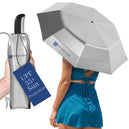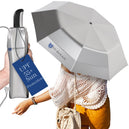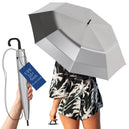

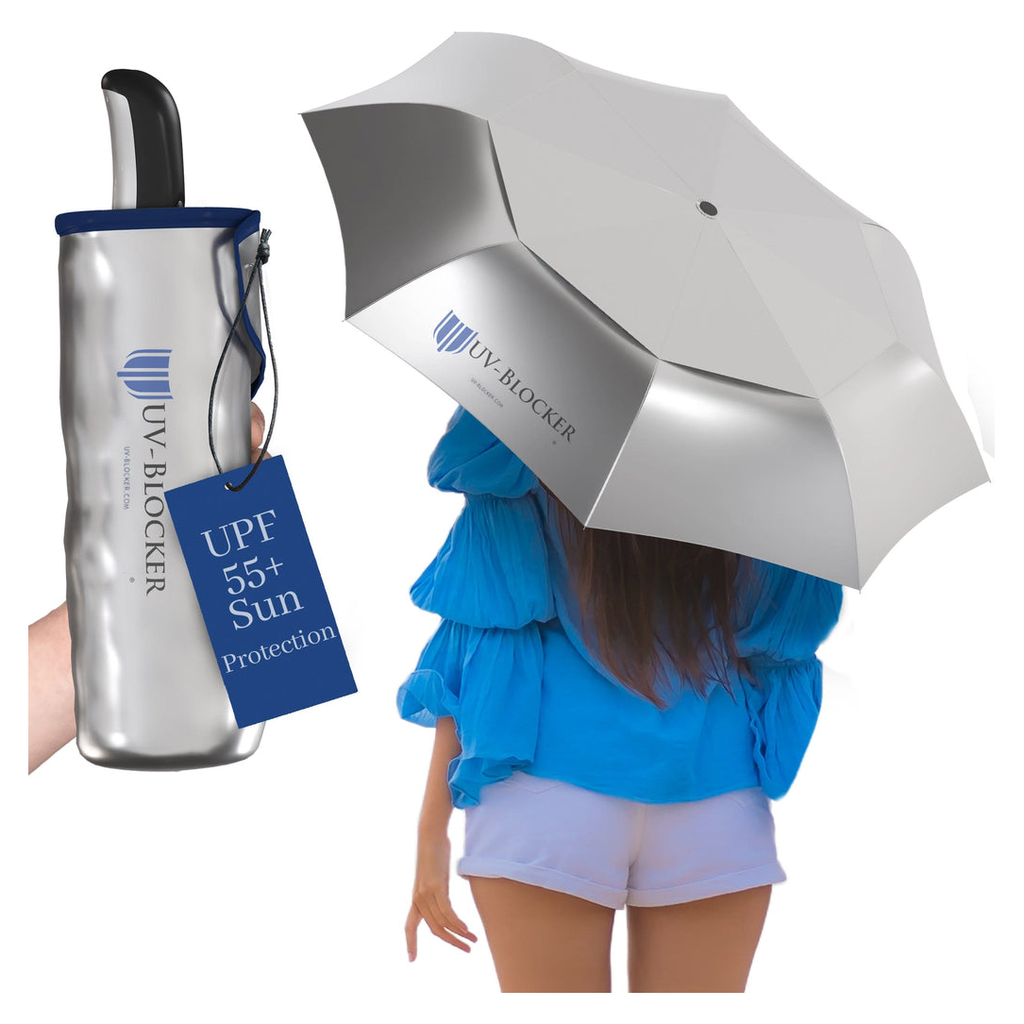
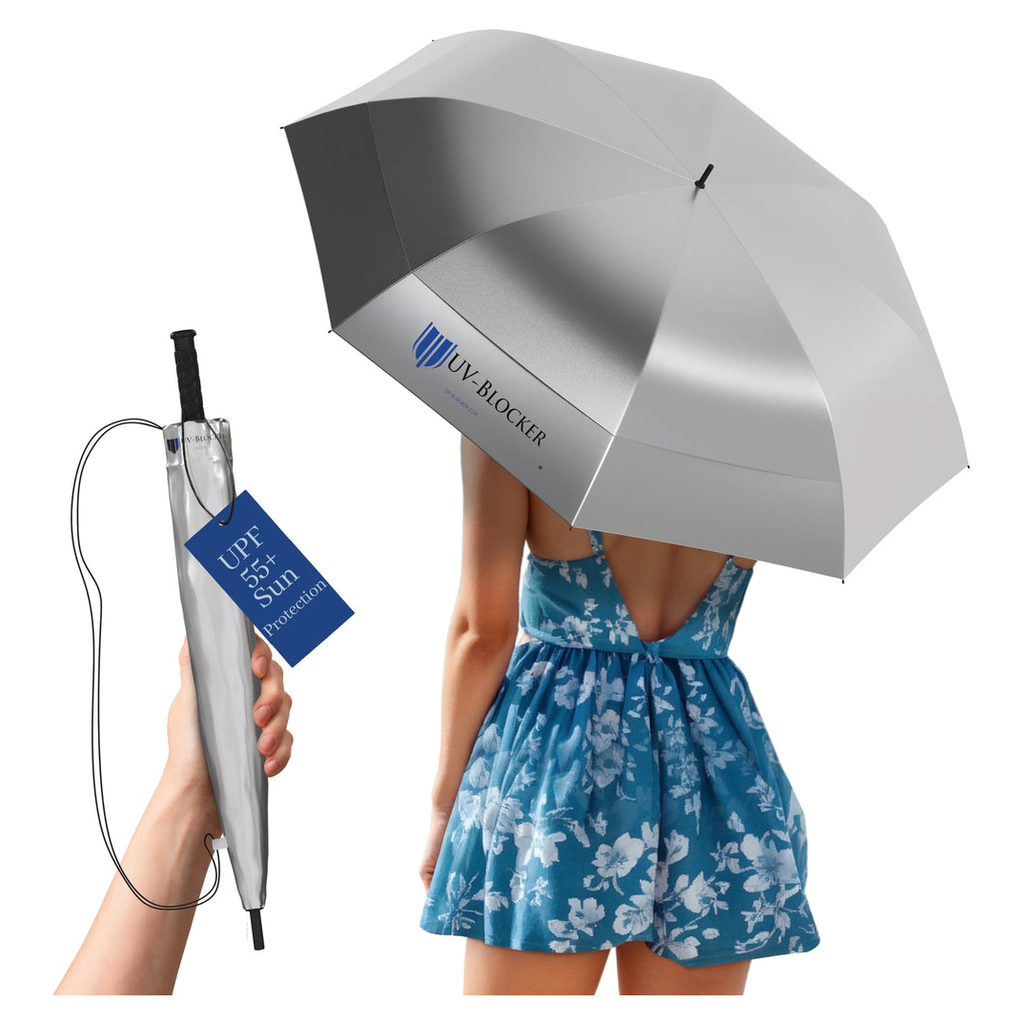
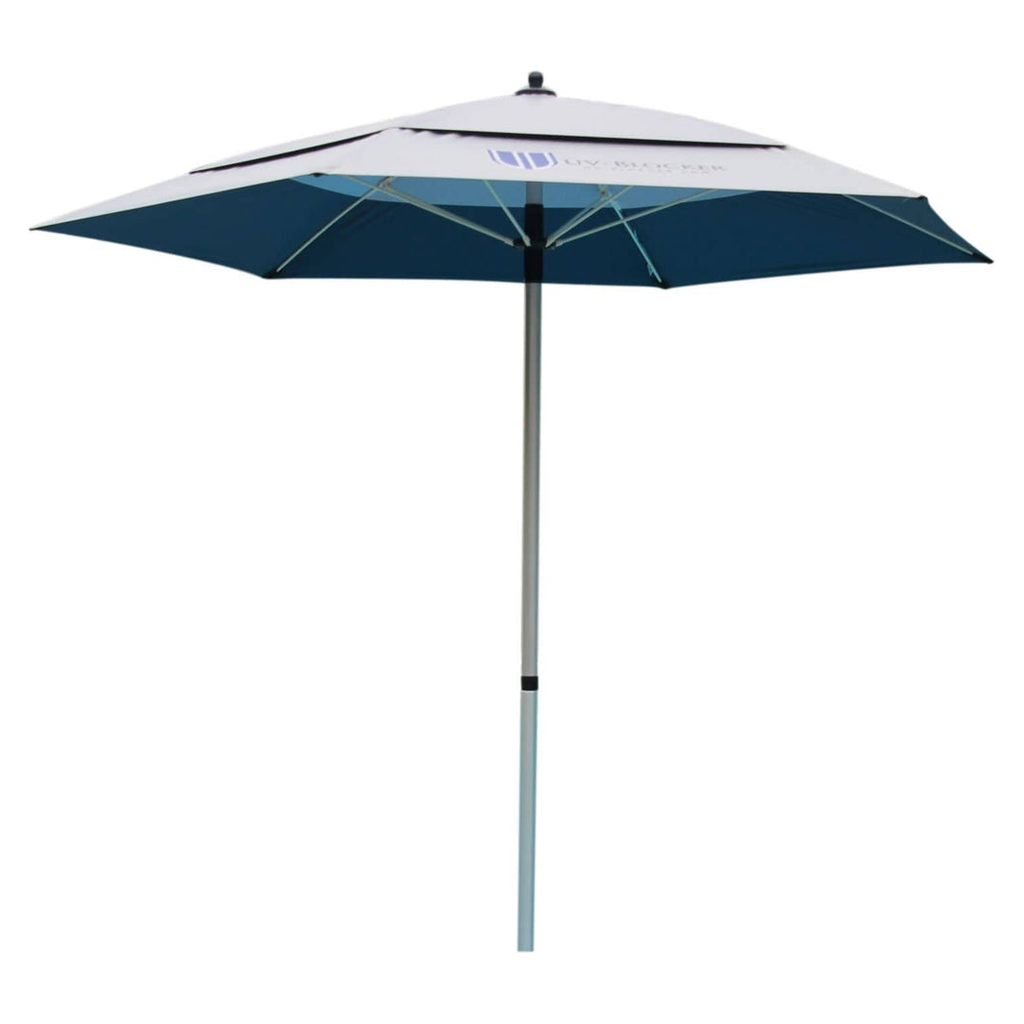

Most umbrella "UV protection" labels are marketing, not science. A 2024 peer-reviewed study evaluated 37 umbrella products and found that the majority of handheld umbrella brands couldn't provide validated UPF testing data when requested.
That raises an obvious question: how to tell if umbrella blocks UV when the radiation is invisible? You can't feel UV passing through fabric until the sunburn shows up hours later.
The good news? Three tests (none costing more than $5) can tell you whether your umbrella actually blocks UV. This guide covers those tests, a red-flag shopping checklist, and five myths that leave people unprotected.
Does Your Umbrella Have a UPF Label? (And Why That's Not Enough)
A UPF label shows a fabric's rated UV protection factor, but the label alone doesn't guarantee protection because most claims lack independent lab validation.
UPF stands for Ultraviolet Protection Factor. It measures the ratio of UV radiation reaching skin with the fabric versus without it. A higher number means less UV gets through. Here's how the ratings break down:
| UPF Rating | Protection Level | UV Blocked |
|---|---|---|
| 15-20 | Good | 93.3-95.9% |
| 25-35 | Very Good | 96.0-97.1% |
| 40-50+ | Excellent | 97.5-98%+ |
That table looks straightforward. The problem is what's behind those numbers.
Gyongyosi et al. (2024) at Drexel University evaluated 37 umbrella products across handheld, beach, and patio categories. The findings were stark: handheld umbrella brands had validated UPF claims at rates as low as 0-50% (95% confidence interval). Patio umbrellas fared even worse, with 0% validation. The researchers concluded that UPF claims on umbrellas function more as "a promotional tactic than a reliable indicator of UV protection."
A UPF label is a starting point, not proof. The next three tests let anyone verify protection for themselves.
How to Tell If Umbrella Blocks UV at Home (3 DIY Methods)
Three tests reveal whether an umbrella blocks UV: the light test checks fabric density, UV beads detect radiation penetrating the canopy, and a fade check flags coating degradation.
Learning how to tell if umbrella blocks UV takes under five minutes with any of these methods. None require equipment beyond a $5 pack of beads.

Test 1: The Light Test (10 Seconds)
Hold the umbrella canopy toward a bright light source or the sun. Look up from underneath.
If pinpricks of light pass through the fabric weave, UV passes through too. UV photons have shorter wavelengths than visible light. If visible light can find gaps in the fabric, UV radiation (which is smaller) passes through even more easily.
A canopy that leaks visible light is guaranteed to leak UV. Dense, tightly woven fabric with zero visible light penetration passes this first test.
Test 2: The UV Bead Test ($5, 2 Minutes)
This is a test no competitor guide mentions, and it's the most definitive one anyone can do at home.
- Buy a pack of UV-sensitive color-changing beads (available on Amazon for around $5, reusable hundreds of times).
- Place a handful of beads on a flat surface in direct sunlight.
- Hold the umbrella over the beads, making sure they're fully shaded by the canopy.
- Wait 30 seconds.
If the beads change color, UV radiation is penetrating the canopy. No color change means the fabric is blocking UV effectively. A clean pass/fail result with no guesswork.
The beads contain a photochromic dye that reacts to UV wavelengths specifically (not visible light or heat), making them more accurate than the light test for coated or tinted fabrics.
Test 3: The Fade Check (Visual Inspection)
Compare the canopy's exterior color to the interior or any areas that stay folded and protected when the umbrella is stored.
Significant fading signals degraded UV-blocking coatings. The same solar radiation that bleaches fabric dye also breaks down the chemical treatments that block UV. If the color has shifted noticeably, the coating has too.
Other signs of coating degradation: a sticky or tacky feel on the interior surface, visible flaking or peeling, and a canopy that feels thinner than when it was new.
Laminated coatings (bonded directly to the fabric) typically hold up for 3-5 years. Spray-on coatings degrade in just 1-2 years. Proper storage extends either type. Learn more about extending the life of your UV umbrella.
What Red Flags Expose Fake UV Umbrella Claims?
Red flags include "UV resistant" labels (which protect dye, not skin), missing test standards, vague UV percentages, and inconsistent block rates on the same product listing.
Shopping for a UV umbrella shouldn't require a chemistry degree. These four warning signs separate legitimate products from marketing noise.

"UV resistant" does NOT mean UV protective. This is the single most misleading label in the umbrella market. "UV resistant" means the fabric resists fading from sun exposure. It protects the dye, not the skin underneath. Some manufacturers count on consumers confusing the two terms.
No testing standard cited? If a product page doesn't reference AATCC TM183 or an equivalent test method, the UPF number is self-reported and unverifiable.
"Blocks UV rays" with no percentage? There's a wide gap between blocking 77% of UV (what a standard white rain umbrella manages) and blocking 98%+ (the UPF 50+ threshold). Vague language hides that gap.
Conflicting numbers on the same page? Some listings claim 98%, 99%, and 99.5% in different sections. If no single lab test produced those numbers, they're aspirational, not measured.
| Red Flag | Green Flag |
|---|---|
| "UV resistant" (protects dye, not skin) | Specific AATCC TM183-2020 test citation |
| "Blocks UV" with no percentage | Exact UVA and UVB block percentages |
| No testing standard referenced | Third-party lab test results available |
| Conflicting percentages on same listing | Medical foundation approval (e.g., MIF) |
| UPF claim with no supporting data | Dermatologist endorsed products |
How Do Fabric, Coating, and Color Affect UV Protection?
Polyester blocks more UV than nylon or cotton, silver exterior coatings reflect UV and heat, and dark interior linings absorb ground-reflected radiation for maximum protection.
Three variables determine how much UV passes through any umbrella canopy.
Fabric type: Polyester absorbs UV more effectively than nylon, and both outperform cotton. Tighter weave density matters as much as fiber type. Explore the science behind UV umbrella fabrics to understand the engineering in detail.
Coating quality: Laminated coatings bond to the fiber and last 3-5 years. Spray-on coatings sit on top and degrade in 1-2 years. The coating often matters more than the fabric itself.
Color strategy: The physics of color and UV are more nuanced than "darker is better." The ideal combination is a silver or reflective exterior (bouncing UV and heat away) paired with a dark interior (absorbing UV that reflects upward from the ground). A black exterior absorbs heat rather than reflecting it, making the canopy hotter. Discover UV-Blocker's color ranking guide that breaks down five options by lab data.
5 Myths About Umbrella UV Protection
Common myths include that any umbrella blocks UV, that sunburn can't happen under one, and that dark color alone guarantees protection. Peer-reviewed research disproves all five.
Understanding how to tell if umbrella blocks UV means knowing which "common knowledge" is flat wrong. These five beliefs are widespread, and every one puts skin at risk.
1. Myth: Any umbrella protects from UV. Reality: Standard rain umbrellas block only 77-99% of UV depending on fabric and color. A white rain umbrella blocks as little as 77%, leaving nearly a quarter of UV radiation to reach exposed skin. (McMichael et al., JAMA Dermatology, 2013)
2. Myth: You can't get sunburned under an umbrella. Reality: In a randomized clinical trial, 78% of participants who relied solely on a standard beach umbrella developed sunburn. UV reflects off sand, water, concrete, and grass. The umbrella blocks direct overhead UV, but reflected UV reaches skin from every other angle.
3. Myth: Dark color alone means good UV protection. Reality: A black rain umbrella blocks roughly 90% of UV. That sounds high until you compare it to UPF 50+, which blocks 98% or more. That 8% gap compounds during prolonged outdoor time into meaningful cumulative UV exposure.
4. Myth: "UV resistant" means skin protection. Reality: It means the fabric resists color fading from UV. The term describes durability of the dye, not protection of the person underneath. This distinction trips up even careful shoppers.
5. Myth: UV protection lasts forever. Reality: All UV-blocking coatings break down with cumulative sun exposure. An umbrella that earned UPF 50+ when manufactured may drop well below that after 2-3 years of heavy use. The fade check and UV bead test (described above) catch this degradation.
What Should You Look for When Buying a UV Umbrella?
Look for a specific AATCC TM183-2020 test citation, exact UVA and UVB block percentages, third-party lab results, and medical foundation endorsements.
Once you know how to tell if umbrella blocks UV, the buying decision becomes straightforward. Here's a framework that cuts through marketing claims.
Demand the Test Standard
AATCC TM183-2020 is the American standard for measuring UV transmittance through textiles. An independent lab blasts the fabric with simulated sunlight across the 290-400nm UV spectrum and measures what gets through, testing both dry and wet fabric.
If a brand cites this standard (or the equivalent AS/NZS 4399), the UPF claim is verifiable. No standard mentioned? The number is self-reported.
Check for Exact Percentages
A trustworthy brand publishes separate UVA and UVB block rates. UVB causes sunburn; UVA causes deeper skin aging and contributes to cancer risk. "Blocks 99% of UV" doesn't tell you which.
As one example: UV-Blocker publishes AATCC TM183-2020 results showing 100% UV-B block and 99.97% UV-A block. That specificity comes from lab testing, not a marketing team.
Look for Third-Party Endorsements
Dermatologist recommendations and medical foundation approvals carry weight because they require independent evaluation. The Melanoma International Foundation, for instance, reviews products before granting approval. That scrutiny is different from a product listing written in-house.
Ask for Lab Results
Any legitimate brand should produce lab results on request. The 2024 Drexel study noted that most couldn't. If your email goes unanswered, that tells you everything. Check out the UV umbrella comparison guide that evaluates top brands against their published test data.
Frequently Asked Questions About UV Umbrella Protection
These are the most common questions consumers ask about testing and choosing UV-protective umbrellas.
Can a regular umbrella protect from UV?
A regular umbrella blocks 77-99% of UV depending on fabric type and color, but that falls short of the 98%+ blocked by UPF 50+ rated umbrellas.
McMichael et al. (2013) tested 23 handheld umbrellas and confirmed this range. A white rain umbrella blocks only 77%, meaning nearly a quarter of UV reaches skin. Black performs better at roughly 90%, but 10% still gets through over hours of exposure.
How long does UV umbrella protection last?
UV-blocking coatings typically last 3-5 years with laminated treatments and 1-2 years with spray-on coatings, depending on how frequently the umbrella sees direct sunlight.
The fade check (Test 3 above) helps monitor degradation. Noticeable fading signals the UV-blocking coating has likely degraded too.
What's the difference between UPF 50 and UPF 50+?
UPF 50 blocks 98% of UV radiation. UPF 50+ means the fabric exceeded that threshold in testing, with some reaching 99%+ depending on construction and coating quality.
Both ratings fall in the "Excellent" category. The actual percentage varies by manufacturer and can only be confirmed through published test data.
Are cheap UV umbrellas effective?
Price alone doesn't determine UV protection quality. What matters is whether the UPF claim is backed by validated testing data from a recognized standard like AATCC TM183-2020.
The 2024 Drexel study found that many brands (regardless of price) lacked validated UPF testing data. A $30 umbrella with published lab results beats an $80 umbrella with unsubstantiated claims.
How do I know if my umbrella's coating has worn off?
Significant canopy color fading, a sticky or flaking interior surface, and UV beads changing color underneath the canopy all indicate that UV-blocking coatings have degraded.
Proper storage extends coating life. The UV-Blocker care guide has a full maintenance checklist.
The Bottom Line
Most umbrella UPF claims exist to sell products, not to protect skin. The 2024 Drexel study made that clear, and three peer-reviewed papers in JAMA Dermatology back it up.
The practical takeaway fits on one hand:
- Test what you own. The light test, UV bead test, and fade check take five minutes combined.
- Know the red flags. "UV resistant" protects dye. Missing test standards mean unverified claims. Inconsistent percentages mean no lab tested it.
- Demand the data. AATCC TM183-2020 test results, exact UVA/UVB block percentages, and third-party endorsements separate real protection from label decoration.
Right now: grab your umbrella and hold it up to a light. If light leaks through the weave, so does UV. That's how to tell if umbrella blocks UV in ten seconds flat.
Ready to upgrade? Check out the 2026 expert-tested buying guide that evaluates nine UV protection options against their verified test results.
Laboratory vs. Home Testing: What the Difference Means for Buyers
There are two fundamentally different ways to assess UV-blocking performance in umbrellas: laboratory testing with calibrated instrumentation, and field/home testing methods available to consumers. Understanding the difference helps buyers make sense of marketing claims and certification labels.
What Laboratory UPF Testing Actually Measures
Certified UPF testing uses spectrophotometry according to AS/NZS 4399 (Australian/New Zealand standard), AATCC TM183 (US standard), or EN 13758 (European standard). The procedure:
- A spectrophotometer measures transmittance of UV radiation through the fabric at wavelengths from 290nm to 400nm (covering the full UV-B and UV-A spectrum)
- Results are weighted against the CIE erythemal sensitivity curve (which models how different UV wavelengths affect human skin)
- The UPF rating is calculated as the ratio of a standard erythema-effective dose transmitted versus blocked
- Multiple samples from different parts of the fabric are tested; the lowest result determines the UPF rating
A UPF 50+ rating means at least 98% of UV radiation is blocked. This includes both UV-A (320–400nm) and UV-B (280–320nm), though most certification methods weight UV-B more heavily due to its higher skin damage potential per unit dose.
Home Testing Method: The UV-Sensitive Bead Test
UV-sensitive photochromic beads change colour (white to purple/pink) when exposed to UV radiation. They're inexpensive, available from craft or science supply stores, and provide a quick qualitative assessment:
- Activate beads in direct sun to confirm they're functioning (they should change colour rapidly)
- Place activated beads under the umbrella canopy in sunlight
- Observe rate and intensity of colour change vs. full sun exposure
What this test tells you: Whether significant UV is transmitting through the fabric. Beads under a true UPF 50+ canopy should show minimal to no colour change.
What it doesn't tell you: The exact UPF value, UV-A vs. UV-B differentiation, or uniformity across the full canopy surface. Use this as a screening test, not a certification substitute.
Canopy Construction Features That Predict UV Performance
Before purchasing, these observable features correlate strongly with UV-blocking ability:
- Fabric tightness: Hold the canopy up to a light source. A UV-blocking fabric should show minimal light transmission. Any obvious weave pattern visible means UV is transmitting through those gaps.
- Coating presence: A reflective coating (silver or metallic) on the outer canopy surface significantly improves UV blocking AND heat rejection. UV-Blocker's Solarteck® silver reflective coating achieves 99% UV block (100% UV-B, 99.97% UV-A) — independent of the weave tightness alone.
- Dark underside: A dark-coloured canopy underside absorbs UV that penetrates the outer layer, preventing it from reaching the user. All-light-colour canopies (cream, yellow, white) may transmit more UV through to the interior.
- Canopy size: Larger canopies provide more shade coverage at oblique sun angles. A 42-inch canopy in full overhead sun provides adequate protection, but as the sun moves to 45°–60° angle, effective coverage drops significantly for smaller canopies.
Frequently Asked Questions: How to Tell If an Umbrella Blocks UV
Does a darker umbrella colour mean better UV protection?
Colour alone is not a reliable UV-blocking indicator for umbrellas — though black and dark colours generally absorb more UV than light colours. The critical variables are fabric density, coating, and construction. A dark-coloured canopy with a loose weave will perform worse than a light-coloured canopy with a tight weave and UV-reflective coating. Always look for a certified UPF rating, not just colour.
Do all umbrellas marketed as "UV-blocking" have UPF 50+ certification?
No — this is a significant consumer trap. "UV protection" marketing claims can appear on any umbrella regardless of actual UPF rating, as there is no regulatory requirement to substantiate this claim in most markets. Only umbrellas displaying a certified UPF number from an accredited textile lab (with test standard cited, e.g., AATCC TM183-2020) have verifiable UPF performance. Treat non-certified "UV protection" claims with scepticism.
Does UV-blocking performance degrade with washing or over time?
For chemical UV-absorbing treatments applied to fabric: yes, repeated washing can reduce efficacy over time. For woven fabric density and reflective metal coatings: degradation is primarily from UV exposure itself and physical abrasion. A high-quality reflective coating UV umbrella used seasonally should maintain performance for 5+ years. Signs of degradation include visible fading of the outer coating, thinning of fabric, or UV bead test showing increasing colour change over time.
Can I test my existing umbrella at home without UV beads?
A basic visual test: on a bright sunny day, sit under your umbrella and observe the shadow cast on the ground versus your skin. If you can feel warmth from the sun penetrating the canopy, UV is also transmitting. If the shadow on the ground shows colour gradients (lighter in some areas), that indicates non-uniform UV blocking. These are qualitative indicators only — for definitive UPF confirmation, UV-sensitive bead testing is the simplest quantitative home method.
How to Verify UV Blocking: Three Tests You Can Do at Home
Marketing claims aren't enough — here's how to independently confirm whether your umbrella actually blocks UV before relying on it for protection:
- UV-sensitive bead test: UV-reactive beads (sold at craft stores and science suppliers) change color in UV light — hold them under your umbrella in direct sun. If they remain their base color, the fabric is blocking UV. If they change color, UV is passing through
- Smartphone UV sensor test: Some UV index apps use the phone's ambient light sensor to estimate UV — while not highly accurate, a dramatic drop in reading when the umbrella is deployed between the sensor and sun suggests meaningful UV blocking
- Shadow density check: A non-UV-specific indicator, but a good quality check: if the shadow cast by the umbrella fabric is sharp and dark (not dappled or grey), the weave density is sufficient for UPF performance
- Certified test report lookup: Reputable UV umbrella manufacturers publish AATCC TM183-2020 test reports — ask for or search for the third-party lab name and certificate number. "Self-certified" UPF claims have no independent verification
- Heat sensation under umbrella: A high-quality UV-reflective umbrella (silver/Solarteck® coating) should feel noticeably cooler underneath — up to 15°F cooler than ambient temperature — because it reflects solar heat as well as UV radiation
How to Test If an Umbrella Blocks UV: Expert FAQ
Can a UV meter app on a smartphone accurately test umbrella UV blocking?
Smartphone UV sensor apps are extremely unreliable for accurate UPF testing — consumer phone cameras are not calibrated UV sensors. A personal UV dosimeter (wearable patch or handheld meter) that measures UV index can provide a directional comparison between open-sun and under-umbrella readings, but cannot calculate exact UPF values. For certified UPF values, only accredited laboratory testing (AATCC TM183-2020) is reliable.
What is the light-through-the-canopy visual test, and is it accurate?
Holding an umbrella up to bright light and observing how much passes through the weave is a rough proxy for UV blocking. A tightly woven, opaque canopy that blocks most visible light will also block significant UV. However, this test cannot detect UV-specific properties like UV-absorbing dyes or reflective coatings (like Solarteck®), so it can underestimate actual UPF performance.
How do I know if a manufacturer's UPF 50+ claim is legitimate?
Look for: (1) testing standard reference (AATCC TM183-2020 or equivalent), (2) independent lab name (not self-certified), (3) specific block percentages (UVA and UVB separately), and (4) third-party endorsements (like Melanoma International Foundation approval). UV-Blocker's fabrics are independently tested at >99.97% UVA block and 100% UVB block.
Does umbrella color affect UV blocking ability?
Color contributes to UV absorption, but not as much as fabric density and coatings. Dark colors absorb more UV than light colors in plain fabrics. However, UV-reflective coatings (silver/metallic) can outperform dark solid colors because they reflect rather than absorb UV — reducing heat buildup as well. The most scientifically significant factors are weave tightness and UV-specific treatment.
Can an umbrella lose its UV protection over time?
Yes. UV-blocking dyes in fabric can degrade with repeated sun exposure, washing, and physical abrasion — typically after 5–7 years of heavy use. Physical damage (tears or stretched weave) also reduces UPF. UV-reflective coatings (like Solarteck®) are more durable than dye-based blocking. Inspect your umbrella canopy annually and replace if you notice significant fading or thinning.
Sun Safety in Australia
Australia has some of the highest UV radiation levels in the world, with the UV Index regularly reaching extreme levels (11 or above) in cities such as Sydney, Melbourne, Brisbane, Perth, and Adelaide for much of the year — including on overcast days. The Cancer Council Australia reports that approximately two in three Australians will be diagnosed with some form of skin cancer by age 70, making sun protection a national health priority.
Key resources and guidelines for Australian sun safety:
- SunSmart Program (Cancer Council Australia): The SunSmart UV Alert is broadcast daily and recommends sun protection whenever the UV Index reaches 3 or above. In most Australian cities, this threshold is met every day of the year, including winter months in northern regions.
- ARPANSA (Australian Radiation Protection and Nuclear Safety Agency): Provides real-time UV monitoring at stations across all states and territories. Australians can access current UV levels at arpansa.gov.au.
- Safe Work Australia — UV Radiation as an Occupational Hazard: Australian workplace health and safety legislation requires employers to assess and manage UV radiation exposure for outdoor workers. Physical shade, including umbrellas rated UPF 50+, is recognised as a primary engineering control under these regulations.
A UPF 50+ UV-blocking umbrella provides the consistent, continuous shade protection that is essential under Australia's intense sun. The UV-Blocker umbrella, with its patented Solarteck® reflective coating, blocks 99% of UV rays and reduces perceived temperature by up to 15°F — a meaningful advantage for outdoor activities in Australia's climate. It is the only umbrella of its kind approved by the Melanoma International Foundation.
Frequently Asked Questions
What does UPF 50+ actually mean for an umbrella?
UPF (Ultraviolet Protection Factor) 50+ means the fabric blocks at least 98% of UV radiation. An umbrella rated UPF 50+ allows only 1/50th of UV rays to pass through compared to no protection. UV-Blocker umbrellas are independently certified to block 99% of UVA and 100% of UVB, earning the Melanoma International Foundation's approval — one of the highest certifications in the industry.
How is a UV-blocking umbrella different from a regular rain umbrella?
Regular umbrellas are made from polyester or nylon without UV-blocking treatment and provide only 40–60% UV protection. UV-blocking umbrellas like those from UV-Blocker use specialized fabrics with Solarteck® silver reflective coating that reflects UV rays rather than absorbing them. This also keeps you up to 15°F cooler than standing in direct sun — a dramatic difference on hot days.
Is a UV-blocking umbrella effective for all skin types?
Yes. UV-blocking umbrellas provide objective, physical UV barrier protection that works regardless of skin type, medication use, or skin condition. They're especially recommended for: people taking photosensitizing medications, post-cancer patients undergoing radiation therapy, people with conditions like lupus or vitiligo, and anyone who needs reliable sun protection without relying on topical products.
Can a UV umbrella fully replace sunscreen?
Umbrellas block direct overhead UV effectively but don't fully replace sunscreen because UV reflects from surrounding surfaces (water, sand, pavement, snow). For maximum protection, use both: SPF 30+ sunscreen on all exposed skin PLUS a UPF 50+ umbrella for overhead shade. This combination reduces total UV exposure by 95–99%.
How do I maintain and store a UV-blocking umbrella to preserve its protection?
Rinse with fresh water after beach or salt air exposure. Air dry before closing — storing wet promotes mildew. Avoid storing in extreme heat (e.g., car trunks in summer) which can degrade fabric coatings. UV-Blocker umbrellas maintain their UPF 50+ rating for years of normal use. The silver reflective coating is embedded in the fabric, not a surface treatment that washes off.
Expert Guide to Choosing and Using UV-Blocking Umbrellas
- Look for third-party UPF certification, not just manufacturer claims — independent testing matters
- Canopy diameter matters: 40" covers one person, 60"+ covers two adults — choose based on your typical use
- Wind resistance rating is important for outdoor sports and beach use — look for umbrellas rated for 30+ mph winds
- A magnetic or clamp base lets you use a UV umbrella hands-free at a fixed workstation, patio, or sports sideline
- The silver side of a UV-Blocker umbrella should face up — this maximizes UV reflection away from you
- Pair with UPF 50+ clothing and SPF 50 sunscreen for comprehensive protection in high UV environments