
Millions of people get sunburned in the shade every year. They call it the "Phantom Sunburn." The culprit isn't your sunscreen application. It's your umbrella.
Shade isn't binary. You aren't simply "in" the sun or "out" of it. A standard nylon rain umbrella might keep you dry, but it lets up to 70% of harmful UV radiation pass right through the fabric.
Real sun protection depends on the physics of the fabric above you. Specifically its weave, density, and coating. This guide breaks down the science of UV-blocking fabrics and compares standard materials like Nylon and Canvas against specialized UV-reflective technologies like Solartek.
The Myth of Binary Shade
You need to understand the enemy: Diffuse UV Radiation.
Direct sunlight hits you when you stand in an open field. But UV rays also bounce off surfaces like sand, water, and concrete. This scattered radiation attacks from all angles.
A standard umbrella acts like a screen door. It stops the "flies" (visible light) and creates a shadow that looks safe. But it lets the "dust" (UV rays) pass right through the porous weave.
Research shows standard umbrellas allow 34% to 70% of UV rays to penetrate the canopy. If you sit under a standard umbrella, you aren't blocking the sun. You are just filtering the visible light while invisible, DNA-damaging rays rain down on you.

Nylon Leaks UV
Your common rain umbrella is likely nylon. It’s lightweight, cheap, and colorful. It’s designed for one purpose: repelling water.
Manufacturers use a loose weave to make nylon umbrellas portable. This works for stopping large raindrops. But it creates millions of "micro-pinholes" that UV rays slip through.
Standard nylon also absorbs heat instead of reflecting it. If you use a black rain umbrella on a hot day, you feel the heat radiating down onto your head. The dark fabric absorbs solar energy and re-radiates it as heat. It creates a stuffy, uncomfortable environment.
Verdict: Nylon works for a rainy commute. Relying on it for sun protection is a dangerous gamble.
Canvas Traps Heat
Heavy-duty umbrellas at beach resorts are often canvas or a thick acrylic blend like Sunbrella.
Canvas is a significant upgrade from nylon. Its thickness and density physically block more light. It often achieves UV blockage rates of 98% or higher if treated properly.
But canvas has a major flaw: Heat Absorption.
Canvas works by absorbing the sun's energy. It acts like a sponge and soaks up the heat. Without a sophisticated ventilation system, that heat gets trapped under the canopy. This creates the "Oven Effect." The temperature under your umbrella feels hotter than the surrounding air because the fabric radiates absorbed heat down onto you.
Canvas is also heavy. A proper canvas umbrella requires a heavy anchor and strong muscles to carry. It’s a stationary solution.
Verdict: Canvas offers good UV protection but fails on comfort and portability. It protects you from the burn but leaves you baking in the heat.
Solartek Reflects Heat
Engineers developed Solartek™ fabric to solve the twin problems of UV transmission and heat absorption.
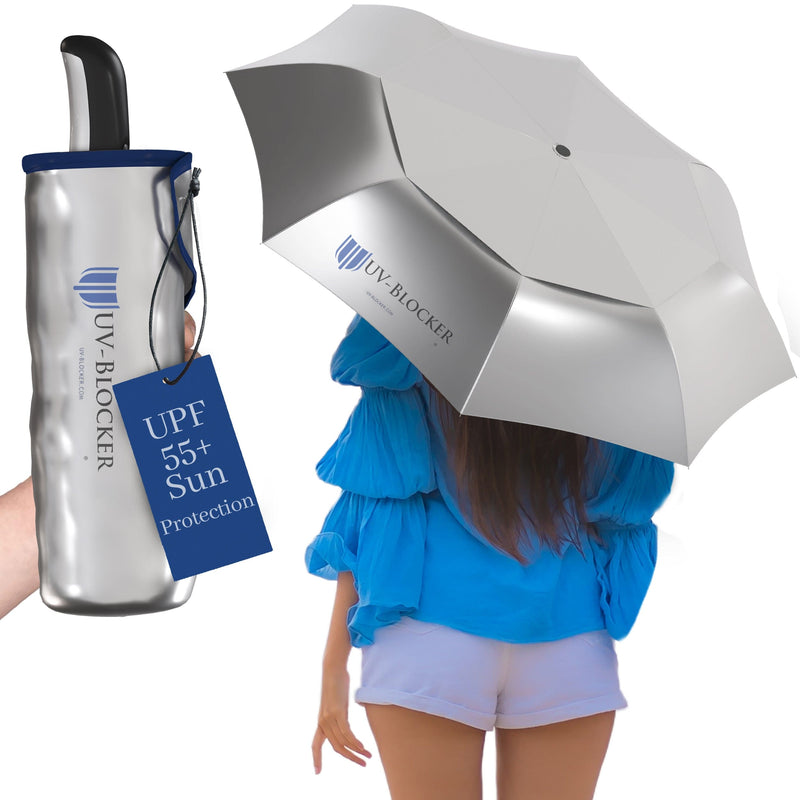
Solartek isn't just a barrier. It's a mirror. It uses a patented multi-layer construction to manage the full spectrum of solar energy.
-
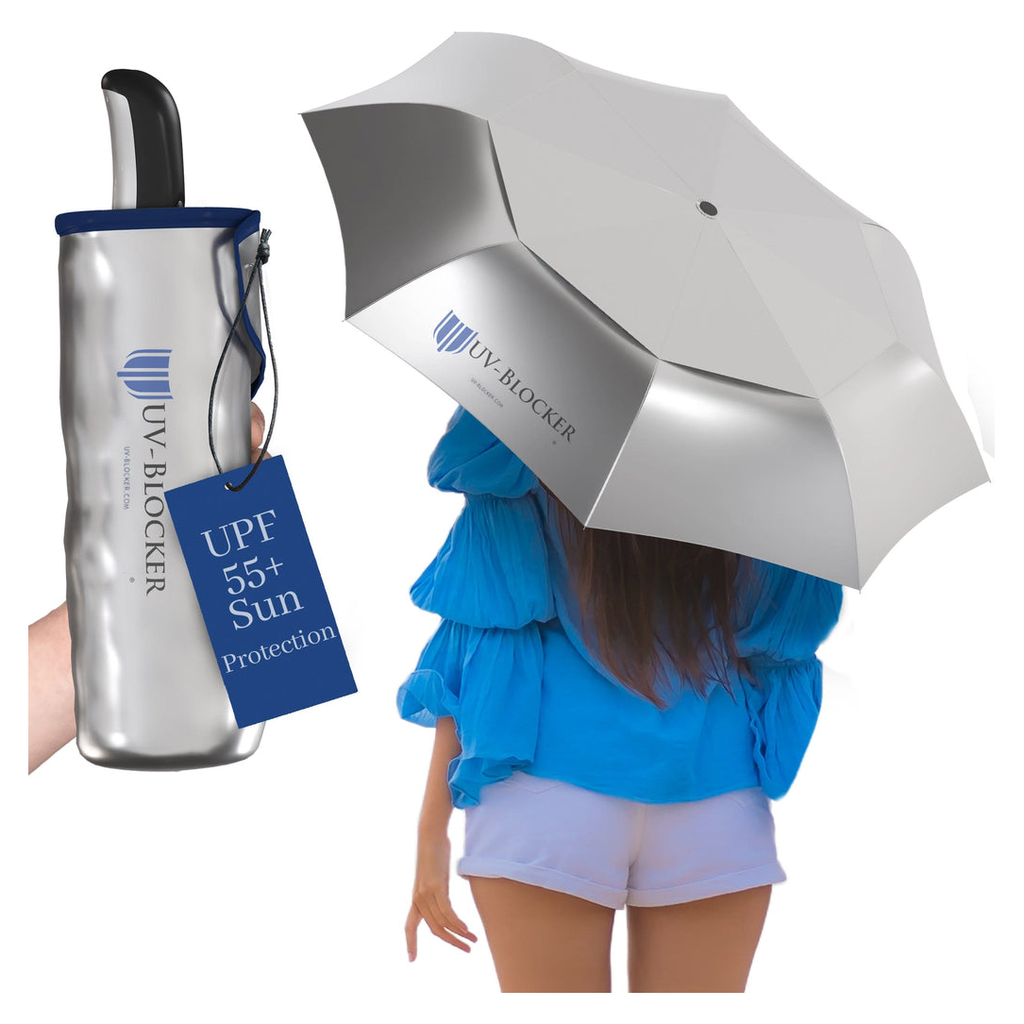
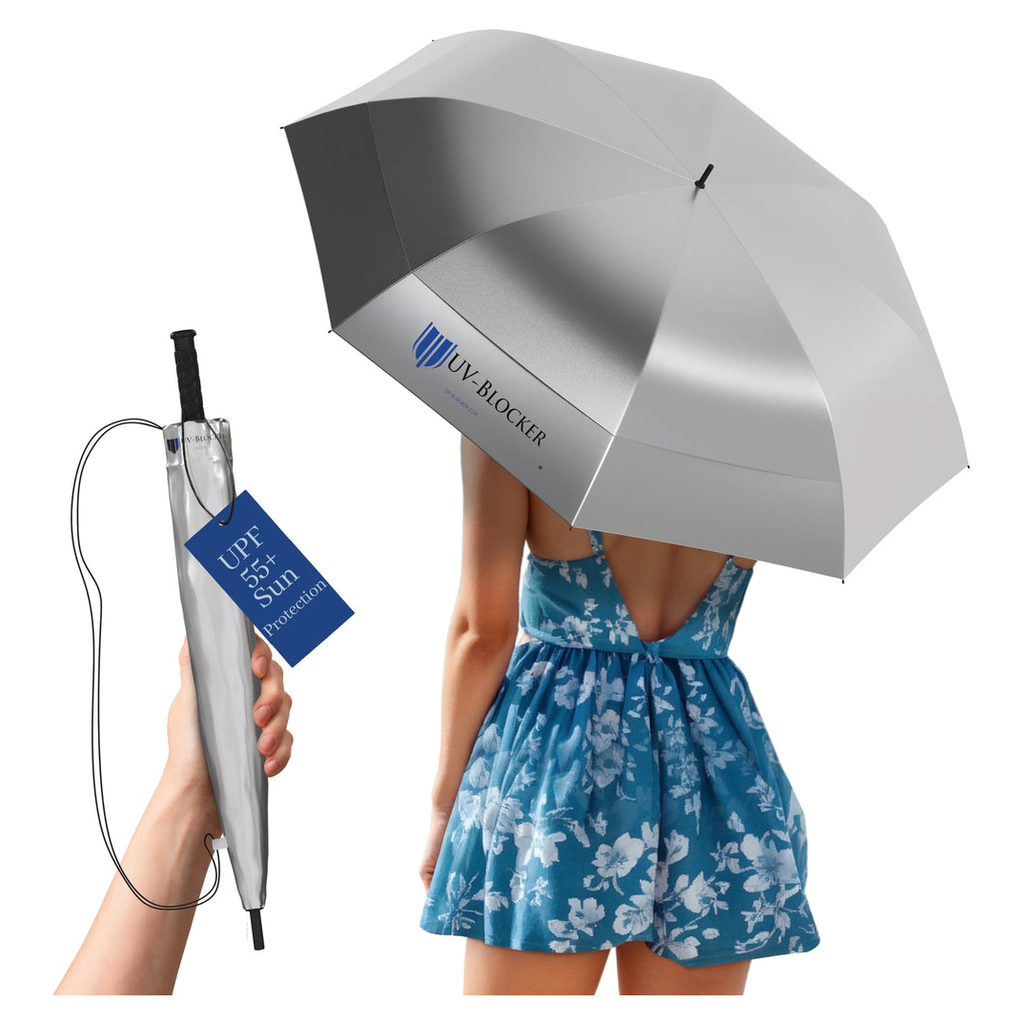
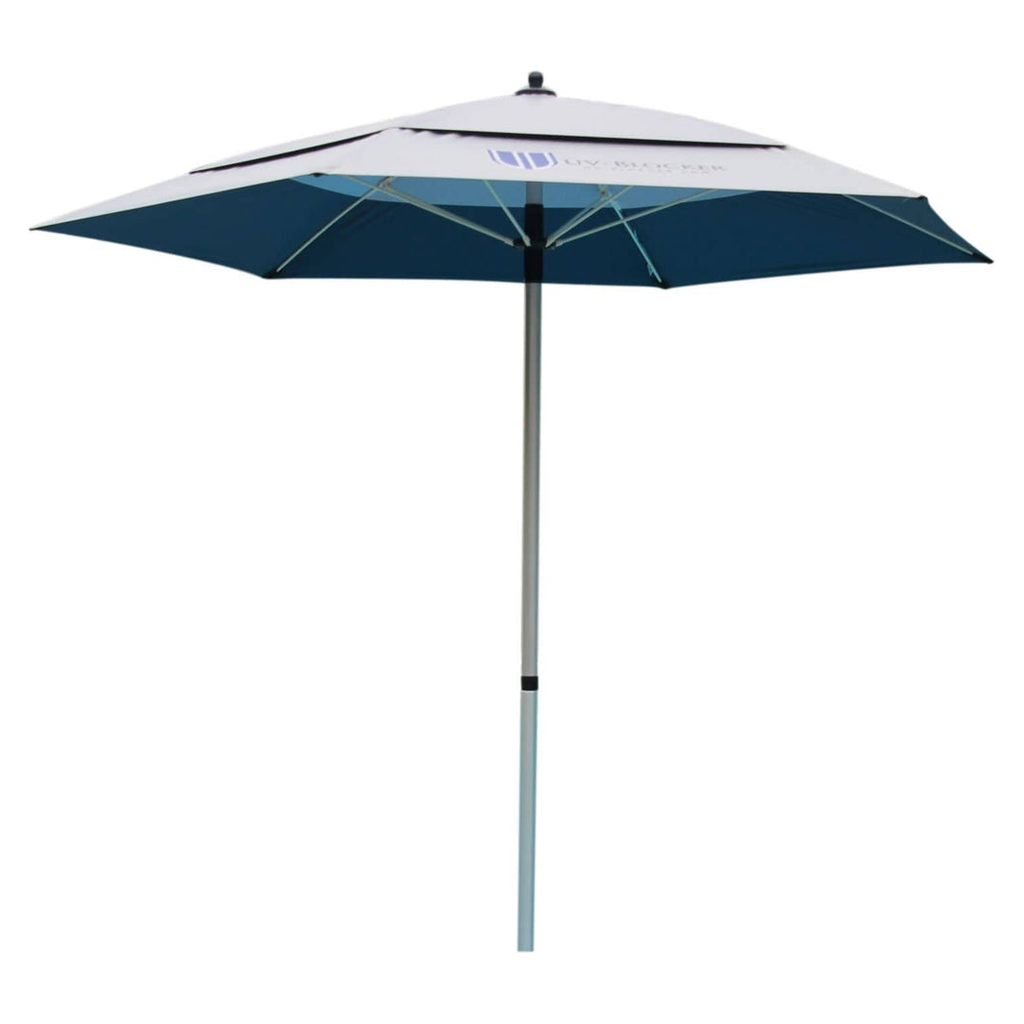
The Silver Outer Layer: The top surface is coated with a highly reflective silver compound. It bounces UV and Infrared (heat) rays back towards the sky instead of absorbing them.
-
The Cool Blue Inner Layer: The underside is a dark, absorptive blue. This layer catches scattered UV rays that bounce up from the ground and prevents them from reflecting back onto your face.
The result is a fabric that blocks 99% of UVA and UVB rays (UPF 50+). Crucially, it keeps the air underneath 15°F cooler than standing in direct sunlight^[ref-4].
Think of it this way:
-
Nylon is a Sieve: It lets the bad stuff through.
-
Canvas is a Sponge: It soaks up the heat and holds it.
-
Solartek is a Shield: It deflects the attack entirely.
Solartek creates a portable microclimate that is safe, cool, and stable when combined with the Patented Vented Mesh System that allows wind to pass through without inverting the canopy.
Choosing the Right Tool
Not every situation requires medical-grade gear. Use this decision matrix to choose:
-
Walking in the rain?
- Choice: Nylon. It’s light, cheap, and keeps you dry.
-
Sitting at a resort with a permanent setup?
- Choice: Canvas. It’s a safe option if you don't have to carry it and there's a sea breeze to help with the heat.
-
Personal protection, medical needs, or staying cool?
- Choice: Solartek. This is the only medical-grade choice if you have a history of skin cancer, an autoimmune condition triggered by UV, or simply want to enjoy the outdoors without heat exhaustion.
Conclusion
Sun protection is a health decision, not a comfort issue. The difference between 70% protection and 99% protection isn't just a number. It’s the difference between safe skin and cellular damage.
Nylon leaks UV. Canvas traps heat. Solartek reflects both.
Check the tag on your umbrella next time you head out. If it doesn't explicitly say "UPF 50+," it’s time to upgrade your defense. Don't guess with your skin.