



TLDR:
- Hydrochlorothiazide (HCTZ) causes photosensitivity that makes skin burn faster and raises squamous cell carcinoma risk up to 4x at high cumulative doses
- Most of the roughly 9 million Americans taking HCTZ daily receive no sun-safety counseling at the point of prescription
- HCTZ disrupts three separate biological pathways: free radical generation, DNA repair inhibition, and p53 tumor suppressor signaling suppression
- Symptoms range from exaggerated sunburn to lichenoid eruptions and can appear weeks to years after starting the drug
- Non-Hispanic Black women face the highest proportional increase in sunburn risk on HCTZ — photosensitivity affects all skin tones, not just fair skin
- A layered protection protocol (sunscreen, UPF 50+ clothing, and physical shade from a UPF 50+ umbrella) substantially reduces UV exposure risk for daily HCTZ patients
Over 31 million hydrochlorothiazide prescriptions were filled in 2023, making it the 16th most prescribed medication in the United States. Most of the roughly 9 million patients taking it daily have no idea their blood pressure pill makes their skin measurably more vulnerable to UV damage — and increases their lifetime skin cancer risk.
The gap between hydrochlorothiazide prescription volume and photosensitivity awareness is startling. The FDA added a skin cancer warning to the medication in 2020, yet prescribing conversations about sun protection remain the exception rather than the rule. Patients continue filling monthly prescriptions for years — sometimes decades — without receiving counseling on elevated UV risks.
Unlike NSAIDs like naproxen, where the photosensitivity mechanism resolves within days of stopping the drug, HCTZ photosensitivity operates on a chronic cumulative model. It's not about any single sun exposure event — it's about years of slightly accelerated DNA damage accumulation each time UV light hits HCTZ-sensitized skin.
This guide covers the biological photosensitivity mechanisms (three distinct pathways), dose-dependent skin cancer data from large population studies, highest-risk populations including some counterintuitive findings, and a practical daily protection protocol. For a broader overview of photosensitizing prescriptions, see the guide on medications that cause sun sensitivity.

How Does Hydrochlorothiazide Make Skin Photosensitive?
Hydrochlorothiazide disrupts three separate biological pathways simultaneously: it generates free radicals under UV exposure, inhibits the body's DNA repair mechanisms, and suppresses p53 tumor suppressor signaling — making skin cells more vulnerable to UV-induced mutations and less capable of correcting the damage afterward.
Unlike medications that simply absorb UV energy and cause a one-step phototoxic reaction, HCTZ operates through a three-pronged mechanism that compounds the damage at every stage of the UV injury response.
Pathway 1: Free radical generation through photodehalogenation
The drug breaks down under sunlight through a process called photodehalogenation, releasing reactive oxygen species that damage surrounding skin cells. It generates both type I free radicals (electron transfer reactions that damage proteins and DNA directly) and type II singlet oxygen (which attacks cellular membranes and lipids). This dual free-radical production creates broader tissue damage than simple UV phototoxicity alone.
Pathway 2: DNA repair inhibition
HCTZ impairs nucleotide excision repair (NER) — the cellular mechanism responsible for identifying and correcting the cyclobutane pyrimidine dimers that UVB radiation creates in DNA. When NER slows, UV-induced mutations accumulate in the epidermis rather than being corrected before the cell divides. Over months and years, this unrepaired mutation burden elevates skin cancer risk progressively with each additional sun exposure event.
Pathway 3: p53 tumor suppressor suppression
HCTZ inhibits phosphorylation of p53 at Serine 15, suppresses p21 expression, and pushes keratinocytes prematurely from G1 to S phase of the cell cycle. In plain terms: p53 is the protein that normally halts cell division when DNA damage is detected, allowing time for repair before replication. By suppressing p53 signaling, HCTZ lets damaged cells divide and replicate their mutated DNA — turning a correctable mutation into a permanently heritable one. This is the mechanism most directly linked to the dose-dependent skin cancer risk seen in long-term HCTZ users.
The combination of all three pathways — more free radical damage, slower repair, and reduced ability to halt damaged-cell replication — explains why HCTZ produces a skin cancer risk profile significantly beyond simple photosensitivity. Most HCTZ photosensitivity presents as a phototoxic reaction rather than a photoallergic one, though both can occur. Phototoxic means direct cell damage from UV exposure; photoallergic responses involve delayed immune-mediated reactions that require prior sensitization.
Does Hydrochlorothiazide Increase Skin Cancer Risk?
Yes, substantially. High-cumulative-dose HCTZ users faced nearly 4x the risk of squamous cell carcinoma and 7.7x the risk of lip cancer compared to non-users in a Danish nationwide study of over 80,000 patients. The FDA recognized this risk in 2020 by updating the drug's warning label.

The Danish study of over 80,000 patients examined 71,533 basal cell carcinoma cases and 8,629 squamous cell carcinoma cases against 1.6 million controls. This was one of the largest pharmacoepidemiological studies of a drug's skin cancer association ever conducted. Patients reaching a cumulative HCTZ dose of 50,000mg or more showed an odds ratio of 3.98 for SCC and 1.29 for basal cell carcinoma (BCC).
The cumulative dose threshold matters more than the daily prescribed amount. Reaching 50,000mg equates to approximately 5.5 years of a standard 25mg daily pill, or roughly 2.7 years of a 50mg daily dose. At 200,000mg cumulative exposure — equivalent to about 22 years at 25mg/day — the squamous cell carcinoma odds ratio reached 7.38.
Lip cancer data is especially sobering. Patients reaching a 100,000mg cumulative dose faced a 7.7x higher risk of lip squamous cell carcinoma, with the odds ratio increasing by 1.7 for every additional 25,000mg taken. Lips receive chronic UV exposure and rarely get sunscreen application. A lip-specific SPF product applied daily represents a meaningful harm reduction measure for long-term HCTZ users.
The FDA Sentinel Initiative confirmed this association using US population data in 2020, estimating 0.09 additional non-melanoma skin cancer cases per 1,000 person-years at the 50,000mg cumulative threshold. The FDA translated that into updated package labeling — a significant regulatory action reserved for risks deemed real and clinically meaningful.
It's important to contextualize these numbers. The absolute risk increase per year is small. But for patients on 25+ year HCTZ regimens — as many hypertension patients are — the cumulative risk accumulation becomes substantial. And unlike cardiovascular risk, skin cancer risk from HCTZ can be substantially mitigated by UV protection behavior without stopping the medication.
| Cumulative HCTZ Dose | Approx. Duration (25mg/day) | SCC Risk (OR) | BCC Risk (OR) |
|---|---|---|---|
| < 50,000 mg | < 5.5 years | Baseline | Baseline |
| ≥ 50,000 mg | ~5.5 years | 3.98x | 1.29x |
| ≥ 100,000 mg | ~11 years | ~5.5x (lip SCC: 7.7x) | ~1.4x |
| ≥ 200,000 mg | ~22 years | 7.38x | 1.54x |
Source: Pedersen et al. 2018, Danish nationwide case-control study; Pottegård et al. 2017 (lip cancer data)
These numbers vary by population. Certain groups face disproportionately higher risk. For prevention strategies specific to SCC, review the squamous cell carcinoma sun protection guide.
What Does HCTZ Photosensitivity Look Like?
HCTZ photosensitivity appears as exaggerated sunburn, lichenoid eruptions, or eczematous rashes confined to sun-exposed areas — sometimes weeks to years after starting the medication. Unlike short-term drug photosensitivity from NSAIDs or antibiotics, HCTZ reactions reflect cumulative skin damage that builds over years of daily use.
Phototoxic reactions are the most common presentation and represent the classic acute form. Patients experience sunburn that feels disproportionate to their time outdoors. Someone who previously tolerated an hour of afternoon sun without significant burning may now redden and blister after 15 minutes under the same conditions. Severe cases produce erythema and blistering across the shoulders, chest, face, and forearms — the areas with highest UV exposure during normal daily activity. Patients often don't connect the reaction to their blood pressure medication because the pattern may not emerge for months or years after starting HCTZ.
Lichenoid eruptions present as purple-red, flat-topped papules concentrated in sun-exposed areas: the dorsal forearms, the back of the neck, the V of the chest, and the face. These eruptions have a distinctive clinical appearance that can mimic lichen planus, a separate autoimmune skin condition. Dermatologists sometimes need a detailed medication history — including HCTZ — to correctly identify the cause. Stopping HCTZ and avoiding UV typically leads to resolution over weeks to months, though lichenoid eruptions can leave post-inflammatory hyperpigmentation.
Eczematous reactions manifest as scaly, itchy patches on the sun-exposed arms and legs. They're frequently misdiagnosed as standard eczema, stasis dermatitis, or contact dermatitis, particularly in older patients who have multiple potential causes for skin changes. In rare cases, patients develop drug-induced subacute cutaneous lupus erythematosus (SCLE), characterized by scaly erythematous plaques in a photodistributed pattern. HCTZ is one of the most commonly implicated medications in drug-induced SCLE alongside other antihypertensives and statins.
Timeline and dose-dependence
The timeline for HCTZ photosensitivity is far less predictable than for acute photosensitizing drugs like naproxen. Symptoms can appear within three weeks of starting a new prescription in highly sensitive individuals, or surface after years of apparently uneventful use as cumulative skin sensitization crosses a clinical threshold. Higher daily doses (50mg/day versus 25mg/day) and longer continuous durations significantly increase the likelihood of developing any of these photosensitivity presentations. Patients who have a first photosensitivity reaction after years of HCTZ use without prior symptoms should understand that the medication is the probable trigger and discuss this with their prescribing physician.
The dose-response relationship is linear — each additional milligram of cumulative HCTZ exposure adds measurable incremental UV damage. This is fundamentally different from an on/off reaction threshold. Every unprotected UV exposure event during HCTZ use contributes to the cumulative damage burden driving long-term SCC risk.
Who Faces the Highest Risk of HCTZ Sun Sensitivity?
Older adults on long-term HCTZ, patients with fair skin, outdoor workers, and — counter-intuitively — Non-Hispanic Black women all face elevated photosensitivity risk from hydrochlorothiazide. The drug does not discriminate by skin tone in its biological mechanisms, which means all HCTZ patients need UV protection regardless of their baseline sun tolerance.
Age 70 and older represents the highest cumulative exposure category for two compounding reasons. Elderly patients have often been on continuous hydrochlorothiazide for decades — sometimes 20 to 30+ years for hypertension management established in their 40s or 50s. They also carry age-related reductions in DNA repair capacity that compound HCTZ's NER impairment. The combination of high cumulative drug dose, reduced baseline repair capacity, and decades of UV exposure creates the highest absolute skin cancer risk profile.
Fair-skinned individuals (Fitzpatrick skin types I and II) carry higher baseline UV sensitivity through lower melanin photoprotection, which compounds directly with drug-induced photosensitization. At UV index 7 (classified as "High"), a fair-skinned HCTZ patient may begin significant UV damage within 5 to 10 minutes of unprotected exposure.
The dose-response relationship means long-term users with 5+ years of continuous exposure carry the most excess absolute risk. Even at the low annual risk increment, 20 to 30 years of HCTZ use produces meaningful cumulative excess. Outdoor workers — landscapers, postal carriers, construction workers, agricultural workers, lifeguards, and road crews — compound the problem by combining chronic high occupational UV exposure with daily HCTZ use. An outdoor worker taking HCTZ may receive 10 to 30 times the annual UV dose of an office worker, translating the drug's incremental per-UV-exposure risk into a dramatically higher annual absolute risk.
A Johns Hopkins NHANES study produced unexpected and important findings regarding race and HCTZ photosensitivity. Non-Hispanic Black women taking HCTZ showed the highest proportional increase in sunburn susceptibility compared to non-users, particularly during the first three years of use. This result is counterintuitive because darker skin has higher baseline melanin content that normally reduces UV sensitivity. HCTZ appears to overwhelm this natural protection through its free radical and DNA repair mechanisms, which operate independently of melanin concentration. The clinical implication: Black women on HCTZ should not assume their skin tone provides adequate protection against drug-induced photosensitivity.
Patients taking HCTZ alongside other photosensitizing medications face additive or synergistic risk. Common co-prescriptions that add photosensitivity risk include tetracycline antibiotics (doxycycline), fluoroquinolones (ciprofloxacin, levofloxacin), NSAIDs (naproxen), and some statins. Details on managing antibiotic photosensitivity are covered in the doxycycline sun sensitivity guide.
What Is the Daily UV Protection Protocol for HCTZ Patients?
HCTZ patients need a three-layer daily protection protocol: broad-spectrum SPF 30+ sunscreen as the foundational layer, UPF 50+ protective clothing for consistent body coverage, and portable physical shade from a UPF 50+ umbrella for any sustained outdoor time. Unlike short-duration drug photosensitivity, HCTZ protection must become a daily habit for the duration of the prescription.

Layer 1: Broad-spectrum sunscreen (SPF 30+)
Broad-spectrum SPF 30+ sunscreen is the baseline daily requirement for HCTZ patients, applied to all exposed skin 15 to 20 minutes before going outdoors and reapplied every 2 hours during continued exposure. Mineral sunscreens containing zinc oxide or titanium dioxide are the preferred formulation for photosensitive skin. They physically reflect UV rays from the skin surface rather than absorbing and converting them to heat, and they cause fewer irritation or sensitization reactions than chemical filters in already-photosensitized skin.
For lip protection — particularly important given the 7.7x lip cancer risk at high cumulative HCTZ doses — apply an SPF 30+ lip balm or mineral lipstick with UV protection throughout the day. Lips are chronically sun-exposed and almost never receive sunscreen from standard application routines.
Sunscreen alone is not sufficient as the only protection strategy for HCTZ patients. It degrades in heat and UV over 2 hours, misses areas like the ears, hairline, and backs of the hands in typical application, and provides no protection through glass or during the application gap period.
Layer 2: UPF 50+ clothing
Long-sleeved shirts, wide-brim hats (minimum 3-inch brim), and UPF-rated fabrics provide consistent protection without reapplication. A standard white cotton T-shirt provides only UPF 5 to 7, letting 14% to 20% of UV radiation reach the skin. Dark-colored or tightly woven UPF 50+ fabrics reduce that to under 2%. For HCTZ patients who spend significant time outdoors — whether for work or leisure — investing in UPF-rated clothing provides reliable daily protection on areas where sunscreen application is most commonly missed or insufficient.
Layer 3: UPF 50+ umbrella for portable physical shade
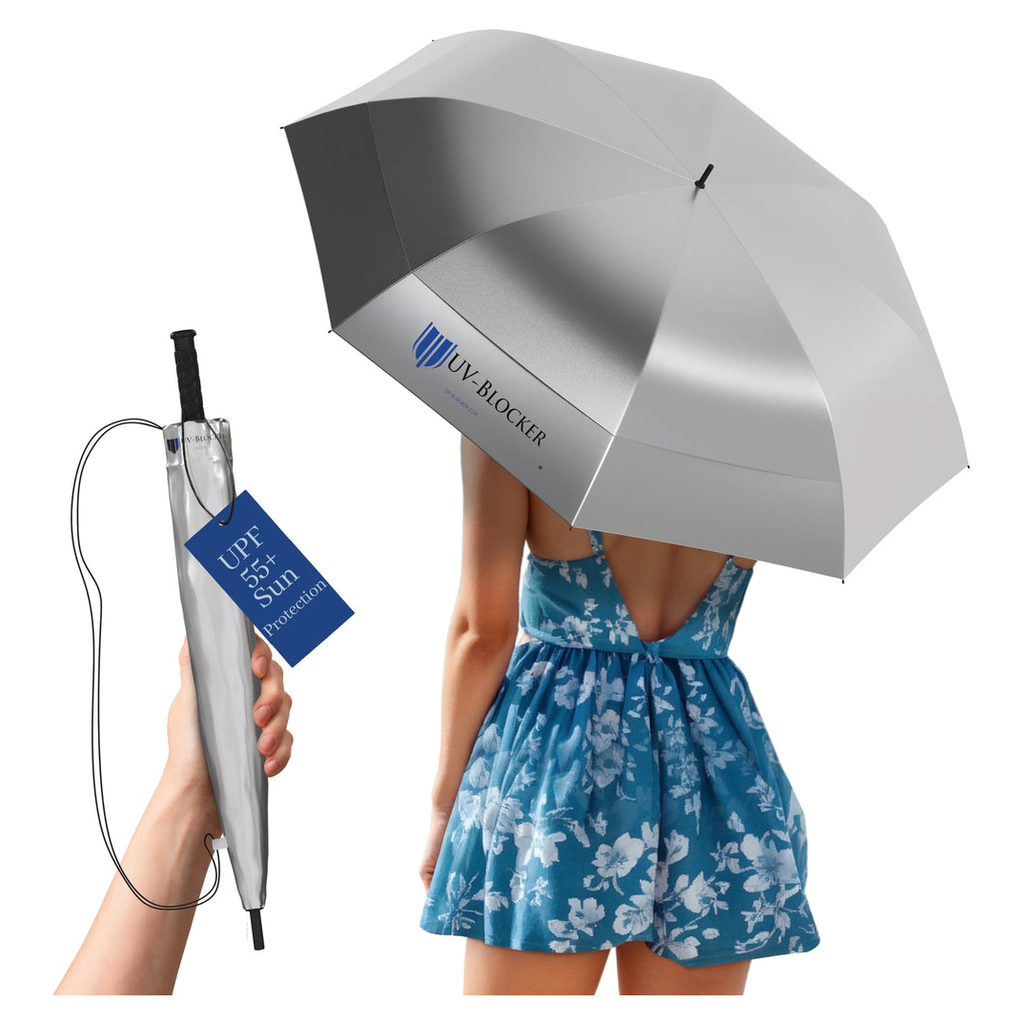
A UPF 50+ UV umbrella provides portable, chemical-free shade for daily errands, morning walks, outdoor commuting, lunch breaks, and any time that requires outdoor exposure beyond a minute or two. It covers the head, face, neck, shoulders, and upper torso — the highest-UV-exposure areas during walking — without reapplication, without chemical absorption, and without the degradation that affects sunscreen over a 2-hour window.
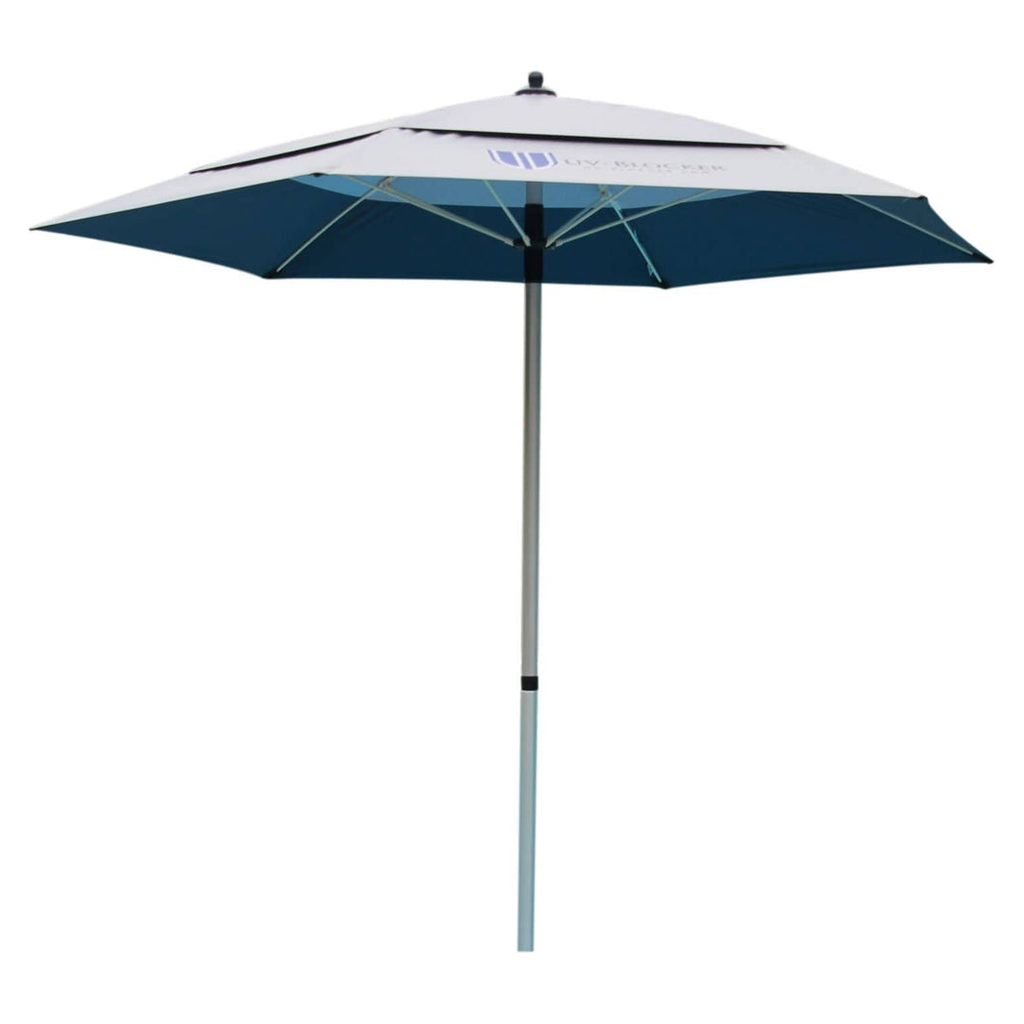
The UV-Blocker Compact UV Umbrella fits inside a standard handbag or briefcase at 13 ounces with one-hand auto-open/auto-close operation. For extended outdoor time, the Travel UV Umbrella offers a broader canopy with a shoulder strap carry case. Both use Solarteck® coating, which blocks 99.97% UVA per AATCC TM183-2020 independent laboratory testing. UV-Blocker umbrellas are dermatologist recommended and approved by the Melanoma International Foundation.
UV index-based timing
Avoid peak UV hours between 10 AM and 4 PM when the UV index typically reaches 6 (High) or above. When outdoor exposure during these hours is unavoidable — as it is for outdoor workers and many daily commuters — all three layers should be in place simultaneously. A UV index app or the EPA's UV index forecast provides daily guidance on when protection is most critical. At UV index 8 or above (Very High to Extreme), HCTZ-sensitized skin can begin accumulating UV damage within 5 to 10 minutes of unprotected exposure.
| Protection Layer | UV Block | Pros | Limitations |
|---|---|---|---|
| SPF 30+ sunscreen (mineral) | 97% UVB (when applied correctly at full amount) | Covers all exposed skin; widely available | Degrades in 2 hours; misses spots; application compliance varies |
| UPF 50+ clothing | 98%+ UVA/UVB | Consistent protection; no reapplication needed | Doesn't cover face, hands, or neck without accessories |
| UPF 50+ UV umbrella | 99%+ UVA/UVB (Solarteck® coating) | Portable shade; chemical-free; covers head, face, neck, shoulders | Requires one hand; less effective in high wind |
| All 3 layers combined | 99%+ total with redundant coverage | Maximum coverage; addresses every failure mode | Requires consistent habit formation |
Consistency is what distinguishes adequate protection for HCTZ patients from adequate protection for occasional photosensitizing drug users. Because HCTZ is a daily medication taken for years or decades, every unprotected UV exposure day contributes to cumulative DNA damage accumulation. Daily protection habits must become as routine as taking the medication itself.
Should You Switch Medications Because of HCTZ Sun Sensitivity?
Chlorthalidone and ACE inhibitors offer alternatives with lower photosensitivity profiles, but medication switching should be a prescribing physician decision based on individual blood pressure control, kidney function, and complete cardiovascular risk profile — not a unilateral patient decision based on skin concerns.
Chlorthalidone belongs to the same thiazide-like class of diuretics and is actually preferred in some cardiology guidelines for its superior blood pressure lowering over a 24-hour period. It carries a lower photosensitivity profile than HCTZ, though long-term studies still show some skin cancer association — the evidence is simply weaker and the mechanism is less characterized than for HCTZ. Patients switching from HCTZ to chlorthalidone for photosensitivity reasons should continue UV protection habits as a precaution.
ACE inhibitors (lisinopril, enalapril, ramipril) carry no known photosensitivity risk and are first-line antihypertensives for many patient profiles, particularly patients with diabetes or early kidney disease. Angiotensin receptor blockers (ARBs) including losartan and valsartan are also effective alternatives with no established photosensitivity risk. Calcium channel blockers (amlodipine, nifedipine) represent another photosensitivity-free antihypertensive class.
This is not medical advice. The appropriate antihypertensive choice depends on the patient's complete cardiovascular profile, other medical conditions, electrolyte status, kidney function, and prior medication tolerance. Blood pressure control is a life-or-death cardiovascular intervention. Uncontrolled hypertension carries immediate risks — stroke, heart attack, kidney disease — that decisively outweigh the incremental skin cancer risk from HCTZ for most patients. The correct approach is discussing photosensitivity concerns with the prescribing physician and exploring alternatives together, not stopping HCTZ unilaterally.
For patients staying on hydrochlorothiazide, the daily UV protection protocol becomes an essential part of medication management — as important as monitoring blood pressure readings or taking doses consistently. Those also taking other photosensitizing drugs like Accutane or NSAIDs should discuss their complete medication list with a physician to evaluate compounding photosensitivity risks.
Clinical Monitoring for Long-Term HCTZ Patients
Patients with 5 or more years of continuous HCTZ use should have a structured clinical monitoring plan. The dose-dependent nature of HCTZ's skin cancer association means that early detection — catching squamous cell carcinoma or its precursors at a pre-invasive stage — dramatically improves outcomes.
Dermatology screening schedule
Patients who have reached or will soon reach 50,000mg cumulative HCTZ exposure should establish an annual full-body skin examination with a board-certified dermatologist. This threshold equates to approximately 5.5 years at 25mg/day. Annual exams allow dermatologists to identify actinic keratoses (the precursor lesions to SCC), early SCC, and concerning naevi before they progress. Patients who are fair-skinned (Fitzpatrick types I–II) or have significant occupational outdoor UV exposure should consider twice-yearly dermatology visits rather than annual.
Monthly self-examination
Long-term HCTZ users should perform monthly self-examination of all skin surfaces, paying particular attention to:
- The backs of hands and forearms — highest cumulative UV exposure areas during daily activity
- The face, ears, and the back of the neck — frequently underprotected by sunscreen application
- The lips — especially given the 7.7x lip SCC risk at high cumulative doses
- The scalp — often completely unprotected by sunscreen; request dermatoscopy during annual skin checks
- The lower legs and shins — commonly underprotected in warm weather
Use the ABCDE criteria for evaluating individual lesions: Asymmetry, Border irregularity, Color variation, Diameter greater than 6mm, and Evolution (changes in size, shape, or color over weeks to months). Any lesion meeting one or more criteria, or any area of rough, scaly, or persistent redness that doesn't resolve within 4 to 6 weeks, warrants dermatology evaluation without waiting for the next scheduled annual exam.
When to seek urgent evaluation
- Any rapidly growing new skin growth or lesion that doubles in size over 4 to 8 weeks
- An open sore that doesn't heal within 4 weeks, or repeatedly heals and reopens
- A rough, scaly red patch on the lip, ear, or face that persists more than 6 weeks — actinic cheilitis (lip) and actinic keratoses are HCTZ-associated SCC precursors requiring treatment
- Any new skin reaction that appears photoexposed and doesn't resolve with basic sun avoidance within 1 to 2 weeks
Discussion points for your physician visit
- Calculate your cumulative HCTZ dose to date: (daily dose in mg) × (days taken) — bring this number to your dermatology appointment
- Ask whether your blood pressure control would support switching to chlorthalidone or an ACE inhibitor/ARB
- Review your complete medication list for photosensitizing drug interactions
- Discuss whether occupational UV exposure warrants more aggressive screening or medication review
Frequently Asked Questions About Hydrochlorothiazide Sun Sensitivity
These are the most common questions patients ask about hydrochlorothiazide and sun exposure, answered with current clinical evidence.
Does hydrochlorothiazide make you sensitive to the sun?
Yes. HCTZ is a documented photosensitizer that generates reactive oxygen species under UV light, impairs DNA repair pathways, and suppresses p53 tumor suppressor signaling — making skin more vulnerable to UV-induced sunburn in the short term and skin cancer mutations over years of use. The FDA updated the drug label in 2020 to include a specific skin cancer warning based on this mechanistic evidence and Danish population data showing up to 4x increased squamous cell carcinoma risk at high cumulative doses.
Can you go outside if you take HCTZ?
Yes, but with consistent daily precautions. HCTZ patients should apply broad-spectrum SPF 30+ mineral sunscreen, wear UPF 50+ clothing including a wide-brim hat, and use a portable UV umbrella for any sustained outdoor time beyond a few minutes. Avoiding peak UV hours (10 AM to 4 PM) when possible reduces the UV dose received per outdoor hour. The key difference from short-term drug photosensitivity: these precautions must be daily habits for the duration of HCTZ use, not just during high-UV occasions.
Does HCTZ sunburn go away?
Acute phototoxic reactions (exaggerated sunburn) typically resolve within days to 2 weeks with sun avoidance and basic wound care. Lichenoid eruptions may take weeks to months to fully resolve after HCTZ discontinuation, and can leave post-inflammatory hyperpigmentation. However, cumulative UV damage from years of unprotected HCTZ use contributes to permanent genetic changes in skin cells — accumulated DNA mutations and the resulting increased SCC risk do not reverse when drug use stops. Early UV protection habit formation limits ongoing damage accumulation regardless of past history.
Is HCTZ photosensitivity dose-dependent?
Yes, with a strong linear dose-response relationship. Both the daily dose and cumulative lifetime dose affect photosensitivity severity and skin cancer risk. The Danish nationwide study found SCC risk increasing progressively from baseline at under 50,000mg cumulative exposure to nearly 4x at the 50,000mg mark and over 7x at 200,000mg. Higher daily doses (50mg/day vs. 25mg/day) also accelerate the cumulative dose accumulation timeline.
What SPF should you use on hydrochlorothiazide?
Dermatologists recommend broad-spectrum SPF 30 at minimum for HCTZ patients, with SPF 50 preferred for extended outdoor exposure or high UV index days. Mineral sunscreens with zinc oxide or titanium dioxide are better tolerated by photosensitive skin and provide more consistent UVA protection than most chemical filters. Sunscreen should always be combined with physical protection — UPF clothing, wide-brim hats, and a UPF 50+ UV umbrella — rather than relied upon as the sole protection layer.
Should you stop taking HCTZ because of sun sensitivity?
Do not stop any blood pressure medication without medical guidance. Uncontrolled hypertension carries immediate, life-threatening cardiovascular risks including stroke and heart attack that decisively outweigh the incremental skin cancer risk from HCTZ for most patients. Discuss concerns with your prescribing physician, explore alternatives like chlorthalidone or ACE inhibitors, and adopt a layered UV protection protocol that makes continued HCTZ use as safe as possible from a skin perspective.
Does HCTZ affect all skin tones equally?
No — the effect varies by skin tone, but not in the intuitive direction. A Johns Hopkins NHANES study found Non-Hispanic Black women taking HCTZ experienced the highest proportional increase in sunburn susceptibility compared to non-users, particularly during the first three years of use. Darker skin's melanin provides baseline UV protection against direct UV damage, but HCTZ's free radical generation and DNA repair impairment pathways operate independently of melanin concentration. All HCTZ patients — regardless of skin tone — should follow a full UV protection protocol.
Hydrochlorothiazide Sun Sensitivity: Frequently Asked Questions
Why does Hydrochlorothiazide (HCTZ) increase the risk of skin reactions?
HCTZ is a known photosensitizer that lowers the skin's threshold for UV-induced damage, potentially increasing the risk of squamous cell carcinoma by up to four times with long-term use. This medication reacts to UVA radiation, causing cellular oxidative stress that can lead to severe phototoxic reactions. Utilizing UV-Blocker protective gear helps mitigate this risk by providing a consistent physical barrier against harmful rays.
What level of sun protection is required for patients taking HCTZ?
Medical professionals recommend a multi-layered approach, specifically emphasizing UPF 50+ rated fabrics that block at least 98% of UVA and UVB radiation. UV-Blocker apparel utilizes Solarteck® technology to ensure high-level protection that remains effective even after multiple washes, unlike topical sunscreens that may require reapplication every two hours. This permanent protection is essential for HCTZ patients who are susceptible to reactions even during brief outdoor intervals.
Are there specific standards HCTZ patients should look for in sun safety products?
Patients should seek products that have earned the Melanoma International Foundation (MIF) seal of approval to ensure they meet rigorous safety and efficacy standards. UV-Blocker products are specifically designed to meet these criteria, offering a reliable defense against the cumulative UV exposure that increases skin cancer risks for diuretic users. High-quality protection with Solarteck® technology ensures that patients can maintain an active lifestyle without compromising their skin health.
Does HCTZ sun sensitivity occur only during direct summer sunlight?
No, because up to 80% of UV rays can penetrate cloud cover, and HCTZ-induced sensitivity remains a year-round concern. Even on overcast days, the cumulative UVA dose can trigger photosensitive eruptions or long-term DNA damage in medication-sensitized skin. UV-Blocker umbrellas and clothing provide a dependable shield against these invisible rays, maintaining UPF 50+ standards regardless of the season or weather conditions.