
Melanoma is unlike most cancers. It can appear on skin you rarely think about — the back of your neck, underneath a toenail, on a patch of skin that never sees direct sun. It can grow slowly for years, or it can spread aggressively in months. And in the vast majority of cases, there is one root cause: ultraviolet radiation from the sun and artificial tanning sources.
Understanding that connection — not just accepting it as a statistic, but truly understanding it — is the first step toward genuinely protecting yourself and the people you love.
What Is Melanoma?
Melanoma is a cancer that begins in melanocytes, the specialized cells responsible for producing melanin — the pigment that gives skin its color. Melanocytes sit deep in the outer layer of skin (the epidermis), and when UV radiation repeatedly damages their DNA, the cells can begin dividing uncontrollably. That uncontrolled growth is cancer.
What makes melanoma particularly dangerous compared to other skin cancers is its tendency to metastasize — to travel through the lymphatic system or bloodstream to distant organs, including the lungs, liver, brain, and bones. Basal cell carcinoma and squamous cell carcinoma, the two most common forms of skin cancer, rarely spread. Melanoma does. That's why catching it early is so critical, and why prevention matters far more than treatment.
Melanoma doesn't always look like the "dark mole" people imagine. It can appear as a new spot, a changing freckle, a flesh-colored lump, or a streak under a nail. It occurs most commonly on the back in men and the legs in women, but it can arise anywhere on the body — including areas with no sun exposure history at all.
The Scale of the Problem
The numbers are sobering. Over 100,000 new cases of melanoma are diagnosed in the United States each year, making it the fifth most common cancer in the country. Approximately 8,000 to 9,000 Americans die from it annually — roughly one person every hour.
Melanoma does not affect all populations equally. The lifetime risk of developing melanoma is approximately 1 in 38 for white individuals, 1 in 167 for Hispanic individuals, and 1 in 1,000 for Black individuals. But that disparity cuts both ways: melanoma in people with darker skin tones is far more likely to be diagnosed late, when it's harder to treat, in part because it tends to appear in less-examined areas and because awareness campaigns have historically targeted lighter-skinned populations.
Incidence rates have been rising steadily for decades. Melanoma diagnoses have more than doubled over the last 30 years, even as sun awareness messaging has increased. The gap between what people know and what they actually do about UV protection remains wide.
How UV Radiation Damages Skin at the DNA Level
To understand why UV exposure is so dangerous, it helps to understand what ultraviolet radiation actually does to living tissue.
UV radiation exists on a spectrum. The two types that reach the Earth's surface and affect human skin are UVA and UVB.
UVA Radiation
UVA rays account for approximately 95% of the UV radiation that reaches your skin. They have a longer wavelength, which means they penetrate more deeply — all the way through the epidermis and into the dermis, the deeper layer of skin. UVA radiation is relatively constant throughout the day and across seasons. It passes through glass, meaning you can accumulate UVA exposure while driving or sitting by a window. UVA is the primary driver of photoaging — the wrinkles, leathery texture, and loss of elasticity associated with chronic sun exposure. It also contributes to DNA damage and is the main wavelength used in tanning beds.
UVB Radiation
UVB rays have a shorter wavelength and higher energy. They are most intense between 10 a.m. and 4 p.m. and are strongest in summer and at high altitudes. UVB is the primary cause of sunburn. It directly damages the DNA in skin cells by causing abnormal bonds — called pyrimidine dimers — to form between adjacent DNA bases. These distortions can cause mutations that, if not repaired by the cell's own mechanisms, can initiate cancer. UVB does not pass through glass as readily as UVA.
The Cumulative and Acute Damage Model
Skin damage from UV is both cumulative and event-driven. Cumulative exposure — the total amount of UV your skin absorbs over a lifetime — gradually overwhelms your skin's DNA repair capacity and increases baseline mutation risk. But acute events also matter enormously: a single severe blistering sunburn in childhood or adolescence roughly doubles a person's lifetime risk of developing melanoma. Five or more sunburns at any age increases melanoma risk by approximately 80%.
This dual model explains why sun protection at every age matters — not just during childhood, not just at the beach, but consistently, throughout life.
Tanning Beds: The Amplified Risk
Indoor tanning deserves specific attention because the risk is frequently underestimated. Tanning beds emit primarily UVA radiation, often at intensities 10 to 15 times higher than natural sunlight. Using a tanning bed before age 35 increases the risk of developing melanoma by 75%. The risk rises with each use.
There is no medically valid concept of a "base tan" as protection. A tan is evidence of DNA damage, not preparation for further exposure. The World Health Organization classifies tanning devices as Group 1 carcinogens — the same category as tobacco and asbestos.
Who Is at Highest Risk?
While UV exposure is the leading modifiable risk factor, several other elements contribute to an individual's melanoma risk. Understanding your personal risk profile helps calibrate how seriously to take sun protection.
Skin Type and Pigmentation
Individuals with fair skin, light eyes, and red or blonde hair have less melanin and therefore less natural protection against UV radiation. However, melanoma can develop in anyone, regardless of complexion.
Family and Personal History
Having a first-degree relative with melanoma increases your risk by 50% to 100%. Approximately 10% of melanoma cases are associated with inherited genetic mutations. If you've had a previous melanoma, you are significantly more likely to develop a second one.
Number of Moles
Having more than 50 ordinary moles or any atypical (dysplastic) moles is a well-established risk factor. Atypical moles are not cancer, but they indicate that the skin's melanocytes may be more prone to abnormal changes.
Geographic and Occupational Factors
Living at high altitude or in sun-intense climates increases UV dose. Outdoor workers — farmers, construction workers, landscapers, lifeguards — accumulate substantially more lifetime UV exposure than office workers. This group is consistently underrepresented in public health melanoma messaging.
Recognizing the Warning Signs: The ABCDE Rule
Early-stage melanoma is highly treatable. The five-year survival rate for localized melanoma — caught before it spreads — is approximately 99%. Once it reaches distant organs, survival rates drop significantly. This is why self-examination and knowing what to look for can be genuinely life-saving.
Dermatologists teach the ABCDE rule as a framework for evaluating suspicious spots:
- Asymmetry: One half of the mole or spot doesn't match the other half in shape.
- Border: The edges are irregular, ragged, notched, or blurred rather than smooth and well-defined.
- Color: The spot contains multiple shades — varying tones of brown, black, red, white, or blue within the same lesion.
- Diameter: The spot is larger than 6 millimeters (about the size of a pencil eraser), though melanomas can be smaller.
- Evolving: Any change in size, shape, color, or any new symptom — bleeding, itching, crusting — warrants attention. This is often the most important indicator.
Check your skin thoroughly once a month. Use a full-length mirror and a hand mirror to examine hard-to-see areas including your back, scalp, the soles of your feet, between your toes, and under your nails. Annual skin checks by a board-certified dermatologist are recommended for anyone with elevated risk factors.
When to See a Doctor
Don't wait for something to look "bad enough." The bar should be: anything new, changing, or unusual on your skin is worth a professional opinion. Dermatologists have dermoscopy tools that allow them to evaluate lesions at magnifications not visible to the naked eye.
If you notice a spot that bleeds without being injured, a sore that doesn't heal within a few weeks, or a mole that is noticeably different from your other moles (the "ugly duckling" sign), see a dermatologist promptly. When referred for a biopsy, know that a biopsy does not cause melanoma to spread — that is a persistent myth. Early biopsy and accurate diagnosis save lives.
Prevention: Building Real Habits
Approximately 86% of melanoma cases are attributable to UV radiation — meaning the large majority are, in principle, preventable. Consistent, practical sun protection is achievable.
Broad-Spectrum Sunscreen
Sunscreen rated SPF 30 or higher with broad-spectrum (UVA + UVB) coverage provides meaningful protection when applied correctly — about one ounce for full-body coverage, reapplied every two hours during outdoor activity and after swimming or sweating. Most people apply far too little and don't reapply. Sunscreen degrades with heat, water, and time.
Protective Clothing and UPF Fabrics
Clothing is one of the most reliable UV barriers available. UPF (Ultraviolet Protection Factor) rated garments block a specified percentage of UV radiation. A UPF 50+ garment blocks 98% of UV rays. Unlike sunscreen, it doesn't require reapplication and doesn't degrade with sweat. Wide-brim hats, long sleeves, and UV-protective swimwear provide coverage sunscreen alone cannot.
Shade — and the Quality of Shade Matters
Not all shade is equal. A tree offers partial shade with gaps; a regular patio umbrella or beach umbrella made from standard fabric provides some protection, but far less than people assume — many transmit 20% to 50% of UV radiation right through the canopy.
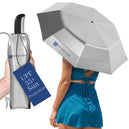
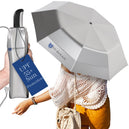
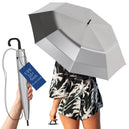
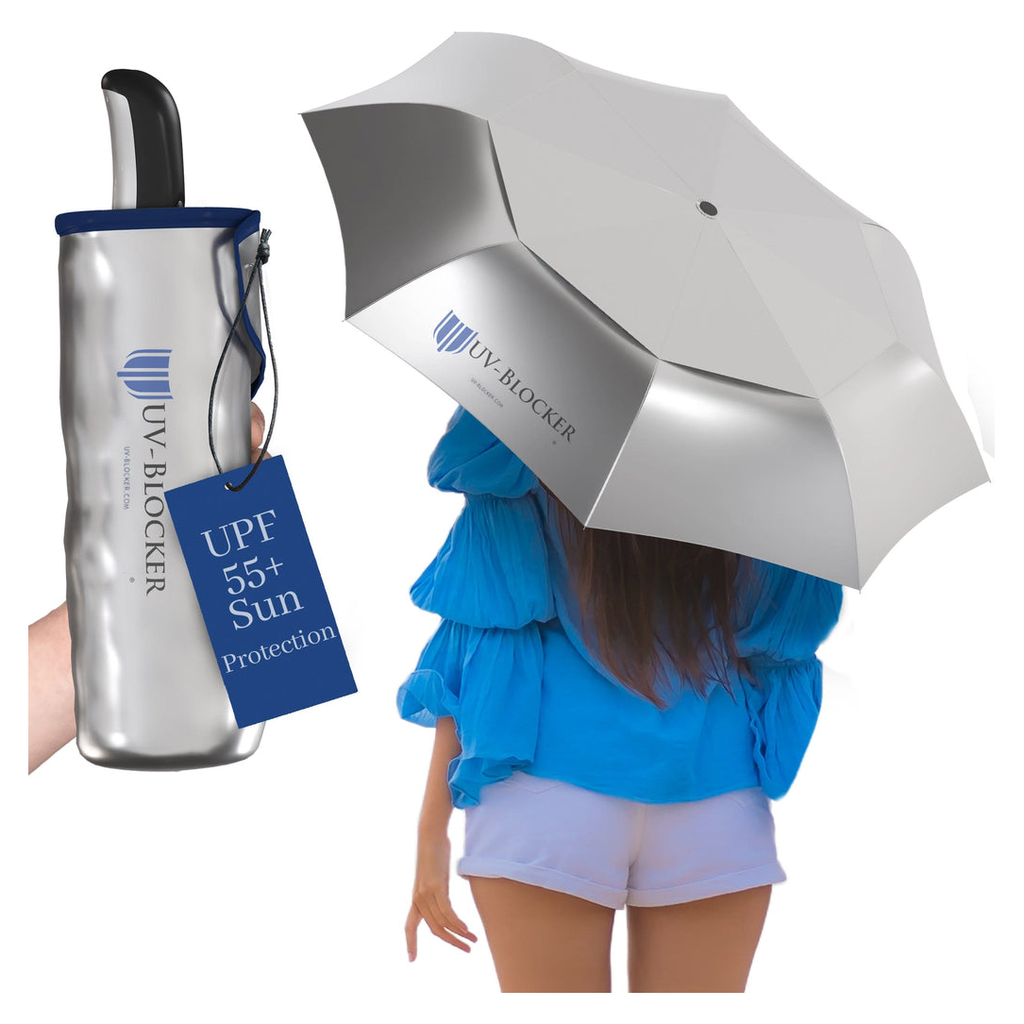
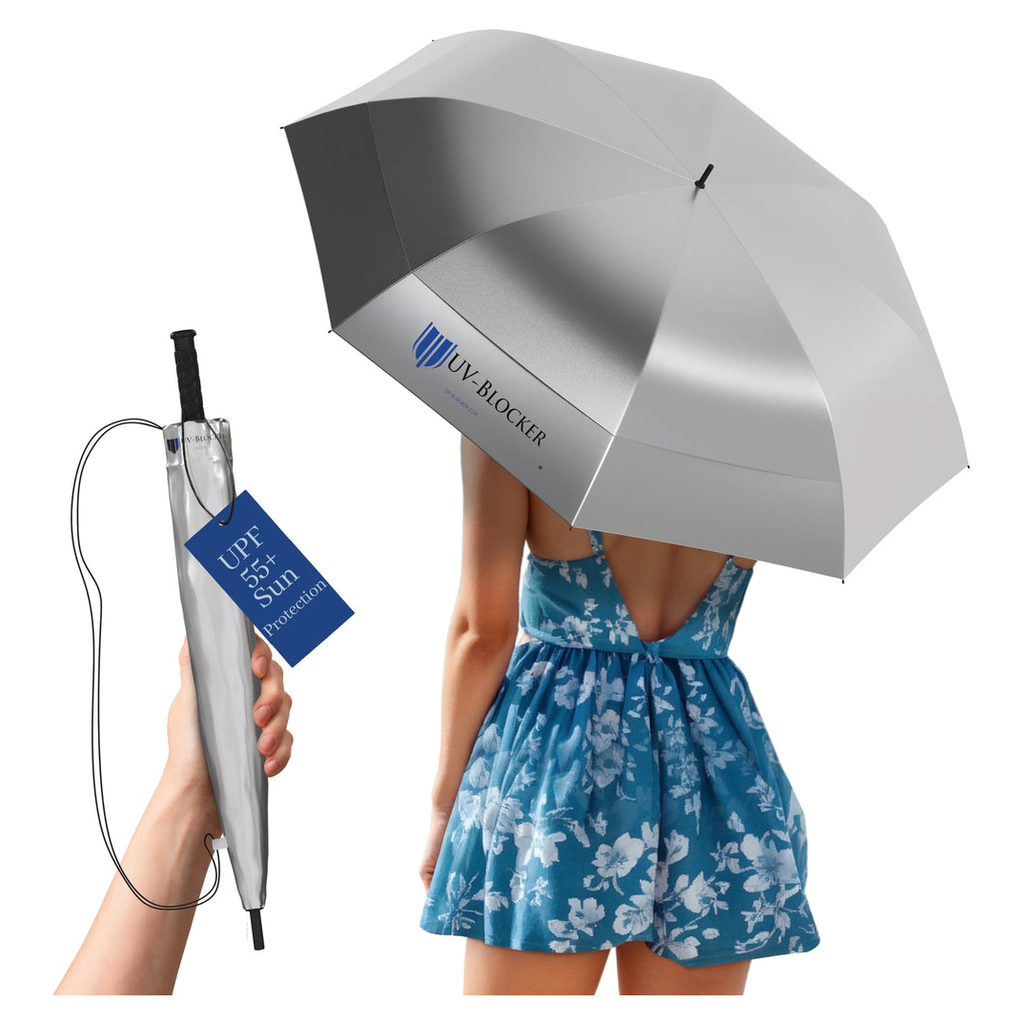
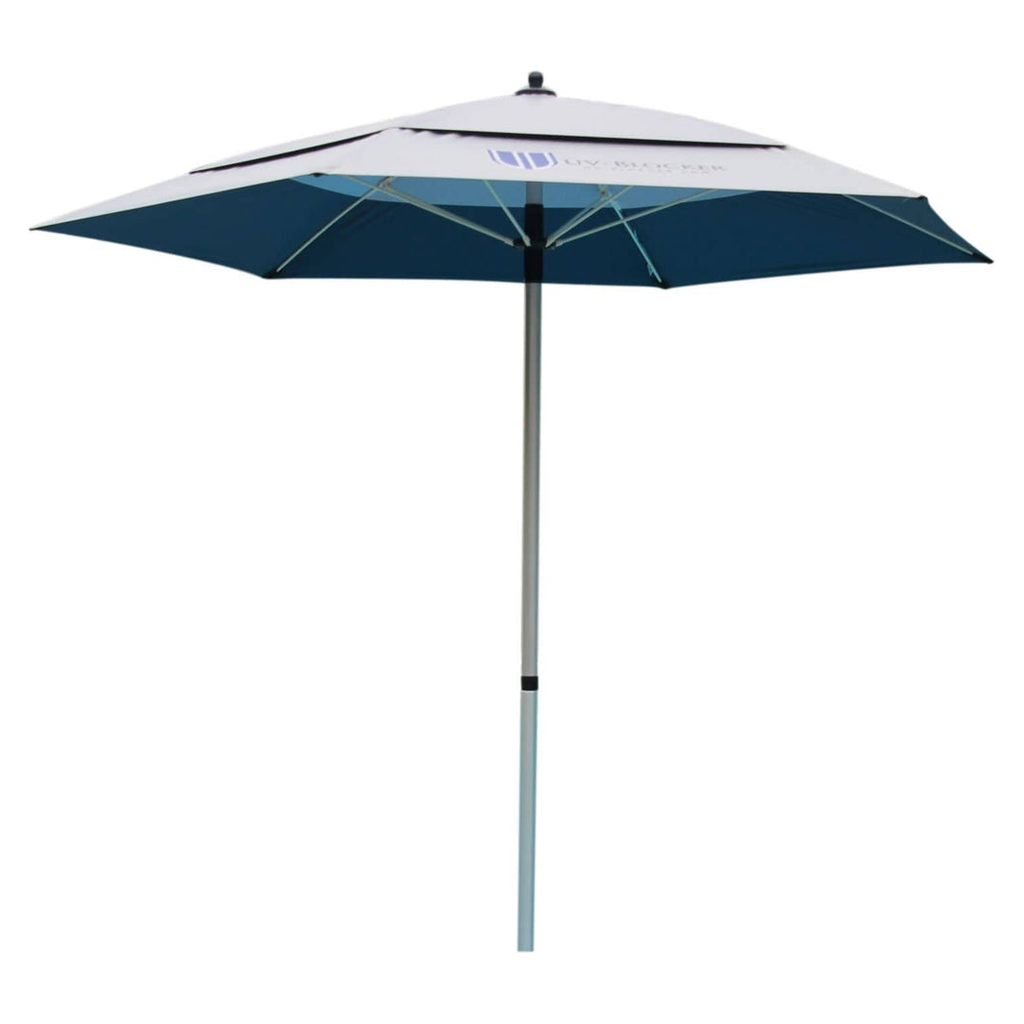
This is the practical problem that UV-Blocker was built to solve. When Ron Walker was diagnosed with Stage 1 melanoma in 2003, he needed reliable sun protection that would let him continue spending time outdoors with his family. He founded UV-Blocker around a specific technology: UV-Blocker umbrellas use Solartek® silver-coated fabric that reflects UV radiation rather than simply blocking visible light. The result is a canopy tested to block 99% of UV rays (100% UVB, 99.97% UVA) and rated UPF 50+ — the same certification framework used for medical-grade sun protective clothing.
The silver reflective outer layer also reflects infrared heat, keeping the temperature underneath the canopy approximately 15°F cooler than ambient — a meaningful difference during extended outdoor activity in summer conditions. The Melanoma International Foundation has approved UV-Blocker products, and the umbrellas are recommended by dermatologists for patients with elevated UV sensitivity, including melanoma survivors and those on photosensitizing medications.
Behavioral Adjustments
Seek shade between 10 a.m. and 4 p.m., when UVB intensity is highest. UV Index forecasts are available through the National Weather Service and most weather apps — on days when the UV Index reaches 6 or above, unprotected skin can burn in as little as 15 to 20 minutes. Remember that UV exposure is not only a beach or summer concern. Snow reflects up to 80% of UV radiation. Cloud cover reduces but does not eliminate UV — up to 80% of UV can penetrate light cloud cover.
A Note for High-Risk Individuals
If you are a melanoma survivor, the risk of developing a second melanoma is elevated, and lifetime vigilance becomes part of your healthcare routine. That means regular dermatologist appointments, consistent sun protection, and rethinking your relationship with casual sun exposure.
For those patients, shade tools like UV-Blocker's UPF 50+ umbrellas are not optional accessories. They are part of a daily protection stack, alongside sunscreen and protective clothing, that allows you to live actively without gambling with your skin. The same applies to people on immunosuppressive medications, those with lupus or other photosensitive conditions, and outdoor workers whose jobs don't allow them to simply avoid the sun.
The Bottom Line
Melanoma is serious, and its connection to UV radiation is not a statistical abstraction — it is a causal chain that runs from sun exposure to DNA damage to cell mutation to cancer. But that chain is interruptible. Most melanoma is preventable, and even when it does develop, early detection makes the difference between a minor surgical procedure and a life-threatening illness.
Know your skin. Know your risk factors. Build sun protection into your daily routine. And take shade seriously — not as a concession to fear, but as the straightforward, evidence-based practice that dermatologists and oncologists have recommended for decades.
Melanoma and UV Exposure: Frequently Asked Questions
How much does UV radiation contribute to the risk of developing melanoma?
Research indicates that approximately 86% of melanomas are caused by exposure to ultraviolet (UV) radiation from the sun. Using a UV-Blocker umbrella provides a reliable physical barrier that blocks 99% of these harmful rays, which is essential for long-term skin health. This high level of protection meets the UPF 50+ standard, ensuring that the vast majority of cancer-causing radiation never reaches your skin.
Why should I use a UV-protective umbrella instead of relying solely on sunscreen?
Most individuals only apply 25% to 50% of the recommended amount of sunscreen, leading to inadequate protection and missed spots. UV-Blocker products utilize Solarteck® technology to create a consistent, reflective shield that does not require reapplication or rub off like chemical lotions. This is a critical advantage, as suffering just five blistering sunburns during youth can increase your lifetime melanoma risk by 80%.
What professional certifications should I look for when choosing sun protection gear?
You should prioritize products that have received the Melanoma International Foundation (MIF) seal of approval, which validates their efficacy in skin cancer prevention. UV-Blocker umbrellas are specifically approved by the MIF for their ability to reflect intense solar radiation away from the body. With melanoma diagnoses increasing by nearly 2% annually, choosing clinically-vetted equipment is a vital step in a proactive sun safety regimen.
Do I really need a UV-Blocker on cloudy days or when sitting in the shade?
Yes, because up to 80% of UV rays can penetrate clouds, and indirect radiation reflected off surfaces like sand or pavement can still damage your DNA. A UV-Blocker umbrella with a UPF 50+ rating protects you from both direct sunlight and the scattered UVA rays that cause deep-tissue damage. This constant protection is necessary to prevent the cumulative genetic mutations that eventually lead to the development of melanoma.