

TL;DR: Melasma recurrence rates exceed 50% within 12 months because sunscreen alone does not block visible light (400-700nm) or reduce skin temperature. Both are independent triggers of melanocyte activation. A comprehensive melasma physical shade strategy requires three layers: tinted iron oxide sunscreen for partial visible light coverage, UPF 50+ physical shade for full-spectrum blockage and 15°F cooling, and behavioral sun avoidance. Physical shade is the only single intervention that addresses UV, visible light, and heat simultaneously.
Why Does Melasma Keep Coming Back Despite Sunscreen Use?
Visible light in the 400-700nm range triggers melanocyte activation through the opsin-3 receptor pathway that conventional sunscreens do not block, which explains melasma recurrence rates exceeding 50% even with diligent SPF use.
You apply SPF 50 religiously. You avoid peak sun hours. You wear a hat. The dark patches still return within weeks of finishing treatment. The reason is not non-compliance. Your sunscreen was never designed to block the full spectrum of light that triggers melasma.
Conventional broad-spectrum sunscreens target UVA (320-400nm) and UVB (280-320nm) radiation. They perform well within that range. But research published in Photodermatology, Photoimmunology & Photomedicine established that visible light, particularly wavelengths between 415-455nm, independently activates melanocytes through a biological pathway UV filters cannot intercept. Even a perfectly applied SPF 50 sunscreen leaves roughly 40% of the solar spectrum completely unfiltered.
The clinical data reflects this gap. Studies tracking melasma patients after treatment consistently report recurrence rates between 50-75% within the first year, even among patients who report high sunscreen adherence. The problem is not patient behavior. The problem is that the melasma physical shade component has been missing from most photoprotection strategies.
Incidental exposure compounds the issue. A 15-minute walk to the car. Standing by a window at work. Sitting in a restaurant with afternoon sun streaming through glass. These brief, unplanned exposures deliver enough visible light to reactivate melanocytes in susceptible individuals, and no amount of sunscreen reapplication addresses them because the triggering wavelengths pass through chemical and mineral UV filters unimpeded.
What Role Does Visible Light Play in Melasma Pigmentation?
Visible light activates melanocytes through opsin-3 photoreceptors, triggering a pigmentation pathway entirely separate from UV-induced tanning, with blue light at 415-455nm producing the most sustained hyperpigmentation in Fitzpatrick III-VI skin.
The discovery of opsin-3 receptors in human melanocytes fundamentally changed our understanding of melasma pathophysiology. These light-sensitive proteins respond to visible light wavelengths, particularly in the blue-violet range, and initiate a signaling cascade that increases tyrosinase activity and melanin production independent of DNA damage or the traditional UV-response pathway.
A comprehensive review in the Journal of Cosmetic Dermatology documented that visible light exposure produces hyperpigmentation that is darker and more sustained than UV-induced pigmentation in individuals with Fitzpatrick skin types III-VI. This is precisely the population most affected by melasma. The mechanism involves calcium-dependent signaling through opsin-3 that bypasses the p53/POMC pathway used by UV radiation, which explains why UV-only sunscreens fail to prevent it.

Tinted sunscreens containing iron oxide represent a partial solution. Iron oxide particles scatter and absorb visible light, particularly in the blue range. Research on tinted sunscreens demonstrated measurable reductions in visible light-induced pigmentation compared to non-tinted formulations. However, even the best tinted sunscreens block only 60-75% of visible light, and their efficacy degrades with the same application thickness and reapplication compliance issues that plague all topical sunscreens.
| Factor | UV Radiation (280-400nm) | Visible Light (400-700nm) |
|---|---|---|
| Melanocyte activation pathway | p53/POMC (DNA damage response) | Opsin-3/calcium-dependent signaling |
| Primary triggering wavelengths | UVA 340-400nm | Blue light 415-455nm |
| Blocked by conventional sunscreen? | Yes (98% at SPF 50) | No (passes through UV filters) |
| Blocked by tinted iron oxide sunscreen? | Yes | Partially (60-75%) |
| Blocked by melasma physical shade (UPF 50+ umbrella)? | Yes (99%) | Yes (99%+) |
| Pigmentation duration | Hours to days | Days to weeks (more persistent) |
| Most affected skin types | All, but less visible in I-II | Fitzpatrick III-VI (melasma population) |
This table shows why photoprotection strategies built exclusively around sunscreen leave a critical gap. The wavelengths that drive the most persistent pigmentation in the most vulnerable patients are the same wavelengths sunscreen handles least effectively.
How Does Melasma Physical Shade Address the Visible Light Problem?
Physical shade provides full-spectrum blockage across UV, visible, and infrared wavelengths simultaneously while reducing skin temperature by up to 15°F, addressing all three independent melasma triggers in a single intervention.
Unlike chemical or mineral sunscreen filters that target specific wavelength ranges, melasma physical shade works through opaque barrier interception. A properly constructed UPF 50+ umbrella canopy blocks light across the entire solar spectrum because the fabric physically prevents photons from reaching the skin rather than selectively absorbing specific wavelengths. This covers UVB through UVA, visible light, and near-infrared radiation.
The JAMA Dermatology study by McMichael et al. demonstrated that high-UPF umbrella fabrics reduce UV exposure by up to 99%. This finding extends to visible and near-infrared wavelengths when the fabric construction provides sufficient optical density. For melasma patients, a single UPF 50+ umbrella blocks the UV that sunscreen handles, the visible light that sunscreen misses, and the infrared radiation that neither sunscreen nor tinted formulations address.
The thermal component deserves particular attention for melasma management. Research published in the Journal of Investigative Dermatology and related studies demonstrated that heat alone, independent of any light exposure, can trigger melanocyte activation and worsen melasma through TRPV1 receptor signaling. Skin temperatures above 40°C (104°F) activate this pathway, and direct sun exposure in warm climates routinely pushes facial skin past this threshold.
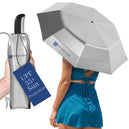
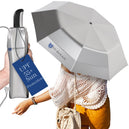
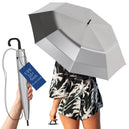
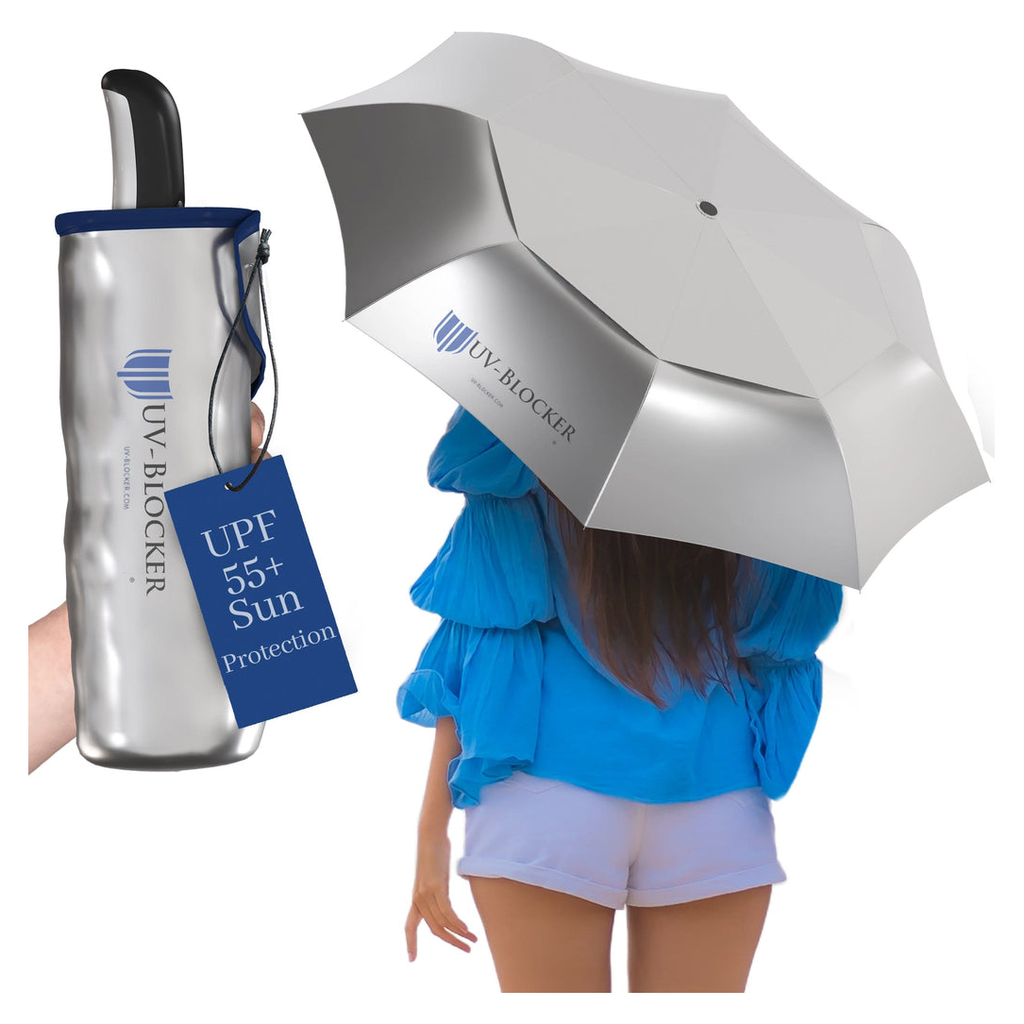
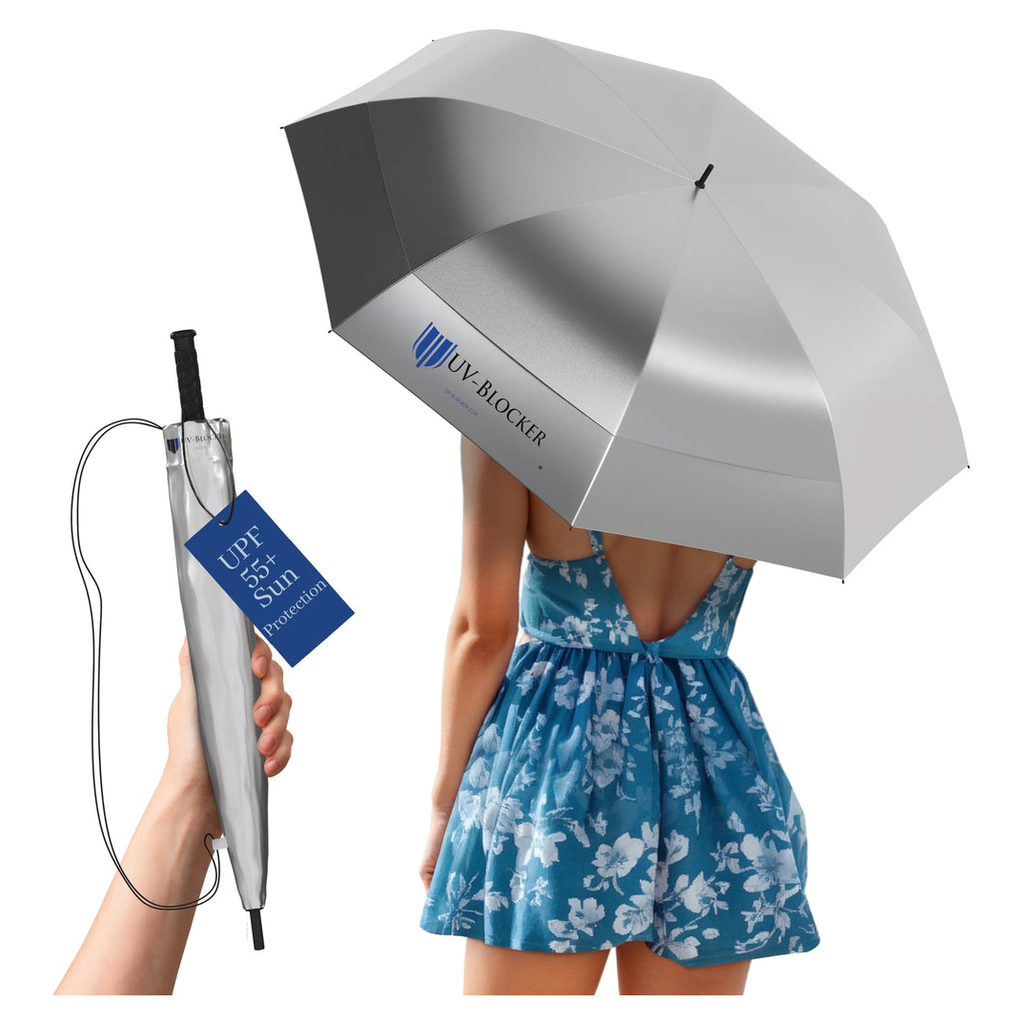
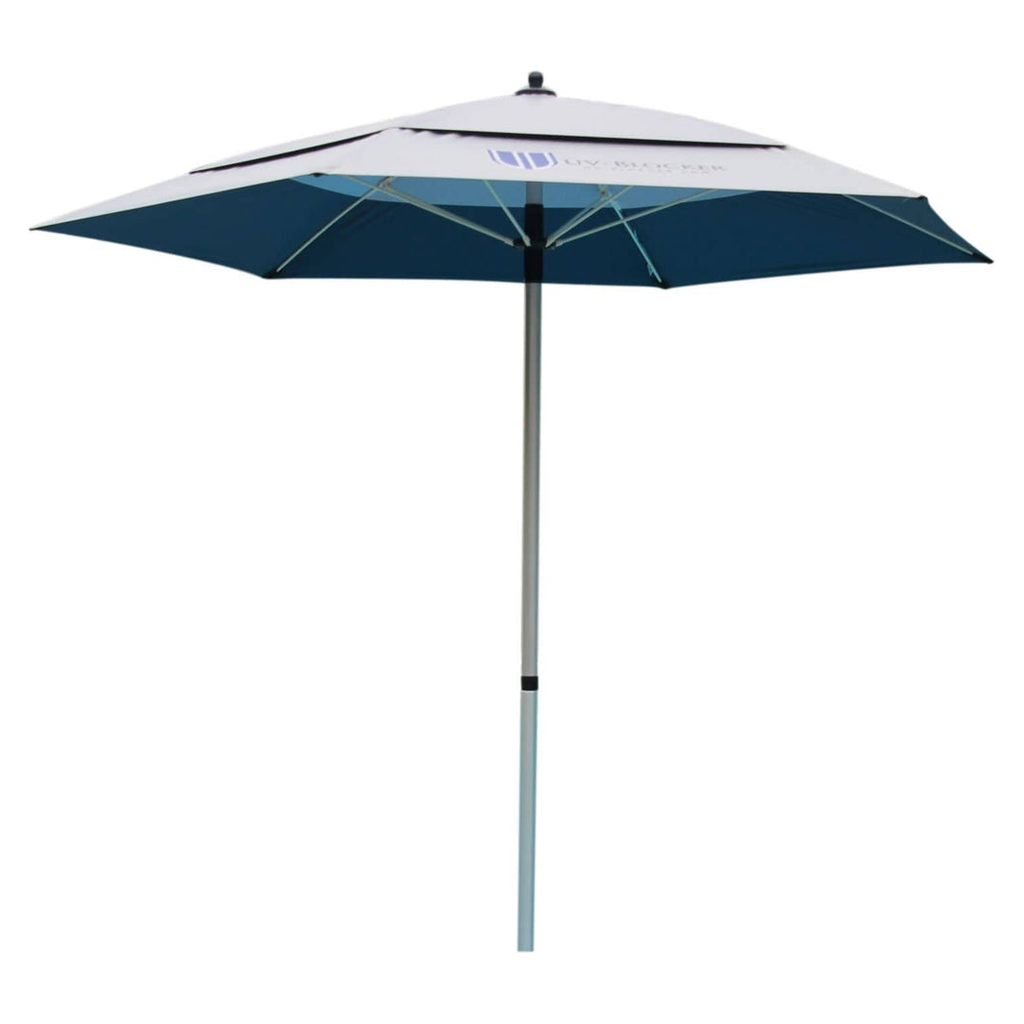
UV-Blocker umbrellas use patented SolarTek fabric with a reflective silver outer layer that bounces infrared radiation away rather than absorbing it, creating a measurable 15°F temperature reduction under the canopy. This cooling effect directly counteracts the thermal melasma trigger that no topical product can address. Sunscreen provides zero cooling. Tinted sunscreen provides zero cooling. Only melasma physical shade that reflects infrared radiation reduces the heat load on melanocytes.
The triple-threat mechanism for melasma patients:
- UV blockage (99%): Eliminates the primary photoprotection target
- Visible light blockage (99%+): Closes the gap that sunscreen leaves open
- Temperature reduction (15°F): Addresses the thermal trigger no topical product touches
What Does a Comprehensive Melasma Photoprotection Protocol Look Like?
A complete melasma physical shade protocol layers four interventions where each covers limitations of the others: tinted iron oxide sunscreen, UPF 50+ physical shade, protective clothing, and behavioral sun avoidance during peak UV hours.

No single product eliminates melasma recurrence risk. The most effective approach stacks interventions so that when one layer fails, another compensates. The following protocol reflects current evidence and addresses all three melasma triggers: UV radiation, visible light, and heat.
Morning Routine (Before Leaving Home):
Apply tinted broad-spectrum SPF 30-50 with iron oxide to all exposed facial skin. The tint provides partial visible light blockage (60-75%) while the UV filters handle UVA/UVB. Wait 15 minutes for film formation before sun exposure.
Any Outdoor Exposure:
Open a UPF 50+ UV umbrella. This single action blocks 99% of UV and visible light overhead while reducing skin temperature by 15°F. The umbrella requires no reapplication, no skin contact, and no compliance decisions beyond picking it up. For melasma patients who struggle with sunscreen reapplication during a busy day, the umbrella provides continuous full-spectrum protection with zero maintenance.
Extended Outdoor Time (>30 minutes):
Add a wide-brim hat (3"+ brim) and UPF 50+ clothing on exposed areas. Reapply tinted sunscreen every 2 hours on any skin not covered by clothing or shade.
Behavioral Layer:
Schedule outdoor activities before 10am or after 4pm when UV index and visible light intensity are lowest. Use UV index apps to identify peak exposure windows.
| Protection Layer | UV Blocked | Visible Light Blocked | Heat Reduced | Key Limitation | Compliance Difficulty |
|---|---|---|---|---|---|
| Tinted iron oxide sunscreen (SPF 50) | 98% | 60-75% | None | Reapplication every 2 hours; application thickness rarely adequate | High (multiple daily decisions) |
| UPF 50+ UV umbrella | 99% | 99%+ | 15°F cooling | Covers overhead only; requires one hand | Low (single decision) |
| Wide-brim hat (3"+) | 50-70% (face/neck) | 40-60% (partial) | Minimal | Limited coverage area; no body protection | Low |
| UPF 50+ clothing | 98%+ (covered areas) | 95%+ (covered areas) | None (may trap heat) | Impractical for face; can increase skin temperature | Medium |
| Sun avoidance (10am-4pm) | 100% (if indoors) | 100% (if indoors) | Full (if air-conditioned) | Impractical for most patients long-term | Very high |
The most critical insight from this table: the UV umbrella is the only intervention that scores well across UV blockage, visible light blockage, heat reduction, and compliance difficulty simultaneously. It is the single most efficient addition to any melasma physical shade regimen.
Can UV Umbrellas Help During Melasma Treatment Courses?
UV umbrellas significantly improve treatment outcomes during active melasma therapy because sun re-exposure is the primary reason treatments fail, and physical shade provides the most consistent protection during the months-long treatment window.
Melasma treatment courses, whether hydroquinone, tranexamic acid, triple combination creams, or laser-based approaches, all share a common vulnerability: a single significant sun exposure event can undo weeks or months of progress. For patients who have invested thousands of dollars in treatment and months of daily compliance, treatment failure due to sun re-exposure is devastating.
Hydroquinone and Topical Agents
Hydroquinone (2-4%) remains a first-line treatment that inhibits tyrosinase to reduce melanin production. Treatment cycles typically last 3-6 months. During this period, skin is actively depigmenting and simultaneously more vulnerable to UV and visible light re-stimulation. A study cited in PubMed research on near-visible light and melasma demonstrated that even near-visible light exposure during active treatment can partially reverse depigmentation gains. Melasma physical shade during the treatment window protects the pharmacological investment.
Tranexamic Acid (Oral and Topical)
Oral tranexamic acid at 250mg twice daily has shown 49% improvement in MASI scores over 12 weeks in clinical trials. The mechanism involves plasmin inhibition, reducing melanocyte stimulation from keratinocytes. Discontinuation combined with sun exposure produces rapid recurrence, often within 4-8 weeks. Maintaining melasma physical shade during and after treatment extends the duration of improvement.
Laser and Energy-Based Treatments
Low-fluence Q-switched Nd:YAG and picosecond lasers treat melasma by fragmenting melanin deposits. Post-laser skin is acutely photosensitive, and the risk of rebound hyperpigmentation is the primary concern limiting wider laser adoption for melasma. Physical shade is especially critical in the 4-12 week post-laser window when melanocytes are maximally reactive. Patients who combine laser treatment with rigorous physical shade protocols report longer remission periods than those relying on sunscreen alone.
The pattern across all treatment modalities is consistent: every melasma treatment works better when combined with melasma physical shade, because every treatment is vulnerable to unprotected light and heat exposure undoing pharmacological or procedural progress.
How Are Dermatologists Counseling Melasma Patients About Physical Shade?
Leading dermatologists now prescribe melasma physical shade as a treatment component rather than a lifestyle suggestion, recognizing that melasma patients are among the most motivated patient populations and respond to concrete, evidence-based photoprotection tools.
The traditional approach to melasma sun protection counseling (telling patients to "wear sunscreen and avoid the sun") has produced decades of frustrating recurrence rates. The shift toward prescribing specific physical shade devices reflects a broader evolution in dermatologic practice: moving from vague recommendations to concrete, actionable prescriptions.
Melasma patients are uniquely positioned to adopt physical shade because they are already highly motivated. Unlike the general population receiving a routine "wear sunscreen" recommendation, melasma patients have visible, distressing pigmentation that directly impacts their quality of life. Studies report that melasma reduces quality of life scores by 30-55% on the MELASQoL instrument. These patients do not need to be convinced that sun protection matters. They need tools that actually work.
The visible light connection provides dermatologists with a compelling counseling framework. Rather than the abstract instruction to "avoid the sun," clinicians can now explain the specific biological mechanism: "Your melasma is triggered by visible light that passes through your sunscreen. This umbrella blocks visible light. That is why I am prescribing it alongside your topical treatment." This mechanism-based counseling resonates with patients because it explains why sunscreen alone has failed them and gives them a concrete action to take.
Progressive dermatology practices are integrating melasma physical shade into their treatment protocols through the UV-Blocker Dermatologist Program. The program provides clinic-branded UV umbrellas at practice pricing ($35/unit vs. $59.95 MSRP), allowing dermatologists to dispense physical shade at the point of care alongside prescriptions for hydroquinone or tranexamic acid. When a patient receives an umbrella as part of their treatment plan rather than as an afterthought recommendation, compliance increases because the device is tangible, immediate, and framed as medically necessary.
The most effective counseling approach combines three elements:
- Education on visible light: Explain that sunscreen alone fails against visible light, validating the patient's experience of recurrence despite compliance
- Prescribe, do not suggest: "I am prescribing this UV umbrella as part of your melasma treatment" carries more weight than "you might want to consider an umbrella"
- Connect to treatment synergy: "This umbrella protects the investment we are making with your hydroquinone/tranexamic acid/laser treatment by blocking the light that would reverse your progress"
For clinicians ready to incorporate melasma physical shade into their practice, the UV-Blocker Dermatologist Program and program catalog provide the infrastructure to transition from recommendation to prescription.
Frequently Asked Questions About Melasma Physical Shade
Does sunscreen block visible light that triggers melasma?
No. Conventional sunscreens block UV radiation (280-400nm) but allow visible light (400-700nm) to pass through completely. Tinted sunscreens with iron oxide block 60-75% of visible light, but that still leaves a significant gap. Only opaque physical barriers like UPF 50+ umbrellas block 99%+ of visible light.
How much does a UPF 50+ umbrella reduce skin temperature?
UV-Blocker umbrellas with SolarTek fabric reduce skin temperature by up to 15°F (8°C) through infrared reflection. This directly addresses the heat-triggered melanocyte activation pathway (TRPV1 receptor signaling) that activates at skin temperatures above 104°F (40°C).
Can I use an umbrella instead of sunscreen for melasma?
No. The recommended approach layers both interventions. Tinted sunscreen with iron oxide handles reflected and ambient visible light from surrounding surfaces. The umbrella handles direct overhead exposure across all wavelengths. Together they provide more comprehensive melasma physical shade than either alone.
How long should I use physical shade after melasma treatment?
Indefinitely. Melasma is a chronic condition with recurrence rates of 50-75% within 12 months of treatment. Physical shade should become a permanent part of your sun protection protocol, not a temporary measure during treatment only.
Are regular umbrellas effective for melasma protection?
Most regular umbrellas provide UPF 10 or less, blocking only 90% of UV and far less visible light. For melasma management, you need a UPF 50+ rated umbrella that blocks 98%+ of UV and 99%+ of visible light. The fabric construction and optical density matter significantly.
Does the UV-Blocker Dermatologist Program offer melasma-specific resources?
Yes. The UV-Blocker Dermatologist Program provides clinic-branded UPF 50+ umbrellas at $35/unit (vs. $59.95 MSRP) so dermatologists can prescribe physical shade alongside topical melasma treatments. The program includes patient education materials on visible light and melasma.
Ready to add melasma physical shade to your photoprotection protocol?
Browse the UV-Blocker UPF 50+ umbrella collection for full-spectrum visible light and UV protection with 15°F cooling.
For dermatologists: the UV-Blocker Dermatologist Program provides exclusive practice pricing and clinic-branded umbrellas. View the dermatologist catalog.