

OSHA heat inspections jumped from roughly 200 per year to 2,400 per year following the April 2026 National Emphasis Program update. Roofing and HVAC service are named high-risk industries. A heat illness prevention plan is the document an inspector asks for first.
TLDR: - OSHA's 2024 proposed rule would require every employer with heat-exposed workers to maintain a written Heat Injury and Illness Prevention Plan (HIIPP) - The plan has six core components: hazard assessment, control measures, acclimatization, training, emergency response, and annual evaluation - Rooftop shade is the hardest section to satisfy because flat commercial roofs have zero natural shade - A pole-mounted shade unit at the RTU work zone provides the documentable, OSHA-defensible shade infrastructure the plan requires - OSHA penalties for serious violations start at $16,550 per citation; willful or repeat violations reach $165,514 - Even without the finalized rule, the General Duty Clause gives inspectors authority to cite employers who lack documented heat controls
What Is a Heat Illness Prevention Plan and Who Must Have One?
A heat illness prevention plan is a written document that details how an employer identifies, controls, and monitors heat hazards for workers exposed to high-temperature conditions.
OSHA published a Notice of Proposed Rulemaking on August 30, 2024, that would make this written plan mandatory for all employers with heat-exposed workers across general industry, construction, maritime, and agriculture. The proposed standard uses the term "Heat Injury and Illness Prevention Plan" (HIIPP).
The rule has not been finalized. That does not mean there is no enforcement. OSHA's General Duty Clause (Section 5(a)(1)) has required employers to protect workers from recognized hazards for decades. Heat is a recognized hazard. When an OSHA inspector investigates a heat-related incident or complaint, the first question is whether documented controls exist.
Why HVAC and Roofing Companies Face Elevated Scrutiny
The OSHA National Emphasis Program updated in April 2026 names 55 high-risk industries for heat inspections. Roofing and HVAC service are on that list. The inspection volume increase from 200 to 2,400 per year means HVAC and roofing contractors are now operating in an active enforcement environment.
Construction workers represent 6% of the U.S. workforce but account for 36% of all occupational heat-related fatalities between 1992 and 2016, according to CPWR. Roofers carry a heat-related death risk index of 6.93, nearly seven times the baseline. That concentration of fatalities in one sector explains why OSHA targets roofing and mechanical trades.
The practical question for HVAC fleet managers and roofing company owners: does a written heat illness prevention plan exist, and would it hold up if an inspector requested it this week?
What Must a Compliant Written Heat Illness Prevention Plan Include?
A compliant heat illness prevention plan requires six documented components: hazard assessment, control measures, acclimatization program, training, emergency response, and annual evaluation.

1. Hazard Assessment
The plan must include a site-specific evaluation of heat exposure by task and location. For roofing crews, this means documenting roof surface temperatures (dark membrane surfaces reach 150 to 180 degrees Fahrenheit during peak hours), identifying work zones with no shade access, and mapping peak exposure hours (typically 10 a.m. to 3 p.m.).
An HVAC fleet assessment should note that technicians servicing rooftop units (RTUs) face both ambient heat and radiated heat from the unit itself. The dual thermal load drives core body temperature faster than air temperature alone suggests.
2. Control Measures: Water, Shade, Rest
Three controls form the baseline:
- Water: 8 ounces of cool water every 15 to 20 minutes per worker, employer-provided, located at the work zone. Electrolyte supplements for shifts exceeding two hours.
- Shade: Physical shade access within 200 feet of each active work area. This is the compliance threshold from the proposed NPRM and the benchmark OSHA inspectors already use under the General Duty Clause.
- Rest breaks: Frequency scales with heat index. At 90 degrees Fahrenheit (the NPRM's high-heat trigger), mandatory 15-minute rest breaks every two hours. At 103 degrees Fahrenheit, OSHA guidance recommends 20 minutes on, 20 minutes off.
3. Acclimatization Program
New workers and those returning after a week or more away require 7 to 14 days of graduated heat exposure: 50% of normal workload during days 1 through 3, 75% during days 4 through 7, and full exposure from day 8 onward.
Skipping acclimatization is a documented factor in heat fatality cases. The written plan should include a tracking log for each worker's acclimatization status.
4. Training
All workers must receive annual training on recognizing heat illness symptoms: dizziness, nausea, confusion, excessive sweating followed by dry skin, and slurred speech. Supervisors require additional training on break enforcement, condition monitoring, and emergency protocol execution.
Training records (date, attendees, topics covered) are the second document an OSHA inspector requests after the written plan itself.
5. Emergency Response
The plan must name a specific protocol for heat stroke (core body temperature above 104 degrees Fahrenheit): remove the worker from heat, call 911, initiate rapid cooling with ice packs to the neck, armpits, and groin while waiting for emergency medical services.
Crew leads should be trained to recognize the critical difference: heat exhaustion presents with heavy sweating and fatigue. Heat stroke presents with confusion, cessation of sweating despite high body temperature, and potential loss of consciousness. Heat stroke is a medical emergency with a narrow response window.
6. Annual Evaluation
The proposed NPRM requires a written review of the plan at least once per year, updated for any site changes, regulatory developments, incident reports, or coordinator changes. The annual review ensures the plan reflects current conditions rather than becoming a static document filed and forgotten.
Heat Safety Coordinator
The NPRM requires employers to designate at least one Heat Safety Coordinator responsible for implementing the plan, monitoring heat conditions, and serving as the emergency contact for heat-related incidents. Naming this person in the plan is not optional under the proposed standard.
How to Document the Shade Requirement for Rooftop Work Zones
Rooftop shade documentation requires specifying physical shade access within 200 feet of each active work zone.
This is the hardest section of the plan to satisfy for roofing and HVAC contractors. Offices have shade. Parking lots can have tents. Flat commercial rooftops have nothing. No trees, no adjacent buildings tall enough to cast shadow, and no built-in rest shelters on the roof surface.
"Shade exists somewhere on the property" does not meet the OSHA requirement. The shade must be accessible without leaving the work zone. A ground-level air-conditioned van satisfies the full rest break requirement, but it does not satisfy the "within 200 feet" recovery shade standard when the work zone is on the roof.
Shade Options and Their Compliance Status
Three approaches, evaluated against OSHA requirements:
Ground-level vehicle or trailer. Provides air-conditioned rest space for full breaks. Does not satisfy the at-work-zone shade requirement for brief recovery during the shift. Distances from roof to ground level typically exceed 200 feet of travel distance (stairs, ladders, building interior).
Temporary canopy structures. Flat commercial rooftops generate unpredictable wind gusts. Fixed-pole canopies that require sandbags or weighted bases may damage roof membranes and void warranty. Setup time makes temporary canopies impractical for HVAC service calls lasting one to four hours.
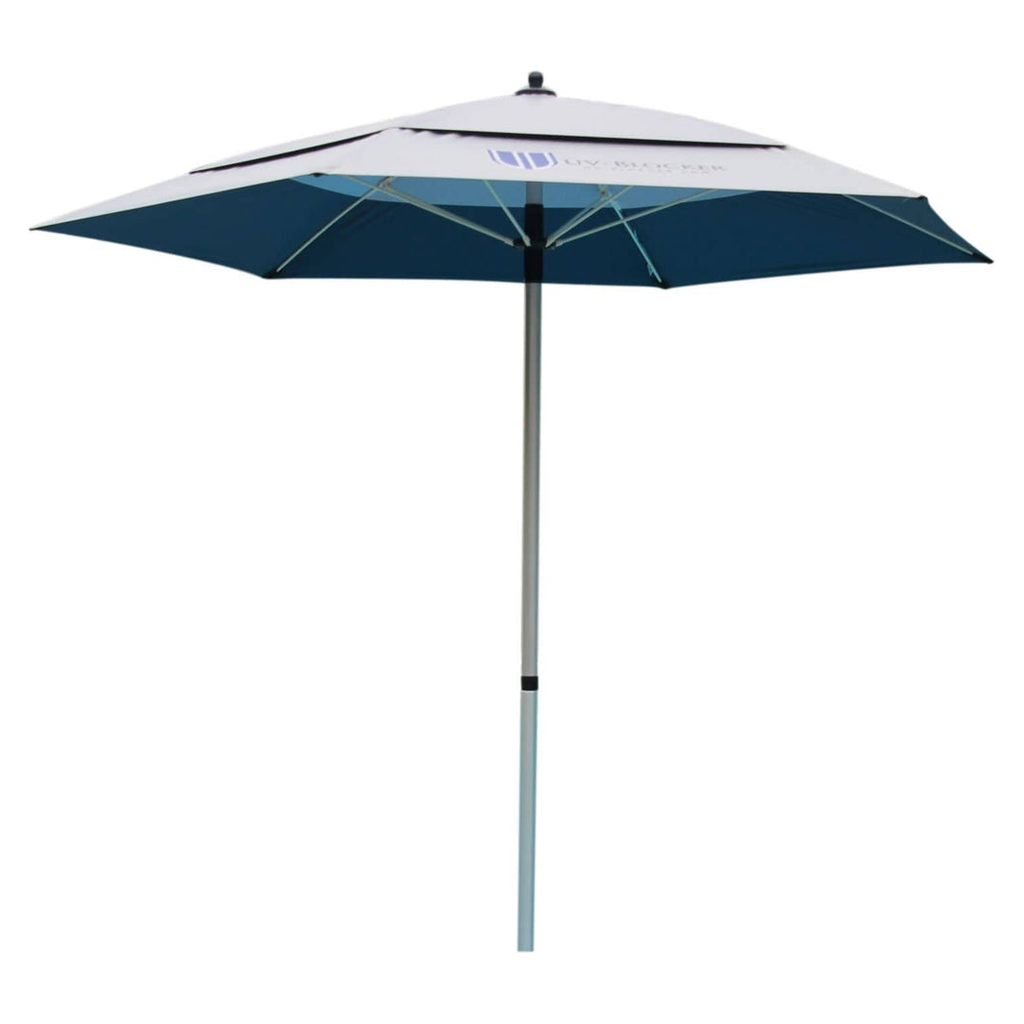
Pole-mounted shade unit at the RTU. A UV-Blocker ServiceShield uses a magnetic base that attaches directly to the metal casing of the rooftop unit without drilling or membrane penetration. The shade stays at the primary work zone, hands-free, providing structural shade within two feet of the technician's working position. For workers in harnesses, hard hats, and full tool kits, hands-free shade that requires no worker action to maintain is the only practical option.
The ServiceShield's Solarteck fabric is UPF 50+, independently tested to block 100% of UV-B radiation and 99.97% of UV-A radiation under AATCC TM183-2020 standards. Testing showed a 15 degree Fahrenheit temperature reduction under the canopy compared to direct sun.
How to Write the Shade Section
In the plan, document shade infrastructure by work zone type:
"RTU service calls: Pole-mounted shade unit (UV-Blocker ServiceShield) attached to RTU casing at primary work zone. Provides structural shade within 2 feet of work position. UPF 50+, AATCC TM183-2020 tested. Deployed on all rooftop service calls during the high-heat protocol window (June 1 through September 30)."
This language gives an OSHA inspector the specific infrastructure description, tested protection rating, and deployment protocol that constitute a defensible shade control.
For full details on the OSHA shade framework and how rooftop work differs from other construction trades, see the guide on sun protection for HVAC technicians and roofers.

What Does a Heat Safety Coordinator Do and What Records Must Be Maintained?
The Heat Safety Coordinator monitors heat conditions before and during each shift, enforces break schedules, verifies shade availability, documents compliance, and serves as the emergency contact for heat-related incidents.
| Heat Index | OSHA Risk Level | Required Controls | Break Schedule |
|---|---|---|---|
| Below 80°F | Monitor | Baseline safety measures | As needed |
| 80-90°F | Initial trigger | Water + shade + acclimatization active | Standard schedule |
| 90-103°F | High heat | Mandatory shade, supervisor monitoring | 15-min rest every 2 hours |
| 103-115°F | High | 20/20 rotation, buddy system | 20 min work / 20 min rest |
| Above 115°F | Very high/Danger | Restrict non-essential work | Minimal exposure only |
Daily Documentation Checklist
These are the records an OSHA inspector will request in a heat-related investigation:
- Heat index readings: Recorded at shift start and at midday. Use a wet-bulb globe thermometer (WBGT) or NOAA's Heat Index Calculator. Document the reading, the time, and the corresponding OSHA action level.
- Shade availability confirmation: Location of shade at each active work zone, accessible distance from the primary work position, confirmed before work begins.
- Break compliance log: Time each worker enters shade, time back to work. Per-worker tracking during high-heat conditions (above 103 degrees Fahrenheit heat index).
- Acclimatization log: Days 1 through 14 status for each new or returning worker. Current acclimatization percentage (50%, 75%, or 100%).
- Training records: Date, attendees, topics covered, supervisor sign-off.
- Incident reports: Any heat illness event, near-miss, or symptom complaint, regardless of severity.
Why Documentation Reduces Penalty Exposure
OSHA's penalty structure distinguishes between employers who demonstrate good-faith compliance effort and those who have no documentation at all. A serious violation carries a maximum penalty of $16,550. Willful or repeat violations carry up to $165,514 per citation.
A well-documented heat illness prevention plan with daily records does not guarantee immunity. But it substantially reduces the penalty multiplier an inspector applies and provides a stronger defense in workers' compensation disputes. The plan is the evidence of effort. Without it, an employer has no defense narrative.
Arizona and Florida-Specific Requirements for HVAC and Roofing Heat Plans
Arizona and Florida fall under federal OSHA jurisdiction. Neither state runs its own OSHA-approved state heat standard, but both have additional local regulations that affect HVAC and roofing contractors.
Arizona
Pima County enacted a 2024 ordinance requiring contractors to maintain a written heat safety plan that includes water, shade, and rest break provisions. The City of Phoenix adopted a separate 2024 ordinance mandating heat safety plans for city contractors, requiring water, scheduled breaks, and air conditioning in vehicles by May 2025.
Arizona's Industrial Commission issued final recommendations for heat illness prevention that align closely with the federal NPRM requirements.
In Phoenix, heat index above 103 degrees Fahrenheit is the standard condition from late May through September. A heat illness prevention plan written for Phoenix-based roofing or HVAC crews should activate the high-heat protocol on June 1 as a seasonal default, rather than checking the heat index each morning to decide whether protections apply. When 103 degrees is the norm, treating it as an exceptional condition creates gaps in the documentation.
Florida
Florida has no state-specific heat law. However, Florida logged 61 fatal occupational heat exposure cases over three decades and averages more than 121 annual heat illness cases involving days away from work. Federal OSHA enforcement through the General Duty Clause and the National Emphasis Program applies fully.
Miami's climate profile mirrors Phoenix in terms of sustained heat index above 103 degrees Fahrenheit during summer months, with the additional factor of high humidity that accelerates heat stress. Written plans for Florida crews should treat the June through September window as a continuous high-heat protocol period.
Two-Tier Shade Documentation for High-Heat Markets
For crews operating in Arizona and Florida, the written plan should specify a two-tier shade system:
- At the work zone: Pole-mounted shade unit at the RTU for brief recovery breaks during the work cycle.
- Ground level: Air-conditioned vehicle or climate-controlled trailer for full rest breaks.
This two-tier approach satisfies both the brief recovery requirement (shade within 200 feet of the work zone) and the full rest break requirement (meaningful core temperature reduction). For portable shade options suited to rooftop environments, see the HVAC rooftop shade options comparison guide.
Frequently Asked Questions About Heat Illness Prevention Plans
Safety managers and fleet operators ask these questions when building or auditing heat plans.
Is a written heat illness prevention plan legally required right now?
Under the current General Duty Clause, no explicit written-plan mandate exists. The 2024 NPRM would make the written plan mandatory once finalized. However, OSHA inspectors investigating a heat citation will ask for documented controls, and the absence of a written plan significantly weakens any compliance defense.
What heat index triggers the high-heat protocols in the plan?
The proposed federal rule sets the initial trigger at 80 degrees Fahrenheit (water, shade, acclimatization active) and the high-heat trigger at 90 degrees Fahrenheit (mandatory 15-minute rest every two hours). OSHA's current guidance puts the high-risk threshold at 103 degrees Fahrenheit (20 minutes on, 20 minutes off). A conservative plan should activate at 90 and escalate at 103.
Does sunscreen count as UV protection in the plan?
Sunscreen degrades within 80 minutes under sweat and direct sun. Only 27% of construction workers consistently use sunscreen even when the employer provides it, according to a CDC study of construction worker sun protection. Sunscreen is a supplement. It is not a documented shade control and OSHA inspectors will not accept it as one.
How should portable shade be documented for rooftops with no permanent structures?
Document the specific shade infrastructure deployed at each work zone type: unit description, mounting method, distance from the primary work position, and tested UV protection rating. For HVAC rooftop work, a pole-mounted unit attached to the RTU casing with the deployment period (e.g., June 1 through September 30) provides the specificity an inspector needs.
How often must the plan be updated?
The NPRM requires annual evaluation. Update the plan whenever a new work site type is added, an incident occurs, OSHA issues updated guidance, a Heat Safety Coordinator change occurs, or new equipment is deployed.
References: Federal Register NPRM | OSHA NEP Update April 2026 | CPWR Heat Illness Data | OSHA Penalties | OSHA Heat Standards | Arizona Heat Recommendations | ScienceDirect Florida Data | CDC Construction Sun Protection
HVAC and Roofing Heat Illness Prevention Plan: Sample Compliance Checklist
OSHA's heat illness prevention standard (when finalized) will require roofing and HVAC contractors to maintain a written plan that passes inspection. Use this checklist to audit your current program:
Plan Checklist — 12 Required Elements
- ☐ Designated Heat Safety Officer named by job site
- ☐ Written shade provision specifying distance and square footage per worker
- ☐ Water supply protocol: minimum 1 quart/worker/hour in temperatures above 80°F
- ☐ Rest schedule: 15-minute breaks every 2 hours when heat index exceeds 91°F
- ☐ New worker 7-day acclimatization schedule (printed, signed)
- ☐ Emergency response plan: nearest hospital, emergency contact list
- ☐ Heat illness recognition training records (annual)
- ☐ Daily weather/heat index monitoring log with sign-off
- ☐ "Buddy system" protocol for high-heat days (HI > 103°F)
- ☐ Shade equipment inventory (type, UPF rating, deployment instructions)
- ☐ Pre-shift heat illness symptom assessment
- ☐ Record of any heat-related incidents and corrective actions
Documenting Portable Shade for OSHA Compliance
When a rooftop job site lacks fixed shade structures, portable shade must be documented in your plan. Required documentation: equipment model, UPF rating, canopy square footage, and deployment time (must be under 2 minutes). The UV-Blocker ServiceShield meets all four criteria and can be referenced by model in your written plan as your designated rooftop shade solution.
Sun Safety in Australia
Australia has some of the highest UV radiation levels in the world, with the UV Index regularly reaching extreme levels (11 or above) in cities such as Sydney, Melbourne, Brisbane, Perth, and Adelaide for much of the year — including on overcast days. The Cancer Council Australia reports that approximately two in three Australians will be diagnosed with some form of skin cancer by age 70, making sun protection a national health priority.
Key resources and guidelines for Australian sun safety:
- SunSmart Program (Cancer Council Australia): The SunSmart UV Alert is broadcast daily and recommends sun protection whenever the UV Index reaches 3 or above. In most Australian cities, this threshold is met every day of the year, including winter months in northern regions.
- ARPANSA (Australian Radiation Protection and Nuclear Safety Agency): Provides real-time UV monitoring at stations across all states and territories. Australians can access current UV levels at arpansa.gov.au.
- Safe Work Australia — UV Radiation as an Occupational Hazard: Australian workplace health and safety legislation requires employers to assess and manage UV radiation exposure for outdoor workers. Physical shade, including umbrellas rated UPF 50+, is recognised as a primary engineering control under these regulations.
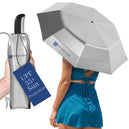
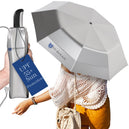
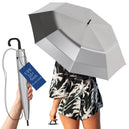
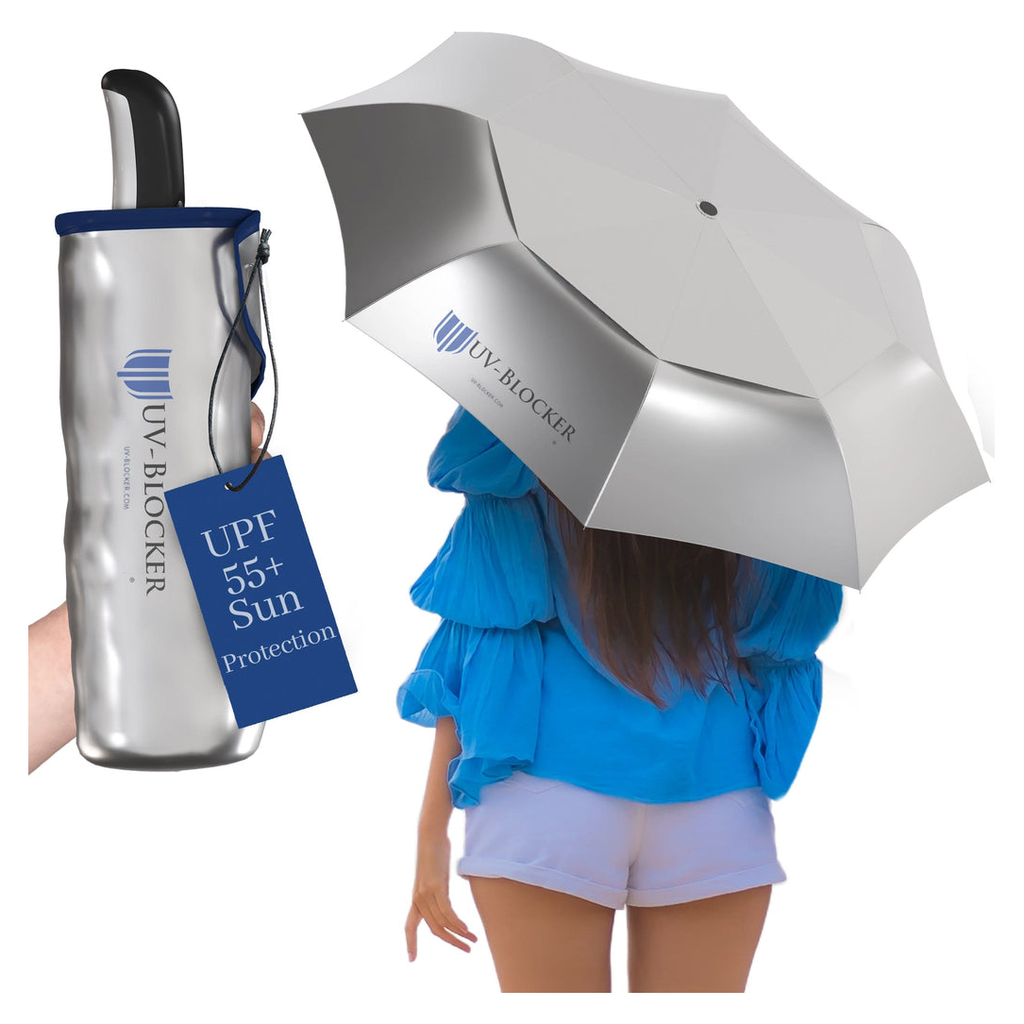
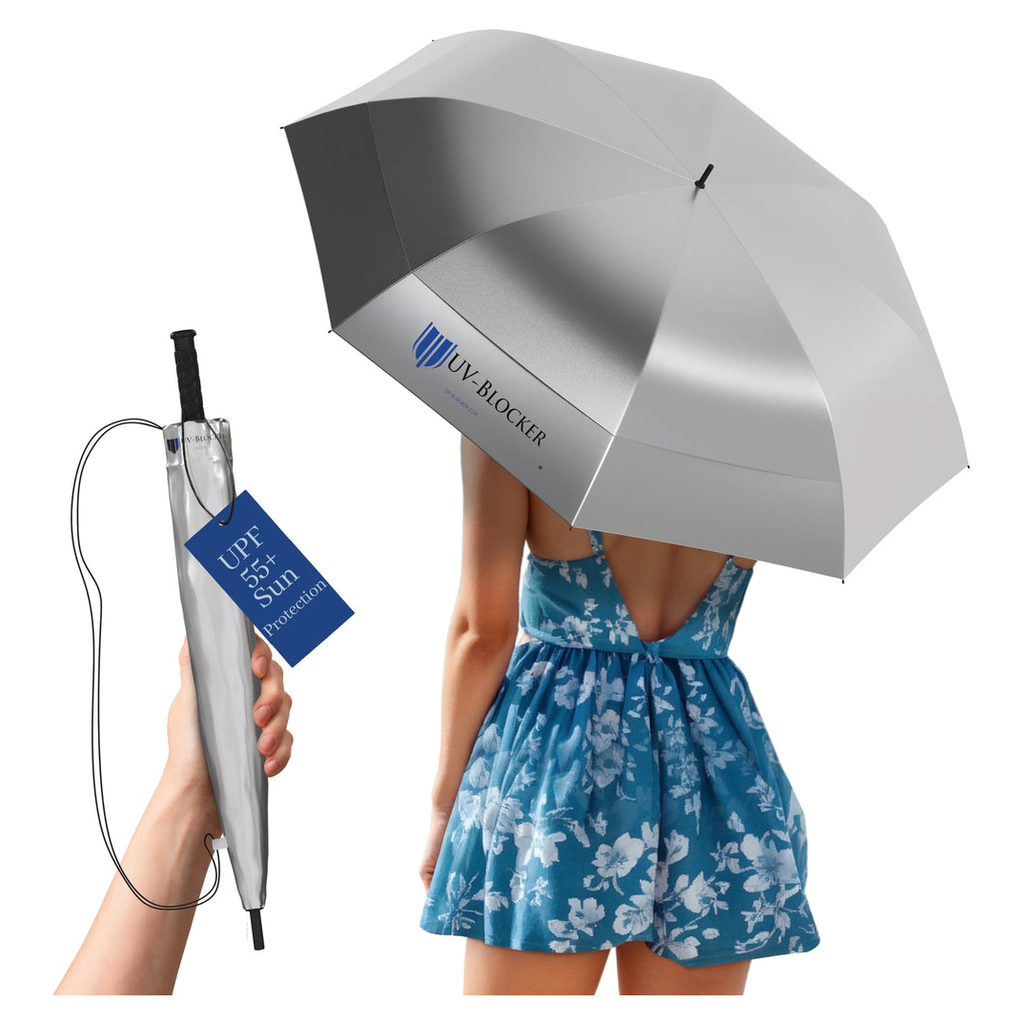
A UPF 50+ UV-blocking umbrella provides the consistent, continuous shade protection that is essential under Australia's intense sun. The UV-Blocker umbrella, with its patented Solarteck® reflective coating, blocks 99% of UV rays and reduces perceived temperature by up to 15°F — a meaningful advantage for outdoor activities in Australia's climate. It is the only umbrella of its kind approved by the Melanoma International Foundation.
Sun Safety in Canada
Canada experiences meaningful UV exposure throughout the year, with UV Index levels regularly reaching 8–10 or higher during summer months in cities such as Vancouver, Calgary, Toronto, and Ottawa. Health Canada and Environment and Climate Change Canada publish daily UV Index forecasts and recommend protective measures whenever the index exceeds 3 — a threshold reached on most clear days between May and August across the country.
Key resources for Canadian sun safety:
- Health Canada UV Index: Published daily via the Environment and Climate Change Canada weather portal (weather.gc.ca). Canadians can track UV levels by city and receive alerts when protection is recommended.
- Canadian Cancer Society: Recommends UPF 50+ clothing, hats, sunscreen, and shade-seeking as primary sun protection strategies. Physical UV barriers — such as UPF 50+ umbrellas — are emphasized for prolonged outdoor exposure.
- Canadian Dermatology Association: Endorses broad-spectrum sun protection strategies, including shade structures and UV-blocking accessories, especially for individuals with fair skin or a personal or family history of skin cancer.
For Canadians spending extended time outdoors — whether working, playing sports, or enjoying recreational activities — a UV-blocking umbrella rated UPF 50+ provides continuous, reapplication-free protection. The UV-Blocker umbrella, independently tested and approved by the Melanoma International Foundation, blocks 99% of UV rays and keeps users up to 15°F cooler — making it a practical and reliable companion for Canadian summers.
Frequently Asked Questions
What are the specific UV risks for Heat Illness Prevention Plan for HVAC and Roofing Contractors?
Outdoor workers like Heat Illness Prevention Plan for HVAC and Roofing Contractors typically accumulate 2–3× more UV exposure than indoor office workers. Chronic UV exposure increases melanoma and non-melanoma skin cancer risk significantly. OSHA recognizes UV radiation as a workplace hazard, and workers' compensation claims related to occupational UV exposure are rising. Proper sun protection is both a health and occupational safety requirement.
Does OSHA require sun protection for outdoor workers?
OSHA's General Duty Clause requires employers to protect workers from recognized hazards, including UV radiation. While no specific UV standard exists for most industries, OSHA guidance on heat illness prevention overlaps with UV protection. Several states have stronger outdoor worker heat and UV protection regulations. Employers should provide shade, schedule breaks, and supply sun protection equipment.
What sun protection equipment works best for active outdoor work?
For workers who need freedom of movement, the most effective combination is: (1) UPF 50+ work shirts and pants, (2) wide-brim hard hat or sun-protective hat, (3) SPF 50 water-resistant sunscreen on exposed skin, and (4) a portable clamp or magnetic-base UV umbrella that creates shade at a fixed workstation. UV-Blocker's ServiceShield umbrella was specifically designed for rooftop and outdoor workstation use.
How often should outdoor workers apply sunscreen during a shift?
Sunscreen should be reapplied every 2 hours, and immediately after heavy sweating or toweling off. Most outdoor workers underapply — dermatologists recommend 1 oz (shot glass amount) for full body coverage. Water-resistant SPF 50+ formulas last longer during sweating. Physical (mineral) sunscreens tend to be more stable under direct sun than chemical formulas.
What long-term skin damage should outdoor workers watch for?
Watch for actinic keratoses (rough, scaly patches), unusual moles or growths that change in size, shape, or color, and persistent sores that don't heal. Annual skin cancer screenings with a dermatologist are strongly recommended for outdoor workers with 10+ years of occupational sun exposure. Early detection dramatically improves outcomes.
Professional Sun Safety Protocol for Heat Illness Prevention Plan for HVAC and Roofing Contractors
- Schedule intensive UV work (roof work, outdoor inspections) before 10am or after 4pm when UV index is lowest
- Use UV-blocking umbrella attachments at fixed workstations — they eliminate ambient UV exposure during breaks
- Establish a buddy system: coworkers check each other for missed sunscreen areas and early sunburn signs
- Keep sunscreen in the work vehicle or tool bag — accessibility increases compliance
- Document sun protection training in safety briefings — it creates legal compliance records and reinforces habits
- Consider UV-protective safety eyewear — eyes are often neglected in outdoor worker sun protection protocols
Frequently Asked Questions
What are the specific UV risks for Heat Illness Prevention Plan for HVAC and Roofing Contractors?
Outdoor workers like Heat Illness Prevention Plan for HVAC and Roofing Contractors typically accumulate 2–3× more UV exposure than indoor office workers. Chronic UV exposure increases melanoma and non-melanoma skin cancer risk significantly. OSHA recognizes UV radiation as a workplace hazard, and workers' compensation claims related to occupational UV exposure are rising. Proper sun protection is both a health and occupational safety requirement.
Does OSHA require sun protection for outdoor workers?
OSHA's General Duty Clause requires employers to protect workers from recognized hazards, including UV radiation. While no specific UV standard exists for most industries, OSHA guidance on heat illness prevention overlaps with UV protection. Several states have stronger outdoor worker heat and UV protection regulations. Employers should provide shade, schedule breaks, and supply sun protection equipment.
What sun protection equipment works best for active outdoor work?
For workers who need freedom of movement, the most effective combination is: (1) UPF 50+ work shirts and pants, (2) wide-brim hard hat or sun-protective hat, (3) SPF 50 water-resistant sunscreen on exposed skin, and (4) a portable clamp or magnetic-base UV umbrella that creates shade at a fixed workstation. UV-Blocker's ServiceShield umbrella was specifically designed for rooftop and outdoor workstation use.
How often should outdoor workers apply sunscreen during a shift?
Sunscreen should be reapplied every 2 hours, and immediately after heavy sweating or toweling off. Most outdoor workers underapply — dermatologists recommend 1 oz (shot glass amount) for full body coverage. Water-resistant SPF 50+ formulas last longer during sweating. Physical (mineral) sunscreens tend to be more stable under direct sun than chemical formulas.
What long-term skin damage should outdoor workers watch for?
Watch for actinic keratoses (rough, scaly patches), unusual moles or growths that change in size, shape, or color, and persistent sores that don't heal. Annual skin cancer screenings with a dermatologist are strongly recommended for outdoor workers with 10+ years of occupational sun exposure. Early detection dramatically improves outcomes.
Professional Sun Safety Protocol for Heat Illness Prevention Plan for HVAC and Roofing Contractors
- Schedule intensive UV work (roof work, outdoor inspections) before 10am or after 4pm when UV index is lowest
- Use UV-blocking umbrella attachments at fixed workstations — they eliminate ambient UV exposure during breaks
- Establish a buddy system: coworkers check each other for missed sunscreen areas and early sunburn signs
- Keep sunscreen in the work vehicle or tool bag — accessibility increases compliance
- Document sun protection training in safety briefings — it creates legal compliance records and reinforces habits
- Consider UV-protective safety eyewear — eyes are often neglected in outdoor worker sun protection protocols