

If you've got psoriasis, you've probably heard both sides: "Get some sun, it'll help your skin" and "Stay out of the sun, you'll flare." Here's the frustrating part — they're both right. More than 7.5 million American adults live with this contradiction every summer. The same UV-B rays that slow plaque growth can also cause a sunburn that spawns brand-new lesions through the Koebner phenomenon. That line between help and harm? It's thinner than most people realize.
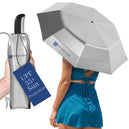
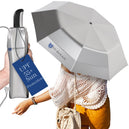
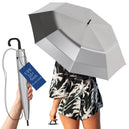
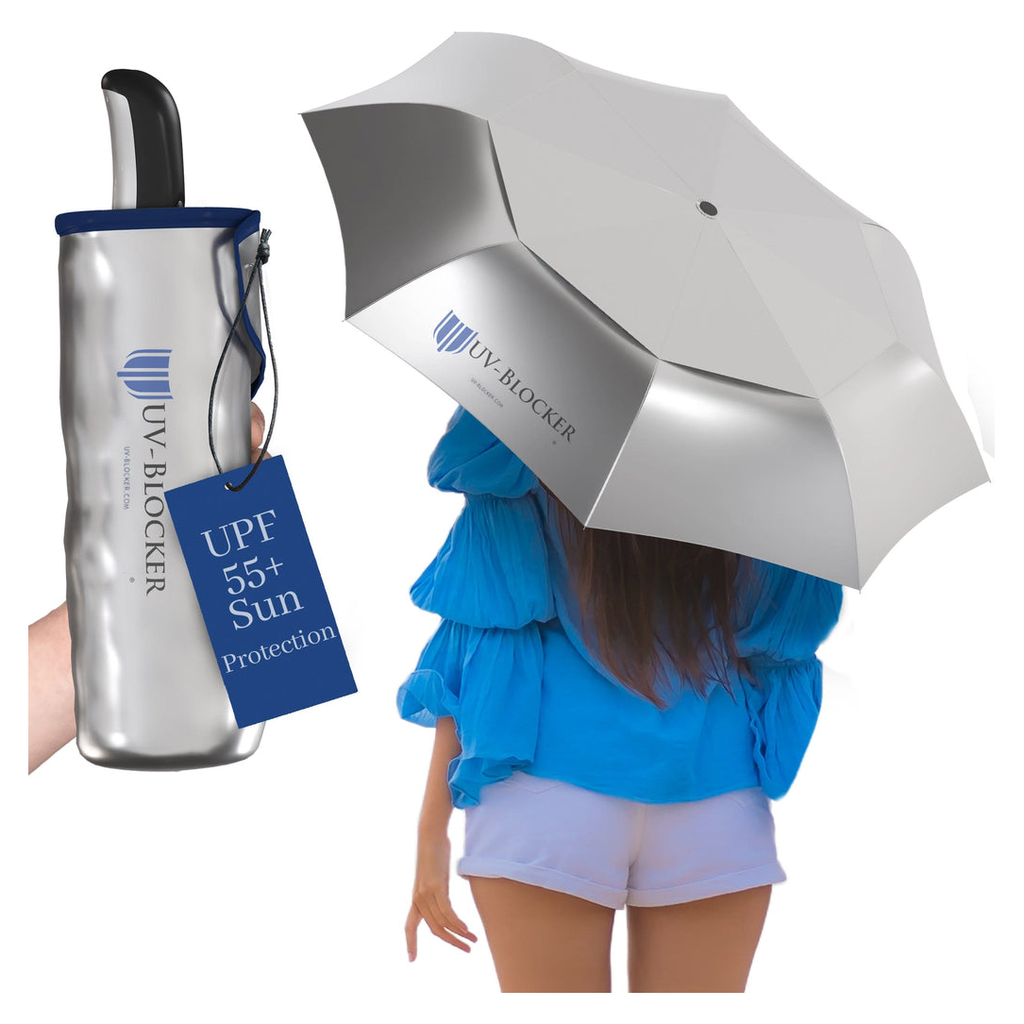
This guide untangles the science behind psoriasis sun exposure, walks through why sunscreen alone isn't the fix most people assume, and lays out a step-by-step controlled exposure protocol. The core idea is something no other resource covers: using a UPF 50+ umbrella as a "manual phototherapy" tool — real physical shade that bridges the gap between a dermatologist's UV booth and your backyard.
Why Does UV-B Light Help Psoriasis?
UV-B light slows the runaway skin cell turnover in psoriatic plaques from 4-7 days back toward the normal 28-day cycle, reducing both inflammation and thickness.
Here's what's happening under the surface. Healthy skin produces about 1,246 cells per day and takes roughly 28 days to cycle through. Psoriatic skin? It's cranking out 35,000 cells daily on a 4-7 day timeline. That flood of cells can't mature properly, so they pile up into the thick, inflamed plaques you know too well.
UV-B radiation (280-315nm) is the main clinical tool that pushes back against this. It calms the overactive immune response and slows keratinocyte production. Narrowband UV-B phototherapy uses a precise 311nm wavelength, and it clears plaques in up to 70 percent of patients over 20 to 36 sessions — usually two to three visits per week.

But natural sunlight doesn't work like a phototherapy booth. It's a blunt instrument — you get therapeutic UV-B mixed inseparably with UV-A (315-400nm), which penetrates deeper, ages the skin, and doesn't help psoriasis at all. You can't filter one out and keep the other with your bare eyes.
So if UV-B genuinely helps, why not just sit outside longer? Because there's a catch — and it's a serious one.
How Does Sunburn Trigger New Psoriasis Plaques?
Sunburn triggers the Koebner phenomenon — new psoriasis plaques forming right where the burn happened — and it affects roughly 25-30 percent of patients. Even previously clear skin isn't safe.
Think of the Koebner phenomenon as your skin's overreaction to injury. Any physical trauma (a scratch, a cut, a burn) can spawn fresh plaques at the exact spot where the damage occurred. Sunburn counts. What starts as a mild pink flush can become a full patch of scaling plaques within a few days.
According to the Cleveland Clinic, between 25 and 30 percent of psoriasis patients deal with Koebnerization after skin injuries, and sunburn is one of the recognized triggers. The gap between "just enough UV-B to help" and "too much UV-B, hello sunburn" is narrow — especially if you're fair-skinned (Fitzpatrick Type I or II).
A 2024 JAAD study put numbers to the problem: 55.4 percent of adults with psoriasis reported sunburns, compared to 45.6 percent without psoriasis. People with psoriasis burn more often, which only compounds the flare risk.
So you need the UV-B, but you really can't afford the burn. Most people's first instinct is to reach for sunscreen — but that creates its own set of problems.
Why Isn't Sunscreen Enough for Psoriasis Sun Protection?
Broad-spectrum sunscreen blocks therapeutic UV-B right alongside harmful UV-A, chemical formulas can sting inflamed plaques, and SPF wears off in two to three hours — sometimes sooner if you're sweating.
Here's the dilemma most psoriasis patients don't realize until they've tried it: a broad-spectrum sunblock doesn't know the difference between UV-B rays you want and UV-A rays you don't. It blocks everything. That means you're wiping out the exact wavelengths that could be helping your skin.
Then there's the irritation factor. Chemical ingredients like oxybenzone, avobenzone, and octinoxate aren't gentle on already-inflamed skin. Mineral sunscreens with zinc oxide or titanium dioxide work better on healthy patches, but try rubbing a thick paste over raised plaques — it's uncomfortable, it cakes, and it's hard to wash off without aggravating the area.
And SPF doesn't last forever. Two to three hours is the standard window, but sweat, water, and friction eat into that clock fast. You don't get an alert when it stops working.
The fundamental problem? Sunscreen is an all-or-nothing barrier. It either blocks everything or protects nothing. But psoriasis patients need something different: controlled, timed access to UV-B, then full shutdown when the dose is done. That kind of on/off control calls for a different approach entirely.
Which Psoriasis Medications Make Sun Exposure More Dangerous?
Methotrexate, azathioprine, and other immunosuppressants prescribed for psoriasis cause photosensitivity — and the resulting sunburn-like reactions can show up within minutes of UV exposure.
This is one a lot of patients don't think about until it happens. If you're on methotrexate (the most common systemic psoriasis drug), your skin now reacts to sunlight differently than it used to. The UK government's GOV.UK drug safety update warns methotrexate patients to stay out of strong sunlight. They've documented cases of blistering, redness, and swelling within minutes — even on parts of the body that normally handle sun without trouble.
Azathioprine, cyclosporine, and several biologics carry the same warnings. Anyone taking these medications that cause sun sensitivity has a much smaller window of safe outdoor time than they might expect.
For people on these drugs, shade stops being a comfort choice and becomes a medical one. Sunscreen wears off unpredictably, and when a photosensitivity reaction can start in minutes, "I think my SPF is still working" isn't a gamble worth taking. Talk to your prescriber about your specific risks, but recognize that physical shade — something that doesn't degrade or wash off — adds a reliable safety layer.
There's another reason psoriasis patients need thoughtful UV-B access, though, and it goes beyond the skin itself: vitamin D.
How Does Vitamin D Affect Psoriasis?
Psoriasis patients tend to have lower vitamin D levels than average, and psoriatic plaques themselves are less efficient at producing the vitamin.
Your skin is actually where most vitamin D production happens. When UV-B hits the skin, it converts a compound called 7-dehydrocholesterol into previtamin D3. That's the body's primary vitamin D factory — not supplements, not food, but sunlight on skin.
Research in Reviews in Endocrine and Metabolic Disorders found that psoriasis patients have noticeably lower serum vitamin D than healthy control groups. And here's the catch-22: psoriatic plaques themselves are less efficient at vitamin D synthesis. So the condition lowers your D levels, and lower D levels make the condition harder to manage.
Supplements help, but most dermatologists agree they don't fully replace what UV-B skin synthesis does naturally. People often ask, can you get vitamin D in the shade? A little ambient light contributes, but structured direct exposure is still the most reliable way.
Bottom line: psoriasis patients need some UV-B access for both plaque management and vitamin D. The real question with psoriasis sun exposure is how to get it outdoors without overdoing it.
What Is the Safest Sun Protocol for Psoriasis Patients?
A controlled-exposure protocol pairs timed UV-B sessions (based on your skin type) with physical shade between doses — giving you phototherapy-like control without a clinic visit.
The idea is simple: treat outdoor sunlight the way a dermatologist treats UV in the clinic — as a measured dose, not a free-for-all. Here's a six-step protocol you can start with this week.
Step 1: Check the UV Index A higher UV index means a shorter safe window. When you're first starting out, aim for moderate conditions (index 3 to 5). That gives you enough UV-B to get some benefit without overwhelming your skin right away.
Step 2: Apply mineral sunscreen to unaffected skin only Use zinc oxide or titanium dioxide on healthy, clear areas. Leave the psoriatic plaques open so they can absorb the UV-B you're after. Avoid chemical formulas on inflamed patches — they tend to sting.

Step 3: Start with short exposure based on Fitzpatrick skin type Your safe starting point depends on how easily you burn. The table below gives conservative numbers — when in doubt, start shorter and work up.
| Fitzpatrick Type | Description | Initial Exposure | Daily Increase |
|---|---|---|---|
| Type I | Very fair, always burns | 3-5 minutes | 30 seconds |
| Type II | Fair, burns easily | 5-8 minutes | 30-60 seconds |
| Type III | Medium, sometimes burns | 8-12 minutes | 60 seconds |
| Type IV | Olive, rarely burns | 12-15 minutes | 60-90 seconds |
| Type V | Brown, very rarely burns | 15-20 minutes | 90 seconds |
| Type VI | Dark brown/black, never burns | 20-25 minutes | 90-120 seconds |
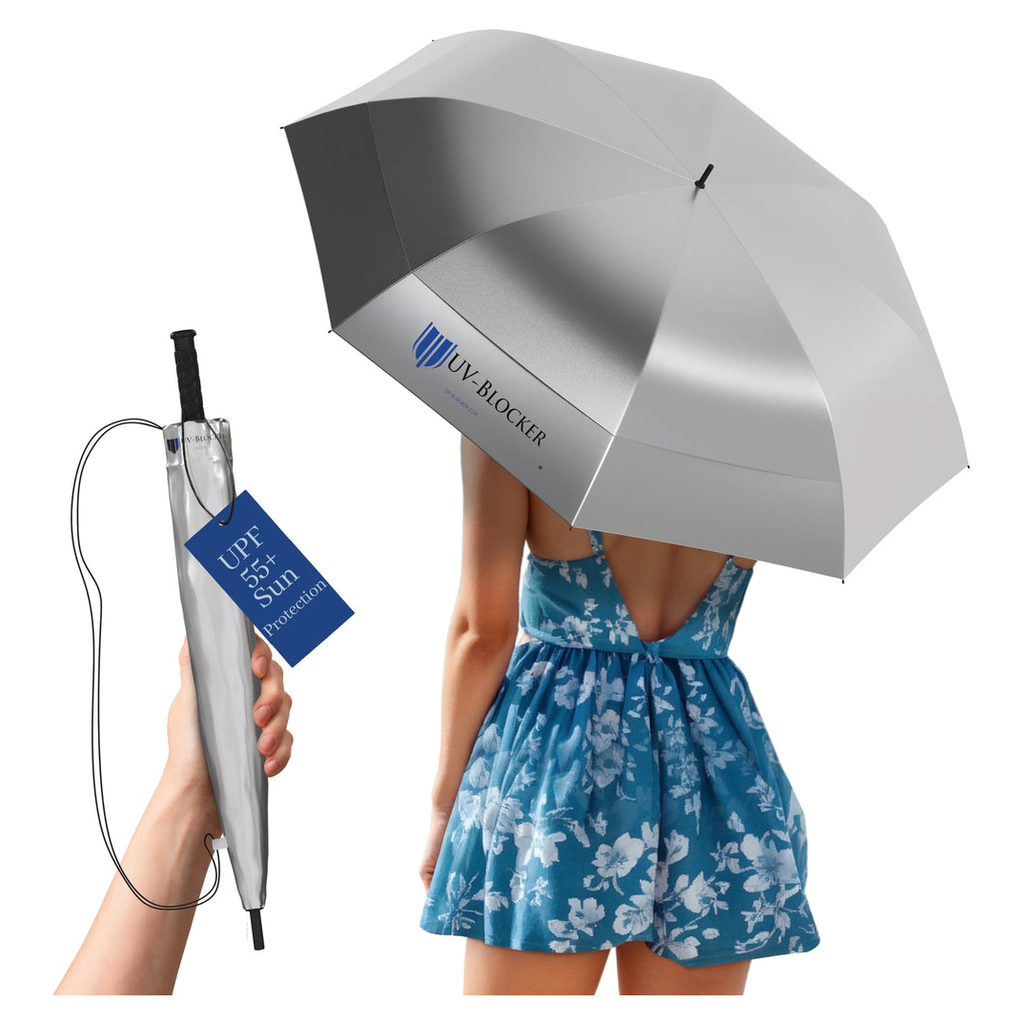
Step 4: Step into UPF 50+ shade when your timer goes off This is where the "manual phototherapy" concept kicks in. When your session's done, you want full UV cutoff — not another layer of lotion. A UPF 50+ compact umbrella does exactly that. The fabric (tested to AATCC TM183-2020 standards) blocks 100 percent of UV-B and 99.97 percent of UV-A. Nothing to rub on sore skin, nothing that wears off.
Step 5: Build up slowly Each session, add 30 to 90 seconds depending on your skin type. The golden rule: never let your skin turn pink. If it's pink, you've gone too far, and that's the kind of minor burn that can trigger Koebner flares.
Step 6: Keep a sun journal Write down the UV index that day, how many minutes you spent in direct sun, and what your skin looked like afterward. If you spot new plaques or extra redness, dial it back and check in with your dermatologist.
This approach works well through the warm months. But when the seasons shift, the strategy needs adjusting too.
Seasonal Strategies: Summer Outdoors vs. Winter Light Therapy
Most psoriasis patients clear up in summer when UV-B is plentiful, then flare again in winter — and each season requires a different approach.
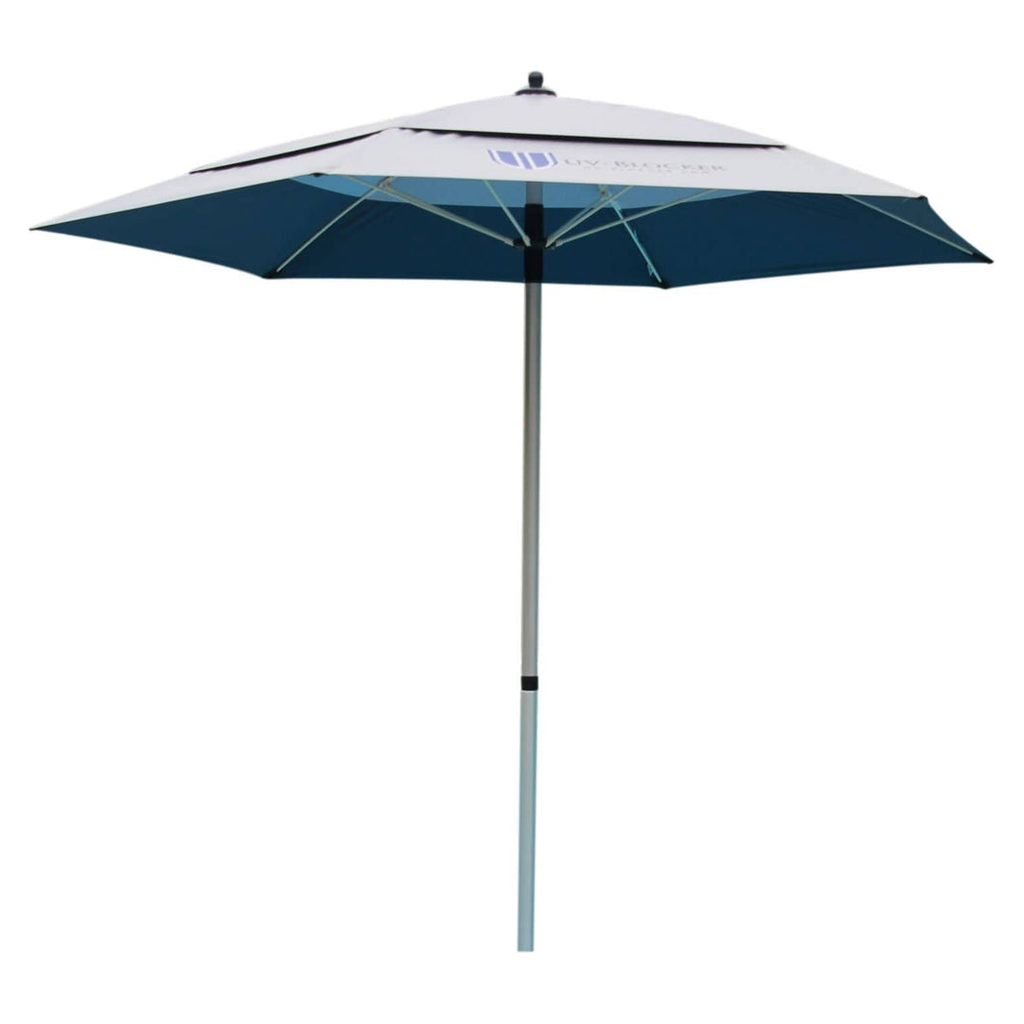
Summer's the easier half. There's plenty of natural UV-B available, and the controlled-exposure protocol above fits right in. With a travel umbrella in your bag, you can spend hours at the park, the beach, or a game — stepping into portable shade between timed UV doses instead of packing up early.
Winter's tougher. UV-B levels fall off sharply, especially if you're above 35 degrees latitude. That's when a lot of patients notice plaques thickening again and flares returning.
To get through the dark months, many dermatologists recommend indoor narrowband UV-B phototherapy two to three times per week. Some prescribe home light therapy units for daily use. Vitamin D supplementation also becomes important since your skin isn't producing much on its own.
The principle stays the same regardless of the calendar: deliberate, timed exposure, then shade. Only the source of UV-B and the session length change.
Frequently Asked Questions About Psoriasis Sun Exposure
Psoriasis sun exposure questions come up constantly in dermatologist offices and online patient forums. Here are straight answers to the ones that get asked most.
Is sun good or bad for psoriasis?
It's both, which is what makes it tricky. UV-B slows the rapid cell turnover behind plaques, but if you stay out too long and burn, that sunburn can trigger brand-new lesions through the Koebner phenomenon. The sweet spot is short, timed sessions followed by full physical shade — the same principle dermatologists use in phototherapy clinics.
Can sunburn trigger a psoriasis flare?
Absolutely. Sunburn activates Koebner responses in about 25-30 percent of psoriasis patients. New plaques can show up right on the burned area, even if that skin was clear before. Fair-skinned people (Fitzpatrick Types I and II) carry the highest risk, but no one's immune to it.
How much sun exposure is safe for psoriasis?
That depends on skin type. Very fair skin should start at 3-5 minutes; darker skin types can handle 20-25 minutes initially. Increase by 30-120 seconds per day, and always stop before your skin turns even slightly pink. Check the Fitzpatrick table above for your starting point.
Does vitamin D help psoriasis?
It plays an important role. Psoriasis patients tend to run low on vitamin D, and the plaques themselves are less efficient at producing it — which creates a frustrating cycle. Controlled UV-B exposure plus supplements (talk to your dermatologist about dosing) is the most balanced approach.
Can I use a tanning bed for psoriasis?
Dermatologists advise against it. Tanning beds blast out UV-A and UV-B at unpredictable intensities, raising skin cancer risk without any of the calibration that makes clinical phototherapy safe. A medical UV-B unit uses a precise 311nm wavelength at controlled doses — tanning beds don't come close to that.
Does psoriasis get worse in summer or winter?
For most people, summer brings improvement (more UV-B) and winter brings flares (less UV-B). But summer sunburn can trigger Koebner flares, so it's not risk-free. And some folks with inverse psoriasis actually get worse in heat and humidity.
Can psoriasis medication make me sun-sensitive?
Yes — and it's more common than people realize. Methotrexate, azathioprine, and several biologics all cause photosensitivity. The UK government issued a safety update specifically warning methotrexate users about sunburn-like reactions that can start within minutes. If you're on any of these, shade that doesn't wear off matters more than ever.
Conclusion
Managing psoriasis sun exposure doesn't have to mean hiding indoors or gambling every time you step outside — sunlight becomes a tool you control.
- UV-B helps psoriasis, but too much causes sunburn — and sunburn triggers new plaques through the Koebner phenomenon.
- Sunscreen alone blocks the UV-B you actually want, and chemicals can irritate inflamed skin.
- Physical shade acts as "manual phototherapy" — timed UV-B doses followed by complete UV cutoff, no chemicals needed.
- Psoriasis medications like methotrexate increase sun sensitivity, making reliable shade a medical priority.
- Vitamin D management takes a two-pronged approach: controlled sun access plus supplementation.
Here's something you can do right now: grab a notebook and track your UV index, exposure time, and skin response for the next seven days. That data gives you (and your dermatologist) a real baseline to work from.
For outdoor UV protection that doesn't wear off or irritate psoriatic skin, UV-Blocker's UPF 50+ compact umbrella is AATCC TM183-2020 tested — blocking 100 percent of UV-B and 99.97 percent of UV-A. No chemicals, no reapplication, no guesswork. Check out the compact and travel options.
If you're managing another sun-sensitive condition, these guides may also help: eczema sun protection, lupus sun protection, and rosacea sun protection.