

She finished her last radiation session, walked to her car in the hospital parking lot, and felt the treated skin on her chest burn within minutes. SPF 50 sunscreen was already on. It didn't matter.
Radiation hadn't just irritated her skin temporarily. It had permanently changed how that specific patch of skin responds to ultraviolet light.
Roughly 1.2 million Americans receive radiation therapy each year. Between 85% and 95% develop radiation dermatitis in the treatment area, ranging from mild redness to severe blistering. Yet most post-treatment sun protection advice treats irradiated skin like it's no different from healthy skin. That's a problem, because radiation-damaged skin needs a fundamentally different protection strategy.
This guide covers exactly how radiation changes skin at the cellular level, why those changes are permanent and localized (unlike chemo photosensitivity), the timeline for safe sun reintroduction, and treatment-site-specific strategies that protect without requiring painful skin contact.
How Does Radiation Therapy Change Your Skin's Relationship with the Sun?
Radiation therapy destroys melanocytes, damages DNA repair mechanisms, and eliminates sweat and oil glands permanently in the treatment field, creating lifelong localized sun sensitivity.
Healthy skin has built-in defenses against UV damage. Melanocytes produce melanin to absorb ultraviolet rays. DNA repair enzymes fix the small mutations that daily sun exposure causes. Sweat glands help cool things down. Oil glands keep the moisture barrier intact. Together, they're a well-tuned system.
Radiation throws a wrench into all of it, but only in the area being treated. Those high-energy beams don't discriminate between tumor cells and the surrounding tissue's infrastructure. Melanocytes take a hit, so the skin loses its natural UV filter. The DNA repair machinery gets damaged too. That means sun-induced mutations pile up faster than the body can fix them.
The sweat and oil glands within the treatment zone are often permanently destroyed as well. Without sweat glands, that patch of skin can't cool itself through evaporation. Without oil glands, the moisture barrier thins and cracks more easily.
These changes are localized to the treatment field. Skin a few inches outside the radiation zone retains its normal UV defenses. This localization is the single most important fact for building a practical protection plan, and it's the key difference between radiation and chemotherapy sun sensitivity.
That's exactly why organizations like the Melanoma International Foundation push for certified, medical-grade UV protection for patients with compromised skin, not just any drugstore sun product.
What Is the Difference Between Radiation and Chemo Sun Sensitivity?
Radiation damage is localized and permanent, while chemotherapy sun sensitivity is systemic and temporary, resolving after treatment ends.
Most patients don't realize how different these two really are. Chemotherapy sun sensitivity is a drug side effect. Photosensitizing medications circulate through the bloodstream, making the entire body more reactive to UV light. When the drugs clear the system, typically within weeks to months after the final infusion, sensitivity returns to baseline.
Radiation sensitivity works differently at every level. It isn't a systemic drug effect. It's structural damage to specific tissue in a specific location. The melanocytes, glands, and DNA repair mechanisms in the treatment field don't regenerate to pre-treatment levels. Here's how that plays out practically: half a year after finishing chemo, most patients go back to their normal sun routine with standard precautions. Half a year after finishing radiation? That treated patch of skin still needs extra protection. And it'll need it for years, possibly decades.

| Factor | Chemotherapy | Radiation Therapy |
|---|---|---|
| Affected Area | Entire body (systemic) | Treatment field only (localized) |
| Duration | Temporary, resolves after treatment | Often permanent |
| Mechanism | Drug-induced photosensitivity | Structural skin damage (melanocyte/gland destruction) |
| Skin Changes | No structural damage | Loss of melanocytes, sweat glands, oil glands |
| Protection Scope | Whole-body coverage needed | Targeted protection of treatment site |
What About Radiation Recall?
There's another wrinkle worth knowing about. Radiation recall is when the skin in a previously treated zone flares up months or even years later, almost like the tissue "remembers" the original injury. One breast cancer patient experienced it 40 years after finishing radiation. Forty years.
Here's what trips people up, though: recall isn't usually caused by sunlight. It's medications that trigger it, things like certain chemo drugs, antibiotics, and other agents that activate the old inflammatory pathway. A review of 129 documented cases confirmed that pharmaceutical triggers dominate. So if a new prescription is on the table, mentioning prior radiation sites to the prescribing doctor matters.
When Can You Go Back in the Sun After Radiation Therapy?
During active treatment, avoid direct sun on the treated area entirely. After treatment ends, reintroduce sun exposure gradually over 6 to 12 months with maximum protection on the irradiated site.
During Treatment (Active Phase)
The irradiated skin is acutely inflamed and healing. Direct sun exposure on the treatment field risks worsening radiation dermatitis and can interfere with skin recovery between sessions. Physical shade barriers are particularly valuable here because the skin is often too tender for sunscreen application.
Skin outside the treatment area follows normal sun protection guidelines during this period.
Recovery Phase (0 to 6 Months Post-Treatment)
Most radiation oncologists recommend keeping the treated skin covered or shaded during this window. The dermis is still remodeling. New collagen is forming. Premature UV exposure can lead to increased pigmentation changes or prolonged healing.
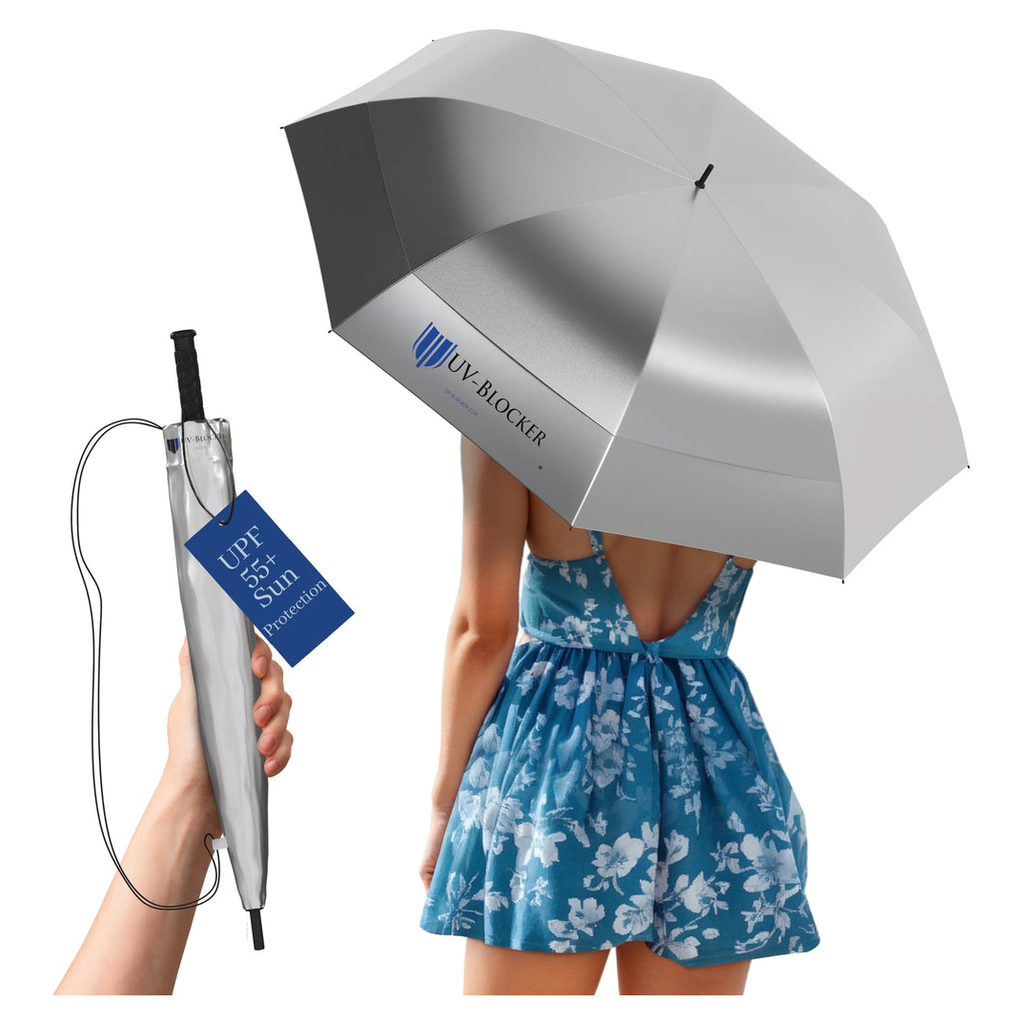
Physical barriers like UPF 50+ umbrellas and protective clothing are preferred over sunscreen during this phase. They provide UV blocking without requiring contact with skin that may still be fragile, peeling, or hypersensitive.
Long-Term (6 to 12+ Months and Beyond)
The irradiated skin will never return to its pre-treatment UV tolerance. That isn't cause for alarm. It's simply a reality that requires ongoing awareness, much like managing any other chronic health consideration.
Lifetime sun-smart habits on the treated area include wearing UPF clothing over the site when practical, using a UV umbrella during extended outdoor time, and applying mineral sunscreen to the area when it's healed enough to tolerate application. Research on Hodgkin's lymphoma survivors found the standardized incidence ratio for basal cell carcinoma in irradiated fields was 5.2, rising to 15.9 after 35 years of follow-up. Protecting the treated area is a long game.
What Are the Best Sun Protection Strategies by Treatment Site?
Head and neck patients need hat-and-umbrella combinations, chest and breast patients benefit from UPF clothing layered with portable shade, and extremity patients require wraparound coverage strategies.
Generic "wear sunscreen and a hat" advice ignores a basic reality: different treatment sites face different UV exposure patterns and clothing-coverage challenges.
Head and Neck Radiation
This is the most exposed treatment site. Hats help but don't block UV reflected off pavement, water, or sand, and they leave the neck and jaw exposed. A UV umbrella creates an overhead shade canopy that covers the entire head and neck zone without touching the skin.
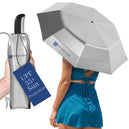
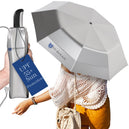
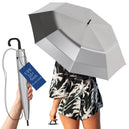
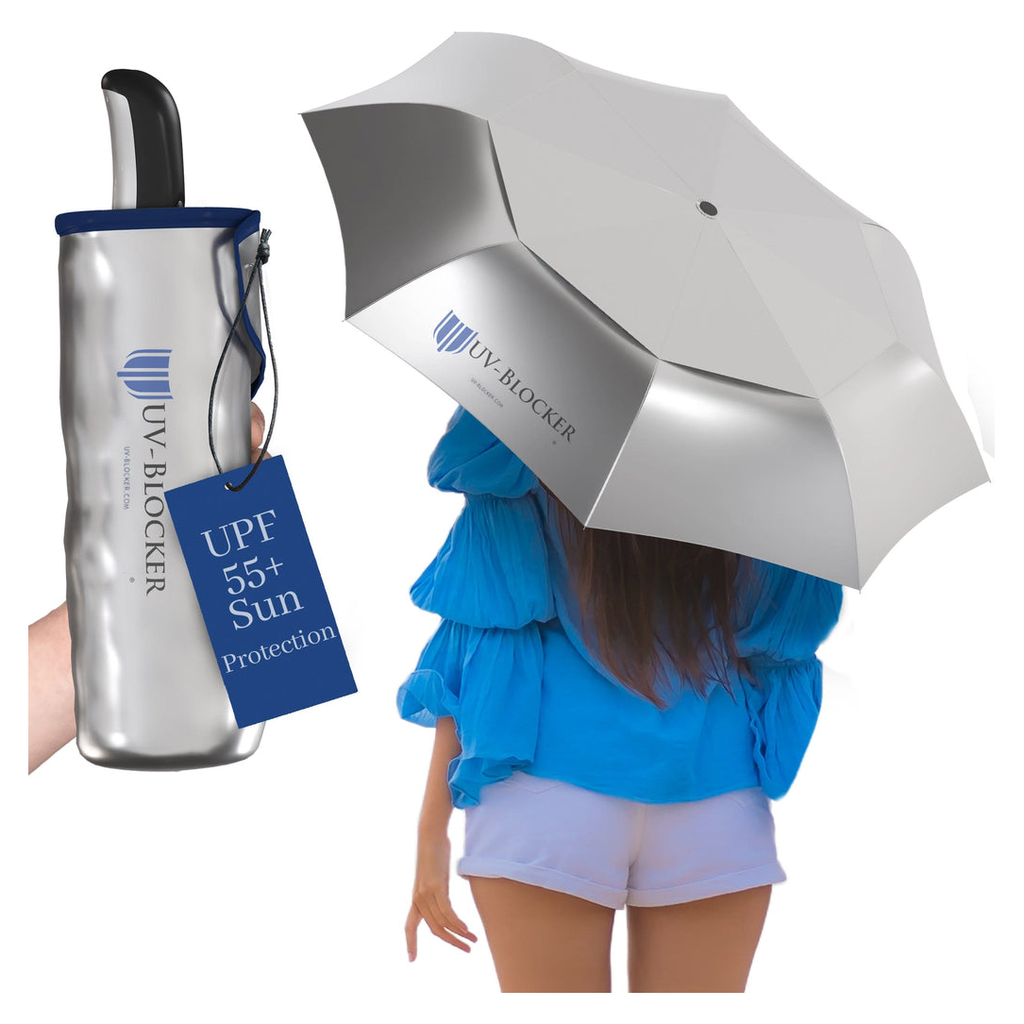
For patients who received radiation to the scalp, ears, or face, the combination of a wide-brim hat plus a UPF 50+ compact umbrella provides layered protection. UV-Blocker's compact model folds to 11.5 inches, small enough to tuck into a bag for every outing.
Chest and Breast Radiation
Post-mastectomy and post-lumpectomy patients often deal with radiation to an area that clothing usually covers. UPF-rated tops and tanks are the foundation. For outdoor time when necklines expose the treated area, or when scar tissue from surgery plus radiation creates an especially vulnerable zone, a portable shade umbrella adds a second layer.
Extremity Radiation (Arms and Legs)
UPF sleeves and pants provide the most practical daily coverage. For seated situations like outdoor dining, spectator sports, or patio time, a UV umbrella shades the treated limb without wrapping it in fabric during hot weather.
Why Does Physical Shade Beat Sunscreen on Irradiated Skin?
Irradiated skin is often too painful, fibrotic, or fragile for sunscreen application and reapplication. Physical shade from UPF-rated umbrellas and clothing provides protection without skin contact.
The "apply and reapply every two hours" approach that works for healthy skin breaks down when the skin in question hurts to touch. During healing phases, even gentle application of mineral sunscreen can cause stinging, irritation, or mechanical disruption to fragile new tissue.
Chemical sunscreens (avobenzone, oxybenzone, octinoxate) absorb into the skin, which can irritate compromised moisture barriers. Mineral sunscreens (zinc oxide, titanium dioxide) sit on the surface and are generally better tolerated, but they still require physical contact, rubbing, and reapplication.
Physical shade eliminates the contact problem entirely. A UPF 50+ umbrella blocks UV rays before they reach the skin. No application, no reapplication, no touching sensitive tissue. For patients whose treated area is painful, thickened with fibrosis, or still healing, this is the practical difference between protection that actually gets used and protection that stays in the medicine cabinet.
The long-term stakes reinforce the importance of consistent protection. In irradiated fields, the risk of developing squamous cell carcinoma or basal cell carcinoma is elevated for decades after treatment. The BCC risk (SIR of 5.2, increasing to 15.9 at 35 years) underscores that UV protection on the treated area isn't optional. It's a long-term medical necessity.
Post-Radiation Sun Protection Kit: Building Your Radiation Therapy Sun Protection Strategy
An effective radiation therapy sun protection kit combines a UPF 50+ umbrella, UPF clothing, mineral sunscreen, and window film.
The goal isn't perfection on any single front. It's having the right tool for each situation, so protection actually happens consistently.
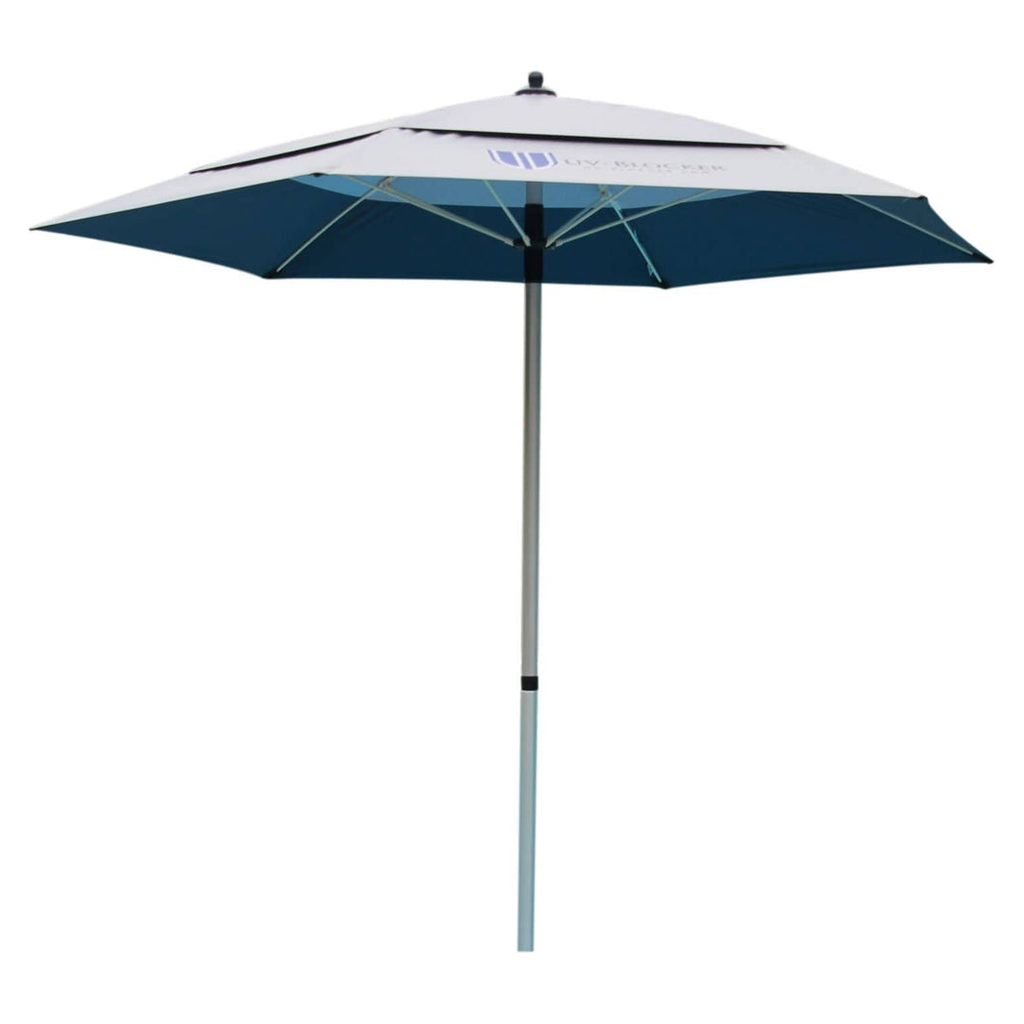
UPF 50+ umbrella. This is the piece most people don't think of, and it's arguably the most useful. UV-Blocker's Compact UV Umbrella and Travel UV Umbrella carry AATCC TM183-2020 certification. They block 100% of UVB and 99.97% of UVA thanks to the patented Solarteck® reflective coating. And both qualify for HSA/FSA reimbursement, which helps when medical bills are already stacking up.
UPF 50+ clothing. Covers the treated area directly. Look for garments rated UPF 50+, which block 98% of UV rays. Lightweight, moisture-wicking fabrics make daily wear comfortable even in summer.
Mineral sunscreen. For exposed skin that tolerates application. Zinc oxide or titanium dioxide formulas sit on the surface rather than absorbing. Apply to areas surrounding the treatment field, and to the treated area itself once the oncology team confirms the skin has healed sufficiently.
Window film. Standard car and home windows block UVB but allow most UVA through. UV-blocking window film protects the treated area during driving and at home near windows. A practical step most patients overlook.
Vitamin D monitoring. Extensive sun avoidance on the treated area, combined with increased indoor time during recovery, can lower vitamin D levels. Work with the oncology team on supplementation and periodic blood tests.
Frequently Asked Questions About Radiation Therapy Sun Protection
Survivors and caregivers ask these questions constantly. Here are straight answers based on current oncology guidance.
How long after radiation can I go in the sun?
Most radiation oncologists recommend avoiding direct sun on the treated area for at least four to six weeks after treatment ends, with lifetime sun-smart habits on irradiated skin.
The treated area will always be more sun-sensitive than before radiation. Gradual reintroduction with physical shade barriers and UPF clothing is safer than relying on sunscreen alone during the early months.
Can radiation recall happen years later?
Yes. Radiation recall reactions have been documented up to 40 years after treatment, though they are primarily triggered by medications rather than sun exposure.
Radiation recall is an inflammatory response in previously treated skin, most commonly caused by certain chemotherapy drugs, antibiotics, and other agents. Patients starting new medications should inform their prescribing physician about prior radiation treatment sites.
Do I need to protect the treated area forever?
Short answer: yes, for most people. The radiation didn't just irritate the skin temporarily. It changed how that tissue handles UV at a structural level, and those changes don't reverse on their own.
That said, it gets easier. The aggressive protection needed in the first year loosens over time. But the irradiated area won't ever handle sun the way it did before treatment. A compact UV umbrella in the car or bag, UPF layers when heading outside, that kind of habit becomes second nature after a while.
Is SPF 30 enough for irradiated skin?
SPF 30 is the floor most dermatologists set for irradiated skin, not the ceiling. But here's the thing: the SPF number isn't really the issue. It's the application.
Rubbing lotion onto skin that stings, cracks, or feels like sandpaper every two hours? That's what breaks down in practice. SPF 30 blocks roughly 97% of UVB. UPF 50+ blocks 98% or more. The gap is small. What's not small is the difference between "protection you have to reapply to painful skin" and "protection that works without touching anything."
Can I use chemical sunscreen on irradiated skin?
Mineral sunscreens with zinc oxide or titanium dioxide are generally better tolerated on irradiated skin than chemical sunscreens, which may cause irritation on compromised moisture barriers.
Check with the radiation oncology team before applying any products to the treated area, especially during the first six months of healing. When in doubt, physical shade barriers provide protection without any product application.
Conclusion
Radiation permanently damages treated skin through melanocyte and gland destruction, requiring lifelong sun protection strategies.
But effective radiation therapy sun protection makes it a manageable reality. Physical shade handles the biggest pain point: protecting skin that can't tolerate being rubbed, lotioned, or reapplied to every couple of hours. Pair that with UPF clothing over the treatment site, mineral sunscreen on whatever skin tolerates it, and window film for the car and house. That combination covers pretty much every daily scenario.
UV-Blocker's UPF 50+ umbrellas are AATCC TM183-2020 certified, blocking 100% of UVB and 99.97% of UVA with patented Solarteck® reflective coating. They're HSA/FSA eligible too, so the cost doesn't have to come out of pocket for patients who are already stretched thin financially.
Start with a conversation with the radiation oncology team about what the treated area specifically needs. Then build the protection kit around that guidance. Lifelong doesn't have to mean difficult.
Key Takeaways
- Yes.
- Dermatologists generally recommend SPF 30+ broad-spectrum sunscreen for patients on photosensitizing medications, with reapplication every 2 hours.
- Absolutely.
- Photosensitivity typically resolves within days to weeks after discontinuing the medication, depending on the drug's half-life and your individual ...
Frequently Asked Questions
Does Radiation Therapy really make skin more sensitive to sunlight?
Yes. Radiation Therapy belongs to a class of medications that can trigger photosensitivity reactions in a subset of patients. This can cause sunburn-like reactions with minimal UV exposure, or trigger phototoxic skin rashes. The reaction severity varies by individual, dosage, and UV intensity. Always review your medication guide and consult your prescribing physician if you notice unusual skin reactions in sunlight.
What SPF should I use if I take this medication?
Dermatologists generally recommend SPF 30+ broad-spectrum sunscreen for patients on photosensitizing medications, with reapplication every 2 hours. However, sunscreen alone isn't sufficient for high UV exposure. Combining sunscreen with physical barriers — UPF 50+ clothing, wide-brim hats, and UV-blocking umbrellas — provides the most reliable protection. UV-Blocker's UPF 50+ umbrellas block 99% of UVA and UVB rays.
Can I still go outdoors while taking this medication?
Absolutely. Most patients can continue outdoor activities with appropriate precautions: avoid peak UV hours (10am–4pm), wear protective clothing, use SPF 30+ sunscreen, and use shade whenever possible. A portable UV-blocking umbrella offers hands-free shade wherever you go, making it a practical solution for patients who need consistent sun avoidance.
How long after stopping the medication until sun sensitivity resolves?
Photosensitivity typically resolves within days to weeks after discontinuing the medication, depending on the drug's half-life and your individual metabolism. Some medications with long half-lives may cause sensitivity for weeks. Continue sun protection until your doctor confirms it's safe to reduce precautions.
What are the signs of a phototoxic reaction vs. a photoallergic reaction?
Phototoxic reactions look like severe, rapid sunburn — they appear within hours of UV exposure and are dose-dependent. Photoallergic reactions involve an immune response, can spread beyond sun-exposed areas, and may appear days later. Both require prompt sun avoidance. See your dermatologist for diagnosis and management.
Sun Safety Essentials for Patients on Photosensitizing Medications
- Keep a UV index app on your phone and avoid going outdoors when the index exceeds 6 without full protection
- Wear UPF 50+ sun-protective clothing on arms and legs, not just sunscreen
- Carry a portable UV-blocking umbrella for shade on demand — especially effective during outdoor commutes, sporting events, or waiting outdoors
- Apply sunscreen to the back of hands and tops of feet — commonly missed areas that receive direct UV
- Inform your pharmacist about all medications you take so they can flag photosensitizing combinations
- Request a window film UV assessment if you drive frequently — car windows block UVB but not all UVA
Key Takeaways
- Yes.
- Dermatologists generally recommend SPF 30+ broad-spectrum sunscreen for patients on photosensitizing medications, with reapplication every 2 hours.
- Absolutely.
- Photosensitivity typically resolves within days to weeks after discontinuing the medication, depending on the drug's half-life and your individual ...
Frequently Asked Questions
Does Radiation Therapy really make skin more sensitive to sunlight?
Yes. Radiation Therapy belongs to a class of medications that can trigger photosensitivity reactions in a subset of patients. This can cause sunburn-like reactions with minimal UV exposure, or trigger phototoxic skin rashes. The reaction severity varies by individual, dosage, and UV intensity. Always review your medication guide and consult your prescribing physician if you notice unusual skin reactions in sunlight.
What SPF should I use if I take this medication?
Dermatologists generally recommend SPF 30+ broad-spectrum sunscreen for patients on photosensitizing medications, with reapplication every 2 hours. However, sunscreen alone isn't sufficient for high UV exposure. Combining sunscreen with physical barriers — UPF 50+ clothing, wide-brim hats, and UV-blocking umbrellas — provides the most reliable protection. UV-Blocker's UPF 50+ umbrellas block 99% of UVA and UVB rays.
Can I still go outdoors while taking this medication?
Absolutely. Most patients can continue outdoor activities with appropriate precautions: avoid peak UV hours (10am–4pm), wear protective clothing, use SPF 30+ sunscreen, and use shade whenever possible. A portable UV-blocking umbrella offers hands-free shade wherever you go, making it a practical solution for patients who need consistent sun avoidance.
How long after stopping the medication until sun sensitivity resolves?
Photosensitivity typically resolves within days to weeks after discontinuing the medication, depending on the drug's half-life and your individual metabolism. Some medications with long half-lives may cause sensitivity for weeks. Continue sun protection until your doctor confirms it's safe to reduce precautions.
What are the signs of a phototoxic reaction vs. a photoallergic reaction?
Phototoxic reactions look like severe, rapid sunburn — they appear within hours of UV exposure and are dose-dependent. Photoallergic reactions involve an immune response, can spread beyond sun-exposed areas, and may appear days later. Both require prompt sun avoidance. See your dermatologist for diagnosis and management.
Sun Safety Essentials for Patients on Photosensitizing Medications
- Keep a UV index app on your phone and avoid going outdoors when the index exceeds 6 without full protection
- Wear UPF 50+ sun-protective clothing on arms and legs, not just sunscreen
- Carry a portable UV-blocking umbrella for shade on demand — especially effective during outdoor commutes, sporting events, or waiting outdoors
- Apply sunscreen to the back of hands and tops of feet — commonly missed areas that receive direct UV
- Inform your pharmacist about all medications you take so they can flag photosensitizing combinations
- Request a window film UV assessment if you drive frequently — car windows block UVB but not all UVA