

Dry beach sand reflects 15 to 18 percent of UV radiation back upward. According to the World Health Organization, that's five to nine times more than grass, which reflects just 0 to 3.7 percent. The Cancer Council Australia confirms the same range. A soccer player on grass gets negligible UV reflection from below. A beach volleyball player absorbs UV hitting the underside of their chin, neck, and the bottom of their nose. Dermatologists call this the "UV sandwich" — and it makes beach volleyball one of the most UV-intense sports on the planet.
About 3.92 million people play beach volleyball in the United States as of 2023. Currently 104 NCAA institutions sponsor the sport, the FIVB Beach Pro Tour expanded playing opportunities by 41 percent in 2025, and boys' volleyball participation grew 40 percent since 2017. Millions of athletes, parents, and coaches face extreme sun exposure every weekend tournament.
This guide covers the unique UV dangers of beach volleyball, real athlete skin cancer stories, the sunscreen compliance crisis among collegiate athletes, and a complete tournament-day protection protocol for players AND spectators.
TLDR:
- Beach sand reflects 15 to 18 percent of UV rays upward into exposed skin
- Players experience a "UV sandwich" from overhead and ground-reflected radiation
- 85 percent of surveyed collegiate athletes skip sunscreen entirely
- Pro player Jake Gibb was diagnosed with melanoma at 26 during his beach volleyball career
- Sweat, salt spray, and sand abrasion degrade sunscreen within 40 to 80 minutes
- Full protection requires mineral sunscreen, UPF clothing, and dedicated sideline shade
Why Is Beach Volleyball One of the Highest-UV-Exposure Sports?
Beach volleyball combines direct overhead sun with 15-18% UV reflection from sand below, creating dual-direction exposure with zero on-court shade during play.

Different surfaces reflect UV radiation at very different rates. Dry sand sits at 15 to 18 percent albedo. Natural grass reflects just 0 to 3.7 percent. Open water bounces back roughly 5 to 10 percent. Concrete falls around 10 to 12 percent. Sand's reflection hits athletes in unusual places — the soft skin under the chin, the underside of the nose, the backs of the knees.
Other outdoor sports offer built-in relief. Tennis players rest under shade canopies during changeovers. Baseball players retreat to covered dugouts between innings. Beach volleyball offers zero on-court infrastructure.
Ten unique factors make this sport a UV hazard:
- Sand reflects 15-18% of UV directly from below
- Direct overhead sun with zero shade during gameplay
- No permanent shade structures, awnings, or dugouts on court
- Tournament schedules force 5-8 hours outdoors
- Heavy sweating washes off chemical sunscreens
- Coastal venues add salt spray that degrades sun protection
- Blowing sand discourages wearing sunglasses
- Minimal clothing culture maximizes exposed skin area
- Bare feet rest on sand exceeding 120°F surface temperatures
- Spectators sit courtside on sand for hours without shade
No other sport combines all ten of these environmental factors. The coastal environment strips away applied protection while exposure hits from two directions at once.
Which Beach Volleyball Athletes Have Been Diagnosed with Skin Cancer?
Pro beach volleyball player Jake Gibb was diagnosed with melanoma at 26 after moving to Huntington Beach, and UCLA player Abby Van Winkle caught melanoma on her foot during a routine dermatology visit.
Skin cancer strikes elite athletes at the peak of their physical fitness. Jake Gibb competed on the AVP tour and represented the United States at the Olympics. Yet Gibb received a melanoma diagnosis at age 26, shortly after relocating to Huntington Beach to pursue professional volleyball full-time. Doctors found the cancerous mole on his shoulder, and he required surgery to remove the tissue. Gibb recovered and went on to compete in both the 2008 and 2012 Olympic Games.
Melanoma also shows up in easily overlooked locations. Abby Van Winkle played collegiate beach volleyball for UCLA and had melanoma discovered on her foot during a standard dermatology appointment. Hot beach sand leaves feet especially vulnerable — the tops take direct overhead UV while the sides absorb scattered radiation from 120-degree sand surfaces.
Current Olympians take sun protection seriously as well. Taryn Kloth and Kristen Nuss, who represented the United States at the 2024 Paris Olympics, follow strict daily sun protocols. They apply sunscreen at 9 AM, 1 PM, and 3 PM without exception. Nuss wears a full-coverage hat between every match because of a family history of skin cancer. Even the best players in the world can't afford to ignore sun protection beach volleyball demands.
If sponsored professionals with medical support teams still get burned, what about the 85 percent of collegiate athletes who skip sunscreen altogether?
How Bad Is Sunscreen Compliance Among Beach Athletes?
Studies show 85% of collegiate athletes reported no sunscreen use in the previous week, and 76.9% of beach handball players experienced at least one sunburn during competition.
The gap between medical advice and actual athlete behavior is wide. Surveys found 85 percent of collegiate outdoor athletes reported zero sunscreen use in the prior seven days. This covered all outdoor sports — beach volleyball likely sees worse numbers given sand reflection, heavy sweating, and constant abrasion.
Beach handball provides the closest studied analog. Both sports involve sand courts, minimal clothing, and intense overhead sun. Clinical researchers found 76.9 percent of beach handball players experienced at least one sunburn during a single competitive tournament. Even among those who tried to protect themselves, only 68.5 percent of university-aged beach athletes in the same study used SPF 30 or higher.
A single pre-game application doesn't last. Standard sunscreen effectiveness drops 40 to 50 percent within 80 minutes when sweating and sand contact come into play. One hurried application before a morning match covers the first game at best.
| Metric | Finding | Source |
|---|---|---|
| No sunscreen use (previous week) | 85% of collegiate athletes | Hamant & Adams, JAAD 2005 |
| Sunburn during competition | 76.9% of beach handball players | PeerJ 2019 beach handball study |
| SPF 30+ usage rate | 68.5% of university beach athletes | PeerJ 2019 (Group I) |
| Sunscreen reapplication | Rare across all sports | Multiple studies |
With compliance this low, athletes need a multi-layered protection strategy that doesn't depend on sunscreen alone.
What Does a Tournament-Day UV Survival Protocol Look Like?
A tournament-day protocol layers mineral sunscreen, UPF clothing, UV-blocking shade equipment, and timed reapplication before each match across a full 5-8 hour day.

Before the Tournament
- Apply broad-spectrum SPF 50+ mineral sunscreen (zinc oxide or titanium dioxide) 15 minutes before sun exposure — mineral formulas resist sweat better than chemical sunscreens
- Wear a UPF rashguard during warmups and practice sessions (many leagues don't permit them during official matches)
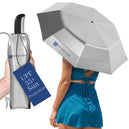
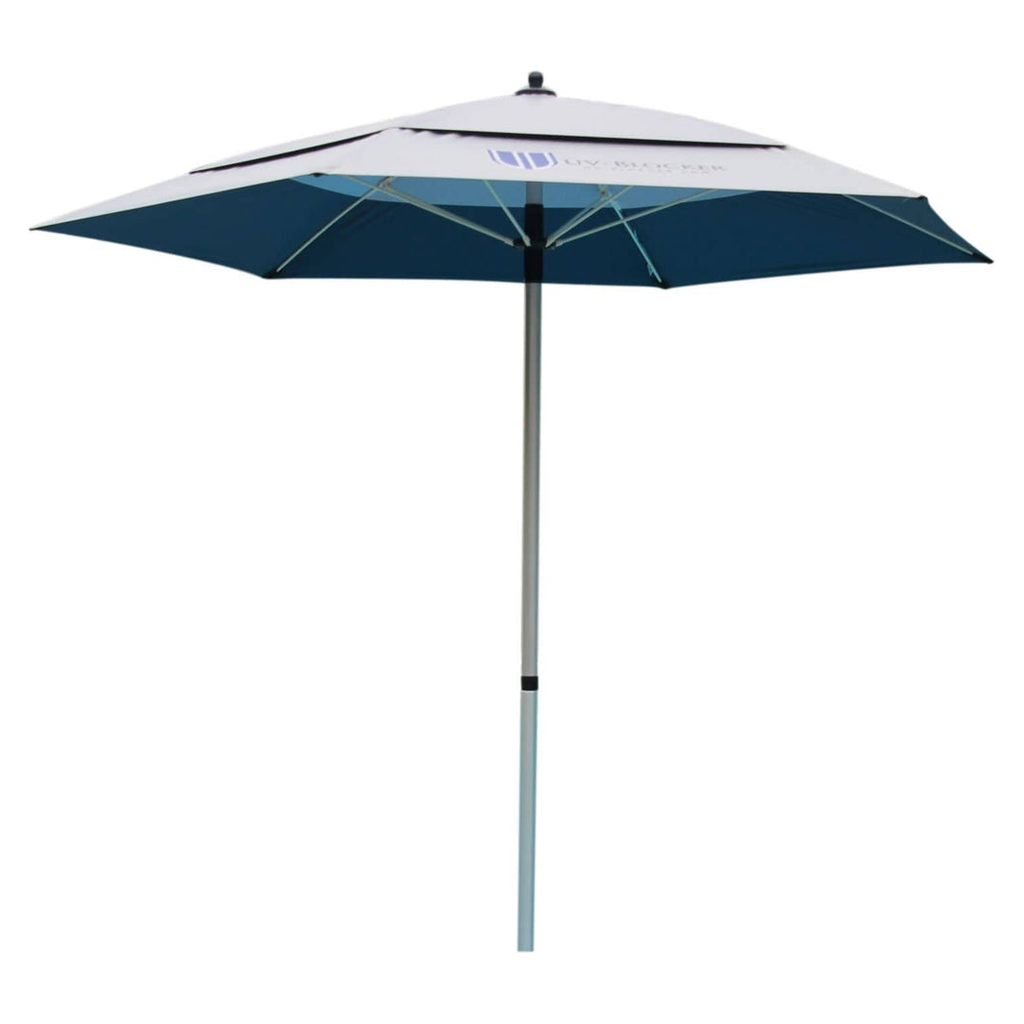
- Set up a sideline shade camp with a UPF 50+ beach umbrella — the UV-Blocker Beach 7.5ft Umbrella provides 88 inches of coverage diameter, enough for team gear and 2-3 resting players, at $159.95. Carry bag included; Long Sand Anchor recommended, sold separately. The Solarteck silver reflective canopy creates a verified 15°F cooling effect underneath.
Between Matches
- Reapply sunscreen before every match. Two hours is the standard maximum interval, but maintain it even during sideline rest.
- Retreat to shade immediately after a match — skin temperature and UV absorption peak during cooldown
- Hydrate in shade; heat exhaustion compounds UV damage
- Wear wraparound or polarized sunglasses blocking 99-100% UV between sets — reflected UV off sand causes photokeratitis (essentially a sunburn on the cornea) and long-term cataract risk
Spectator Protection
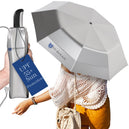
Parents and fans often sit motionless courtside for 4-6 hours with no shade at all. The Chair Umbrella Holder attaches to bleachers or folding chairs for hands-free shade. For travel to tournaments, the Compact UV Umbrella ($59.95) fits inside a standard backpack.
For more spectator strategies, see the full guide on Sun Protection for Sports Parents.
Coaches and Referees
Officials stand on exposed sand for the entire day and face the same UV sandwich as players. The Sports Umbrella Holder provides hands-free shade during breaks.
What Body Areas Do Beach Volleyball Players Miss Most When Applying Sunscreen?
The UV sandwich means sand-reflected UV hits the underside of the chin, under the nose, neck, tops of feet, and behind the knees, which are areas most athletes skip completely.
Standard sunscreen habits only account for direct overhead sun. Sand reflection changes the math entirely.
- Under the chin and jawline: Overhead sun barely reaches here, but 15-18% sand reflection strikes these spots all day. Most players have never thought to protect the underside of their jaw.
- Under the nose: Skin cancer develops frequently on the nose. Sand reflection makes the underside vulnerable to UV that normally never reaches it.
- Tops of feet: Players stand barefoot on sand exceeding 120°F. The feet absorb both direct overhead UV and reflected UV from the surrounding surface. Gibb's melanoma was on his shoulder; Van Winkle's was on her foot.
- Behind the knees: Defensive stances and diving expose the backs of the knees to the sun. Players almost never apply sunscreen here.
- Ears and back of neck: Sand blowing around discourages hat use during matches. Short haircuts leave the neck exposed for hours. These areas accumulate UV damage over entire careers.
Frequently Asked Questions About Sun Protection Beach Volleyball
Beach volleyball players, parents, and coaches ask these sun safety questions most often. Here are evidence-based answers.
Does sand reflect UV rays?
Yes — dry beach sand reflects 15-18% of UV radiation upward, hitting body areas like under the chin and nose that are normally shaded from direct sun.
Sand's reflectivity sits between water (5-10%) and fresh snow (up to 80%). Unlike grass at 0-3.7%, sand creates a second source of UV exposure that strikes from below. This is why sun protection beach volleyball players need goes well beyond what field sports require.
What SPF should beach volleyball players use?
SPF 50+ broad-spectrum mineral sunscreen with zinc oxide or titanium dioxide resists sweat and sand better than chemical formulas for beach play.
Chemical sunscreens degrade faster under heavy sweating and salt spray. Mineral sunscreens sit on the skin surface and provide physical UV blocking without requiring a 15-minute absorption period. For beach volleyball's stop-and-go intensity, mineral formulas hold up better across a full tournament day.
How often should athletes reapply sunscreen during a tournament?
Before every match at minimum, and every 80 minutes during continuous play — sweat and sand strip sunscreen faster than normal activity.
The standard "every two hours" guideline assumes moderate activity levels. Beach volleyball's intensity, constant sand contact, and salt spray cut that window short. The safest approach: treat each match as a fresh application cycle.
Can athletes get sunburned under a beach umbrella?
A standard beach umbrella blocks only direct UV from above — sand reflection still delivers 15-18% UV exposure from below unless the umbrella fabric blocks UVA and UVB.
UPF-rated umbrellas like the UV-Blocker Beach 7.5ft block 99% of UVA/UVB through the canopy. But reflected UV from surrounding sand still reaches exposed skin underneath. Combining umbrella shade with sunscreen provides the most complete protection. For more on indirect UV exposure, see Can You Get Sunburn on a Cloudy Day?.
Do professional beach volleyball players get skin cancer?
Yes — AVP pro Jake Gibb was diagnosed with melanoma at 26, and UCLA player Abby Van Winkle had melanoma discovered on her foot during a routine dermatology visit.
Professionals face the same environmental UV exposure as recreational players, and often accumulate more damage over time. Daily training and weekend competitions spanning 10-20 year careers add up to significant cumulative sun damage.
What areas of the body are most commonly missed when applying sunscreen?
Under the chin, behind ears, tops of feet, back of knees, and underside of the nose are the most commonly missed areas for beach athletes applying sunscreen.
Sand reflection makes these areas especially dangerous in beach sports because UV arrives from below rather than above — the direction nobody thinks to protect against.
Conclusion
Beach volleyball's UV sandwich — overhead sun plus 15-18% sand reflection — creates dual-direction exposure that no other sport matches. Sunscreen alone can't keep up with the demands of a full tournament day. Layered protection through mineral sunscreen, UPF clothing, shade equipment, and timed reapplication is the only approach that holds.
Spectators and coaches face the same UV risks as the athletes on court. Shade infrastructure matters for everyone courtside, not just the players between the lines.
The risk is not theoretical. Jake Gibb and Abby Van Winkle both received melanoma diagnoses during their playing careers.
Start at the next tournament: apply mineral sunscreen to the underside of the chin, tops of feet, and behind the knees — three areas that absorb peak reflected UV and that almost every player skips. Set up a UV-Blocker Beach 7.5ft Umbrella at the sideline camp for 15°F cooler shade between matches.
Why UV Damage in Young Beach Volleyball Athletes Compounds Over Time
Beach volleyball draws a younger average participant age than most other high-UV sports, and this creates a compounding problem that dermatologists describe as one of the most preventable sources of long-term skin cancer risk in amateur athletics.
The biology of UV damage is cumulative and largely permanent. Each sun exposure adds to a lifetime UV "account" in the skin. The repair mechanisms built into skin cells have a finite capacity. Once repeated UV damage exceeds the body's repair rate, mutations accumulate in melanocytes — the cells that produce melanin. The Skin Cancer Foundation estimates that five or more severe sunburns before age 20 doubles lifetime melanoma risk.
Beach volleyball players often start competing at 12 to 16 years old and may compete through their 30s. A player who competes in weekend tournaments from age 14 to 30 accumulates 800+ tournament hours of peak UV exposure across those 16 years. For context, most adults accumulate a lifetime skin cancer risk from only 23 minutes of daily outdoor exposure without protection. Tournament beach volleyball delivers 6 to 8 hours of that exposure on a single day.
The compounding risk factors unique to junior and teen beach volleyball players:
- Competition schedule peaks in summer months — precisely when UV index hits its highest readings.
- Playing surfaces are sand — which reflects 15 to 25% of UV radiation upward, adding to total dose from below.
- Uniform requirements expose large skin areas — FIVB uniform standards allow minimal coverage, maximizing UV-exposed skin surface area.
- Intense physical activity causes heavy sweating — which removes sunscreen faster than sedentary sun exposure.
- Younger athletes often underestimate UV risk — tanning culture in beach sports sometimes frames sun exposure as a positive aesthetic outcome rather than a health hazard.
Coaches, parents, and tournament organizers all have a role to play in normalizing rigorous sun protection as a standard part of athletic preparation — the same way hydration, warm-up, and injury prevention are standard.
Beach Volleyball Sun Protection Gear: The Complete Pre-Tournament Checklist
The difference between a properly protected beach volleyball player and an unprotected one comes down to a 5-minute pre-game preparation routine and the right gear in the bag. Here's the complete checklist for players, parents, and coaches:
In the gear bag:
- SPF 50+ water-resistant sport sunscreen — Look for broad-spectrum, water-resistant (80-minute) formulas. Zinc oxide-based mineral sunscreens resist sweat better than chemical alternatives during intense play. Apply 20 minutes before court time to all exposed skin including ears, scalp parts, and tops of feet.
- Sunscreen stick for face reapplication — Easier to apply mid-match than lotion, doesn't drip into eyes during play.
- Reapplication alarm — Set a timer for 60 minutes (not the standard 120) because sweat accelerates sunscreen removal.
- Wide-brim hat or visor for warm-up and breaks — Players can't wear hats during competition per FIVB rules, but a wide-brim hat during warm-up, timeouts, and between matches adds meaningful coverage.
- UV-blocking rash guard or warm-up shirt — UPF 50+ long-sleeve rash guards provide full arm and torso coverage before competition starts.
- UV sunglasses — Available in sport-wrap designs. Chronic UV exposure to the eyes contributes to cataract and pterygium development — both documented at higher rates in beach athletes.
For spectators and coaches:
Coaches spend as much time in the sun as players. The UV-Blocker Travel Umbrella provides UPF 50+ overhead shade for courtside viewing. The Sports Umbrella Holder clips to beach chairs and coaching chairs, freeing hands without losing protection. Parents in the bleachers at beach volleyball tournaments face comparable exposure to the athletes themselves — open sand arenas with no overhead cover and high UV reflection from the court surface.
UV-Blocker Products for Beach Volleyball: What Works Courtside
The portable shade category has a clear application for beach volleyball — getting protection from UV without interfering with play, while being easy to pack and carry to open beach venues.
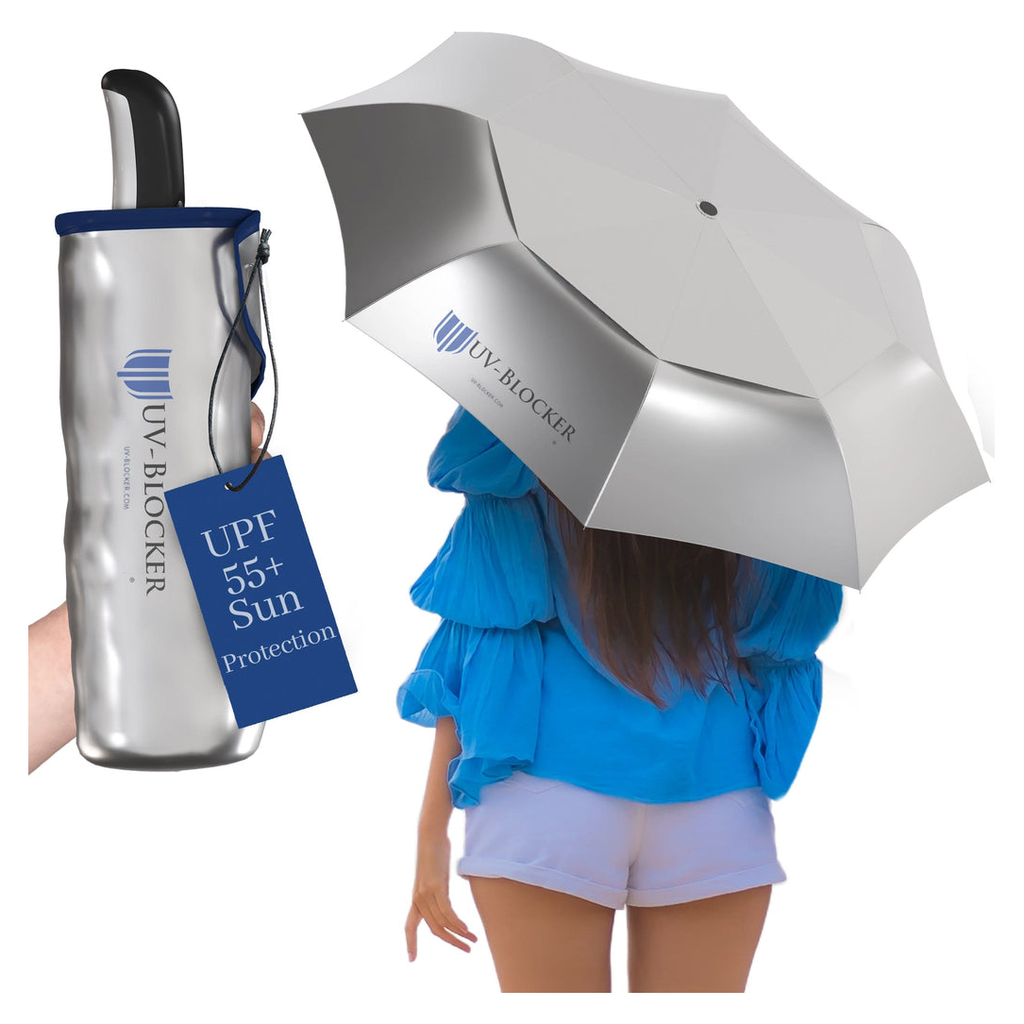
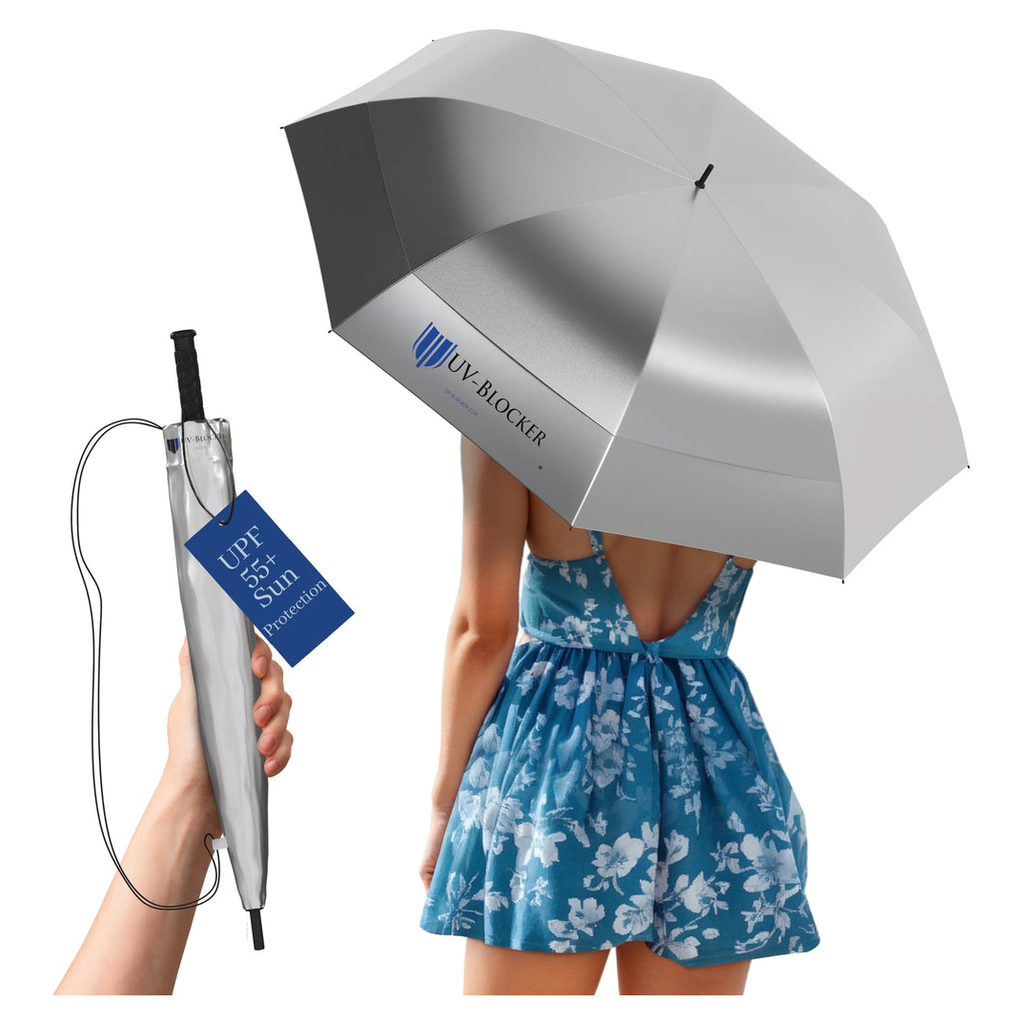
The UV-Blocker Compact UV Umbrella (42-inch arc, folds to 12 inches) carries easily in a standard volleyball bag alongside gear. It weighs under a pound and deploys in seconds for between-set breaks, shade during warm-up, or coverage during extended tournament waits between matches.
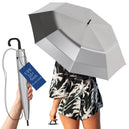
For parents and spectators watching multiple-match tournament days, the Travel UV Umbrella (44-inch arc, ergonomic handle) handles 6 to 8 hours of continuous outdoor use. Its Solarteck silver reflective coating keeps temperatures up to 15°F cooler underneath — a meaningful comfort advantage when watching a full-day tournament in summer heat.
All UV-Blocker umbrellas are certified UPF 50+ via AATCC TM183-2020 testing, blocking 100% of UV-B and 99.97% of UV-A radiation. The Melanoma International Foundation certification confirms the UV-blocking efficacy meets clinical standards — relevant for beach athletes who need verified protection, not marketing language.
Beach Volleyball UV Exposure: Why Sand Courts Are Among Sport's Highest-Risk Environments
Beach volleyball combines multiple high-UV-risk factors that are rarely present simultaneously in other sports — and yet sun protection is systematically underpractised at recreational and competitive levels.
The UV Amplification Factors at a Beach Volleyball Court
- Sand reflection: Dry, light-coloured sand reflects 17–25% of incident UV radiation, adding significant UV exposure to legs, underarms, and lower body — areas often neglected in sunscreen application
- Water proximity: Courts near ocean water receive additional UV reflection from surf and wet sand (up to 25% reflection from water surface)
- Peak activity hours: Beach volleyball is predominantly played between 9am–6pm — heavily overlapping with peak UV hours (10am–4pm)
- Minimal clothing: Competitive beach volleyball uniforms provide minimal UPF coverage compared to court volleyball or other field sports
- Physical exertion and sweating: High-intensity play causes rapid sunscreen degradation through perspiration; 30-minute water-resistance ratings are typically exceeded within a single competitive set
- Dive and dive recovery:** Sand contact on dive recovery strips sunscreen from skin surfaces — particularly shoulders, forearms, hips, and knees
Cumulative UV Exposure in a Tournament Day
A competitive beach volleyball tournament day typically involves 3–6 matches over 6–8 hours. With a UV Index of 10 (common in summer coastal conditions), this represents:
- Direct UV exposure: equivalent to 6–8 "standard erythemal dose" (SED) units — the threshold for sunburn in unprotected fair skin is 2–3 SED
- Plus sand reflection adding approximately 2–4 additional effective SED across skin surfaces facing the court
- Total effective exposure: 5–10x the sunburn threshold for unprotected fair skin over a tournament day
Tournament-Ready Sun Protection Protocol
Pre-Match (30 Minutes Before)
- Apply SPF 50+ broad-spectrum sport sunscreen to all exposed skin — including the backs of knees, inner arms, behind ears, and lower back (exposed when jumping/serving)
- Use a stick formula around the face and eye area to prevent sting from sweating
- Apply SPF 30+ lip balm
Between Matches and Sets
- Reapply sunscreen to any skin showing perspiration or visible sunscreen breakdown (white streaks/residue gone)
- Use a UV umbrella (UPF 50+) during rest periods and match intervals — the most effective shade solution for courtside recovery areas
- Change into a UPF 50+ cover-up between matches to allow skin recovery from active-play UV exposure
For Spectators and Coaches
- Beach volleyball spectators often face 3–8 hours of full sun exposure with no overhead shade at outdoor courts
- A personal UV umbrella (UPF 50+) provides continuous shade regardless of court positioning
- Coaching positions near the court are particularly exposed — coaches should be as diligent as athletes
Frequently Asked Questions: Sun Protection Beach Volleyball
How do professional beach volleyball players manage sun protection during competition?
FIVB regulations permit players to apply sunscreen during matches, and many professional players use a combination of sport-grade SPF 50+ sunscreen (reapplied between sets), UV-protective eyewear, and covered warm-up gear. Some players wear lightweight UPF-rated compression sleeves on arms during practice. During tournament warm-ups and cool-downs, UV umbrellas are commonly used courtside.
Does wet sand reflect more or less UV than dry sand?
Wet sand reflects less UV than dry sand (approximately 10–15% vs. 17–25%). However, wet sand near surf zones is typically adjacent to open water, which introduces ocean surface reflection (up to 25%). The net UV environment near wet sand and surf is similar to dry sand courts due to this offset.
What's the safest sunscreen type for beach volleyball given sweat and sand contact?
Water-resistant mineral sunscreen (SPF 50+, with zinc oxide) is optimal: it doesn't sting eyes when wet, is not absorbed into the skin (stays on surface for mechanical UV blocking), and is less likely to cause adverse reactions for players with sensitive skin. Reapply every 60–80 minutes during active play — not per the "80-minute water resistance" label, which doesn't account for sand abrasion.
Are beach volleyball players at significantly higher skin cancer risk?
Active players with multi-year tournament careers in outdoor settings accumulate substantial lifetime UV exposure. A comprehensive study of outdoor athletes published in the British Journal of Dermatology found that professional outdoor athletes have significantly elevated melanoma risk compared to the general population, with UV exposure intensity and unprotected exposure duration being the primary modifiable factors. Year-round competition in southern hemisphere countries (Australia, Brazil) or equatorial regions amplifies this risk further.
Sun Safety in Australia
Australia has some of the highest UV radiation levels in the world, with the UV Index regularly reaching extreme levels (11 or above) in cities such as Sydney, Melbourne, Brisbane, Perth, and Adelaide for much of the year — including on overcast days. The Cancer Council Australia reports that approximately two in three Australians will be diagnosed with some form of skin cancer by age 70, making sun protection a national health priority.
Key resources and guidelines for Australian sun safety:
- SunSmart Program (Cancer Council Australia): The SunSmart UV Alert is broadcast daily and recommends sun protection whenever the UV Index reaches 3 or above. In most Australian cities, this threshold is met every day of the year, including winter months in northern regions.
- ARPANSA (Australian Radiation Protection and Nuclear Safety Agency): Provides real-time UV monitoring at stations across all states and territories. Australians can access current UV levels at arpansa.gov.au.
- Safe Work Australia — UV Radiation as an Occupational Hazard: Australian workplace health and safety legislation requires employers to assess and manage UV radiation exposure for outdoor workers. Physical shade, including umbrellas rated UPF 50+, is recognised as a primary engineering control under these regulations.
A UPF 50+ UV-blocking umbrella provides the consistent, continuous shade protection that is essential under Australia's intense sun. The UV-Blocker umbrella, with its patented Solarteck® reflective coating, blocks 99% of UV rays and reduces perceived temperature by up to 15°F — a meaningful advantage for outdoor activities in Australia's climate. It is the only umbrella of its kind approved by the Melanoma International Foundation.
Sun Safety in Canada
Canada experiences meaningful UV exposure throughout the year, with UV Index levels regularly reaching 8–10 or higher during summer months in cities such as Vancouver, Calgary, Toronto, and Ottawa. Health Canada and Environment and Climate Change Canada publish daily UV Index forecasts and recommend protective measures whenever the index exceeds 3 — a threshold reached on most clear days between May and August across the country.
Key resources for Canadian sun safety:
- Health Canada UV Index: Published daily via the Environment and Climate Change Canada weather portal (weather.gc.ca). Canadians can track UV levels by city and receive alerts when protection is recommended.
- Canadian Cancer Society: Recommends UPF 50+ clothing, hats, sunscreen, and shade-seeking as primary sun protection strategies. Physical UV barriers — such as UPF 50+ umbrellas — are emphasized for prolonged outdoor exposure.
- Canadian Dermatology Association: Endorses broad-spectrum sun protection strategies, including shade structures and UV-blocking accessories, especially for individuals with fair skin or a personal or family history of skin cancer.
For Canadians spending extended time outdoors — whether working, playing sports, or enjoying recreational activities — a UV-blocking umbrella rated UPF 50+ provides continuous, reapplication-free protection. The UV-Blocker umbrella, independently tested and approved by the Melanoma International Foundation, blocks 99% of UV rays and keeps users up to 15°F cooler — making it a practical and reliable companion for Canadian summers.
Key Takeaways
- UPF (Ultraviolet Protection Factor) 50+ means the fabric blocks at least 98% of UV radiation.
- Regular umbrellas are made from polyester or nylon without UV-blocking treatment and provide only 40–60% UV protection.
- Yes.
- Umbrellas block direct overhead UV effectively but don't fully replace sunscreen because UV reflects from surrounding surfaces (water, sand, paveme...
Frequently Asked Questions
What does UPF 50+ actually mean for an umbrella?
UPF (Ultraviolet Protection Factor) 50+ means the fabric blocks at least 98% of UV radiation. An umbrella rated UPF 50+ allows only 1/50th of UV rays to pass through compared to no protection. UV-Blocker umbrellas are independently certified to block 99% of UVA and 100% of UVB, earning the Melanoma International Foundation's approval — one of the highest certifications in the industry.
How is a UV-blocking umbrella different from a regular rain umbrella?
Regular umbrellas are made from polyester or nylon without UV-blocking treatment and provide only 40–60% UV protection. UV-blocking umbrellas like those from UV-Blocker use specialized fabrics with Solarteck® silver reflective coating that reflects UV rays rather than absorbing them. This also keeps you up to 15°F cooler than standing in direct sun — a dramatic difference on hot days.
Is a UV-blocking umbrella effective for all skin types?
Yes. UV-blocking umbrellas provide objective, physical UV barrier protection that works regardless of skin type, medication use, or skin condition. They're especially recommended for: people taking photosensitizing medications, post-cancer patients undergoing radiation therapy, people with conditions like lupus or vitiligo, and anyone who needs reliable sun protection without relying on topical products.
Can a UV umbrella fully replace sunscreen?
Umbrellas block direct overhead UV effectively but don't fully replace sunscreen because UV reflects from surrounding surfaces (water, sand, pavement, snow). For maximum protection, use both: SPF 30+ sunscreen on all exposed skin PLUS a UPF 50+ umbrella for overhead shade. This combination reduces total UV exposure by 95–99%.
How do I maintain and store a UV-blocking umbrella to preserve its protection?
Rinse with fresh water after beach or salt air exposure. Air dry before closing — storing wet promotes mildew. Avoid storing in extreme heat (e.g., car trunks in summer) which can degrade fabric coatings. UV-Blocker umbrellas maintain their UPF 50+ rating for years of normal use. The silver reflective coating is embedded in the fabric, not a surface treatment that washes off.
Expert Guide to Choosing and Using UV-Blocking Umbrellas
- Look for third-party UPF certification, not just manufacturer claims — independent testing matters
- Canopy diameter matters: 40" covers one person, 60"+ covers two adults — choose based on your typical use
- Wind resistance rating is important for outdoor sports and beach use — look for umbrellas rated for 30+ mph winds
- A magnetic or clamp base lets you use a UV umbrella hands-free at a fixed workstation, patio, or sports sideline
- The silver side of a UV-Blocker umbrella should face up — this maximizes UV reflection away from you
- Pair with UPF 50+ clothing and SPF 50 sunscreen for comprehensive protection in high UV environments
Key Takeaways
- UPF (Ultraviolet Protection Factor) 50+ means the fabric blocks at least 98% of UV radiation.
- Regular umbrellas are made from polyester or nylon without UV-blocking treatment and provide only 40–60% UV protection.
- Yes.
- Umbrellas block direct overhead UV effectively but don't fully replace sunscreen because UV reflects from surrounding surfaces (water, sand, paveme...
Frequently Asked Questions
What does UPF 50+ actually mean for an umbrella?
UPF (Ultraviolet Protection Factor) 50+ means the fabric blocks at least 98% of UV radiation. An umbrella rated UPF 50+ allows only 1/50th of UV rays to pass through compared to no protection. UV-Blocker umbrellas are independently certified to block 99% of UVA and 100% of UVB, earning the Melanoma International Foundation's approval — one of the highest certifications in the industry.
How is a UV-blocking umbrella different from a regular rain umbrella?
Regular umbrellas are made from polyester or nylon without UV-blocking treatment and provide only 40–60% UV protection. UV-blocking umbrellas like those from UV-Blocker use specialized fabrics with Solarteck® silver reflective coating that reflects UV rays rather than absorbing them. This also keeps you up to 15°F cooler than standing in direct sun — a dramatic difference on hot days.
Is a UV-blocking umbrella effective for all skin types?
Yes. UV-blocking umbrellas provide objective, physical UV barrier protection that works regardless of skin type, medication use, or skin condition. They're especially recommended for: people taking photosensitizing medications, post-cancer patients undergoing radiation therapy, people with conditions like lupus or vitiligo, and anyone who needs reliable sun protection without relying on topical products.
Can a UV umbrella fully replace sunscreen?
Umbrellas block direct overhead UV effectively but don't fully replace sunscreen because UV reflects from surrounding surfaces (water, sand, pavement, snow). For maximum protection, use both: SPF 30+ sunscreen on all exposed skin PLUS a UPF 50+ umbrella for overhead shade. This combination reduces total UV exposure by 95–99%.
How do I maintain and store a UV-blocking umbrella to preserve its protection?
Rinse with fresh water after beach or salt air exposure. Air dry before closing — storing wet promotes mildew. Avoid storing in extreme heat (e.g., car trunks in summer) which can degrade fabric coatings. UV-Blocker umbrellas maintain their UPF 50+ rating for years of normal use. The silver reflective coating is embedded in the fabric, not a surface treatment that washes off.
Expert Guide to Choosing and Using UV-Blocking Umbrellas
- Look for third-party UPF certification, not just manufacturer claims — independent testing matters
- Canopy diameter matters: 40" covers one person, 60"+ covers two adults — choose based on your typical use
- Wind resistance rating is important for outdoor sports and beach use — look for umbrellas rated for 30+ mph winds
- A magnetic or clamp base lets you use a UV umbrella hands-free at a fixed workstation, patio, or sports sideline
- The silver side of a UV-Blocker umbrella should face up — this maximizes UV reflection away from you
- Pair with UPF 50+ clothing and SPF 50 sunscreen for comprehensive protection in high UV environments