

Here's a statistic that stops most parents in their tracks: 80% of a person's lifetime sun damage occurs before age 18.
Not 50%. Not 60%. Eighty percent.
By the time your child graduates high school, the foundation for their skin health — or their skin cancer risk — has largely been set. And here's the uncomfortable truth: most parents, myself included, drastically underestimate how vulnerable our children's skin actually is.
This isn't about fear. It's about understanding what we're dealing with so we can make informed choices. Because once you understand WHY physical shade matters so much for children, the idea of carrying a UV umbrella stops feeling optional.
TLDR: Quick Summary
- 80% of lifetime sun damage occurs before age 18 — children are far more vulnerable than adults
- AAP recommends shade FIRST, sunscreen second — physical barriers are medically preferred
- Babies under 6 months should NOT use sunscreen — UV umbrellas are the primary protection
- UV umbrellas + sunscreen work together — not either/or, use both strategically
- UV-Blocker was founded by a melanoma survivor — MIF approval verifies UV protection claims
- Start young, normalize the habit — children who grow up with UV umbrellas don't question them
The Hidden Danger: Why Children's Skin Is More Vulnerable
Children aren't just small adults. Their skin is fundamentally different — and far more susceptible to UV damage.
The Numbers That Matter
According to the Skin Cancer Foundation:
- Children receive approximately three times more annual sun exposure than adults
- One blistering sunburn in childhood more than doubles a person's chance of developing melanoma later in life
- Melanoma is now the most common cancer in young adults ages 25-29
These aren't distant risks. They're the cumulative result of afternoons at playgrounds, school walks, sports practices, and family beach trips. Each sun exposure adds to the total.
Why Children's Skin Is Different
A child's skin has less melanin — the pigment that provides some natural UV protection. Their dermis (the deeper skin layer) is thinner, which means UV radiation penetrates more deeply. And because children grow rapidly, damaged cells can replicate damage faster than in adults.
What feels like harmless "playing outside" is actually a significant UV exposure event. Not every time. But consistently. Over years.
The good news: understanding this changes how we approach protection.
What Pediatricians Actually Recommend
Most parents are surprised to learn what the American Academy of Pediatrics (AAP) actually recommends for sun protection. It's not what most of us assume.
The AAP Hierarchy of Protection
According to AAP guidelines, the order of sun protection for children is:
- Shade (first line of defense)
- Protective clothing and hats
- Sunscreen (when shade and clothing aren't sufficient)

For most parents, this order is reversed in practice. We reach for sunscreen first, sometimes skip the hat, and rarely think about intentional shade.
The Six-Month Rule
Here's the AAP guidance that catches parents off guard:
"Babies under 6 months should be kept out of direct sunlight. Dress your baby in lightweight clothing that covers the arms and legs, and use a wide-brimmed hat. If shade is not available, you may apply a minimal amount of sunscreen to small areas of the body."
Read that again: shade is the primary recommendation. Sunscreen is the backup when shade isn't available.
Why? Infant skin absorbs chemicals differently, and the safety data for sunscreen in very young babies simply isn't as robust. Physical barriers — shade, clothing, hats — are the medically preferred approach.
Peak UV Hours
The AAP also recommends seeking shade during peak UV hours: 10 AM to 4 PM. This is when UV radiation is most intense. For school-aged children, this overlaps significantly with recess, sports practice, and the walk home from school.
This isn't about keeping children indoors. It's about being strategic with protection during high-risk hours.
UV Umbrellas and Sunscreen: Partners, Not Competitors
Let's be clear about something: this isn't an article arguing against sunscreen. Sunscreen is essential, especially for water activities and all-over body protection.
The argument is that UV umbrellas and sunscreen work together — and each excels in different situations.
When Each Protection Works Best
| Situation | Best Primary Protection |
|---|---|
| Stroller walks | UV umbrella |
| Beach or pool | Sunscreen + umbrella for breaks |
| Walking to school | UV umbrella or hat |
| Soccer sidelines | UV umbrella + sunscreen |
| Playground | Seek shade + sunscreen |
| Outdoor dining | UV umbrella |
What UV Umbrellas Do That Sunscreen Can't
Instant protection. The moment you open a UV umbrella, you're protected. No waiting 15-30 minutes for absorption. No wondering if you applied enough.
No reapplication. Sunscreen needs to be reapplied every two hours (more often if swimming or sweating). An umbrella provides consistent protection for as long as it's open.
Works for babies. For infants under 6 months where sunscreen isn't recommended, a UV umbrella provides the shade protection that pediatricians prefer.
Heat reduction. A quality UV umbrella with reflective fabric actually keeps the area underneath significantly cooler — not just shaded.
What Sunscreen Does That Umbrellas Can't
All-over body protection. An umbrella protects overhead. Sunscreen protects exposed skin everywhere.
Water activities. Swimming, sprinklers, water tables — umbrellas aren't practical here.
Active play. A running, climbing child won't stay under an umbrella. Sunscreen stays with them.
The point isn't either/or. It's knowing when to use each — and often, using both.
A Melanoma Survivor's Mission to Protect Kids
Understanding WHY someone creates a product matters. It reveals whether they're solving a real problem or just selling something.
The Diagnosis That Changed Everything
In 2003, Ron Walker received the diagnosis no one wants: Stage 1 Melanoma.
If you've never had a skin cancer scare, it's hard to describe the shift that happens. Suddenly, every sunny day looks different. Every childhood photo of sunburned shoulders becomes evidence of accumulated risk. Every decision about outdoor time with family feels weighted.
For Ron, the question became personal: "How do I protect my family while still enjoying the beach, the park, the outdoor life we love?"
He looked for solutions. And found them lacking.
Building What Didn't Exist
The UV umbrellas available at the time were either flimsy rain umbrellas with unverified UV claims, or heavy-duty beach umbrellas that required setup and couldn't move with you.
What didn't exist: a portable, personal umbrella with verified medical-grade UV protection that could go anywhere a family goes.
So Ron built it. The result was UV-Blocker — and what his Uncle Joe called "the air-conditioned umbrella" because of how noticeably cooler the shade felt compared to standard umbrellas.
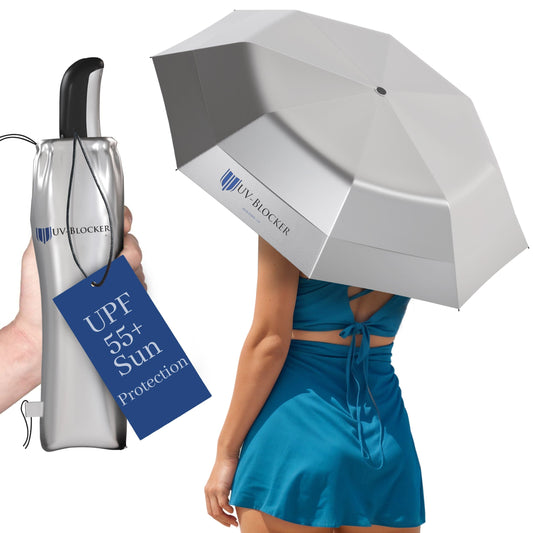
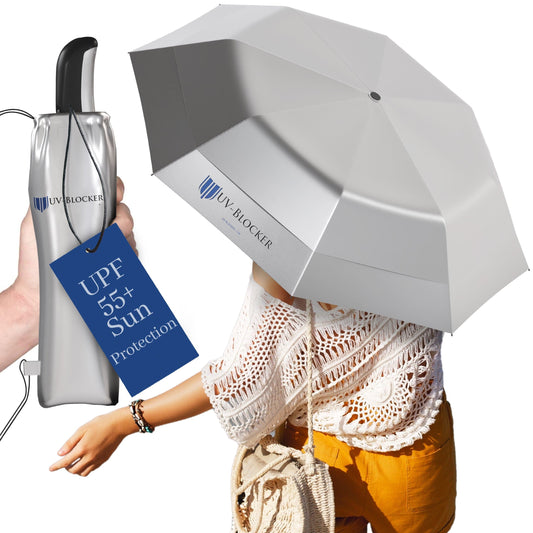
The cooling effect wasn't just comfort. It was the Solarteck™ fabric with a reflective silver outer layer that bounces UV and heat away, and a dark inner layer that absorbs any remaining UV scatter.
Why MIF Approval Matters
After developing the product, Ron sought something that mattered to him personally: approval from the Melanoma International Foundation.
The MIF is a nonprofit dedicated to melanoma awareness, education, and research. When they approve a product, it means the organization has verified UV protection claims — not just taken the company's word for it.
UV-Blocker is the only personal UV umbrella brand carrying MIF approval.
This isn't marketing. For Ron, it was giving back to the community that helped him understand his own cancer. It was proof that the product does what it claims.
For parents researching protection for their children, it's independent verification that matters.
Making UV Umbrellas Work for Your Family
Theory is one thing. Daily life with kids is another.
Real Parents, Real Use
Dr. Andrea Buck, a dermatologist from Medford, NJ, puts it simply:
"The first items we pack are our UV-Blocker Beach Umbrellas."
When a dermatologist prioritizes UV umbrellas in their own family's gear, it signals something about practical value.
Age-Appropriate Strategies
Infants (0-6 months): Use a universal umbrella holder that attaches to your stroller frame. This gives hands-free UV protection exactly where your baby sits. No fumbling. No repositioning. The umbrella angles to block sun regardless of direction.
Toddlers (1-3 years): Toddlers are unpredictable. They won't stay under an umbrella reliably. Use it when stationary — watching siblings play, eating outdoors, in the stroller — and combine with sunscreen for active time.
Preschool (3-5 years): This is when normalization matters. If children see parents using UV umbrellas, it becomes normal. Let them "help" hold it for short stretches. Their future habits are forming now.
School age (5-10): Compact umbrellas can live in backpacks for school walks. Auto-open mechanisms mean they can manage it themselves. Choose one together — ownership builds usage.
The "My Kid Won't Use It" Problem
Some children resist anything new. That's normal.
What helps:
- Let them choose it. A child who picked their umbrella is more likely to use it.
- Personalize it. A sticker or keychain makes it theirs.
- Model it. If you use a UV umbrella, it's not weird. It's what your family does.
- Connect to their goals. Athletes stay cooler and perform better. Skin stays healthy for activities they love.
- Don't force it. Consistency over time matters more than perfection on any single day.
Taking the First Step
Sun protection for children isn't about fear. It's about informed choices.
You now understand:
- Why children's skin is uniquely vulnerable
- What pediatricians actually recommend (shade first)
- How UV umbrellas and sunscreen work together
- Why a melanoma survivor built this specific solution
- How to make it practical for your family
Three Simple Actions
-
Assess your child's current sun exposure. School walks. Sports practices. Playground time. Where are the gaps in their protection?
-
Add a UV umbrella to your outdoor kit. Start with one for the stroller, one for the car, or one for their backpack.
-
Make shade-seeking a family habit. Talk about it. Model it. Normalize it.
Finding the Right Umbrella
If you want specific product recommendations — which umbrellas work for which ages, how to compare UPF ratings, what features matter — we've put together a complete guide: Best UV Umbrellas for Kids in 2025.
Your child's skin is building its story right now. The choices you make about sun protection today become the foundation they live with for decades.
Make those choices count.
Frequently Asked Questions
At what age can children start using sunscreen?
The AAP recommends avoiding sunscreen for babies under 6 months. After 6 months, sunscreen is safe and recommended for sun exposure. For younger babies, physical shade (UV umbrellas, hats, clothing) is the preferred protection method.
How much sun exposure is safe for children?
There's no "safe" amount of unprotected sun exposure. Even brief exposures add up over time. The goal isn't zero outdoor time — it's protected outdoor time. Use shade during peak hours (10 AM - 4 PM) and combine UV umbrellas with sunscreen for longer outdoor activities.
Do UV umbrellas block all harmful rays?
Quality UV umbrellas with UPF 50+ block 98% or more of UV rays. UPF 55+ (like UV-Blocker) blocks 99%+. However, umbrellas only protect the area directly underneath — reflected UV from sand, water, or concrete can still reach exposed skin, which is why combining with sunscreen is ideal.
Are UV umbrellas necessary if we already use sunscreen?
They're not strictly necessary, but they're highly beneficial. UV umbrellas provide instant, consistent protection without the reapplication sunscreen requires. For infants who can't use sunscreen, they're essential. For everyone else, they reduce overall UV exposure and keep you cooler.
What's the difference between a UV umbrella and a regular umbrella?
Regular rain umbrellas typically provide UPF 10 or less — blocking about 90% of UV rays. UV umbrellas are specifically designed with fabrics that block 98-99%+ of UV radiation. The difference is significant: a cotton t-shirt often provides better protection than a regular umbrella.
How do I know if a UV umbrella actually works?
Look for specific UPF ratings (not just "UV protection" claims). Third-party certifications like Melanoma International Foundation approval provide additional verification. UV-Blocker is the only personal umbrella brand with MIF approval.
Will my child actually use a UV umbrella?
Children are more likely to use umbrellas if: they helped choose it, they see parents using one, it's presented as normal rather than forced, and it's appropriately sized for their age. Starting young (before peer pressure matters) helps establish the habit naturally.
Can UV umbrellas be used in windy conditions?
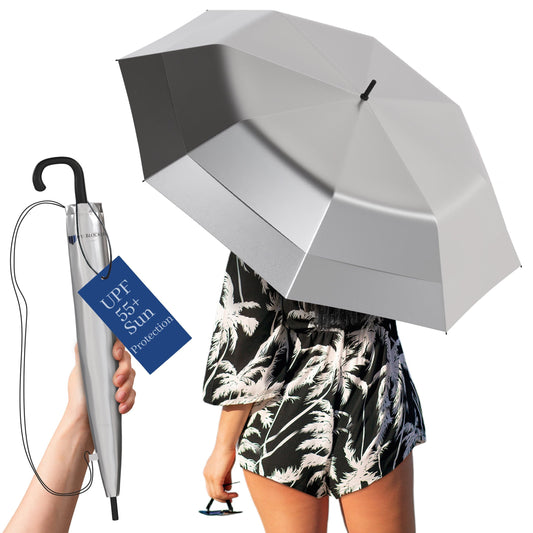
Quality UV umbrellas with vented canopy designs are engineered for wind stability. UV-Blocker's patented mesh system allows wind to pass through rather than inverting the umbrella. Budget umbrellas without venting tend to flip easily in wind.
Have questions about UV protection for your specific situation? Check out our complete FAQ on UV umbrellas or explore our full product line to find the right fit for your family.