

You applied sunscreen at 9 AM. By 11 AM, it washed off on the lazy river. By 1 PM, you couldn't feel the burn because your skin was wet. By 3 PM, the damage was done.
Millions of families repeat this cycle every summer, assuming a bottle of SPF 50 is sufficient defense for a day at the water park. However, water parks create unique conditions that multiply UV exposure beyond what any other outdoor environment produces. The combination of direct sun, reflective surfaces, and constant water immersion creates a "UV trap" that overwhelms standard sun protection strategies.
This water park sun protection guide explains the science behind why water parks represent a worst-case scenario for UV exposure and outlines a practical, layered protection strategy. By understanding the seven specific ways water parks amplify UV radiation, families can move beyond reliance on sunscreen alone and implement a defense that actually works.
Why Are Water Parks the Worst Place for UV Exposure?
Water parks combine direct overhead sun, water reflection, UV penetration through water, sunscreen washoff, concrete reflection, and cooling deception into the worst UV environment possible.
While a beach trip might last three hours and a backyard pool session offers easy access to indoor shade, a water park typically traps visitors outdoors for six to eight hours with minimal escape. This extended duration compounds with multiple exposure vectors to create a risk profile significantly higher than other summer activities.
In a backyard setting, shade is often just steps away. At a beach, families typically bring umbrellas or tents. At a water park, however, shade is a luxury often reserved for expensive cabana rentals, leaving the majority of guests exposed in queue lines and walkways. The environment itself is engineered for maximum exposure, with reflective water and concrete surfaces surrounding visitors from all angles.
The following table compares the UV risk factors across common summer environments:
| Factor | Beach | Backyard Pool | Water Park |
|---|---|---|---|
| Typical exposure time | 2-4 hours | 1-3 hours | 6-8+ hours |
| Shade access | Umbrella/tent | House nearby | Minimal/none |
| Water immersion | Optional | Intermittent | Constant |
| Sunscreen durability | Moderate | Good | Poor (constant wash) |
| UV reflection sources | Sand (15%), water (5-10%) | Water (5-10%) | Water (5-10%), concrete (8-12%), splash (25%) |
| Queue line exposure | None | None | 20-45 min in direct sun |
The compounding effect of these factors means that a standard application of sunscreen is often insufficient. For more on how indirect UV exposure works, read about Can You Get Sunburn Under an Umbrella?, which explains the mechanics of scattered radiation.
But how exactly does each of these pathways multiply your UV dose? Let's break down the science.
How Do Water Parks Multiply Your UV Exposure 7 Ways?
Water parks multiply UV exposure through overhead sun, water surface reflection, underwater UV penetration, sunscreen washoff, concrete deck reflection, splash zone amplification, and cooling deception.
Understanding the specific mechanisms of UV amplification is essential for effective protection.
- Direct overhead UV for 6-8+ hours Most outdoor activities are limited to 1-3 hours. Water parks encourage full-day attendance, often keeping visitors in direct sunlight during peak UV hours (10 AM to 4 PM). The CDC recommends limiting exposure during these times, but the nature of a water park visit often makes this impossible.
- Water surface reflects 5-10% of UV Calm water reflects about 5% to 10% of UV radiation, according to the World Health Organization (WHO). This baseline reflection hits skin from angles that overhead protection (like a hat brim) might miss.
- Splash zones and wave pools reflect 25% of UV The WHO data also indicates that sea foam and white water reflect approximately 25% of UV radiation. Wave pools, splash pads, and ride run-outs generate this white water constantly, significantly increasing the reflective load compared to a still pool.
- UV penetrates THROUGH water Many assume being underwater offers protection. However, 80% of UV-A rays and 50% of UV-B rays penetrate water, according to iQ-UV. At typical swimming depths of one meter or less, significant UV radiation still reaches the skin. You are not protected while submerged in a lazy river or wave pool.
- Wet skin strips sunscreen faster The FDA regulations on sunscreen only allow "water resistant" claims for 40 or 80 minutes. Every trip down a slide or dip in the pool resets the clock. Three rides in two hours essentially washes away chemical sunscreens, leaving skin vulnerable.
- Concrete pool decks reflect 8-12% additional UV Unlike grass, which reflects only 2-3% of UV, the concrete surrounding pools reflects 8-12%, according to a study on UV albedo. This means while standing in line, visitors receive UV radiation reflected from the ground up.
- Cooling deception — wet skin masks the burn The British NHS and other health bodies warn that water's cooling effect masks the physical sensation of sunburn (erythema). Visitors do not feel the heat or burning sensation because the water keeps skin temperature low. By the time the skin is dry and the burn is felt, the damage is deep. For information on recovery, see How Long Does a Sunburn Last?.

Not all areas of a water park carry equal risk. Some zones are far more dangerous than others.
Where Is UV Risk Highest at a Water Park?
Queue lines, wave pools, and lounging areas carry the highest UV risk at water parks due to extended direct sun exposure, maximum water reflection, and zero shade infrastructure.
Identifying these high-risk zones allows for better planning and protection.
- Queue lines (20-45 minute waits): These are often the most exposed areas in the park. Visitors stand on reflective concrete in direct overhead sun with no shade structures. Once in line, leaving to seek shade means losing one's place. This captive exposure is a primary source of sunburns.
- Wave pools: The combination of white water reflection (up to 25%) and direct sun makes this zone particularly intense. Furthermore, bobbing in the waves often exposes the face, neck, and shoulders—areas highly susceptible to burning—for extended periods.
- Lazy rivers: While they appear relaxing, lazy rivers are a trap for UV exposure. The slow movement means long duration in the sun, while continuous immersion strips sunscreen at the maximum rate. Shallow water allows significant UV penetration to submerged skin.
- Lounging areas: Lying flat on a lounge chair maximizes the body surface area exposed to direct UV rays. Additionally, these areas are often paved with concrete, adding reflected UV from below. Cabana rentals that offer shade can cost $150-300 per day, leaving most guests in the open.
- Slides (waiting vs. riding): The ride itself is brief, often lasting less than a minute. The real danger lies in the 20-45 minute wait on the tower stairs, often elevated and fully exposed to the sun.

If every zone carries UV risk, can sunscreen alone handle it? The math says no.
Why Does Sunscreen Alone Fail at Water Parks?
Sunscreen alone fails because the FDA limits water resistance to 40-80 minutes, constant water immersion strips protection faster, and reapplication is impractical between rides.
Reliance on a single bottle of lotion is a strategy destined to fail in a water park environment.
First, the concept of "waterproof" sunscreen is a myth. The FDA banned "waterproof" claims in 2011 because no product can fully resist water. Manufacturers can only claim "water resistance" for 40 or 80 minutes.
Consider the math of a typical visit: A family rides the lazy river (30 minutes), walks to a slide (10 minutes), waits in queue (25 minutes), and rides the slide (2 minutes). That totals 67 minutes. By the time they splash down, an 80-minute water-resistant sunscreen is nearing the end of its effectiveness.
Furthermore, pool chemicals like chlorine can degrade some sunscreen active ingredients faster than fresh water.
The practical impossibility of reapplication seals the failure. Drying off a dripping wet child, reapplying lotion, and waiting 15 minutes for it to set before the next ride is logistically difficult. Most families skip this step, leading to unprotected exposure after the first hour.
So what actually works? You need a layered defense — protection that doesn't wash off, portable shade, AND sunscreen.
What Should You Pack for Water Park Sun Safety?
Pack a UV umbrella for queue shade, UPF 50+ rash guards for everyone, water-resistant SPF 50+ mineral sunscreen, SPF lip balm, UV sunglasses with retainer strap, and wide-brim hats.
Effective water park sun protection follows a layered approach, ensuring that if one defense fails (like sunscreen washing off), another remains in place.
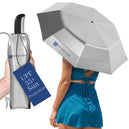
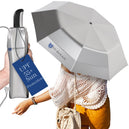
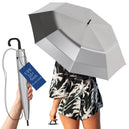
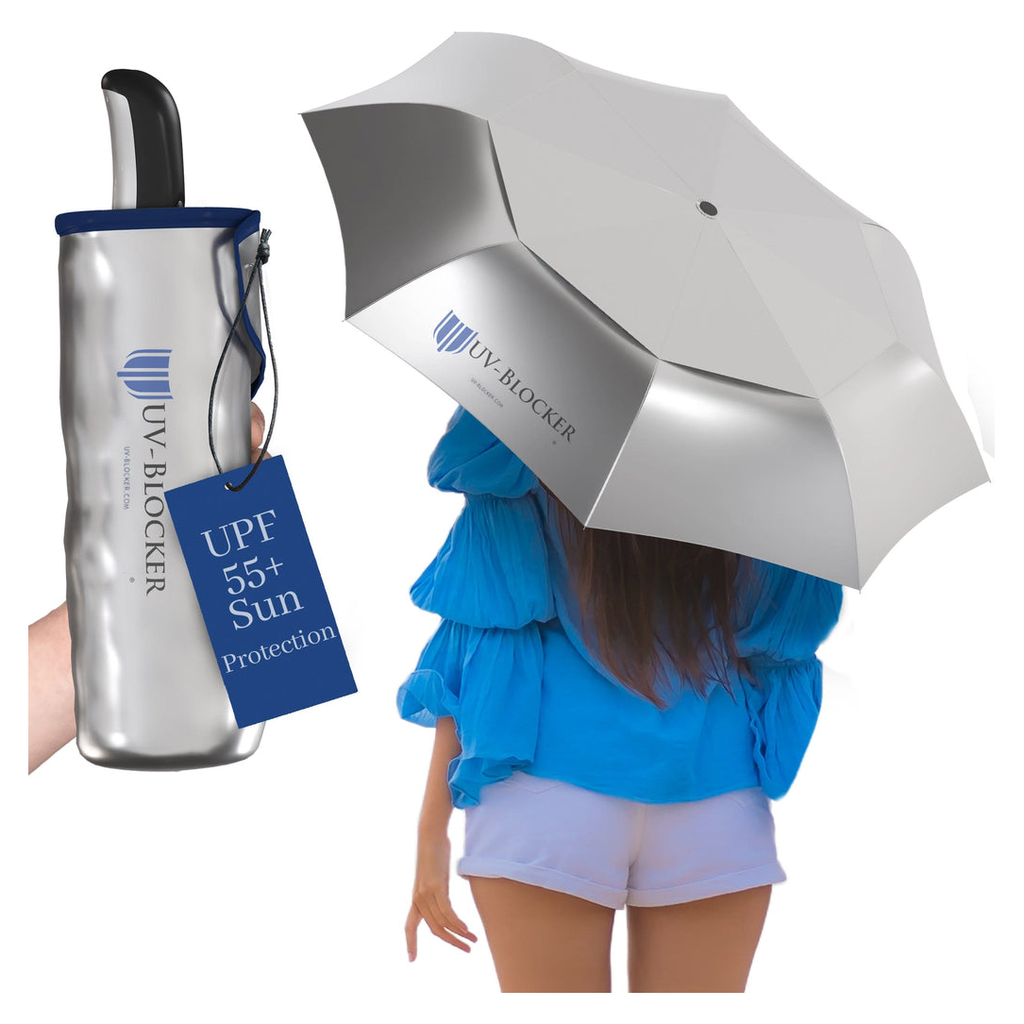
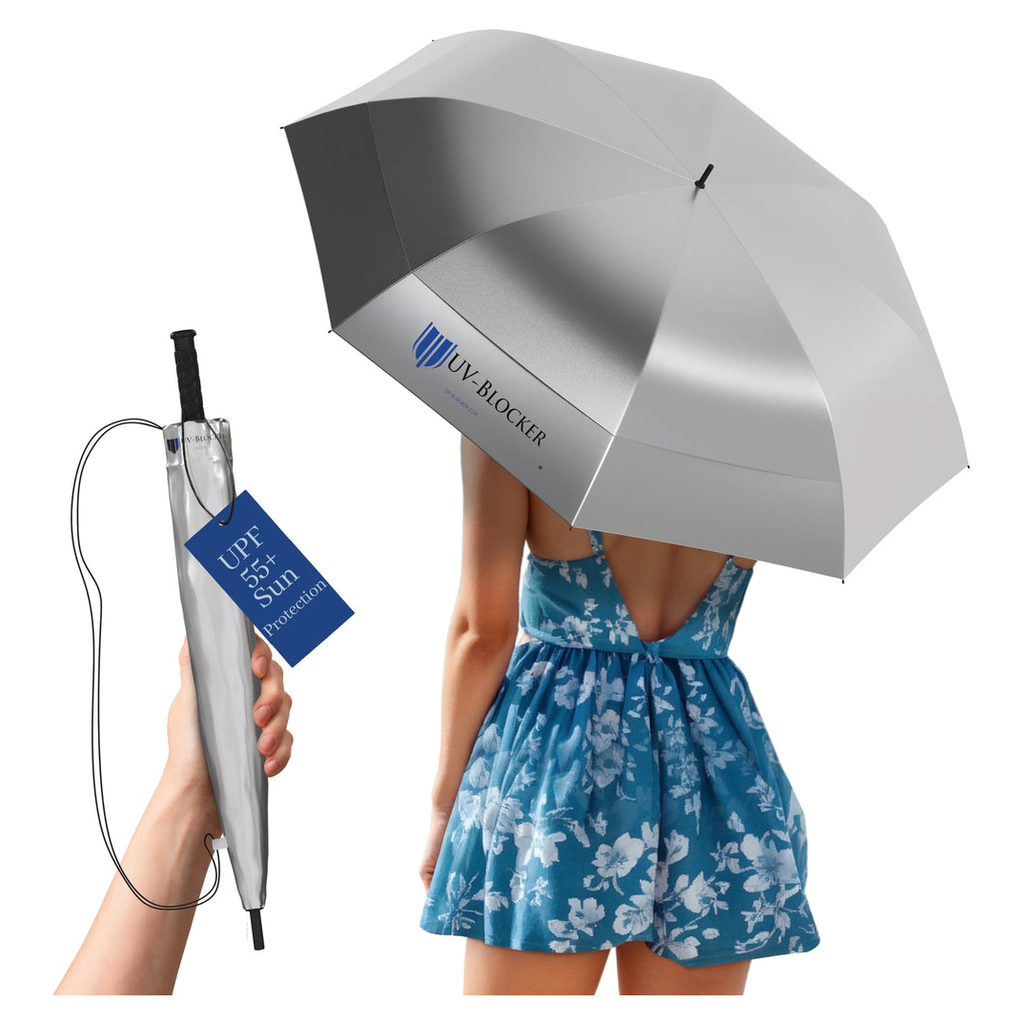
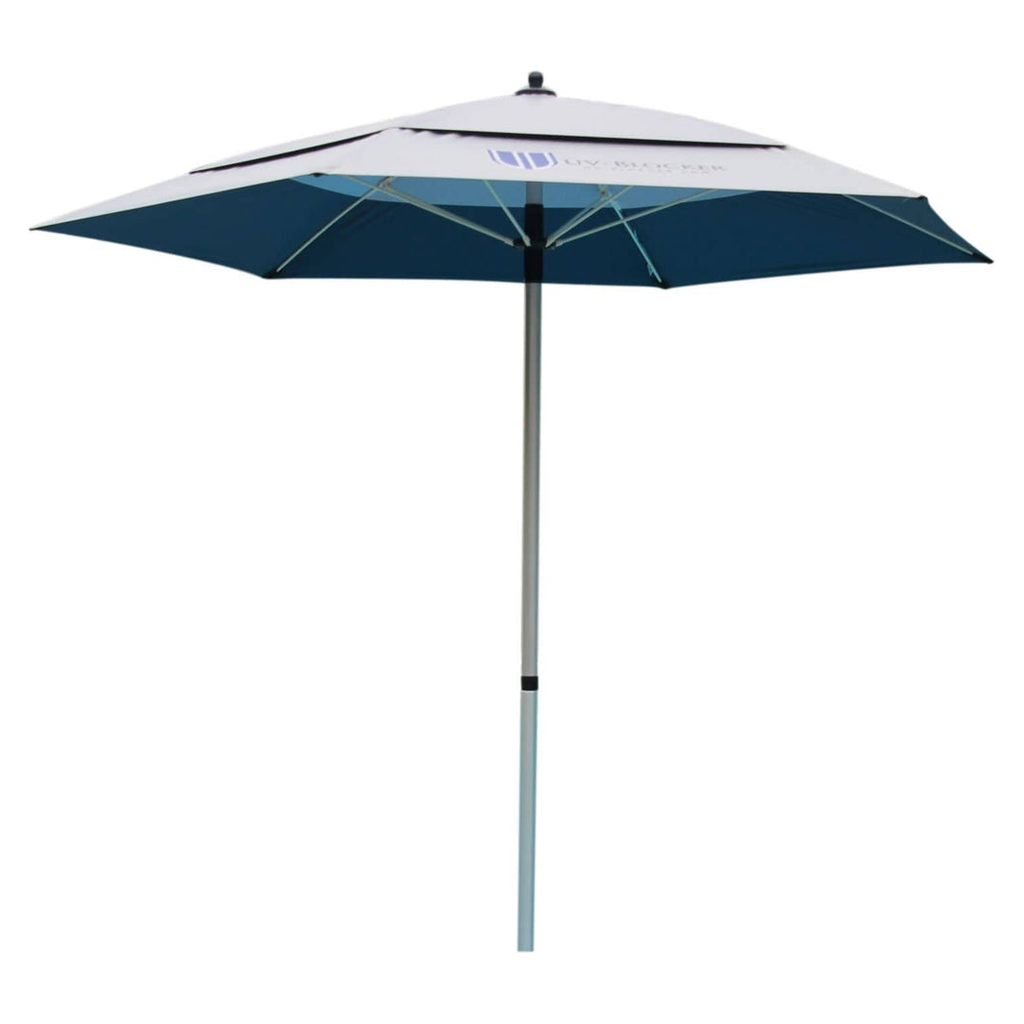
- Layer 1: UV Umbrella Think of this as a personal, portable cabana. A UV umbrella provides critical shade during the 20-45 minute waits in queue lines and while resting in lounge chairs. The UV-Blocker Travel Umbrella offers a 44" arc of protection and weighs just 1 lb 5 oz, making it easy to carry. For even more portability, the UV-Blocker Compact Umbrella fits easily into a park bag. These umbrellas are UPF 50+, blocking 99% of UV rays and creating a zone that is approx. 15°F cooler. This is a far more cost-effective solution than renting a stationary cabana.
- Layer 2: UPF Rash Guard Clothing is the only protection that does not wash off. A UPF 50+ rash guard blocks 98% of UV rays regardless of how many times you go down a slide. Unlike standard cotton t-shirts, which lose UV protection when wet, UPF-rated synthetic fabrics maintain their blocking capability.
- Layer 3: Water-Resistant Mineral Sunscreen (SPF 50+) Sunscreen should be the third line of defense, applied to exposed skin such as the face, ears, hands, and feet. Choose a mineral formula (zinc oxide or titanium dioxide) labeled "80 minutes water resistant." Mineral sunscreens sit on top of the skin and are generally more resistant to immediate wash-off than chemical absorbers.
-
Extras
- SPF 30+ Lip Balm: Lips have no melanin and burn easily.
- UV Sunglasses with Retainer Strap: Essential for eye protection; the strap ensures they aren't lost on rides.
- Wide-Brim Hat: For use in dry areas or lazy rivers.
- For Kids Specifically Full-body UPF suits are superior to simple rash guards as they cover more skin. A sunscreen stick is often easier to apply to a child's wet face than lotion. Parents must diligently enforce reapplication breaks.
For more on product efficacy, review UV-Blocker's Testing Methodology and why the products are Dermatologist Recommended.
Frequently Asked Questions About Water Park Sun Protection
Water park sun protection raises specific questions that beach and pool safety guides don't address. Here are the most common questions families ask.
Can you get sunburned at a water park?
Yes, water parks often cause worse sunburns than beaches because of longer exposure, constant sunscreen washoff, and the cooling effect that masks burning until damage is done.
The combination of 6-8 hours outdoors, water stripping sunscreen, and wet skin hiding the burn makes water parks one of the highest-risk environments for severe sunburn.
Does water reflect UV rays?
Yes, calm water reflects 5-10% of UV rays, while white water and splash zones reflect up to 25%, according to WHO data.
This means wave pools are the highest UV reflection zones at any water park. Combined with UV penetrating through water (80% UV-A, 50% UV-B), you're exposed from every direction.
Can you get sunburned underwater?
Yes, 80% of UV-A rays and 50% of UV-B rays penetrate water, so you receive significant UV exposure while submerged at typical pool depths.
At 1 meter below the surface, substantial UV still reaches your skin. Lazy rivers and wave pools keep you at shallow depths where UV penetration is highest.
How often should you reapply sunscreen at a water park?
Reapply sunscreen every 40-80 minutes or after every water ride, whichever comes first, because water immersion strips protection faster than normal outdoor activity.
The FDA only certifies "water resistant" for 40 or 80 minutes (depending on formula). Since most water rides involve full immersion, each ride effectively resets the sunscreen clock.
Is waterproof sunscreen really waterproof?
No, the FDA banned "waterproof" sunscreen claims in 2011 because no sunscreen is truly waterproof. Only "water resistant" for 40 or 80 minutes is allowed.
This is why a sunscreen-only strategy fails at water parks. You need layered protection — UPF clothing that doesn't wash off, UV umbrella shade for queue lines, and sunscreen as the third line of defense.
What is the best sunscreen for water parks?
Choose SPF 50+ water-resistant mineral sunscreen with zinc oxide or titanium dioxide, which sits on skin rather than absorbing and is less affected by chlorine degradation.
Look for the "80 minutes water resistant" designation on the label — it provides the longest FDA-certified protection window. Apply 15 minutes before water exposure for best adhesion.
Conclusion
Water parks create a multi-vector UV trap that no other outdoor activity matches. By understanding the seven pathways of exposure—from direct sun and water reflection to the cooling deception—families can see why standard protection often fails.
- The Trap: Seven simultaneous exposure pathways overwhelm sunscreen alone.
- The Deception: Wet skin keeps you cool, masking the burn until it is too late.
- The Solution: Layered protection is the only effective strategy.
- The Critical Gap: Queue lines leave you exposed for 20-45 minutes per ride; shade is essential here.
Before the next water park trip, add a UV umbrella and UPF rash guards to the family packing list — these are the foundation of real water park sun protection. These two items provide the physical barrier that sunscreen cannot maintain in a water-heavy environment.
For portable shade that protects you in long queue lines, consider the UV-Blocker Travel Umbrella or the Compact Umbrella. Both offer the UPF 50+ protection needed to turn a scorching wait into a cooler, safer experience.
Water Park Sun Protection: Frequently Asked Questions
Why is the UV risk significantly higher at a water park compared to a typical backyard setting?
Water parks create a 'UV trap' because surfaces like pool water and light-colored concrete reflect up to 80% of UV rays back onto the skin from below. Relying on sunscreen alone often fails due to water friction, which is why using a UV-Blocker umbrella with Solarteck® technology is essential to block 99% of UVA/UVB rays. This physical barrier provides a UPF 50+ safety zone that doesn't wash off in the wave pool.
Does a standard rental umbrella or pavilion provide adequate protection for a full day of water play?
Most standard rental umbrellas use fabric with a UPF rating of only 5 to 10, allowing up to 20% of harmful radiation to penetrate through the material. In contrast, UV-Blocker products are engineered with Solarteck® fabric to meet the highest UPF 50+ standards, blocking 49/50ths of all UV radiation. This superior protection has earned approval from the Melanoma International Foundation for its effectiveness in preventing long-term skin damage.
How does water and towel-drying impact the effectiveness of a family's sun protection strategy?
Clinical data indicates that towel-drying can remove up to 85% of applied sunscreen, leaving skin vulnerable even if the product was labeled 'water-resistant.' Integrating a UV-Blocker umbrella into your setup ensures that your family has a reliable, non-chemical backup that maintains its integrity all day. This is critical for children, as just five blistering sunburns before age 20 can increase the risk of melanoma by 80%.
Are families safe from UV damage during cloudy days at the water park?
Up to 80% of the sun's UV rays can pass through clouds, meaning significant skin damage can occur even without direct heat or visible sunlight. Utilizing a UV-Blocker umbrella ensures consistent protection against these invisible rays, which are often more dangerous because the cooling effect of the water masks the sensation of burning. By maintaining a UPF 50+ environment, you eliminate the guesswork associated with intermittent cloud cover and varying UV indices.