

Updated May 2026 — This guide reflects the latest UPF testing standards (AATCC TM183-2020) and current dermatologist recommendations. Updated for peak season 2026.

TL;DR: UV Umbrella vs Regular Umbrella
The quick answer: When choosing a UV umbrella vs regular umbrella, protection level is everything. Regular rain umbrellas block only 77% of UV rays, while dedicated sun umbrellas block 99%+. Sun umbrellas also keep you 15°F cooler thanks to reflective SolarTek technology. For melanoma survivors, lupus patients, or anyone serious about skin protection, a dedicated UV umbrella is essential—not optional.

When people assume all umbrellas are interchangeable, they make a costly mistake. A handle, shaft, ribs, and canopy—they share a silhouette. Open it, hold it overhead, and you're covered—right?
Wrong.
While they look similar, sun protection umbrellas and regular rain umbrellas are fundamentally different tools. Using one for the other isn't just inefficient—it can be dangerous for your health. If you've ever stood under a black rain umbrella on a hot day and felt like you were baking in an oven, you've experienced this difference firsthand.
This guide dissects the anatomy of these two products so you never make the mistake of bringing a knife to a gunfight—or a rain umbrella to a heatwave.
UV Umbrella vs Regular Umbrella: Quick Comparison
According to The Skin Cancer Foundation: "Seek shade, especially during midday hours. An umbrella can provide portable shade, but not every umbrella fabric provides good UV protection—look for a UPF label."
1. The Core Purpose: Shielding vs. Repelling
The Regular Umbrella
The standard rain umbrella has one job: Hydrophobicity. Its goal is to keep you dry. The engineering focuses on water tension, quick drying, and wind resistance during storms. It doesn't care about light spectrums; it only cares about H2O molecules.
The Sun Protection Umbrella
This is where the key difference begins. A sun umbrella has a dual job:
- Block UV Rays: It must stop invisible UVA and UVB light from penetrating the fabric.
- Reflect Heat: It must bounce thermal energy away so the user stays cool underneath.
The engineering priorities are completely different. While rain umbrellas optimize for water repellency, sun umbrellas optimize for radiation shielding and thermal management.

2. Material Composition: The Hidden Physics
The biggest difference lies in the fabric, which you often can't see without a microscope.
Regular Umbrellas are typically made of nylon or polyester with a simple waterproof coating (like Scotchgard). These fabrics are woven tightly enough to stop a raindrop but loosely enough that light streams right through. If you hold a normal umbrella up to the sun, you can likely see the sun's disk clearly through the fabric. That "light leak" is actually a UV flood.
Sun Protection Umbrellas use multi-layered technical fabrics:
- The Base: High-thread-count pongee or specialty nylon
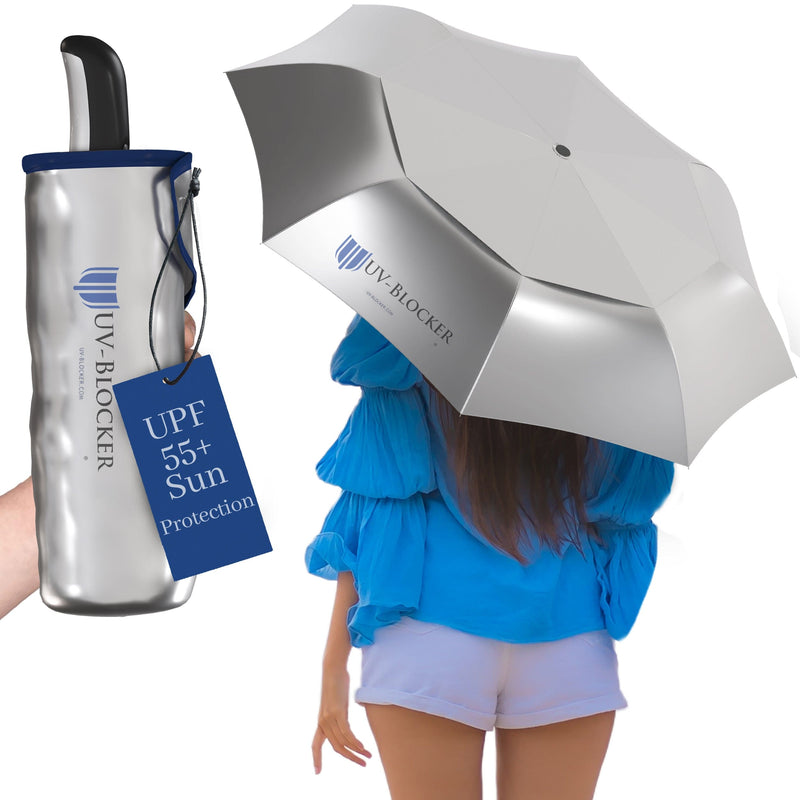
- The Outer Layer: Metallic silver coating to reflect 99% of visible light and heat
- The Inner Layer: A dark absorption layer (black) to stop ground reflections from bouncing around your head
Did You Know? A regular umbrella typically offers a UPF of around 5-10. A UV-Blocker Umbrella offers UPF 50+—blocking over 99% of harmful rays.
3. Heat Management: The "Oven Effect"
This is the most noticeable difference for users comparing their options.
Regular umbrellas tend to trap heat. Dark rain umbrellas absorb solar energy and radiate it downwards onto your head, creating a "hot pocket." It can actually feel hotter under a rain umbrella than standing in direct sunlight with a breeze.
Sun protection umbrellas are designed to be thermodynamically neutral or cooling:
- Reflective Tops: Bounce heat away before it's absorbed
- Vented Canopies: Allow hot air rising from the ground to escape through the top vents (the chimney effect)
Proper venting is crucial for sun protection umbrellas to allow accumulated heat to escape, keeping you up to 15°F cooler. Testing shows the temperature underneath a UV-Blocker umbrella is consistently 10-15°F cooler than direct sunlight—a significant difference on hot days.

4. Durability and Weight
Regular Umbrellas are built to survive storms. They often have heavier fiberglass or steel ribs to withstand heavy rain and gusty winds. They are "armor" against the weather.
Sun Protection Umbrellas are built for portability. Since they are often used on hikes, golf courses, or walks, they prioritize lightweight materials like carbon fiber or aluminum. However, premium brands (like UV-Blocker) hybridize this, using storm-proof frames with sun-proof fabrics—giving you the best of both worlds.
The frame construction also matters for long-term value. Budget umbrellas use aluminum ribs that bend permanently when stressed. Quality sun umbrellas use fiberglass ribs with high memory flex—they bow under pressure but return to their original shape.
5. The Protection Gap: Why 77% Isn't Enough
The American Academy of Dermatology emphasizes that UV protection should be as complete as possible.
A study by Emory University found that standard umbrellas can filter about 77% of UV rays. While 77% sounds good, it means 23% of radiation is still hitting you. Over an hour walk, that is significant exposure. Over a summer of daily use, the cumulative damage adds up substantially.
Whatever you do, avoid using a transparent bubble umbrella for sun protection. It essentially acts as a greenhouse, trapping heat and letting nearly 100% of UVA rays through to damage your skin.
The Cumulative Effect
Sun damage accumulates over your lifetime. The difference between 77% and 99% protection may seem small, but consider:
- 100 hours under a rain umbrella: Equivalent to 23 hours of direct unprotected sun exposure
- 100 hours under a UPF 50+ umbrella: Equivalent to less than 1 hour of direct unprotected sun exposure
For casual use, this margin may be acceptable. For anyone with photosensitivity, skin cancer history, or lupus, this difference is a measurable health intervention.
What Dermatologists Recommend
Medical experts consistently recommend dedicated sun protection over makeshift solutions.
Dr. Andrea Buck, Board-Certified Dermatologist (Medford, NJ):
"When patients ask about this comparison, I'm clear: a rain umbrella is not sun protection. For anyone with photosensitivity or skin cancer history, a UPF-rated umbrella is non-negotiable."
Dr. Aradhna Saxena, Dermatologist (Ft Washington, PA):
"The 23% UV transmission from regular umbrellas compounds over time. I recommend UPF 50+ umbrellas as part of a comprehensive sun protection strategy, especially for my lupus patients."
Dr. David A. Kasper, Dermatologist (Lansdale, PA):
"I've seen patients who thought their rain umbrella was protecting them. It wasn't. A dedicated sun umbrella with reflective coating is fundamentally different technology."
Medical Certifications That Matter
When making your choice, look for these trust signals:
- Melanoma International Foundation (MIF) Approved — UV-Blocker umbrellas carry this endorsement
- The Skin Cancer Foundation Seal of Recommendation — Products must demonstrate safe and effective UV protection
- UPF 50+ Rating — Indicates fabric blocks 99%+ of UV radiation
For a complete breakdown of which UV umbrella dermatologists specifically recommend — including verified quotes from three board-certified dermatologists — read: What UV Umbrella Do Dermatologists Recommend?
The Buyer's Guide: What to Look For
If you are ready to upgrade from a regular umbrella to a dedicated sun umbrella, here is your checklist:
- [ ] UPF 50+ Rating: Do not settle for less
- [ ] Double Canvas/Vented System: Essential for heat dissipation
- [ ] Silver Outer Coating: For maximum heat reflection
- [ ] Black Inner Liner: To absorb "bounce-back" UV from pavement
- [ ] Fiberglass Ribs: For durability without weight
- [ ] Dermatologist Recommended: Look for validation from medical experts
Size recommendations: - Personal/Travel: 42-44 inch arc — Travel UV Umbrella - Golf: 62-68 inch arc — Golf UV Umbrella - Beach: Large canopy — Beach UV Umbrella
Who Needs a UV Umbrella Most?
This choice is especially critical for:
- Melanoma survivors and skin cancer patients — UV-Blocker was founded in 2005 by Ron Walker after his Stage 1 melanoma diagnosis. Every product is designed with the understanding that sun protection is a medical necessity.
- Lupus patients — Photosensitivity can trigger dangerous flares. The larger coverage zone of a sun umbrella provides a meaningful buffer. See our Lupus Sun Protection Guide.
- Anyone on photosensitizing medications — Retinoids, certain antibiotics, and other medications increase sun sensitivity significantly.
- Golfers and outdoor enthusiasts — Extended sun exposure over 18 holes or a day of hiking requires serious protection.
- Parents protecting young children — Babies under 6 months can't use sunscreen, making physical shade the only safe option.

When Should You Buy a UV Protection Umbrella?
If you're here comparing UV umbrellas vs regular umbrellas, the answer is probably: now. But not all UV umbrellas are equal. Here's how to choose the right one based on how you'll use it.
Three non-negotiables for any UV protection umbrella:
- UPF 50+ certification — Must be lab-tested, not just labeled. Look for AATCC TM183-2020 compliance.
- Reflective coating — Pure UV blocking keeps you protected; a reflective silver coating also keeps you cool (15°F difference matters).
- Wind resistance — A vented double canopy prevents inversion. A UV umbrella that turns inside-out in a breeze is useless.
Browse the full range of UV sun protection umbrellas — all UPF 50+, all Melanoma International Foundation approved.
Frequently Asked Questions
Can a sun umbrella be used in the rain?
Yes. High-quality sun umbrellas (like UV-Blocker) are waterproof. However, because the fabric is premium, you should take extra care to dry it properly to preserve the reflective coating. Most users get dual-purpose utility from their purchase.
Why is the inside of a UV umbrella black?
UV rays hit the ground (concrete, sand) and bounce up. If the inside of your umbrella is silver or white, those rays bounce off the umbrella and hit your face (the "parabolic mirror" effect). Black absorbs them, stopping the ping-pong effect and providing complete protection.
How much cooler is a sun umbrella?
Users typically report a temperature difference of 10°F to 15°F cooler compared to direct sunlight under a UV-Blocker umbrella. This makes a significant difference during summer heat waves or extended outdoor activities.
What UPF rating should I look for?
Look for UPF 50+ for maximum protection. UPF 50 blocks 98% of UV rays, while UPF 50+ blocks 99%+. That extra 1% means half the radiation exposure over time—a meaningful difference for anyone with sun sensitivity concerns.
Is a sun umbrella worth the extra cost?
For casual, occasional use, a rain umbrella provides some shade. For anyone who spends significant time outdoors, has medical sun sensitivity, or wants long-lasting protection, a dedicated sun umbrella provides measurably better protection and typically lasts 5+ years versus 1-2 seasons for budget options.
The Verdict: Use the Right Tool for the Job
The difference between these two umbrella types is the difference between specific-purpose gear and a makeshift solution. You wouldn't wear a raincoat to the beach to stop a sunburn, so don't rely on a rain umbrella to do a sun umbrella's job.
Investing in a high-quality sun protection umbrella is an investment in your skin's longevity. It's a portable shield that offers shade, coolness, and medical-grade protection wherever you go.
Ready to upgrade? Explore the UV-Blocker collection or read our Complete Buying Guide.