
Quick Reference Summary: Wind-Proofing Your Beach Day
- The Hidden Danger: Approximately 3,000 Americans visit the ER annually due to flying beach umbrella injuries. Wind is the primary culprit, not weak anchoring alone.
- Physics at Play: Standard beach umbrellas act like airplane wings, generating up to 700+ pounds of lift and drag force in 37 mph winds due to pressure differentials.
- The Engineering Solution: Vented canopy technology significantly reduces lift force by 40-60% by allowing wind to pass through engineered mesh panels, equalizing pressure.
- Robust Anchoring is Key: Properly anchor your umbrella by burying the pole 16-18 inches deep, compacting sand, angling it into the wind, and using a quality screw anchor. This is effective *only* when paired with a vented canopy.
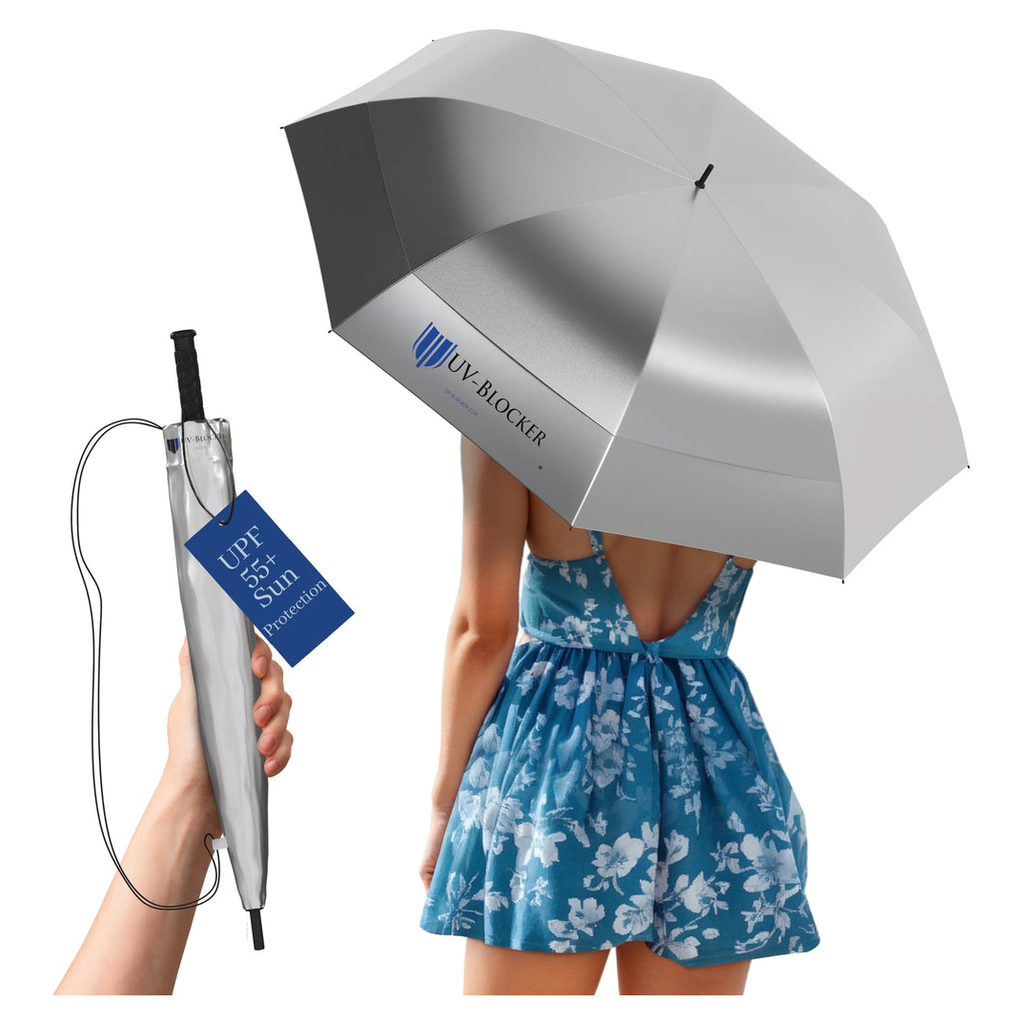
- UV-Blocker's Advantage: Featuring patented Solarteck® vented designs, durable fiberglass ribs, and certified UPF 50+ fabric, UV-Blocker umbrellas are engineered to handle sustained coastal winds while providing superior sun protection.
- Safety Standards: The new ASTM F3681-24 standard highlights the importance of systems that can withstand 30 mph winds or provide substantial anchoring resistance.
I watched my neighbor's umbrella take flight last summer at Myrtle Beach. Forty feet across the sand. Skewered someone's cooler like a javelin. Nobody got hurt—that time—but the look on his face told me everything. He'd been fighting this battle for years. It’s a frustratingly common scene, one that too many beachgoers experience firsthand.
Turns out he's not alone, and this isn't just a minor nuisance.
Roughly 3,000 Americans land in the emergency room each year because of flying beach umbrellas. Wind was the culprit in more than half those cases, often leading to lacerations, contusions, and even more severe injuries. These aren't freak accidents or acts of God. They're predictable physics playing out the same way, day after day, on beaches from Maine to San Diego. According to the Consumer Product Safety Commission (CPSC), beach umbrella injuries have been rising steadily as coastal tourism increases, turning what should be a relaxing day into a potential hazard. The CPSC has documented cases of eye injuries, broken bones, and even impalement, underscoring the serious nature of this issue.
Here's the thing most people get wrong. They treat this like an anchoring problem. Heavier stakes. Thicker poles. Sandbags the size of small children. And the umbrella still takes off. Why? Because they're fighting the symptom, not the cause. It's a fundamental misunderstanding of the aerodynamic forces at play.
Let me walk you through what's actually happening under that canopy—and how to fix it once and for all with smart design and proper technique.
Your Beach Umbrella Is Secretly a Kite: The Physics of Flight
When wind hits a solid, curved beach umbrella canopy, it doesn't just push against it. It does something far more complex and dangerous: it generates aerodynamic lift. This is the exact same principle that allows airplanes to take off. As air flows over the curved upper surface of the canopy, it has to travel a greater distance than the air flowing underneath. This causes the air on top to speed up, leading to a drop in air pressure (Bernoulli's Principle). Simultaneously, air accumulating beneath the canopy creates an area of higher pressure. This pressure differential—high pressure pushing up from below, low pressure pulling up from above—creates a powerful upward force: lift.
Your umbrella isn't merely catching wind; it's actively generating lift and drag. Think of it as an accidental sail, or worse, an uncontrolled missile. A sailboat harnesses this force purposefully, but your beach setup turns a casual 15 mph afternoon breeze into launch energy for an uncontrolled projectile capable of causing serious harm.

Want the actual numbers? At around 37 mph (60 km/h)—a wind speed not uncommon on coastal beaches—a typical 10-foot diameter umbrella with a solid canopy generates approximately 325 pounds of pure lift force. Add another 355 pounds of drag pulling sideways, attempting to rip the umbrella out of its anchor. That's nearly 700 pounds of combined aerodynamic force trying to yank your umbrella from the sand with every sustained gust. Even at lower speeds, say 20-25 mph, the forces can easily exceed 200-300 pounds, far more than most anchors can withstand.
Now look at your anchor setup realistically. A decent sand stake, twist-in plastic anchor, or sandbag might give you 30–50 pounds of holding resistance. A high-quality, deep-burying screw-style anchor, properly installed? Maybe 75 pounds on a good day, possibly up to 100-120 pounds if the sand is perfectly compacted and undisturbed. But this is still a fraction of the force exerted by the wind.
See the monumental problem yet? No anchor you can buy at the beach rental hut is going to counter that math. The issue isn't weak anchoring in isolation. It's too much lift generation by the umbrella's design itself. You can't stake your way out of a physics mismatch any more than you can bolt a kite to the ground during a windstorm and expect nothing to break. This foundational understanding is crucial for truly wind-proofing your shade.
Enter the Vented Beach Umbrella Canopy: An Engineered Solution
Aircraft designers solved the problem of unwanted lift decades ago. When a commercial jet lands, pilots deploy spoilers—flat panels that extend upward from the wing surface. These spoilers disrupt the smooth airflow, collapsing the pressure differential that was generating lift, and helping the plane stay firmly on the runway instead of floating. The plane essentially "sinks" onto its wheels because the aerodynamic forces are neutralized.
Vented beach umbrellas work on the same basic principle, but in reverse—they prevent the unwanted lift from building up in the first place. Instead of a solid, impermeable dome, these umbrellas incorporate mesh panels or openings near the canopy's peak. These vents allow wind to pass straight through, preventing the high-pressure zone from building up underneath and equalizing pressure above and below the canopy. The physics that transforms your umbrella into a dangerous projectile simply... stops. Air escapes upward, pressure equalizes, and your umbrella stays put, securely tethered by its anchor.

How significant is the performance difference? Studies measuring canopy behavior in wind tunnels and controlled gust simulations consistently show that vented designs cut overall lift force by an impressive 40–60% compared to their solid-canopy counterparts. In test scenarios mimicking strong coastal winds, high-quality vented beach umbrellas held steady 90% of the time, demonstrating remarkable stability. Non-vented umbrellas with solid canopies, on the other hand, frequently flipped inside-out or took flight in 80% of the same test conditions, often failing catastrophically.
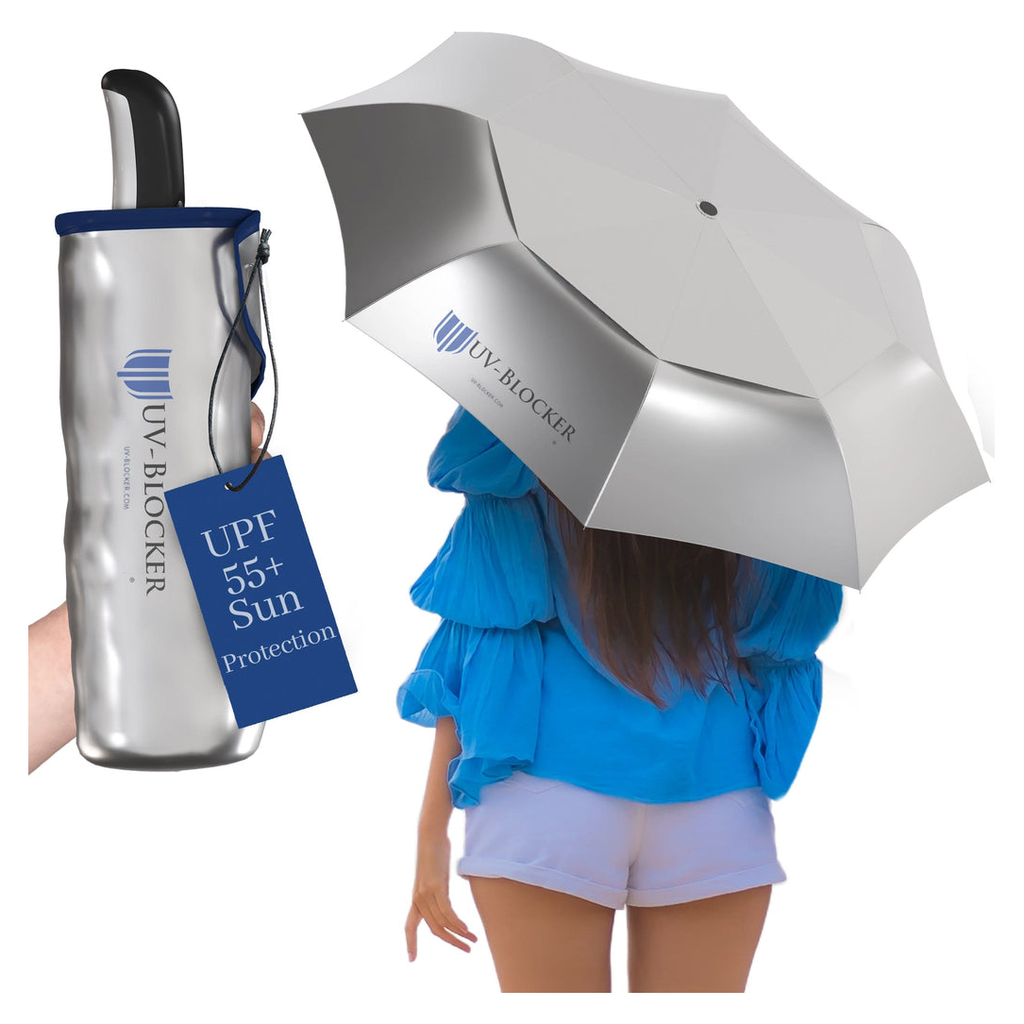
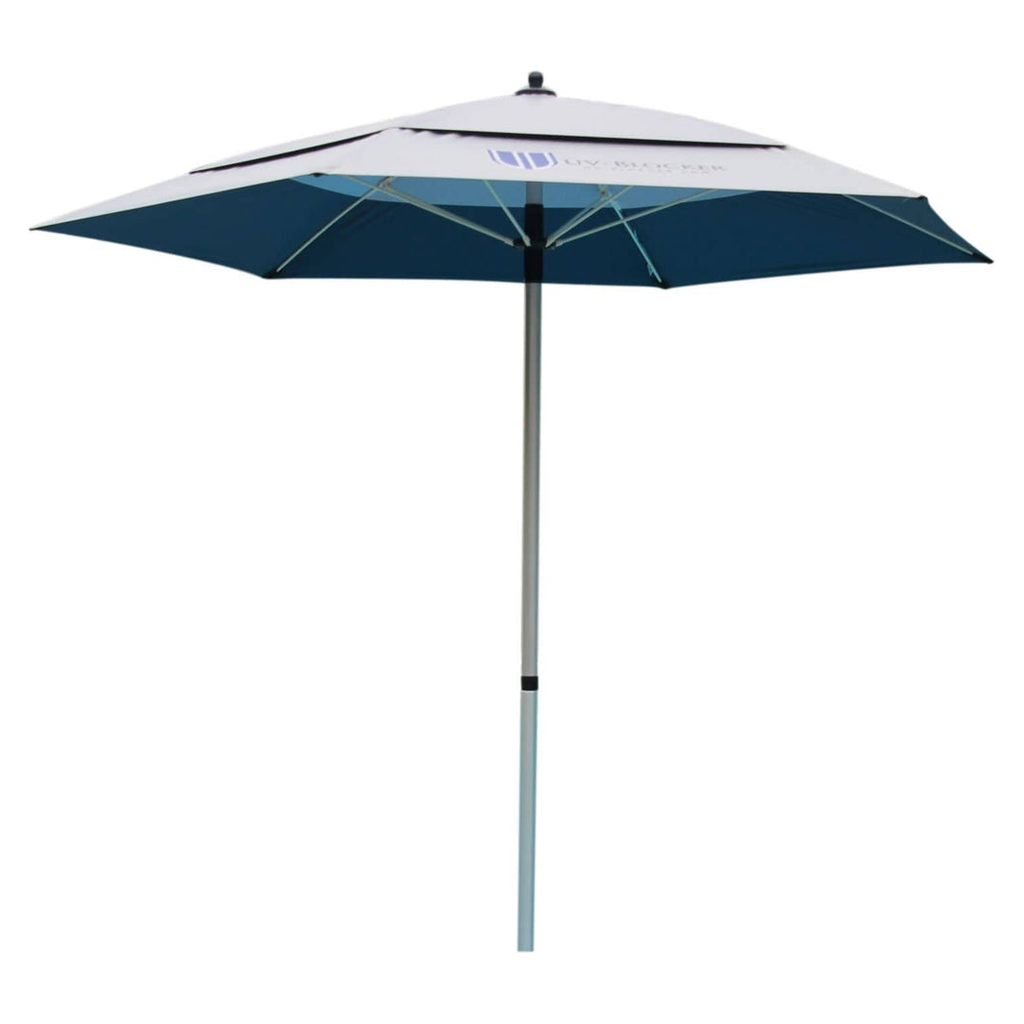
The best implementations, like those found in UV-Blocker umbrellas, push this engineering further with a dual-canopy system. This sophisticated design features an outer layer, a strategically placed mesh vent section, and an inner layer. Wind enters through the outer fabric, is channeled through the vented mesh, and harmlessly escapes through the gap between the two canopy layers. Crucially, harmful UV rays and rain remain effectively blocked because the inner and outer layers are offset—the protection remains completely intact while all that dangerous lift force dissipates harmlessly into the air. This patented Solarteck® vented mesh system is not just marketing fluff; it's a genuine, scientifically-backed engineering fix for a critical physics problem, ensuring your shade stays put while keeping you safe from the sun. Our UPF 50+ fabric, a key component of this design, also ensures maximum UV protection, verified by the Melanoma International Foundation (MIF).
Now Your Beach Umbrella Anchor Actually Works: The Complete System
Vented canopies don't eliminate the need for anchoring; they make anchoring realistic and genuinely effective. By reducing the primary aerodynamic forces, a properly chosen and installed anchor can now perform its job reliably. You're no longer asking a simple stake to fight hundreds of pounds of lift; you're asking it to manage a fraction of that force, which is an entirely achievable goal.
Here's the comprehensive setup that actually holds in coastal wind, forming a complete safety system:
- Go Deep. Really Deep. Bury that umbrella pole a minimum of 16–18 inches into the sand. Not six inches. Not ten. Studies and field tests consistently show that burying the pole deeper significantly increases its holding power due to the sheer volume and weight of sand above the buried section. Every extra inch provides exponential resistance.
- Compact As You Dig. Don't just stick the pole in. Rock and twist the pole back and forth as you insert it and once it's in place to pack sand tightly around it. You want resistance from densely compressed sand, not just depth alone. Loose sand offers minimal resistance, allowing the pole to wobble and loosen with every gust. Some advanced anchors feature fins or auger designs that naturally compact sand as they're twisted in.
- Angle Into the Wind. This feels counterintuitive at first, but it's a crucial aerodynamic trick. When your beach umbrella leans slightly toward the incoming breeze, gusts actually push it *down* into the sand, further seating the pole and increasing its stability, instead of launching it skyward. You're harnessing physics to work for you instead of against you, turning a potential liability into an asset.
- Add a Screw Anchor (and Choose Wisely). Even with a vented canopy and deep burial, a quality screw-style anchor is highly recommended, especially when setting up on soft, loose sand or if stronger afternoon gusts are expected. Look for anchors made from durable, corrosion-resistant materials (like high-grade plastics or aluminum) with deep threads that truly grip the sand. Avoid shallow, flimsy plastic cones. UV-Blocker umbrellas are designed to be compatible with robust anchoring systems, offering an integrated approach to wind resistance.

Why does this setup suddenly work when it failed before? Simple math and effective engineering. When your canopy design sheds 60% of its lift force through smart venting, a 30-pound anchor suddenly becomes effective. You're not asking a cheap plastic stake to fight 300 pounds of aerodynamic physics anymore. You're asking it to handle 120 pounds of residual force, maximum. That's genuinely achievable with a good anchor and proper technique. This integrated approach—superior canopy design combined with intelligent anchoring—is the key to a truly wind-proof beach experience.
The new ASTM F3681-24 safety standard, published in 2024, acknowledges this reality. It provides guidelines for beach umbrella safety, requiring compliant systems to either handle sustained 30 mph winds OR provide a minimum of 75 pounds of anchoring resistance when properly installed in sand. Quality vented umbrellas like those from UV-Blocker are engineered to meet or exceed these performance marks, providing peace of mind to consumers. We are committed to designing products that set the standard for safety and performance.
What to Look for When Shopping for a Wind-Resistant, UPF 50+ Beach Umbrella
Not every umbrella belongs on every beach, especially when wind picks up or sun protection is paramount. Investing in a quality umbrella means prioritizing safety and effective UV defense. Here's a comprehensive guide to what truly matters:
1. Canopy Design: Vents Are Non-Negotiable
- Solid Canopies: These are the "standard grade" you find at rental kiosks or big-box discount stores. They feature a single, unbroken fabric layer. While fine for perfectly calm days and light breezes (under 5-7 mph), they start struggling badly between 10–15 mph—basically any typical afternoon sea breeze on an open coast. They become dangerous projectiles above 15 mph. Avoid these for anything other than backyard patio use.
- Single-Vent Design: A modest improvement, these umbrellas have a small, single vent opening at the very top. They offer slightly better wind resistance than solid canopies but are still often overwhelmed by sustained coastal winds above 15-20 mph. The venting area is often too small to dissipate significant pressure.
- Dual-Vent or Multi-Layered Vented Canopies: This is the gold standard for wind resistance. These designs incorporate multiple vents or, ideally, a patented dual-layer system like UV-Blocker's Solarteck® technology. This sophisticated engineering allows for maximum wind pass-through, significantly reducing lift and drag. Our patented system is designed to handle sustained 25-30 mph coastal winds, providing unmatched stability. Look for systems where the vents are properly designed to release pressure without compromising the canopy's structural integrity or UV protective capabilities.
2. Frame & Rib Construction: Durability and Flex are Key
- Steel/Aluminum Ribs: Common in standard and moderate-grade umbrellas. While affordable, steel can rust in saltwater environments, and both can bend or break permanently under strong wind stress. They lack the necessary flexibility to absorb gusts.
- Fiberglass Ribs: Superior to metal, fiberglass ribs offer excellent flexibility, allowing them to bend and flex in gusts without snapping or deforming permanently. This "memory" feature means they return to their original shape after being stressed. UV-Blocker specifically uses heavy-duty, reinforced fiberglass ribs for exceptional durability and wind resilience, ensuring a long lifespan even with frequent beach use.
- Pole Material: Look for strong, corrosion-resistant aluminum or even carbon fiber poles. Avoid thin, flimsy poles that can easily snap or bend at the connection points. A thicker pole diameter often indicates greater stability.
3. UV Protection: Beyond Just Shade
- UPF 50+: This is absolutely critical. A beach umbrella should not just provide shade; it should actively block harmful UV rays. Look for umbrellas explicitly rated UPF 50+, meaning they block 98% of UVA and UVB rays. Many unrated umbrellas offer minimal protection, equivalent to an SPF of 5-7. UV-Blocker umbrellas are certified UPF 50+ across all fabric layers, providing maximum sun safety.
- Solarteck® Fabric: UV-Blocker's proprietary Solarteck® fabric goes beyond standard UPF 50+ ratings. It's engineered to be lightweight, durable, and highly effective at blocking both UVA and UVB rays, even under direct sunlight for extended periods. This specialized fabric is also designed to resist fading and degradation from sun exposure and saltwater, maintaining its protective qualities season after season. Learn more about our Solarteck® technology.
- Melanoma International Foundation (MIF) Approved: This endorsement signifies a commitment to the highest standards of sun protection. UV-Blocker is proud to be a MIF-approved brand, reflecting our dedication to skin cancer prevention, a mission personally driven by our founder, melanoma survivor Ron Walker.
4. Anchoring System: Integrated and Reliable
- Built-in Screw Anchor: Many higher-end umbrellas feature a sturdy, integrated screw anchor at the base of the pole. This makes installation much easier and more secure than relying on separate, generic plastic anchors.
- Compatibility with Third-Party Anchors: Ensure the pole diameter is compatible with robust, after-market screw anchors if you prefer to use one, especially for very soft sand conditions.
5. Portability and Convenience
- Weight and Carry Bag: A well-engineered umbrella doesn't have to be overly heavy. Look for reasonable weight and a durable carry bag with a shoulder strap for easy transport to and from the beach.
- Tilt Mechanism: A strong, easy-to-use tilt mechanism allows you to adjust the canopy to follow the sun's movement throughout the day, ensuring continuous shade and UV protection.
By carefully considering these factors, you can choose a beach umbrella that not only provides refreshing shade but also guarantees safety, durability, and superior sun protection—a true investment in your beach experience.
Frequently Asked Questions About Beach Umbrella Safety
How many people get injured by beach umbrellas each year?
Approximately 3,000 Americans visit emergency rooms annually due to beach umbrella-related injuries. These incidents range from lacerations and contusions to more serious eye injuries and broken bones, often caused by umbrellas being lifted and propelled by wind. The CPSC reports a rising trend in these injuries as coastal tourism increases.
Why do beach umbrellas fly away even with an anchor?
Most beach umbrellas fly away because their solid canopy designs create significant aerodynamic lift, much like an airplane wing. Wind building up underneath creates high pressure, while low pressure forms above, generating hundreds of pounds of upward force. Traditional anchors simply cannot counteract these immense forces, making the issue a design flaw rather than just an anchoring problem.
What is a vented beach umbrella and how does it work?
A vented beach umbrella features strategically placed mesh panels or openings near the top of the canopy. These vents allow wind to pass through, preventing the dangerous buildup of pressure underneath the canopy and equalizing pressure above and below. This significantly reduces lift force (by 40-60%), allowing the umbrella to remain stable even in strong gusts. UV-Blocker's patented Solarteck® dual-layer vented system effectively dissipates wind while maintaining full UPF 50+ sun protection.
What is the best way to anchor a beach umbrella in windy conditions?
For optimal stability, you must combine a vented umbrella design with proper anchoring technique. Bury the pole 16-18 inches deep into the sand, compacting the sand firmly around it. Angle the umbrella slightly into the direction of the prevailing wind—this allows gusts to push it down, rather than lift it up. Finally, use a high-quality, deep-threaded screw anchor for added security, especially in softer sand or during stronger winds. This comprehensive approach ensures your umbrella stays put.
Are all "wind-resistant" umbrellas truly safe?
Not necessarily. Many umbrellas claim "wind resistance" but may only feature minimal venting or weaker frames. True wind resistance comes from a combination of a robust, multi-layered vented canopy system (like UV-Blocker's Solarteck®), flexible and durable fiberglass ribs, and strong pole construction. Always look for specific details on the venting mechanism, frame materials, and ideally, compliance with standards like ASTM F3681-24, which addresses beach umbrella safety in wind.
Why should I choose a UPF 50+ umbrella?
A UPF 50+ umbrella provides superior protection by blocking 98% of harmful UVA and UVB rays, significantly reducing your risk of sunburn and long-term skin damage, including skin cancer. Many standard beach umbrellas offer very little UV protection, leaving you vulnerable even in the shade. UV-Blocker umbrellas, founded by melanoma survivor Ron Walker, are certified UPF 50+ and recommended by the Melanoma International Foundation, ensuring you receive the highest level of sun safety with your shade.