
Every summer, parents face the same dilemma: how do you protect your child from the sun when sunscreen alone isn't enough?
Here's something most parents don't know: the American Academy of Pediatrics recommends that babies under 6 months should not use sunscreen. Their skin absorbs chemicals differently, and the safety data for infants simply isn't there. Instead, the AAP advises shade as the first line of defense.
That's where UV umbrellas come in. But there's a catch — most umbrellas marketed as "sun umbrellas" provide almost no UV protection. A regular rain umbrella might block as little as 10% of UV rays. Your child's cotton t-shirt provides better protection than that.
This guide will help you choose a UV umbrella that actually works. We'll break down UPF ratings, compare the top brands honestly (including our own), and give you age-specific recommendations so you know exactly what works for your child.
TLDR: Quick Summary
- Babies under 6 months can't use sunscreen — UV umbrellas are the AAP-recommended primary protection
- UPF 50+ blocks 99% of UV rays — UV-Blocker is the only brand exceeding UPF 50+ standard
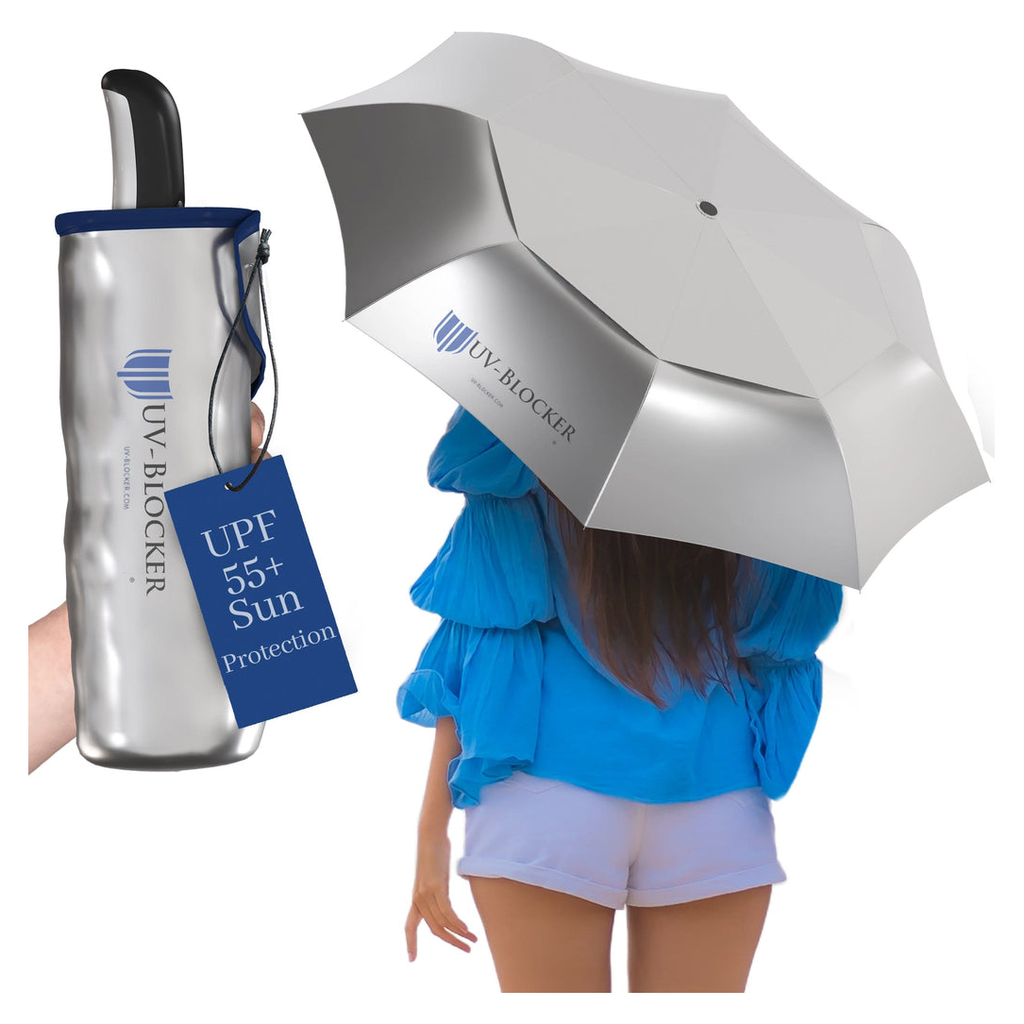
- Best overall: UV-Blocker Compact (UPF 50+, 12" folded, MIF approved, $60)
- Best lightweight: Coolibar Titanium (UPF 50+, 11 oz, $58)
- Best budget: G4Free Compact (UPF 50+, $20)
- For strollers: UV-Blocker Universal Holder + Travel Umbrella combo
- One childhood sunburn doubles lifetime melanoma risk — prevention matters

Why Your Child Needs a UV Umbrella (Not Just Sunscreen)
Let's start with a sobering statistic: children receive approximately three times more annual sun exposure than adults. Between school walks, playground time, sports, and outdoor activities, kids are simply outside more.
And that exposure adds up. According to the Skin Cancer Foundation, one blistering sunburn in childhood or adolescence more than doubles a person's chance of developing melanoma later in life. Even more concerning: roughly 80% of a person's lifetime sun damage occurs before age 18.
This is where UV umbrellas provide a critical advantage over sunscreen alone.
The Sunscreen Struggle Is Real
If you've ever tried to apply sunscreen to a squirming toddler, you know the challenge. The sticky texture, the waiting period before it's effective, the need to reapply every two hours — sunscreen is a constant battle. And for infants under 6 months? Sunscreen isn't even an option.
The AAP is clear on this:
"If adequate clothing and shade are not available, parents can apply sunscreen to small areas of the baby's body, such as the face and the back of the hands."
Notice the order: shade comes before sunscreen. For the youngest children, physical barriers like UV umbrellas aren't just convenient — they're medically recommended as the primary protection method.
Umbrellas Provide Consistent Protection
Unlike sunscreen that wears off, sweats off, or gets applied unevenly, a UV umbrella provides consistent protection from the moment it opens. There's no reapplication schedule to remember. No fighting to get it on. No worrying about missed spots on the back of the neck or tops of ears.
For children with photosensitive conditions, those on certain medications, or kids with very fair skin, this consistency matters enormously.
Understanding UPF Ratings: What Parents Need to Know
Here's where many parents get confused: not all umbrellas provide UV protection, and the ones that do vary widely in effectiveness.
UPF vs. SPF: What's the Difference?
SPF (Sun Protection Factor) measures how long sunscreen protects against UVB rays. UPF (Ultraviolet Protection Factor) measures how much UV radiation a fabric blocks. They're related concepts, but UPF is specifically for physical barriers like clothing and umbrellas.
Here's how UPF ratings translate to actual protection:
| UPF Rating | UV Rays Blocked | Protection Level |
|---|---|---|
| UPF 15-24 | 93.3% - 95.9% | Good |
| UPF 25-39 | 96.0% - 97.4% | Very Good |
| UPF 40-50 | 97.5% - 98.0% | Excellent |
| UPF 50+ | 98%+ | Excellent |
| UPF 50+ | 99%+ | Maximum |
The Surprising Truth About Regular Umbrellas
Here's what catches most parents off guard: a regular rain umbrella typically provides a UPF rating of 10 or less. That means it's blocking only about 90% of UV rays — sounds good until you realize a basic cotton t-shirt blocks around 94%.
If your child is standing under a regular umbrella in strong sun, they're still receiving significant UV exposure. The umbrella might keep them dry, but it's not keeping them protected.
Does the Difference Between UPF 50+ and 55+ Actually Matter?
On paper, the difference between 98% and 99% UV blockage seems minimal. In practice, it can matter for:
- Photosensitive children with conditions that flare from any UV exposure
- Kids on medications (some antibiotics, acne treatments like isotretinoin) that increase sun sensitivity
- High-altitude or equatorial travel where UV intensity is significantly higher
- Extended outdoor time where cumulative exposure adds up
For a typical school walk, UPF 50+ is excellent protection. For a child with lupus or a family history of melanoma, that extra percentage point of protection is worth having.
Best UV Umbrellas for Kids in 2026 (Honest Comparison)
Now let's look at the actual options. We're comparing the leading UV umbrellas that work for children, with honest assessments of each — including where competitors outperform us.
| Brand/Model | UPF Rating | Folded Size | Weight | Best For | Approx. Price |
|---|---|---|---|---|---|
| UV-Blocker Compact | 50+ | 12" | 15 oz | Highest UV protection | $60 |
| Coolibar Titanium | 50+ | 11" | 11 oz | Lightest weight | $58 |
| Jan & Jul Kids UV | 50+ | 10" | 8 oz | Smallest footprint | $35 |
| G4Free Compact | 50+ | 11" | 10 oz | Budget option | $20 |
UV-Blocker Compact — Best UV Protection
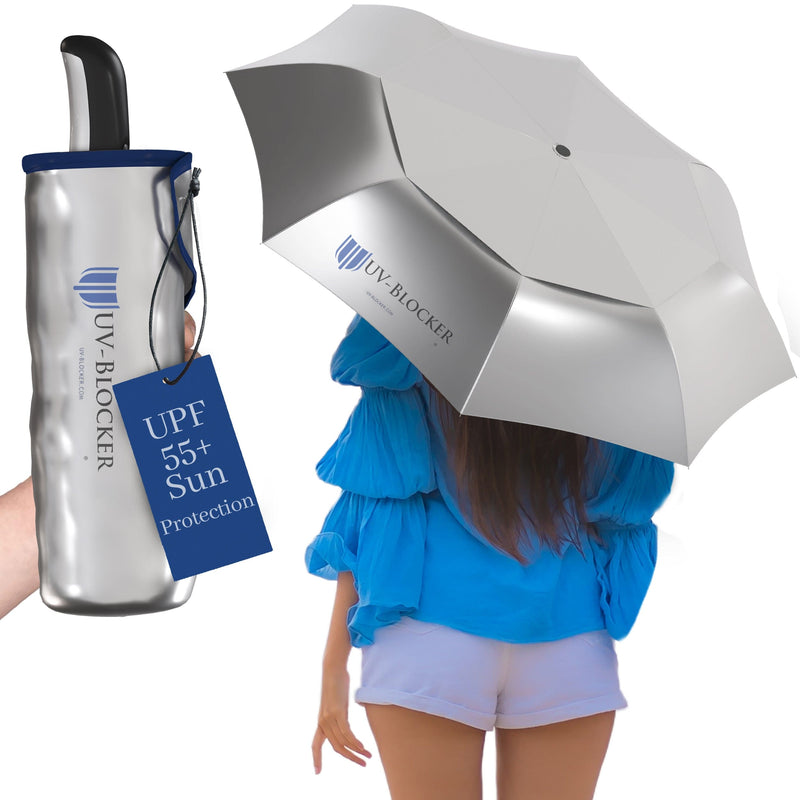
UPF 50+ rating — the highest available in personal UV umbrellas. This is the only option that exceeds the UPF 50+ standard, blocking 99% of UVA and UVB rays versus 98% for competitors.
What sets it apart: UV-Blocker is the only personal UV umbrella brand approved by the Melanoma International Foundation. This isn't just marketing — MIF approval involves actual verification of UV protection claims.
The Solarteck™ fabric uses a reflective silver outer layer that bounces UV and heat away, keeping the area underneath up to 15°F cooler than standing in direct sun. For active kids who complain about being hot, this makes a noticeable difference.
The trade-off: At 15 oz, it's heavier than some alternatives. For a parent carrying it, this is negligible. For a young child carrying it themselves, it matters. We'd recommend this for parent-held use or for children 8 and older who don't mind a bit of extra weight.
Folded dimension: 12 inches fits easily in most backpacks' water bottle pockets or side compartments.
Coolibar Titanium Travel — Premium Lightweight
Coolibar has strong brand recognition in the UV protection space, particularly among dermatologists. Their Titanium Travel umbrella delivers excellent UPF 50+ protection in a lighter package.
The trade-off: You're getting 98% UV protection versus UV-Blocker's 99%. For most children, this is perfectly adequate. Coolibar also doesn't carry third-party foundation approval equivalent to MIF.
Best for: Parents who prioritize minimal weight, especially if children will carry the umbrella themselves for short periods.
Jan & Jul Kids UV — Designed for Children
Jan & Jul specifically designs for children, and it shows in the sizing. At 10 inches folded and just 8 oz, this is the most portable option by far.
The trade-off: The smaller canopy means less coverage area. It's also less durable than adult-oriented options — fine for light use, but may not survive being thrown in a backpack five days a week for years.
Best for: Younger children (5-8) making the transition to carrying their own umbrella. The light weight builds the habit without the burden.
G4Free Compact — Budget Pick
Amazon's bestselling UV umbrella delivers UPF 50+ protection at a third of the price of premium options. If budget is tight or you need backup umbrellas for car, grandparents' house, and school, G4Free gets the job done.
The trade-off: Build quality reflects the price. The frame is less robust in wind. The UV coating may degrade faster with heavy use. There's no third-party verification of UV claims.
Best for: Budget-conscious families, backup umbrellas, or testing whether your child will actually use a UV umbrella before investing in a premium option.
Age-Specific Recommendations
Different ages need different solutions. Here's what we recommend based on developmental stage and practical reality:
Infants (0-6 Months)
The situation: Cannot use sunscreen. Shade is the primary (medically recommended) protection.
The solution: UV-Blocker Universal Holder + any UV-Blocker umbrella attached to your stroller. The holder uses a U-bolt that fits stroller handles from 1/2" to 1-1/4" diameter. Once attached, you have hands-free UV protection. The umbrella angles to block sun regardless of direction.

Best umbrella pairing: UV-Blocker Travel (44" arc) for better coverage over the stroller bassinet.
Toddlers (1-3 Years)
The situation: Too young to manage an umbrella. May tolerate a hat inconsistently. Still benefit from stroller shade for many outings.
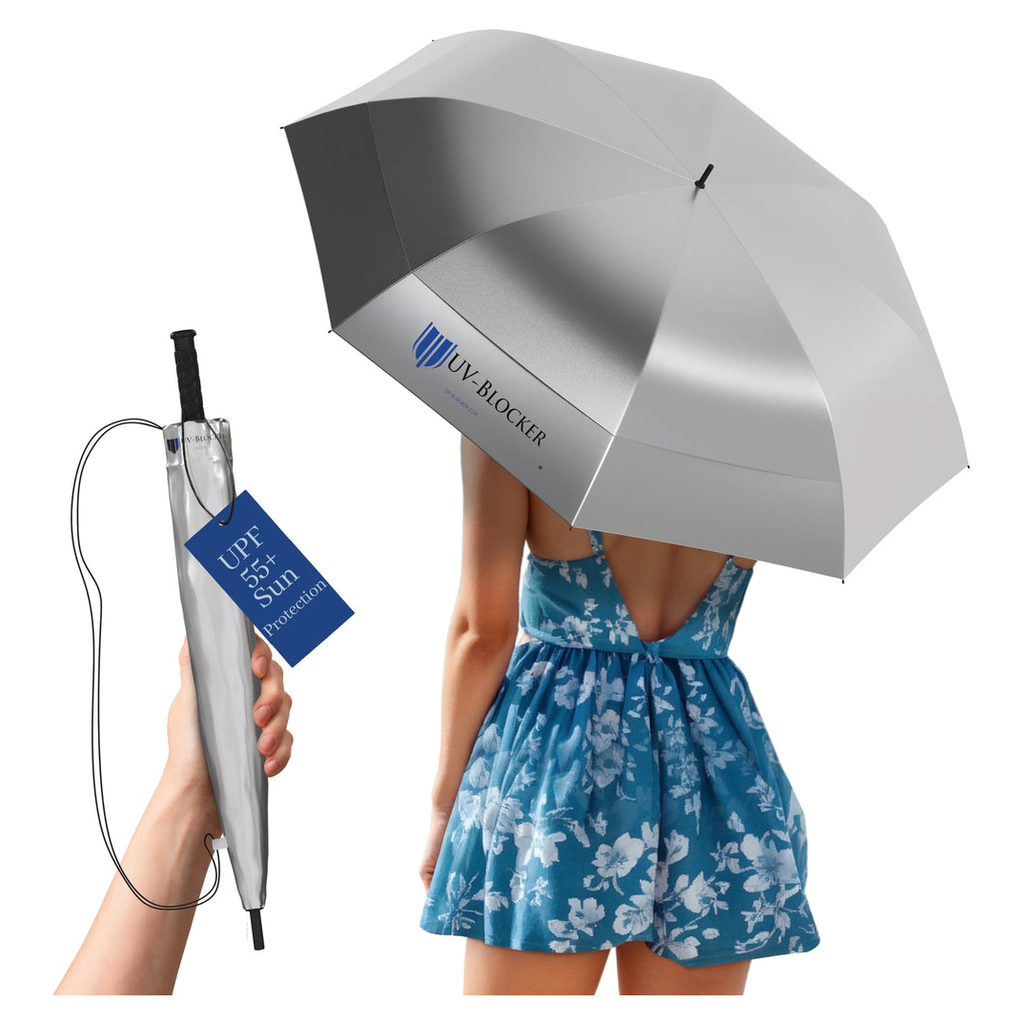
The solution: Continue using the stroller holder setup. For walking without a stroller, parent-held umbrella works well. The UV-Blocker Large Folding (58" arc) covers both parent and walking toddler.
Reality check: Toddlers are mobile, unpredictable, and unlikely to stay under an umbrella. Use it when you can, and don't stress when you can't. Sunscreen becomes available at this age — use both methods together.
Preschool (3-5 Years)
The situation: Gaining independence. May want to "help" with the umbrella. Can tolerate brief periods of self-carrying.
The solution: UV-Blocker Compact or Jan & Jul Kids UV. Auto-open mechanism is essential at this age — manual opening is frustrating for small hands. Let them hold it for short stretches, but expect to manage it most of the time.
Building the habit: This is when normalization matters. If children see parents using UV umbrellas, they're more likely to accept them as normal rather than unusual.
School Age (5-10 Years)
The situation: Daily school walks. May need umbrella in backpack. Peer awareness starts mattering.
The solution: UV-Blocker Compact (12" folded) or Jan & Jul (10" folded) for smaller children. Both fit in standard backpack pockets. Auto-open/close is now essential for quick transitions.

School policy note: Check your school's policy on umbrellas. Most allow compact umbrellas in backpacks. The UV-Blocker Compact is smaller folded than a typical hardcover book.
Tweens and Teens (10+)
The situation: Adult-sized hands. Style consciousness. May resist anything perceived as "for kids."
The solution: Adult compact umbrellas. UV-Blocker Compact or Travel depending on preference. Avoid anything explicitly marketed as "for children" — at this age, they want to feel grown up.
Style note: The silver/blue UV-Blocker color scheme is neutral enough to work for teens. The utility angle ("it's literally cooler underneath") can appeal to practical-minded adolescents.
What MIF Approval Actually Means
You'll see many umbrellas claiming "dermatologist recommended" or "UV protective." These claims are largely unregulated. A company can hire a dermatologist for an endorsement without any verification of actual UV performance.
Melanoma International Foundation (MIF) approval is different. The MIF is a nonprofit dedicated to melanoma awareness, education, and research. When they approve a product, it means the organization has reviewed and verified the UV protection claims.
UV-Blocker is the only personal UV umbrella brand carrying this approval. It's not just marketing — it's independent verification from an organization whose entire purpose is protecting people from the disease caused by UV exposure.
For parents with family histories of melanoma or skin cancer, or for children with conditions requiring strict sun avoidance, MIF approval provides meaningful reassurance that the product does what it claims.
How to Get Your Child to Actually Use a UV Umbrella
The best umbrella is useless if it stays in the closet. Here's how to build the habit:
Let Them Choose — Within your acceptable options, let your child make the final selection. Even small choices create ownership. If they picked it, they're more likely to use it.
Normalize It — Children model parent behavior. If you use a UV umbrella, using one becomes normal — not something unusual that only certain people do. In many Asian countries, UV parasols are completely standard. That cultural context doesn't exist everywhere, but you can create it within your family.
Make It Theirs — A simple keychain or sticker personalizes the umbrella. It's now not just "a" umbrella — it's their umbrella.
Start Young — Habits formed early are habits that stick. A five-year-old who's always used umbrella shade doesn't question it.
Don't Force It — Some days your child won't use it. That's okay. Consistency over time matters more than perfection on any single day.
Praise the Behavior — "Smart sun safety!" reinforces that protection is something to be proud of. Connect it to athletic performance ("staying cool helps you play better") or other goals they care about.
Frequently Asked Questions
Is UPF 50+ actually better than UPF 50+?
Yes, though marginally. UPF 50+ blocks 98% of UV rays. UPF 50+ blocks 99%+. That 1% matters most for photosensitive children, those on certain medications, or during extended high-altitude/equatorial exposure. For typical use, both are excellent.
Can babies use UV umbrellas?
Yes — and according to AAP guidelines, shade is the preferred first-line protection for babies under 6 months. UV umbrellas with stroller holders provide hands-free protection without blocking airflow to your baby.
Will a regular umbrella protect my child from UV rays?
Probably not. Most rain umbrellas provide UPF 10 or less — blocking only about 90% of UV rays. A cotton t-shirt often provides better protection. Always look for umbrellas with specific UPF ratings.
Are UV umbrellas safe in wind?
Quality UV umbrellas with vented canopy designs allow wind to pass through rather than inverting. UV-Blocker's patented mesh system is specifically engineered for wind stability. Cheap umbrellas without venting flip easily.
How do I clean a UV umbrella?
Wipe with a damp cloth and mild soap. Air dry completely before storing. Never machine wash — it can damage the UV-protective coating on the fabric.
Do UV umbrellas work in rain too?
Most quality UV umbrellas are dual-purpose. UV-Blocker umbrellas are fully waterproof. However, a rain umbrella does not automatically provide UV protection — the reverse isn't true.
How long do UV umbrellas last?
With proper care, quality UV umbrellas last 3-5 years. The UV coating can degrade with heavy use and sunlight exposure, so inspect periodically. Budget umbrellas may lose effectiveness sooner.
Can my child use a UV umbrella at school?
Check your school's policy. Many allow compact umbrellas in backpacks. The UV-Blocker Compact folds to 12 inches — smaller than most standard textbooks.
What size umbrella does my child need?
For school bags: compact (42" arc). For family outings with parent coverage: Large Folding (58" arc) covers parent and child together. See age recommendations above for detailed guidance.
Are expensive UV umbrellas worth it?
For daily use, yes. A $60 umbrella that lasts 4 years costs $1.25/month. Cheap umbrellas break quickly and may not actually provide verified UV protection despite marketing claims. For occasional use or as a backup, budget options work fine.
Protecting Your Child Starts With the Right Tools
Choosing a UV umbrella isn't complicated once you know what matters: verified UPF rating (50+ minimum, 55+ ideal), appropriate size for your child's age, and construction quality that survives daily use.
For parents who want the highest verified protection available, the UV-Blocker Compact with its UPF 50+ rating and MIF approval delivers medical-grade protection in a backpack-friendly size. For weight-conscious parents, Coolibar's Titanium offers excellent protection at lower weight. For budget-conscious families, G4Free provides solid UPF 50+ protection at an accessible price point.
The best choice is the one your child will actually use. Start with quality, add personalization, and build the habit young. Your future adult child — with healthy, undamaged skin — will thank you.
Want to learn more about how UV-blocking fabric technology works? Explore our complete guide to SolarTek™ cooling technology and discover why temperature reduction matters as much as UV protection.
Best UV Umbrellas for Kids in 2026: Frequently Asked Questions
What UPF rating should I look for in a child's UV umbrella for maximum protection?
Look for a UPF 50+ rating, which ensures that less than 2% of UV radiation penetrates the fabric. UV-Blocker umbrellas utilize Solarteck® technology to block 99% of UVA and UVB rays, providing a significantly higher safety margin than standard polyester options. This level of protection is crucial for children, whose thinner skin is more susceptible to long-term DNA damage from solar exposure.
Can a UV umbrella actually keep my child cooler during high-heat summer days?
High-quality UV umbrellas can reduce the temperature underneath the canopy by up to 15 degrees Fahrenheit compared to direct sunlight. UV-Blocker models feature a reflective outer coating that bounces solar energy away rather than absorbing it through the fabric. This thermal regulation helps prevent heat exhaustion in children, who typically regulate their internal body temperature less efficiently than adults.
How do I know if a UV umbrella is medically recommended for sun-sensitive children?
Seek out products that have earned the Melanoma International Foundation seal of approval, a distinction held by UV-Blocker for meeting rigorous clinical shielding standards. This certification confirms that the canopy blocks 99% of harmful radiation, making it suitable for children with medical sun sensitivities. Using medically-vetted equipment ensures consistent protection that far exceeds the performance of standard fashion umbrellas.
What size UV umbrella is appropriate for a child, and how do I ensure it is safe to handle?
A 34-inch to 42-inch arc provides ideal coverage for a child while remaining lightweight enough for them to carry independently. UV-Blocker umbrellas are designed with child-safe features like rounded tips and wind-resistant frames that can withstand gusts up to 35 mph without inverting. These durable components ensure the UPF 50+ protection remains securely in place over the child's head and shoulders during outdoor activities.