
TLDR:
- Black umbrellas absorb UV radiation and convert it to heat, radiating downward toward you
- Silver umbrellas reflect UV rays and heat away—keeping you up to 15°F cooler
- Both colors can achieve UPF 50+ ratings—the difference is thermal comfort, not UV blocking
- Dual-layer construction (silver exterior, dark interior) provides the best of both worlds
- Look for reflective outer coating + dark underside to eliminate the style-vs-comfort tradeoff
The Mistake I Made For Years

I made this mistake for years.
Every summer, I'd grab my trusty black umbrella. It matched my bag, looked sleek, and seemed like the obvious choice. Black blocks everything, right? That's what I assumed.
Then I started paying attention to how I actually felt. Twenty minutes into a beach walk, I was drenched. The air under my umbrella felt thick and stuffy, like a greenhouse. Protected from the rays? Sure. But also slowly cooking.
Why Your "Protective" Black Umbrella Cooks You

Black umbrellas do block UV rays effectively. Dark colors absorb radiation rather than letting it pass through.
But absorption is the problem.
Think of standing on hot asphalt in July. The black surface absorbs the sun's energy and radiates it back at you. That is precisely what happens with a black umbrella. The fabric absorbs UV and visible light, converts it to thermal energy, and that heat radiates downward toward your head.
Thermal camera tests are clear: black umbrella surfaces register 10-15°F warmer than silver-coated fabrics. Your black umbrella creates what engineers call a "heat island"—a localized zone of elevated temperature hovering directly above you.
According to research published in the Journal of Solar Energy Engineering, dark surfaces can heat to 140°F+ in direct sunlight, significantly higher than reflective surfaces under identical conditions.
You have a choice: block the rays and trap the heat, or reflect both away.

The Physics: Absorption vs. Reflection
Here is what happens at the surface of your umbrella.
Absorption (Black)
When UV rays hit a black umbrella, the fabric absorbs them. That energy converts to thermal energy. The fabric heats up. Heat naturally flows from hot objects to cooler ones, so that thermal energy radiates downward. Toward you.
This is fundamental thermodynamics. The American Meteorological Society explains this as Kirchhoff's Law: materials that are good absorbers of radiation are also good emitters. Your black umbrella absorbs solar energy and then emits it—half upward (wasted) and half downward (heating you).
Reflection (Silver)
Silver works differently. When UV rays hit a reflective surface, they bounce away. The energy never converts to heat because it never enters the material. The fabric stays cool because it sends the sun's energy back where it came from.
A silver umbrella is like holding a mirror overhead. Light bounces off and never enters your space. A black umbrella is like wearing a dark hat in the desert. It absorbs everything and slowly bakes you.
The Critical Insight
Here's what matters: both colors can achieve UPF 50+ ratings (blocking over 98% of UV radiation). The difference isn't protection. It's comfort. Only one keeps you 15°F cooler while providing that protection.
The Skin Cancer Foundation confirms that UPF ratings measure UV transmission, not thermal performance. A black UPF 50+ umbrella and a silver UPF 50+ umbrella provide identical UV protection—but only one feels like standing in a hot room.
Why We Still Buy Black
I understand the hesitation about silver umbrellas. They can look industrial. Technical. Like something you'd see on a hiking trail, not at a café.
Black works. It matches everything, hides dirt, and doesn't scream "I'm worried about the sun."
Most people reach for black for aesthetics. For a long time, the choice felt binary: look good or feel good.
The result is millions of us roasting under black canopies, convinced we are being "sun safe" while sweating through our shirts.
But what if you didn't have to choose?
Engineering for Style and Physics: Dual-Layer Design
The choice between black and silver only exists if you stick with single-layer umbrella design. Modern engineering offers a better solution: dual-layer construction.
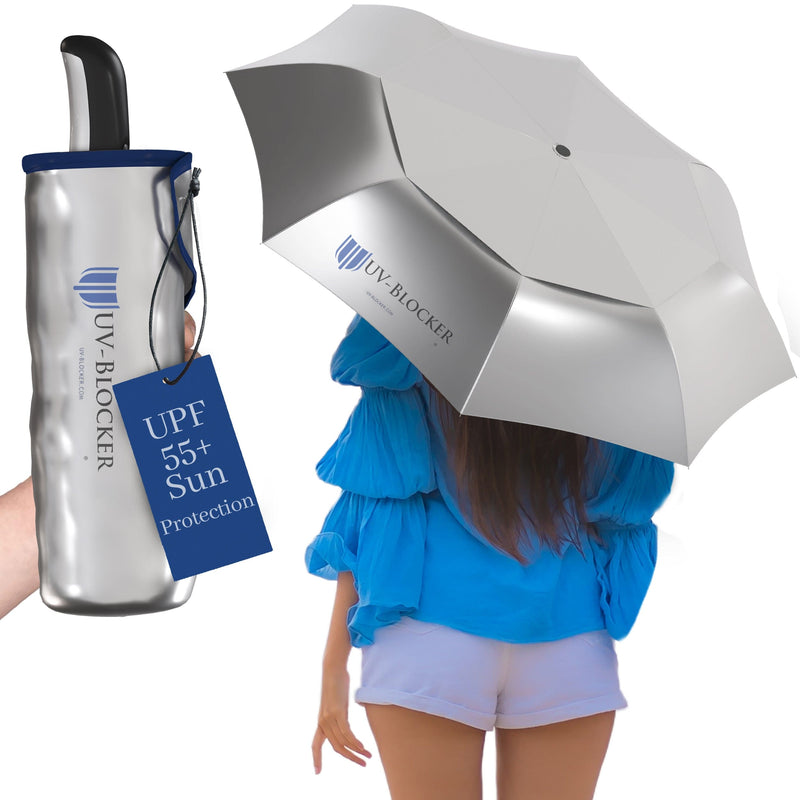
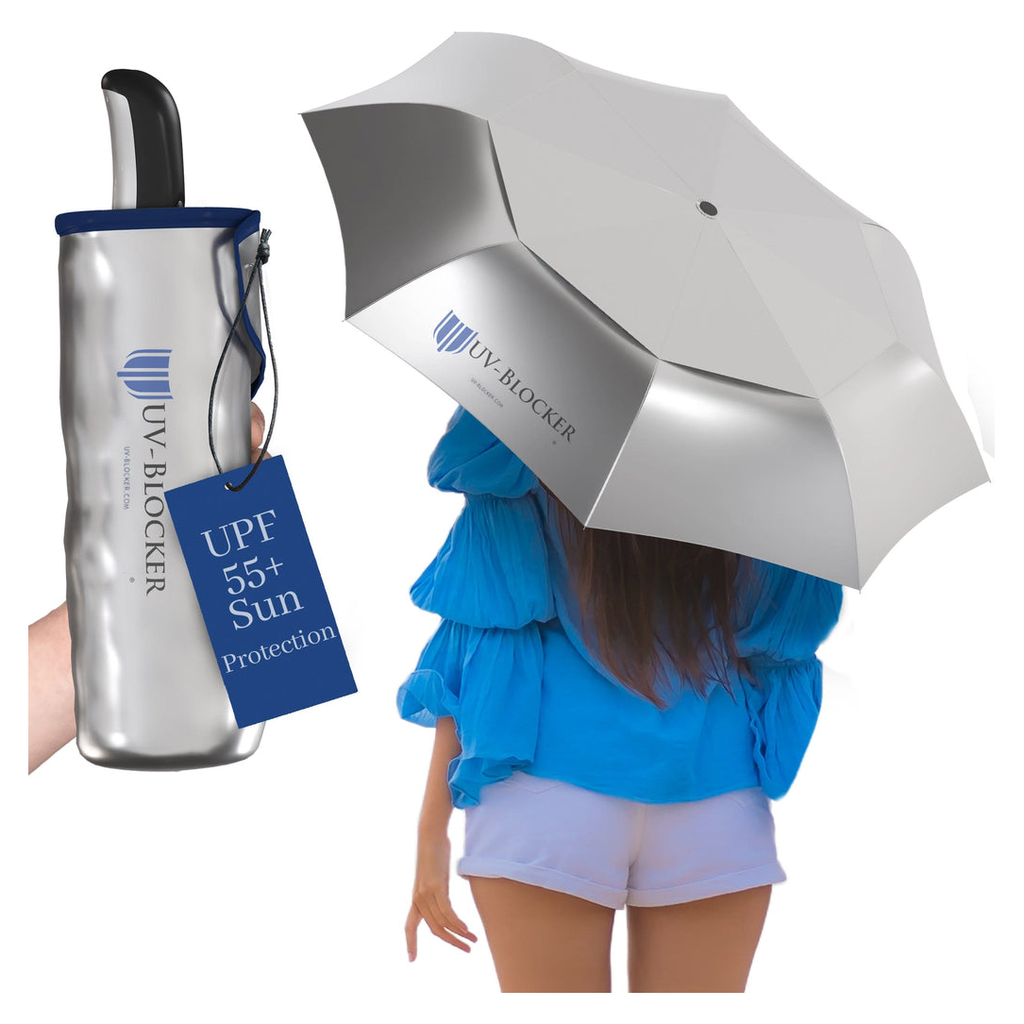
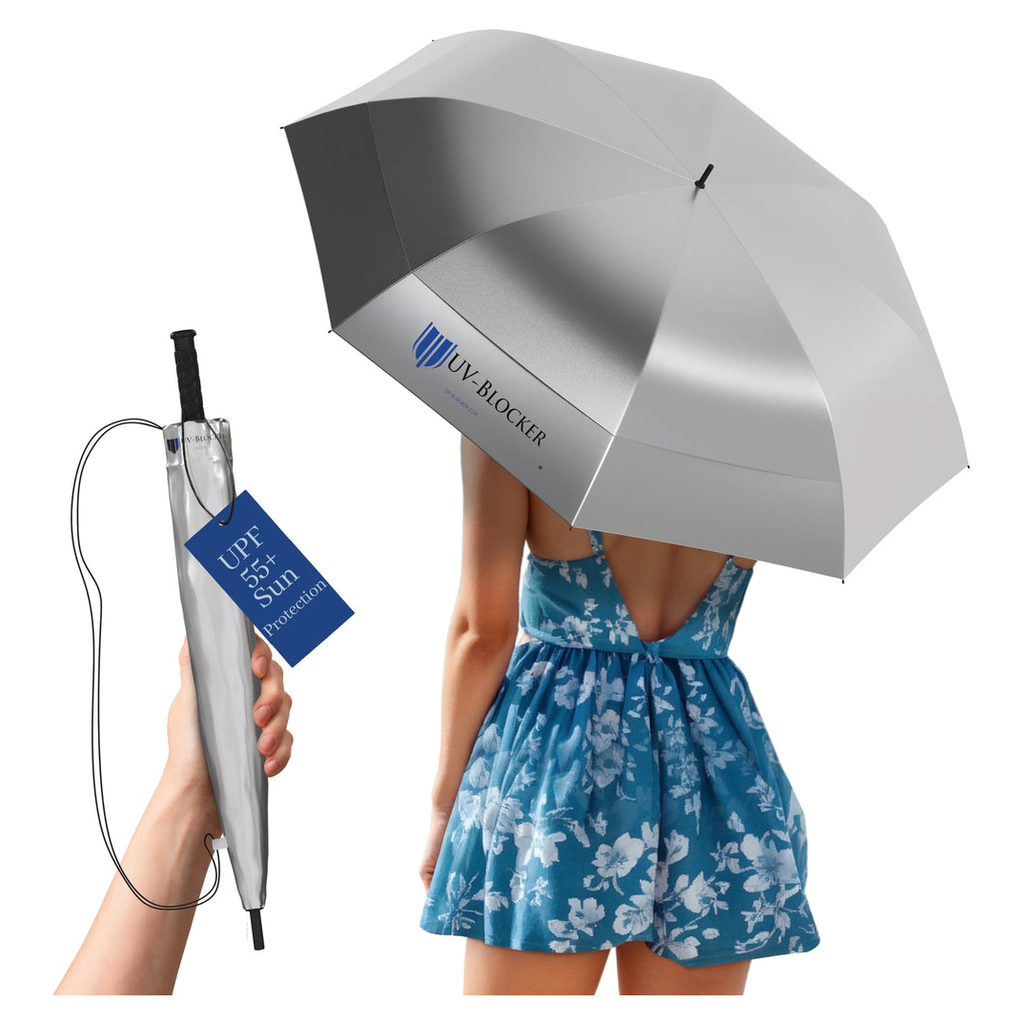
Silver on top: The exterior surface reflects UV rays and infrared radiation away before they heat the fabric. It does the work of keeping you cool.
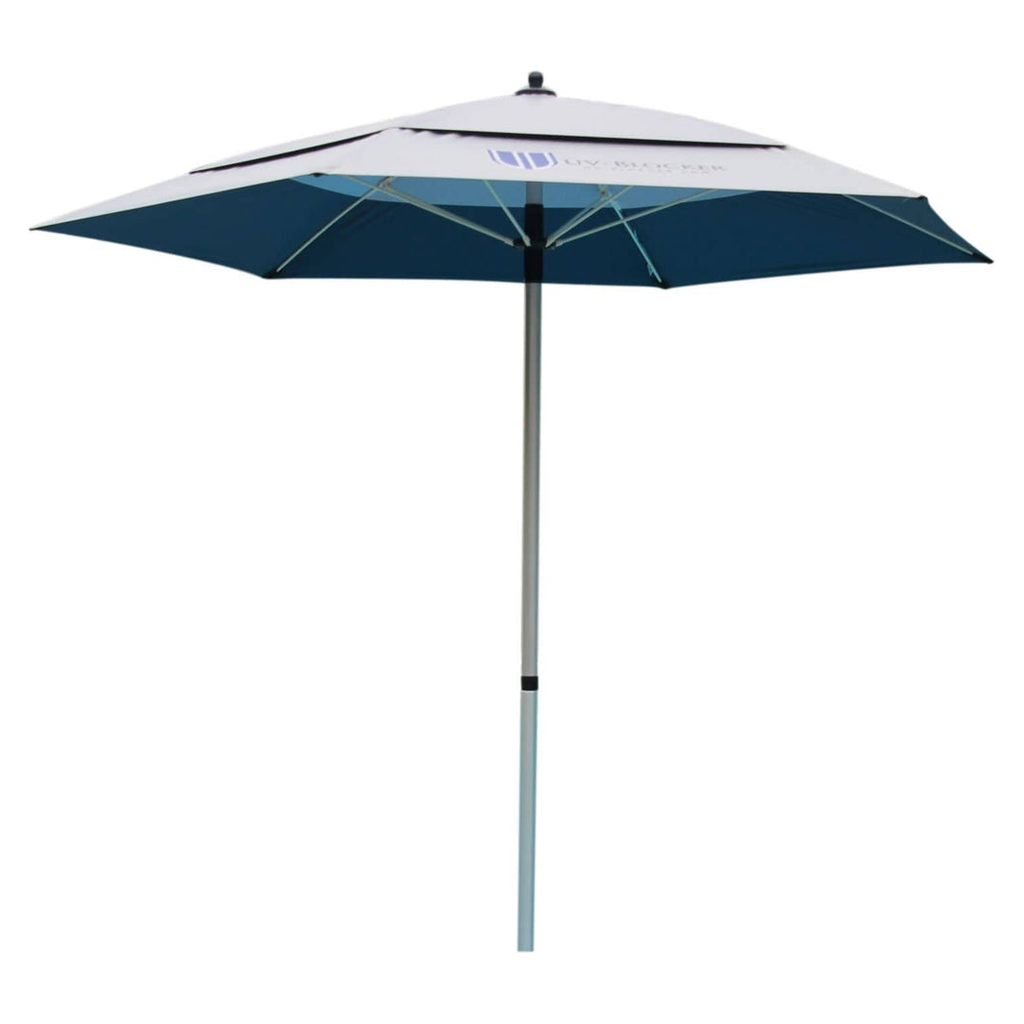
Blue or black underneath: The interior surface facing you reduces glare and looks refined. It eliminates the industrial appearance that makes people avoid silver umbrellas. The dark interior also absorbs any UV rays bouncing up from below (sand, water, concrete).
This is how the Solartek coating works. It is a reflective system. The patented silver exterior reflects heat and UV away, while the cool blue underside creates a pleasant visual experience.
In side-by-side thermal tests, Solartek umbrellas register in the cool blues and greens on thermal cameras, while black umbrellas glow red. Same UV protection. Dramatically different temperature.
You don't have to sacrifice comfort for style. You just needed better engineering.
The Data: Thermal Camera Evidence
Thermal imaging provides objective evidence of the temperature difference:
| Umbrella Type | Surface Temperature | Air Underneath |
|---|---|---|
| Black solid canopy | 125-140°F | 95-105°F |
| Silver reflective | 95-105°F | 80-90°F |
| Dual-layer (silver/blue) | 90-100°F | 78-88°F |
In practical terms: Standing under a black umbrella in 90°F weather feels like 100°F+. Standing under a silver reflective umbrella in the same conditions feels like 85°F. That 15°F difference isn't marginal—it's the difference between comfort and heat stress.
What to Look For When Shopping
When shopping for a sun umbrella, look for these specs:
- UPF 50+ rating: Non-negotiable. Anything below UPF 50 isn't providing serious protection.
- Reflective outer layer: Look for silver, white, or light-colored exteriors. The outer surface should bounce heat away, not absorb it.
- Dark or blue underside: This reduces glare from reflected light without the industrial look of an all-silver umbrella.
- Quality construction: Wind resistance, durability, and portability matter too. A great canopy on a flimsy frame won't last.
The perfect sun umbrella uses physics. It reflects what needs reflecting, blocks what needs blocking, and keeps you 15°F cooler.
For more on umbrella materials, check out our Ultimate Guide to UV Fabrics for a deep dive into the material science behind true sun protection.
Frequently Asked Questions
Q: Does a black umbrella provide better UV protection than silver? A: No. Both can achieve identical UPF 50+ ratings, blocking 98-99% of UV radiation. The difference is thermal comfort: black umbrellas absorb and re-emit heat, making you feel 10-15°F hotter than silver reflective umbrellas.
Q: Why do thermal cameras show black umbrellas as hotter? A: Black fabric absorbs solar radiation across the visible and infrared spectrum, converting light energy to heat. Silver surfaces reflect this energy away before it can heat the material. Thermal cameras detect this temperature difference clearly.
Q: Can I make my black umbrella cooler? A: Unfortunately, no. The heat absorption is a fundamental property of dark colors. Your best option is upgrading to a dual-layer umbrella with a reflective exterior and dark interior.
Q: Why isn't every umbrella silver if it's so much better? A: Aesthetics. Many people prefer the look of black or colored umbrellas. Dual-layer designs (silver exterior, colored interior) solve this by hiding the industrial look while preserving the thermal benefits.
Q: Does the interior color matter? A: Yes. A dark interior (black, navy, blue) absorbs UV rays that bounce up from reflective surfaces like sand, water, and concrete. A white or silver interior would reflect these rays back onto your face—actually increasing exposure.
Q: How much cooler is 15°F in practical terms? A: Significant. In 90°F weather, being 15°F cooler means 75°F equivalent—a comfortable room temperature versus heat stress territory. You'll sweat less, feel more alert, and enjoy outdoor time longer.
Q: Are reflective umbrellas heavier than regular ones? A: No. The reflective coating adds negligible weight. A quality silver-coated compact umbrella weighs the same as a comparable black one—typically 12-16 ounces.
Black vs. Silver: Frequently Asked Questions
Why does a silver exterior provide better cooling than a standard black umbrella?
Silver coatings reflect solar radiation away from the canopy, whereas black fabrics absorb energy and radiate that heat downward toward the user. UV-Blocker umbrellas utilize Solarteck® technology to create a thermal barrier that can reduce the temperature underneath by up to 15°F compared to traditional designs. This reflective property is the primary reason silver is scientifically superior for heat mitigation in direct sunlight.
How much UV radiation actually passes through a UPF 50+ umbrella compared to a regular one?
A standard rain umbrella may only block about 75% of UV rays, whereas a UV-Blocker umbrella is lab-certified to block 99% of both UVA and UVB rays. This UPF 50+ rating is essential for long-term skin health and has earned the seal of approval from the Melanoma International Foundation. Without this specialized fabric, you are still receiving a significant dose of DNA-damaging radiation through the canopy.
What is the purpose of the black interior found on professional silver sun umbrellas?
While the silver exterior reflects overhead rays, the black underside of a UV-Blocker umbrella is engineered to absorb UV radiation reflecting off the ground, sand, or water. Research shows that up to 30% of UV exposure comes from these ground reflections, which a silver interior would bounce back onto your skin. This dual-layer system ensures that reflected light is neutralized rather than concentrated on your face and eyes.
Will the reflective Solarteck® coating lose its effectiveness or flake off over time?
Unlike topical sun-protective sprays, the Solarteck® coating on UV-Blocker umbrellas is saturated into the fabric fibers for permanent 99% UV protection. This industrial-grade durability ensures the umbrella maintains its UPF 50+ rating even after repeated exposure to wind and moisture. This longevity is critical for individuals with medical sun-sensitivity who require consistent, clinical-grade protection every time they go outdoors.