

Planning a Disney vacation means preparing for long days, magical moments, and hours spent under the sun. What many guests don't realize is that Disney parks sun protection requires more than just a quick sunscreen application—these outdoor theme parks present serious UV exposure risks that catch visitors off guard.
This comprehensive Disney parks sun protection guide covers strategies for every destination—from the intense Florida heat at Walt Disney World to the extreme humidity of Tokyo Disney Resort. I'll share specific UV data, confirmed umbrella policies, and practical tips that work across all six Disney resorts worldwide.
Why Is Disney Parks Sun Protection So Critical?
Disney parks are outdoor sun exposure zones where emergency services respond to dozens of heat illness calls weekly during summer months, making proper UV protection essential for every guest.
Emergency services were called 86 times in just 11 days for heat illness at Walt Disney World in July 2025. That's not a typo—86 separate incidents requiring emergency response in less than two weeks. The full picture from 2024 shows Disney World's first responders handled 103 heat illness calls in June, 152 in July, and 88 in August.

These numbers reflect a fundamental truth about Disney parks: they're primarily outdoor experiences. You'll spend hours walking between attractions, waiting in queues under direct sun, and watching parades without shade. According to AllEars.Net, the UV index in Orlando reaches 10-11+ daily during summer months—levels that cause skin damage within minutes of unprotected exposure.
Most guests dramatically underestimate their cumulative sun exposure. A typical Disney day runs 8-12 hours, much of it outdoors. That's the equivalent of spending an entire workday at the beach without shelter. Proper Disney parks sun protection isn't optional—it's essential for enjoying your vacation safely.

What Are the Sun Conditions at Each Disney Park?
Disney parks sun protection needs vary dramatically across the six global destinations, with UV index values ranging from 7 at Disneyland Paris to a dangerous 12 at Hong Kong Disneyland during peak summer months.
Here's what you're actually facing at each resort:
| Park | Location | Peak UV Index | Summer High Temps | Humidity | Peak Heat Months |
|---|---|---|---|---|---|
| Walt Disney World | Orlando, FL | 10-11+ | 92°F (33°C) | Very High | June-August |
| Disneyland Resort | Anaheim, CA | 9-10 | 85-100°F (29-38°C) | Low-Moderate | July-September |
| Disneyland Paris | France | 7 | 77-86°F (25-30°C) | Moderate | July-August |
| Tokyo Disney Resort | Japan | 8-9 | 88-95°F (31-35°C) | Extreme | July-August |
| Hong Kong Disneyland | China | 11-12 | 88-91°F (31-33°C) | Very High | May-August |
| Shanghai Disneyland | China | 9-11 | 91°F+ (33°C+) | High | June-August |
Walt Disney World has some of the most intense UV rays in the country. The Florida sun combines brutal UV levels with oppressive humidity, creating conditions where heat illness develops rapidly. Florida Politics reports that medical calls spike dramatically each summer.
Disneyland California may not match Florida's humidity, but heat waves regularly push temperatures above 100°F. The dry heat can be deceptive—you're still accumulating serious UV damage even when you don't feel uncomfortable.
Tokyo Disney Resort presents a unique challenge. According to the official Tokyo Disney website, from mid-July through late September it's hot and extremely humid every single day, with temperatures reaching 95°F. They explicitly recommend sun umbrellas as essential gear.
Hong Kong Disneyland has the highest UV index of any Disney park. According to the Hong Kong Observatory, UV levels regularly exceed 10 and peak at 12 during summer months. Without sun protection, you could develop a sunburn before lunchtime.
Shanghai Disneyland sees UV index values reaching 11 from June through August. Locals understand this—you'll see many Chinese guests carrying UV umbrellas, and it's perfectly acceptable to do the same.
Disneyland Paris offers the mildest conditions with average temperatures of 77-86°F and a max UV index of 7. However, European heat waves have become more common, occasionally pushing temperatures above comfortable levels.
Are UV Umbrellas Allowed at Disney Parks?
Yes, UV umbrellas for Disney parks sun protection are fully permitted at all resorts worldwide—Disney even sells them at Epcot, and many experienced guests use them daily throughout their trips.
According to Disney's official PlanDisney page, umbrellas are not on the prohibited items list for any Walt Disney World theme park. You'll see people using umbrellas for sun protection throughout the parks—nobody looks twice at it, even when it's not raining.
A few practical notes for bringing your umbrella:
Security screening: Umbrellas, especially those with metal shafts, may trigger metal detectors. Take your umbrella out of your bag and hold it visibly while walking through security to speed up the process.
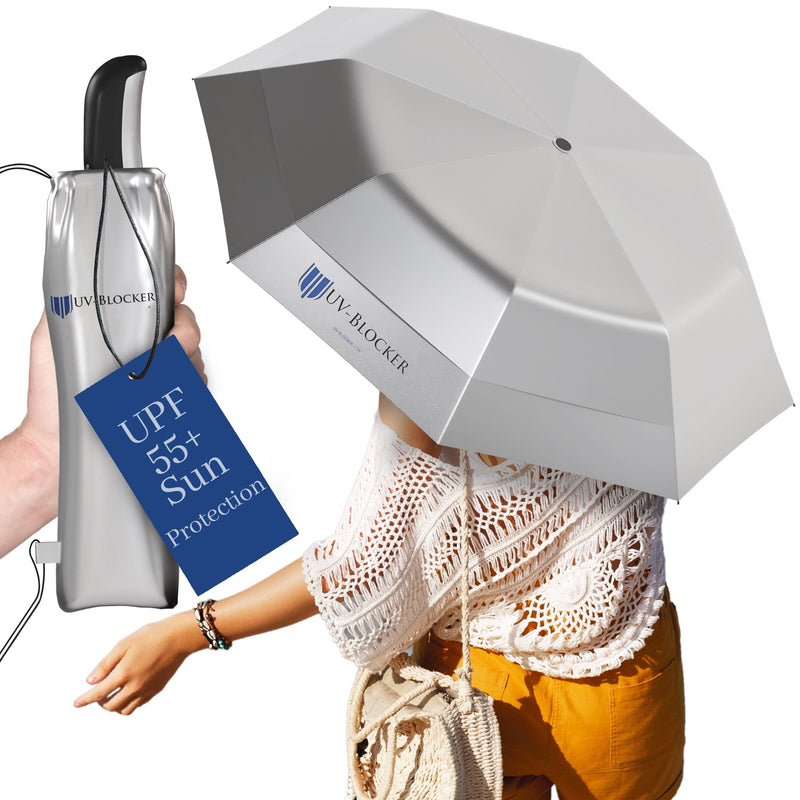
Choose compact designs: Folding umbrellas are much easier to carry in a backpack or park bag. The UV-Blocker Travel Umbrella folds to 17.5 inches and provides a 44-inch arc of coverage with UPF 50+ protection. For even smaller storage, the UV-Blocker Compact Umbrella folds to just 12 inches.
Etiquette matters: Lower or close your umbrella during shows, fireworks, and in tight queue spaces. Be mindful of guests behind you who need to see performances.
Shanghai and Hong Kong: UV umbrellas are extremely common at Asian Disney parks. You'll fit right in using one there—it's part of the local sun protection culture.
What Should You Pack for Sun Protection at Disney?
A complete Disney parks sun protection kit includes a UPF 50+ umbrella, broad-spectrum SPF 50+ sunscreen, wide-brim hat, UV sunglasses, cooling accessories, and a refillable water bottle for proper hydration.
Here's the complete packing list that experienced Disney guests swear by:
Essential Gear
- UV Umbrella (UPF 50+ minimum) - Get a sun umbrella that's completely opaque and ideally lined in black or dark blue inside. UV-Blocker umbrellas exceed this with UPF 50+ ratings and keep you up to 15°F cooler underneath thanks to their reflective Solarteck fabric.
- Broad-Spectrum Sunscreen (SPF 50+) - Your sunscreen needs to guard against both UVA and UVB rays. Water-resistant formulas hold up better against sweat. Apply 30 minutes before sun exposure and reapply every 2 hours minimum—more often if you're sweating heavily.
- Wide-Brim Hat - Light colors reflect heat better than black. Look for hats with UPF ratings for maximum protection.
- UV-Blocking Sunglasses - Sunglasses with 100% UVA and UVB protection are essential. The sun's rays can damage your eyes without proper protection, leading to eye sunburns, cataracts, and macular degeneration over time.
- UPF Clothing - If you're sun-sensitive, lightweight UPF-rated clothing provides consistent protection without needing reapplication. Look for light colors that breathe well.
- Cooling Accessories - Portable neck fans, cooling towels (like Frogg Toggs), and misting spray bottles provide immediate temperature relief.
- Refillable Water Bottle - Disney has installed over 70 water bottle fill-up stations at Walt Disney World alone. Staying hydrated is your first defense against heat illness.
- Electrolyte Supplements - Liquid IV, Nuun tablets, or similar products replace what you lose through sweat. Plain water isn't always enough in extreme heat.
For Families with Strollers
The UV-Blocker Umbrella Holder attaches to any stroller frame, providing hands-free shade while you push. It's frequently cited as the "Disney stroller umbrella" solution—covering both the parent pushing and providing shade for the child.
When Is the Best Time to Visit Disney for Sun-Sensitive Guests?
November through March offers the best conditions for sun-sensitive guests at most Disney parks, with shorter days, lower UV index values, and temperatures rarely exceeding 80°F.
If you have sun sensitivity, winter is your best bet. July and August are the worst times at virtually all Disney parks, combining highest UV levels, hottest temperatures, and largest crowds.
Here's a park-by-park breakdown:
| Park | Best Months for Sun Sensitive | Avoid |
|---|---|---|
| Walt Disney World | November-March | June-August |
| Disneyland | Early June, October-November | July-September heat waves |
| Disneyland Paris | April-May, September | July-August heat waves |
| Tokyo Disney | March-May, Late October | Mid-July to September |
| Hong Kong Disneyland | November-March | May-August |
| Shanghai Disneyland | March-April, October-November | June-August |
California trick: Early June often features "June Gloom" cloud cover that doesn't burn off until afternoon, making mornings significantly cooler and more comfortable than mid-summer visits.
Tokyo Disney tip: Avoid Obon Week (August 13-16) at all costs. Nearly everyone in Japan takes time off, creating peak crowds during the hottest weather. Tokyo Disney does offer special summer evening tickets with 3pm or 5pm entry to help guests avoid the worst heat.
Daily planning: UV rays are strongest between 10am and 4pm. Structure your days to spend peak sun hours enjoying indoor attractions, air-conditioned shows, or midday breaks at your hotel.
How Can You Stay Cool While Waiting in Lines?
Keep a UV umbrella open during outdoor queue sections, plan midday hotel breaks between 2pm-4pm, and target air-conditioned shows during peak heat hours when outdoor wait times are longest.
Disney parks are primarily outdoor, and nearly every ride has outdoor queue sections. Even attractions that seem indoor have exposed walkways, switchbacks, and staging areas where you'll stand in direct sun.
Here's how to survive the queues:
Use your UV umbrella strategically: Bringing an umbrella helps provide shade in areas where there is none. Keep it open while standing in outdoor queue sections, but close it when you enter covered or crowded indoor portions.
Plan a midday escape: Consider leaving the parks between 2pm-4pm to rest at your hotel in air conditioning. According to Theme Park Insider, from lunchtime until about 4pm the parks are typically both hottest and busiest.
Target indoor attractions midday: Air-conditioned shows feature virtually non-existent wait times during peak heat hours because most guests are trying to ride popular outdoor attractions. Use this to your advantage.
Time water rides carefully: The summer heat sends everyone rushing to Splash Mountain, Grizzly River Run, and similar rides once temperatures climb. Lines explode by mid-morning. Ride early using Lightning Lane or Single Rider options if available.
Tokyo Disney Special
Tokyo Disney Resort offers complimentary cold water specifically for misting fans. They also sell cooling towels that provide immediate relief. During summer months, the parks offer Early Evening Passports and Weeknight Passports allowing 3pm or 5pm entry—perfect for avoiding the brutal afternoon sun.
Shanghai Disney Special
In China, UV umbrellas are part of everyday life. Many locals carry them constantly during summer. Feel free to do the same at Shanghai Disneyland—it's completely acceptable and expected. Just be mindful to lower umbrellas during parades and shows so guests behind you can see.
How Do You Protect Children from Sun at Disney Parks?
Children require more vigilant sun protection than adults because their thinner, more delicate skin burns faster, and infants under 6 months cannot safely use sunscreen at all.

Children are particularly vulnerable to the sun's rays because their skin is more delicate and susceptible to burns. When a child gets sunburned, they're more likely to suffer related conditions like heat stroke.
Children's eyes also require special attention—they cannot filter out harmful UV rays as effectively as adults. Sunglasses with full UV protection are essential, not optional.
According to medical experts, children and seniors are the most vulnerable to heat exhaustion at theme parks.
Age-Specific Protection Strategies
Infants under 6 months: Cannot use sunscreen safely. Physical shade from umbrellas, stroller canopies, and UV covers is the ONLY option. The UV-Blocker Umbrella Holder attaches to stroller frames and provides consistent overhead coverage without requiring you to hold anything.
Toddlers (1-3 years): May resist wearing hats or keeping sunglasses on. A mounted UV umbrella provides passive protection that doesn't depend on their cooperation. Apply sunscreen to exposed skin before leaving the hotel when they're distracted.
School-age children: Old enough to understand why sun protection matters. Apply sunscreen thoroughly before leaving the hotel each morning, and teach them to seek shade when they feel too warm.
Stroller Shade Solutions
The Large Folding UV Umbrella combined with the Stroller Umbrella Holder is frequently cited as the "Disney Stroller" setup—the large 58-inch canopy covers both the parent pushing and provides ample shade for the child riding.
What Are the Signs of Heat Illness at Theme Parks?
Heat exhaustion symptoms include heavy sweating, dizziness, nausea, fast weak pulse, and cold clammy skin—if these appear, move immediately to air conditioning and hydrate slowly.
The most common illness people experience at Disney is heat exhaustion—when, over time, they become dehydrated and feel tired or sick. Recognizing symptoms early is critical.
Heat Exhaustion Warning Signs
- Heavy sweating
- Cold, pale, clammy skin
- Fast, weak pulse
- Nausea or vomiting
- Muscle cramps
- Tiredness or weakness
- Dizziness
- Headache
- Fainting
What To Do If Symptoms Appear
- Move to air conditioning immediately - Find the nearest indoor space, whether it's a shop, restaurant, or first aid center
- Remove excess clothing - Loosen belts, remove hats, unbutton shirts
- Apply cool water to skin - Wet towels on neck, wrists, and forehead help
- Drink water slowly - Small sips, not gulping
- Seek first aid if symptoms don't improve - Every Disney park has a first aid center
First Aid Locations
Each Disney theme park and Disney Springs has a dedicated first aid center staffed by medical professionals. Cast members throughout the parks can direct you to the nearest location in an emergency.
Prevention Summary
The formula is simple: UV umbrella for shade + consistent hydration + regular air-conditioning breaks = dramatically reduced heat illness risk. Don't wait until you feel symptoms—prevent them proactively.
Your Disney Parks Sun Protection Action Plan
Planning your Disney trip? Here's the quick version:
- Pack a UPF 50+ umbrella - The UV-Blocker Travel Umbrella is the top choice among Disney veterans. It folds to fit in any park bag while providing UPF 50+ protection and keeping you up to 15°F cooler.
- Layer your protection - Umbrella + sunscreen + hat + sunglasses provides comprehensive coverage
- Time your visit wisely - November through March offers the mildest conditions at most parks
- Plan daily escapes - Structure midday breaks in air conditioning
- Protect children proactively - They can't advocate for themselves when overheating
- Stay hydrated constantly - Bring a refillable bottle and use the free fill stations
For hands-free stroller protection, the UV-Blocker Umbrella Holder attaches securely to any stroller frame, keeping both parent and child shaded.
The magic of Disney is worth experiencing safely. With the right Disney parks sun protection strategy, staying safe becomes second nature—allowing you to focus on the memories instead of recovering from a miserable sunburn or heat illness.
Disney Parks Sun Protection Guide 2026: Frequently Asked Questions
How do reflective surfaces at Disney parks impact my total UV exposure?
Reflective surfaces like concrete and water at Disney parks can increase your UV exposure by up to 15% through indirect radiation. Utilizing a UV-Blocker umbrella with Solarteck® technology ensures that 99% of UVA and UVB rays are reflected away from the user. These umbrellas meet the highest UPF 50+ standards, providing a portable shade solution that is clinically proven to keep the area underneath significantly cooler than the surrounding air.
When is the most dangerous time for sun damage during a Disney park day?
Between 10:00 AM and 4:00 PM, the UV Index at Disney parks often reaches extreme levels of 10 or higher, where skin damage can occur in just 15 minutes. To supplement sunscreen, the Melanoma International Foundation recommends physical barriers like UV-Blocker umbrellas which provide consistent UPF 50+ protection. Unlike chemical filters that break down with sweat, this Solarteck®-infused fabric maintains its ability to block 99% of harmful rays throughout the entire day.
Can sun protection help manage the intense heat in crowded Disney queue lines?
The 'heat island' effect at large theme parks can make guest areas feel 10 to 15 degrees hotter than the actual ambient temperature due to asphalt heat absorption. UV-Blocker umbrellas use a double-canopy design and Solarteck® technology to vent wind while reflecting solar heat. This system maintains a UPF 50+ rating, blocking 98% of thermal radiation and significantly reducing the risk of heat exhaustion during long outdoor waits.
Does being near water attractions like Tiana's Bayou Adventure increase my burn risk?
Wait times for water attractions leave guests exposed to both direct sunlight and UV rays reflected off the water, which can increase UV intensity by approximately 10%. A UV-Blocker travel umbrella is an ideal tool because its UPF 50+ rating remains effective even in humid or misty conditions near water. This specialized protection is approved by the Melanoma International Foundation, offering a reliable defense against the cumulative DNA damage caused by long-term park exposure.