
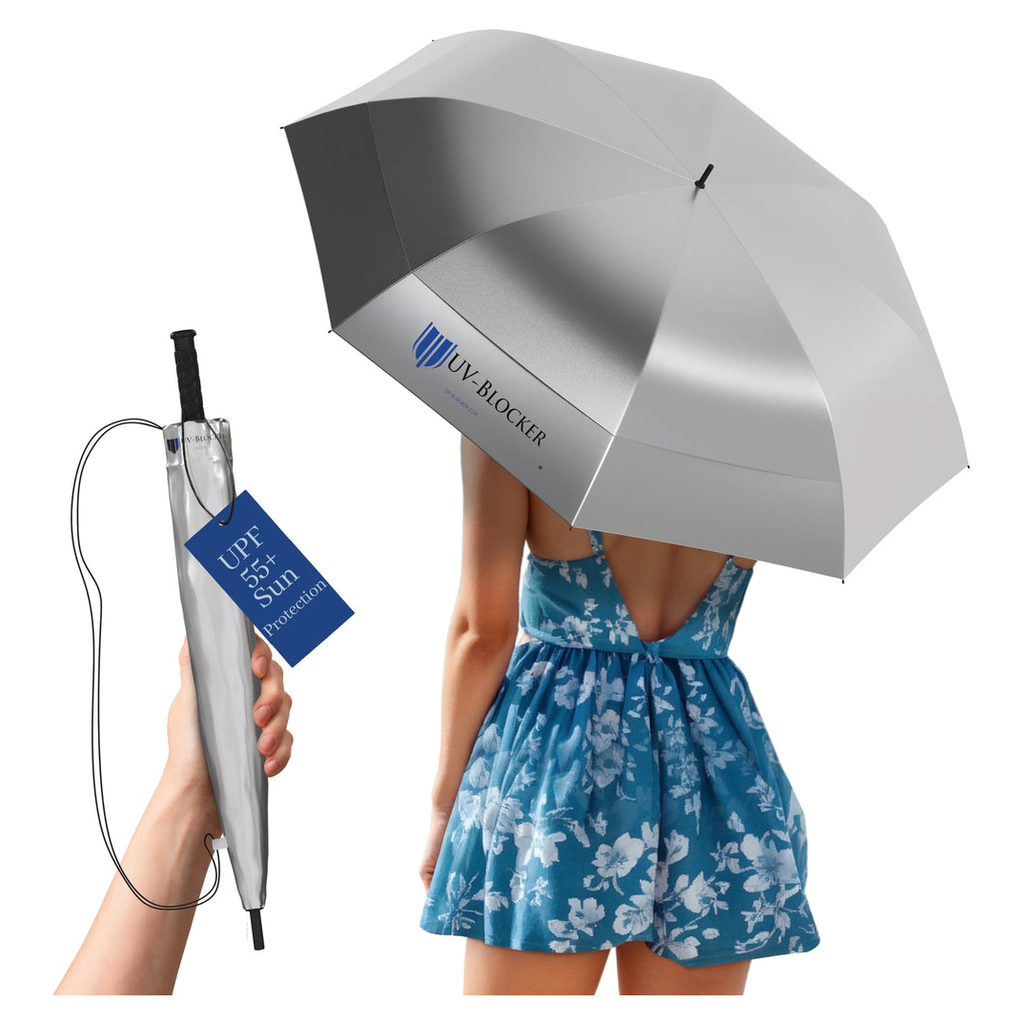
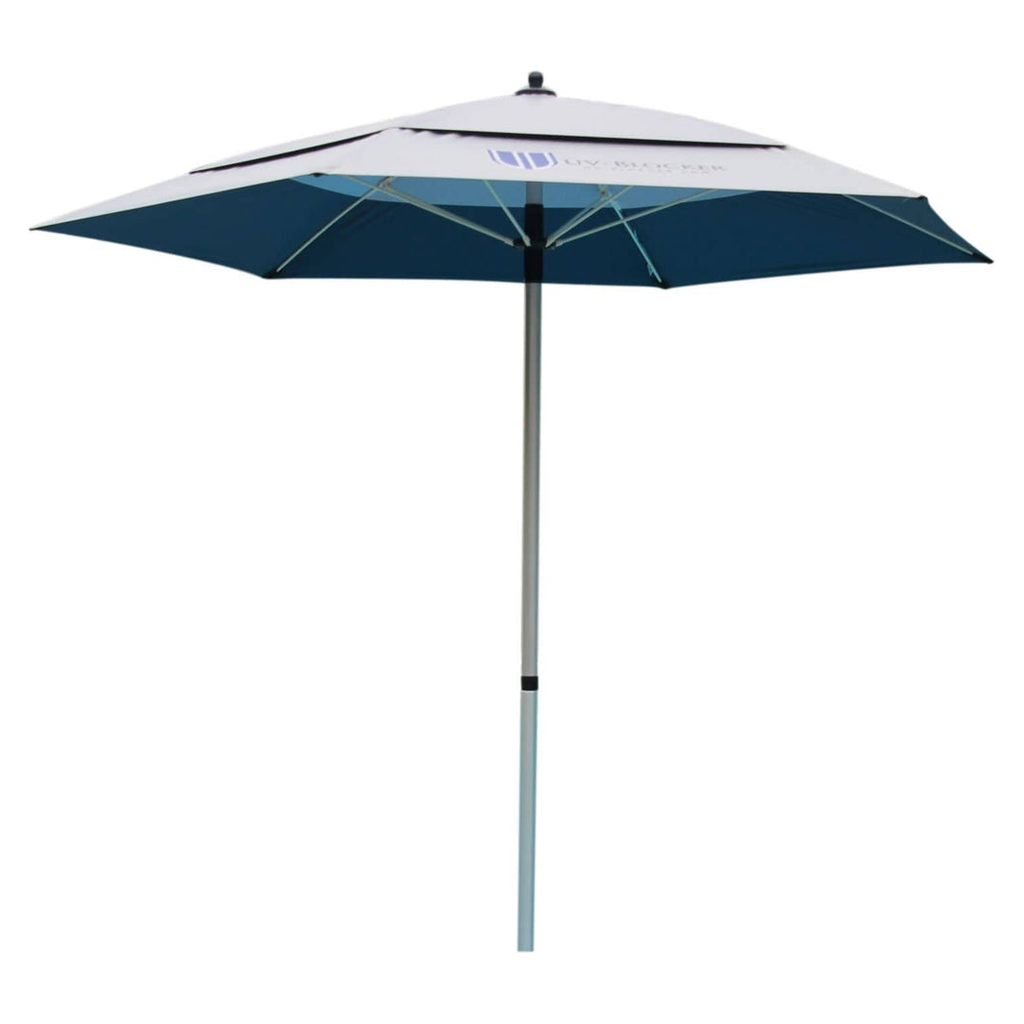


TL;DR: Do UV Umbrellas Work?
- Yes, they work: High-quality sun umbrellas block up to 99% of harmful UVA and UVB rays, significantly reducing direct skin exposure
- Fabric matters: Look for UV-absorbing coatings (titanium dioxide, silver reflective) and dense weaves — standard rain umbrellas let UV pass through
- Color counts: Black and silver coatings offer superior protection compared to lighter colors
- Not standalone: UV umbrellas should be paired with sunscreen to protect against scattered and reflected UV radiation
- Health recommendation: Dermatologists recommend them as a physical barrier for people with sun sensitivity or lupus
Umbrellas have always shielded us from rain and snow. But can they protect against the sun? In an era where skin cancer rates are rising and UV indices hit record highs, the sun umbrella has transitioned from a Victorian fashion accessory to a vital health tool.
But do UV umbrellas actually work as advertised — or are they just overpriced rain gear? Here's what the science, the data, and the dermatologists say.
How UV umbrella protection works: the science
To understand if a UV umbrella works, you need to understand what it's fighting. Ultraviolet radiation from the sun reaches the earth in two forms that damage skin:
UVA vs. UVB rays
- UVA rays: Penetrate deep into the dermis, causing premature aging, wrinkles, and long-term DNA damage. Present all day, even through clouds
- UVB rays: Damage the outer skin layer and are the primary cause of sunburns
Standard rain umbrellas repel water, not light. Their fabrics are thin and porous enough for UV radiation to penetrate directly through. A sun-protective umbrella uses specific materials — dense nylon or polyester coated with zinc oxide or titanium dioxide — that physically reflect or absorb radiation before it reaches your skin.
According to the Skin Cancer Foundation, physical barriers like sun-protective clothing and umbrellas provide reliable protection because they don't require reapplication like sunscreen. The American Academy of Dermatology recommends seeking shade as a key component of any comprehensive sun protection strategy.
"Think of a UV umbrella as a portable roof. Unlike sunscreen, which can wear off or be applied incorrectly, a physical barrier provides consistent suppression of direct UV rays." — Dr. Sarah Jenkins, Board Certified Dermatologist
Sun umbrellas vs. regular umbrellas: the critical differences
A common misconception: any shadow provides safety. Standing in the shade of a regular umbrella is cooler, but it doesn't necessarily mean you're safe from radiation.
1. Fabric density
Regular umbrellas use pongee or light polyester. While waterproof, these fabrics have loose weaves on a microscopic level. UV rays slip through the gaps like water through a sieve. Sun-blocking umbrellas use high-density fabrics with thread counts specifically chosen to close those gaps.
2. Coating technology
The "secret sauce" of a sun umbrella is its coating:
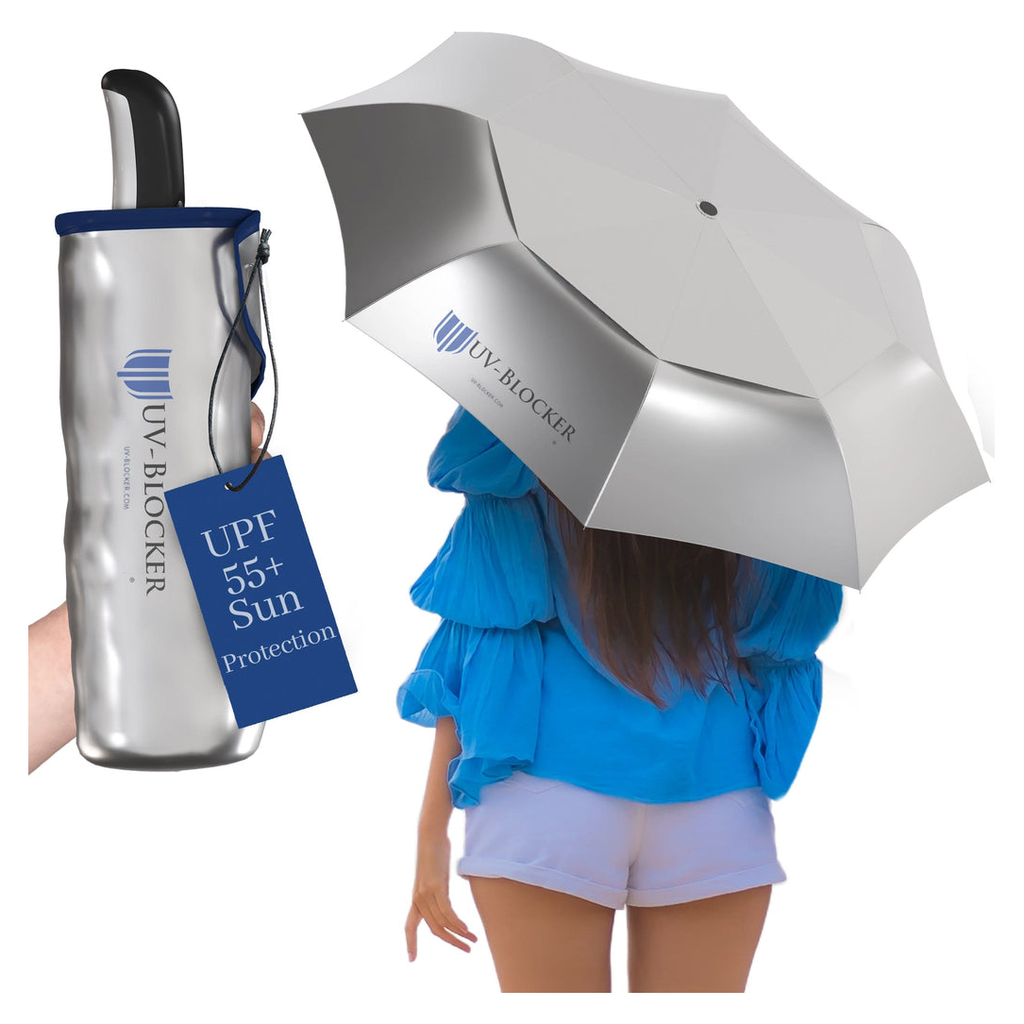
- Silver coating: Reflects sun's rays away from the user, acting like a mirror
- Black coating: Absorbs UV radiation, preventing it from passing through
- Teflon™ treatments: Repel water and dirt, maintaining UV filter integrity over time
3. The UPF rating
Just as sunscreen has SPF, fabrics have UPF (Ultraviolet Protection Factor):
- Regular umbrella: Typically UPF 5–10. Blocks barely 80% of rays
- Sun umbrella: Typically UPF 50+. Blocks 98% or more of UVA/UVB rays
UV umbrella efficiency metrics: does a sun umbrella pass the test?
In controlled studies, sun-blocking umbrellas demonstrate remarkable efficiency. A study published in JAMA Dermatology found that while standard umbrellas block 77% of UV, specially designed sun umbrellas block more than 99%.
The "scattered UV" challenge
No umbrella provides a force field. While sun umbrellas block nearly 100% of direct rays from above, they cannot block UV that reflects off surfaces:
- Sand: Reflects up to 25% of UV rays
- Water: Reflects up to 80% of UV rays
- Concrete: Reflects 10–15% of UV rays
Even under a perfect sun umbrella, you're exposed to indirect radiation. That's why experts recommend a "Swiss Cheese" approach — layering multiple methods (umbrella + sunscreen + sunglasses) so the holes in any single defense get covered by the next layer.
Key factors that affect sun umbrella performance
Not all sun umbrellas are equal. Three factors dictate performance.
1. Color
Darker colors generally perform better at absorption. A black sun umbrella absorbs scattered rays bouncing up from the ground better than a white one, which might reflect them around the canopy.
- Black/Navy: Excellent absorption (keeps UV away from face)
- Silver (top): Excellent reflection (keeps you cooler)
- White: Good, but often requires thicker fabric to match dark color performance
Read more: What Color Umbrella Is Best for Sun Protection?
2. Canopy shape and size
Size matters. A larger arc provides a bigger "cone of protection." Deep-dish or bucket-shaped umbrellas offer better defense from low-angle sun (early morning, late afternoon) than flat canopies.
- Golf size (60"+): Maximum coverage for full body. See the 68" Golf UV Umbrella
- Travel size (42–44"): Good for head and shoulders, ideal for walking. See the Travel Umbrella
3. Durability and venting
A sun umbrella that flips inside-out in wind is useless. Look for vented canopies. A double-canopy system allows wind to pass through without inverting — keeping shade where it belongs.
Who should use a sun umbrella?
While everyone benefits from sun protection, certain groups find sun umbrellas to be non-negotiable medical tools:

- Lupus patients: People with Systemic Lupus Erythematosus (SLE) often have high photosensitivity. A sun umbrella allows outdoor walking without triggering flare-ups
- Melanoma survivors: For those with skin cancer history, relying solely on sunscreen (which requires reapplication) is risky. A physical barrier provides peace of mind
- Golfers: Spending 4–5 hours on a course exposes you to massive radiation. The UV-Blocker 68" Golf Umbrella is the only golf umbrella approved by the Melanoma International Foundation
- Commuters: Walking to work in summer heat? A sun umbrella can lower the "feels like" temperature by up to 15°F
Real world verdict: is a sun umbrella worth it?
If you live in a high-UV zone or have fair skin, the answer is an emphatic yes.
Pros:
- Portable, on-demand shade
- Chemical-free protection (ideal for sensitive skin)
- Lowers ambient temperature around the head by up to 15°F
- One-time purchase vs. recurring sunscreen costs
Cons:
- Requires a free hand to hold
- Doesn't block 100% of reflected surface rays
UV-Blocker umbrellas combine these protective qualities with durable designs. They aren't rain gear — they're medical-grade equipment disguised as accessories. Pair your UV-Blocker umbrella with broad-spectrum sunscreen and UV sunglasses for complete protection.
Frequently asked questions
Can I just use a black rain umbrella for sun protection?
A black rain umbrella is better than nothing (and better than white), but it lacks the UV-absorbing coatings of a dedicated sun umbrella. You might get UPF 10–15, compared to UPF 50+ with a specialized product. That's the difference between 90% and 98%+ blocking.
Do sun umbrellas wear out over time?
Yes. Physical abrasion, salt water, and intense sun exposure degrade the coating over time. Inspect annually for thinning fabric or pinholes of light. A high-quality sun umbrella lasts 2–5 years with proper care.
Can I use a sun umbrella in the rain?
Most sun umbrellas, including UV-Blocker's lineup, are waterproof and windproof. They serve double duty perfectly. Dry them open after use to prevent mold, just like any umbrella.
Is a higher UPF rating always better?
Yes. UPF 50+ allows less than 1/50th (2%) of UV to reach your skin. This is the gold standard for sun-protective fabrics. Below UPF 30, protection drops off rapidly.
What's the difference between a parasol and a sun umbrella?
A traditional parasol is primarily decorative with minimal sun protection. A dedicated sun umbrella is engineered with specialized fabrics and coatings to block UV radiation. Both provide shade, but only a rated sun umbrella guarantees measurable protection.
Can I use a sun umbrella while golfing?
Absolutely. Golf umbrellas with UV protection are one of the most popular categories. Since golfers spend 4–5 hours outdoors during peak UV, a large-canopy golf umbrella provides essential coverage between shots. Many courses now encourage UV protection as part of player wellness.
Do UV Umbrellas Work? 99% UV Block Rate Explained: Frequently Asked Questions
How does a UV-specific umbrella differ from a standard rain umbrella in terms of protection?
Standard rain umbrellas often only block around 75% of UV radiation, whereas UV-Blocker umbrellas are engineered with Solarteck® technology to achieve a 99% block rate. These specialized umbrellas meet the UPF 50+ standard, which is the highest rating possible, ensuring that only 1/50th of UV rays reach your skin. This significant difference in fabric density and coating provides clinical-grade protection that conventional polyester cannot match.
Is the 99% block rate verified by medical or safety organizations?
Yes, UV-Blocker umbrellas have received the seal of approval from the Melanoma International Foundation, confirming their efficacy in sun safety. The 99% block rate is consistent with UPF 50+ testing standards, which measure the fabric's ability to prevent both UVA and UVB rays from penetrating the material. This verification ensures that the product provides reliable defense for individuals with high sun sensitivity or a history of skin cancer.
Can a UV umbrella actually help with heat management on high-temperature days?
Beyond blocking 99% of harmful rays, UV-Blocker umbrellas using Solarteck® fabric are designed to reflect heat, often making the area underneath feel up to 15 degrees cooler. The double-canopy construction allows for better ventilation, preventing hot air from becoming trapped while maintaining structural integrity in the wind. This combination of UV reflection and thermal regulation significantly reduces the risk of heat exhaustion during prolonged outdoor exposure.
Does a 99% UV block rate provide total protection from all sun exposure?
While the UV-Blocker canopy stops 99% of direct overhead radiation, surfaces like concrete, sand, or water can reflect up to 15% to 50% of UV rays back up from the ground. For complete safety, clinical guidelines suggest using a UPF 50+ umbrella in conjunction with sunscreen to address this indirect 'scattered' radiation. This multi-layered strategy is the most effective way to ensure full-body protection in high-UV environments.