

TL;DR
- Wheelchair users face 40% higher risk of heat-related illness due to limited mobility options
- Manual wheelchairs use 1-1.5" round or oval tubing; power chairs use square frames (1.5-2")
- Universal clamp systems attach to push handles, armrests, or frame tubes without drilling
- UPF 50+ umbrellas block 98% of UV while allowing 360° adjustment for changing sun angles
- Properly mounted umbrellas add <2 lbs to chair weight and fold to 18-24" for transport
Why a Wheelchair Umbrella Matters: UV Exposure Risk
Limited mobility creates compounding sun exposure risks. Finding the right wheelchair umbrella solves critical protection gaps. According to the American Journal of Physical Medicine & Rehabilitation, wheelchair users spend an average of 6-8 hours outdoors per week during warm months. Unlike ambulatory individuals, they cannot quickly move to shade or seek indoor cooling.
The problem intensifies with heat. Wheelchair users have impaired thermoregulation due to reduced muscle mass below the injury level, decreased sweating capacity, and limited ability to change position for cooling. The National Institute on Disability reports that 40% of wheelchair users experience at least one heat-related illness episode annually.
Sun exposure for wheelchair users is not recreational. It's functional: commuting, errands, medical appointments, social participation. Traditional sun protection fails here. Hats protect the head but leave shoulders and arms exposed. Sunscreen requires reapplication every 2 hours. Seeking shade requires route changes or assistance.
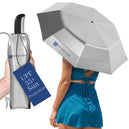
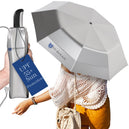
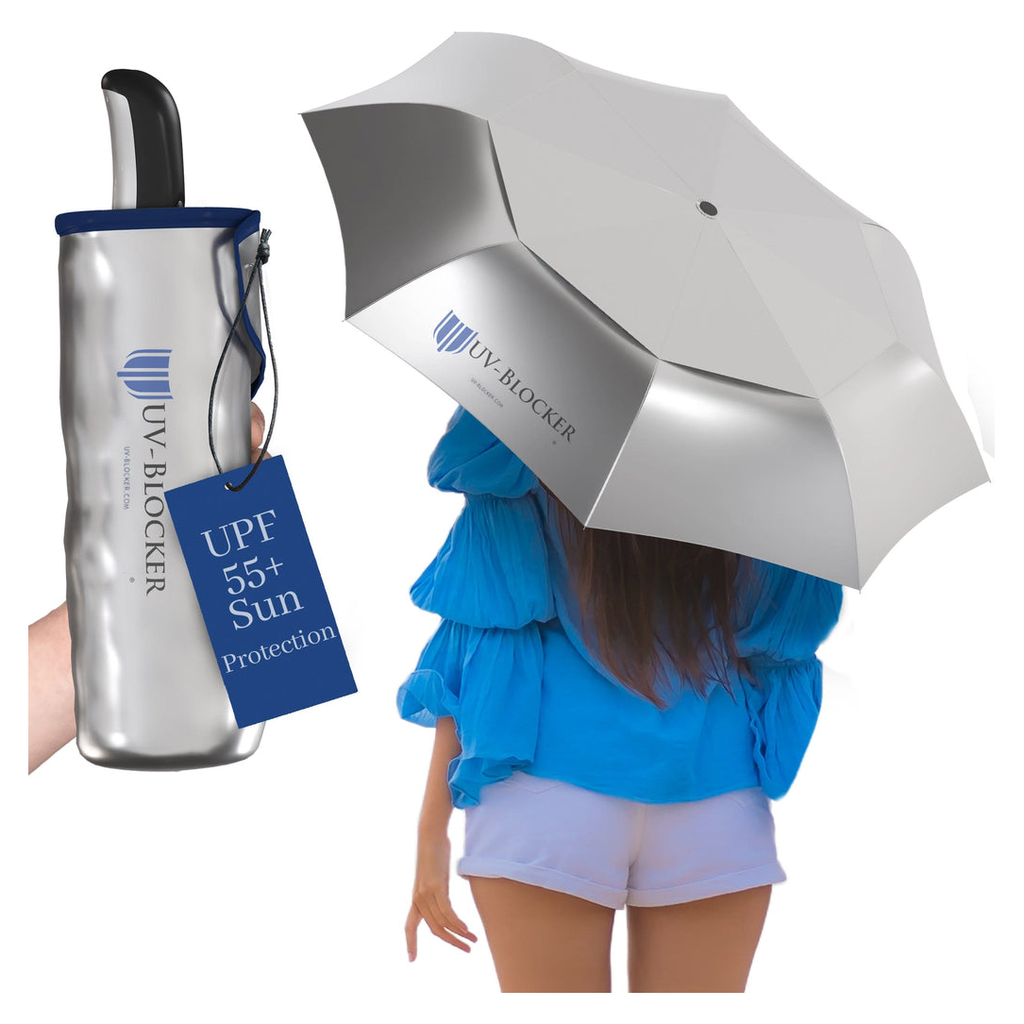
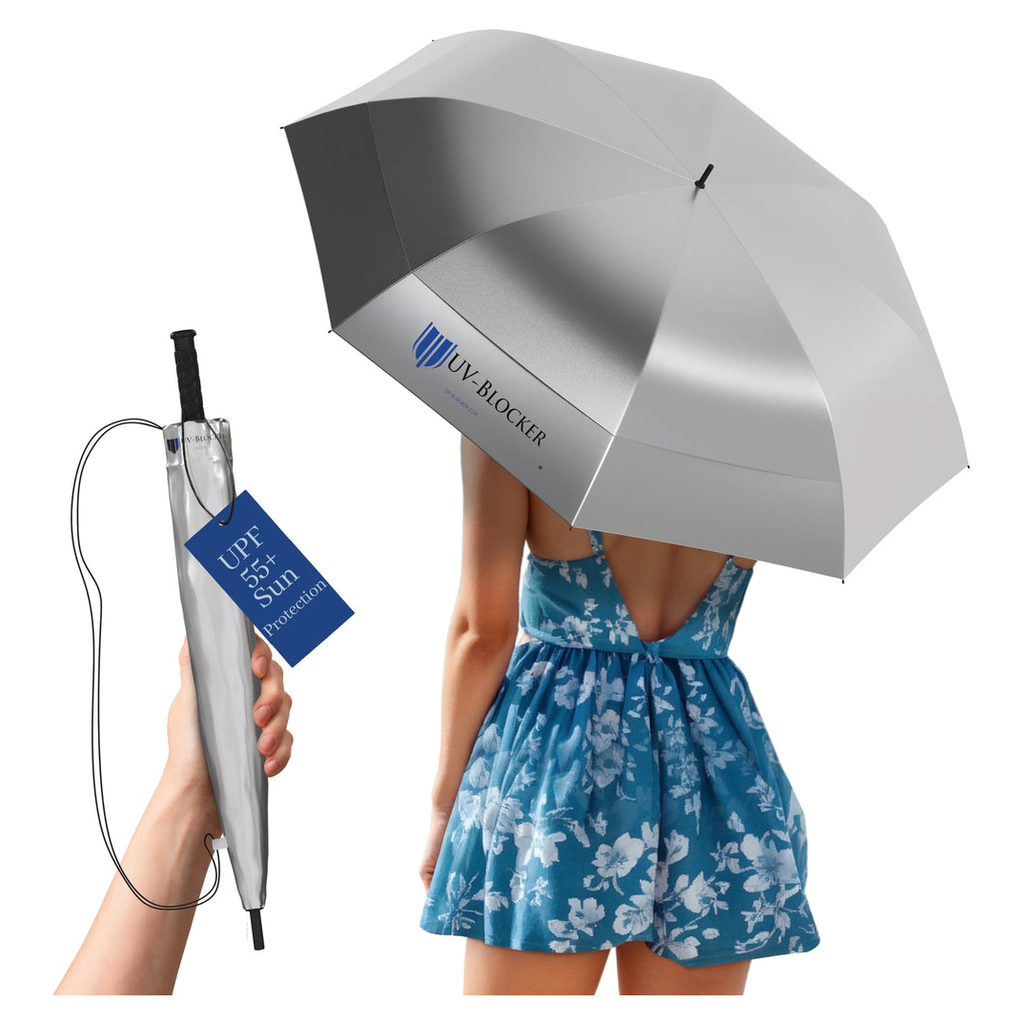
A wheelchair umbrella solves all three limitations. It moves with the user, requires no reapplication, and provides continuous overhead protection. Products like the UV-Blocker Compact Umbrella work well with universal clamp systems.

Universal Clamp Compatibility Guide for Wheelchair Umbrella Mounting
Wheelchair frames vary significantly. The right clamp depends on your chair type and preferred mounting location.
Manual Wheelchairs
Frame Type: Round or oval tubing (7/8" to 1-1/4" diameter) Common Mounting Points: Push handles, armrest posts, seat frame tubes Best Clamp: C-clamp with rubber padding or quick-release lever clamp Weight Limit: 1.5 lbs (standard UV umbrella weight)
Manual chairs typically have exposed tubing at multiple mounting points. Push handles are the most common attachment location because they position the umbrella directly overhead and allow easy angle adjustment.
Installation: Position clamp on push handle tubing below the grip. Tighten until snug but not deforming the tube. Test stability by gently pulling the umbrella in multiple directions.
Power Wheelchairs
Frame Type: Square tubing (1-1/2" to 2" per side) or composite mounting rails Common Mounting Points: Rear frame tubes, armrest posts, mounting brackets Best Clamp: Adjustable J-clamp or universal mount with adapter plate Weight Limit: 2 lbs
Power chairs have heavier frames that can support larger umbrellas. However, mounting locations are less standardized. Some models have proprietary mounting rails that require adapter plates.
Installation: Identify square tubing on the rear frame or seat back. Use J-clamp with rubber inserts to prevent scratching. For chairs with mounting rails, use adapter plates designed for your chair model.
Sport Wheelchairs
Frame Type: Angled aluminum tubing (varies by sport) Common Mounting Points: Frame crossbars, push rim guards Best Clamp: Multi-angle clamp with swivel head (0-90° adjustment) Weight Limit: 1 lb
Sport chairs have aggressive angles and minimal frame exposure. Standard clamps often don't fit. Multi-angle clamps with adjustable jaws accommodate angled tubes.
Installation: Mount to rear crossbar or axle plate mount. Ensure umbrella clears wheels during propulsion. Test clearance by rotating wheels through full motion.
Pediatric Wheelchairs
Frame Type: Smaller diameter tubing (5/8" to 1" diameter) Common Mounting Points: Stroller-style push handles Best Clamp: Small-diameter C-clamp or stroller clamp adapter Weight Limit: 1 lb
Pediatric chairs require smaller clamps and lighter umbrellas. Standard adult clamps are too large for 5/8" tubing.
Installation: Use pediatric-specific clamps rated for smaller diameters. Position umbrella to shade both child and caregiver if possible.
Essential Wheelchair Umbrella Features
Not every UV umbrella works on wheelchairs. A proper wheelchair umbrella meets these mandatory specifications.

UPF 50+ RatingBlocks 98% of UVA and UVB rays. Non-negotiable for medical-grade sun protection.
360° Gooseneck MountAllows continuous angle adjustment as sun position changes. Rigid mounts force fixed positioning.
Vented CanopyMesh vent at top prevents wind resistance that could affect chair stability or steering.
Lightweight FrameUnder 1.5 lbs for manual chairs, under 2 lbs for power chairs. Excess weight affects maneuverability.
Compact When ClosedFolds to 18-24" length for bag storage or transport. Must fit in accessible vehicle without removing from chair.
Reflective ExteriorSilver coating reflects 80-90% of solar radiation, reducing heat by 10-15°F compared to dark umbrellas.
Quick-Release MechanismAllows removal and reattachment in <30 seconds for transfers or vehicle access.
Mounting Location Selection
Choose mounting location based on chair type and sun protection needs.
Location Pros Cons Best For
Push Handles Optimal overhead coverage, easy angle adjustment Blocks caregiver access to handles Manual chairs, independent users
Armrest Posts No interference with propulsion, accessible Partial shade coverage, asymmetric One-sided sun exposure
Seat Back Frame Central positioning, balanced weight Harder to adjust angle Power chairs
Crossbar Mounts Low profile, clears transfers Limited shade area Sport chairs
Test positioning before finalizing. Sit in chair with umbrella mounted and adjust angle to confirm full head and shoulder coverage.
Medical Considerations
Certain conditions require enhanced sun protection beyond standard precautions.
Spinal Cord Injury (SCI)Impaired thermoregulation below injury level. According to the Journal of Spinal Cord Medicine, SCI patients have 3-4x higher risk of heat exhaustion compared to general population.
Multiple Sclerosis (MS)Heat sensitivity (Uhthoff's phenomenon) causes temporary symptom worsening. Even 1°F core temperature increase can trigger fatigue, vision changes, or weakness.
MedicationsPhotosensitizing drugs (antibiotics, diuretics, NSAIDs) increase UV damage risk. UV umbrellas provide critical protection for users on these medications.
Skin Grafts or Radiation SitesAreas with compromised skin integrity require complete UV blocking. Standard sunscreen (SPF 30-50) offers 97-98% protection. UPF 50+ fabric offers 98%+ protection.
Wheelchair Umbrella Cost-Benefit Analysis
A quality wheelchair umbrella costs $40-$80 depending on features and mounting system.

Item Cost
Wheelchair UV umbrella with universal clamp $40-80
Sunscreen (reapply 5x/day, summer season) $60-90/year
Heat exhaustion ER visit $800-1,500
Skin cancer treatment (basal cell) $5,000-10,000
The umbrella pays for itself within one season compared to sunscreen costs. More importantly, it prevents heat-related medical events that sunscreen cannot address.
A 2021 study in the journal Disability and Health found that adaptive sun protection devices (including wheelchair umbrellas) reduced heat-related ER visits by 60% among users compared to non-users.
Installation and Safety Checklist
Before using umbrella on wheelchair:
Stability Test
- [ ] Clamp tightened to manufacturer specifications (typically 15-20 ft-lbs torque)
- [ ] Umbrella tested with pulling force in 4 directions (forward, back, left, right)
- [ ] No movement or slipping detected
Clearance Test
- [ ] Umbrella clears head and shoulders by 6-12 inches when seated
- [ ] Does not interfere with propulsion (manual chairs)
- [ ] Does not block joystick access (power chairs)
- [ ] Clears door frames when tilted back
Wind Test
- [ ] Vented canopy allows airflow
- [ ] Umbrella stable in 10-15 mph winds (remove in winds >20 mph)
- [ ] No effect on chair steering or stability
Transport Test
- [ ] Folds to fit in vehicle or storage bag
- [ ] Quick-release mechanism functions smoothly
- [ ] All components accounted for after removal/reinstallation
Regulatory and Insurance Notes
Some insurance plans cover adaptive sun protection equipment under Durable Medical Equipment (DME) benefits. Coverage requires:
- Prescription from physician documenting medical necessity
- Diagnosis code related to heat sensitivity (e.g., MS, SCI, photosensitivity)
- Documentation that standard sun protection is insufficient
Contact your DME supplier or insurance provider for pre-authorization. Medicare Part B may cover wheelchair accessories if deemed medically necessary and prescribed by a doctor.
Independence Through Adaptation
Wheelchair users should not have to choose between outdoor participation and sun safety. A properly mounted UV umbrella provides:
- Extended outdoor time without heat risk
- Independence from caregiver shade assistance
- Continuous protection during transit
- Dignity through self-sufficiency
The National Council on Independent Living states that adaptive equipment enables participation, not dependence. A umbrella that moves with the chair is not an accommodation. It's an enabler.
Frequently Asked Questions
Q: Will the umbrella affect my chair's maneuverability?A: Properly mounted umbrellas add <2 lbs and do not affect steering or propulsion. Position clamp behind the axle centerline to avoid weight distribution changes.
Q: Can I use this umbrella indoors (malls, stores)?A: Yes. Umbrellas fold vertically along the chair back for indoor navigation. Quick-release mounts allow removal in <30 seconds for tight spaces.
Q: What about wind?A: Vented canopies handle winds up to 15-20 mph. In higher winds, tilt umbrella back or remove temporarily. Fiberglass ribs flex without breaking.
Q: Will this fit my chair model?A: Universal clamps fit 90% of manual and power chairs. Measure your tubing diameter (round) or dimensions (square) and match to clamp specifications. For non-standard frames, adapter plates are available.
Q: How do I clean the umbrella?A: Hand wash with mild soap and water. Air dry completely before folding to prevent mildew. Do not machine wash (degrades UV coating).
Q: Can caregivers still push the chair with umbrella mounted?A: Yes if mounted to armrests or side frames. Push handle mounting blocks this access. Choose mounting location based on caregiver needs.
Q: Is this crash-tested for transport?A: Umbrellas must be removed during vehicle transport. They are not crash-rated and could become projectiles in an accident.
Q: How long does the UV protection last?A: Quality UPF 50+ umbrellas maintain protection for 2-3 years with regular use. Test annually by holding fabric up to bright light. Visible light penetration indicates replacement time.
Recommended Wheelchair Umbrella Options
Based on universal clamp compatibility and UPF ratings, these UV-Blocker options work well as a wheelchair umbrella:
- UV-Blocker Compact Travel Umbrella - Lightweight (under 1 lb), UPF 50+, ideal for manual chairs
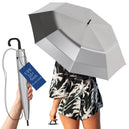
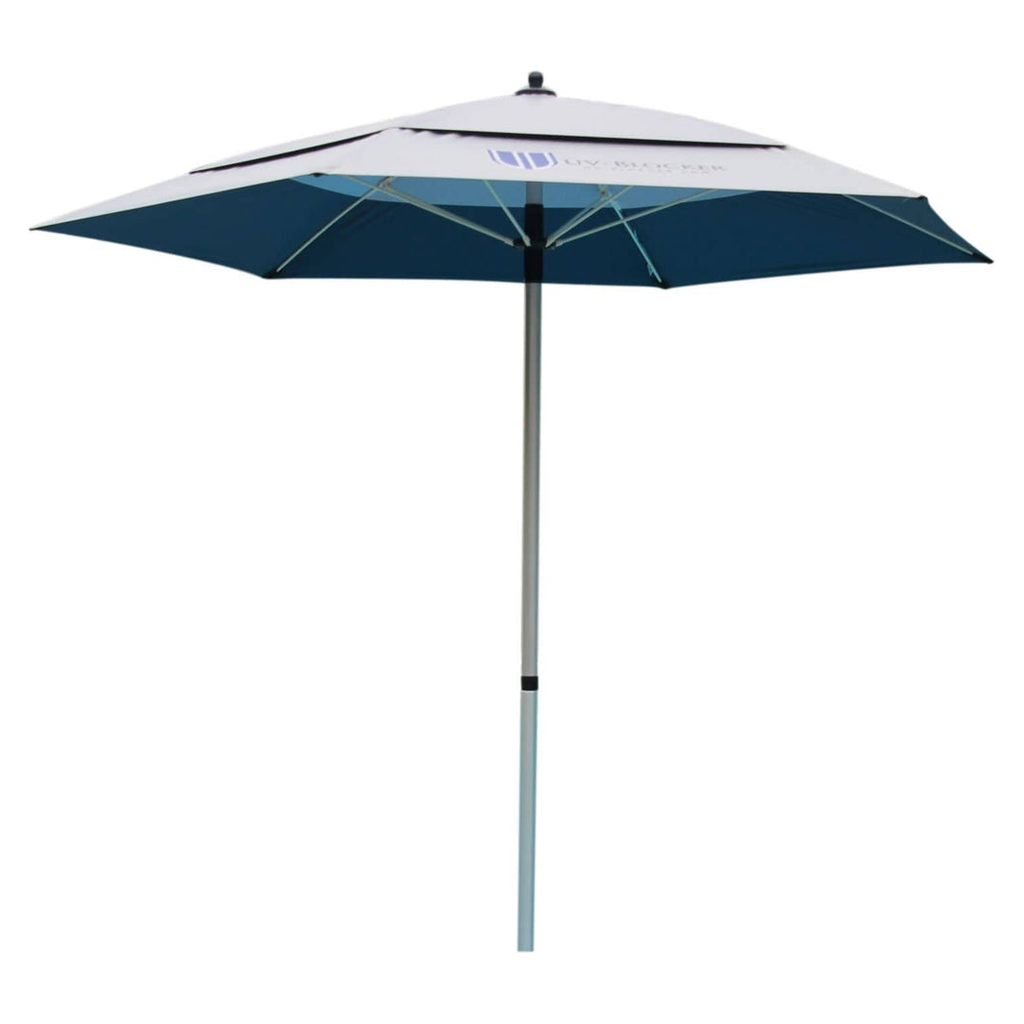
- UV-Blocker Large Golf Umbrella - 62" coverage, UPF 50+, best for power chairs
For more adaptive sun protection, see our guides on lupus sun protection and medical-grade UV umbrellas.