

By Ron Walker
The global retinol market crossed $2.5 billion in 2024. Millions of people dab it on every night chasing smoother skin, and most of them walk outside the next morning with a compromised UV barrier.
Here's the paradox. Retinol fights photoaging. Unprotected sun exposure accelerates it. Every minute of UV on retinol-thinned skin chips away at the collagen gains that retinol spent all night building.
This guide breaks down what retinol actually does to UV defenses (spoiler: it's not what most skincare blogs claim), how different retinoid types compare for sun risk, and a layered protection routine that holds up in summer, on vacation, and at higher concentrations.
TLDR:
- Retinol is not a true photosensitizer, but it still makes skin more UV-vulnerable.
- Barrier change matters more than phototoxicity.
- Retinol, tretinoin, and adapalene do not share the same sun-risk profile.
- Stronger retinol usually means more irritation and more daytime protection.
- Sunscreen is often under-applied and under-reapplied.
- A UPF 50+ barrier adds overhead shade without reapplication.
- Retinol can stay in summer if the protection plan is layered.
Does Retinol Actually Make You Sun Sensitive?
Retinol is not a true photosensitizer, but it thins the stratum corneum and accelerates cell turnover, leaving newer skin cells more vulnerable to UV damage.
That's the practical version of retinol sun sensitivity, and it's an important distinction. Drugs like doxycycline, hydrochlorothiazide, and certain tetracyclines absorb UV light and kick off a phototoxic chemical reaction in the skin. Retinol doesn't do that. For context on drugs that do, check the guide to medications that cause sun sensitivity.
So what does retinol do? Picture it as stripping away a few layers of the skin's outermost armor. Kligman and colleagues demonstrated that topical retinol alters the stratum corneum's response to environmental stress, helping explain why retinol users tend to feel drier, peel more readily, and burn faster under the same sun (PubMed PMID 9257377).
And there's a second problem. Retinoid molecules photodegrade when hit with UV light. Fu et al. showed that retinyl palmitate breaks down into photoproducts that generate reactive oxygen species and cause DNA strand cleavage (PubMed PMID 16149731). That's not the same as classic photosensitivity, but it confirms that retinol UV damage is a real, measurable phenomenon.
Bottom line? Retinol-treated skin won't react through the textbook photosensitivity pathway. But retinol users still burn faster, peel more, and accumulate more UV injury per minute of exposure than they would without the product.
Retinol vs. Tretinoin vs. Retinoids: What's the Sun Risk Difference?
Tretinoin is 10-20x stronger than OTC retinol and causes more barrier disruption. Adapalene is photostable and safe for daytime use, unlike most other retinoids.
This matters because most shoppers lump every retinoid together. Walk into a CVS and the labels say "retinol." Visit a dermatologist and the prescription says "tretinoin." They're related, but they aren't the same. OTC retinol converts to retinoic acid in the skin through a two-step enzymatic process, which is partly why it feels gentler and sits on open shelves (PubMed PMID 9257377).
Prescription tretinoin skips that conversion entirely. It delivers retinoic acid directly, which ramps up peeling and barrier disruption faster. That's exactly why prescription users need stricter sun guidance than someone picking up a 0.5% retinol serum at Target.

Then there's adapalene, and it breaks the pattern. GoodRx's clinical comparison notes that adapalene is photostable (it doesn't fall apart under UV the way retinol and tretinoin do) and binds selectively to skin receptors, which tends to mean less redness and peeling (GoodRx). That's a genuinely useful distinction most skincare content ignores.
Retinyl palmitate sits at the gentle end of the OTC range. Less visible irritation, yes, but the photodecomposition problem still applies. The sun-risk ladder across retinoids isn't flat, and knowing where each product sits on it changes the protection math.
| Retinoid | Availability | Potency | Photostable? | UV Risk Level |
|---|---|---|---|---|
| Retinol | OTC | Moderate | No | Moderate |
| Retinyl Palmitate | OTC | Low | No | Low-Moderate |
| Tretinoin | Prescription | High | No | High |
| Adapalene (Differin) | OTC/Rx | Moderate | Yes | Low |
| Tazarotene | Prescription | High | Yes | Moderate |
A drugstore retinol user and a tretinoin patient aren't in the same boat. But both boats have a hole in the sun protection floor.
Does Retinol Concentration Affect Sun Sensitivity?
Higher retinol concentrations (0.5-1.0%) cause more stratum corneum thinning and faster cell turnover, increasing UV vulnerability compared to gentler 0.25% formulations.
Concentration is the variable most skincare routines ignore. A 0.25% product is the typical starting point, and for good reason. A 2025 multi-omics study found 20-30% improvement in fine lines over 12 weeks with minimal barrier disruption at this level (PMC). Beginners can start here without much drama.
Bump to 0.5% and the adaptation period gets real. More peeling, more tightness, and the first 4-6 weeks feel like a retinization boot camp. If the skin barrier was already compromised from over-exfoliation or harsh cleansers, that window can be rough.
At 1.0% (the OTC ceiling), stratum corneum thinning accelerates noticeably. The product still works. But the protection protocol around it has to tighten, particularly for anyone with a history of retinol UV damage or past sunburns.
Here's the piece most guides skip: new users feel the shift most sharply during the first 4-8 weeks. Veteran users adapt and flake less, but the structural thinning of the barrier persists. Tolerance to irritation isn't the same as restored protection.
| Concentration | Typical Use | Barrier Effect | UV Vulnerability |
|---|---|---|---|
| 0.25% | Entry-level | Mild | Modest, but real |
| 0.5% | Standard therapeutic | Moderate | Noticeable |
| 1.0% | Maximum OTC | Strongest | Highest |
So the answer to "does retinol make you sun sensitive" becomes more pointed with strength. It's not fearmongering. It's calibration.
Why Isn't Sunscreen Enough for Retinol Users?
Most people apply only 25-50% of the recommended sunscreen amount, and UV protection degrades within 2 hours, leaving retinol-thinned skin exposed during the gaps.
Petersen and Wulf published data showing real-world sunscreen use at 0.39-1.0 mg/cm2. SPF testing assumes 2 mg/cm2. That gap means a tube labeled SPF 50 might be delivering SPF 12-25 on actual skin (Wiley). For retinol users with a thinner barrier, that math stings.
Then there's the time problem. Apply sunscreen at 8 AM, walk to lunch at noon, and four hours have passed without reapplication. Sweat, oil, and mechanical rubbing have been grinding down the product since breakfast. That's where retinol sunburn sneaks in, on ordinary days with ordinary routines.
Coverage gaps add another layer of risk. Ears, hairline, neck, hands, and the part in someone's hair are easy to miss with a pump bottle. Those spots are just as retinol-thinned as the cheeks.
Sunscreen should stay in the routine. But asking one product to carry the entire UV defense for barrier-compromised skin is asking too much. A physical overhead barrier fills the gaps that chemistry can't.
For readers comparing physical options, the UPF vs SPF guide explains why fabric protection behaves differently from sunscreen chemistry. That difference is the point.
The Retinol Sun Protection Protocol
Protect retinol-treated skin with three layers: nighttime-only application, morning broad-spectrum SPF 30+, and a physical UPF 50+ barrier for continuous overhead UV protection.
Layer 1: Timing
Apply retinol after the sun goes down. Night application protects the ingredient from photodegradation and cuts down on daytime vulnerability before the morning even starts.
Layer 2: Chemical Protection
Broad-spectrum SPF 30+ goes on every morning. A nickel-sized dollop for the face remains the standard, and reapplication every 2 hours still matters for extended outdoor time. No shortcuts here, especially on retinol-thinned skin.
Layer 3: Physical UV Barrier
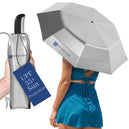
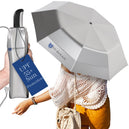
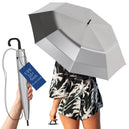
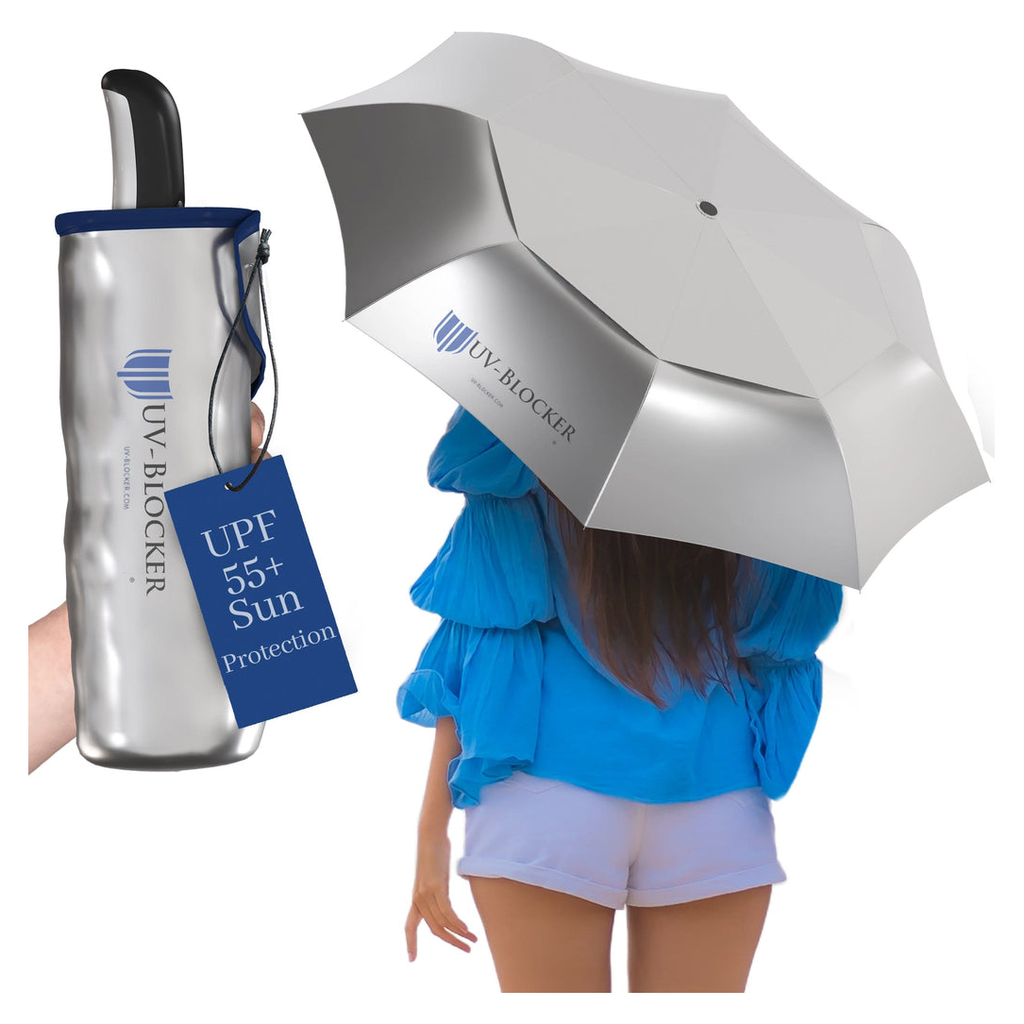
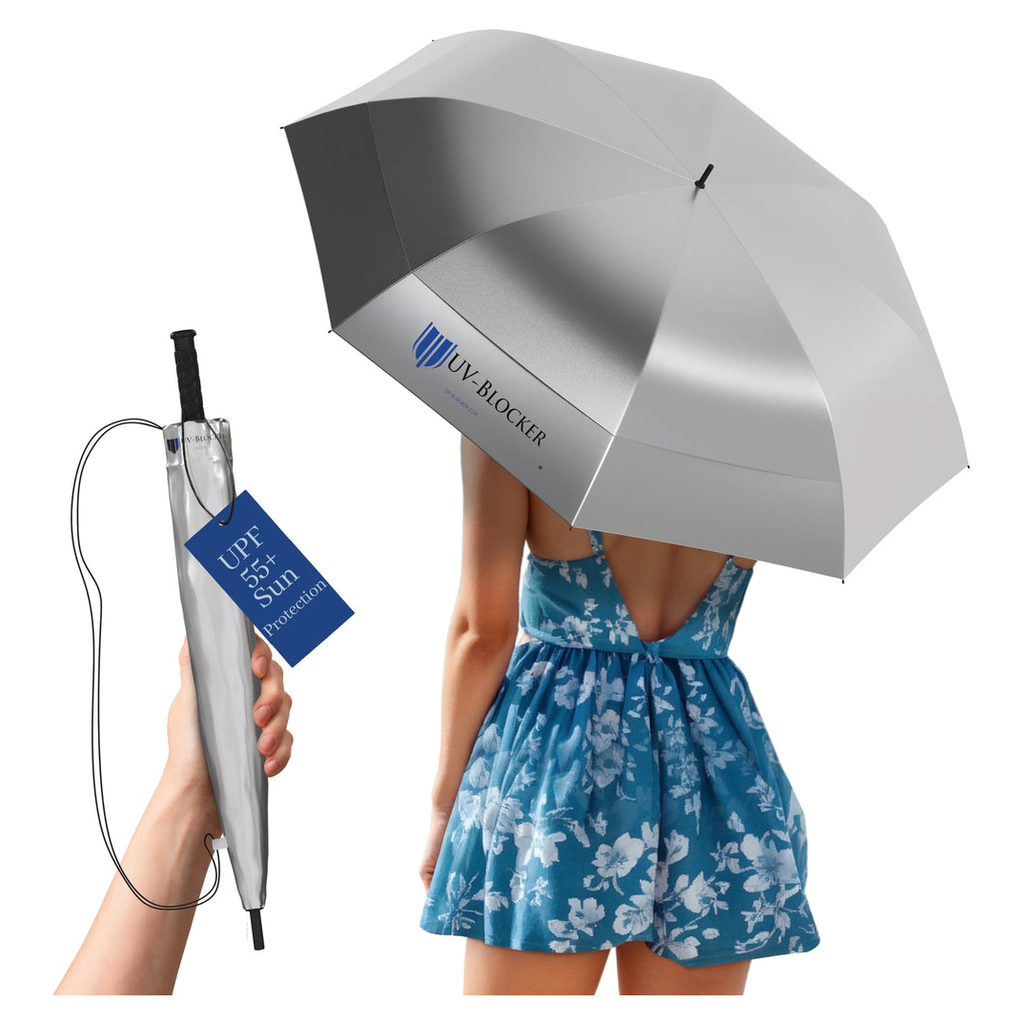
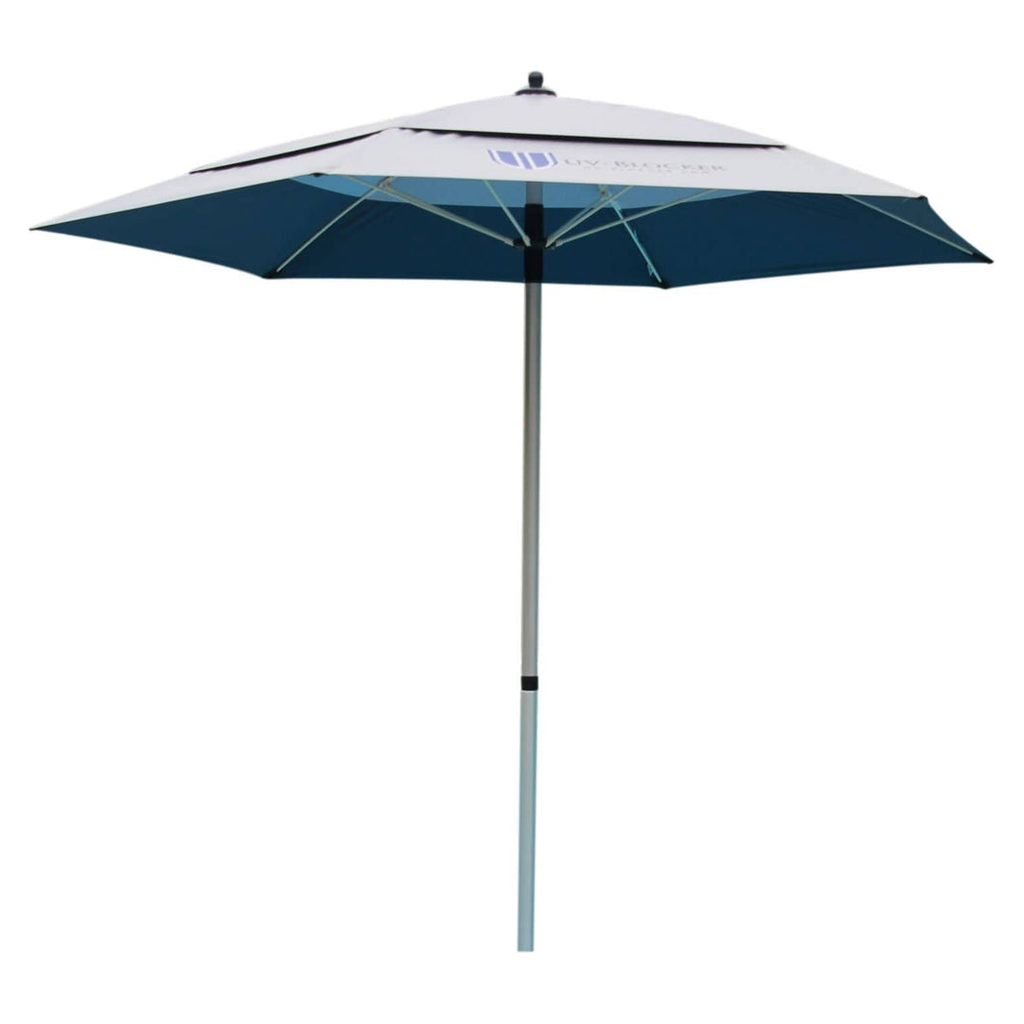
A UPF 50+ umbrella adds something sunscreen can't: continuous overhead protection that doesn't wash off, sweat off, or fade between applications. UV-Blocker's Solarteck fabric umbrellas are AATCC TM183-2020 tested, blocking 100% of UV-B and 99.97% of UV-A. They carry UPF 50+ certification, MIF Approved status, and dermatologist recommendation, plus they drop the temperature underneath by about 15F.

For everyday carry, the Compact UV Umbrella ($59.95) fits in a purse or briefcase. For travel days and longer getaways, the Travel UV Umbrella ($59.95) is easier to pack with a shoulder strap carry case. Neither product replaces sunscreen. Both fill the gap sunscreen leaves behind.
| Layer | What | Why | Frequency |
|---|---|---|---|
| Timing | Apply retinol at night only | Prevents photodegradation; reduces daytime sensitivity | Every night |
| Chemical | SPF 30+ broad-spectrum | Absorbs/reflects UV on contact | Reapply every 2 hours |
| Physical | UPF 50+ umbrella | Continuous overhead UV block; no reapplication needed | Whenever outdoors |
This is where physical protection earns its place. It doesn't need a reminder app, and it doesn't care whether the day runs long.
Can You Use Retinol in Summer?
Yes. Retinol is safe to use in summer with proper layered protection, nighttime application, daily SPF 30+, and physical UV barriers during extended outdoor time.
Quitting retinol for the summer usually costs more than it saves. Collagen stimulation, smoother texture, more even tone: those benefits are cumulative. A 3-4 month pause can erase real progress, especially for someone who spent months building tolerance.
The better move? Adjust the protocol, don't ditch the product. If retinol photosensitivity feels more intense during peak UV months, stepping down from 0.5% to 0.25% is a reasonable compromise. But increasing protection layers (hat, UPF umbrella, shade-seeking) is usually smarter than decreasing the active ingredient.
And vacations don't cancel retinol either. A week at the beach should trigger a tighter protection plan, not a product purge. Pack the sunscreen, pack the physical barrier, keep the nighttime application going.
For readers building a broader shade strategy, the sunscreen alternative page shows how physical UV protection fits beside SPF, not in place of it.
Frequently Asked Questions About Retinol Sun Sensitivity
These come up constantly in skincare forums and dermatologist offices alike. Short answers first, context after.
Should retinol be stopped before vacation?
Nope. Dropping retinol a week before Cancun tosses out weeks of skin progress for no good reason. Keep the nighttime application and raise daytime protection instead: broad-spectrum SPF plus a UPF 50+ physical barrier.
What SPF is recommended with retinol?
SPF 30 at minimum, SPF 50 for a real-world safety margin. Given that most people slather on half the tested amount, that extra SPF headroom isn't overkill.
Does retinol cause sunburn?
Not in the way doxycycline does. Retinol weakens the barrier, which lets UV penetrate more easily. The result can look and feel like a worse-than-usual burn, but the underlying mechanism is barrier compromise rather than a phototoxic reaction.
Is retinol safe for daily use in sunny climates?
Absolutely. People in Arizona, South Florida, and coastal Australia use retinol year-round. The key is a non-negotiable routine: night application, morning SPF, physical UV barrier for outdoor time.
Should lower retinol strengths still be protected?
Yes. Even 0.25% retinol changes the barrier enough to matter. The risk is lower than with stronger formulas, but it is not zero.
Is adapalene less of a sun problem than retinol?
Often, yes. Adapalene is photostable and generally less irritating, which can make daytime exposure easier to manage than with many other retinoids.
Can retinol and sun exposure coexist on the same day?
They can, as long as retinol stays at night and daytime protection is serious. The mistake is treating sunscreen as the only layer.
What's the simplest way to remember the routine?
Night retinol. Morning SPF. Outdoor shade or UPF 50+ protection. That sequence covers the gaps that single-layer routines miss.
Conclusion
Retinol isn't something to fear, and summer isn't a reason to quit. The research is clear: retinol changes the skin barrier in ways that make UV more dangerous, even though it's technically not a classic photosensitizer. What matters is matching the protection to the biology.
Night application. Morning SPF. A physical UV barrier when the day runs longer than the sunscreen does. That three-layer approach keeps retinol doing what it's supposed to do without letting UV undo the work. For a reapplication-free physical layer, the Compact UV Umbrella and Travel UV Umbrella are two solid options to round out the routine.
Frequently Asked Questions: Retinol and Sun Sensitivity
Why does retinol make skin more sensitive to the sun?
Retinol accelerates cell turnover, shedding the outermost skin layers and revealing fresher, thinner epidermis underneath. This new skin has less natural UV protection and is significantly more vulnerable to sunburn, photoaging, and hyperpigmentation.
Can I use retinol in summer?
Yes, but with extra caution. Apply retinol only at night, always follow with SPF 50+ in the morning, and consider reducing frequency to 2–3 nights per week in summer if your skin becomes reactive. A UPF umbrella adds a crucial physical barrier against midday UV.
How long after stopping retinol does sun sensitivity return to normal?
Increased UV sensitivity typically resolves within 1–2 weeks of stopping retinol as skin cell turnover normalizes. If you pause for a vacation, restart gradually to avoid re-sensitizing your skin.
Should I use retinol if I'm going to be outdoors a lot?
Plan your retinol use around your schedule. Avoid applying it the night before an all-day outdoor event. Commit to rigorous sun protection — SPF 50+, protective clothing, and a UV umbrella — on days you've used retinol recently.
Retinol and Retinoids: A Dermatologist's Guide to Safe Sun Exposure
Retinol is the most widely used anti-aging active in skincare — and one of the most misunderstood when it comes to sun sensitivity. The photosensitivity risk is real but manageable, and understanding the mechanism helps users make smarter choices.
Why Retinol Causes Sun Sensitivity
Retinol undergoes photodegradation when exposed to UV light, and this breakdown process generates reactive oxygen species (free radicals) that damage skin cells. Additionally, retinol accelerates cell turnover — meaning the skin surface is consistently thinner and less UV-hardened than untreated skin. This creates two distinct sensitivity sources:
- Direct photodegradation — Retinol molecules break down when hit by UV, producing damaging byproducts
- Reduced stratum corneum thickness — Faster cell turnover means less natural UV filtering in the outermost skin layer
Prescription vs. OTC Retinoids: Sensitivity Comparison
| Product Type | Examples | Potency | Photosensitivity Risk |
|---|---|---|---|
| Prescription tretinoin | Retin-A, Renova | Highest | HIGH — use evening only |
| Prescription adapalene 0.3% | Differin Rx | High | HIGH |
| OTC adapalene 0.1% | Differin OTC | Moderate | MODERATE |
| OTC retinol 0.5–1% | Various brands | Moderate | MODERATE |
| OTC retinol 0.1–0.3% | Entry-level products | Low | LOW-MODERATE |
| Retinyl palmitate | Cosmetics, SPF products | Very low | LOW |
Safe Outdoor Protocol for Retinol Users
Apply retinol exclusively at night. On daytime outdoor activities, use SPF 50+ sunscreen plus a UPF 50+ umbrella for physical shade — the umbrella eliminates UV before it reaches skin, making it the most reliable protection method for retinol users regardless of reapplication compliance.
Ready for Real UV Protection?
UV-Blocker umbrellas block 99%+ of UV rays, keep you up to 15°F cooler, and carry the only Melanoma International Foundation approval of any umbrella. Dermatologist-recommended. Loved by melanoma survivors, outdoor workers, and sun-sensitive individuals worldwide.
Shop UV-Blocker Umbrellas →Sun Safety in Australia
Australia has some of the highest UV radiation levels in the world, with the UV Index regularly reaching extreme levels (11 or above) in cities such as Sydney, Melbourne, Brisbane, Perth, and Adelaide for much of the year — including on overcast days. The Cancer Council Australia reports that approximately two in three Australians will be diagnosed with some form of skin cancer by age 70, making sun protection a national health priority.
Key resources and guidelines for Australian sun safety:
- SunSmart Program (Cancer Council Australia): The SunSmart UV Alert is broadcast daily and recommends sun protection whenever the UV Index reaches 3 or above. In most Australian cities, this threshold is met every day of the year, including winter months in northern regions.
- ARPANSA (Australian Radiation Protection and Nuclear Safety Agency): Provides real-time UV monitoring at stations across all states and territories. Australians can access current UV levels at arpansa.gov.au.
- Safe Work Australia — UV Radiation as an Occupational Hazard: Australian workplace health and safety legislation requires employers to assess and manage UV radiation exposure for outdoor workers. Physical shade, including umbrellas rated UPF 50+, is recognised as a primary engineering control under these regulations.
A UPF 50+ UV-blocking umbrella provides the consistent, continuous shade protection that is essential under Australia's intense sun. The UV-Blocker umbrella, with its patented Solarteck® reflective coating, blocks 99% of UV rays and reduces perceived temperature by up to 15°F — a meaningful advantage for outdoor activities in Australia's climate. It is the only umbrella of its kind approved by the Melanoma International Foundation.
Sun Safety in Canada
Canada experiences meaningful UV exposure throughout the year, with UV Index levels regularly reaching 8–10 or higher during summer months in cities such as Vancouver, Calgary, Toronto, and Ottawa. Health Canada and Environment and Climate Change Canada publish daily UV Index forecasts and recommend protective measures whenever the index exceeds 3 — a threshold reached on most clear days between May and August across the country.
Key resources for Canadian sun safety:
- Health Canada UV Index: Published daily via the Environment and Climate Change Canada weather portal (weather.gc.ca). Canadians can track UV levels by city and receive alerts when protection is recommended.
- Canadian Cancer Society: Recommends UPF 50+ clothing, hats, sunscreen, and shade-seeking as primary sun protection strategies. Physical UV barriers — such as UPF 50+ umbrellas — are emphasized for prolonged outdoor exposure.
- Canadian Dermatology Association: Endorses broad-spectrum sun protection strategies, including shade structures and UV-blocking accessories, especially for individuals with fair skin or a personal or family history of skin cancer.
For Canadians spending extended time outdoors — whether working, playing sports, or enjoying recreational activities — a UV-blocking umbrella rated UPF 50+ provides continuous, reapplication-free protection. The UV-Blocker umbrella, independently tested and approved by the Melanoma International Foundation, blocks 99% of UV rays and keeps users up to 15°F cooler — making it a practical and reliable companion for Canadian summers.
Key Takeaways
- Yes.
- Dermatologists generally recommend SPF 30+ broad-spectrum sunscreen for patients on photosensitizing medications, with reapplication every 2 hours.
- Absolutely.
- Photosensitivity typically resolves within days to weeks after discontinuing the medication, depending on the drug's half-life and your individual ...
Frequently Asked Questions
Does Retinol really make skin more sensitive to sunlight?
Yes. Retinol belongs to a class of medications that can trigger photosensitivity reactions in a subset of patients. This can cause sunburn-like reactions with minimal UV exposure, or trigger phototoxic skin rashes. The reaction severity varies by individual, dosage, and UV intensity. Always review your medication guide and consult your prescribing physician if you notice unusual skin reactions in sunlight.
What SPF should I use if I take this medication?
Dermatologists generally recommend SPF 30+ broad-spectrum sunscreen for patients on photosensitizing medications, with reapplication every 2 hours. However, sunscreen alone isn't sufficient for high UV exposure. Combining sunscreen with physical barriers — UPF 50+ clothing, wide-brim hats, and UV-blocking umbrellas — provides the most reliable protection. UV-Blocker's UPF 50+ umbrellas block 99% of UVA and UVB rays.
Can I still go outdoors while taking this medication?
Absolutely. Most patients can continue outdoor activities with appropriate precautions: avoid peak UV hours (10am–4pm), wear protective clothing, use SPF 30+ sunscreen, and use shade whenever possible. A portable UV-blocking umbrella offers hands-free shade wherever you go, making it a practical solution for patients who need consistent sun avoidance.
How long after stopping the medication until sun sensitivity resolves?
Photosensitivity typically resolves within days to weeks after discontinuing the medication, depending on the drug's half-life and your individual metabolism. Some medications with long half-lives may cause sensitivity for weeks. Continue sun protection until your doctor confirms it's safe to reduce precautions.
What are the signs of a phototoxic reaction vs. a photoallergic reaction?
Phototoxic reactions look like severe, rapid sunburn — they appear within hours of UV exposure and are dose-dependent. Photoallergic reactions involve an immune response, can spread beyond sun-exposed areas, and may appear days later. Both require prompt sun avoidance. See your dermatologist for diagnosis and management.
Sun Safety Essentials for Patients on Photosensitizing Medications
- Keep a UV index app on your phone and avoid going outdoors when the index exceeds 6 without full protection
- Wear UPF 50+ sun-protective clothing on arms and legs, not just sunscreen
- Carry a portable UV-blocking umbrella for shade on demand — especially effective during outdoor commutes, sporting events, or waiting outdoors
- Apply sunscreen to the back of hands and tops of feet — commonly missed areas that receive direct UV
- Inform your pharmacist about all medications you take so they can flag photosensitizing combinations
- Request a window film UV assessment if you drive frequently — car windows block UVB but not all UVA
Key Takeaways
- Yes.
- Dermatologists generally recommend SPF 30+ broad-spectrum sunscreen for patients on photosensitizing medications, with reapplication every 2 hours.
- Absolutely.
- Photosensitivity typically resolves within days to weeks after discontinuing the medication, depending on the drug's half-life and your individual ...
Frequently Asked Questions
Does Retinol really make skin more sensitive to sunlight?
Yes. Retinol belongs to a class of medications that can trigger photosensitivity reactions in a subset of patients. This can cause sunburn-like reactions with minimal UV exposure, or trigger phototoxic skin rashes. The reaction severity varies by individual, dosage, and UV intensity. Always review your medication guide and consult your prescribing physician if you notice unusual skin reactions in sunlight.
What SPF should I use if I take this medication?
Dermatologists generally recommend SPF 30+ broad-spectrum sunscreen for patients on photosensitizing medications, with reapplication every 2 hours. However, sunscreen alone isn't sufficient for high UV exposure. Combining sunscreen with physical barriers — UPF 50+ clothing, wide-brim hats, and UV-blocking umbrellas — provides the most reliable protection. UV-Blocker's UPF 50+ umbrellas block 99% of UVA and UVB rays.
Can I still go outdoors while taking this medication?
Absolutely. Most patients can continue outdoor activities with appropriate precautions: avoid peak UV hours (10am–4pm), wear protective clothing, use SPF 30+ sunscreen, and use shade whenever possible. A portable UV-blocking umbrella offers hands-free shade wherever you go, making it a practical solution for patients who need consistent sun avoidance.
How long after stopping the medication until sun sensitivity resolves?
Photosensitivity typically resolves within days to weeks after discontinuing the medication, depending on the drug's half-life and your individual metabolism. Some medications with long half-lives may cause sensitivity for weeks. Continue sun protection until your doctor confirms it's safe to reduce precautions.
What are the signs of a phototoxic reaction vs. a photoallergic reaction?
Phototoxic reactions look like severe, rapid sunburn — they appear within hours of UV exposure and are dose-dependent. Photoallergic reactions involve an immune response, can spread beyond sun-exposed areas, and may appear days later. Both require prompt sun avoidance. See your dermatologist for diagnosis and management.
Sun Safety Essentials for Patients on Photosensitizing Medications
- Keep a UV index app on your phone and avoid going outdoors when the index exceeds 6 without full protection
- Wear UPF 50+ sun-protective clothing on arms and legs, not just sunscreen
- Carry a portable UV-blocking umbrella for shade on demand — especially effective during outdoor commutes, sporting events, or waiting outdoors
- Apply sunscreen to the back of hands and tops of feet — commonly missed areas that receive direct UV
- Inform your pharmacist about all medications you take so they can flag photosensitizing combinations
- Request a window film UV assessment if you drive frequently — car windows block UVB but not all UVA