


TLDR:
- Subacute cutaneous lupus erythematosus (SCLE) is a photosensitive skin form of lupus that produces ring-shaped or scaly plaques on the neck, upper chest, upper back and outer arms
- The rash usually does not itch and does not scar, but healed patches often leave lighter or darker skin
- Between 20% and 40% of cases are set off by a prescription drug, and those cases clear once the drug is stopped
- More than 80% of patients carry anti-Ro/SSA antibodies
- Around half meet the classification criteria for systemic lupus, but only about 10% to 15% go on to develop it
- Self-reported sun sensitivity does not predict who actually reacts to UV, so protection matters even for people who never burn
A ring-shaped rash appears across the chest and upper arms. It does not itch. It returns every spring. Most people never connect it to sunlight.
Fewer still learn that a pill they take daily set it off. That pattern describes subacute cutaneous lupus erythematosus, one of the three main skin forms of lupus and the one most reliably provoked by ultraviolet light. It is also the one most often caused by medication, which makes it unusual among autoimmune skin diseases: for a large group of patients, the trigger is removable.
This guide covers what the condition is, how it differs from the other lupus rashes, which drugs are implicated, why the flare shows up long after the exposure, and what the photoprotection research actually demonstrates.
What Is Subacute Cutaneous Lupus Erythematosus?
Subacute cutaneous lupus erythematosus is an autoimmune skin disease that produces photosensitive, non-scarring plaques on the neck, shoulders, upper back, chest and outer arms.
It appears in two clinical forms. The annular form produces red, raised, ring-shaped plaques with a raised border and a clearer centre, spreading across sun-exposed skin. The papulosquamous form combines bumps with scale and is frequently mistaken for eczema or psoriasis, which is one reason the diagnosis is often delayed.

The distribution follows sunlight rather than body symmetry lines, which is the clue that usually points a dermatologist toward a photosensitive cause. According to Cleveland Clinic, the rash typically does not itch and does not scar, though it commonly leaves skin discoloration once it resolves.
Blood work supports the diagnosis rather than making it. DermNet reports that more than 80% of patients are Ro/SSA antibody positive and around 60% are antinuclear antibody positive. A skin biopsy confirms it.
The condition is diagnosed most often in middle-aged women, with Cleveland Clinic citing a peak between ages 40 and 60. It is chronic, and it waxes and wanes rather than resolving permanently.
How Is SCLE Different From Discoid Lupus and the Butterfly Rash?
The practical difference is scarring. Discoid lupus can leave permanent scars and hair loss, while SCLE leaves colour change only, and the acute butterfly rash usually signals active systemic disease.
| Feature | Subacute cutaneous (SCLE) | Discoid (DLE) | Acute (butterfly rash) |
|---|---|---|---|
| Typical location | Neck, upper chest, upper back, outer arms | Scalp, ears, face | Cheeks and bridge of the nose |
| Appearance | Annular rings or scaly plaques | Thick disc-shaped plaques | Flat or slightly raised red rash |
| Scarring | No, colour change only | Yes, can be permanent | No |
| Link to systemic lupus | Around 50% meet criteria, 10% to 15% develop SLE | Lower | Usually indicates active SLE |
Getting the subtype right changes what happens next. Discoid lesions on the scalp are treated with urgency because the follicle damage is irreversible. SCLE plaques are not an emergency, but they are the most sun-reactive of the three, which shifts the emphasis toward finding and removing triggers.
Which Medications Trigger Drug-Induced SCLE?
Between 20% and 40% of cases are drug-induced, and drug-triggered disease is reversible: the rash clears after the responsible medication is discontinued.
The strongest evidence comes from a population-based matched case-control study of 234 patients in Sweden, published in the British Journal of Dermatology in 2012. In the six months before diagnosis, 166 patients (71%) had filled at least one prescription for a drug previously implicated in the condition. The authors concluded that more than one third of cases could be attributed to drug exposure.
The largest odds ratios in that study were:
- Terbinafine (an oral antifungal): odds ratio 52.9
- TNF-alpha inhibitors (used for rheumatoid arthritis and inflammatory bowel disease): odds ratio 8.0
- Antiepileptic drugs: odds ratio 3.4
- Proton pump inhibitors (omeprazole, lansoprazole and similar reflux medications): odds ratio 2.9
One finding deserves care in the retelling. Thiazide diuretics, long reported as a culprit in case series and named by both Cleveland Clinic and DermNet, did not reach a significant odds ratio in the Swedish study.
The authors suggested the design may have missed them because thiazide-related cases develop after a longer delay. Thiazides are still worth reviewing, and there is more detail in this guide to hydrochlorothiazide and sun sensitivity, but the evidence for them is weaker than for terbinafine.
A 2017 review of case reports found that proton pump inhibitor cases rose by 34.1% relative to all other medications, while antihypertensive and antifungal reports fell. The list of implicated drugs keeps growing, which the authors attributed partly to publication bias.
Cleveland Clinic's own list covers antifungal and antiseizure medications, blood pressure drugs and ACE inhibitors, chemotherapy agents, proton pump inhibitors and TNF inhibitors. A broader overview of medications that cause sun sensitivity covers the wider category.
The practical step is simple: bring a complete medication list, including over-the-counter products, to a dermatologist or prescriber. Nobody should stop a prescribed drug on their own.
Why Does Sunlight Set Off an SCLE Rash Days Later?
Lupus skin lesions surface well after the ultraviolet exposure that caused them, which is why patients rarely connect a flare to a specific day outdoors.
Researchers can demonstrate this under controlled conditions using standardized photoprovocation, which exposes small patches of unaffected skin to measured doses of UVA and UVB and then watches for lesions. In an analysis of 431 patients with cutaneous lupus published in Arthritis Care and Research, 61.7% developed a positive reaction, and the delay before lesions appeared was significantly longer than in polymorphic light eruption (P less than 0.001), a condition that erupts within hours.
That same study produced a finding worth repeating to anyone who has dismissed their own sun sensitivity: a patient's history of photosensitivity did not predict the photoprovocation result. The authors concluded that photosensitivity should not be ruled out in patients who report no history of it.
A multicentre study across seven European sites, published in the Journal of Investigative Dermatology, tested 47 patients with cutaneous lupus and 13 healthy volunteers. UVA and UVB irradiation induced lesions in 22 patients (47%) and in none of the healthy volunteers. Broken down by subtype, 57% of the SCLE group reacted, compared with 35% of the discoid group.
The underlying biology involves UV-triggered cell death and a delayed clearance of the resulting cellular debris, a mechanism covered in more depth in this article on lupus sun flare triggers.
What matters day to day is the timing. A flare that appears on a Thursday may trace back to the previous weekend. Protection has to be habitual rather than reactive, because by the time the skin reacts, the exposure is long past.
Do Sunscreens Actually Prevent SCLE Lesions?
Yes, but the research found large differences between products, and the deciding factor was UVA coverage rather than the SPF number on the bottle.
A double-blind study published in Photodermatology, Photoimmunology and Photomedicine tested three commercially available sunscreens against photoprovocation in 11 lupus patients. Every patient developed lupus-specific lesions on unprotected skin. One sunscreen prevented lesions in all 11 patients. The second protected 5 of 11. The third protected only 3 of 11.
The product that worked for everyone carried a strong UVA filter set, including Mexoryl SX, Mexoryl XL, avobenzone and titanium dioxide. The two weaker performers had thinner UVA coverage. All three were sold as sun protection.
This is a small study from 2000, so it is a specific finding rather than a universal rule. Even so, the implication is consistent with the biology: SPF is a measure of protection against UVB, and it says nothing about how much UVA a product blocks. Cleveland Clinic recommends broad-spectrum sunscreen at SPF 50 or higher, and the word that carries the weight there is broad-spectrum.
How Should Someone With Subacute Cutaneous Lupus Erythematosus Protect Their Skin?
Combine physical shade, covered skin and a sunscreen with genuine UVA filters. The fabric layer is the one that never wears off or gets missed during reapplication.
Cleveland Clinic's prevention guidance covers the basics: avoid direct sun between 10 a.m. and 4 p.m., review medication risks with a provider, stop smoking, and discuss vitamin D supplementation, since strict sun avoidance affects vitamin D status.
Smoking deserves its own line. DermNet notes that antimalarial drugs, the first-line treatment for this condition, are less effective in smokers. That is a concrete and under-discussed reason to quit, separate from the general health argument.
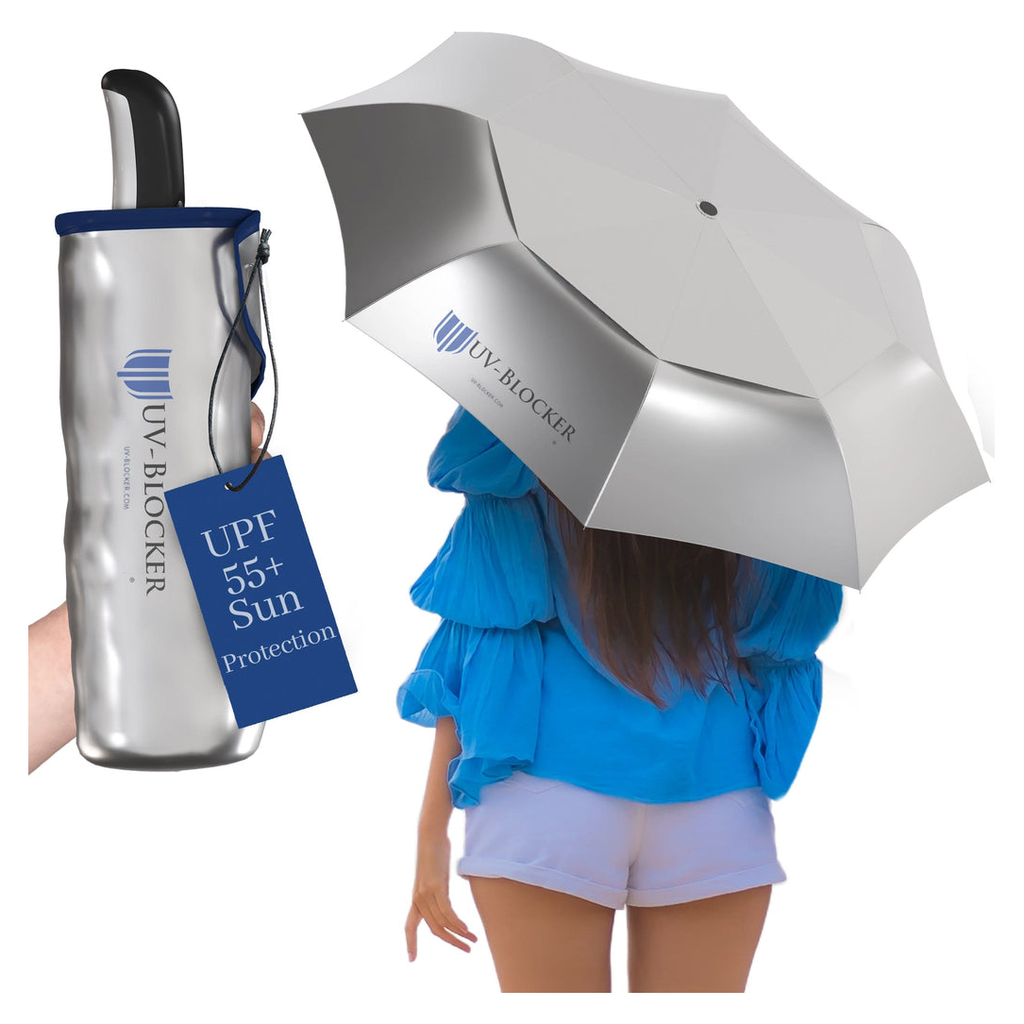
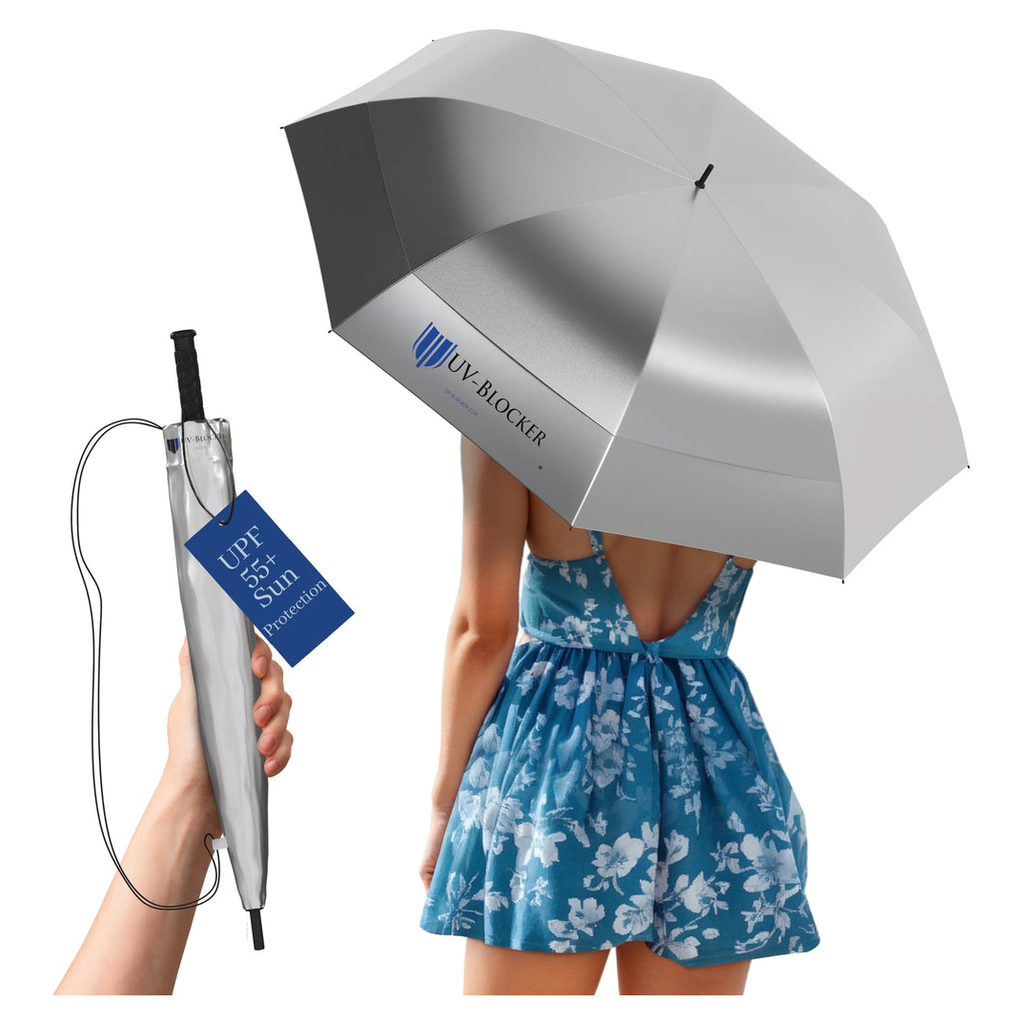
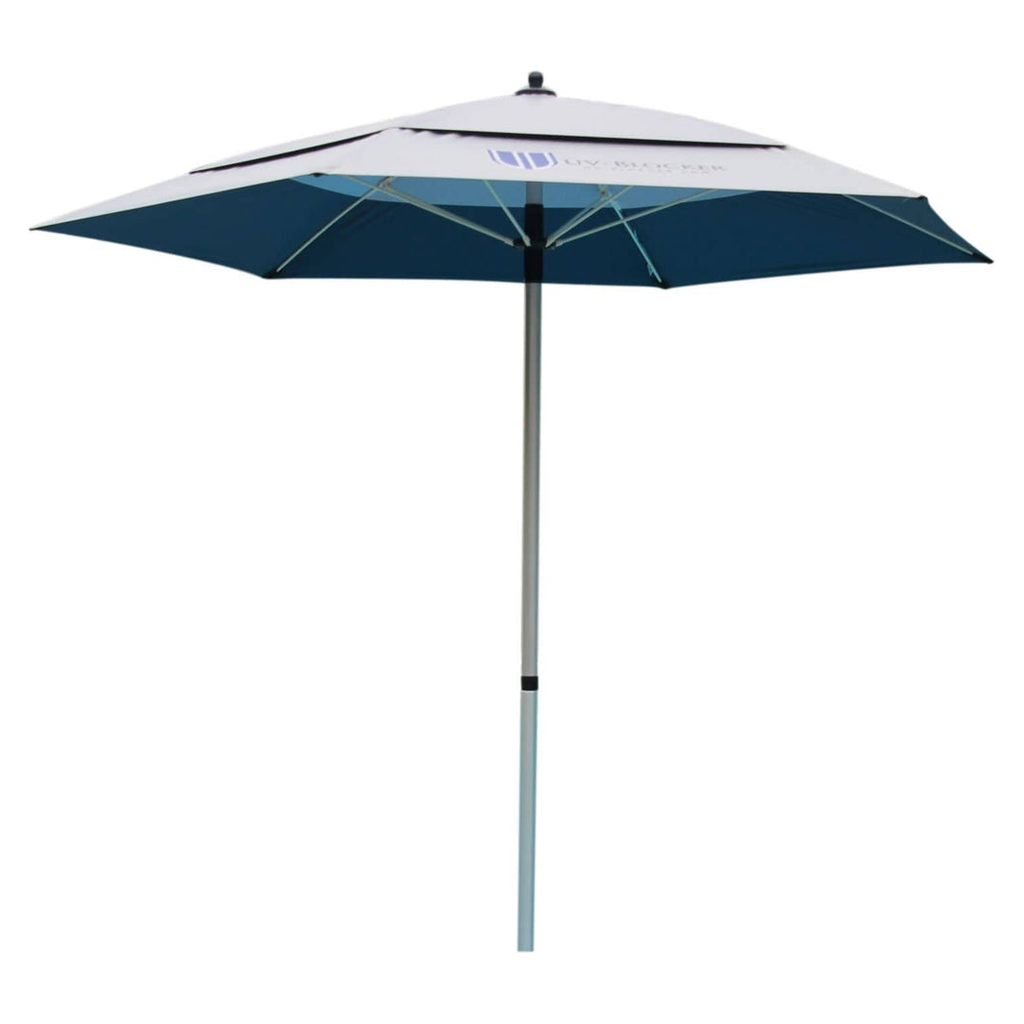
Physical shade closes the gap that sunscreen leaves. A UPF 50+ umbrella puts a barrier between skin and sky over exactly the region SCLE favours: the neck, shoulders and upper chest.
UV-Blocker's UV protection umbrellas use a patented Solarteck® silver reflective canopy rated UPF 50+ (verified), tested to AATCC TM183-2020 at 100% UV-B block and 99.97% UV-A block, and they read roughly 15°F cooler underneath. Given that UVA coverage was the variable separating the sunscreens in the photoprovocation study, a fabric that blocks 99.97% of UVA and never needs reapplying is a useful second layer.
For the full daily routine, including how to handle indoor and through-glass exposure, see the complete lupus sun protection guide.
Does SCLE Turn Into Systemic Lupus?
Usually not. Around half of patients meet the classification criteria for systemic lupus, but only about 10% to 15% go on to develop the systemic disease itself.
Those two numbers describe different things, and conflating them causes unnecessary alarm. Meeting classification criteria is a research and diagnostic convention that a photosensitive rash plus positive antibodies can satisfy on its own. Developing systemic lupus means organ involvement, and that is the smaller group.
Monitoring generally includes antinuclear antibody testing, a complete blood count, sedimentation rate, C-reactive protein, and liver and kidney function tests. First-line treatment is an antimalarial, usually hydroxychloroquine, supported by topical corticosteroids and topical calcineurin inhibitors. Hydroxychloroquine carries its own photosensitivity considerations, covered separately in this guide to hydroxychloroquine and sun sensitivity.
Frequently Asked Questions About Subacute Cutaneous Lupus Erythematosus
Short answers to the questions patients ask most often after a new diagnosis. None of this replaces advice from a treating dermatologist or rheumatologist.
Is SCLE contagious?
No. It is an autoimmune condition, not an infection, and it cannot be passed to another person through contact of any kind.
Does the SCLE rash leave permanent marks?
It does not scar. Healed areas frequently leave hypopigmentation or hyperpigmentation, which can persist for months and is more noticeable on deeper skin tones.
Can SCLE go away completely?
Drug-induced cases typically resolve once the triggering medication is stopped. Cases not linked to a drug are chronic and tend to cycle between quiet periods and flares.
How long does drug-induced SCLE take to clear?
The Swedish study confirmed that drug-induced cases are reversible on discontinuation, though published case reports describe resolution over weeks to several months rather than days. A prescriber should manage the change.
Do people with SCLE need sun protection on cloudy days?
Yes. Cloud cover reduces visible brightness far more than it reduces UVA, so the perception of a dull day is not a reliable guide to the actual exposure.
Is SCLE the same as the lupus butterfly rash?
No. The butterfly rash is the acute cutaneous form, sits across the cheeks and nose, and usually accompanies active systemic disease. SCLE affects the neck, chest and arms.
Living With Subacute Cutaneous Lupus Erythematosus
Managing this condition comes down to two separate audits rather than one instruction: the medication list, and the light exposure.
The first matters because a third or more of cases have a removable cause sitting in a pill organiser. The second is handled with shade and fabric as much as with sunscreen, since a protective layer worn on the body cannot be forgotten at the two-hour reapplication mark.
Neither audit is something to run alone. A dermatologist can confirm the subtype by biopsy, screen for systemic involvement, and work through the prescription list with the prescriber who issued it.