

Only 23% of farmers regularly use sunscreen. In one screening study, 34% were referred for suspicious skin lesions.
Farmers receive 2 to 3 times more UV radiation than indoor workers, yet most sun safety advice for agriculture still reads like a generic checklist. The real problem goes beyond long days in the field. Tractor cabs let UVA through side windows, glass greenhouses transmit much of the UVA spectrum, and reflective farm surfaces send UV back up from below.
TL;DR:
- Farmers get 2-3x more UV exposure than indoor workers, often during 8 to 12 hour shifts in peak season.
- Only 23% of farmers in one study always or frequently used sunscreen outdoors for 15 minutes or more.
- Tractor side windows do not block UVA the way windshields do, so cab time still creates skin damage.
- Glass greenhouses can transmit roughly 70% of UVA, which means indoor growing is not automatically UV safe.
- Reflective soil, concrete, metal, and water all bounce UV into places a brimmed hat won't cover.
- A farm sun protection system works best when it combines shade, UPF clothing, equipment modifications, and skin checks.
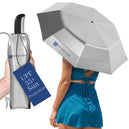
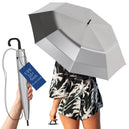
- Portable shade options such as the Large Folding UV Umbrella can fill the gap at break stations, rest stops, and market stalls.
Why Are Farmers at Higher Risk for Skin Cancer?
Farmers receive 2 to 3 times more UV radiation than indoor workers, and routine sunscreen use remains low enough to leave a clear prevention gap.
That exposure shows up in the numbers. In a Journal of Agromedicine study of 476 participants, including 194 farmers at Wisconsin Farm Technology Days in 2011, only 23% said they always or frequently used sunscreen when outdoors for 15 minutes or more. The same screening referred 34% for suspicious skin lesions.
Those figures don't prove every lesion was cancer. But they show how often problems were already present when farmers were finally screened.
The barriers are practical, not mysterious. Long sleeves feel hot. Sunscreen gets forgotten. Hats can be awkward around equipment, loader arms, and tight cab work. And during planting or harvest, a worker can't stop every two hours to reapply sunscreen.
These aren't minor inconveniences. They explain why agriculture needs sun protection for farmers that actually fits the workday.
What Farm-Specific UV Hazards Do Most Guides Miss?
Tractor cabs, greenhouse glass, and reflective surfaces create UV exposure that standard advice barely addresses.

Tractor Cab Exposure
Tractor cab physics surprises a lot of operators. Laminated windshields block most UVA, but side windows are usually tempered glass, which does not offer the same protection.
That's why one side of the body can take more damage over time. The left arm, face, and neck often get the worst of it, depending on the machine and direction of travel. The pattern is similar to the familiar "trucker face" problem. Ceramic tinting on side windows can block 99% or more of UVA while keeping visibility intact.
Greenhouse UV Penetration
Greenhouses deserve the same reality check. Standard glass greenhouses transmit about 65% to 75% of UVA, with one study reporting 74.3% in smooth ordinary glass. Inside a glass greenhouse, UV index levels can still climb into the 5 to 8 range on summer days.
Polycarbonate structures behave differently and block nearly all UV, which makes material choice a real safety decision. The greenhouse transmission research is clear on that point.
Reflective Farm Surfaces
Reflective ground cover also matters. The data below shows why a farmer can get hit from above and below at the same time.
| Farm Surface | UV Reflection Rate |
|---|---|
| Fresh snow (comparison) | 80-90% |
| Sandy dry soil | 10-18% |
| Concrete barn floors | 8-12% |
| Metal equipment/roofing | 10-30% |
| Irrigation ponds / standing water | 3-8% |
| Green grass (comparison) | 1-3% |
That matters in summer because the highest UV months — June through August — overlap with planting, cultivation, and harvest pressure. For more on this topic, see the sun protection for yard work guide.
How Does Pesticide Exposure Compound UV Risk for Farmers?
Pesticide contact may add a second path to skin cancer risk, so UV protection alone is only part of the answer.
The AGRICOH consortium studied 8 cohorts across France, the US, Norway, Australia, Korea, and Denmark, tracking nearly 2.8 million person-years and 23,188 cancers. It found elevated melanoma risk among agricultural workers. That's an association, not proof of direct causation, but it's difficult to ignore in a job that already brings daily sun exposure.
An additional American Journal of Industrial Medicine review identified dermal exposure to agrochemicals as an independent skin cancer risk factor in US Central States farmers. Chemical residue on skin isn't just a separate hazard. It may sit alongside UV and raise the overall burden.
Practical Steps to Reduce Chemical + UV Risk
- Shower before and after fieldwork when possible
- Keep dedicated field clothes separate from clean clothes
- Wash work garments apart from household laundry
- Apply sunscreen to exposed skin before handling chemicals, not after
For farmers who also use NSAIDs for chronic pain, there's another layer to consider. Ibuprofen sun sensitivity is worth reading because common pain medications can increase photosensitivity.
What Does an Effective Farm Sun Protection System Look Like?
The strongest farm protection plan layers shade, clothing, scheduling, and skin checks so no single weak point carries the whole load.

Shade Infrastructure
A working system starts with shade at the places workers actually stop. Portable canopies at break stations, shaded rest areas, and equipment-side shade all reduce reliance on perfect sunscreen use.
California's Cal/OSHA Heat Illness Prevention Standard has required shade access for outdoor workers when temperatures exceed 80°F since 2005, after 4 worker heat deaths. The Large Folding UV Umbrella is one portable option, with a 58-inch arc, UPF 50+ coverage, and enough room for two people at $69.95.
UPF Clothing That Works in Heat
Lightweight UPF fabrics solve the heat problem that keeps many farmers away from long sleeves. Modern UPF shirts breathe better than heavy cotton work layers and can cover skin without turning the job into a sweat test.
Sunscreen Logistics
Sunscreen still has a place, but it can't be the only plan. Reapplication every 2 hours sounds simple on paper and often falls apart in the middle of harvest. Physical shade cuts the number of times a worker has to think about reapplication.
Scheduling Around Peak UV
When possible, move equipment maintenance, planning, and indoor tasks into the 10am to 4pm UV peak. This isn't always realistic during harvest, but even partial task rotation helps reduce cumulative exposure.
Equipment-Mounted Shade
A Chair Umbrella Holder can mount shade on stationary equipment during rest stops, checks, or paperwork. For some crews, it's the difference between a shaded pause and no pause at all.
How Can Farmers Add UV Protection to Tractors and Equipment?
Equipment changes can cut UV exposure fast, especially for operators who spend long hours in one seat.
Enclosed cab tractors benefit most from ceramic window tinting on side and rear windows. Ceramic tint blocks 99% or more of UVA without making the cab dark or interfering with electronics. Windshields already do more because laminated glass blocks much of UVA, but side windows remain the weak point.
Open-cab tractors need a different approach. Aftermarket bimini-style canopy kits, ROPS-mounted shade canopies, and fiberglass canopy retrofits all reduce direct radiation. Many tractor supply companies carry these systems, making them easier to source than a custom fabrication job.
Stationary equipment and rest stops can use portable shade instead of waiting for permanent construction. A clamp-mounted umbrella holder gives workers shade during equipment checks or short breaks. The Chair Umbrella Holder fits this role.
Greenhouse workers have options too. UV-protective film can be added to glass panels, and growers can check actual UV levels with a UV index meter instead of assuming indoor means protected.
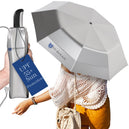
Farmers market vendors face a smaller but familiar problem: tent shade often misses the side angle. A Compact UV Umbrella can cover that gap with portable UPF 50+ shade when market canopies fall short.
What Should Farmers Know About Skin Monitoring and Early Detection?
Monthly self-checks, annual skin exams, and attention to changing moles catch problems earlier than waiting for pain or bleeding.
The ABCDE Mole Check
The basic screen takes only a few minutes each month:
- A — Asymmetry (one half doesn't match the other)
- B — Border irregularity (edges are ragged or blurred)
- C — Color variation (multiple shades of brown, black, or red)
- D — Diameter greater than 6 millimeters (about the size of a pencil eraser)
- E — Evolution or change in size, shape, or color
Annual Dermatologist Visits
Farmers with decades of sun exposure should schedule annual skin exams, especially after age 40. Skin cancer often carries a 10 to 20 year latency, which means the consequences of fieldwork in the 30s and 40s may not show up until much later.
Photo Documentation
A few quick photos of freckles, moles, and sun-exposed areas create a baseline for year-over-year comparison. It's a simple step that makes changes easier to spot.
Overcast days aren't a free pass either. Can you get sunburn on a cloudy day? explains why farmers should maintain protection when the sky looks dull. And if damage happens, how long does a sunburn last sets expectations for recovery.
Frequently Asked Questions About Sun Protection for Farmers
These are the most common sun protection questions from farmers and agricultural workers, answered with farm-specific context.
Can you get sunburned inside a tractor cab?
Yes. Side windows in tractor cabs are tempered glass that transmits most UVA radiation, so the face and left arm can still accumulate damage inside an enclosed cab.
Windshields are different because laminated glass blocks most UVA. Side and rear windows usually don't. Ceramic window tinting addresses that gap and costs under $200 per window.
Do greenhouses protect from UV?
Not always. Glass greenhouses transmit roughly 70% of UVA, so workers inside them are not fully protected from UV damage.
Polycarbonate structures block nearly all UV. If a greenhouse uses glass, UPF clothing and sunscreen are still necessary.
Does sunscreen interfere with pesticide gloves?
Standard sunscreens do not degrade nitrile or chemical-resistant gloves. Apply sunscreen to exposed skin before putting on gloves, and wash hands before reapplication.
The concern is more relevant with some latex gloves and certain spray formulas. Lotion-based SPF 30+ sunscreen is the safer default for farm routines.
What is the cheapest way to add shade to a field break area?
A portable UPF 50+ umbrella with a stake or clamp mount is the fastest low-cost option for one to two workers at a break station.
For larger crews, a 10x10 pop-up canopy runs $100-200 but needs weighting in wind. The Large Folding UV Umbrella offers 58 inches of UPF 50+ coverage at $69.95, sitting in the practical middle ground for field use.
How much UV exposure do farmers get on cloudy days?
Clouds block only 20% to 40% of UV radiation, so farmers can still receive 60% to 80% of the full UV dose during overcast fieldwork.
Thin cloud cover can even scatter UV and make exposure feel milder than it is. The schedule may change, but the need for sun protection for farmers doesn't.
Conclusion
The farm sun problem is bigger than hats and sunscreen. Tractor side windows still let UVA through. Glass greenhouses are not UV free. Metal, soil, and water bounce sunlight back into working skin. Chemical contact can add another layer of risk.
The practical response: add shade where workers actually stop, use UPF clothing that holds up in heat, modify cabs and equipment, and check skin once a month.
Ron Walker, a melanoma survivor and founder of UV-Blocker, built the brand around the reality of outdoor UV exposure. That history keeps the focus on ordinary workdays, not marketing language.
Start with three actions this week:
- Do a monthly ABCDE mole check
- Add ceramic tinting to tractor cab side windows
- Set up a shaded break station with a portable umbrella or canopy
Then choose the shade solution that fits the farm, whether that's the Large Folding UV Umbrella, the Chair Umbrella Holder, or the Compact UV Umbrella.
For broader occupational context, see Sun Protection for Outdoor Workers.
Frequently Asked Questions: Sun Protection for Agricultural Workers
How much UV exposure do farmers receive per day?
Studies show farmworkers receive 3–5× the UV dose of indoor workers on a typical day. Cumulative annual UV exposure rivals that of professional surfers, significantly elevating lifetime risk of squamous cell carcinoma and melanoma.
What clothing works best in field conditions?
Lightweight, light-colored, loose-fitting UPF 50+ shirts and pants provide the best combination of UV protection and breathability. Look for moisture-wicking fabrics with UPF ratings certified to AATCC TM183 — the same standard used for professional athletic UV gear.
Can a UV-blocking umbrella be used during fieldwork?
Handheld UV umbrellas are ideal for stationary tasks — row inspection, irrigation management, harvest supervision. They can reduce ambient temperature at skin level by up to 15°F, significantly reducing heat stress alongside UV exposure.
How do farmers manage UV protection alongside pesticide application?
Sunscreen should be applied before any pesticide exposure to create a skin barrier. Use mineral-based SPF 50+ under chemical-resistant gloves and reapply after washing or removing PPE.