

TLDR
Outdoor workers need trade-specific sun protection because standard sunscreen advice is impractical for those with dirty hands, heavy gear, and full-day UV exposure.
- Outdoor workers face a 60% higher risk of developing non-melanoma skin cancer compared to indoor workers.
- Standard sun safety advice (reapplying sunscreen every two hours) is often impossible for workers with dirty or gloved hands.
- Cotton work shirts lose significant protection when wet, dropping from UPF 5-7 to UPF 3.
- Effective protection requires trade-specific strategies, such as hard-hat compatible neck shades for construction or window film for drivers.
- Portable shade tools, like clamp-on UV umbrellas, provide a critical layer of protection that sunscreen and clothing cannot match.
- Investing in shade equipment costs a fraction of the expense associated with a single heat-related workplace injury.
Introduction
This guide covers trade-specific sun protection strategies and portable shade tools that standard workplace safety advice overlooks entirely.
Nearly one in three deaths from non-melanoma skin cancer is caused by working under the sun, according to joint estimates from the World Health Organization (WHO) and the International Labour Organization (ILO). Between 2000 and 2019, these occupational deaths nearly doubled, increasing by 88%.
The standard workplace sun safety advice, reapply sunscreen every two hours and wear a hat, was written for office workers who spend lunch outside. It was not written for professionals who spend 8 to 10 hours in direct UV radiation. Try reapplying sunscreen when hands are caked in concrete mix, roofing tar, or engine grease. It is not just difficult. It is often impossible without stopping work entirely to wash up.
Effective sun protection for outdoor workers requires more than generic tips. It demands trade-specific strategies and the integration of portable shade tools that most safety guides overlook entirely. This guide examines the unique constraints of different trades and introduces UV umbrellas as a necessary category of personal protective equipment.
Why Does Standard Sun Protection Advice Fail Outdoor Workers?
Standard sun protection advice fails outdoor workers because sunscreen requires reapplication every two hours, which is impractical with dirty or gloved hands during physical labor.
Conventional recommendations ignore the reality of a job site. Sunscreen formulations degrade after two hours of exposure, and this timeframe shortens significantly with heavy sweating. For a worker actively pouring concrete or framing a house, stopping every 90 minutes to apply lotion is logistically unfeasible. Hands covered in dust, chemicals, or grease cannot safely apply sunscreen to the face or neck without risking eye irritation or ingestion of hazardous materials.
Clothing often provides a false sense of security. A standard white cotton T-shirt offers an Ultraviolet Protection Factor (UPF) of only 5 to 7 when dry. When that same shirt becomes wet with sweat, its protection rating drops to UPF 3, meaning approximately 33% of UV radiation penetrates the fabric to reach the skin.
Protective gear also creates conflicts with standard sun safety measures. Hard hats prevent the use of wide-brimmed hats, leaving the ears and neck exposed. Safety goggles interfere with wraparound sunglasses, and heavy work gloves make accessing and applying sunscreen a cumbersome task. These contradictions leave the most common sites for occupational skin cancer, the forearms, back of hands, and neck, vulnerable to daily damage.
What Sun Protection Do Different Outdoor Trades Need?
Each outdoor trade has unique constraints requiring tailored sun protection for outdoor workers, from hard-hat-compatible solutions for construction to breathable, chemical-resistant coverage for landscapers.
A roofer's needs differ vastly from a delivery driver's. Addressing these specific requirements is the only way to ensure compliance and safety.
Construction Workers
Construction sites often mandate hard hats, ruling out standard sun hats. Workers in this trade benefit from neck flaps or drapes that attach directly to the hard hat's suspension system. Cooling vests worn under high-visibility safety vests help manage core temperature. For exposed skin, mineral sunscreens containing zinc oxide are superior to chemical variants as they adhere better to sweaty skin and do not sting the eyes if they run. Whenever possible, scheduling high-exposure tasks like concrete pours or roofing for early morning hours helps avoid the peak UV index window between 10:00 AM and 4:00 PM.
Landscapers and Groundskeepers
Landscapers typically do not require hard hats, allowing for the use of wide-brim hats with neck capes for maximum coverage. Because this work involves constant movement and potential exposure to fertilizers and pesticides, clothing choice is critical. Long-sleeved shirts with a UPF 50+ rating that wick moisture are essential. Workers should also use chemical-resistant sunscreen, as some lawn chemicals can degrade standard sunscreen compounds. For stationary tasks such as weeding, planting, or mulching, portable shade becomes a viable and necessary tool.
Delivery Drivers
Drivers face a unique asymmetry in exposure, with the left arm receiving significantly more UV radiation through the driver's side window. UV-protective arm sleeves can mitigate this risk. While factory auto glass blocks most UV-B rays, it often allows UV-A rays to penetrate. Installing clear UV window film can block nearly 100% of these rays. For the "last mile" walking deliveries, a compact UV umbrella provides immediate shade, while tinted safety glasses protect the eyes during transitions from bright outdoors to dimmer indoor environments.
Utilities and Rooftop Workers
Utility workers often operate in exposed, elevated positions. High-visibility clothing with reflective materials can serve a dual purpose by reflecting some UV radiation. Clamp-on shade devices are particularly effective for stationary work in buckets or at transformer boxes. Cooling neck wraps worn under hard hats assist in thermoregulation.
Agriculture
Agricultural workers have long relied on wide-brim straw hats, and this tradition remains effective when combined with modern neck drapes. For operators of ride-on equipment like tractors or harvesters, applying UV film to cab windows is a passive but powerful protective measure. Portable shade that can be clamped to equipment or staked into the ground offers relief during harvest or picking tasks. Given the combination of intense sun and physical exertion, aggressive hydration strategies including electrolytes are required to prevent heat illness.
Event and Security Staff
Staff stationed at parking lots, gates, or outdoor stages often have limited mobility. A golf-sized UV umbrella can provide a personal shade canopy for these fixed positions. For team rest areas, pop-up shade canopies are standard. Replacing standard cotton event T-shirts with UPF-rated polo shirts ensures that staff retain protection even when sweating.
How Does Shade Compare to Sunscreen and UPF Clothing?
Shade blocks up to 99% of UV radiation and requires zero reapplication, making it the most effective and lowest-maintenance sun protection for outdoor workers.

While sunscreen and clothing are vital layers of defense, engineered shade offers superior consistency. High-quality shade fabrics block 95% to 99% of UV radiation. This distinguishes them from natural shade, such as tree canopies, which may only block 50% to 90% depending on density.
UPF 50+ clothing blocks 98% of UV rays but can contribute to heat stress when layered with other safety equipment. SPF 30 sunscreen blocks approximately 97% of UV-B rays when first applied, but its efficacy can drop by 50% or more after two hours of sweating.
From a cost perspective, shade presents a compelling case. Disposable sunscreen can cost an employer $150 to $300 per worker annually, whereas high-quality shade equipment is often a one-time purchase.
| Protection Method | UV Block (Fresh) | UV Block (After 4 Hours) | Reapplication Needed | Heat Impact | Annual Cost Per Worker |
|---|---|---|---|---|---|
| Engineered shade (UV umbrella) | 99% | 99% | None | Reduces temp 10-15°F | $65-90 (one-time) |
| UPF 50+ clothing | 98% | 98% | None | Increases heat retention | $50-100/year |
| SPF 30 sunscreen | 97% | ~50-60% | Every 2 hours | Neutral | $150-300/year |
| Standard cotton shirt | 5-7 UPF (dry) | 3 UPF (wet) | N/A | Moderate heat | $15-30/year |
| Baseball cap only | Face only | Face only | N/A | Minimal | $10-20/year |
For a deeper understanding of these metrics, review the differences between SPF vs UPF and the science behind how UV umbrellas work.
Can UV Umbrellas Work as Portable Shade on a Job Site?
UV umbrellas provide portable, engineered shade that blocks 99% of UV rays and reduces temperatures by up to 15°F, making them practical workplace shade tools for any trade.
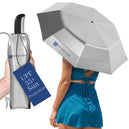
Portable shade is often the missing link in industrial sun protection. While permanent structures are immobile and pop-up tents are cumbersome, UV umbrellas offer a flexible solution that moves with the worker. There are three primary configurations suitable for the job site:
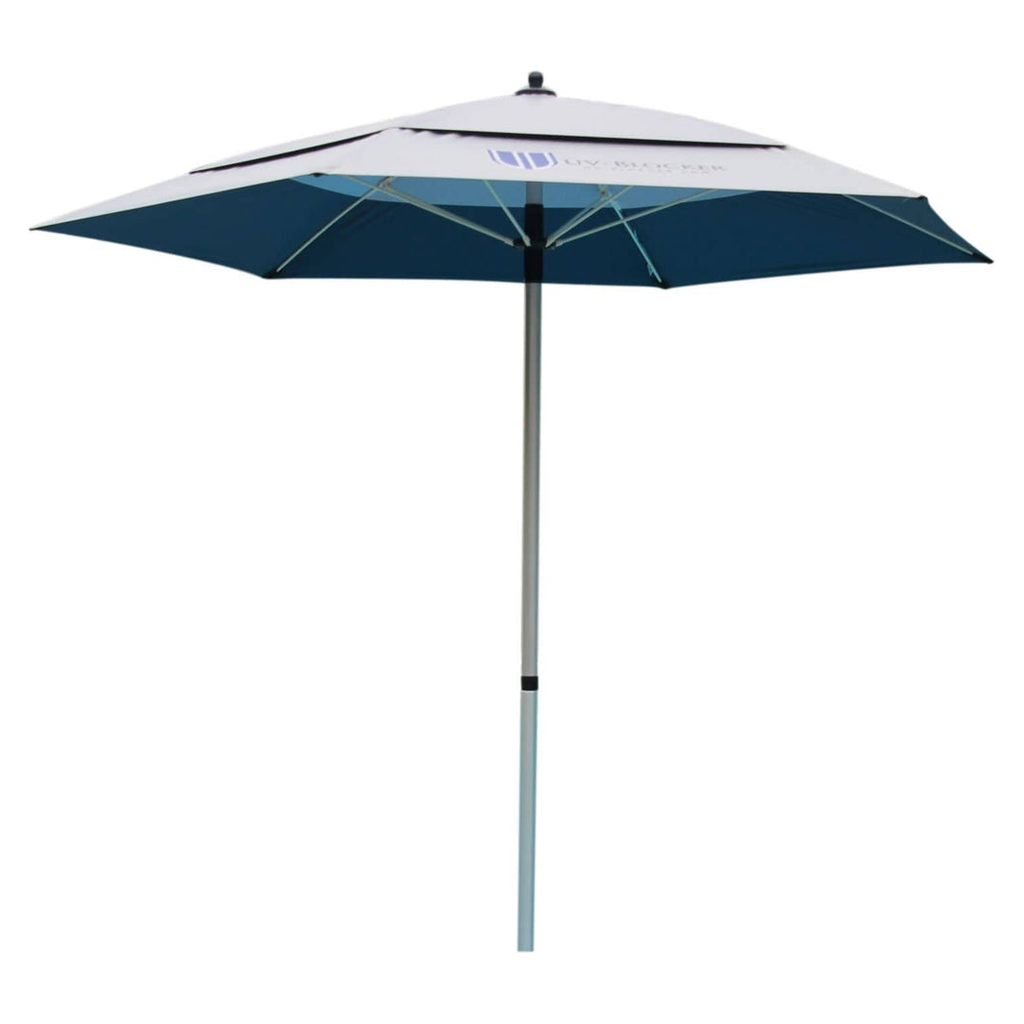
- Clamp-on Shade: A sports umbrella holder allows a standard or golf-sized umbrella to be mounted to equipment, scaffolding, fences, or chairs. This creates hands-free protection for stationary tasks like welding prep, blueprint reading, or equipment operation.
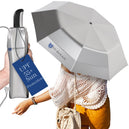
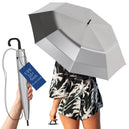
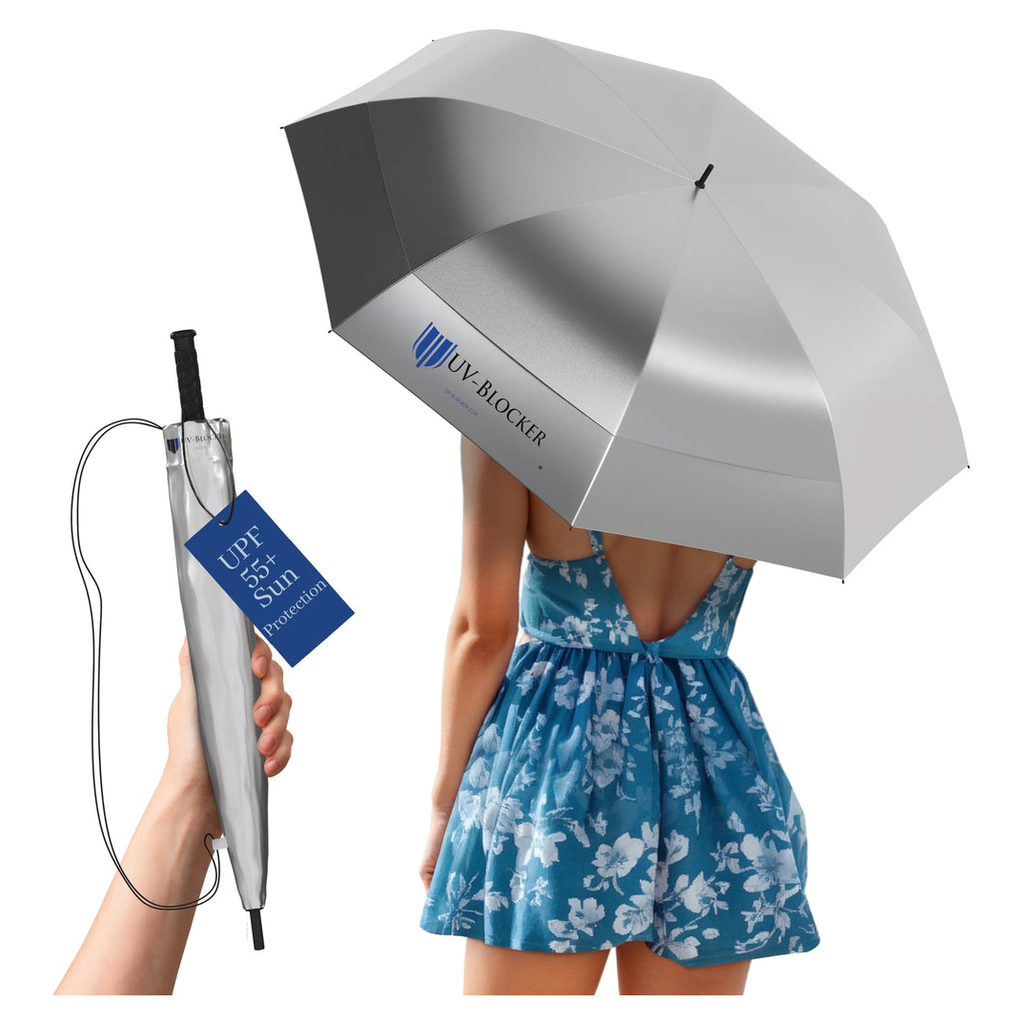
- Break Area Shade: A UV protection golf umbrella with a 62-inch or 68-inch arc is large enough to cover two to three workers during a rest break. It is significantly cheaper than a large canopy and can be easily stowed in a truck bed or tool box.
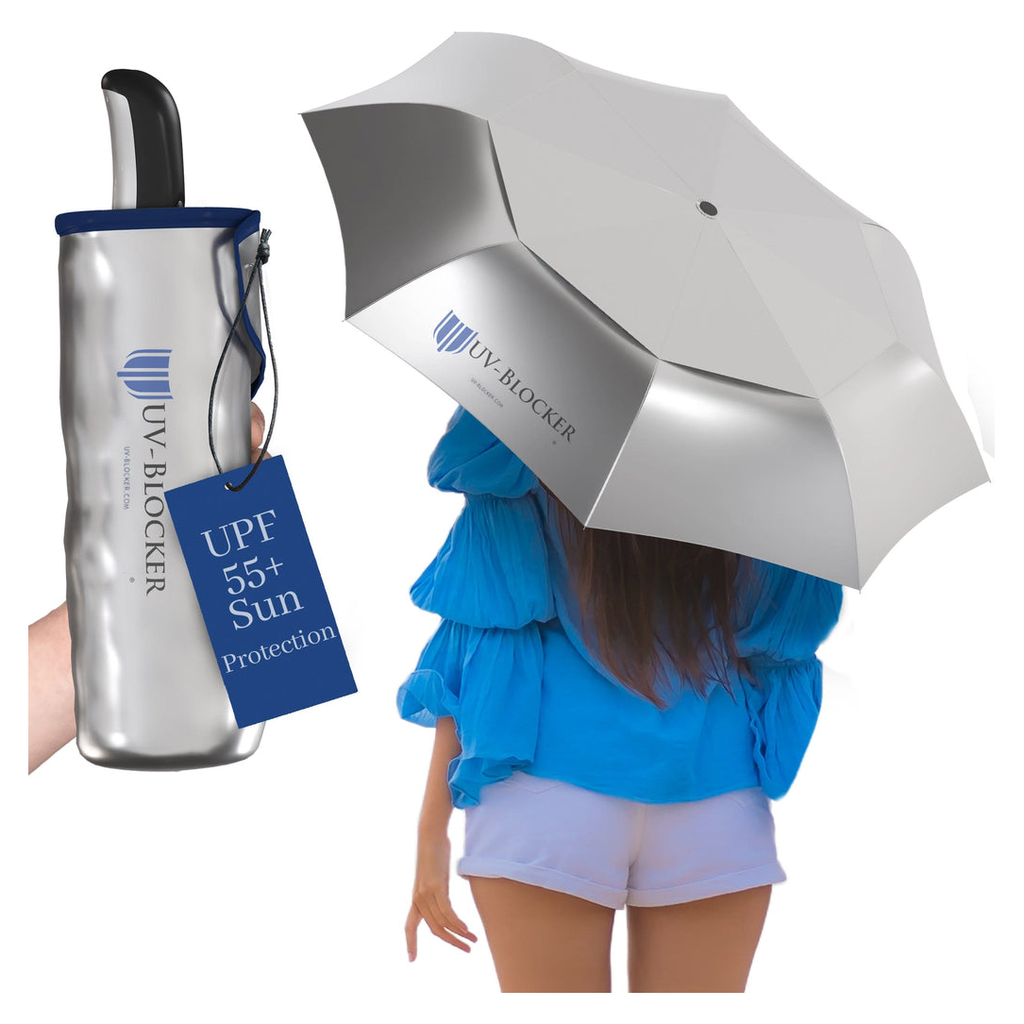
- Personal Portable Shade: For workers who must walk the site, such as foremen or inspectors, a large folding UV umbrella offers substantial coverage but collapses to 21 inches for easy transport.
The effectiveness of these tools lies in the materials. The SolarTek reflective coating blocks 99% of UV radiation and reflects heat, keeping the area underneath roughly 15°F cooler than the ambient temperature. This directly addresses the risk of heat illness, a major concern alongside skin damage. The vented mesh design prevents the umbrella from inverting during wind gusts, a common occurrence on exposed rooftops or open construction sites. Learn more about what color umbrella is best for sun protection and why reflective silver outperforms dark fabrics.
How Should Outdoor Workers Use the UV Index?
Outdoor workers should check the UV index daily using a weather app. At UV 6 or higher, shade protection becomes essential in addition to sunscreen and clothing.

Many outdoor workers are unaware of the daily UV index, which can vary dramatically based on location, season, and cloud cover. Understanding this scale allows workers and supervisors to adjust their protection protocols accordingly.
- UV Index 1-2 (Low): Standard clothing is generally sufficient.
- UV Index 3-5 (Moderate): Sunscreen and a hat are required.
- UV Index 6-7 (High): Protection must be increased. Add UPF clothing or portable shade.
- UV Index 8-10 (Very High): Shade becomes essential. Schedule breaks during the peak intensity hours of 10:00 AM to 2:00 PM.
- UV Index 11+ (Extreme): Exposure should be minimized. Shade is mandatory for all stationary work.
Workers should consult resources on understanding the UV index to better interpret these risk levels.
What Does Sun Protection Cost Employers Compared to Heat Illness?
Heat-related workplace incidents generate $1 to $5 in indirect costs for every $1 in direct costs, making sun protection for outdoor workers a fraction of a single incident's expense.
The financial argument for sun protection is as strong as the medical one. Between 1992 and 2022, the U.S. averaged 34 workplace heat-related deaths per year. Annually, nearly 28,000 workplace injuries are linked to hot weather.
The costs associated with these incidents are significant. Direct workers' compensation costs for all workplace injuries exceed $1 billion per week, according to the Liberty Mutual 2025 Workplace Safety Index. Beyond the direct medical and indemnity costs, indirect costs such as lost productivity, investigation time, and retraining multiply the financial impact.
Regulatory pressure is also mounting. OSHA's proposed heat illness prevention rule signals a shift toward stricter enforcement. As of 2024, a serious violation can result in a penalty of over $16,000. In comparison, outfitting a crew with UV umbrellas costs approximately $65 to $90 per unit. Providing a 10-person crew with complete shade gear costs less than the deductible on many workers' compensation claims, and certainly less than the potential fines for non-compliance.
Frequently Asked Questions About Sun Protection for Outdoor Workers
These frequently asked questions address the most common concerns about sunscreen effectiveness, UPF ratings, job-site shade, and OSHA requirements for outdoor workers.
Is sunscreen enough for an 8-hour outdoor shift?
No. Sunscreen loses effectiveness after two hours and requires reapplication, which is impractical during physical labor with dirty or gloved hands. Layering sunscreen with UPF clothing and portable shade provides reliable all-day protection. Mineral sunscreens containing zinc oxide tend to last longer than chemical formulations under conditions of heavy sweating.
What UPF rating should work clothes have for outdoor jobs?
Outdoor workers should wear clothing rated UPF 50+ for maximum protection, blocking 98% of UV radiation regardless of sweat or stretching. Standard cotton work shirts often rate only UPF 5-7. Look for polyester or nylon blends with specific UPF treatments that maintain their rating even when wet.
Can a UV umbrella be used on a construction site?
Yes. Clamp-mounted UV umbrellas provide hands-free shade for stationary tasks like equipment operation, welding prep areas, and designated break zones. The key is using a universal holder that mounts the umbrella to scaffolding, equipment, or chairs, keeping both hands free for work. Golf-sized UV umbrellas (62-68 inches) are recommended as they cover the largest area.
Does OSHA require employers to provide sun protection?
OSHA does not have a specific sun protection standard yet, but the General Duty Clause requires employers to address recognized heat hazards in the workplace. OSHA published a proposed heat illness prevention rule in August 2024 that would mandate shade access. Proactive employers are already implementing shade programs ahead of final enforcement.
How much does shade reduce heat illness risk on job sites?
Engineered shade reduces ambient temperature 10-15°F underneath and blocks 95-99% of UV radiation, significantly reducing both heat illness and skin cancer risk. The SolarTek reflective coating on UV-Blocker umbrellas is specifically designed to bounce heat and UV rays away, unlike standard dark-colored shade fabrics which absorb and re-radiate heat.
Conclusion
Standard sun protection fails outdoor workers because generic advice ignores real-world job-site constraints that vary by trade.
- Shade is superior. It is the most effective and lowest-maintenance protection method available.
- Portable shade fills the gap. UV umbrellas provide a solution where permanent structures are impossible and sunscreen is impractical.
- Cost-effective safety. For employers, prevention equipment costs a fraction of the expense of a single heat-related incident.
Check the UV index before every shift. If the index is 6 or higher, add shade to the protection plan. Explore the full UV protection umbrella collection to find the right portable shade solution for your crew.