

TL;DR — SPF vs UPF Quick Facts
- SPF goes on skin. UPF is about fabric. Two rating systems doing two different jobs
- SPF only tracks UVB protection. Your sunscreen might not stop UVA at all unless it says "broad spectrum"
- UPF covers both UVA and UVB — that matters more than most people realize
- SPF 50 sunscreen and UPF 50 fabric aren't equal protection. The numbers fool people constantly
- Fabric keeps working all day. Sunscreen stops protecting after about two hours
- Smart approach: wear UPF gear as your base layer, slather sunscreen on whatever skin is still showing
You're religious about your SPF 50 sunscreen. You also bought that UPF 50 shirt. Same number, same protection, right?
Actually, no. And getting this wrong could mean you're catching more UV than you bargained for.
SPF and UPF sound similar but track completely different things. One's about sunscreen and how long until you burn. The other's about how much UV passes through fabric. People mix them up constantly — the marketing makes them seem interchangeable.
What SPF actually tells you (and what it doesn't)
SPF means Sun Protection Factor. It grades your sunscreen's ability to keep UVB rays from burning you.
That number on the bottle is a multiplier. SPF 30 means you can theoretically stay in the sun 30× longer before turning pink. If you'd normally burn in ten minutes, SPF 30 stretches that to around 300 minutes. In theory.
But here's what gets lost: SPF only measures UVB rays — the ones that make you red. UVA goes deeper into your skin. Those rays cause wrinkles, age spots, and also bump cancer risk. Unless your bottle specifically says "broad spectrum," you might be blocking the burn while letting the aging rays waltz right through.
The way they test SPF: they put sunscreen on real people's backs, hit them with UV, and time how long until redness shows. Real world testing, but variable depending on skin type, application thickness, and humidity.
The practical catch with sunscreen
- Reapplication required: The FDA says every two hours minimum. Swimming or sweating? Start the clock over
- Thickness matters: Research shows most people use about half what testers used. A thin layer of SPF 50 might deliver SPF 15 protection. Or less
- It degrades: Left in a hot car or sitting in your beach bag for two summers, the active ingredients break down and won't perform as labeled
- Missed spots: Behind your ears. The stripe down your back. Tops of your feet. If sunscreen isn't there, it's not protecting there
UPF: the fabric protection rating system explained
UPF stands for Ultraviolet Protection Factor. It tells you what percentage of UV radiation fabric blocks before reaching your skin.
The major difference from SPF: UPF tracks both UVA and UVB. According to researchers at MD Anderson Cancer Center, UPF-rated fabrics handle the full UV spectrum. Most sunscreens don't unless labeled broad spectrum.
The UPF number represents what fraction of rays gets through. UPF 50 means only 1/50th penetrates — blocking 98%. UPF 30 stops about 97%. UPF 15 catches roughly 93%.
Testing happens in labs using spectrophotometers. No human subjects, no variation from person to person. Just measurement of how much light passes through material. Far more consistent than SPF testing.
Why UPF gear wins in key areas
- Put it on once, done: Eight-hour hike? Eight hours of protection. No timer, no reapplication
- Uniform coverage: Every inch gets identical protection. No thin patches where you rushed, no missed spots
- Doesn't degrade in sunlight: Good UPF fabric holds its rating through dozens of washes
- Getting wet doesn't wash it off: Fabric stretches when wet and coverage can shift, but blocking ability stays intact
SPF vs UPF: direct comparison table
| What We're Comparing | SPF (Your Sunscreen) | UPF (Your Shirt) |
|---|---|---|
| Actually measures | Minutes until sunburn | How much UV passes through |
| Which rays | Just UVB (unless "broad spectrum") | Both UVA and UVB |
| How they test it | Volunteers getting UV exposure | Lab equipment analyzing fabric |
| Need to reapply? | Every 2 hours | Never |
| Application consistency | Depends on how carefully you applied | Same across the whole garment |

The important SPF vs UPF takeaway: the "50" on sunscreen and the "50" on clothing give different kinds of protection. Not the same. Not equivalent. Different.
Your SPF 50 handles UVB and maybe some UVA if it's broad spectrum. But you're reapplying and depending on getting the application right. Your UPF 50 shirt blocks 98% of everything — UVA and UVB — all day without effort.
How to layer SPF and UPF for real sun protection
This isn't about picking sides. It's about building redundancy into your defense.
Step 1: Cover with UPF. Put UPF-rated gear over as much skin as possible. Long sleeves when you can, hats with actual brims, UV umbrellas when you're stationary. These work without babysitting.
Step 2: Fill gaps with SPF. Everything your clothes and shade don't cover — face, neck, hands, whatever's exposed — gets broad-spectrum sunscreen.
When you layer this way:
- Your UPF gear handles continuous protection without you thinking about it
- Sunscreen catches what fabric can't reach
- If you forgot to reapply (we all do), physical barriers are still working

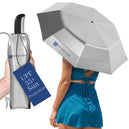
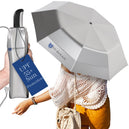
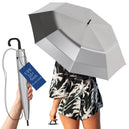
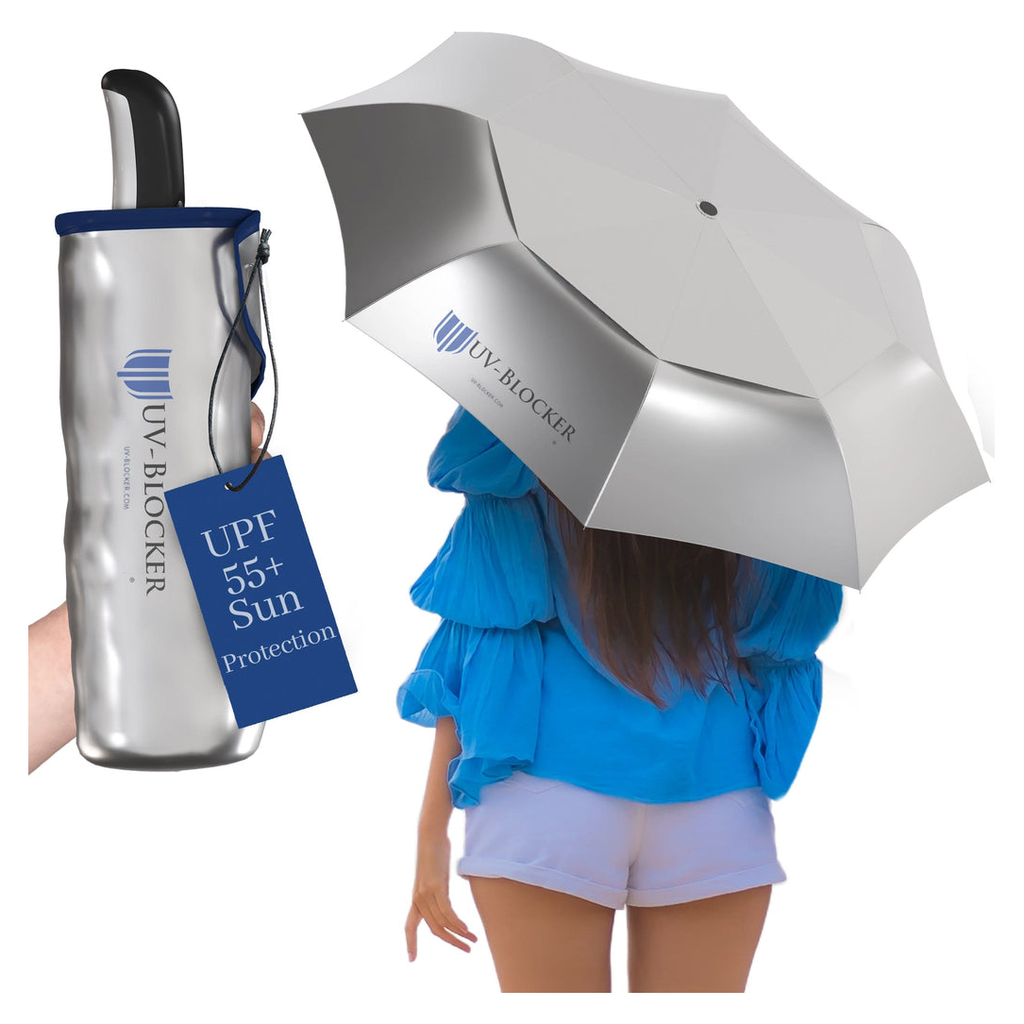
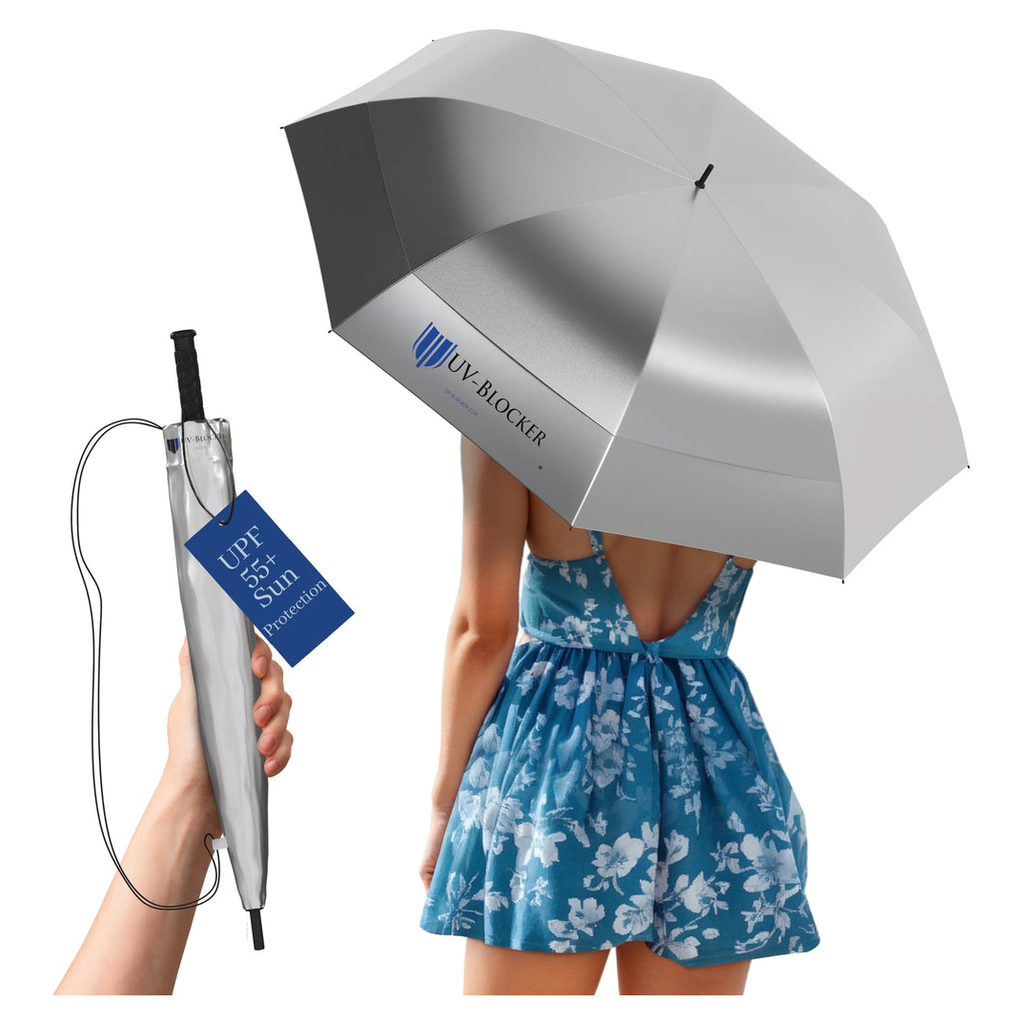
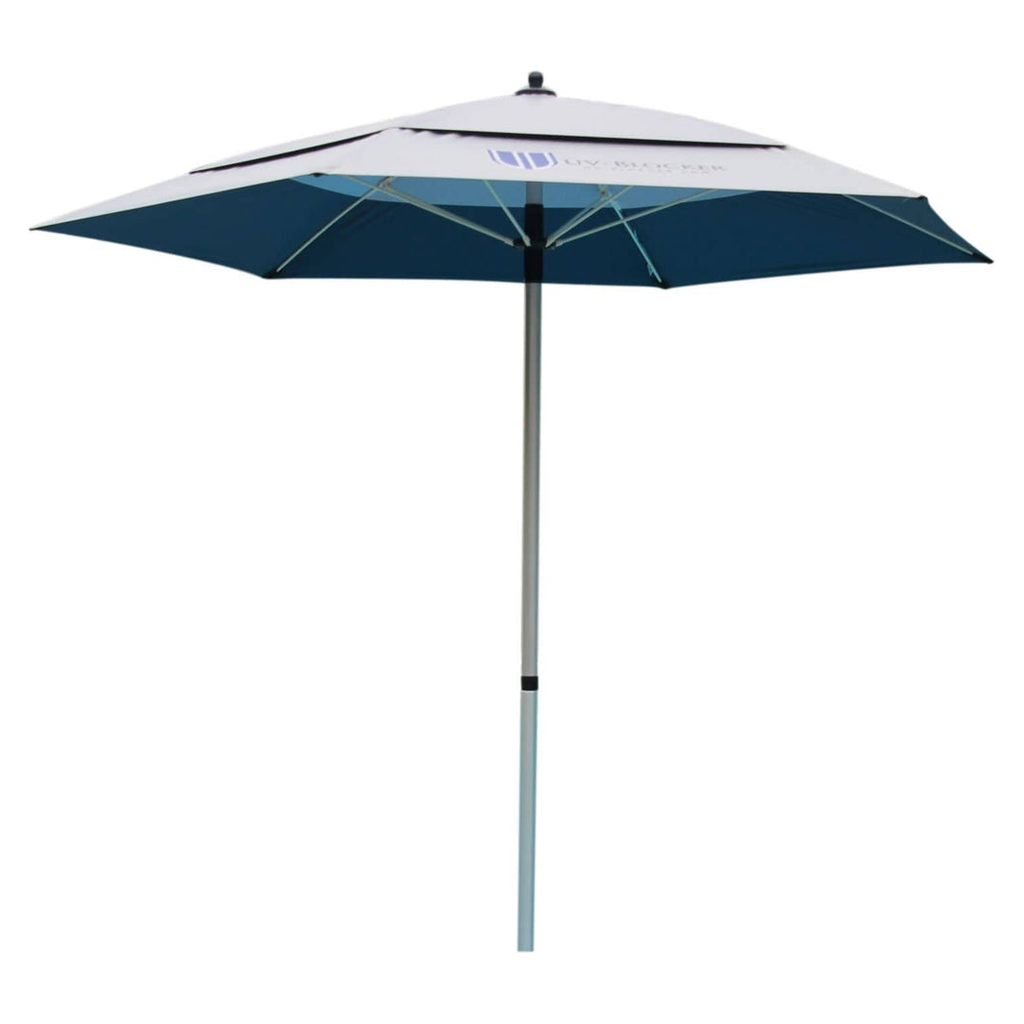
A UV umbrella with UPF 50+ keeps your head, face, and upper body in shade constantly. UV-Blocker umbrellas block 99% of rays and create a moving zone of shade that follows you. Better than a hat because the coverage zone is bigger — and you're blocking UV bouncing up off pavement, sand, and water too.
Common SPF vs UPF misconceptions
"Double the SPF number means double the protection"
Nope. SPF 50 catches 98% of UVB. SPF 100 catches 99%. That's one percentage point, not twice as good. Returns diminish fast past SPF 30.
"Higher number is always better"
Only when comparing within the same system. SPF 50 sunscreen vs. UPF 50 fabric is comparing different measurement systems. They're not ranking the same thing.
"My UPF clothing handles everything"
Your shirt protects your torso. What about your face? Hands? Ankles? UPF covers what it covers. The rest needs sunscreen.
"Dark clothes block more UV"
Darker colors block more than lighter ones, yes. But that old black t-shirt? Still likely poor for UV. Researchers at the Skin Cancer Foundation put the average white cotton tee at UPF 5–7. Get it wet and you're down to UPF 3. Basically a window. Actual UV protection requires tested, rated fabric.
"Cloudy days are safe"
Up to 80% of UV punches through clouds. UVA especially stays consistent whether you see the sun or not. If there's daylight, there's UV.
SPF vs UPF: what works best by scenario
Beach days
Reflection off sand and water plus hours of exposure means maximum coverage. Use a UV-Blocker Large Beach Umbrella (7.5 feet of UPF 50+ shade) overhead, plus broad-spectrum SPF 30+ on exposed skin. Reapply sunscreen every two hours and after swimming.
Golf course
Four to five hours in the open with nowhere to hide from the sun. Mount a UV-Blocker 68" Golf Umbrella on your cart for continuous shade. Apply sunscreen on face, ears, neck, and hands.
Walking around town
Sneaky exposure from concrete and glass bouncing UV at angles you don't expect. Carry a UV-Blocker Compact Umbrella — under a pound, fits any bag — plus sunscreen on your face.
Medical sun sensitivity (lupus, post-melanoma)
When UV avoidance is medically necessary, single-system protection isn't enough. Layer maximum UPF coverage everywhere possible plus SPF 50+ broad-spectrum on exposed skin. Physical barriers don't fade, wash off, or need reapplication. The Melanoma International Foundation approved UV-Blocker umbrellas for this reason.
Frequently asked questions
What does SPF stand for?
Sun Protection Factor. It measures how long sunscreen delays UVB-induced sunburn. SPF 30 means 30× longer than unprotected skin, theoretically. Actual performance depends on application thickness and reapplication.
What does UPF stand for?
Ultraviolet Protection Factor. It measures what fraction of UV passes through fabric. UPF 50 lets through 1/50th (2%) of UV rays — covering both UVA and UVB.
Is UPF better than SPF?
They do different jobs. UPF covers fabric, blocks both ray types, works all day without reapplication. SPF covers skin, mostly tracks UVB, needs refreshing every two hours. The best protection uses both together.
Can I skip sunscreen if I'm wearing UPF clothes?
Only on skin that's actually covered by the fabric. Your face, hands, and whatever else is exposed still needs sunscreen. UPF gear handles covered areas; sunscreen handles the gaps.
What UPF number should I look for?
UPF 30 blocks about 97% (rated "very good"). UPF 50+ blocks 98%+ (rated "excellent"). For serious outdoor time or medical sun sensitivity, go UPF 50+.
Does my regular shirt have a UPF rating?
All fabric blocks some UV, but unless specifically tested, you're guessing. A basic white cotton tee might only be UPF 5. For numbers you can trust, you need fabric that's been engineered and rated for UV protection.
How often should I reapply sunscreen?
Every two hours minimum. Swimming, sweating, or toweling off — start over. This is why layering with UPF fabric saves you from constant reapplication.
What about sun protection on cloudy days?
Clouds aren't much of a UV filter. Up to 80% of UV gets through. UVA barely notices clouds at all. If you can see daylight, UV is reaching you.
The SPF vs UPF takeaway is straightforward: these are different systems measuring different things. Your sunscreen handles one type of ray (or both if broad spectrum) but needs reapplication. Your UPF gear handles both types all day. Use both — let fabric do the heavy lifting, sunscreen picks up whatever's exposed.
Related reading: Do UV Umbrellas Actually Work? · Full UV-Blocker Product Lineup