
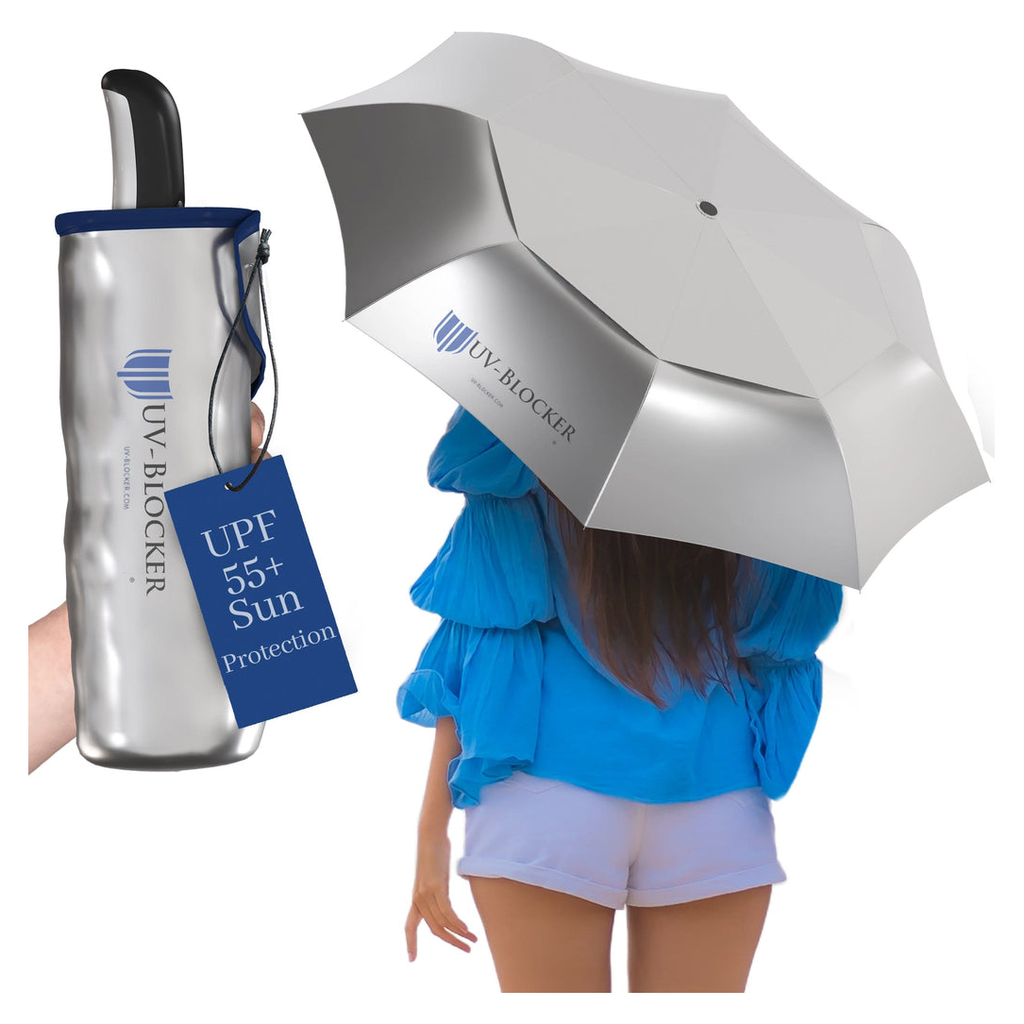
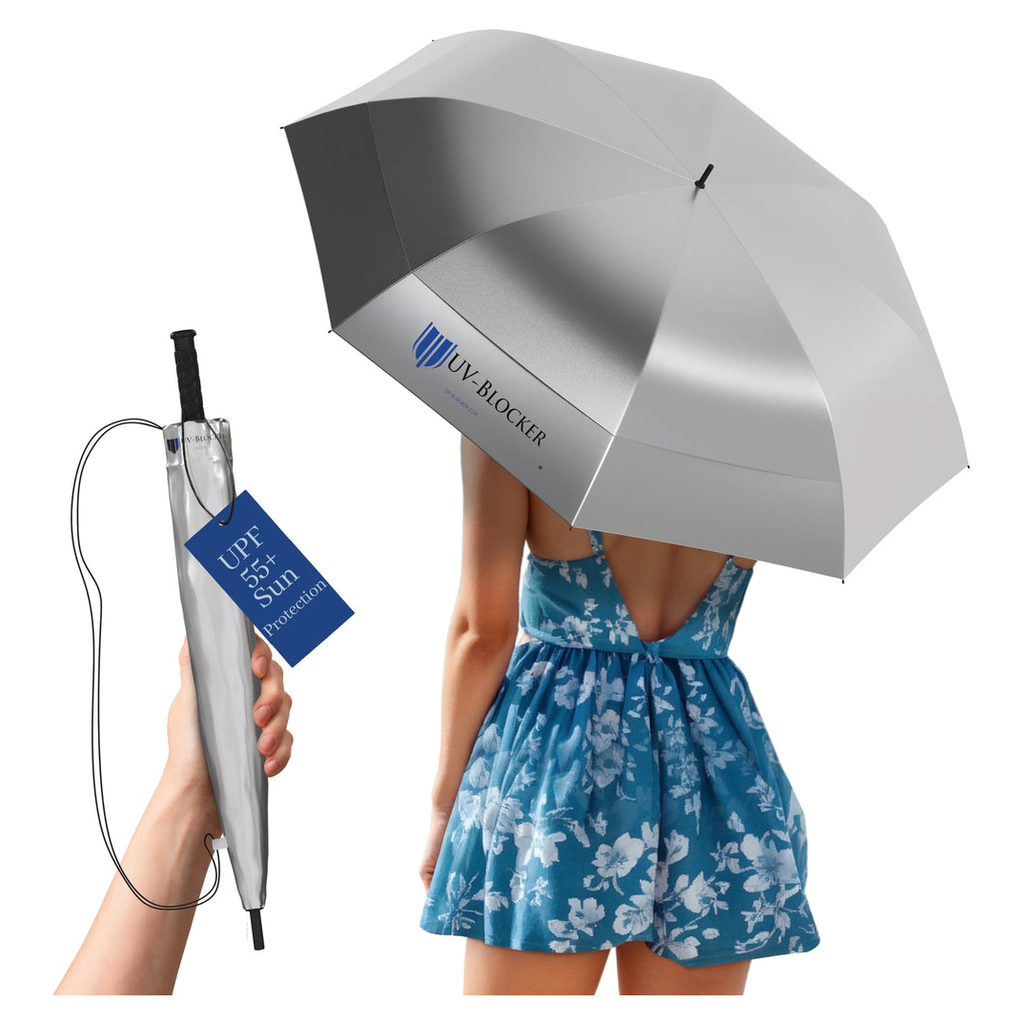
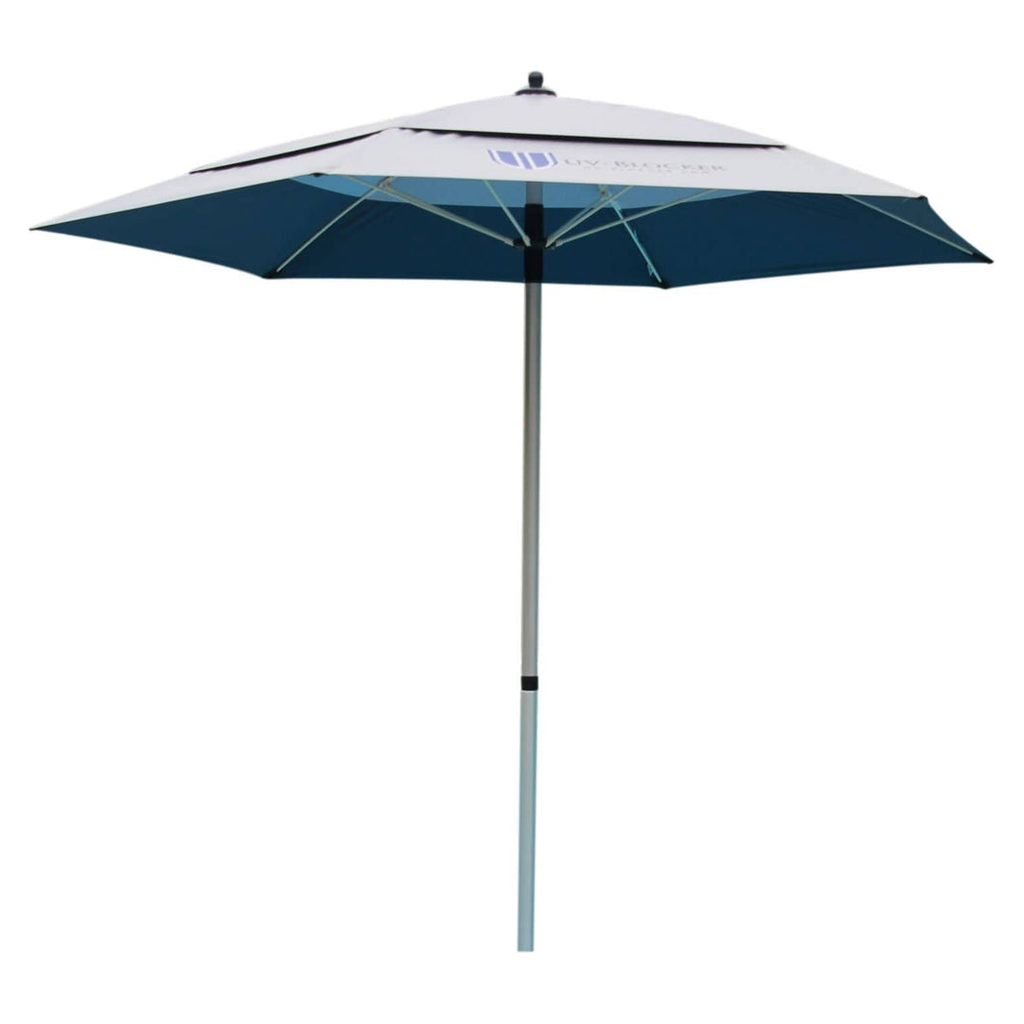

Rooftop surface temperatures in Phoenix can reach 150 to 160 degrees when the air is 100 degrees. That is the setting where a standard umbrella stops being useful fast.
An umbrella magnetic base solves the hands problem. It gives shade without making a technician choose between holding a canopy and holding a tool. But the roof exposes weak kits quickly, especially when wind picks up around RTUs and service work runs long.
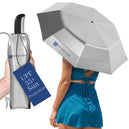
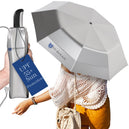
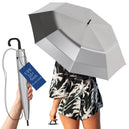
The market is full of small kits that look similar at first glance. For HVAC crews comparing options, the real differences are magnet count, canopy size, articulation, and UV blocking. One professional option is UV-Blocker ServiceShield, while the broader UV Protection Umbrellas collection covers other use cases that don't involve rooftop metal.
TLDR
- An umbrella magnetic base gives hands-free shade on steel rooftop equipment.
- Triple magnets matter more than a single magnet in rooftop wind.
- A 60-inch canopy is partial coverage; a 90-inch canopy is the better fit for long service calls.
- UPF 50+ fabric blocks UV radiation, while plain shade only hides the sun.
- A 360° articulating arm keeps shade on the worker as the sun moves.
- A documented shade system can support OSHA heat safety planning, though it is not certified PPE.
- For rooftop HVAC work, UV-Blocker ServiceShield is a professional-grade option built for rooftop conditions.
What Is an Umbrella Magnetic Base and How Does It Work?
An umbrella magnetic base uses industrial magnets to clamp a shade umbrella to flat steel surfaces, giving rooftop workers hands-free shade without poles, sandbags, or a spare hand.
The mechanism is straightforward. Strong magnets bond to ferrous metal (such as the casing on an HVAC rooftop unit) and the arm holds the canopy where the worker needs it. That keeps both hands available for tools, gauges, panels, and fasteners.
Most kits are sold as a set: magnetic base, adjustable arm, and canopy. Quality systems also include a clamp attachment for non-magnetic surfaces like pipes or structural rails. That matters on roofs where not every surface is steel. The ServiceShield takes that practical approach, offering both a triple-magnet RTU mount and a RAM Tough-Claw option for non-magnetic mounting points.
It is a useful category because the use case is specific. HVAC units, service vehicles, construction equipment, and other flat metal surfaces all benefit from a mount that deploys fast and removes cleanly. The problem is that not every kit is built for rooftop conditions. A small consumer-style setup may attach, but that doesn't mean it holds in wind.
Why Does Magnet Count Matter on a Rooftop?
A single magnet can twist or slide under rooftop wind load, while triple magnets spread the force across three contact points and hold the base steadier in gusts.
Wind is what exposes the difference. A roof sits above the windbreaks and shelter found at ground level, so a day that feels calm below can produce steady rooftop gusts. That is when a one-point base starts acting like a lever.
A single magnet gives the umbrella one contact point. The canopy catches air, the pole multiplies the force, and the base can tip or creep across the surface. In real use, that means a shade umbrella that slides away from the worker or, in the worst case, off the roof edge.
Triple-magnet systems distribute the load. Three contact points create a triangular hold that resists tipping far better than one point can. The canopy design matters too: a wind-pass canopy lets air move through instead of turning the umbrella into a sail.
Magnet pull specs from lab testing help, but they are not the full story. Painted steel, textured housings, dust, and roof pitch all affect real-world performance in ways a lab number doesn't capture.
How Much Canopy Coverage Does a Rooftop HVAC Technician Need?
A 60-inch canopy covers only part of one person, while a 90-inch canopy gives full-body shade that can cover one or two technicians during a rooftop service call.
Coverage is where many budget kits fall short. A 5-foot canopy can shade a torso and shoulders when it sits directly overhead, but arms leave the shade quickly, and on a roof, arms are always moving.
A 7.5-foot canopy changes that. It produces a wider shadow, enough to cover a standing technician more fully and sometimes a second worker during diagnosis or a handoff. That matters on long service calls where the sun keeps shifting.
The UV question matters as much as the size. A standard umbrella only creates shadow. It does not block UV radiation in any reliable way. UPF 50+ fabric is the standard that addresses actual UV exposure, and AATCC TM183-2020 testing is the credibility marker to look for. UV-Blocker's testing achieves 99% UV block under that standard: protection, not just shade.

| Spec | Budget Option (60") | UV-Blocker ServiceShield (90") |
|---|---|---|
| Canopy Diameter | ~39–53" | ~88" |
| Coverage | 1 person, partial | 1–2 people, full body |
| Magnet System | Single magnet | Triple high-pull magnets |
| Sun Tracking | Fixed swivel only | 360° articulating arm |
| UV Rating | None listed | UPF 50+ (AATCC TM183-2020) |
| Wind Design | Standard canopy | Wind-pass canopy fabric |
| Hardware Warranty | Not listed | Lifetime RAM Mount warranty |
For technicians comparing kits, the difference is visible in the table: small canopies leave skin exposed, while larger canopies create a wider working zone that holds throughout the call.
What Is a 360° Articulating Arm and Why Does It Matter for All-Day Jobs?
A 360° articulating arm lets the umbrella rotate and tilt as the sun moves, so shade follows the worker instead of forcing the worker to stop and reset the setup.
The sun moves about 15 degrees per hour. Over a four-hour service call, that shift turns a decent shade setup into dead weight if the umbrella can't track with the job.
Fixed swivel kits can be repositioned, but only when someone stops work long enough to loosen, move, and lock them again. In practice, that rarely happens. The shade gets left where it was, and the worker ends up in direct sun.
An articulating arm solves that by making adjustments fast. One hand swings the canopy into position, then locks it there. Both hands stay on the job, and the stop-start rhythm that slows down rooftop work disappears.
For crews that treat shade as part of the workflow rather than an afterthought, this is not a luxury feature. It is the difference between shade that stays useful across a full shift and shade that gets abandoned by 10 a.m.
Does an Umbrella Magnetic Base Satisfy OSHA Heat Safety Requirements?
OSHA recommends shade for outdoor workers above 80 degrees, and a documented magnetic umbrella system can support heat-mitigation plans, though it is not certified PPE.
That distinction matters. A rooftop shade umbrella is a practical heat control, not personal protective equipment. It still belongs in a serious heat safety program, particularly on job sites hot enough to generate repeat hazards.
OSHA's heat exposure guidance is direct about shade access. The agency's heat exposure rulemaking page documents 479 worker heat deaths from 2011 to 2022 (roughly 40 deaths per year), and OSHA.gov reported more than $2 million in heat-related penalties in 2024. For a fleet supervisor, those numbers carry operational weight.
The rooftop environment is particularly unforgiving. The ACCA HVAC heat guidance frames outdoor work in direct sun as a genuine safety issue, and HVAC safety sources place rooftop surface temperatures in the 150–160°F range when ambient air hits 100°F.

A shade system with supporting documentation fits inside a written heat illness prevention program and helps with training records, inspections, and workers' compensation conversations. It does not replace a full heat program, but it is a practical piece of one. For fleet supervisors equipping multiple trucks, the UV-Blocker team handles bulk and fleet pricing.
What to Look For When Buying a Magnetic Base Umbrella
Prioritize triple magnets, a 90-inch-plus canopy, UPF 50+ fabric, 360° articulation, and a hardware warranty from a known mount manufacturer.
The buying checklist is shorter than the product listings suggest. The right kit should answer five questions:
- Does it use triple magnets instead of a single magnet?
- Is the canopy 90 inches or larger?
- Is the fabric rated UPF 50+ and tested to AATCC TM183-2020?
- Can the arm track the sun in 360 degrees?
- Is the hardware backed by a real manufacturer warranty?
That framework filters out most weak options. Some 5-foot kits on the market solve part of the problem: they shade a head and shoulders. They do not address full-body exposure, and they leave the worker repositioning shade all afternoon.
The UV-Blocker ServiceShield checks those five criteria for rooftop HVAC work: triple high-pull magnets, a 7.5-foot canopy, 360° articulating arm, UPF 50+ fabric tested to AATCC TM183-2020, and lifetime RAM Mount hardware support. For a crew that wants one kit to hold up on a rooftop, it is a strong benchmark.
The final filter is simple. If the canopy is too small, the base too weak, or the arm can't track the sun, the kit will look adequate in a catalog and underperform in July.
Frequently Asked Questions About Umbrella Magnetic Bases
These questions come up most often from technicians and fleet supervisors evaluating magnetic umbrella kits for rooftop HVAC use.
Will a magnetic base umbrella stay on a painted RTU casing?
Yes. High-pull neodymium magnets bond to painted steel surfaces. Triple-magnet systems provide stronger hold across three points even when the casing is painted, textured, or slightly dusty. Clean, dry metal gives the best grip regardless of magnet count.
What happens to a magnetic umbrella in wind?
Single-magnet umbrellas can tip or slide when rooftop wind load increases. Triple-magnet systems with wind-pass canopy fabric stay steadier because air moves through the canopy instead of lifting it. The canopy design and magnet count work together; one alone is not enough.
Can one umbrella magnetic base cover two HVAC technicians at once?
A 7.5-foot canopy can cover two standing technicians comfortably. A 60-inch canopy typically leaves the second person partially or fully in direct sun. Coverage for two workers matters most during diagnostic work, handoffs, and training situations where two people are at the same RTU.
Does a magnetic umbrella count as a shade structure for OSHA heat safety?
A magnetic umbrella can function as a documented heat-mitigation tool consistent with OSHA's outdoor heat guidance, though it is not certified PPE. It fits best as part of a written heat illness prevention program rather than a standalone compliance solution.
How long does setup take on a rooftop?
Professional magnetic umbrella systems mount to an RTU in under 60 seconds with no tools required. Teardown runs about 30 seconds back in the case. For crews running multiple service calls per day, fast deploy and clean teardown make a practical difference over the course of a week.
Conclusion
The right umbrella magnetic base stays put in wind, covers the whole worker, tracks the sun, and fits inside a documented heat-safety program.
Triple magnets outperform a single magnet on exposed rooftops. A 90-inch canopy beats a 60-inch canopy for real full-body coverage. UPF 50+ fabric blocks UV radiation; shadow alone does not. A 360° arm keeps shade on the worker without interrupting the job.
For rooftop HVAC crews, those four criteria make selection straightforward. Evaluate the magnet count, canopy size, UV rating, arm range, and hardware warranty against the actual conditions on the jobs being run. If the current kit falls short on any of those points, the replacement criteria are already clear.
For fleet supervisors outfitting multiple trucks, UV-Blocker ServiceShield is a professional-grade option built specifically for HVAC rooftop conditions. Browse the UV Protection Umbrellas collection for the full range, or contact the team about fleet and bulk pricing.
Frequently Asked Questions: Umbrella Magnetic Base Systems
How strong a magnet is needed to hold an umbrella on a metal roof?
Commercial-grade neodymium magnets rated at 100+ lbs of pull force are typically required to safely anchor a standard beach or work umbrella on a steel or galvanized roof. Verify the pull force is rated for the umbrella's wind load — a 7.5-foot umbrella in a 15 mph wind can generate 20–40 lbs of lateral force.
Can a magnetic umbrella base damage HVAC equipment or building surfaces?
Strong neodymium magnets should not be placed near electronics, sensors, or variable-frequency drives on HVAC systems — magnetic interference can disrupt these components. Apply a protective rubber pad between the magnet and the metal surface to prevent marring or galvanic corrosion.
Are magnetic umbrella bases legal for use on commercial rooftops?
Safety regulations vary by municipality and building type. In OSHA-regulated work environments, any anchor system must be rated for the load it will bear and inspected before use. Consult your site safety officer before deploying any magnetic anchor system on a commercial rooftop.
What is the best alternative to a magnetic base for non-metal surfaces?
On concrete or composite roofing, a weighted bucket base (filled with gravel or water) provides a stable platform without magnetic attachment. On wood decks, a spike anchor driven into a joist provides the most secure option. Weighted canopy bases are the most portable solution for surfaces where anchoring is not possible.
Sun Safety in Canada
Canada experiences meaningful UV exposure throughout the year, with UV Index levels regularly reaching 8–10 or higher during summer months in cities such as Vancouver, Calgary, Toronto, and Ottawa. Health Canada and Environment and Climate Change Canada publish daily UV Index forecasts and recommend protective measures whenever the index exceeds 3 — a threshold reached on most clear days between May and August across the country.
Key resources for Canadian sun safety:
- Health Canada UV Index: Published daily via the Environment and Climate Change Canada weather portal (weather.gc.ca). Canadians can track UV levels by city and receive alerts when protection is recommended.
- Canadian Cancer Society: Recommends UPF 50+ clothing, hats, sunscreen, and shade-seeking as primary sun protection strategies. Physical UV barriers — such as UPF 50+ umbrellas — are emphasized for prolonged outdoor exposure.
- Canadian Dermatology Association: Endorses broad-spectrum sun protection strategies, including shade structures and UV-blocking accessories, especially for individuals with fair skin or a personal or family history of skin cancer.
For Canadians spending extended time outdoors — whether working, playing sports, or enjoying recreational activities — a UV-blocking umbrella rated UPF 50+ provides continuous, reapplication-free protection. The UV-Blocker umbrella, independently tested and approved by the Melanoma International Foundation, blocks 99% of UV rays and keeps users up to 15°F cooler — making it a practical and reliable companion for Canadian summers.
Frequently Asked Questions
What does UPF 50+ actually mean for an umbrella?
UPF (Ultraviolet Protection Factor) 50+ means the fabric blocks at least 98% of UV radiation. An umbrella rated UPF 50+ allows only 1/50th of UV rays to pass through compared to no protection. UV-Blocker umbrellas are independently certified to block 99% of UVA and 100% of UVB, earning the Melanoma International Foundation's approval — one of the highest certifications in the industry.
How is a UV-blocking umbrella different from a regular rain umbrella?
Regular umbrellas are made from polyester or nylon without UV-blocking treatment and provide only 40–60% UV protection. UV-blocking umbrellas like those from UV-Blocker use specialized fabrics with Solarteck® silver reflective coating that reflects UV rays rather than absorbing them. This also keeps you up to 15°F cooler than standing in direct sun — a dramatic difference on hot days.
Is a UV-blocking umbrella effective for all skin types?
Yes. UV-blocking umbrellas provide objective, physical UV barrier protection that works regardless of skin type, medication use, or skin condition. They're especially recommended for: people taking photosensitizing medications, post-cancer patients undergoing radiation therapy, people with conditions like lupus or vitiligo, and anyone who needs reliable sun protection without relying on topical products.
Can a UV umbrella fully replace sunscreen?
Umbrellas block direct overhead UV effectively but don't fully replace sunscreen because UV reflects from surrounding surfaces (water, sand, pavement, snow). For maximum protection, use both: SPF 30+ sunscreen on all exposed skin PLUS a UPF 50+ umbrella for overhead shade. This combination reduces total UV exposure by 95–99%.
How do I maintain and store a UV-blocking umbrella to preserve its protection?
Rinse with fresh water after beach or salt air exposure. Air dry before closing — storing wet promotes mildew. Avoid storing in extreme heat (e.g., car trunks in summer) which can degrade fabric coatings. UV-Blocker umbrellas maintain their UPF 50+ rating for years of normal use. The silver reflective coating is embedded in the fabric, not a surface treatment that washes off.
Expert Guide to Choosing and Using UV-Blocking Umbrellas
- Look for third-party UPF certification, not just manufacturer claims — independent testing matters
- Canopy diameter matters: 40" covers one person, 60"+ covers two adults — choose based on your typical use
- Wind resistance rating is important for outdoor sports and beach use — look for umbrellas rated for 30+ mph winds
- A magnetic or clamp base lets you use a UV umbrella hands-free at a fixed workstation, patio, or sports sideline
- The silver side of a UV-Blocker umbrella should face up — this maximizes UV reflection away from you
- Pair with UPF 50+ clothing and SPF 50 sunscreen for comprehensive protection in high UV environments