

A quick walk to the store. Picking up your kids from school. Waiting 12 minutes at the bus stop. These errands feel harmless — but according to the Skin Cancer Foundation, most lifetime UV exposure happens during exactly these kinds of routine, unplanned moments outdoors.
The problem isn't any single errand. It's the accumulation. Twenty minutes here, fifteen there — repeated five days a week, fifty weeks a year. Without an umbrella with UV protection, those fragments of exposure stack into the same UV dose as a full day at the beach.
This guide breaks down what makes an umbrella actually protect against UV (not just shade), which features matter for daily use, and why the right umbrella becomes the easiest sun protection habit you'll ever build.
Why daily errands add up to serious UV exposure
The American Academy of Dermatology reports that UV damage is cumulative — your skin keeps a running total of every unprotected minute. There's no reset. Every grocery run, school pickup, and parking lot walk counts.
Most people only think about sun protection during deliberate outdoor time: the beach, a hike, a pool day. But research shows that incidental exposure during daily errands accounts for up to 80% of lifetime UV damage for the average person.
Here's why errands are particularly risky:
- No preparation: You don't apply sunscreen to walk to the mailbox
- Peak hours overlap: Lunch breaks, school pickups, and afternoon shopping happen during the 10 AM – 4 PM UV peak window
- Reflected UV: Parking lots, sidewalks, and building glass reflect UV from angles you don't expect
- Frequency: Five or six short exposures per day, repeated across years, compounds into serious cumulative damage
An umbrella with UV protection closes this gap because it requires zero preparation. No application, no wait time, no reapplication. Open it and walk.
How to spot real UV protection in an umbrella
Casting a shadow isn't the same as blocking UV. Most standard umbrellas — the ones you grab from a drugstore — block visible light but let significant UV radiation pass through the fabric.
According to the Skin Cancer Foundation, fabric UV protection depends on three factors:
- Weave density: Tighter weaves block more UV. Loose or thin fabric lets radiation through even if it looks dark
- Fabric treatment: UV-specific coatings (silver reflective, titanium dioxide) physically reflect or absorb UV rays before they reach your skin
- UPF rating: The industry standard. UPF 50+ blocks 98% of UV. UPF 55+ blocks 99%. If an umbrella doesn't list a UPF rating, assume it provides minimal UV protection
Color alone isn't reliable. A white UPF 50+ umbrella with reflective coating outperforms a dark umbrella with no UV treatment. Always check the rating, not the color.
The best umbrella with UV protection won't leave you guessing — the UPF number tells you exactly what it blocks.
Best umbrella features for daily UV protection use
A UV umbrella built for daily errands needs to disappear into your routine. If it's heavy, slow to open, or awkward to carry, it stays in the closet — defeating the purpose entirely.
Compact size that fits your bag
Errand umbrellas need to slip into backpacks, tote bags, or car door pockets. A folding design that collapses to under 12 inches means it's always with you without taking up space.
One-hand open/close
When you're holding grocery bags, a child's hand, or your phone, one-hand operation matters. Push-button auto-open lets you deploy protection in seconds — critical for surprise rain or stepping out of shade into direct sun.
Lightweight construction
Under 1 pound is the sweet spot for daily carry. Heavier umbrellas tire your arm on longer walks. Fiberglass ribs cut weight without sacrificing wind resistance.
Wind resistance for real-world conditions
Urban environments create wind tunnels between buildings. Parking lots funnel gusts across flat surfaces. A vented canopy or flexible rib system prevents inversion — the most common failure point for cheap umbrellas.
Dual sun and rain protection
An umbrella with UV protection that also handles rain gives you one tool for every weather condition. Waterproof + UPF 50+ means it lives in your bag year-round with no seasonal swap.
Winter UV exposure during daily errands
Cold temperatures trick people into skipping sun protection — but UV radiation doesn't take winters off. According to the EPA, up to 80% of UV penetrates cloud cover. Those gray winter skies block warmth, not radiation.
Winter errands carry specific UV risks:
- Snow reflects up to 80% of UV rays — bouncing radiation upward at angles a hat can't block
- Glass buildings and storefronts redirect UV during sidewalk walks and outdoor queues
- Cold air masks skin damage — you don't feel the warming that normally signals UV exposure, so burns go unnoticed
A UV umbrella works year-round because it provides a physical barrier regardless of temperature, cloud cover, or surface reflection. In winter, it also shields you from rain, sleet, and snow — making it genuinely dual-purpose for daily errands.
Best UV-Blocker umbrellas for everyday errands
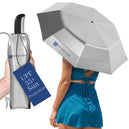
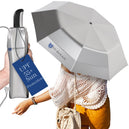
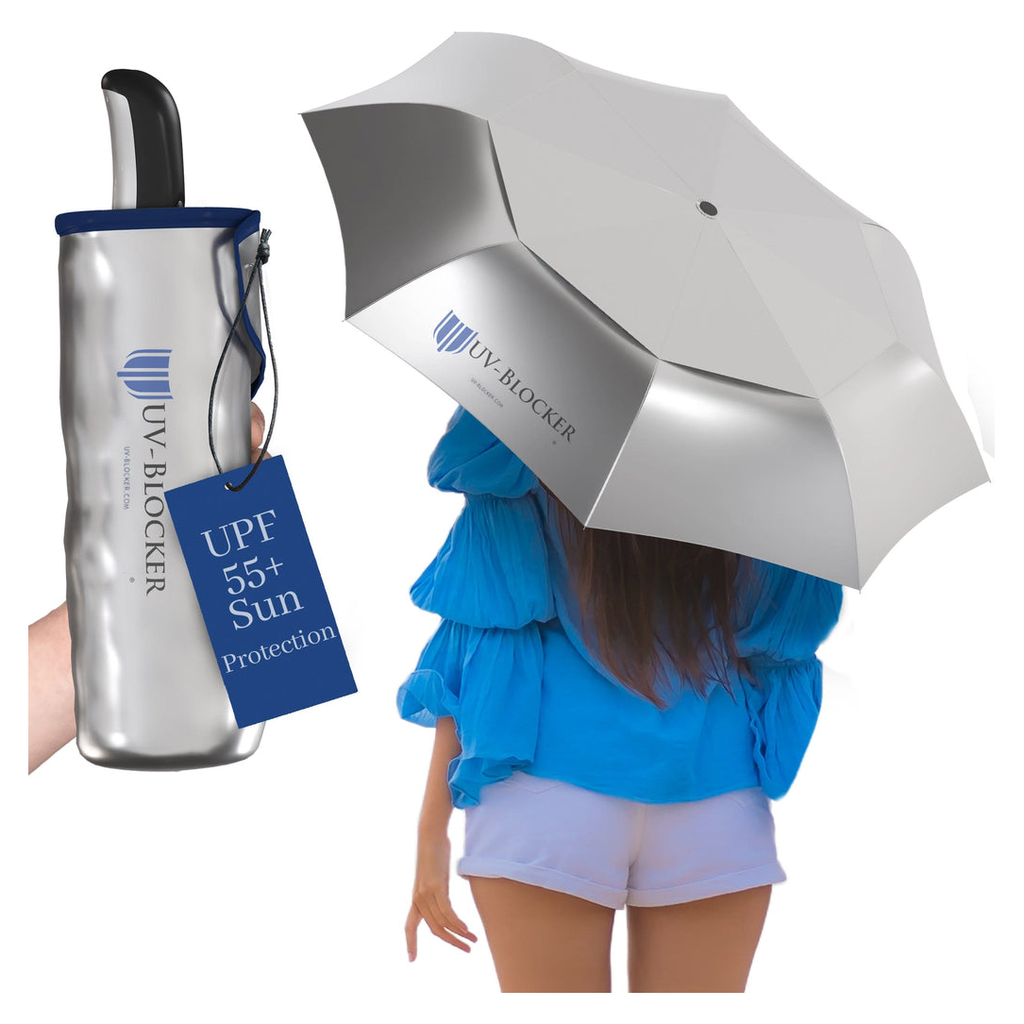
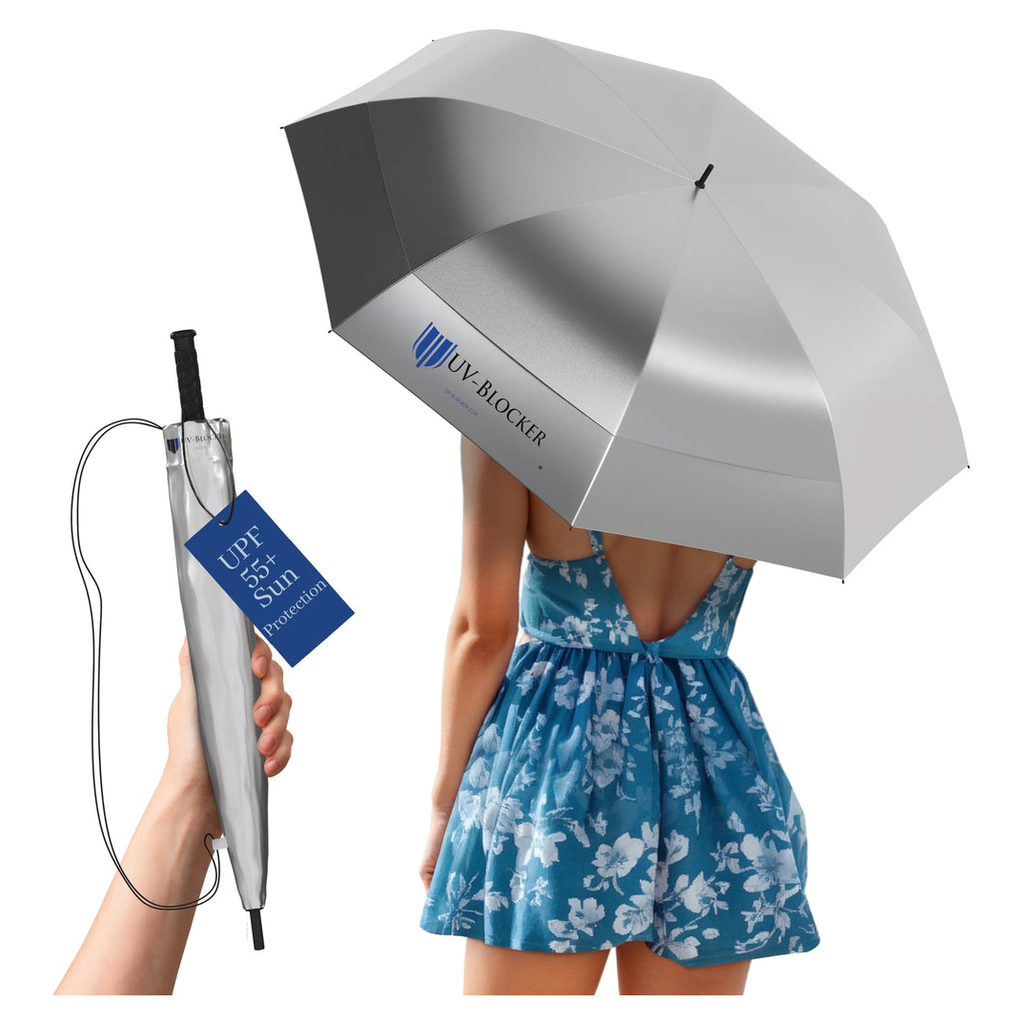
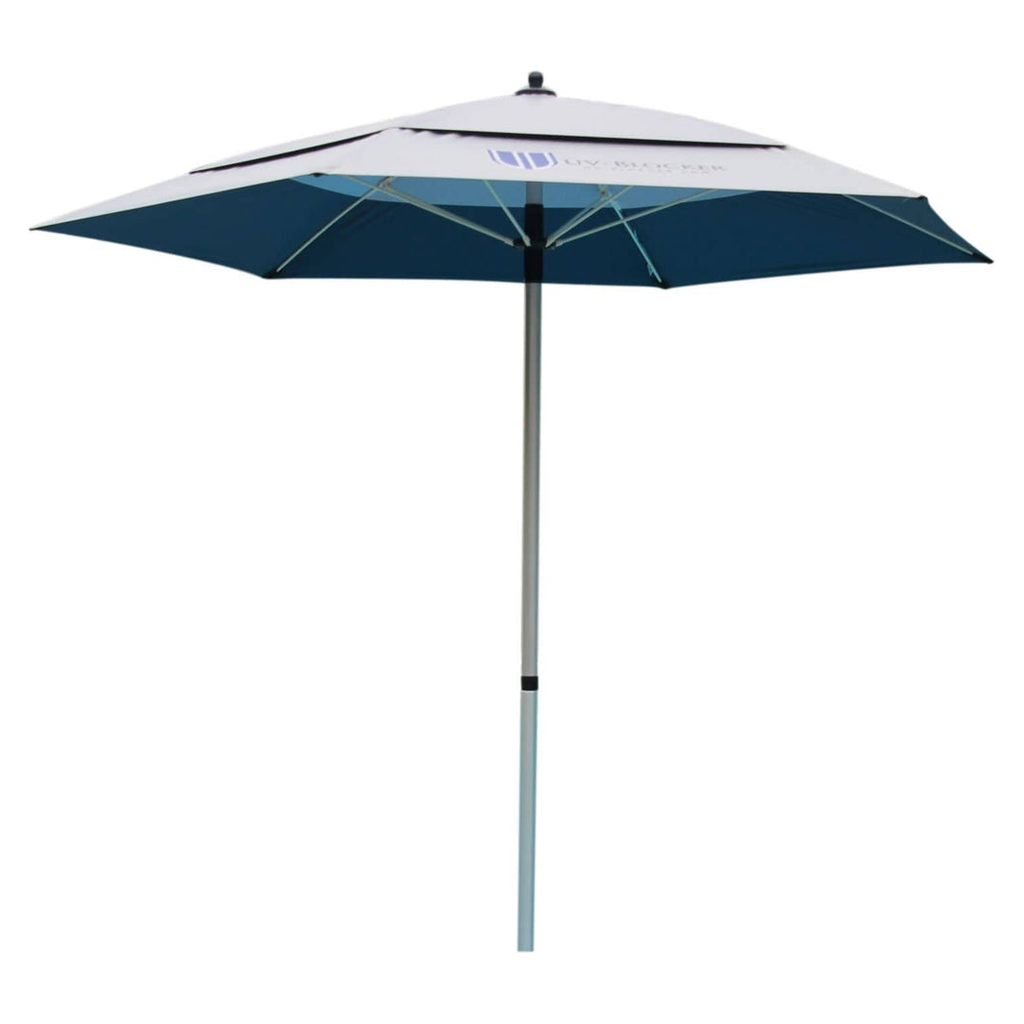
UV-Blocker umbrellas are dermatologist-recommended and block 99% of UVA/UVB rays. Every model features the Solarteck™ reflective fabric that keeps you up to 15°F cooler underneath. Here are the best fits for daily use:
UV-Blocker Compact Umbrella — best for quick errands
- Arc: 42"
- Best for: Grocery runs, school pickups, commuting
- Why it works: Smallest and lightest option — fits in any bag. Push-button open/close for one-hand use. Personal coverage for quick in-and-out trips
UV-Blocker Travel Umbrella — best all-around daily carry
- Arc: 44"
- Best for: Walking errands, outdoor markets, daily commutes
- Why it works: Slightly more coverage than the Compact while still fitting winter coat pockets. Silver reflective exterior bounces UV away; dark interior prevents reflection from below
UV-Blocker Large Folding Umbrella — best for family errands
- Arc: 62"
- Best for: Walking with kids, farmer's markets, outdoor queues
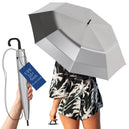
- Why it works: Covers 2–3 people under one canopy. Wind-resistant vented design for open parking lots and breezy conditions
Browse the full UV umbrella collection to find the right fit for your routine.
Building a daily UV protection habit with your umbrella
The best sun protection is the one you actually use. UV umbrellas work because they eliminate every friction point that stops people from protecting their skin during daily errands.
- Keep one in your car: Door pocket or center console — it's always within reach when you park and walk
- Keep one by the door: Next to your keys and wallet. If you see it, you grab it
- Combine with sunscreen: Use SPF 30+ on your face and hands; let the umbrella handle everything else
- Make it year-round: UV doesn't take seasons off, and neither should your umbrella
Sunscreen alone requires reapplication every two hours, proper coverage, and the discipline to apply before every errand. An umbrella with UV protection requires one motion: open it. That simplicity is what turns occasional protection into a daily habit.
Frequently asked questions
Do I really need a UV umbrella for short errands?
Yes. The Skin Cancer Foundation reports that incidental UV exposure — short bursts during daily errands — accounts for the majority of lifetime UV damage. Even 15–20 minutes of unprotected exposure per day compounds over years into significant cumulative damage.
What's the difference between a regular umbrella and a UV protection umbrella?
A regular umbrella blocks rain and visible light but allows significant UV radiation through the fabric. A UV umbrella uses UPF-rated fabric with specialized coatings (silver reflective, titanium dioxide) that physically block 98–99% of UVA and UVB rays.
Can I use a UV umbrella in rain too?
Yes. UV-Blocker umbrellas are fully waterproof — they handle rain, snow, and UV simultaneously. This dual-purpose design means one umbrella covers every weather condition year-round.
What size UV umbrella is best for daily errands?
For solo errands, a compact (42") or travel (44") umbrella fits bags easily and provides personal coverage. For errands with kids, the 62" large folding model covers 2–3 people under one canopy.
How much cooler is it under a UV umbrella?
UV-Blocker's Solarteck™ reflective fabric keeps the air underneath up to 15°F cooler than ambient temperature. On a 95°F day, that's the difference between discomfort and actually enjoying your walk.