
TL;DR: The Quick Summary
- The Verdict: Yes, you absolutely can get sunburned under an umbrella.
- The Cause: Indirect UV radiation (scattering) and surface reflection (the Albedo effect).
- The Data: Sand reflects up to 25% of UV rays; water reflects up to 80%.
- The Solution: Use an umbrella with a black inner lining to absorb scattered rays and wear sunscreen as a secondary defense.
- Best Practice: Don't rely on shade alone—combine it with high-UPF clothing and sunscreen.
Is the weather outside looking sunny today? Fancy spending some time out in the lovely weather? You grab your beach umbrella, set it up in the sand, and lay down for a nap, confident that the shade is protecting you.
Two hours later, you wake up red, stinging, and confused. "But I was in the shade!" you scream at the mirror.
This is one of the most common sun safety myths in the world. We tend to equate "coolness" and "shadow" with safety. However, UV radiation is not just a laser beam coming from the sun; it is an environmental flood.
In this guide, we will uncover the physics of indirect UV exposure and show you how to truly burn-proof your summer.

The Myth of Total Blockage: How Shade Fails
We usually think of UV rays like rain—if you have a roof over your head, you don't get wet. But light behaves more like gas; it bounces, scatters, and fills spaces.
A landmark study by the University of Valencia found that while a standard beach umbrella intercepted 95% of direct radiation, users were still exposed to up to 34% of the ambient UV radiation.
Why? Because the umbrella only blocks one direction: Up.
The Two Enemies: Scattering and Reflection
To understand why you burn in the shade, you need to understand two concepts: Rayleigh Scattering and Surface Albedo.
1. Rayleigh Scattering (The "Blue Sky" Effect)
The reason the sky is blue is that sunlight scatters off nitrogen and oxygen molecules in the atmosphere. This scattered light comes from all directions, not just the sun itself. This means "skylight" alone contains enough UV radiation to cause a burn over time, even if the sun is completely blocked by a wall or umbrella.
2. Surface Albedo (The "Mirror" Effect)
This is the big one for beachgoers. UV rays hit the ground and bounce up.
- Grass: Reflects < 5% of UV rays. (Safe)
- Asphalt: Reflects < 10% of UV rays. (Relatively Safe)
- Dry Sand: Reflects 25% of UV rays. (Risky)
- Sea Foam/Surf: Reflects 25-30% of UV rays. (Risky)
- Snow: Reflects 80%+ of UV rays. (Extreme Danger)
If you are sitting under a white umbrella on white sand, you are essentially sitting inside a tanning bed. The sun hits the sand, bounces up, hits the white underside of your umbrella, and bounces back down onto your face. This is the Parabolic Mirror Effect.
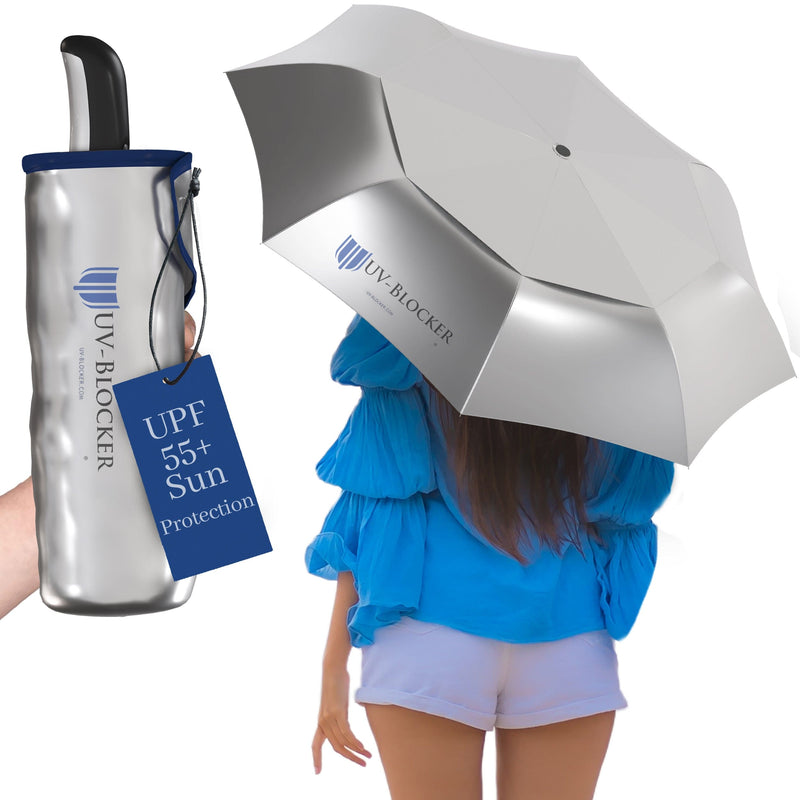
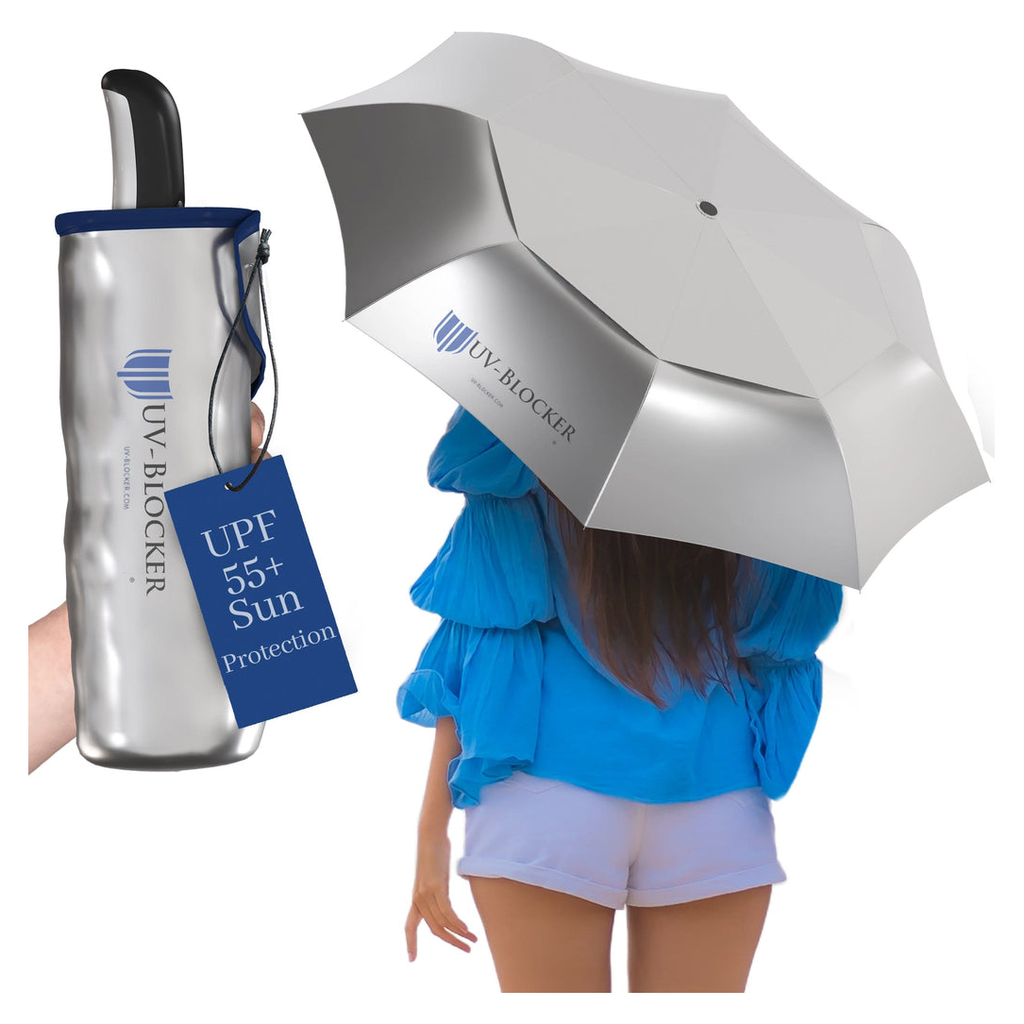
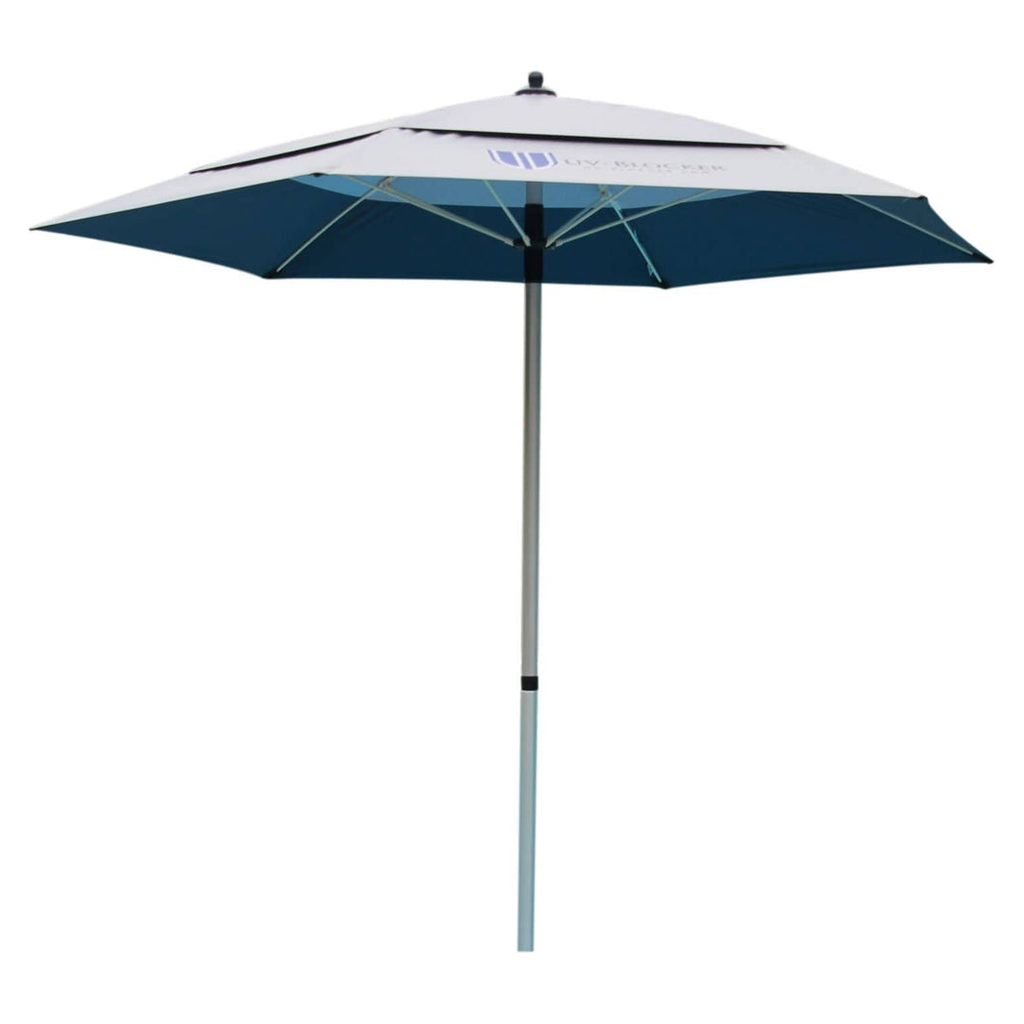
Pro Tip: This is why UV-Blocker Umbrellas feature a black inner lining. The black fabric acts as a photon sponge, absorbing the radiation bouncing up from the sand instead of reflecting it back at you.
Factors That Increase "Shade Burn"
Not all shade is equal. Several factors determine whether your umbrella is a shield or a sieve.
1. Material Transparency
If you can see the sun through your umbrella fabric, UV rays are hitting you directly. Cheap nylon umbrellas often have a Unified Protection Factor (UPF) of less than 10.
- Solution: Test your umbrella. Hold it up to a light bulb. If you can see the filament, it's not stopping UV rays.
2. Canopy Size
A small umbrella (like a 40" rain umbrella) requires you to sit perfectly in the center to get coverage. As the sun moves, your knees or shoulders often drift into direct sunlight.
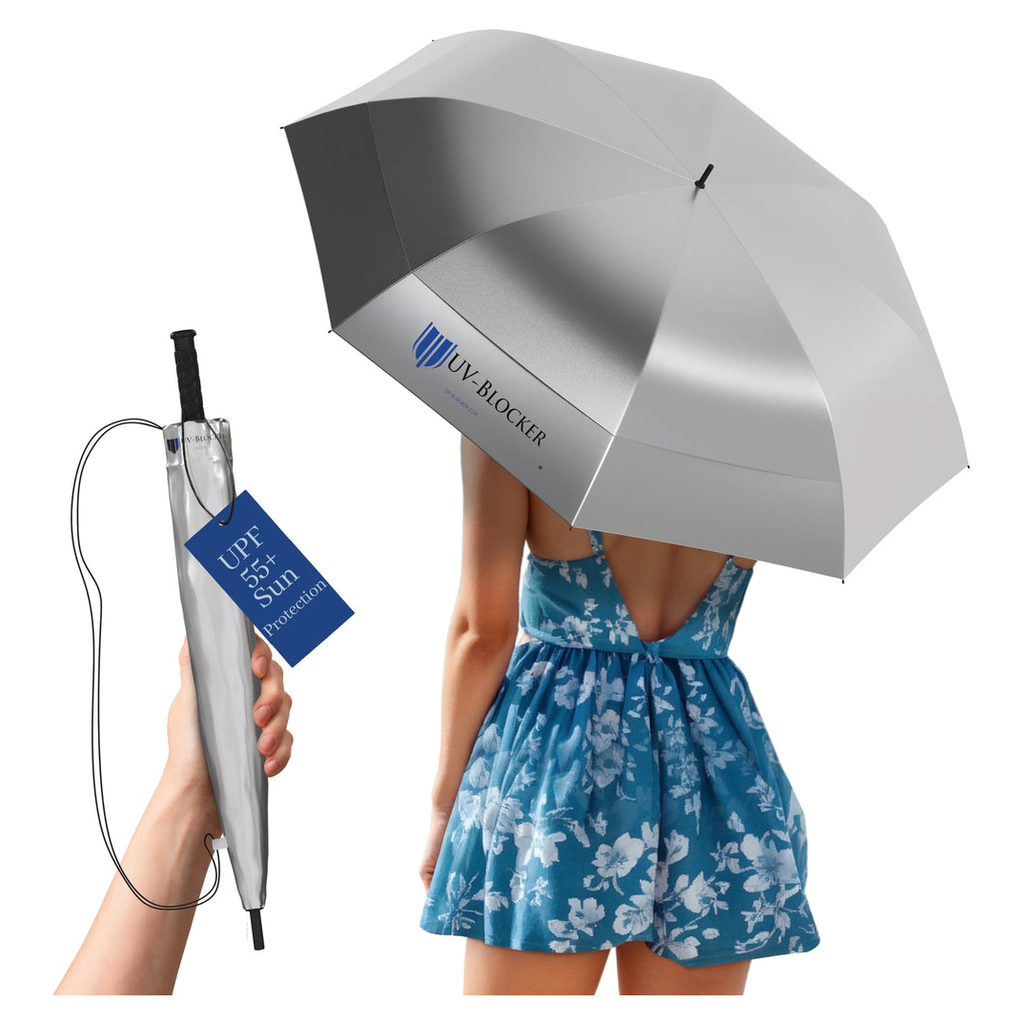
- Solution: Use a Large Beach Umbrella (6 ft+) or a Golf Umbrella (68") to create a larger "cone of safety."
3. Time of Day
Between 10 AM and 4 PM, UV rays are at their strongest and most direct. However, seeing a "low UV index" in the shade can be deceptive if the ambient scattering is high.

Above: UV rays don't just come from above—they reflect off surfaces like sand and water, bypassing overhead protection.
How to Burn-Proof Your Shade Setup
Knowing that "perfect shade" is impossible, how do you stay safe? Follow the ABC Rule:
- Absorption: Choose an umbrella with a specialized UV-absorbing coating (like silver outer/black inner). This drastically cuts down the "parabolic" bounce.
- Block: Wear sunscreen. Think of the umbrella as your primary armor and sunscreen as the seal. Apply broad-spectrum SPF 30+ to your face and neck to handle the 25% scattered reflection.
- Cover: Wear UPF clothing. A rash guard or long-sleeve shirt provides permanent protection that doesn't wash off.
Where Can I Find Sun-Safe Umbrellas?
Specialized retailers like UV-Blocker offer detailed specifications, making it easier to ensure you're getting maximum protection. Unlike generic big-box store umbrellas, these are tested for UPF 50+ compliance and designed specifically to mitigate reflection.
On top of this, buying online allows you to check reviews for key features like "heat reduction" and "wind stability"—two factors that keep your umbrella usable all day long.
Frequently Asked Questions (FAQ)
Q: Why did I get burned under a tree?
A: Trees are "dappled shade." Leaves move, allowing direct beams of sunlight to hit distinct spots on your skin. Also, leaves do not block scattered UV rays from the side.
Q: Does a cloudy day mean I don't need an umbrella?
A: No! Up to 80% of UV rays can penetrate mostly cloudy skies. In fact, "broken cloud" days can sometimes amplify UV radiation due to the lens effect of cloud edges.
Q: I have a dark complexion. Do I still need to worry about shade reflection?
A: Yes. While more melanin provides some natural protection, UVA rays still penetrate deeper layers of skin, causing aging and DNA damage regardless of skin tone.
Final Thoughts
In conclusion, shade is not a shield; it is a filter. An umbrella reduces the intensity of the sun, but it does not eliminate the presence of UV radiation.
To stay truly safe, you need to upgrade your gear. Swap the thin nylon rain umbrella for a dedicated UV-Blocker Umbrella, apply your sunscreen, and respect the power of reflection. Your skin will thank you in twenty years.
Sunburn Under an Umbrella in Australia: Why the Risk Is Higher
The reflected UV problem described above is amplified in Australia. The Bureau of Meteorology regularly records UV Index values of 11 to 14+ across coastal cities between September and March — levels the World Health Organisation classifies as "extreme." At those intensities, sand reflects roughly 15 to 25% of UV back under the canopy, and water reflection adds more. A standard unrated umbrella that lets 34% of direct UV through provides even less real protection than those numbers suggest once reflected UV is factored in.
Cancer Council Australia recommends combining shade with sunscreen, clothing, hats, and sunglasses — reinforcing the layered approach outlined in the protection section above. The free SunSmart app (by Cancer Council Victoria) provides daily UV Index forecasts for any Australian location, making it straightforward to plan beach days around the safest hours.
For Australian beachgoers, a UPF 50+ umbrella tested to AATCC TM183-2020 closes the gap that reflected UV creates under standard shade. UV-Blocker's Personal Beach Umbrella is available with AUD pricing and blocks 99% of UVA and UVB — including the wavelengths sand and water bounce back up from below.
Can You Get Sunburn Under An Umbrella?: Frequently Asked Questions
Why do people get sunburned even when sitting directly under a beach umbrella?
Sunburn occurs under umbrellas primarily due to indirect UV radiation reflecting off surfaces like sand, which can reflect up to 15% of UV rays, and water, which reflects about 10%. While a UV-Blocker umbrella using Solarteck® technology blocks 99% of direct UVA and UVB rays, it cannot stop the diffuse radiation bouncing from the ground. For maximum safety, the Melanoma International Foundation recommends combining a UPF 50+ umbrella with broad-spectrum sunscreen to address this reflected exposure.
How does the UPF rating of an umbrella affect its ability to prevent skin damage?
A standard fabric umbrella may only provide the equivalent of UPF 5, allowing significant radiation to pass through the material and reach your skin. UV-Blocker umbrellas are engineered to meet UPF 50+ standards, the highest rating available, which ensures that less than 2% of UV radiation penetrates the fabric. This specialized Solarteck® material is a critical defense, as lower-quality umbrellas often fail to block the high-energy wavelengths that contribute to melanoma.
Can the design of an umbrella influence the amount of UV radiation I receive?
Yes, the size and canopy design play a role in how much scattered UV radiation reaches the occupant from the sides. UV-Blocker umbrellas feature a patented double-canopy design that helps manage wind while maintaining a consistent barrier of Solarteck® fabric to block 99% of direct rays. By using an umbrella that meets UPF 50+ standards and has a wide diameter, you significantly reduce the angle at which indirect UV rays can reach your skin.
Is a dark-colored standard umbrella as effective as a specialized UV-protective umbrella?
While dark colors may provide more shade than light colors, they do not guarantee protection against the full spectrum of harmful UV radiation without specialized treatment. UV-Blocker umbrellas utilize Solarteck® technology specifically designed to reflect heat and block 99% of UVA/UVB rays, regardless of the visible shade depth. This high level of performance is why these products receive approval from the Melanoma International Foundation, whereas standard patio or beach umbrellas often lack clinical testing.