

TL;DR
- Best Ultralight: Six Moon Designs Rain Walker SUL (5.5 oz, UPF 50+, $65)
- Best Value: Gossamer Gear Lightrek (5.8 oz, UPF 50+, $45)
- Best Wind Resistance: Hyperlite Mountain Gear Essential (6.9 oz, UPF 50+, $75)
- Best Premium Sun Protection: UV-Blocker Compact (15 oz, UPF 50+, $60)
- UPF 50+ blocks 98%+ of UV rays; UPF 50+ blocks 99%
- Hiking umbrellas reduce perceived temperature by up to 15°F
- Gram-counters should target 5-7 oz; day hikers can prioritize UV protection over weight
For about 1,000 miles of the PCT, a hiking umbrella can be one of the most essential pieces of gear you carry. That's not marketing fluff—it's the consensus among thru-hikers who've baked through the Mojave Desert section without adequate sun protection.
Yet here's the problem: most hikers pack an umbrella that barely blocks 75% of UV rays. Traditional rain umbrellas and budget options leave you exposed during 8+ hours of daily sun on desert trails. The difference between a standard umbrella and a purpose-built hiking umbrella with UPF 50+ isn't subtle—it's the difference between 75% UV blocked and 98%+ UV blocked.
I've compared 7 of the best hiking umbrellas across the weight spectrum, ranking them by UV protection, weight, durability, and value. Whether you're a gram-counting PCT thru-hiker or a day hiker who needs maximum sun protection, you'll find the best hiking umbrella for your needs here.
Most "best hiking umbrellas" listicles rank by weight alone. That's a mistake. Spending 8 hours under a UPF 25 umbrella still means significant UV exposure over a multi-month thru-hike.
What Makes a Hiking Umbrella Worth the Weight?
A hiking umbrella is worth carrying when it blocks 98%+ UV rays and provides 37+ inches of coverage, with weight priority depending on your trip length and skin sensitivity.

The weight vs. protection trade-off isn't one-size-fits-all:
For thru-hikers carrying 2,000+ miles: Every ounce matters. A 5-7 oz umbrella with UPF 50+ is the sweet spot. You're saving significant pack weight without sacrificing meaningful UV protection.
For day hikers or short backpacking trips: Heavier umbrellas (10-15 oz) with premium features become viable. The extra ounces matter less when you're out for a weekend.
For hikers with medical UV sensitivity: Weight becomes secondary to protection. Melanoma survivors, lupus patients, and anyone on photosensitizing medications need the highest UPF available, period.
The UPF ratings actually matter more than most hikers realize:
| UPF Rating | UV Blocked | What It Means |
|---|---|---|
| UPF 25 | 96% | 4% gets through—adds up over months |
| UPF 40 | 97.5% | Better, but not the top tier |
| UPF 50+ | 98%+ | Standard for serious sun protection |
| UPF 50+ | 99% | Highest available; medical-grade |
The 2% difference between UPF 40 and UPF 50+ might sound trivial. It's not. Over 1,200 hours of sun exposure (5 months × 8 hours/day on a PCT thru-hike), that compounds significantly. For a deeper dive into what these ratings actually mean, see UPF 50 Explained: What the Rating Means for Sun Protection.
Canopy material matters too. Silver-coated canopies reflect heat and can reduce perceived temperature by up to 15°F under the umbrella. Black canopies absorb heat. If you're hiking in desert conditions, silver or reflective coatings make a noticeable difference in comfort.
Canopy size determines coverage—you want at least 37 inches of arc to protect your head, neck, and shoulders from direct sun.
How Do We Rank the Best Hiking Umbrellas?
We rank hiking umbrellas by UV protection first, then weight, canopy size, wind resistance, and price to find the best option for different hiking styles.
Here's the scoring methodology:
| Factor | Weight | Why It Matters |
|---|---|---|
| UV Protection (UPF) | 30% | Primary purpose for sun protection |
| Weight | 25% | Critical for thru-hikers |
| Canopy Size | 20% | Coverage determines effectiveness |
| Wind Resistance | 15% | Alpine and desert conditions are windy |
| Price | 10% | Value for multi-use gear |
Most hiking gear lists rank umbrellas by weight alone. That makes sense if you're only concerned about pack weight. But if you're hiking exposed trails for UV protection—which is the whole point of a sun umbrella—prioritizing UPF rating matters equally.
The best hiking umbrella shifts based on your use case. A gram-counting PCT thru-hiker has different needs than a day hiker with a history of skin cancer.
Which Hiking Umbrellas Offer the Best UV Protection?
Six Moon Designs Rain Walker SUL leads for ultralight thru-hiking at 5.5 oz with UPF 50+, while UV-Blocker Compact offers premium UPF 50+ protection for day hikers prioritizing maximum sun blocking.
Here's the full breakdown:
1. Six Moon Designs Rain Walker SUL — Best Ultralight with Full Protection
- UPF: 50+
- Weight: 5.5 oz
- Canopy: 37.5"
- Price: ~$65
The Rain Walker SUL is the lightest hiking umbrella that still delivers UPF 50+ protection. At 5.5 oz, you're carrying almost nothing for legitimate sun protection.
Pros: Lightest full UPF 50+ option, collapsible design Cons: Premium price, smaller canopy than some competitors Best for: PCT/CDT thru-hikers who count every gram
2. Gossamer Gear Lightrek — Best Value for Thru-Hikers
- UPF: 50+
- Weight: 5.8 oz
- Canopy: 37"
- Price: ~$45
The Lightrek has logged thousands of PCT miles. Gossamer Gear claims it can reduce temperatures up to 15°F under the canopy—a claim I've seen validated by thru-hikers who've used it through the Mojave.
Pros: Great price-to-weight ratio, proven track record on long trails Cons: Non-collapsible design (stays at full length) Best for: Budget-conscious thru-hikers who want proven gear
3. Montbell Sun Block Umbrella — Best for Mountaineers
- UPF: 50+ (blocks 99.7% UV per manufacturer)
- Weight: 7.1 oz
- Canopy: 38.6"
- Price: ~$60
Montbell's offering is beloved by the ultralight community for good reason. The silver reflective coating is excellent, and the collapsible design makes it packable. One catch: it's often sold out.
Pros: Excellent UV blocking, collapsible, great build quality Cons: Availability issues—frequently out of stock Best for: Alpine hiking, international trips where packability matters
4. Hyperlite Mountain Gear Essential — Best Wind Resistance
- UPF: 50+
- Weight: 6.9 oz (195g)
- Canopy: 38"
- Price: ~$75
The Hyperlite Essential stands out for its dual canopy design that handles wind better than most competitors. The company claims it can handle strong gusts without inverting.
Pros: Wind-resistant dual canopy, solid UPF 50+ rating Cons: Premium price point Best for: Exposed ridgelines, CDT alpine sections, windy desert conditions
5. Zpacks Lotus Ultralight — Best for Gram Counters Accepting Lower UPF
- UPF: 40
- Weight: 6.8 oz
- Canopy: 38"
- Price: ~$55
The Zpacks Lotus has excellent build quality and a proven reputation. The trade-off: UPF 40 instead of 50+. That's 97.5% UV blocked vs 98%+—a meaningful difference over months of exposure.
Pros: Excellent durability, trusted brand Cons: Lower UPF rating than competitors at similar weight Best for: Hikers who prioritize brand reputation and accept slightly lower UV protection
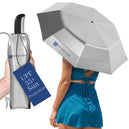
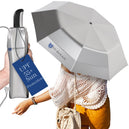
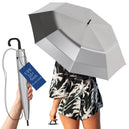
6. UV-Blocker Compact — Best Premium Sun Protection
- UPF: 55+ (blocks 99% UV)
- Weight: 15 oz
- Canopy: 42" arc (largest coverage)
- Price: ~$60
Here's where I need to be honest: the UV-Blocker Compact is not an ultralight option. At 15 oz, it's nearly 3x heavier than the ultralight competition. For gram-counting thru-hikers, that's disqualifying.
But it has the highest UPF rating available (55+), the largest canopy (42" arc), and it's approved by the Melanoma International Foundation. The Solarteck fabric with its silver reflective coating keeps you 15°F cooler than direct sun.
Pros: Highest UPF rating, MIF approved, largest coverage, 15°F cooling effect Cons: Nearly 3x heavier than ultralight options Best for: Day hikers, melanoma survivors, lupus patients, anyone prioritizing maximum UV protection over weight
7. Snow Peak Ultra-Light — Absolute Lightest (Rain Priority)
- UPF: Not rated
- Weight: 4.7 oz
- Canopy: 33"
- Price: ~$40
The Snow Peak is the lightest hiking umbrella available. But there's no UPF rating, and the small 33" canopy provides minimal coverage. This is a rain umbrella, not a sun umbrella.
Pros: Lightest option available Cons: No UPF rating, small canopy, rain-only protection Best for: Hikers who need rain protection and don't prioritize UV blocking
Quick Comparison Table
| Umbrella | UPF | Weight | Canopy | Price | Best For |
|---|---|---|---|---|---|
| Six Moon Designs Rain Walker | 50+ | 5.5 oz | 37.5" | $65 | Ultralight thru-hiking |
| Gossamer Gear Lightrek | 50+ | 5.8 oz | 37" | $45 | Budget thru-hiking |
| Montbell Sun Block | 50+ | 7.1 oz | 38.6" | $60 | Mountaineering |
| Hyperlite Essential | 50+ | 6.9 oz | 38" | $75 | Wind resistance |
| Zpacks Lotus | 40 | 6.8 oz | 38" | $55 | Weight priority |
| UV-Blocker Compact | 50+ | 15 oz | 42" | $60 | Premium sun protection |
| Snow Peak Ultra-Light | N/R | 4.7 oz | 33" | $40 | Rain only |
Why Does UPF Rating Matter for Thru-Hikers?
Thru-hikers face 8-12 hours of daily sun exposure for 4-6 months, making cumulative UV damage a serious health risk that basic umbrellas don't adequately address.

Let's do the math: - PCT thru-hike: ~5 months - Average hiking hours per day: 8-10 hours - Total sun exposure: 1,200+ hours
The PCT desert section alone covers 700+ miles of exposed terrain with minimal tree cover. The CDT has extensive alpine sections where higher altitude means stronger UV radiation—roughly 10-12% more UV exposure per 1,000 meters of elevation gain.
Traditional umbrellas only block about 75% of UV rays. Over 1,200 hours, that 25% getting through adds up to significant cumulative damage.
UPF 50+ umbrellas block 98%+ of UV rays. That extra 23% protection compounds over a multi-month hike.
For Hikers with Medical UV Sensitivity
Some hikers can't afford to compromise on UV protection:
- Melanoma survivors need maximum protection to prevent recurrence
- Lupus patients experience flares triggered by UV exposure—see The Complete Lupus Sun Protection Guide
- Retinol/tretinoin users have heightened sun sensitivity
- Fair-skinned hikers burn faster and accumulate damage quicker
For these hikers, the UV-Blocker Compact's UPF 50+ rating and Melanoma International Foundation approval matter more than the 9+ oz weight penalty. Medical-grade protection isn't negotiable when your health depends on it.
Can Hiking Umbrellas Handle Wind and Rain?
Modern hiking umbrellas handle 20-40 mph gusts through vented canopy designs and carbon fiber construction, unlike cheap umbrellas that invert in light wind.
How wind-resistant designs work:
- Vented mesh systems allow wind to pass through instead of catching like a sail (UV-Blocker, Gossamer Gear)
- Dual canopy designs create airflow that reduces blowouts (Hyperlite)
- Carbon fiber/fiberglass shafts flex without snapping under stress
The Hyperlite Essential's dual canopy is specifically designed for windy conditions. UV-Blocker's Vented Mesh System serves the same purpose—letting wind pass through while maintaining coverage.
Realistic limitations:
Hiking umbrellas aren't invincible. Be realistic about when they work:
- Heavy storms: Use a rain jacket instead. Umbrellas are supplemental.
- Dense vegetation: The Appalachian Trail's green tunnel makes umbrellas impractical—branches catch the canopy constantly.
- Extreme winds: Above 40+ mph, even wind-resistant designs struggle. Consider hands-free attachment systems that secure the umbrella to your pack.
Umbrellas work best on exposed, open terrain—exactly where you need sun protection most.
How Should You Choose Your Hiking Umbrella?
Choose based on trip length and priorities: ultralight UPF 50+ for thru-hikes, premium UPF 50+ for day hikes or medical UV sensitivity.
Here's a decision matrix:
| If You're... | Prioritize... | Best Choice |
|---|---|---|
| PCT/CDT thru-hiking | Weight + UPF 50+ | Six Moon Designs or Gossamer Gear |
| Day hiking in high sun | Maximum UV protection | UV-Blocker Compact (UPF 50+) |
| Melanoma survivor or lupus patient | Medical-grade protection | UV-Blocker (MIF Approved) |
| Hiking alpine/windy conditions | Wind resistance | Hyperlite Essential |
| Budget-conscious | Value | Gossamer Gear Lightrek |
| International travel | Packability + protection | Montbell Sun Block |
Budget Considerations
- Under $50: Gossamer Gear Lightrek ($45) delivers excellent value
- $50-65: Most options live here; pick based on your priority (weight vs. protection)
- $75+: Hyperlite's premium wind resistance for exposed conditions
What's the Bottom Line on Hiking Umbrellas?
The best hiking umbrellas depend on your priorities—ultralight thru-hikers need 5-7 oz options, while day hikers and medically UV-sensitive hikers benefit from premium protection.
Our picks for the best hiking umbrellas:
- Best Ultralight: Six Moon Designs Rain Walker SUL ($65, 5.5 oz, UPF 50+)
- Best Value: Gossamer Gear Lightrek ($45, 5.8 oz, UPF 50+)
- Best Wind Resistance: Hyperlite Mountain Gear Essential ($75, 6.9 oz, UPF 50+)
- Best Premium Sun Protection: UV-Blocker Compact ($60, 15 oz, UPF 50+)
The honest take:
For gram-counting thru-hikers, the Six Moon Designs or Gossamer Gear options make more sense—they're among the best hiking umbrellas for PCT thru-hikes. You're saving 9+ oz over the UV-Blocker without sacrificing UPF 50+ protection. Over 2,000 miles, that weight adds up.
But for day hikers, those with medical UV sensitivity, or anyone who prioritizes the absolute best sun protection over weight, the UV-Blocker Compact is the best hiking umbrella for maximum UV blocking. Its UPF 50+ rating, MIF approval, and 15°F cooling technology justify the extra weight. When you're not carrying it for months at a time, 15 oz for maximum protection is a fair trade.
For more on choosing the right UV umbrella for your needs, see The Complete Travel UV Umbrella Buying Guide.
For those prioritizing medical-grade sun protection, explore UV-Blocker's full lineup of MIF-approved umbrellas.
Frequently Asked Questions
What UPF rating do I need for the best hiking umbrellas?
For serious sun protection, aim for UPF 50+ minimum. The best hiking umbrellas all offer UPF 50+, blocking 98%+ of UV rays. UPF 50+ (like UV-Blocker) blocks 99%. For hikers with medical UV sensitivity (melanoma survivors, lupus patients), UPF 50+ provides the highest available protection.
Are the best hiking umbrellas worth the weight?
For exposed trails like the PCT desert section or CDT alpine zones, yes. The best hiking umbrellas can reduce perceived temperature by 15°F and block 98%+ of UV with proper UPF ratings. For densely forested trails like the AT, they're less useful due to branch interference.
Can I use a regular umbrella instead of the best hiking umbrellas?
You can, but regular umbrellas only block about 75% of UV rays. The best hiking umbrellas with UPF 50+ block 98%+ of UV rays and typically weigh less while being more wind-resistant than standard umbrellas.
How do I carry a hiking umbrella hands-free?
Most ultralight hiking umbrellas can be secured to pack straps using foam handles or dedicated attachment systems. Some hikers use shock cord or velcro straps to secure the umbrella shaft to their pack's shoulder straps.
What's the difference between UPF 50 and UPF 50+?
UPF 50 blocks approximately 98% of UV rays (1/50th passes through). UPF 50+ is the maximum rating category, blocking 98%+ of UV rays. UPF 50+ (like UV-Blocker offers) blocks 99% of UV rays and represents the highest protection available.
Do black or silver umbrella canopies work better for sun protection?
Silver or reflective canopies are better for sun protection. They reflect UV rays and heat away from you, reducing perceived temperature by up to 15°F. Black canopies absorb UV (blocking it from reaching you) but also absorb heat, making it warmer underneath. Learn more about umbrella colors for sun protection.
Are hiking umbrellas waterproof?
Most hiking umbrellas have water-resistant coatings that handle light to moderate rain. However, they're not designed to replace rain jackets in heavy downpours. Consider them supplemental rain protection for lighter conditions.
How long do hiking umbrellas last?
Quality hiking umbrellas from brands like Gossamer Gear, Six Moon Designs, and UV-Blocker typically last several seasons with proper care. Fiberglass and carbon fiber frames resist corrosion better than metal frames. Avoid leaving your umbrella in direct sun when not in use, and store it dry to prevent mold.