


Amoxicillin does not cause sun sensitivity. That is the short answer, and this amoxicillin sun sensitivity guide explains why the belief persists and what really causes rashes.
The FDA prescribing information for amoxicillin contains zero occurrences of the words "photosensitivity," "sun," "sunlight," "ultraviolet," "UV," or "phototoxic." Not one mention across the entire label. For anyone who just got prescribed amoxicillin and wants to know whether they can go outside this weekend, the answer is yes.
But the question persists for a reason. Amoxicillin causes rash as one of its four most common side effects, and a rash that shows up during the summer on sun-exposed skin looks a lot like sunburn. There is also a specific rash tied to mononucleosis that has fueled the misconception for decades. Both are worth understanding.
TLDR:
- Amoxicillin is not a photosensitizer. The FDA label contains zero mentions of sun, UV, or photosensitivity.
- The words "photosensitivity," "sunlight," and "ultraviolet" do not appear anywhere in the amoxicillin prescribing information.
- Rash is one of the four most common side effects, occurring at greater than 1% incidence in clinical trials.
- A high percentage of mononucleosis patients who receive amoxicillin develop a distinctive rash often confused with sunburn.
- No medication-specific sun precautions are required while taking amoxicillin.
- Baseline sun safety (UPF 50+ shade, protective clothing, broad-spectrum sunscreen) still applies to everyone.
Does Amoxicillin Sun Sensitivity Exist?
No. The FDA prescribing information for amoxicillin contains zero occurrences of the words photosensitivity, sun, sunlight, ultraviolet, or phototoxic.
The current amoxicillin label (Sandoz Inc, version 26, effective February 2024) was searched for all eight standard photosensitivity-related terms. Every count came back zero. There is no amoxicillin photosensitivity warning because no such reaction exists in the clinical data. This is not a quirk of one manufacturer's label. The silence is consistent across labels from multiple companies.
The most comprehensive drug photosensitivity review in the pharmacological literature, published by Kowalska et al. in Pharmaceuticals (2021), lists tetracyclines, fluoroquinolones, sulfonamides, and two specific cephalosporins as photosensitizers. No penicillin appears anywhere in the 123,000-character review. The authors do list beta-lactams as a class, but narrow the implicated drugs to ceftazidime and cefotaxime only. Amoxicillin is a beta-lactam, but it is not named.
The FDA's consumer page on sun-reactive medications names ciprofloxacin, doxycycline, levofloxacin, ofloxacin, tetracycline, and trimethoprim. Amoxicillin is absent from that list too.
Why Do So Many People Think Amoxicillin Causes Sunburn?
Amoxicillin causes rash as a common side effect, and rashes on sun-exposed skin during summer look like sunburn to the untrained eye.
Four factors explain why the belief is so persistent.
Common Drug Rash
The FDA label states it plainly: "The most common adverse reactions (greater than 1%) observed in clinical trials of amoxicillin capsules, tablets or oral suspension were diarrhea, rash, vomiting, and nausea." Rash sits among the top four side effects. Any drug taken by millions of people every year that causes rash at over 1% will produce a large number of patients with visible skin reactions.
Visibility Bias on Exposed Skin
A drug rash appears across the body, including skin under clothing. But people notice it first on their arms, face, and neck because those areas are visible. The rash then gets blamed on sun exposure instead of the medication.
Summer Prescribing Overlap
Amoxicillin is the most prescribed antibiotic in the United States. Summer means more prescriptions are active at the same time that people are spending hours outdoors. The overlap in timing creates a coincidence that feels causal.
The Mononucleosis Connection
This is the strongest driver of the false belief, and it has its own section below.
Amoxicillin Rash vs Sunburn: How Do You Tell Them Apart?
An amoxicillin drug rash appears on covered and uncovered skin, itches rather than burns, and has diffuse spotty borders rather than sharp clothing lines.

The table below provides a direct comparison.
| Feature | Amoxicillin Drug Rash | Sunburn |
|---|---|---|
| Distribution | Whole body including areas covered by clothing | Sun-exposed areas only |
| Borders | Diffuse, spotty, no clear edge | Sharp lines where clothing covered skin |
| Sensation | Itchy, not typically painful | Painful and hot to the touch |
| Onset | 5 to 14 days after starting medication | 2 to 6 hours after UV exposure |
| Course | Fades over days, responds to antihistamines | Peaks at 24 to 48 hours, peels in 3 to 7 days |
| Appearance | Pink-red maculopapular spots and raised bumps, sometimes described as measles-like | Uniform redness matching the exposed area, may blister |
The single most reliable indicator is distribution. If the rash is on skin that was covered by a shirt, it is not sunburn.
Why Does Amoxicillin Cause a Rash in Mononucleosis?
The FDA label warns that a high percentage of mononucleosis patients who receive amoxicillin develop an erythematous skin rash unrelated to true allergy.
Section 5.6 of the amoxicillin prescribing information, titled "Skin Rash in Patients With Mononucleosis," states: "A high percentage of patients with mononucleosis who receive amoxicillin develop an erythematous skin rash. Thus amoxicillin should not be administered to patients with mononucleosis."
The CDC separately advises: "If you have infectious mononucleosis, you should not take penicillin antibiotics like ampicillin or amoxicillin."
The clinical scenario unfolds like this. A teenager develops a sore throat. The doctor suspects strep and prescribes amoxicillin. But the underlying infection is actually Epstein-Barr virus (mono). Within days, a widespread erythematous rash appears. If it happens during the summer, the teenager, the parents, and sometimes even the prescribing clinician attribute the rash to sun exposure.
This rash is not a true penicillin allergy. It is an immune-mediated reaction specific to the combination of active EBV infection and aminopenicillin antibiotics. Many patients who develop this rash can safely take amoxicillin again later, after the EBV infection resolves. A doctor should make that determination on a case-by-case basis.
This EBV-amoxicillin scenario is likely the single strongest origin of the amoxicillin sun sensitivity myth. Teenagers get prescribed amoxicillin more than almost any other age group, and summers bring both sun exposure and the outdoor socializing that spreads EBV.
Which Antibiotics Actually Do Cause Sun Sensitivity?
Three antibiotic classes are documented photosensitizers: tetracyclines like doxycycline, fluoroquinolones like ciprofloxacin, and sulfonamides like Bactrim.
Tetracyclines carry the highest photosensitivity risk among commonly prescribed antibiotics. Doxycycline is the most frequently implicated, with reactions triggered specifically by UVA radiation. The FDA label for doxycycline states that "photosensitivity manifested by an exaggerated sunburn reaction has been observed in some individuals taking tetracyclines." The full protection guide is available in the dedicated doxycycline sun sensitivity article.
Fluoroquinolones such as ciprofloxacin and levofloxacin produce phototoxic reactions through a different mechanism. Ciprofloxacin's label includes a dedicated "Photosensitivity/Phototoxicity" warning section. Details are covered in the cipro sun sensitivity guide.
Sulfonamides, including sulfamethoxazole/trimethoprim (Bactrim), are the third photosensitizing class. Unlike tetracyclines, sulfonamide reactions are triggered by UVB wavelengths. The bactrim sun sensitivity guide covers sulfonamide-specific precautions.
For a complete class-by-class comparison covering every major antibiotic, see the antibiotics sun sensitivity hub or the broader medications that cause sun sensitivity guide.
Do You Still Need Sun Protection While Taking Amoxicillin?
No medication-specific amoxicillin sun sensitivity precautions are needed, but baseline sun safety recommended by the CDC and AAD still applies to everyone.
Amoxicillin does not increase UV sensitivity. There is no pharmacological reason to change sun habits because of this drug. Standard sun protection guidance from the AAD applies regardless of medication status: seek shade during peak UV hours (10 a.m. to 4 p.m.), wear sun-protective clothing, and apply broad-spectrum SPF 30 or higher sunscreen to exposed skin.
One practical consideration: if an active drug rash is present on the skin, keeping inflamed areas out of direct sunlight helps limit post-inflammatory hyperpigmentation. This is not unique to amoxicillin. Any irritated or inflamed skin benefits from shade while it heals.
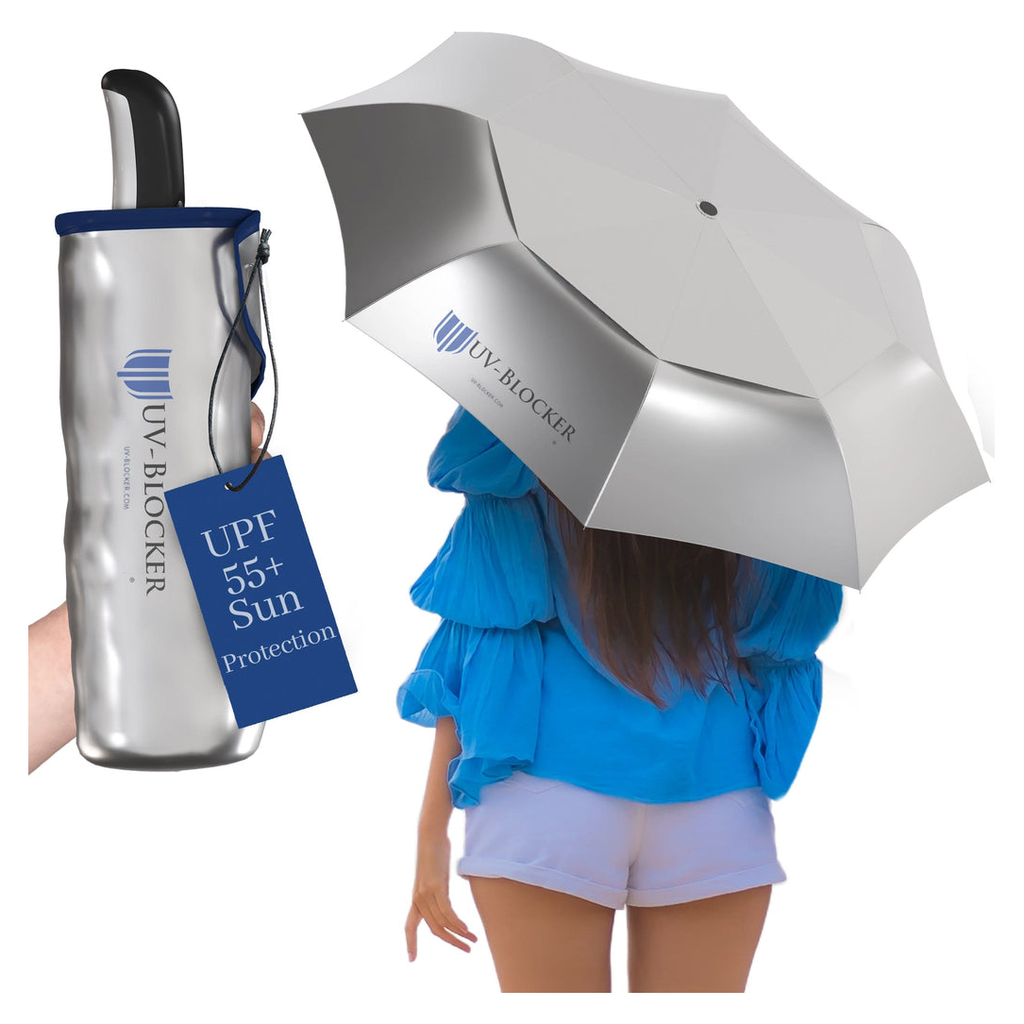
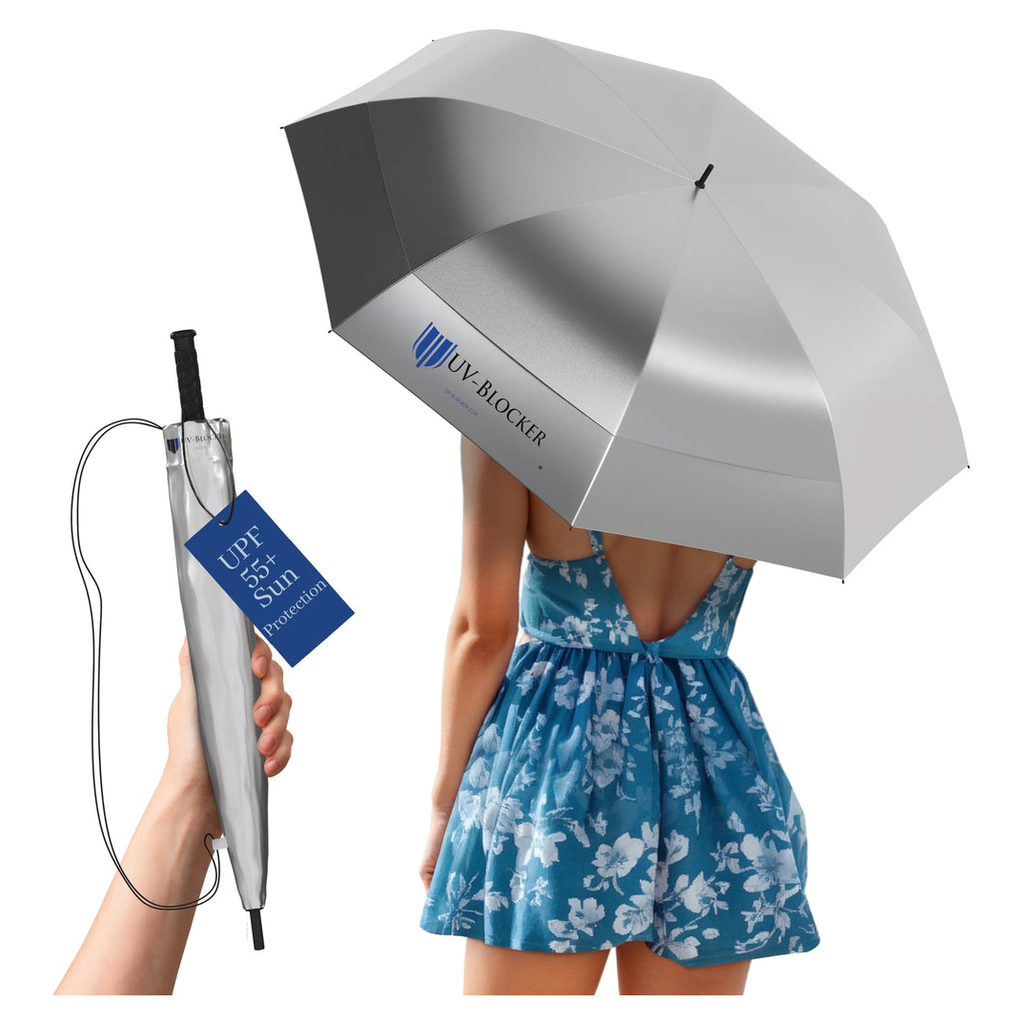
For anyone who prefers physical shade over chemical sunscreen, a UPF 50+ umbrella provides verified protection without anything applied to the skin. The UV-Blocker Compact Umbrella ($59.95) blocks 100% of UV-B and 99.97% of UV-A rays, verified through independent AATCC TM183-2020 testing with Solarteck reflective coating. The full UPF 50+ umbrella collection includes models for travel, golf, and beach use. Research comparing UV umbrellas and sunscreen shows that physical shade addresses the application-gap problem that limits real-world sunscreen performance.
When Should You Call a Doctor About a Rash on Amoxicillin?
Contact the prescribing clinician immediately if a rash on amoxicillin blisters, involves the mouth or eyes, spreads rapidly, or appears alongside fever or facial swelling.
These are the red flags that require urgent medical attention:
- Blistering or peeling skin. This can signal Stevens-Johnson syndrome or toxic epidermal necrolysis, both rare but serious reactions.
- Mucosal involvement. Sores inside the mouth, redness around the eyes, or genital lesions alongside a body rash point toward a systemic reaction.
- Fever with the rash. A rash paired with high fever suggests a more serious drug reaction beyond a simple eruption.
- Facial or throat swelling. This may indicate anaphylaxis and requires emergency care, not a scheduled appointment.
- Rapid spread over hours. A rash that covers large areas within hours rather than days is behaving differently than a typical drug eruption.
The AAD recommends seeing a dermatologist when a rash covers most of the body, turns into open sores, or causes significant pain.
A mild, non-blistering rash without any of these systemic symptoms can often be managed with over-the-counter antihistamines while waiting for a regular appointment with the prescriber. Stopping the antibiotic without medical guidance is not recommended, since incomplete courses can contribute to antibiotic resistance.
Frequently Asked Questions About Amoxicillin and Sun Exposure
These are the most common questions about amoxicillin sun sensitivity, answered with evidence from the FDA prescribing information and verified medical sources.
Can you go in the sun on amoxicillin?
Yes. Amoxicillin does not cause photosensitivity. Following baseline sun safety such as shade, clothing, and sunscreen is sufficient while taking this medication. No additional precautions are needed.
Does amoxicillin make you burn easier?
No. The FDA label for amoxicillin contains zero references to sun, UV, or photosensitivity. A sunburn that happens while someone is taking amoxicillin is a coincidence, not a side effect of the medication. Amoxicillin rash sun exposure overlap in summer creates a false impression of cause and effect.
How do you know if a rash is from amoxicillin or the sun?
Check the distribution. An amoxicillin drug rash appears on skin that was covered by clothing as well as exposed skin. A sunburn follows sharp clothing lines and affects only areas that were directly in the sun. The rash-vs-sunburn table in this article breaks down six key differences.
Is an amoxicillin rash the same as a penicillin allergy?
Not always. The rash triggered by the combination of amoxicillin and active Epstein-Barr virus (mononucleosis) is an immune-mediated reaction, not a true penicillin allergy. Any rash that develops during antibiotic treatment should be reported to the prescribing clinician so they can determine whether it represents a true allergy.
How long does an amoxicillin rash last?
A non-allergic amoxicillin rash typically fades within 3 to 7 days, and in some cases it resolves even without stopping the medication. An allergic rash generally requires discontinuing the drug and may need antihistamine or corticosteroid treatment.
Should I stop taking amoxicillin if I get a rash?
Do not stop an antibiotic without speaking to the prescriber first. A mild, non-blistering rash may not require discontinuation. However, any rash accompanied by blistering, fever, mouth sores, or facial swelling is a reason to seek immediate medical attention.
Frequently Asked Questions
Does Amoxicillin really make skin more sensitive to sunlight?
Yes. Amoxicillin belongs to a class of medications that can trigger photosensitivity reactions in a subset of patients. This can cause sunburn-like reactions with minimal UV exposure, or trigger phototoxic skin rashes. The reaction severity varies by individual, dosage, and UV intensity. Always review your medication guide and consult your prescribing physician if you notice unusual skin reactions in sunlight.
What SPF should I use if I take this medication?
Dermatologists generally recommend SPF 30+ broad-spectrum sunscreen for patients on photosensitizing medications, with reapplication every 2 hours. However, sunscreen alone isn't sufficient for high UV exposure. Combining sunscreen with physical barriers — UPF 50+ clothing, wide-brim hats, and UV-blocking umbrellas — provides the most reliable protection. UV-Blocker's UPF 50+ umbrellas block 99% of UVA and UVB rays.
Can I still go outdoors while taking this medication?
Absolutely. Most patients can continue outdoor activities with appropriate precautions: avoid peak UV hours (10am–4pm), wear protective clothing, use SPF 30+ sunscreen, and use shade whenever possible. A portable UV-blocking umbrella offers hands-free shade wherever you go, making it a practical solution for patients who need consistent sun avoidance.
How long after stopping the medication until sun sensitivity resolves?
Photosensitivity typically resolves within days to weeks after discontinuing the medication, depending on the drug's half-life and your individual metabolism. Some medications with long half-lives may cause sensitivity for weeks. Continue sun protection until your doctor confirms it's safe to reduce precautions.
What are the signs of a phototoxic reaction vs. a photoallergic reaction?
Phototoxic reactions look like severe, rapid sunburn — they appear within hours of UV exposure and are dose-dependent. Photoallergic reactions involve an immune response, can spread beyond sun-exposed areas, and may appear days later. Both require prompt sun avoidance. See your dermatologist for diagnosis and management.
Sun Safety Essentials for Patients on Photosensitizing Medications
- Keep a UV index app on your phone and avoid going outdoors when the index exceeds 6 without full protection
- Wear UPF 50+ sun-protective clothing on arms and legs, not just sunscreen
- Carry a portable UV-blocking umbrella for shade on demand — especially effective during outdoor commutes, sporting events, or waiting outdoors
- Apply sunscreen to the back of hands and tops of feet — commonly missed areas that receive direct UV
- Inform your pharmacist about all medications you take so they can flag photosensitizing combinations
- Request a window film UV assessment if you drive frequently — car windows block UVB but not all UVA
Frequently Asked Questions
Does Amoxicillin really make skin more sensitive to sunlight?
Yes. Amoxicillin belongs to a class of medications that can trigger photosensitivity reactions in a subset of patients. This can cause sunburn-like reactions with minimal UV exposure, or trigger phototoxic skin rashes. The reaction severity varies by individual, dosage, and UV intensity. Always review your medication guide and consult your prescribing physician if you notice unusual skin reactions in sunlight.
What SPF should I use if I take this medication?
Dermatologists generally recommend SPF 30+ broad-spectrum sunscreen for patients on photosensitizing medications, with reapplication every 2 hours. However, sunscreen alone isn't sufficient for high UV exposure. Combining sunscreen with physical barriers — UPF 50+ clothing, wide-brim hats, and UV-blocking umbrellas — provides the most reliable protection. UV-Blocker's UPF 50+ umbrellas block 99% of UVA and UVB rays.
Can I still go outdoors while taking this medication?
Absolutely. Most patients can continue outdoor activities with appropriate precautions: avoid peak UV hours (10am–4pm), wear protective clothing, use SPF 30+ sunscreen, and use shade whenever possible. A portable UV-blocking umbrella offers hands-free shade wherever you go, making it a practical solution for patients who need consistent sun avoidance.
How long after stopping the medication until sun sensitivity resolves?
Photosensitivity typically resolves within days to weeks after discontinuing the medication, depending on the drug's half-life and your individual metabolism. Some medications with long half-lives may cause sensitivity for weeks. Continue sun protection until your doctor confirms it's safe to reduce precautions.
What are the signs of a phototoxic reaction vs. a photoallergic reaction?
Phototoxic reactions look like severe, rapid sunburn — they appear within hours of UV exposure and are dose-dependent. Photoallergic reactions involve an immune response, can spread beyond sun-exposed areas, and may appear days later. Both require prompt sun avoidance. See your dermatologist for diagnosis and management.
Sun Safety Essentials for Patients on Photosensitizing Medications
- Keep a UV index app on your phone and avoid going outdoors when the index exceeds 6 without full protection
- Wear UPF 50+ sun-protective clothing on arms and legs, not just sunscreen
- Carry a portable UV-blocking umbrella for shade on demand — especially effective during outdoor commutes, sporting events, or waiting outdoors
- Apply sunscreen to the back of hands and tops of feet — commonly missed areas that receive direct UV
- Inform your pharmacist about all medications you take so they can flag photosensitizing combinations
- Request a window film UV assessment if you drive frequently — car windows block UVB but not all UVA