

Can you get sunburn on a cloudy day? Absolutely. On partly cloudy days, UV radiation at the surface can exceed clear-sky levels by up to 25 percent. A partly cloudy afternoon actually poses a higher threat to bare skin than a cloudless sky. People skip sun protection on overcast days. They feel cool air. They don't see glaring sunlight. Data proves this blind spot. Only 20 percent of Americans use sunscreen under clouds. You aren't alone if you ditch the SPF under gray skies. Skipping sunscreen leads to surprise sunburns. It also causes decades of hidden UV damage.
Human brains link visible sunlight and heat with sunburn danger. But that evolutionary trick fails against ultraviolet radiation. People rely on temperature to gauge risk. The air feels cool. So people assume the sun won't burn them. This sensory trap leaves hikers and beachgoers with severe burns on overcast days. Skin clinics see the aftermath every day. Patients sit in shock. They can't believe they burned without seeing the sun.
People ask whether you can get sunburn on a cloudy day every summer. National Weather Service atmospheric data provides exact UV transmission rates for specific cloud formations. You'll find exact burn times for different cloudy conditions. The damage happens fast. You'll see exactly why physical UV protection works no matter what the sky looks like. Skincare blogs love to claim that 80 percent of UV rays pierce the clouds. That vague number ignores the facts. Specific cloud formations transmit UV differently. And partly cloudy skies actually spike your total exposure through hidden mechanisms.
How Much UV Gets Through Clouds? (The Real Numbers by Cloud Type)
Cloud types change everything. Scattered clouds allow 89% of UV to hit the ground. Broken clouds transmit 73%. Heavy overcast finally drops that number to 31%.

Warning people about an 80 percent UV penetration rate oversimplifies the science. It treats every cloud like the exact same filter. The NOAA Climate Prediction Center measures exactly how different clouds block UV. Learn how specific clouds filter light to gauge your exact risk. Use a UV index umbrella guide to match today's forecast with real-world protection tactics.
| Cloud Condition | UV Transmission | What It Looks Like |
|---|---|---|
| Clear sky | ~100% | No clouds visible |
| Thin cirrus | 90-95% | Wispy, high-altitude streaks |
| Scattered clouds | 89% | Patches of blue sky visible |
| Broken clouds | 73% | More cloud than blue sky |
| Overcast | 31% | Complete gray sky, no blue |
| Heavy stratus | ~16% | Dark, thick low clouds |
Only thick overcast skies block a meaningful amount of UV. Look up on a standard afternoon. You'll likely see scattered or broken clouds instead of a solid, gray ceiling. Those white puffy clouds transmit nearly 90 percent of the sun's ultraviolet rays. The sky looks safe to the naked eye. But the actual UV drop barely registers.
Thin cirrus clouds float high in the atmosphere. They barely filter a thing. Expect 90 to 95 percent of UV to hit the dirt. Scattered clouds mix blue sky with white puffs. They dump 89 percent of UV rays onto your shoulders. Broken clouds blanket half the sky. Yet they still leak 73 percent of the radiation. Risk drops only when dark gray overcast deletes the blue sky. Thick stratus clouds finally drag transmission rates under 20 percent. Weather apps label most days as cloudy. But those clouds offer zero real protection.
Can the UV Index Be Higher on Cloudy Days Than Sunny Days?
Yes. Partly cloudy skies can push UV levels 25% above clear-sky baselines. The edges of cumulus clouds act like magnifying glasses to focus radiation directly at the ground.
So can you get sunburn on a cloudy day when the sky looks mostly gray? Clouds can act like giant atmospheric mirrors. They bounce extra UV radiation straight down. A full 25 percent of partly cloudy days record UV spikes higher than perfectly clear days. So you'll absorb a heavier dose of UV on a partly cloudy Tuesday than a cloudless Wednesday. Read exactly how indirect exposure works in this sunburn in the shade guide.
These UV spikes usually last 10 minutes as clouds drift past the sun. But the damage stacks up fast over a long afternoon. Two atmospheric tricks drive this threat. Tall cumulus clouds reflect radiation down their vertical sides. Thin cirrus clouds act like a massive optical diffuser. The clouds spread intense radiation across miles of terrain. Mountaineers and skiers face the absolute worst of this cloud enhancement effect.
They battle high altitudes, reflective snow, and broken clouds all at once. But sea-level beachgoers face the exact same physical laws. One cumulus cloud blocks the sun and casts a shadow. The bright white edges of that cloud bounce an intense UV beam into the unshaded zones. Sit just outside the shadow. You'll take a direct hit from the sun plus the extra beam from the cloud edge.
Why Do Cloudy Days Feel Safe When They're Not? (The Heat vs. UV Trap)
Clouds block heat perfectly. They fail to block UV. Your skin feels cool while absorbing the exact same radiation as a sunny day.
Infrared radiation warms the skin. Clouds block that infrared heat. The air suddenly feels cool. But UV radiation ignores the clouds. Water droplets scatter the UV rays but fail to absorb them. The radiation simply diffuses and hits the dirt. You sit comfortably in the cool air. Meanwhile, your skin absorbs massive cellular damage. Spot this trap to avoid common sun protection mistakes.
UVA rays age your skin and spike your melanoma risk. Heavy overcast still transmits 70 percent of those UVA rays. UVA makes up 95 percent of the total UV hitting the ground. Your skin ages at normal speed on a cloudy day. The UVB rays drop just enough to stop a fast red burn. You won't turn red immediately. But your collagen breaks down at top speed.
People abandon their sunscreen fast. Sunscreen use plummets 38 percent when clouds roll in. Usage drops from 53 percent to barely 32 percent. Only 20 percent of people bother with SPF on dark days. Heat triggers the instinct to apply lotion. Clouds kill the heat. They leave the UV threat alive. This creates a huge blind spot for anyone working outside.
How Long Does It Take to Get Sunburn on a Cloudy Day?
Fair skin burns in 25 minutes under scattered clouds at a UV index of 8. That barely beats the 22-minute clear-sky burn time. Scattered clouds still dump 89% of UV onto your skin.

You have to calculate how clouds alter your specific burn time. The math takes clear-sky burn times for fair skin and applies the NWS cloud transmission factors. Read the full methodology behind these sunburn in the shade calculations. You'll see how sand and concrete bounce indirect light directly onto your skin.
| UV Index | Clear Sky | Scattered Clouds (89%) | Broken Clouds (73%) | Overcast (31%) |
|---|---|---|---|---|
| 6 | ~29 min | ~33 min | ~40 min | ~94 min |
| 8 | ~22 min | ~25 min | ~30 min | ~71 min |
| 10 | ~18 min | ~20 min | ~25 min | ~58 min |
Ground reflection warps these numbers further. Sand reflects up to 25 percent of UV. Water bounces back up to 30 percent. Concrete kicks back 12 percent. Stand on a beach under scattered clouds. You'll take 89 percent of the overhead UV plus the reflection from the sand. That total matches a clear-sky day.
Scattered clouds buy you zero extra time. A 25-minute burn acts exactly like a 22-minute burn when you spend three hours outside. Golf takes hours. Three extra minutes of safety means nothing. Broken clouds give you eight extra minutes at UV index 8. You'll still burn in 30 minutes. Dark overcast skies finally push the burn time past an hour. A few white clouds offer zero real safety.
What Is the Best Sun Protection for Cloudy Days?
Combine a UPF 50+ umbrella with broad-spectrum sunscreen. Physical barriers block rays perfectly no matter what the clouds do.
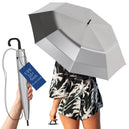
UPF umbrellas work perfectly under blue skies or dark gray clouds. They stop the radiation right above your head. People refuse to apply sunscreen when they feel cold. But carrying an umbrella requires zero effort. You open it. You block the sun. Look at the data on do UV umbrellas work. They provide a hard, measurable defense against scattered rays.
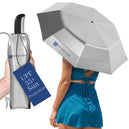
A UPF 50+ UV Protection Travel Umbrella blocks 99 percent of UV rays in any weather. That reliability solves the problem of skipping sunscreen on cool days. You still need sunscreen on exposed arms. But people just won't apply it without feeling the heat. Pair sunscreen with a solid physical barrier for total defense.
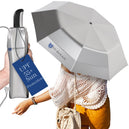
Toss a UV Protection Compact Umbrella into your bag for daily commutes. It works just as well on the beach. Read the sunburn under an umbrella guide. You'll learn exactly how to handle reflected ground UV with portable shade.
Skin doctors push for protection the second the UV index hits 3. Check the EPA UV Index Scale for a fast shadow rule. If your shadow is shorter than your actual height, UV exposure is dangerously high. Pop the canopy open. You immediately block direct and scattered radiation.
Can You Get Sunburn on a Cloudy Day? Frequently Asked Questions
Atmospheric research provides concrete answers to the most common questions about sunburns and cloudy skies.
What percentage of UV rays get through clouds?
Cloud type dictates the transmission. Scattered clouds transmit 89%. Broken clouds leak 73%. Thin cirrus clouds let 95% pass. NOAA data shows heavy overcast drops transmission to 31%.
That 80 percent figure hides the daily reality. A partly cloudy afternoon hits 89 percent transmission. Trusting the 80 percent myth gets people burned.
Can the UV index be higher on cloudy days?
Yes. Cumulus clouds can reflect UV downward. This cloud enhancement effect pushes UV levels 25% higher than a totally clear sky.
A quarter of all UV measurements on partly cloudy days show this spike. Clouds act like magnifying mirrors. These intense radiation spikes catch people off guard.
How long does it take to sunburn on a cloudy day?
Fair skin burns in 25 minutes at UV index 8 under scattered clouds. That same skin burns in 22 minutes under clear skies. Scattered clouds still transmit 89% of the UV.
Only dark storm clouds delay the burn. Broken clouds give you 8 extra minutes. Scattered clouds offer zero extra time. You'll burn just as fast on a hike.
Do you need sunscreen on cloudy days?
Yes. Use SPF 30+ whenever the UV index hits 3. That index hits 3 on almost every cloudy day from spring through fall.
An American Academy of Dermatology survey shows exactly 20 percent of Americans use sunscreen under clouds. That leaves millions unprotected. UPF-rated umbrellas step in to block UV rays when people forget their sunscreen. Follow basic year-round UV protection tips in any weather.
Can you get vitamin D on a cloudy day?
Yes. Clouds transmit plenty of UVB radiation to trigger vitamin D production. Heavy overcast slows the process down.
Scattered clouds let enough UVB through to synthesize vitamin D. Only a thick, dark ceiling stops the wavelengths. You never need perfectly clear skies for vitamin D.
What type of clouds block the most UV?
Thick, low stratus clouds block the most UV. They transmit just 16%. Thin cirrus clouds let 95% of UV pass right through.
Thunderstorm clouds kill UV radiation dead. But thunderstorms make up a tiny fraction of cloudy weather. Standard clouds won't protect your skin.
Conclusion
- Most days feature scattered or broken clouds that transmit 73 to 89 percent of all UV.
- Partly cloudy skies push UV levels 25 percent above clear skies through cloud reflection.
- Clouds block heat but transmit UV. This drops the temperature and tricks people into ditching their sunscreen.
- UPF 50+ umbrellas block 99 percent of UV rays under any cloud cover.
Now you know the answer: yes, you can get sunburn on a cloudy day. Check the UV index on your phone right now. Grab an umbrella if that number hits 3. Never trust the air temperature. A UPF 50+ umbrella kills the guesswork. Buy a UV Protection Compact Umbrella for your daily bag. Pack it before you check the weather.