

No. Everyday sunscreen use has not been shown to cause vitamin D deficiency. Sunscreen filters most UVB in the lab, but the way people really apply it still lets enough through.
So why does the question keep coming up? Because the logic sounds airtight. UVB is the part of sunlight that makes vitamin D, and sunscreen is designed to stop UVB. Ask "does sunscreen block vitamin D?" and the obvious answer seems to be yes.
The worry hits hardest for people who avoid the sun for medical reasons: people with lupus, people taking photosensitizing medicines, melanoma survivors and patients going through radiation therapy. For them, the trade-off feels real. This guide walks through the SPF math, what studies on real people found, how shade and UV umbrellas compare, and who should talk to a doctor about testing or supplements. The shade question has its own in-depth guide: can you get vitamin D in the shade.
Does Sunscreen Stop Your Skin Making Vitamin D?
Not in everyday use. Sunscreen reduces vitamin D production under lab UV, but field trials and population studies find that people who use it daily keep normal vitamin D levels.
The skin makes vitamin D when UVB light (roughly 290 to 315 nm) turns a cholesterol compound in the skin into pre-vitamin D3. UVA plays no part. So it is fair to ask whether a product built to filter UVB shuts the process down.
What the lab shows versus real life
A 2019 review in the British Journal of Dermatology by Neale and colleagues looked at both sides of the evidence. In experiments under artificial UV lamps, sunscreen "considerably reduced" vitamin D production. But randomized field trials, where people used sunscreen of around SPF 16 every day in normal life, found no effect on vitamin D. Most observational studies found either no link or a positive one: sunscreen users often had higher levels, likely because they spend more time outdoors. The authors concluded that vitamin D concerns should not get in the way of skin cancer prevention advice.
The Tenerife holiday study
The clearest real-world test came from a 2019 study of people on a sunny week-long holiday in Tenerife, led by researchers at King's College London. Groups who applied SPF 15 properly, thickly enough to prevent sunburn, still raised their blood vitamin D during the week. According to the published study, levels rose by 19.0 nmol/L with a high-UVA-protection SPF 15 and 13.0 nmol/L with a low-UVA-protection SPF 15.
There is an honest limit here. The study tested SPF 15, and the British Association of Dermatologists noted that more research is needed on SPF 30 and higher.
What experts and US data say
An expert consensus review published the same year (Passeron et al.) concluded that sunscreen used for daily and recreational protection does not compromise vitamin D synthesis, even when applied under optimal conditions.
US population data points the same way. In NHANES data from 2003 to 2006, sunscreen use was not associated with low vitamin D, while frequent shade-seeking and wearing long sleeves were. These links were strongest in white participants and did not reach significance in Black or Hispanic participants. The Skin Cancer Foundation sums it up: clinical studies have never found that everyday sunscreen use leads to vitamin D insufficiency.
If sunscreen filters 97% of UVB, how can that be true? The answer is in the numbers.
How Much UVB Do SPF 30 and SPF 50 Block?
Applied at the lab test amount, SPF 30 filters about 97% of UVB and SPF 50 about 98%. Most people apply far less, so real protection is lower.
SPF works roughly as a fraction: at the test dose, a sunscreen lets through about 1/SPF of the sunburning UV. That gives the figures below, which match the Skin Cancer Foundation's 97% and 98% for SPF 30 and SPF 50.
| SPF (applied at 2 mg/cm²) | UVB filtered | UVB reaching skin |
|---|---|---|
| SPF 15 | ~93% | ~7% |
| SPF 30 | ~97% | ~3% |
| SPF 50 | ~98% | ~2% |
Lab figures at the FDA test amount. Real-world application is usually thinner, so more UVB gets through.
The application gap
SPF is measured with sunscreen spread at 2 mg/cm², a thick, even layer. Almost nobody uses that much. A 2023 review in the Journal of Exposure Science & Environmental Epidemiology found that 36 of 38 real-world application values reported between 1985 and 2020 fell below the 2 mg/cm² test amount. A King's College London study found that at a typical 0.75 mg/cm², protection fell by about 60% compared with the label.
Add missed spots, sweat, swimming and skipped reapplication, and the gap gets wider. That gap is a big reason real-world vitamin D levels hold up. It is also why sunscreen alone often under-protects, so the answer is never to apply less. For readers who cannot tolerate sunscreen, there are proven options for sun protection without sunscreen.
The strength of UVB itself matters far more than the SPF on the bottle. Season, time of day and latitude change how much vitamin D the skin can make, which is covered in more depth in this guide to the UV index explained.
Do Shade and UV Umbrellas Block Vitamin D Too?
Partly. Ordinary shade still lets through about half the vitamin D-effective UV of full sun. A UPF 50+ canopy blocks UVB through its fabric, but scattered light still reaches you.
Shade is not darkness as far as UV is concerned. Much of the UV that reaches the skin is scattered across the sky or bounced up from the ground. Researchers Turnbull, Parisi and Kimlin measured vitamin D-effective UV at about 52% of full-sun levels under a shade umbrella and about 55% in tree shade, under clear skies at a subtropical site.
Why the umbrella fabric matters
Not all umbrellas are equal. In a JAMA Dermatology test of 23 umbrellas at UV index 8, standard umbrellas blocked at least 77% of UV, black ones about 90%, and a silver sun umbrella 99%.
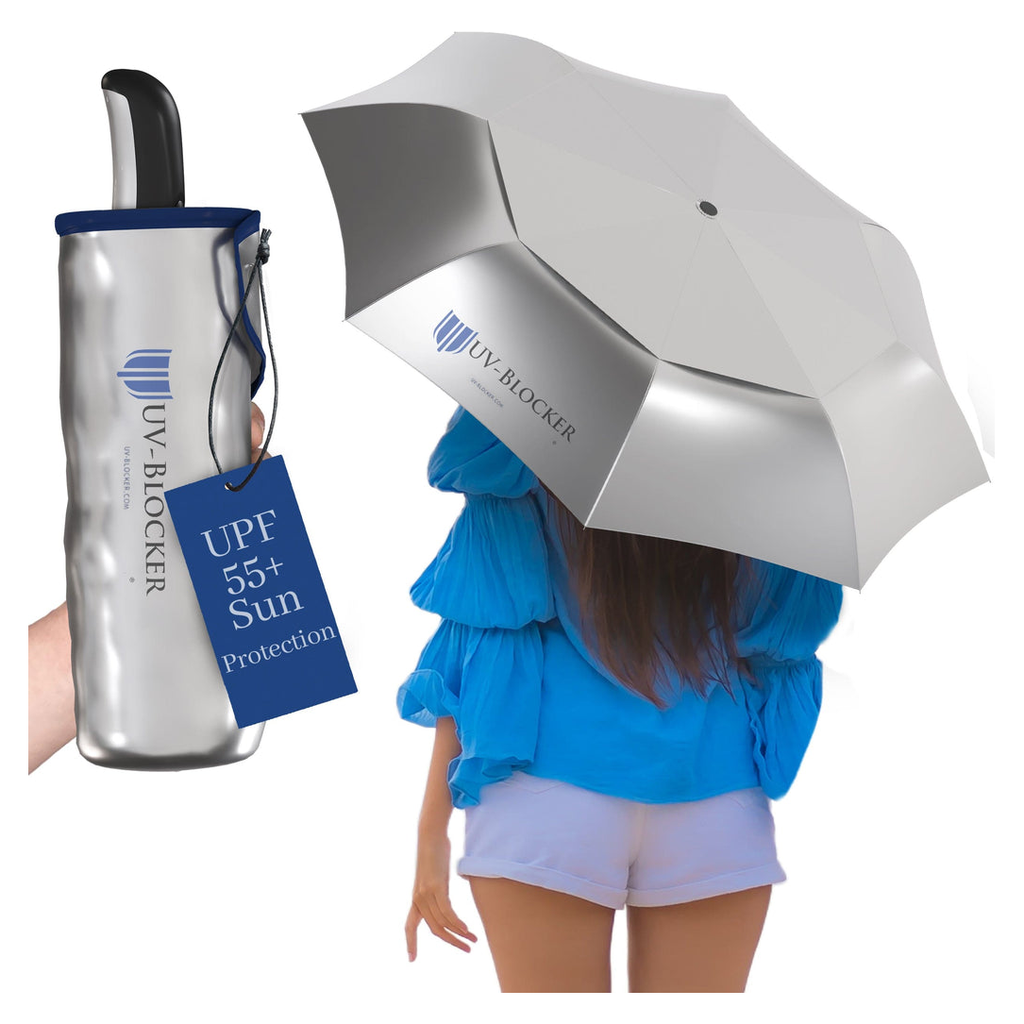
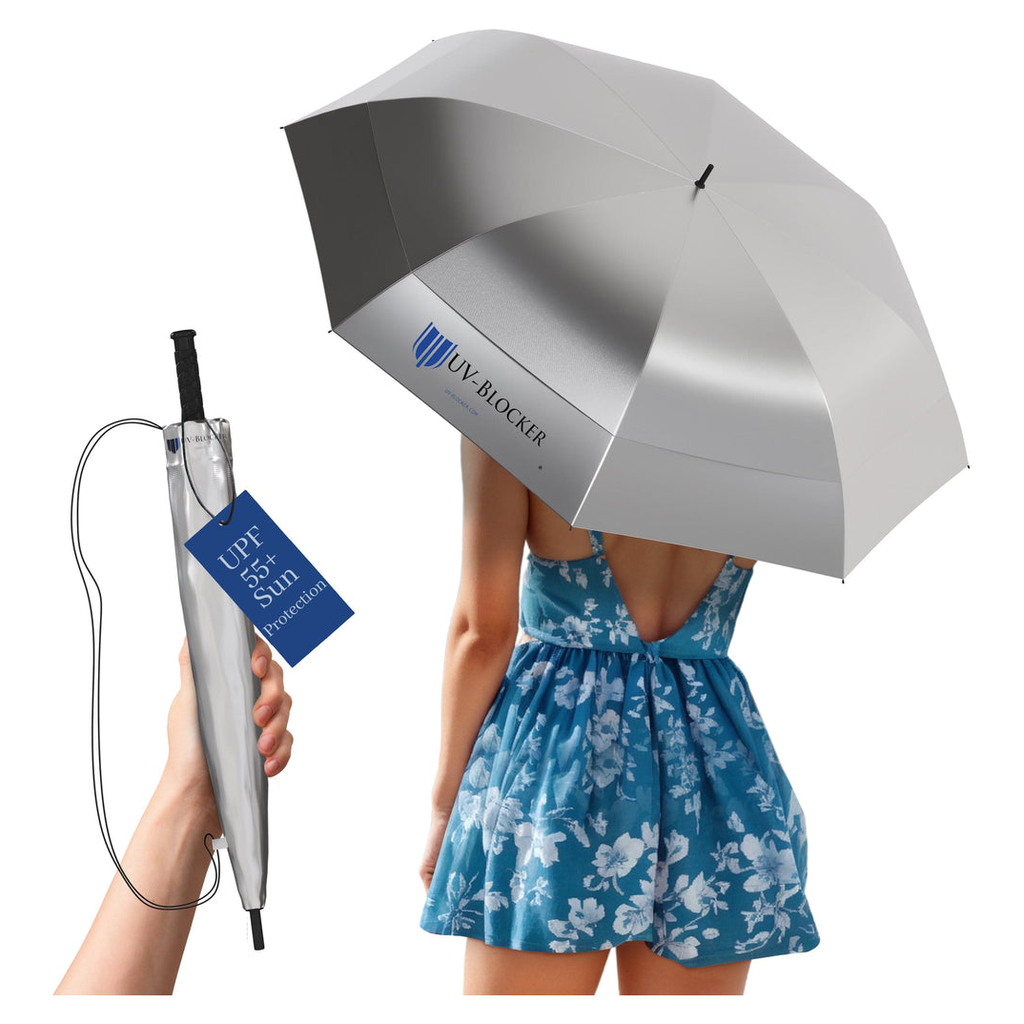
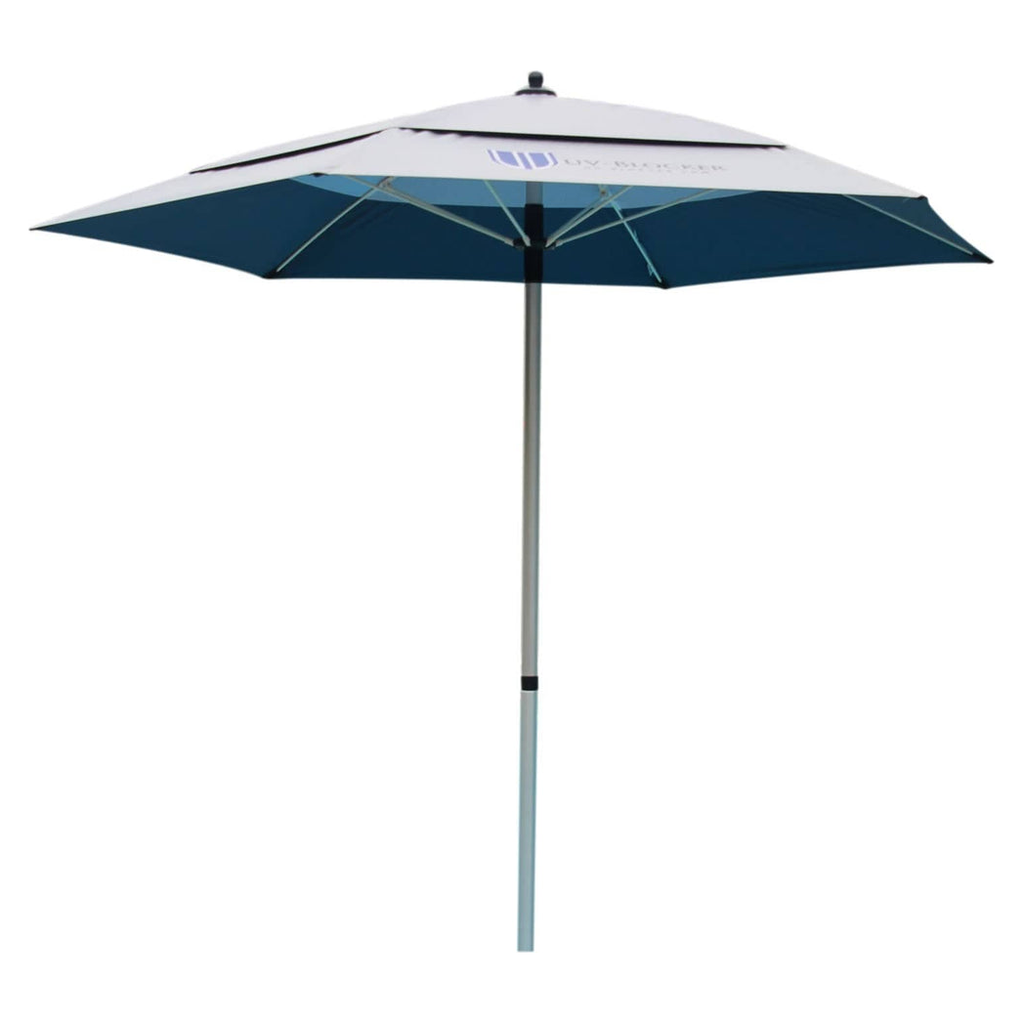
UV-Blocker umbrellas use Solarteck® silver reflective fabric. In lab testing to AATCC TM183-2020, the fabric blocked 100% of UVB and 99.97% of UVA, and it carries a UPF 50+ rating. The navy underside absorbs UV that bounces up from sand, water and pavement, and the canopy keeps users up to 15°F cooler than standing in direct sun. That also means the canopy itself is not a source of vitamin D. Scattered and reflected light still reaches skin under any umbrella, which is why UV-Blocker recommends pairing it with sunscreen. The research behind that pairing is laid out in UV umbrellas vs sunscreen, and the full range is in the UPF 50+ umbrellas collection.
Window glass is another form of shade worth knowing about: it blocks most UVB, so sitting by a sunny window does not make vitamin D.
| Protection | Effect on UVB | Vitamin D impact (evidence) |
|---|---|---|
| Daily sunscreen, real-world use | Filters most UVB at the label dose; less as applied | No deficiency in field trials or population data (Neale 2019; Linos 2012) |
| Tree shade | Vitamin D-effective UV about 55% of full sun | Synthesis reduced, not stopped (Turnbull 2005) |
| Ordinary shade umbrella | Vitamin D-effective UV about 52% of full sun | Synthesis reduced, not stopped (Turnbull 2005) |
| UV-Blocker canopy (Solarteck®) | 100% UVB blocked through the fabric (AATCC TM183-2020) | Canopy blocks direct UVB; scattered and reflected light still reaches skin |
| Frequent shade-seeking plus long sleeves | Large cut in total UV dose | Linked to lower vitamin D in NHANES (Linos 2012) |
So who actually needs to think about vitamin D?
Who Should Test Their Levels or Take a Supplement?
People who avoid UV almost completely, such as those with lupus, on photosensitizing drugs, or after melanoma, should ask their doctor whether testing or a supplement makes sense.
The NIH Office of Dietary Supplements lists the groups most likely to run low: people with limited sun exposure, older adults, people with darker skin, and people with conditions that affect fat absorption. The American Academy of Dermatology (AAD) also notes that people with darker skin tones may be at increased risk of lower vitamin D.
Photosensitive conditions
For many readers, sun avoidance is not a choice. The Lupus Foundation of America describes vitamin D status as a common health concern for people with lupus, and sun is a known flare trigger (see lupus sun flare triggers). People on medications that cause sun sensitivity, patients in radiation therapy, and anyone following sun protection after melanoma fall into the same group. UV-Blocker's founder, Ron Walker, started the company after his own Stage 1 melanoma diagnosis in 2003, so this group is the reason the brand exists.
Testing, intake and the AAD position
The Endocrine Society's 2024 guideline suggests against routine vitamin D screening in healthy adults. Testing still makes sense when there is a medical reason, and a doctor decides that. If you avoid UV for a medical reason, ask your doctor whether a test is worth it.
For intake, the NIH recommends 600 IU (15 mcg) a day for ages 1 to 70 and 800 IU (20 mcg) for adults over 70. Food sources include fatty fish, fortified milk and cereals, egg yolks and UV-exposed mushrooms. Any supplement dose beyond that is a conversation for your doctor.
What about "just a few minutes of sun"? The AAD is direct: "Vitamin D should not be obtained from unprotected exposure to ultraviolet (UV) radiation." It adds that there is no scientifically validated safe level of UV exposure that maximizes vitamin D without raising skin cancer risk.
How to Protect Your Skin Without Worrying About Vitamin D
Use broad-spectrum SPF 30 or higher, add shade or a UPF 50+ umbrella at peak UV, and cover vitamin D with food or a doctor-advised supplement.
Protection and vitamin D are two separate jobs. Handle them separately:
- Sunscreen: broad-spectrum SPF 30 or higher on exposed skin, applied generously and reapplied every two hours and after swimming or sweating.
- Shade: a UPF 50+ umbrella or solid shade during peak UV hours, typically late morning to mid-afternoon.
- Cover up: a wide-brim hat, UPF clothing and UV-blocking sunglasses.
- Vitamin D from food: fatty fish, fortified foods and eggs, plus a supplement if your doctor advises one.
- Testing with a reason: a blood test when there is a medical reason, decided with your doctor.
Frequently Asked Questions About Sunscreen and Vitamin D
Can you get vitamin D through sunscreen?
Yes. Even when applied properly, sunscreen lets a small share of UVB through, and real-world application lets through more, so the skin keeps making vitamin D.
The 2019 Tenerife study showed rising vitamin D levels in people who used SPF 15 well enough to avoid sunburn.
Do you get vitamin D with sunscreen on?
Yes. In a 2019 study, people who applied SPF 15 well enough to avoid sunburn still raised their vitamin D levels during a sunny week.
Field trials of daily sunscreen use also found no drop in vitamin D.
Does SPF 50 block more vitamin D than SPF 30?
At the lab dose, SPF 50 filters about 98% of UVB versus 97% for SPF 30, a small difference, and fewer field studies have tested high-SPF daily use.
The 2019 Neale review called for more trials using high-SPF sunscreen.
Is there such a thing as vitamin D sunscreen?
Some products are marketed that way, but sunscreen does not supply vitamin D, and putting vitamin D on the skin is not a recognized substitute for food or supplements.
Should I skip sunscreen for a few minutes to get vitamin D?
The American Academy of Dermatology advises against getting vitamin D from unprotected UV exposure, while food and supplements carry no skin cancer risk.
Do UV umbrellas cause vitamin D deficiency?
No study links umbrella use to deficiency. A UPF 50+ canopy blocks UVB, so people who avoid UV almost entirely should cover vitamin D through diet or supplements.
The Bottom Line: Does Sunscreen Block Vitamin D?
Sunscreen is not the vitamin D problem, and protection does not have to come at the cost of your levels.
- Everyday sunscreen use has not been shown to cause vitamin D deficiency in field trials or population data.
- The people at real risk are those who avoid UV almost completely, often for medical reasons.
- Protection and vitamin D are separate jobs: sunscreen and shade for your skin, food and doctor-led supplements for vitamin D.
One step to take today: if you avoid the sun for a medical reason, add vitamin D to the list of questions for your next appointment.
For the hours when the sun is strongest, pair sunscreen with a UPF 50+ UV umbrella that needs no reapplication. Small price to pay. Isn't your health worth it?