

About 31.6 million Americans live with eczema. Dermatologists regularly prescribe targeted ultraviolet light to treat it. Then they hand patients a pamphlet urging strict sun avoidance. The contradiction confuses parents and patients alike, but it isn't an accident. It's a paradox that hides in the narrow space between a measured clinical dose and the unfiltered blast of a summer afternoon.
Patients hear that UV light helps calm eczema flares. They naturally assume a sunny day outdoors counts as free therapy. But stepping outside introduces variables that a clinic deliberately removes: full-spectrum radiation, infrared heat, heavy sweating. Controlled phototherapy avoids all three. That's what makes the difference between treatment and trigger when it comes to eczema and sun exposure — and understanding that line changes how patients manage their skin outdoors.
TL;DR: The Eczema-Sun Paradox
- Narrowband UVB phototherapy is an AAD-recommended treatment for moderate-to-severe eczema.
- Outdoor sun delivers full-spectrum UV + heat + sweat — three separate eczema triggers at once.
- 10% of eczema patients are directly photoaggravated (sun makes it worse, period).
- 100% of high-SPF chemical sunscreens tested contained at least one allergen.
- Physical shade blocks UV and cuts temperature without touching the skin — bridging both sides of the paradox.
Why Do Dermatologists Prescribe UV for Eczema — Then Tell You to Avoid the Sun?
Narrowband UVB phototherapy uses a single controlled wavelength (311-313nm) at a measured dose — outdoor sun delivers full-spectrum radiation, heat, and sweat that phototherapy deliberately avoids.
Narrowband UVB phototherapy works as a specialized medical tool. The AAD recommends it for moderate-to-severe eczema based on data from 32 clinical trials involving 1,219 participants. The standard protocol calls for two to three sessions per week in a clinical setting, usually running 10 to 14 weeks.
The mechanism is specific. NB-UVB operates in a tight band between 311 and 313 nanometers — just enough to suppress overactive T cells and calm the Langerhans cells that act as the immune system's frontline sentinels in the epidermis. Breaking that inflammatory cycle is the whole point. This wavelength also suppresses Staphylococcus aureus, the bacteria that commonly colonizes eczema-prone skin and drives flares.
Here's where the paradox kicks in. Phototherapy delivers one controlled wavelength at a calculated dose, inside a room with no other variables. Outdoor sunlight dumps a mix of UVA, UVB, visible light, and infrared heat onto the skin all at once, with intensity that shifts based on cloud cover, time of day, and location. A beach afternoon isn't phototherapy. It buries whatever benefit UV might offer under layers of thermal stress and full-spectrum radiation that the clinic was designed to avoid.
How Does Uncontrolled Sun Exposure Attack Eczema Skin?
Outdoor sun attacks eczema through three pathways: UV barrier damage, heat and sweat inflammation, and chemical sunscreen irritation on compromised skin.

Uncontrolled sunlight hits the skin barrier through three separate mechanisms. Patients sometimes mistake the temporary immune suppression from a sunburn for real improvement. What's actually happening underneath is compounding damage.
UV barrier damage. Eczema skin already has structural problems — it's low on the lipids and proteins that hold cells together. Full-spectrum UV radiation breaks down what's left of those intercellular lipids and corneodesmosomes. The barrier gets leakier, water loss accelerates, and irritants, allergens, and bacteria push deeper into tissue that can't keep them out. Research confirms that UV weakens a barrier that's already compromised in eczema patients.
Heat and sweat. This one gets underestimated. The PEER cohort study followed 5,595 participants and found that every 5°F increase in temperature raised the odds of poorly controlled eczema by 15%. Sweat makes it worse — its acidic pH actively suppresses filaggrin production, the protein that builds skin barrier strength. The trace metals in sweat (zinc, copper, nickel) sit on sensitized skin and irritate it directly.
Sunscreen chemical irritation. When eczema patients try to protect themselves with chemical sunscreen, the compromised barrier absorbs those chemicals faster and deeper than healthy skin would. Analysis of 52 high-SPF sunscreens found that 100% of them contained at least one known allergen. Oxybenzone is the most-cited photoallergen in the literature. By contrast, there are zero reported cases of allergic contact dermatitis linked to zinc oxide or titanium dioxide.
What Is Photoaggravated Eczema and Who Gets It?
About 10% of eczema patients have photoaggravated atopic dermatitis — their skin gets actively worse from sun exposure rather than better.
A specific group of eczema patients doesn't just fail to benefit from sunlight — their skin gets noticeably worse. About 10% of atopic dermatitis patients fall into this category. For them, sun acts as a direct inflammatory trigger rather than an immune suppressant.
A Japanese study tracked this phenomenon closely. Among AD patients with persistent facial redness, 55% got visibly worse after sun exposure. And the flares weren't brief — in 28 out of 41 recorded cases, the worsening lasted more than 48 hours. Clinical data suggests this pattern shows up more often in women.
These patients need a different playbook entirely. Gradual exposure doesn't work for photoaggravated eczema. They need strict physical UV avoidance from the start. The diagnostic clue is straightforward: if eczema consistently flares on sun-exposed areas during summer months, photoaggravation is the likely explanation. It's also worth checking whether current medications are adding to the problem — some systemic treatments increase photosensitivity on their own. A full list of medications that cause sun sensitivity helps rule out drug-induced reactions.
What Is the Safest Way to Manage Eczema and Sun Exposure?
For the 90% who tolerate some sun, physical shade provides UV protection and heat reduction without skin contact — for the 10% who don't, it's the safest first-line defense.

Roughly 90% of eczema patients can handle some sun. What they need is a way to manage it rather than avoid it completely. The AAD recommends bridging the gap with physical shade — not more sunscreen layered on already-irritated skin.
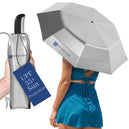
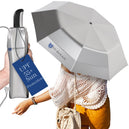
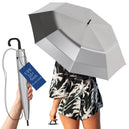
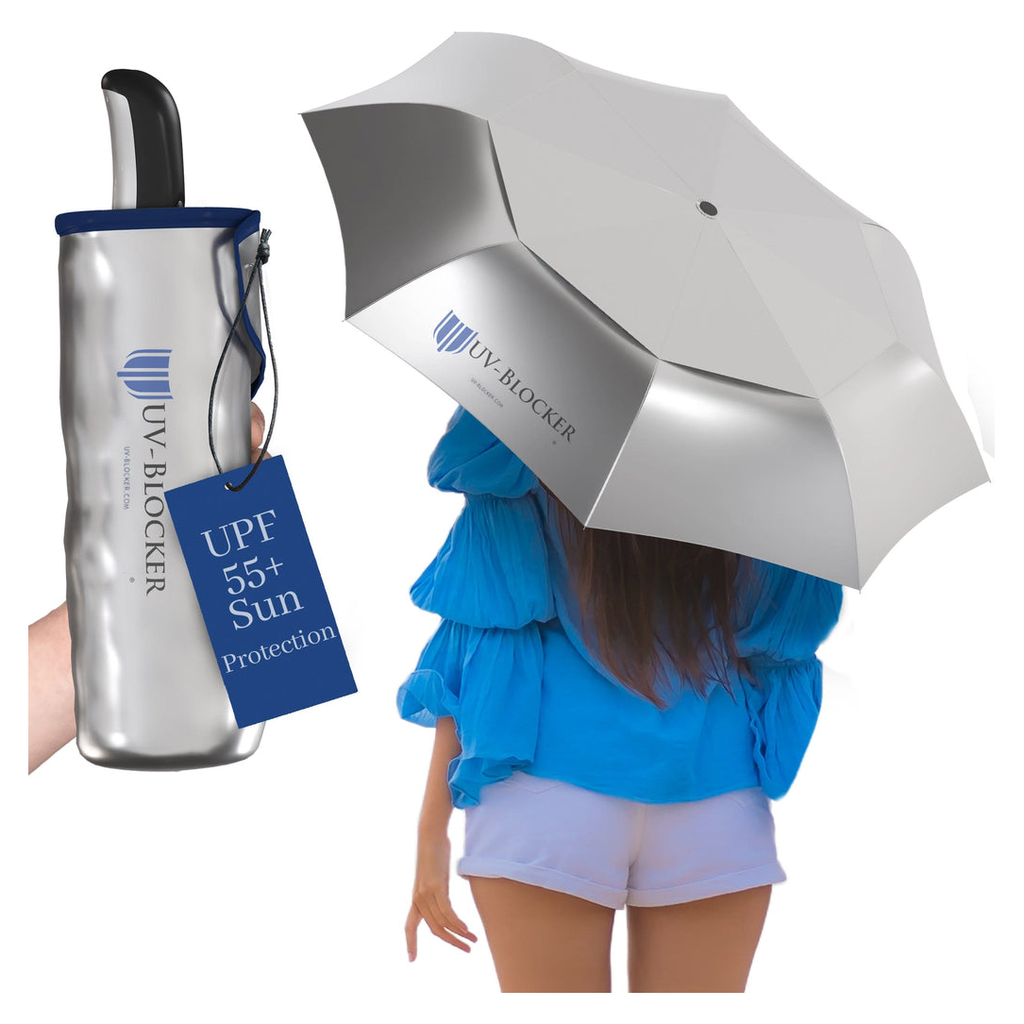
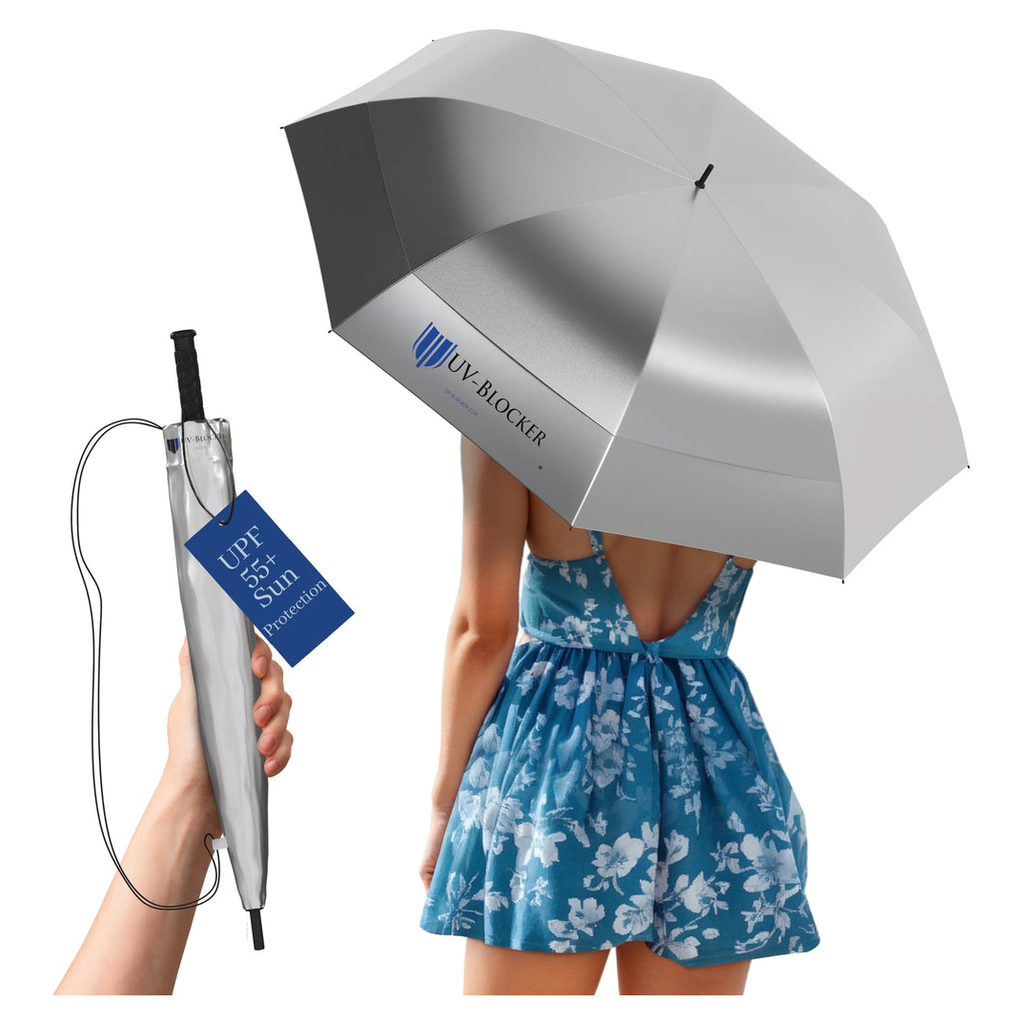
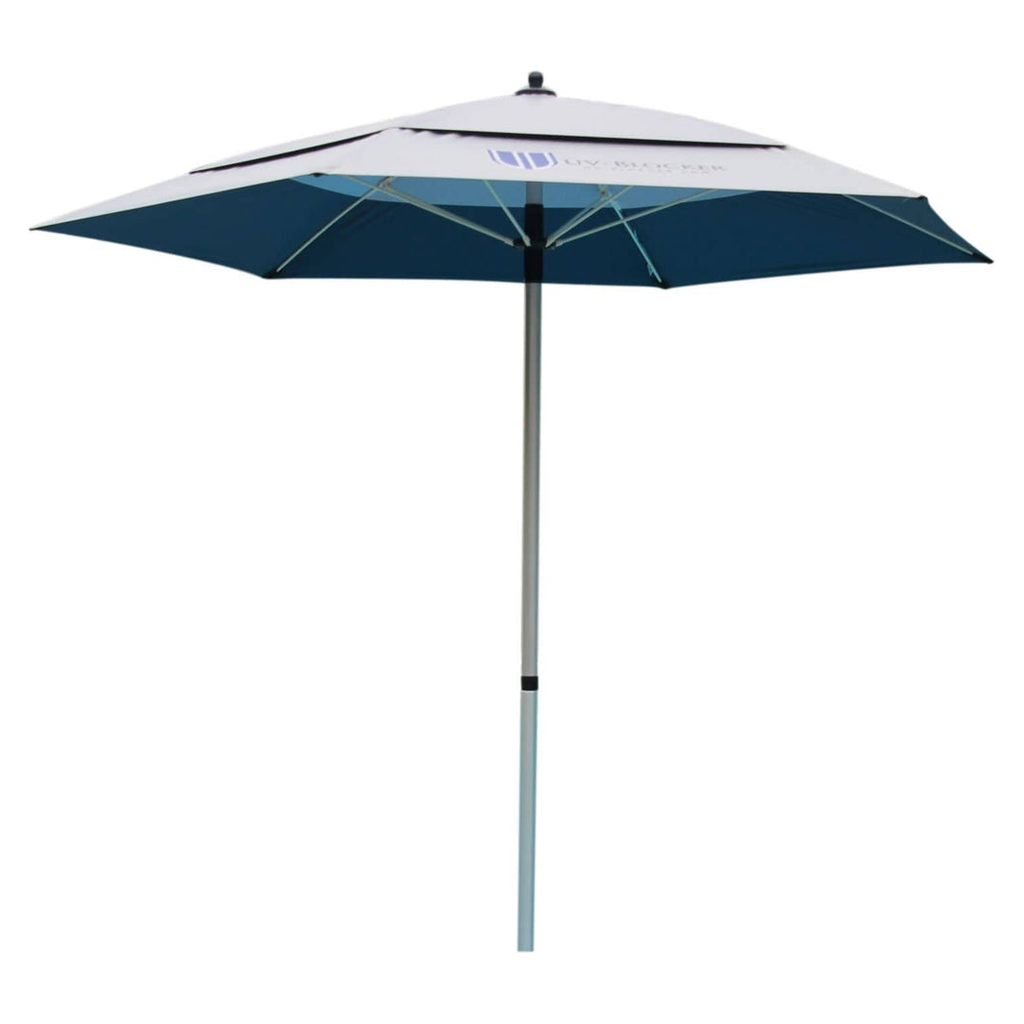
A UPF 50+ umbrella sits at the top of that hierarchy. UPF 50+ rated fabric blocks 99% of UV without touching the skin. It also deflects infrared heat, dropping the temperature underneath by up to 15°F. That specific temperature reduction directly addresses the heat-and-sweat trigger the PEER study identified.
For skin that does need topical coverage, mineral sunscreen with 20% or higher zinc oxide works — but only on intact skin. Never on active flares. The zinc oxide sits on the surface and reflects UV rather than absorbing into compromised tissue.
Heat and sweat management fills out the rest of a safe summer routine. Cool showers right after sweating rinse away the acidic trace metals before they irritate. Loose cotton clothing prevents friction. And avoiding direct sun between 10 AM and 4 PM keeps the heat trigger at manageable levels.
The 10% with photoaggravated eczema operate under stricter rules. They rely on shade-first protocols: UPF clothing, wide-brim hats, and a portable UV Protection Compact Umbrella that lets them step outside without triggering multi-day flares. For the full daily management toolkit, the dedicated eczema sun protection guide goes deeper.
Frequently Asked Questions About Eczema and Sun Exposure
These are the most common questions about eczema and sun exposure, answered with guidance from the AAD, National Eczema Association, and published clinical data.
Does sunlight actually help eczema?
It can, but only in the narrow sense that medical phototherapy uses controlled UV wavelengths to suppress immune activity. Uncontrolled outdoor sunlight comes with UV barrier damage, heat, sweat, and full-spectrum radiation — all of which can trigger flares that outweigh any temporary benefit.
Is a tanning bed the same as phototherapy for eczema?
Not at all. Tanning beds primarily emit UVA radiation, which penetrates deep into the dermis and raises skin cancer risk without providing the anti-inflammatory benefits of narrowband UVB. Dermatologists specifically advise against using tanning beds as an eczema treatment.
Can children with eczema safely play outside?
Yes, with heat and UV management in place. Outdoor play is best scheduled before 10 AM or after 4 PM. Kids need access to physical shade, loose cotton clothing, and a cool bath or shower soon after sweating to rinse away the trace metals that irritate their skin.
What SPF should eczema patients use?
SPF 30 or higher is standard, but the ingredients matter more than the number. Stick with mineral sunscreens that use zinc oxide or titanium dioxide as the active ingredient. Chemical filters like oxybenzone are among the most common causes of allergic contact dermatitis on compromised eczema skin.
Is eczema sun protection HSA/FSA eligible?
Many sun protection products qualify for HSA/FSA reimbursement, including sunscreens rated SPF 15 or higher and UPF-rated sun protective gear. Specifics vary by plan, so a quick check with the plan administrator confirms what's covered.
Conclusion
The eczema-sun paradox resolves when dose and exposure are treated as different things — physical shade gives patients the control that outdoor sun lacks.
The paradox resolves once dose and exposure are treated as two different things. UV light works as medicine when it's controlled, measured, and isolated to a single wavelength. Delivered as full-spectrum outdoor radiation with heat and sweat piled on top, it becomes a trigger.
Physical shade bridges the gap between those two realities. It blocks UV and cuts temperature without putting anything on the skin. For the 90% of eczema patients who can tolerate some outdoor time, it turns an unpredictable environment into something manageable. For the 10% who can't, it's the safest first-line defense available. Either way, controlling the environment is what turns eczema and sun exposure from a daily gamble into a daily routine. Isn't that kind of reliable, zero-contact protection worth a one-time investment?
Eczema and Sun Exposure: Frequently Asked Questions
Why do dermatologists prescribe narrow-band UVB phototherapy but warn against natural sunlight?
Controlled phototherapy uses specific 311nm wavelengths to reduce skin inflammation in approximately 70% of eczema patients, whereas natural sunlight includes heat and unpredictable UVA/UVB levels. Dermatologists recommend UV-Blocker clothing to prevent uncontrolled exposure that triggers flares. These UPF 50+ garments ensure that therapeutic progress isn't undermined by accidental UV damage during daily life.
How does heat-induced sweating impact eczema during sun exposure?
Sweat contains sodium and urea that can irritate a compromised skin barrier, causing flares in over 80% of eczema sufferers. Using UV-Blocker apparel with Solarteck® technology helps regulate skin temperature while blocking 98% of harmful radiation. This combination of cooling and protection is vital for maintaining the skin's moisture balance in high-UV environments.
Are eczema patients at a higher risk for skin cancer or UV sensitivity?
While eczema itself doesn't cause cancer, certain immunosuppressant treatments can increase photosensitivity and the risk of cellular damage. Utilizing UV-Blocker products, which carry the Melanoma International Foundation seal of approval, provides a reliable defense against the cumulative UV exposure that contributes to skin cancer. This is especially important for patients undergoing long-term topical steroid therapy.
Why is UPF 50+ clothing often preferred over sunscreen for eczema-prone skin?
Chemical sunscreens contain preservatives and fragrances that cause allergic reactions in up to 15% of individuals with atopic dermatitis. UV-Blocker clothing offers a physical barrier that blocks 99% of UVA and UVB rays without introducing potential irritants to the skin. This permanent UPF 50+ protection provides a consistent safety level that won't rub off or require frequent, irritating reapplication.
Frequently Asked Questions
How does this skin condition interact with UV exposure?
Many skin conditions are directly triggered or worsened by ultraviolet radiation. UV light causes DNA damage in skin cells, triggers inflammatory cascades, and can activate dormant conditions. For immune-mediated conditions, UV exposure can disrupt immune regulation and cause flares. Understanding your specific UV sensitivity is critical for effective condition management.
What level of sun protection do dermatologists recommend for this condition?
Dermatologists typically recommend broad-spectrum SPF 50+ sunscreen for patients with UV-sensitive skin conditions, combined with physical sun protection: UPF 50+ clothing, wide-brim hats, and shade during peak UV hours (10am–4pm). For conditions like xeroderma pigmentosum or porphyria, near-total sun avoidance is required.
Are certain UV wavelengths more problematic than others for this condition?
Yes. UVB (290–320nm) is primarily responsible for sunburn and direct DNA damage. UVA (320–400nm) penetrates deeper, causing photoaging and activating certain photosensitive conditions. Most photosensitive skin disorders respond to specific wavelength ranges. A phototest by a dermatologist can identify your exact sensitivity spectrum.
Can a UV-blocking umbrella replace sunscreen for sensitive skin conditions?
No — a UV-blocking umbrella complements but doesn't replace sunscreen. Umbrellas block direct overhead UV but not reflected UV from surfaces (sand, water, concrete). The combination of SPF 50+ sunscreen + UPF 50+ umbrella reduces UV exposure by over 99% and is recommended for high-sensitivity patients. UV-Blocker umbrellas are dermatologist-recommended.
How do I find a dermatologist experienced with photosensitive conditions?
Look for board-certified dermatologists with a subspecialty in photodermatology or pigmented skin disorders. The American Academy of Dermatology (AAD) has a physician finder at aad.org. For rare conditions like porphyria, seek specialists at academic medical centers. Some conditions require coordination between dermatology, hematology, or rheumatology.
Expert Dermatology Recommendations for Sun-Sensitive Skin
- Use a UV index app daily and plan outdoor activities around low UV periods — typically before 10am and after 4pm
- Test new sunscreen formulations on a small patch first — some ingredients trigger reactions in sensitive skin
- Invest in UV-protective windows and car film — indoor UV exposure through glass is underestimated
- Carry a UV-blocking umbrella for everyday use — it's the easiest way to create personal shade on demand
- Photograph any skin changes and keep a symptom log to share with your dermatologist
- Wear sun-protective clothing rated UPF 50+ — regular clothing often provides only UPF 6–15