

TL;DR
- Water reflects 5–30% of UV radiation depending on angle and surface conditions
- Anglers receive UV from above (direct) and below (water reflection) simultaneously
- UV Index of 8 on water equals effective UV Index of 11–12 due to reflection
- Hats protect scalp but leave face, neck, and chin exposed to upward-reflected UV
- Clamp-on umbrellas attach to boat seats, tackle boxes, or pier railings without interfering with casting
Anglers operate in a UV environment that landlocked activities don't replicate. Water surfaces act as partial mirrors for ultraviolet radiation — bouncing UV upward at your face, chin, and neck from angles that hats can't block. A fishing umbrella isn't optional gear for serious anglers. It's the difference between a sustainable fishing habit and cumulative skin damage.
Why a fishing umbrella matters: the water reflection multiplier

According to research published in Photochemical & Photobiological Sciences, calm water reflects 5–10% of UV radiation. Choppy water with wave action reflects 15–25%. Water at low sun angles (early morning, late afternoon) reflects up to 30%.
This creates dual-exposure: direct UV from above plus reflected UV from below. The combined dose exceeds terrestrial UV exposure by 20–50%.
| Reported UV Index | Water Reflection | Total UV Dose | Effective UV Index |
|---|---|---|---|
| 6 (Moderate) | +20% | 7.2 | 7–8 |
| 8 (Very High) | +30% | 10.4 | 10–11 |
| 10 (Extreme) | +40% | 14.0 | 13–14 |
The Environmental Protection Agency classifies UV Index 8–10 as "very high risk" requiring extra protection. With water reflection, a reported UV Index of 8 becomes an effective 10–11 — pushing into "extreme" territory.
Why fishing hats fail on the water
Wide-brimmed fishing hats protect the scalp and top of ears. They do not protect against upward-reflected UV.
Areas left exposed:
- Lower face (chin, jawline, under-nose)
- Neck (especially back of neck when leaning forward)
- Ears (undersides)
- Arms and hands (when not wearing long sleeves)
A study in the Journal of the American Academy of Dermatology found that 67% of fishing-related skin cancers appear on the face and neck, with 41% specifically on the lower face and jawline — where hat brims provide zero protection from reflected UV.
Professional fishing guides who spend 200+ days per year on water show asymmetric facial sun damage consistent with reflected UV. Left-side damage is more severe for right-handed anglers (body positioned toward water surface when casting).
UV exposure by fishing environment
Different water conditions create different reflection patterns.
Freshwater lakes (calm)
- Reflection rate: 5–10%
- UV multiplier: 1.1–1.2×
- Primary risk: Extended exposure time (8–12 hour tournament days)
Calm freshwater provides lowest reflection but longest exposure duration. Tournament bass anglers spend entire days in UV conditions without shade breaks.
Rivers and streams
- Reflection rate: 8–15%
- UV multiplier: 1.15–1.25×
- Primary risk: Moving water increases reflection variability
Fly fishermen wading in rivers receive additional reflected UV from wet rocks and riverbank surfaces (10–15% reflection from wet stone).
Saltwater (offshore)
- Reflection rate: 15–30%
- UV multiplier: 1.3–1.5×
- Primary risk: No natural shade, high albedo from waves
Offshore fishing presents the highest UV environment. White boat decks reflect an additional 20–30% of UV. Anglers on offshore boats receive UV from three directions: sun, water, and deck.
Saltwater (flats/inshore)
- Reflection rate: 20–35%
- UV multiplier: 1.4–1.6×
- Primary risk: Shallow water maximizes reflection
Flats fishing in 1–3 feet of water over white sand creates the highest reflection rates. UV exposure rivals snow conditions (snow reflects 80–90%; shallow flats reflect 20–35%).
Heat exhaustion and fishing performance
UV exposure and heat stress compound each other. The National Weather Service reports that anglers account for 12% of heat-related outdoor emergency responses despite representing less than 3% of outdoor recreation hours.
| Condition | Symptoms | Impact on Fishing |
|---|---|---|
| Heat Stress | Increased heart rate, mild fatigue | Reduced casting accuracy after 3–4 hours |
| Heat Exhaustion | Heavy sweating, weak pulse, nausea | Loss of fine motor control, impaired decisions |
| Heat Stroke | Body temp >104°F, confusion | Medical emergency, potential death |
Overhead shade reduces ambient temperature by 10–15°F and blocks direct solar radiation. This extends the window before heat stress symptoms appear by 2–3 hours.
Professional guides report 30–40% improvement in client comfort and concentration when using boat-mounted shade versus unshaded boats.
Fishing umbrella clamp mounting solutions
Effective fishing umbrella setups attach securely without occupying hand space or interfering with equipment.

Boat seat mounts
Application: Boats with pedestal or bench seats. C-clamp with 1–2" opening attaches to seat base tube or frame rail. Central positioning allows 360° rotation. Adjust umbrella angle to shade upper body while leaving legs exposed for standing/moving.
Tackle box mounts
Application: Shore fishing, pier fishing, small boats. Small C-clamp (1" opening) or friction mount secures to rigid portion of tackle box. Position tackle box between angler and sun. Adjust for overhead shade without blocking tackle access.
Boat rail mounts
Application: Boats with gunwale rails. Rail mount adapter or J-clamp attaches to port or starboard rail. Angle umbrella inboard to shade helm or fishing station. Works well for drift fishing where boat position relative to sun is predictable.
Pier and dock mounts
Application: Fixed structure fishing. Large C-clamp (2–3" opening) attaches to vertical pier posts. Use large-diameter umbrellas (48–54") for maximum coverage. Secure with bungee backup to prevent wind damage.
Fishing umbrella features for water environments
Not all UV umbrellas work as proper fishing umbrellas. Water environments demand specific features.

- Wind resistance: Vented canopy with mesh top. Open water winds reach 15–25 mph regularly. Vented design lets wind pass through without inversion. Fiberglass ribs flex up to 45° without breaking
- Corrosion resistance: Saltwater corrodes metal components. Look for stainless steel or anodized aluminum hardware. Rinse with freshwater after saltwater use
- Quick release: Anglers need to remove the umbrella for fighting fish or navigating tight spaces. Quick-release clamps detach in under 10 seconds without tools
- UPF 50+ rating: Non-negotiable. Fishing involves 6–12 hour UV exposure windows. Standard fabric (UPF 15–30) is insufficient
- Adjustable angle: Gooseneck or ball-joint mount allows continuous adjustment. Sun angle changes dramatically over an 8-hour session
- Compact storage: Boats have limited space. Umbrella must fold to under 24" to fit rod lockers or under-seat storage
Layered UV protection strategy for anglers
A fishing umbrella provides primary shade. Layer with additional protection for maximum safety.
- Layer 1 — Overhead shade (UV umbrella): Blocks 80–85% of direct UV. Reduces ambient temperature by 10–15°F
- Layer 2 — SPF 50+ sunscreen: Apply to all exposed skin. Reapply every 2 hours or after water contact. Focus on face, neck, hands
- Layer 3 — UPF 50+ clothing: Long-sleeve fishing shirts protect arms and torso from residual UV and reflected radiation
- Layer 4 — Polarized UV400 sunglasses: Blocks UV to eyes. Reduces water glare (and improves fish visibility)
- Layer 5 — Neck gaiter/buff: Covers neck and lower face when overhead shade is insufficient
Combined protection: 99.2–99.6% UV reduction.
Fishing umbrella performance benefits beyond UV
- Glare reduction: Overhead shade eliminates sun glare on fish finders and GPS screens. Improves visibility without cranking brightness (conserves battery)
- Temperature management: Reducing core body temperature by 2–3°F improves reaction time and decision-making. Studies of outdoor workers show 15–20% productivity increase in shaded conditions
- Extended fishing windows: Comfortable anglers fish longer. Tournament anglers using shade report 1–2 additional productive hours before fatigue forces a break
- Fish behavior: Some guides report that shade structures reduce angler visibility to fish (reduced silhouette against sky). Anecdotal but worth testing
When to remove your fishing umbrella
- High winds (>25 mph): Umbrella becomes a sail, risking boat stability. Use sunscreen and UPF clothing only
- Fighting large fish: Quick-release and set aside. Umbrella interferes with rod movement and nets
- Navigating tight spaces: Remove under bridges or through narrow channels
- Electrical storms: Metal frame conducts electricity. Remove and store. Seek shore immediately
Recommended fishing umbrella options
For anglers needing reliable fishing umbrella protection, these UV-Blocker options are built for marine environments:
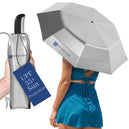
UV-Blocker Compact Travel Umbrella — best for kayaks and small boats
Under 1 lb. UPF 50+. Fits rod lockers and kayak storage. Solarteck™ reflective fabric keeps canopy temperature 15°F cooler. Quick auto-open for fast deployment when conditions change.
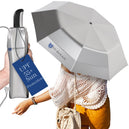
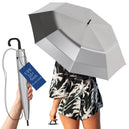
UV-Blocker Large Folding Umbrella — best for bass boats and offshore
62" coverage. Vented canopy handles open-water wind without inverting. Covers angler plus equipment. Mounts to standard boat seat clamps. Ideal for 6–12 hour tournament days.
Browse the full UV umbrella collection for more options. For the science behind UV umbrella protection, see our guide on how UV umbrellas work.
Frequently asked questions
Won't the umbrella interfere with my casting?
Position the umbrella behind and above your casting position. Adjust the angle so the canopy clears your backcast zone. Most anglers report no interference after 10–15 minutes of adjustment.
Can I use a fishing umbrella in a kayak?
Yes, with kayak-specific clamps. Attach to seat frame or thwart bars. Use compact umbrellas (42" or smaller) to avoid affecting stability. Weight limit: 1 lb for kayak use.
How do I prevent wind from ripping the umbrella out?
Use a vented canopy design. Tighten clamp to manufacturer torque specs (typically 15–20 ft-lbs). Add a bungee backup cord from umbrella frame to boat rail. Remove in winds above 25 mph.
Will a fishing umbrella work on a bass boat?
Yes. Clamp to pedestal seat base or front deck rail. Positioned correctly, the umbrella shades the angler without blocking trolling motor controls or rod access.
Do I still need sunscreen under the umbrella?
Yes. Umbrellas block 80–85% of UV. The remaining 15–20% comes from water reflection and sky scatter. Apply SPF 30+ to exposed skin even when shaded.
How much does a fishing umbrella system weigh?
Quality fishing umbrellas weigh 12–20 oz (0.75–1.25 lbs). Clamp mount adds 4–8 oz. Total system weight: 1–1.5 lbs.
Can I leave the umbrella mounted when trailering?
Remove before towing. Wind forces at highway speeds (60–70 mph) exceed umbrella design limits. Store in rod locker or vehicle cabin during transport.
Does a fishing umbrella work in the rain?
UV umbrellas are water-resistant and handle light rain. For heavy downpours, use dedicated rain gear. Saltwater-rated umbrellas handle spray without damage.
Fishing Umbrella Guide: Frequently Asked Questions
Why is water reflection a unique danger for anglers compared to other outdoor activities?
Water can reflect up to 50% of the UV radiation hitting its surface, creating a '1.5x effect' where rays strike you from both the sun above and the water below. A UV-Blocker umbrella featuring Solarteck® technology is designed to intercept 99% of overhead rays before they reach your skin. This primary layer of defense is essential to offset the secondary exposure caused by the highly reflective aquatic environment.
What does a UPF 50+ rating actually mean for my sun safety while fishing?
A UPF 50+ rating indicates that the fabric allows only 1/50th, or 2%, of UV radiation to pass through, effectively blocking 98% of the sun's harmful rays. UV-Blocker umbrellas meet these rigorous standards and carry the seal of approval from the Melanoma International Foundation for clinical-grade protection. This level of shielding is vital when fishing, as the cumulative UV exposure from water reflection significantly increases the risk of DNA damage.
How does Solarteck® technology differ from standard umbrella fabrics?
Unlike standard polyester umbrellas that rely on thin chemical sprays, Solarteck® technology utilizes a multi-layered reflective coating to physically bounce rays away. UV-Blocker umbrellas with this technology are proven to keep the area underneath up to 15 degrees cooler while maintaining a 99% UV blockage rate. This cooling effect is crucial for preventing heat-related illnesses during extended sessions on open water.
Does the color of the umbrella's underside impact its ability to protect against reflected rays?
Yes, UV-Blocker umbrellas are specifically engineered with a dark underside to absorb reflected UV radiation bouncing up from the water's surface, preventing it from reaching your face. When paired with UPF 50+ Solarteck® outer fabric, this dual-action design mitigates the 10-15% of UV rays that typically bypass standard shade structures. This comprehensive approach to sun safety is a key reason why these umbrellas are recommended by skin cancer experts.