

Naproxen ranked as the 103rd most prescribed medication in the United States in 2023, with over 6.8 million prescriptions filled that year. Millions more bought it over the counter as Aleve. People rely on it for everything from headaches to rheumatoid arthritis — often for weeks or months at a stretch.
Yet naproxen carries the highest photosensitivity risk of any commonly used OTC pain reliever. Most patients discover this after an unexpectedly severe sunburn following a routine afternoon outside. They chalk it up to stronger sun or forgot to reapply sunscreen. The real cause is a photochemical reaction happening beneath the skin's surface — one that sunscreen alone cannot prevent.
This guide covers the phototoxic mechanism behind naproxen sun sensitivity, how long the vulnerability window lasts based on the drug's pharmacokinetic half-life, a clinical monitoring section for patients showing concerning reactions, and a layered protection protocol built around physical shade. Whether you take naproxen occasionally for pain relief or daily for chronic inflammation, understanding this risk window can prevent a painful — and sometimes dangerous — reaction.
TLDR
- Naproxen absorbs UVA radiation and triggers reactive oxygen species that damage skin cells, causing a phototoxic reaction far beyond normal sunburn.
- Among common OTC pain relievers, naproxen carries the highest photosensitivity risk. Ibuprofen presents minimal risk.
- The 12 to 17 hour half-life means photosensitivity persists for two to three days after the final dose.
- Sunscreen alone is insufficient. Naproxen reactions are UVA-driven and sunscreen wears off.
- Physical shade from a UPF 50+ umbrella blocks all UV wavelengths continuously and serves as the most reliable primary defense.
- Long-term pediatric naproxen users face pseudoporphyria risk — a blistering condition requiring dermatology referral.
How Does Naproxen Make Your Skin Sensitive to the Sun?
Naproxen absorbs UVA radiation and generates reactive oxygen species that damage skin cell membranes through lipid peroxidation. This causes skin inflammation far worse than an ordinary sunburn — and it can happen with any route of UV exposure, including through windows.
Naproxen belongs to the 2-arylpropionic acid family of NSAIDs. This chemical structure acts like an antenna for ultraviolet light. When naproxen molecules in the skin absorb UV energy — primarily in the UVA range of 315 to 400 nanometers — they enter an excited electronic state and transfer that energy to surrounding molecules, generating reactive oxygen species (ROS). Those molecules punch holes in skin cell walls through a process called lipid peroxidation, triggering oxidative stress, membrane disruption, and localized inflammatory cascades.
Two distinct types of reactions can occur. Phototoxic reactions make up the majority of cases. They are dose-dependent, occur on first exposure, and cause direct cell damage confined to sun-exposed areas. No prior sensitization is required — anyone taking naproxen in sufficient doses can experience a phototoxic reaction after UV exposure. Photoallergic reactions are rarer and involve a delayed immune system response that can happen even at low doses after prior sensitization. The immune system treats the naproxen-UV product as a foreign antigen and mounts a response that can spread beyond the original exposure zone.
UVA is the primary trigger wavelength for both reaction types. That detail has major practical implications. Unlike UVB, which is largely blocked by window glass, UVA penetrates car windshields, home windows, and cloud cover with minimal attenuation. A naproxen user driving for 30 minutes on an overcast day receives meaningful UVA exposure. The risk is not confined to beach days or hiking trips — it's present in daily commutes and indoor-adjacent activities.
The concentration of naproxen in skin tissue correlates directly with reaction severity. Oral absorption peaks within 2 to 4 hours after ingestion, meaning the highest skin photosensitivity coincides with the peak plasma concentration window shortly after dosing.
Is Naproxen Worse Than Ibuprofen for Sun Sensitivity?
Yes. Naproxen has the highest photoactivity of any commonly used OTC NSAID, while ibuprofen is generally considered non-phototoxic based on clinical and molecular evidence.
Clinical data confirms naproxen holds the highest photosensitizing potential among 2-aryl propionic acid derivatives, the chemical family that includes most common OTC NSAIDs. Its specific molecular structure — with a naphthalene ring system instead of the phenyl ring found in ibuprofen — traps UV energy more efficiently and transfers it to surrounding tissue with greater efficiency. In vitro photolysis studies show naproxen generates significantly higher ROS yields per photon absorbed than structurally similar NSAIDs.

Ibuprofen (sold as Advil or Motrin) doesn't function as a clinically meaningful phototoxic agent. While isolated case reports exist in medical literature, clinical consensus — including dermatology reference sources and NSAID photosensitivity reviews — points to minimal risk for standard ibuprofen users at normal doses. Patients who need an OTC pain reliever and face significant sun exposure can discuss switching to ibuprofen with their healthcare provider, though this depends on their specific medical indication.
Aspirin falls into the salicylate class of NSAIDs and carries negligible photosensitivity risk. Its chemical structure does not efficiently absorb UV radiation in the range that triggers phototoxic reactions. Acetaminophen (Tylenol) is not an NSAID at all — it works through a different pain-relief mechanism entirely and carries zero photosensitivity risk. Some online sources and even occasional medical references incorrectly group acetaminophen with photosensitizing drugs, which creates unnecessary confusion for patients looking for safe alternatives.
Eleven percent of children treated long-term with naproxen developed pseudoporphyria after an average of 18 months of continuous use. DermNet NZ: NSAIDs and Skin Side Effects — Pseudoporphyria causes severe blistering, extreme skin fragility, and permanent scarring. It mimics a rare genetic porphyria condition but stems from the medication alone. Pediatric patients with juvenile idiopathic arthritis on long-term naproxen require regular dermatologic monitoring.
| NSAID | Brand Names | Photosensitivity Risk | Notes |
|---|---|---|---|
| Naproxen | Aleve, Naprosyn | High | Highest photoactivity among OTC NSAIDs; pseudoporphyria risk in pediatric patients |
| Ibuprofen | Advil, Motrin | Minimal | Generally non-phototoxic; isolated case reports only at high doses |
| Aspirin | Bayer, Bufferin | Negligible | Salicylate class; not a meaningful photosensitizer |
| Acetaminophen | Tylenol | None | Not an NSAID; no photosensitivity mechanism |
| Celecoxib (Celebrex) | Celebrex | Low-Moderate | COX-2 selective; some sulfonamide-derived photosensitivity reported |
For patients who must stay on naproxen due to specific joint pain, chronic inflammation, or conditions like ankylosing spondylitis, knowing the elevated risk is step one. Recognizing an actual chemical reaction on the skin — and distinguishing it from an ordinary sunburn — is step two.
What Does a Naproxen Sun Reaction Look Like?
A naproxen sun reaction presents as an exaggerated sunburn with intense redness, swelling, burning pain, and possible blistering confined exclusively to sun-exposed skin. The reaction appears disproportionate to actual UV exposure time and often develops within 30 minutes to a few hours of combined naproxen ingestion and sun exposure.
A phototoxic reaction produces intense erythema (redness), edema (swelling), burning or stinging pain, and fluid-filled vesicles or bullae (blisters) in severe cases. These symptoms stay confined strictly to areas of the body that received direct UV exposure. A sharp visual line — a "sun exposure boundary" — often forms where a shirt sleeve, watch band, sock, or hat brim blocked the light. This geographic demarcation is the primary diagnostic clue that separates a phototoxic response from a generalized allergic reaction or heatstroke.
The severity appears disproportionate to actual sun time. A 20-minute walk that would normally produce mild pinkness in the same individual — before starting naproxen — can trigger painful blistering in a naproxen user. Patients frequently describe being shocked by how severe the reaction is relative to their outdoor time. First-time reactions often send people to urgent care or the emergency department.
Pseudoporphyria presents a distinctly different pattern. Patients develop skin fragility and tense blisters on the dorsal (back) surfaces of the hands — areas with high UV exposure but that receive less daily sunscreen protection than the face. Scarring follows as blisters heal. This condition builds gradually over months of consistent naproxen use rather than from a single UV exposure event. Young patients (especially children with juvenile idiopathic arthritis on prescription naproxen) and fair-skinned individuals with chronic naproxen exposure face the highest risk. The condition mimics genetic porphyria so closely that a skin biopsy is sometimes needed to distinguish them.
Photoallergic reactions develop with different timing and distribution. Unlike phototoxic reactions that appear within hours, photoallergic responses develop slowly — typically 24 to 72 hours after combined drug-plus-UV exposure. They can spread beyond the original sun-exposed areas because the reaction involves systemic immune activation rather than localized direct cell damage. Patients may develop itchy, eczematous plaques on areas that didn't receive direct sun exposure. A dermatologist can perform photopatch testing to confirm photoallergic sensitization.
How Long Does Naproxen Sun Sensitivity Last?
Naproxen has a 12 to 17 hour elimination half-life — one of the longest of any OTC analgesic. This means photosensitivity persists for roughly two to three days after the last dose, until the drug fully clears the body.
Drug elimination follows a predictable pharmacokinetic pattern. Full clearance requires approximately four to five half-lives. At a 12-hour half-life, complete clearance takes 48 to 60 hours. At a 17-hour half-life, it extends to 68 to 85 hours. The practical guideline for planning outdoor activities is two to three days of continued sun protection after the final naproxen dose.
For comparison: ibuprofen has a half-life of just 2 to 4 hours and is largely gone within 12 to 24 hours. Aspirin's active metabolite (salicylate) has a half-life of 3 to 6 hours at standard doses. Naproxen's extended clearance window makes it unique among OTC pain relievers — a single dose creates a multi-day photosensitivity window, not just a same-day concern.
A single 220mg Aleve tablet creates this extended risk window. This isn't just a concern for prescription users taking 500mg twice daily. Casual weekend users who take one or two Aleve tablets on Saturday evening remain photosensitive through Monday or Tuesday. The risk is not intuitive because symptoms may not have appeared during a short prior dose — the reaction requires both drug presence and UV exposure simultaneously.
Higher doses extend and intensify the window. Prescription naproxen at 500mg twice daily maintains significantly higher plasma and skin tissue concentrations. More drug in the bloodstream means more UV-absorbing molecules in the skin, which means higher reaction probability and severity per photon absorbed. Patients on high-dose prescription regimens for rheumatoid arthritis or ankylosing spondylitis should discuss this risk explicitly with their prescribing physician.
Key timeline summary:
- Single OTC dose (220mg): photosensitivity window of approximately 48 to 72 hours
- Standard prescription dose (250–500mg twice daily): risk period extends through continuous treatment plus 2 to 3 days after stopping
- Maintain full sun protection for at least two to three days after the last naproxen dose
This risk window leads immediately to a practical question. Most patients reach for sunscreen first. That approach is incomplete for UVA-driven photosensitivity.
Why Isn't Sunscreen Enough for Naproxen Users?
Naproxen reactions are primarily UVA-triggered. Most sunscreens prioritize UVB protection, leave gaps during reapplication intervals, degrade over time in sunlight, and provide no protection through windows during commutes. None of these limitations affect a physical shade barrier.
Naproxen photosensitivity is driven by UVA radiation in the 315–400nm range. While modern broad-spectrum sunscreens include UVA filters, the UVA protection in many commercial formulas is significantly weaker than their UVB protection. The SPF number on a sunscreen bottle reflects only UVB protection, not UVA. A product labeled SPF 50 may offer only SPF-equivalent 16 or less against UVA — the very wavelengths driving naproxen photosensitivity.
Chemical sunscreens need a full 15 to 20 minute absorption window before they achieve full efficacy. That gap leaves naproxen users exposed to UVA during the absorption period. Many people apply sunscreen and walk outside immediately — negating a significant portion of its protective effect during the most intense outdoor UV hours.
Reapplication compliance fails dramatically in real-world conditions. Sunscreen effectiveness degrades within 2 hours under UV exposure regardless of SPF rating. Perspiration, swimming, and skin contact (touching the face, wiping with clothing) further reduce efficacy. Studies consistently show that most people apply one-quarter to one-half the amount of sunscreen used in SPF testing, which means real-world protection is far lower than the labeled SPF.
Most critically, sunscreen does not protect against UVA through glass. UVA penetrates ordinary window glass at significant levels. A naproxen user driving a car, sitting by an office window, or working near a glass storefront receives UVA exposure that sunscreen applied before leaving home does not address hours later.
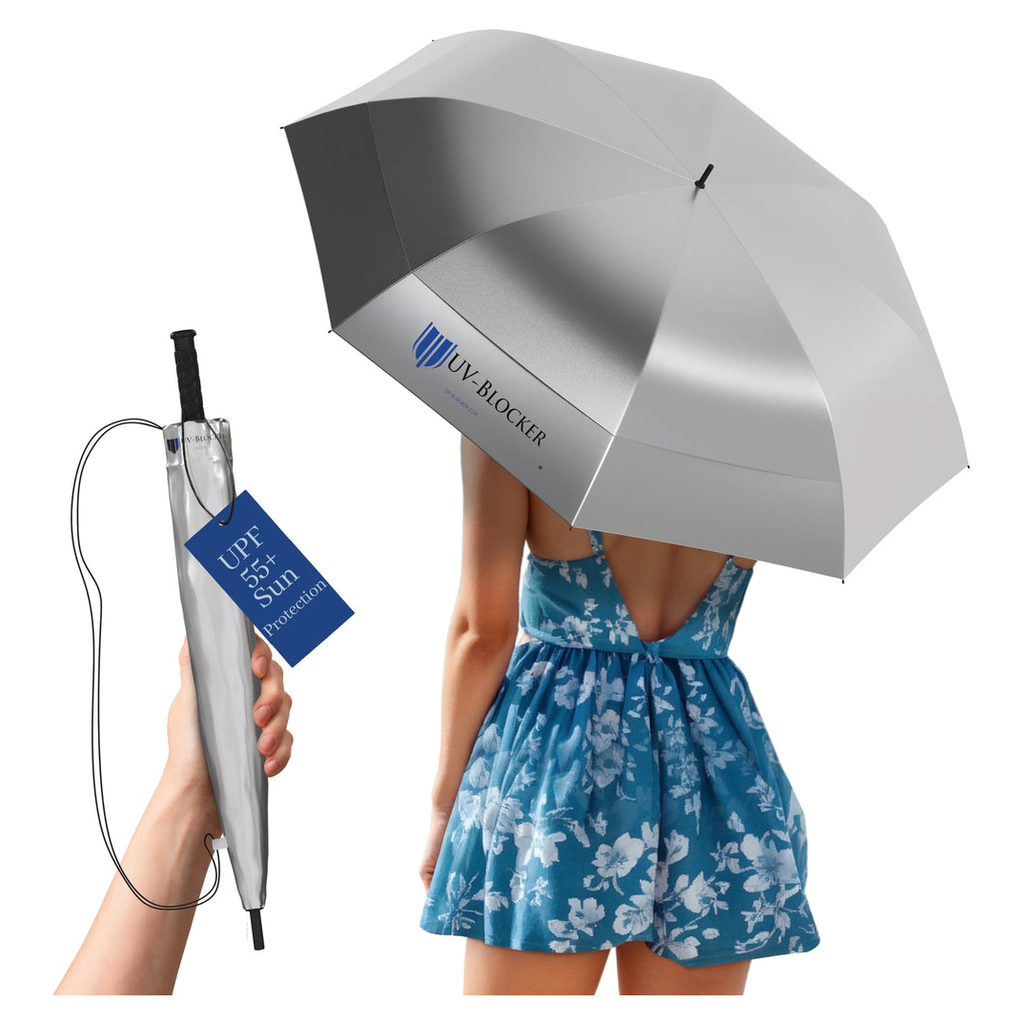
Physical shade blocks all UV wavelengths equally, instantly, and continuously. There is no absorption delay. There is no reapplication gap. UVA and UVB protection remain balanced and constant at 99%+ for the life of the umbrella's Solarteck® coating. The UV-Blocker umbrella line uses this coating to block 99.97% UVA per AATCC TM183-2020 testing — significantly outperforming most commercial SPF products on the UVA wavelengths that drive naproxen reactions.
Complete Sun Protection Protocol for Naproxen Patients
Layer physical shade as the primary barrier, add broad-spectrum mineral sunscreen as a secondary layer, wear UPF clothing and accessories, time outdoor activity appropriately, and maintain the full protocol for two to three days after stopping naproxen.
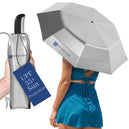
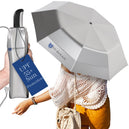
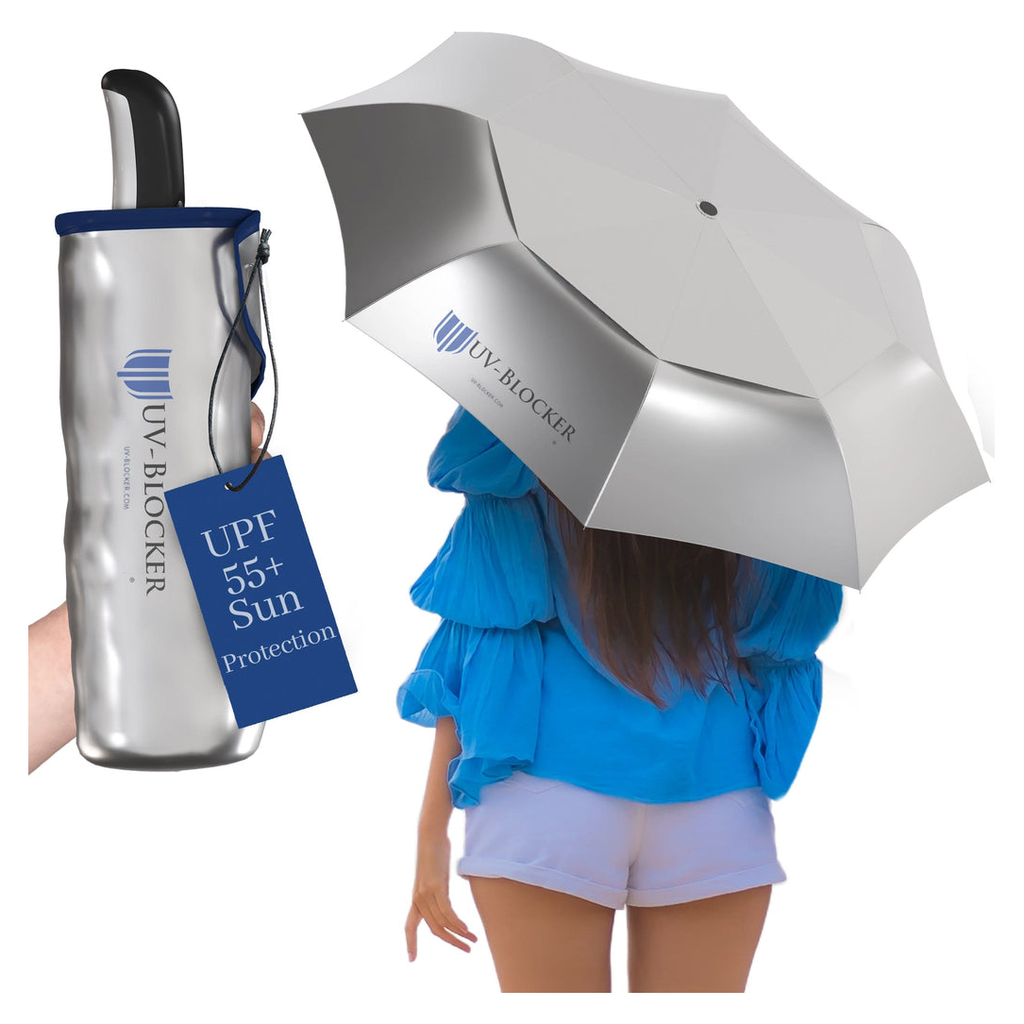
Layer 1: Physical shade (primary barrier). A UPF 50+ umbrella serves as the first line of defense for naproxen users. It blocks all UV wavelengths equally, activates instantly without any absorption delay, and places zero chemicals on photosensitive skin. The UV-Blocker Compact UV Umbrella features one-hand auto-open/auto-close operation and collapses to fit in a purse or briefcase. Its Solarteck® silver reflective coating blocks 99.97% UVA per AATCC TM183-2020 independent laboratory testing — exceeding the protection offered by SPF 100 sunscreen on the UVA wavelengths that trigger naproxen reactions.
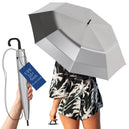
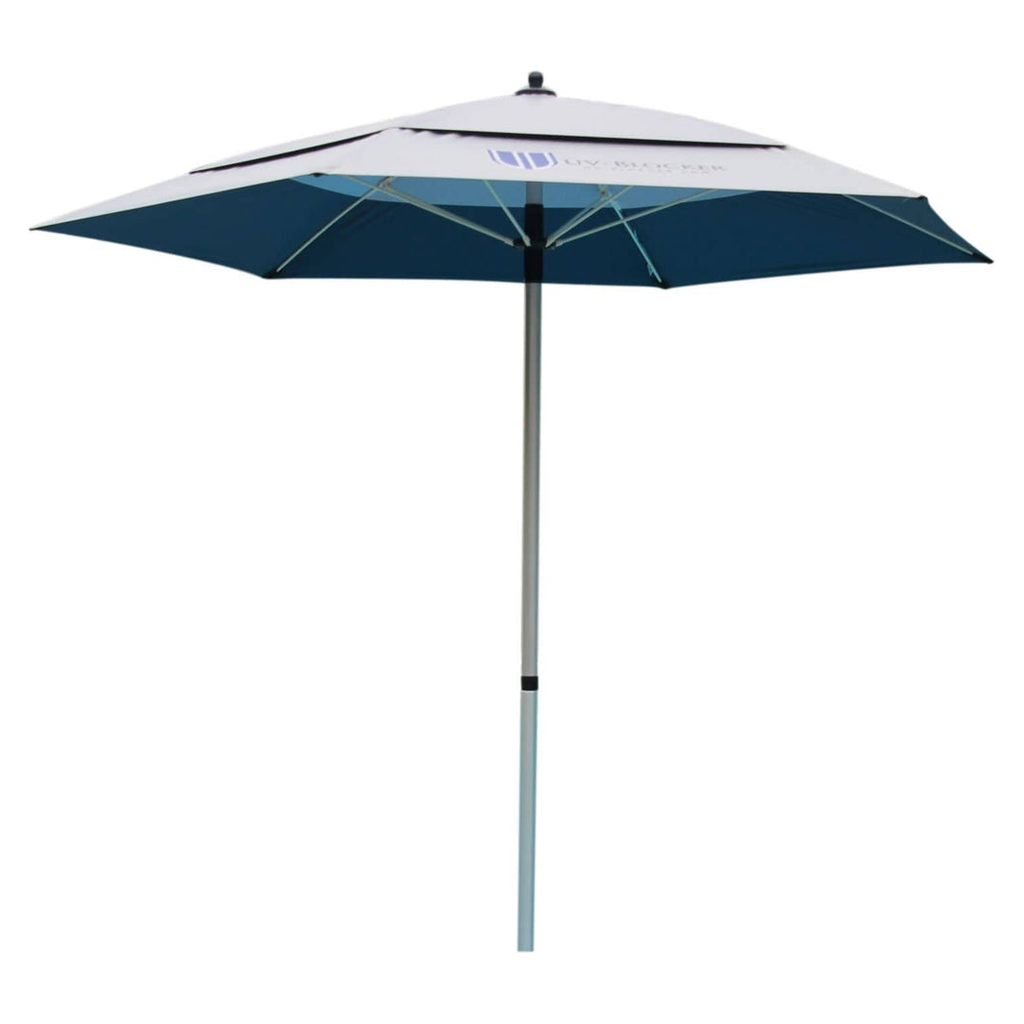
For extended outdoor trips, the Travel UV Umbrella provides a larger canopy with a shoulder strap carry case. For outdoor dining, gardening, or stationary use, consider a standing UV umbrella with a ground anchor.

Layer 2: Broad-spectrum sunscreen (SPF 30+ with UVA coverage). Apply mineral formulas with zinc oxide or titanium dioxide as the secondary layer. Mineral sunscreen sits on top of the skin and reflects UV rays rather than absorbing and converting them, making it the preferred choice for photosensitive skin. Chemical sunscreen can cause additional irritation reactions in already-sensitized skin. Apply 20 minutes before going outdoors and reapply every 2 hours. Focus application on areas the umbrella cannot continuously cover: backs of hands, ankles, lower legs, and the sides of the face.
Layer 3: UPF clothing and accessories. Wear a wide-brim hat (minimum 3-inch brim), UV-blocking sunglasses with wraparound coverage, and long sleeves when practical. Sun protection clothing made from tight-weave UPF-rated fabrics provides a protection layer that won't wash off, degrade with sweat, or require reapplication. Standard white cotton T-shirts provide only UPF 5–7 — insufficient for naproxen users.
UV index-based timing. UV index (UVI) is a standardized 1–11+ scale measuring the intensity of UV radiation at ground level. Avoid peak UV hours between 10 AM and 4 PM when UVI typically reaches 6 (high) or above. At UVI 8 or higher (classified as "Very High"), unprotected naproxen-sensitized skin can burn in 5 minutes or less. Check the daily UV index forecast through the US EPA UV index tool or weather apps and plan outdoor activity for before 10 AM or after 4 PM when UVI is typically 3 or below.
| Protection Layer | What It Does | Why It Matters for Naproxen Users |
|---|---|---|
| UPF 50+ umbrella | Blocks 99%+ UVA and UVB instantly | Primary barrier with no gaps, no reapplication, no absorption delay |
| Mineral sunscreen (SPF 30+) | Reflects UV from exposed skin surfaces | Covers areas umbrella doesn't continuously reach (hands, neck) |
| UPF clothing + wide-brim hat | Physical fabric barrier on torso and scalp | Consistent, wearable protection that doesn't wear off with sweat |
| UV sunglasses (wraparound) | Blocks eye and periorbital UV exposure | Naproxen sensitivity affects all exposed skin including around the eyes |
| Avoid 10am–4pm peak UV | Reduces total UV dose received | Lower UV intensity means lower phototoxic reaction probability |
Maintain this full protection protocol for two to three days after taking the final naproxen dose. The drug's presence in skin tissue — not just the bloodstream — is what drives photosensitivity. Even as plasma levels decline, naproxen distributed in skin tissue remains photoactive until fully metabolized and eliminated.
When to Contact Your Doctor About Naproxen Sun Reactions
Most naproxen-related phototoxic reactions resolve on their own within days with basic wound care and sun avoidance. However, certain presentations warrant prompt medical evaluation. Knowing when to seek care can prevent more serious complications.
Seek immediate medical care if you experience:
- Extensive blistering covering more than a small localized area — large blisters risk infection if they rupture and may require prescription wound care
- High fever or chills accompanying a phototoxic reaction — systemic infection from open skin lesions requires antibiotic treatment
- Facial swelling or difficulty breathing — these may indicate a rare anaphylactoid response rather than simple phototoxicity and require emergency evaluation
- Reaction spreading beyond sun-exposed areas — this pattern suggests a photoallergic immune response that may require systemic corticosteroid treatment
Schedule a dermatology appointment if you experience:
- Skin fragility or blistering on the backs of the hands after months of naproxen use — this pattern is characteristic of pseudoporphyria and requires formal dermatologic assessment including possible skin biopsy
- Scarring from previous blistering reactions — pseudoporphyria scars can be permanent and the condition requires medication management, often including naproxen discontinuation
- Reactions occurring at low UV exposure levels (cloudy days, brief indoor-adjacent exposure) — this may indicate significant cumulative sensitization requiring medication review
- Children on long-term naproxen developing any blistering or skin fragility — pediatric pseudoporphyria risk is 11% after 18 months of continuous use and warrants proactive dermatologic monitoring
Discuss with your prescribing physician:
- Whether the naproxen indication supports switching to a less photosensitizing alternative (ibuprofen, acetaminophen, or a COX-2 inhibitor depending on the condition)
- Whether the dose can be reduced during high-UV-exposure months
- Whether timing doses in the evening reduces peak skin drug concentrations during daytime UV exposure hours
- Complete medication list review — patients taking naproxen alongside other photosensitizers (doxycycline, hydrochlorothiazide, fluoroquinolones) face additive risk and may need enhanced monitoring
Frequently Asked Questions About Naproxen Sun Sensitivity
These are the most common questions patients ask about naproxen and sun exposure, answered with current clinical data.
Does naproxen make you sensitive to the sun?
Yes. Naproxen absorbs UVA radiation and triggers phototoxic reactions through reactive oxygen species generation, causing skin inflammation and sunburn-like symptoms far more severe than normal UV exposure would produce in the same individual. The reaction is driven by the drug's 2-arylpropionic acid molecular structure, which efficiently absorbs UV energy in the 315–400nm UVA range.
Among common OTC pain relievers, naproxen carries the highest photosensitivity risk. Even a single 220mg Aleve tablet creates a multi-day vulnerability window extending 48 to 72 hours. Other medications that cause sun sensitivity include doxycycline, hydrochlorothiazide, and fluoroquinolone antibiotics.
How long does naproxen sun sensitivity last after stopping?
Photosensitivity typically persists for 2 to 3 days after the last dose, based on naproxen's 12 to 17 hour elimination half-life. Full drug clearance requires 4 to 5 half-lives — roughly 48 to 85 hours depending on individual metabolism, kidney function, and the dose taken.
Maintain full sun protection during this entire clearance period. Similar multi-day clearance precautions apply to the doxycycline sun sensitivity window and the Accutane sun protection protocol.
Can I take Aleve and go to the beach?
Naproxen and beach sun exposure is a high-risk combination due to prolonged direct UVA/UVB exposure in an environment where reapplying sunscreen is practically difficult. Physical shade from a UPF 50+ umbrella should be the primary protection if naproxen use and beach plans overlap. Set it up to cover your chair and keep direct sun off your skin even when sunscreen has degraded.
Sunscreen alone is insufficient for naproxen users in beach environments due to the intensity and duration of UV exposure combined with the UVA-dominant mechanism. A UV umbrella combined with mineral sunscreen on uncovered extremities provides continuous layered defense.
Is naproxen or ibuprofen worse for sun sensitivity?
Naproxen is significantly worse. It has the highest photoactivity among common OTC NSAIDs due to its naphthalene ring molecular structure, while ibuprofen is generally considered non-phototoxic. Ibuprofen's phenyl ring absorbs UV energy far less efficiently.
Patients who can use either drug for their condition and face significant sun exposure can discuss switching to ibuprofen with their healthcare provider. The appropriate alternative depends on the indication — some conditions respond better to naproxen's extended half-life regardless of photosensitivity risk.
Does naproxen dose affect sun sensitivity?
Higher naproxen doses directly increase phototoxic reaction severity because they place more UV-absorbing molecules in skin tissue per unit area. Prescription 500mg doses carry greater risk than OTC Aleve 220mg doses, though both can trigger reactions under sufficient UV exposure. The reaction is dose-dependent in the classic toxicology sense: more drug equals greater effect magnitude.
Dose timing also matters. Taking naproxen in the evening reduces daytime skin drug concentrations compared to morning dosing, since plasma levels are highest 2 to 4 hours post-dose. Discuss dose timing with your physician if daytime outdoor activity is unavoidable.
Can naproxen cause a sun allergy?
Naproxen can trigger photoallergic reactions — a true immune-mediated response to the naproxen-UV combination — though phototoxic reactions (direct cell damage) are far more common and occur on first exposure without prior sensitization. Photoallergic reactions require prior sensitization and typically develop 24 to 72 hours after sun exposure, and can spread beyond the original exposed areas. Consult a dermatologist if reactions persist beyond a few days, spread to non-exposed areas, or recur at very low UV exposure levels.
Is pseudoporphyria from naproxen permanent?
Pseudoporphyria scars can be permanent, but the blistering typically stops when naproxen is discontinued and UV exposure is minimized. Recovery of normal skin integrity may take weeks to months after stopping the medication. Children are more vulnerable than adults — 11% of pediatric patients on long-term naproxen develop pseudoporphyria, compared to lower rates in adults. Any child on prescription naproxen who develops blistering or skin fragility on sun-exposed areas should be evaluated by a dermatologist promptly.
What is the UV index threshold for naproxen risk?
There is no completely safe UV threshold for naproxen users during the drug clearance window. However, risk increases sharply above UV index 3 (moderate). At UV index 6 to 7 (high), unprotected naproxen-sensitized skin can begin reacting within 15 to 30 minutes. At UV index 8 or above (very high to extreme), reactions can begin in under 10 minutes. Checking daily UV index forecasts and using layered protection on any day above UVI 3 is the practical clinical guidance.
Conclusion
- Naproxen carries the highest photosensitivity risk of any common OTC NSAID due to its naphthalene-based molecular structure that efficiently absorbs UVA radiation.
- A single dose creates a two to three day vulnerability window based on the drug's 12 to 17 hour elimination half-life.
- Sunscreen alone leaves critical UVA protection gaps. Physical shade from a UPF 50+ umbrella is the most reliable primary barrier because it blocks all UV wavelengths equally and continuously.
- Long-term or pediatric users should discuss pseudoporphyria risk with a dermatologist and review whether an alternative pain reliever is appropriate.
- After stopping naproxen, maintain the full protection protocol for the complete 2 to 3 day clearance period.
For anyone taking naproxen and spending time outdoors, a UPF 50+ compact umbrella with Solarteck® coating is the simplest, most reliable first layer of daily sun protection — no absorption delay, no reapplication gap, 99.97% UVA block on demand.
Does Naproxen Dosage Affect Photosensitivity Risk?
One of the practical questions patients ask when managing naproxen photosensitivity is whether taking a lower dose reduces the sun sensitivity risk. The photosensitizing mechanism of naproxen and other NSAIDs involves reactive oxygen species generation in the skin when UV photons interact with the drug molecules or their metabolites. Naproxen accumulates in skin tissue at concentrations related to plasma levels — meaning higher doses generally produce higher skin tissue concentrations and a correspondingly higher theoretical photosensitivity risk. However, the clinical relationship between dose and reaction severity is not strictly linear.
OTC doses (220 mg per dose, 2x daily maximum = 440 mg/day): Standard over-the-counter naproxen sodium dosing for adults. At these doses, photosensitivity reactions occur but are less common than at prescription doses. Short-course use (3 to 5 days for acute pain) carries lower cumulative risk than long-term daily use.
Prescription doses (500–1,000 mg/day for arthritis): Higher doses and long-term maintenance use create greater skin tissue concentration of naproxen metabolites. Patients on chronic prescription naproxen for osteoarthritis or ankylosing spondylitis have higher photosensitivity baseline risk than short-course OTC users.
Extended-release formulations (Naproxen EC, Naprosyn SR): Sustained-release formulas maintain more consistent plasma levels than immediate-release tablets. The photosensitivity risk profile is similar to equivalent immediate-release total daily doses, but the sustained-level pharmacokinetics mean the "tail" of drug in skin tissue persists slightly longer after stopping.
The practical advice for all naproxen users: apply SPF 50+ sunscreen every morning when taking the medication, regardless of planned outdoor activity. You cannot predict when unexpected UV exposure will occur during a treatment course, and the photosensitivity risk applies to incidental exposure as much as planned outdoor activities.
NSAIDs and Photosensitivity: Choosing Alternatives for Sun-Sensitive Patients
Patients who know they have significant UV exposure during a treatment period — outdoor workers, athletes, travel to high-UV climates, summer outdoor events — may benefit from discussing NSAID alternatives with their prescriber based on comparative photosensitivity risk profiles.
| NSAID | Photosensitivity Class | Risk Level | Common Use |
|---|---|---|---|
| Naproxen (Aleve, Naprosyn) | Propionic acid | Moderate-High | Arthritis, acute pain, menstrual pain |
| Ibuprofen (Advil, Motrin) | Propionic acid | Low-Moderate | Pain, fever, inflammation |
| Ketoprofen (Orudis) | Propionic acid | High (especially topical) | Arthritis pain |
| Piroxicam (Feldene) | Oxicam | High | Arthritis; documented pseudoporphyria risk |
| Celecoxib (Celebrex) | COX-2 selective | Low | Arthritis; lower GI risk profile |
| Acetaminophen (Tylenol) | Non-NSAID analgesic | Minimal | Pain, fever; no anti-inflammatory effect |
| Aspirin | Salicylate | Low-Moderate | Pain, fever, cardiovascular |
For patients specifically concerned about photosensitivity while managing acute pain or inflammation, ibuprofen represents a lower-risk NSAID alternative compared to naproxen. Acetaminophen provides pain and fever reduction with minimal photosensitivity risk, though it lacks anti-inflammatory properties. Celecoxib (prescription COX-2 selective NSAID) has a lower documented photosensitivity incidence than traditional NSAIDs, though prescription requirements and cost considerations apply.
This is a conversation for the prescriber — don't switch medications independently without medical guidance. But if you're planning two weeks at a beach destination during a naproxen course and know that limiting sun exposure will be difficult, the conversation about alternatives is a legitimate one to have before departure rather than after a severe reaction.