

When dermatologists screened sailors at the 2018 Barcolana regatta, they found suspicious skin lesions in 37% of them. That's more than one in three — and it's not because sailors are careless. Choppy water bounces up to 30% of UV radiation right back at them from below, and most boats have nowhere to hide from it.
This guide breaks down the real UV science behind water exposure and walks through a layered sun protection for boating system that works on any vessel. Most boating sun safety articles recycle the same sunscreen-and-hat advice. This one uses peer-reviewed albedo data and covers portable shade, which is the one thing nearly every guide skips.
Why Do Boaters Face a Higher UV Risk Than People on Land?
Boaters absorb UV radiation from three directions: direct sunlight above, water reflection below (up to 30%), and hull or deck bounce from all sides.
Everyone deals with direct sun. But on a boat, there's a second source coming from below. Choppy seawater bounces 20 to 30% of UV rays straight back up at anyone on deck. Calm freshwater is gentler — around 3 to 5% — but it's still hitting skin from an angle most people never think about.
Then there's the boat itself. White fiberglass decks and hulls kick back another 9.1% of UV. So you've got sun from above, reflection from the water below, and bounce from the deck all around. Compare that to a grassy field at just 1 to 2%, or beach sand at about 15%. Even the WHO notes that fresh snow is the only common surface that reflects more (80 to 90%). Put it all together, and the deck of a boat is one of the worst UV environments most people will ever sit in.

| Surface | UV Reflection (Albedo) | Source |
|---|---|---|
| Choppy seawater | 20-30% | PMC6069363 |
| Calm freshwater | 3-5% | PMC6069363 |
| White fiberglass deck | 9.1% | PMC6069363 |
| Dry beach sand | ~15% | WHO |
| Fresh snow | 80-90% | WHO |
| Grass | 1-2% | WHO |
But reflection is only part of the problem. Research shows that the absence of shade matters even more.
Why Is the Absence of Shade the Biggest Factor in Water UV Exposure?
PubMed research identifies the absence of shade as the primary factor in water-based UV overexposure, more impactful than reflection itself.
Here's what surprised researchers: it's not the reflection that does the most damage. It's the simple fact that there's nowhere to get out of the sun. Published studies confirm shade access matters more than any other variable when it comes to UV overexposure on water. On land, shade is everywhere — trees in parks, buildings along a beach, covered dugouts at a ballfield. You can always step out of the sun for a few minutes.
On a boat? There's nothing. Open water stretches for miles without a single shadow. Bimini tops help, but they've got gaps, and the sun's angle shifts throughout the day so it gets past the canvas anyway. Kayaks, canoes, and center consoles often don't have any shade at all. People end up sitting in direct sun for four, five, six hours straight with no way to take a break from it.
Why It Gets Worse Than You'd Expect
Think about what that means for your skin. There's no ducking under a tree or stepping inside for a quick break. Your body just keeps absorbing UV, hour after hour, with no recovery window. One long outing can do the kind of damage that would normally take several days of regular outdoor activity to accumulate.
Wind and spray make this worse by hiding the damage until it's too late.
What Is the "False Cooling" Trap That Causes Severe Boating Sunburns?
Wind and water spray lower skin temperature on boats, masking UV damage and preventing boaters from feeling the burn until exposure becomes severe.
Wind evaporates sweat instantly on a moving boat. Skin temperature stays artificially low. The intense heat associated with a typical sunburn never registers. That normal warning signal just vanishes. This false cooling effect tricks the brain into assuming the body is safe from harm.
Only 14.4% of sailors say they always put on sunscreen. That number is shockingly low, and false cooling is a big reason why. If you don't feel hot, you don't think to reapply. Meanwhile, the Skin Cancer Foundation reports that five sunburns doubles the lifetime melanoma risk. One bad weekend on the water can stack up multiple severe burns before you even notice — it all hits when you step off the boat at the dock. If you're curious about how long a sunburn lasts, it depends on how much damage piled up while you felt fine.
That's the real danger: feeling comfortable while the UV dose climbs. People skip reapplication because nothing hurts yet, and by the time it does, they've been unprotected through the worst hours of the day.
Which Body Areas Are Most Vulnerable to Reflected UV on a Boat?
Reflected UV from water strikes upward, targeting the chin, underside of the nose, neck, tops of ears, backs of hands, and feet — areas rarely burned on land.
Most people apply sunscreen the way they learned on land — forehead, cheeks, shoulders, maybe the back of the neck. That routine misses the spots that water reflection targets. UV bouncing off choppy water hits from below, so it catches the underside of the nose, the chin, and the front of the neck — places that rarely burn at a park or backyard barbecue.
Hands, Feet, and Ears Take the Worst Hit
Ears get it bad too — especially the tops, which stick out past most hat brims. And if you're gripping a wheel or holding a rod for hours, the backs of your hands are locked in place under constant UV. Then there are the feet. Most people wear sandals or go barefoot on boats, and the white fiberglass deck is bouncing UV straight up at thin, unprotected skin on the tops of their feet and ankles.
These "secondary" burn zones actually tend to get the worst damage on boating trips. The nose underside and the tops of the feet have thin skin that rarely sees direct sun on land, so they blister fast when hit from an unexpected angle.
A complete boating sun protection system addresses all three UV sources with three layers of defense.
How Do You Build a Complete Sun Protection System for Boating?
A complete boating sun protection system combines three layers: SPF 50+ water-resistant sunscreen, UPF 50+ clothing, and portable shade to block all UV sources.

Layer 1: Sunscreen
Use an SPF 50+ broad-spectrum sunscreen with a water-resistant rating of at least 80 minutes. Reapply every 80 minutes or right after swimming. Zinc-based formulas work well for facial protection. Apply liberally to all reflected-UV zones: underside of the nose, chin, neck, tops of ears, hands, and feet.
Layer 2: UPF Clothing
Wear a UPF 50+ long-sleeve shirt. Add a wide-brim hat with at least a 3-inch brim. Quality sun protection clothing blocks rays far better than standard cotton. Polarized UV400 sunglasses protect the eyes. Add a buff or neck gaiter — constant wind pushes shirt collars open, exposing delicate skin on the neck.
Layer 3: Portable Shade
Bimini tops serve as the default shade structure, but they cost between $500 and $2,000 and only fit specific boat designs. Clamp-on umbrella holders solve this problem at a fraction of the cost.
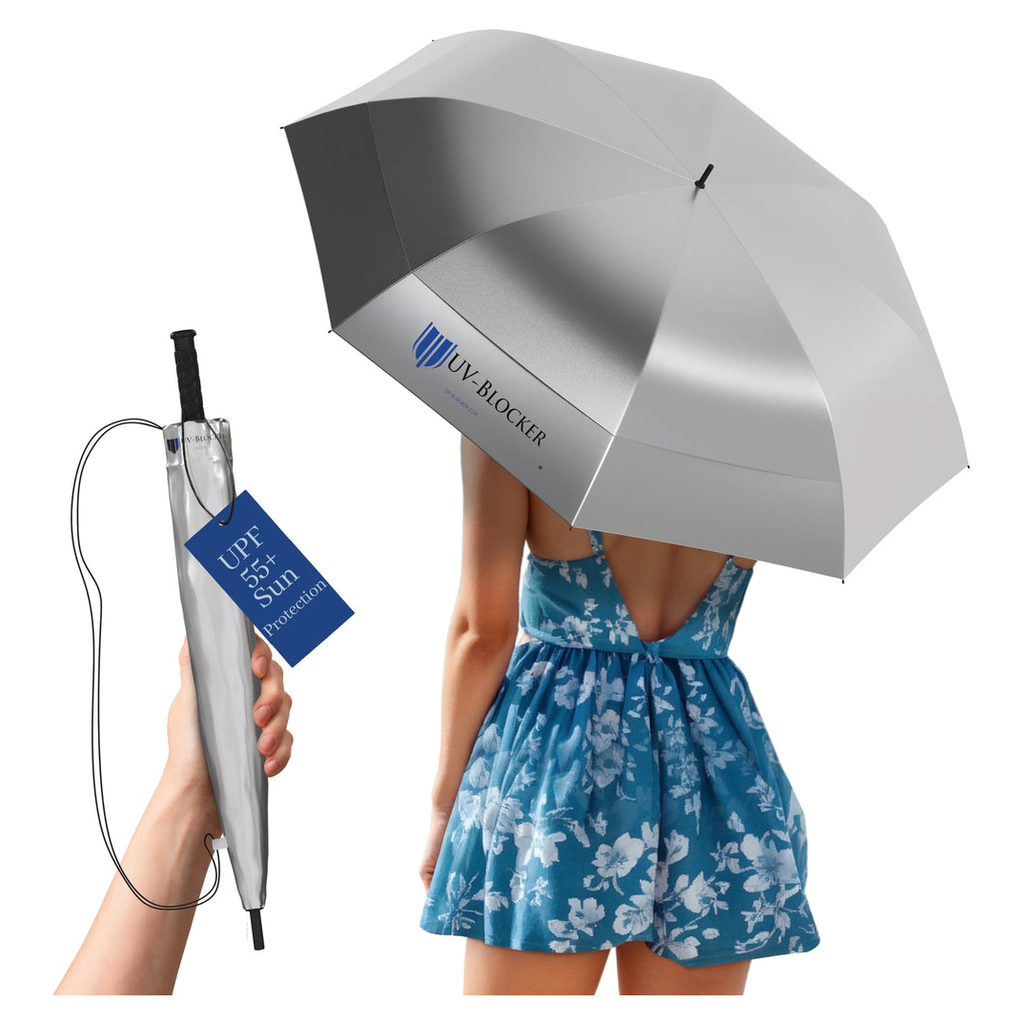
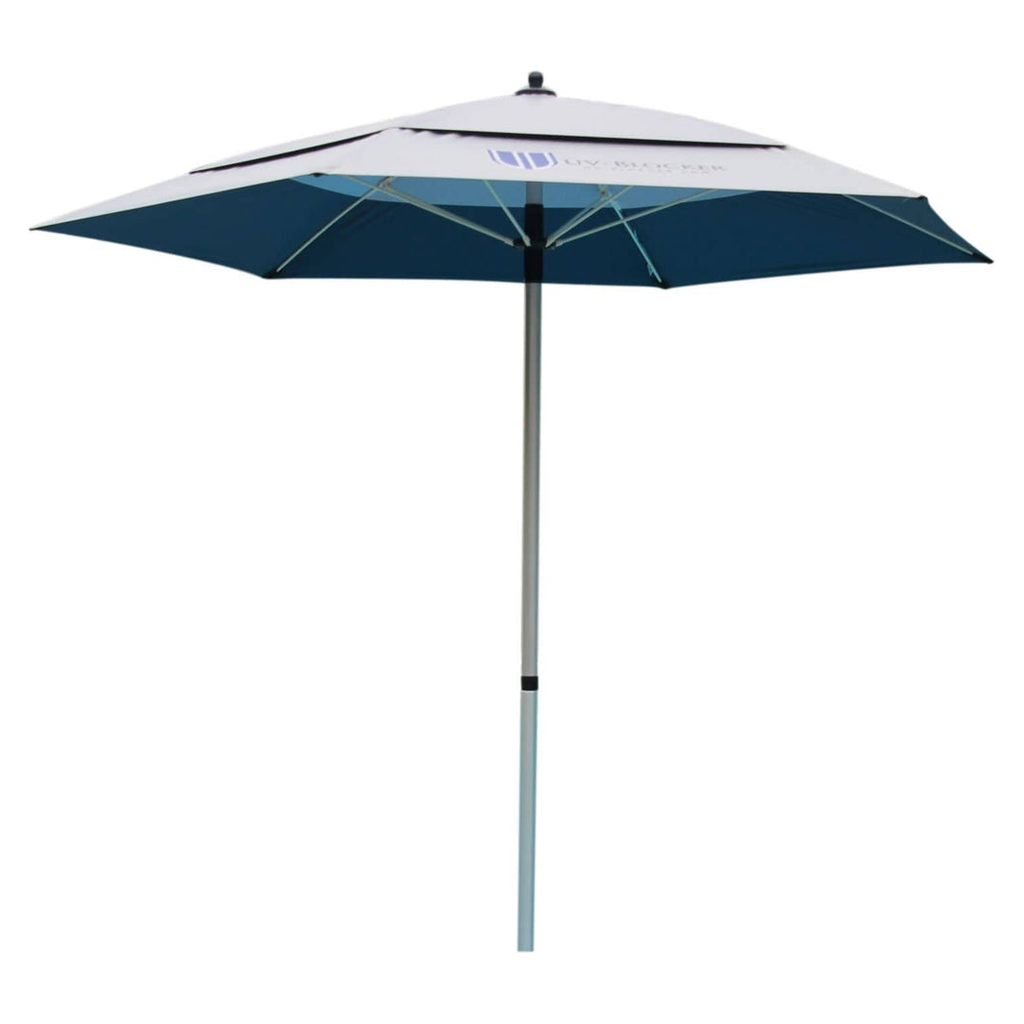
The Sports Umbrella Holder features a RAM Tough-Claw mount that clamps securely to railings up to 2 inches thick. Pair this mount with a Golf UV Umbrella 62" or a larger Golf UV Umbrella 68". The total cost comes in under $130 — a fraction of what permanent bimini installation runs.
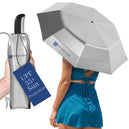
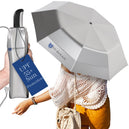
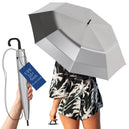
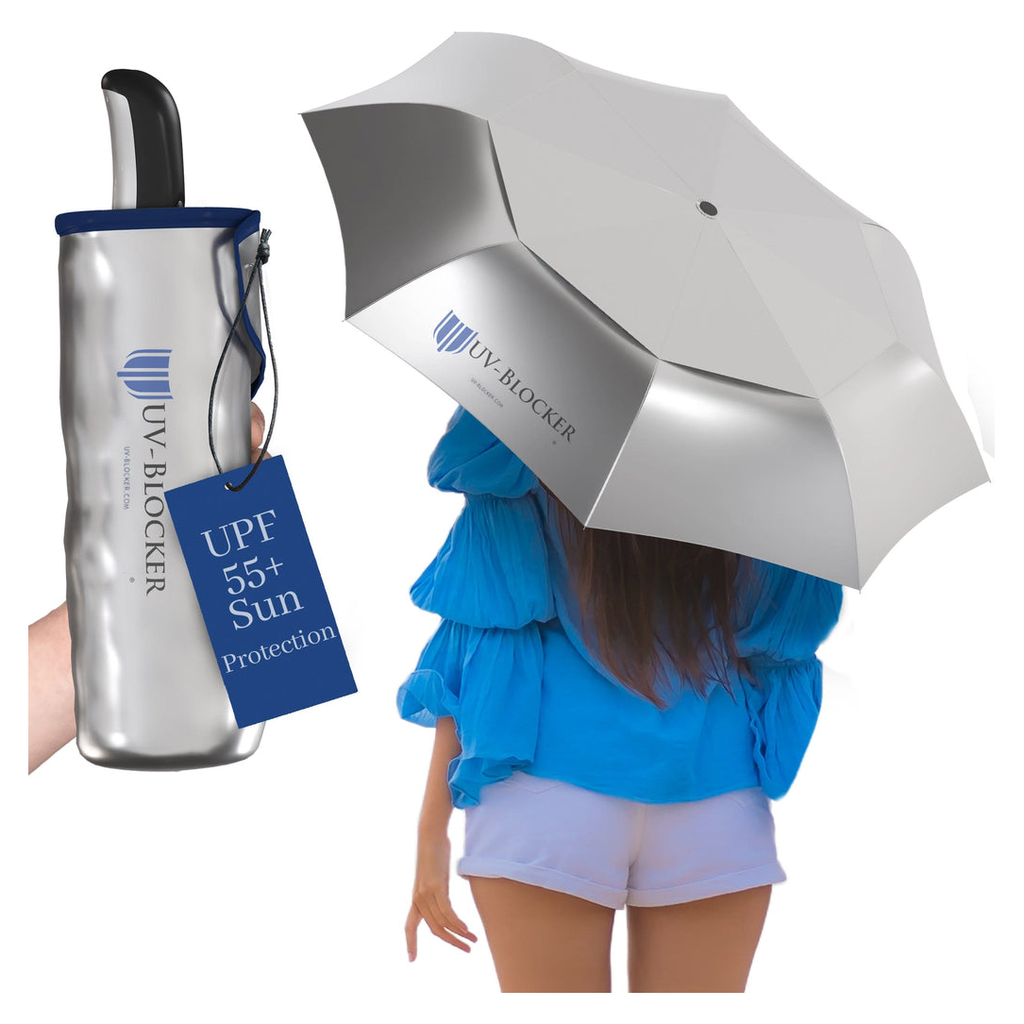
The Solarteck reflective coating on these umbrellas blocks 99.97% of UV-A and 100% of UV-B — numbers you won't find on a standard golf umbrella. They've also got a vented mesh canopy that lets wind pass through instead of catching it, so the umbrella stays put when a gust hits. Anyone who's watched a cheap umbrella flip inside out on the water knows why that matters. For more on wind performance, see the best windproof UV umbrella breakdown. If you're worried about salt spray eating metal parts, the Chair Umbrella Holder is built with marine-grade aluminum specifically for that.
| Solution | Coverage | Cost | Fits Any Boat? | Portable? |
|---|---|---|---|---|
| Bimini top | Full cockpit | $500-$2,000+ | No (custom fit) | No |
| UPF umbrella + clamp mount | 53-58" diameter | Under $130 | Yes (clamps to rails) | Yes |
| Canvas dodger | Helm area | $1,000-$3,000+ | No (sailboats only) | No |
| Pop-up canopy (pontoon) | Partial | $200-$500 | No (flat decks only) | Semi |
Different boats need different approaches. Here's how to adapt the system.
Boat-Specific Sun Protection Tips
Each boat type presents different shade challenges. Kayaks need full UPF coverage, center consoles need gap-filling shade, and pontoons need side protection.
Kayak and Canoe
You're completely in the open. There's no frame to mount shade on and no railing to clamp anything to. That makes full UPF 50+ clothing non-negotiable — long sleeves, a hat with a neck flap, and sun gloves. Your only real shade opportunity comes during shore breaks, and a Large Folding UV Umbrella packs down small enough to bring along for those stops.
Center Console Fishing Boat
That T-top covers the helm, but the cockpit — where you're actually standing and fishing — stays wide open. A clamp-on umbrella holder on the T-top frame or console railing closes that gap without any permanent modification to the boat.
Pontoon Boat
Large biminis often cover the center deck, but the sides remain wide open. UV radiation enters from the sides continuously. Add layers of UPF clothing or position an adjustable umbrella at the sun angle to block incoming rays.
Sailboat
Every tack swings the boat's orientation to the sun, so fixed shade is basically useless — it covers you one minute and leaves you exposed the next. A clamp-mount umbrella can be repositioned in seconds to follow where the sun actually is.
Frequently Asked Questions About Sun Protection for Boating
These are the most common questions about boating sun safety, answered with the UV science behind each recommendation.
Do you burn faster on a boat?
Yes, water reflects 20-30% of UV radiation, creating multi-directional exposure that increases total UV dose compared to land-based activities.
The breeze makes you feel fine, but the UV keeps stacking up. Set a timer — reapply every 80 minutes no matter how comfortable you feel.
Does water reflect UV rays?
Water reflects 3-30% of UV radiation depending on surface conditions. Choppy seawater reflects 20-30%, while calm freshwater reflects only 3-5%.
Sun angle plays a role too. When the sun sits low in the morning or late afternoon, more of it skims off the water surface and hits you sideways.
Can you get sunburned through water?
UV penetrates water to about 1 meter depth. Swimming near the surface still exposes skin to significant UV radiation from above and reflected UV from the surface.
If you're swimming off the boat, water-resistant sunscreen is a must. Towel off and reapply the moment you climb back on board.
What SPF should I use on a boat?
Use SPF 50+ broad-spectrum, water-resistant sunscreen with at least an 80-minute water resistance rating. Reapply every 80 minutes or immediately after swimming.
Zinc oxide formulas give you broader UV coverage than chemical-only sunscreens. They're reef-safe too, which matters if you're boating near coral or in freshwater ecosystems.
How do you shade a boat without a bimini?
Clamp-on umbrella mounts attach to existing railings, T-top frames, or console structures and hold UPF 50+ golf umbrellas for portable shade under $130 total.
The RAM Tough-Claw mount fits boat rails up to 2 inches in diameter. Pair it with a vented UV golf umbrella for wind resistance on open water.
Is a bimini top enough sun protection?
Bimini tops block direct overhead sun but leave sides exposed. Reflected UV from water still reaches skin from below and at angles the bimini cannot cover.
You'll still need sunscreen on every exposed area and UPF layers underneath it. And don't let clouds fool you either — you can absolutely get sunburned on a cloudy day, because most UV passes right through overcast skies.
Conclusion
Here's what it comes down to: water bounces up to 30% of UV right back at you, and there's usually nowhere on a boat to get away from it. Published research says shade access — not sunscreen, not clothing — is the single biggest factor in how much UV damage you take on the water. And the wind makes you feel cool the whole time, so your body never warns you it's happening.
Three layers fix this. Heavy sunscreen on the spots most people miss (chin, nose underside, neck, ears, hands, feet). UPF clothing that blocks rays even when you forget to reapply. And portable shade for the stretches where you're just sitting in the open.
If your boat doesn't have a bimini, a clamp-mount umbrella holder and a UPF 50+ golf umbrella run under $130 and solve the shade problem on any vessel. That small setup is the difference between a great day on the water and a painful week wondering why you didn't plan ahead.