

OSHA conducted roughly 2,400 heat-related inspections per year between 2022 and 2025. The April 2026 NEP update extends that program across 55 high-risk industries for five more years. For sun protection for construction workers, that shift matters — enforcement is accelerating while UV exposure still sits in a regulatory blind spot.
Heat gets watched closely. UV radiation doesn't have a specific federal standard, even though working under the sun caused 18,960 nonmelanoma skin cancer deaths in 2019, according to WHO and ILO joint estimates. That gap leaves construction crews exposed in places where the danger is ordinary, repetitive, and easy to miss.
Construction jobs make the problem worse. Open framing, steel erection, roof decking, concrete pours, and long scaffold shifts create hours of direct exposure. This guide breaks down the 2026 OSHA-era landscape, the construction-specific hazards most generic safety guides skip, and a five-layer protection system that treats UV like a standalone jobsite risk.
TLDR:
- Construction crews face higher UV exposure than indoor workers because of long shifts, overhead work, and limited shade.
- OSHA's April 2026 NEP update expands heat enforcement, but there's still no specific federal UV radiation standard.
- State heat rules in California, Oregon, Washington, Maryland, Nevada, and Colorado now shape what "shade" means on jobsites.
- Fresh concrete reflects up to 10% of UV. Standing water reflects up to 5%. The hazard comes from below, not just above.
- Hard hats help, but they leave the face, ears, neck, and forearms exposed — where much of occupational skin cancer develops.
- A practical system uses five layers: scheduling, shade infrastructure, UPF clothing, sunscreen logistics, and UV monitoring.
- One incident costs roughly $80,000. A break station shade setup costs under $100.
Why Do Construction Workers Face Higher Skin Cancer Risk Than Other Outdoor Workers?
Construction workers absorb 2-3x more UV radiation than indoor workers because shifts run long, shade is scarce, and reflective surfaces add exposure from unexpected angles.
That risk is not abstract. WHO and ILO estimate that 1 in 3 nonmelanoma skin cancer deaths globally are work-related, with nearly 19,000 deaths in 2019 and an 88% rise from 2000 to 2019. For broader occupational context, see sun protection for outdoor workers.
Scaffolding, roof decking, steel work, and concrete pours put crews in direct sun for hours. Fresh concrete reflects up to 10% of UV, and standing water reflects up to 5%, so the hazard comes from below as well as above. Sunscreen on the face doesn't cover everything workers are actually getting hit with.
Hard hats matter, but they only protect part of the head. The crown is covered, while the face, ears, back of the neck, and forearms stay open. The demographic profile adds another layer: the construction workforce is about 88% male according to the BLS, and 65% of occupational skin cancer deaths are male.
What Does OSHA Require for Sun Protection on Construction Sites in 2026?
OSHA has no specific UV radiation standard, but the General Duty Clause and the April 2026 heat NEP update create enforceable obligations for shade, water, and rest breaks.
The regulatory gap is the core issue. OSHA regulates heat illness, yet UV exposure remains a recognized hazard without a dedicated federal rule. Employers can still face General Duty Clause citations if they ignore known UV risks on their sites, and the April 2026 NEP expansion broadens inspection pressure across 55 target industries, including construction. The official announcement is here: OSHA NEP Update April 2026.

State rules already set the floor in several places and are the most concrete guide for shade and rest planning today. Federal OSHA's proposed heat standard is still in rulemaking, so these state standards remain the binding requirements where they apply.
| State | Trigger Temperature | Shade Required | Key Provisions |
|---|---|---|---|
| California | 80°F | Yes, must be available | Water, shade, rest breaks; high-heat procedures at 95°F |
| Oregon | 80°F (Heat Index) | Yes | Water, shade, rest, acclimatization, training |
| Washington | 80°F (Heat Index) | Yes | Water, shade, rest, emergency medical plans |
| Maryland | 80°F (Heat Index) | Yes | Water, shade, rest breaks mandated |
| Nevada | 95°F | Shade/cooling measures | Water, shade or cooling, paid rest breaks |
| Colorado | 80°F | Yes | Heat mitigation, acclimatization, training |
California's shade rule, Oregon's heat rules, and Washington's heat rules all show the same direction: shade is part of workplace protection, not a nice extra. The same pattern is visible in references from Cal/OSHA, Oregon OSHA, and Washington L&I.
What UV Hazards Are Unique to Construction Jobsites?
Construction sites amplify UV exposure through reflective surfaces, overhead work without shade structures, and PPE that covers some areas while leaving others fully exposed.
The most obvious gap is overhead shade. Scaffold crews, roof decking teams, and steel erectors often work for hours with no barrier between them and direct midday sun. That's different from a walking route or a short outdoor task.
Reflective Surfaces Hit From Below
Concrete and reflective surfaces create a hidden second dose. WHO notes that concrete reflects up to 10% of UV, and standing water reflects up to 5%. A worker can catch UV from below around pours, washdown areas, and unfinished slabs — places where sunscreen on the face alone doesn't cut it.
The PPE Coverage Gap
Hard hats and safety vests are essential, but they don't cover the areas that drive most occupational skin cancer. Workers can look fully suited up and still have face, ears, back of neck, and forearms exposed for an entire shift. That's not a failure of PPE. It's a coverage gap that needs shade, clothing, and sunscreen to fill.
Cloud Cover Doesn't Mean Safety
Up to 80% of UV penetrates clouds, so overcast mornings don't eliminate burn risk. For more on that myth, see can you get sunburn on a cloudy day.
The 5-Layer Construction Sun Protection System
Effective construction sun protection requires five coordinated layers: scheduling, shade infrastructure, UPF clothing, sunscreen logistics, and UV monitoring.

Each layer covers a different failure point. No single layer works alone.
Layer 1: Scheduling
Rotate tasks around peak UV where possible. Concrete pours, roofing, and scaffolding work are easier to move before 10 AM or after 3 PM than they are at noon. When the schedule can't change, crews can still rotate so the same worker isn't sitting in peak exposure all day.
The goal is reduction, not perfection.
Layer 2: Shade Infrastructure
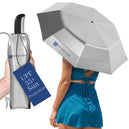
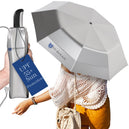
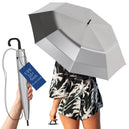
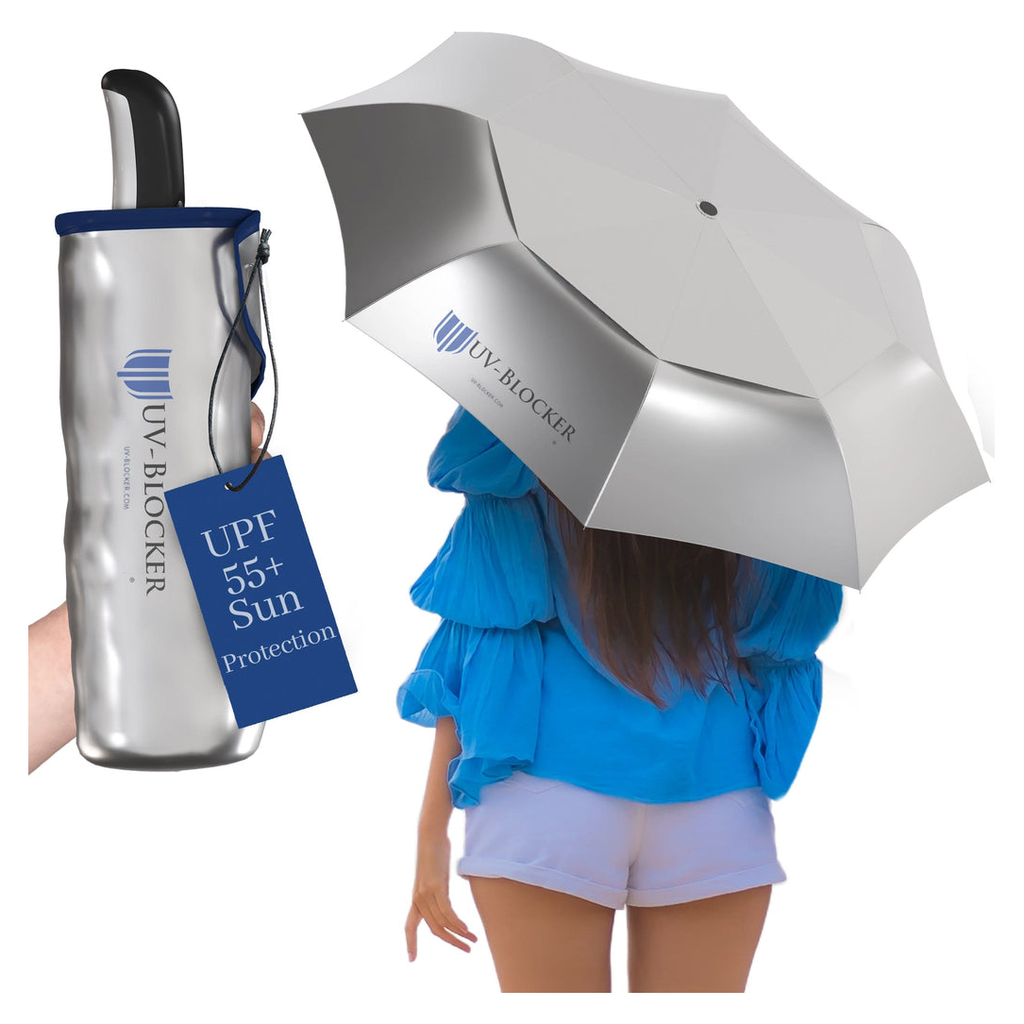
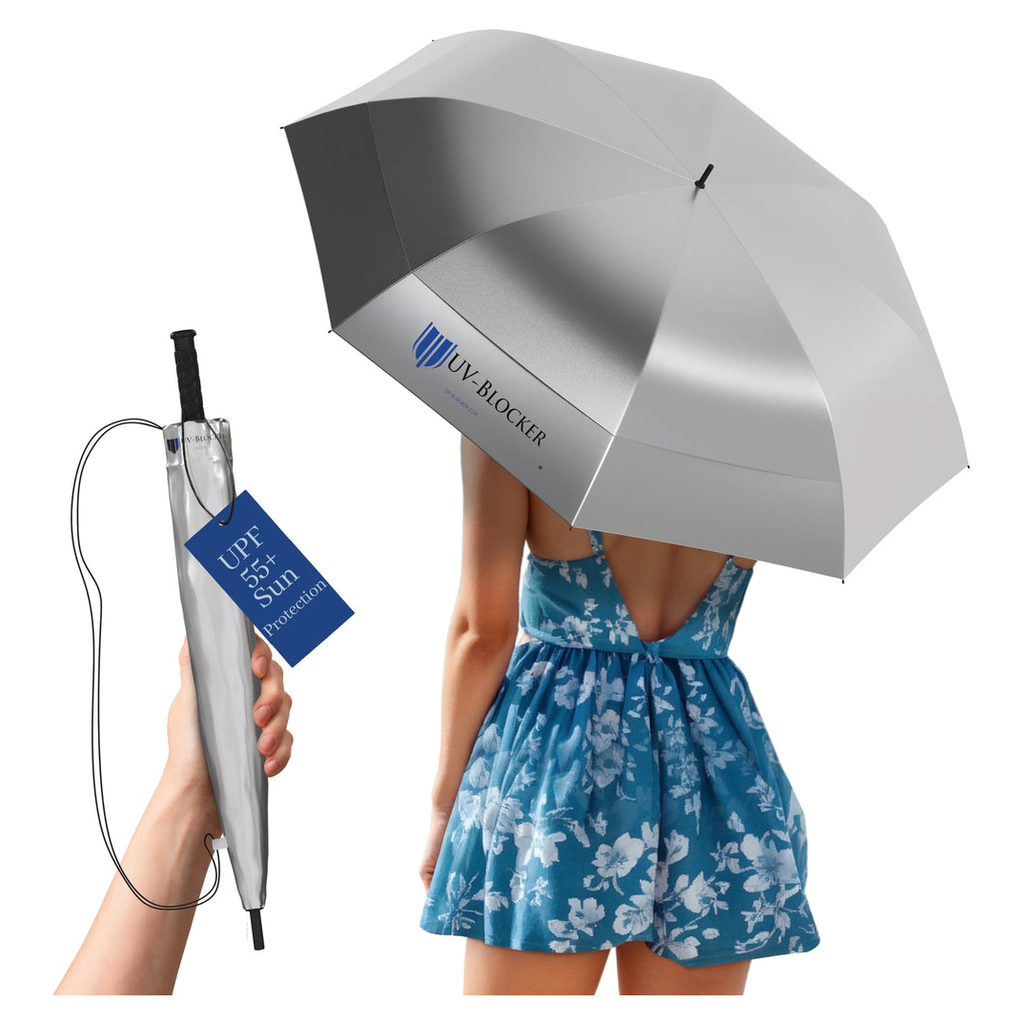
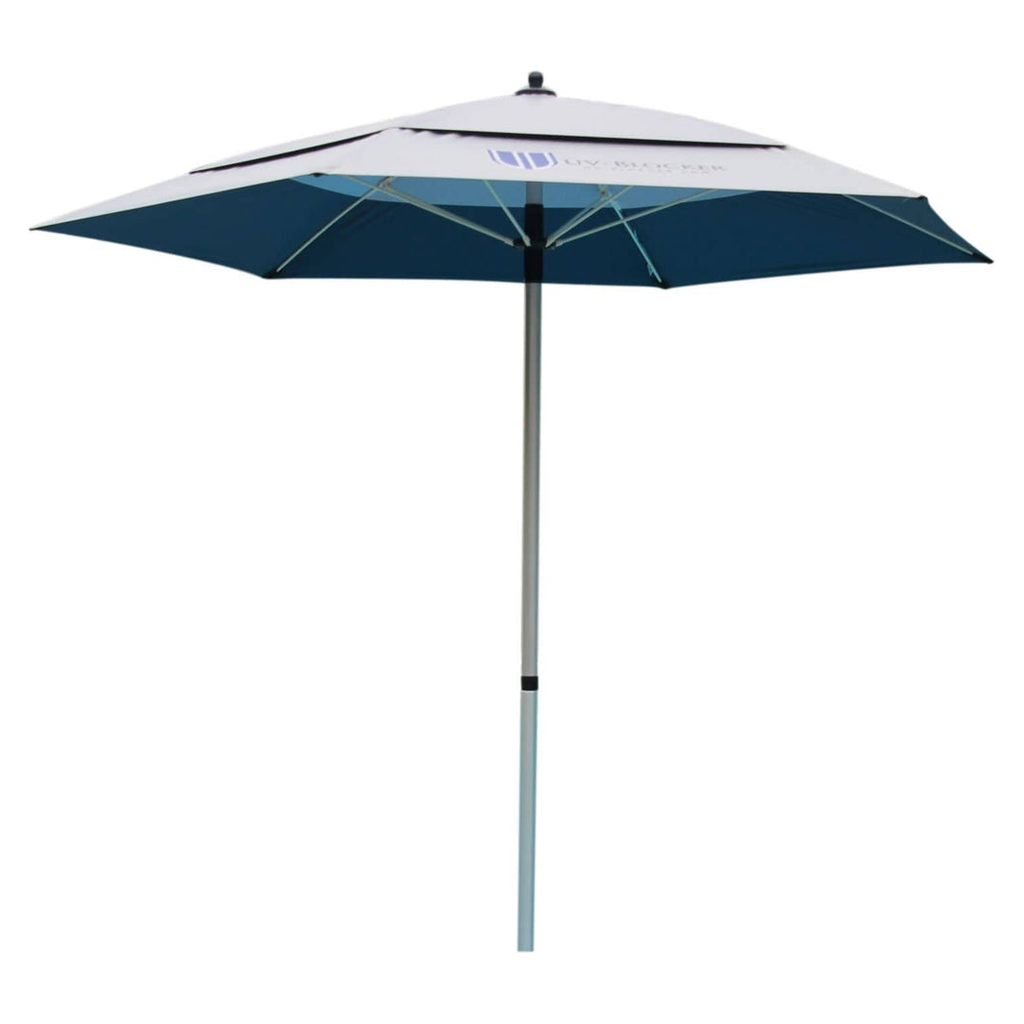
Shade zones should sit where people actually stop — break stations, water coolers, and equipment staging areas. Portable UV umbrellas with UPF 50+ protection are one practical option because they create immediate cover and can move as the project changes.
A Chair Umbrella Holder works at break stations, while a Sports Umbrella Holder fits staging zones and larger jobsite setups. These holders turn a standard umbrella into equipment, not a consumer accessory. The setup keeps crews about 15°F cooler and blocks 99% of UV during rest breaks.
For a side-by-side comparison of portable shade options for your crew, see the best UV umbrella for outdoor workers guide.
Layer 3: UPF Clothing
Clothing fills the gaps that hats and vests leave behind. Hard hat brims and neck flaps help. So do UPF 50+ long-sleeve shirts made with moisture-wicking, ventilated fabric. Wraparound UV-blocking glasses or sunglasses protect the eyes and the skin around them.
Layer 4: Sunscreen
Sunscreen still matters, but it's a logistics problem on construction sites. Dust, sweat, gloves, and time pressure all make reapplication harder than a consumer ad suggests. AAD sunscreen guidance points to SPF 30+ broad-spectrum sunscreen, with SPF 50 preferred for extended outdoor shifts. The old SPF 15 minimum is outdated.
Stick and roll-on formats are easier to use with dirty hands. A buddy system for back-of-neck coverage helps too.
Layer 5: Monitoring
UV monitoring should sit beside heat monitoring in the daily briefing. Check the UV Index before each shift, then fold it into the same safety rhythm already used for heat index, hydration, and rest. A buddy system helps workers notice redness on the back of the neck or ears before it becomes a full burn.
What Is the ROI of Sun Protection for Construction Employers?
OSHA estimates the average cost of a single heat/UV-related workplace incident at roughly $80,000 when factoring medical costs, lost productivity, and potential citations.
That number comes from OSHA's Safety Pays estimator, which includes medical, indemnity, and indirect costs. Skin cancer's long latency means claims can surface 10 to 20 years after the original exposure, so documentation matters now.
Penalties add up fast. OSHA's 2026 penalty schedule lists serious violations up to $16,550 and willful violations up to $165,514 per violation. UV itself has no dedicated standard, but the General Duty Clause still applies when known hazards are ignored.
The math is straightforward. A portable UV umbrella setup at a break station costs under $100. One prevented incident saves far more than that. The Compact UV Umbrella is one way to add shade without disrupting the jobsite.
Can Common Medications Increase UV Sensitivity for Construction Workers?
Yes — NSAIDs like ibuprofen, commonly taken for job-related pain, can increase UV sensitivity and accelerate sunburn on construction sites.
That matters because many crews rely on ibuprofen for muscle and joint pain, whether the bottle says Advil or Motrin. NSAIDs are photosensitizing medications, so a worker already taking a sun hit from direct exposure can burn faster than expected. For more detail, see ibuprofen and sun sensitivity and the broader medications that cause sun sensitivity guide.
Other common photosensitizing drugs include certain antibiotics (doxycycline), some blood pressure medications, and diuretics. When a worker is on medication that raises UV sensitivity, extra shade coverage and more careful sunscreen reapplication become critical.
Frequently Asked Questions About Sun Protection for Construction Workers
Construction workers and safety officers commonly ask these questions about UV protection on jobsites. Here are direct answers based on current OSHA guidance and occupational health research.
Does OSHA require sun protection on construction sites?
OSHA has no specific UV radiation standard, but the General Duty Clause requires employers to protect workers from recognized hazards including UV exposure. Six states also mandate shade access at 80°F or higher.
Federal enforcement still runs through heat rules and the General Duty Clause, while California, Oregon, Washington, Maryland, Nevada, and Colorado spell out shade provisions more directly.
What SPF should construction workers use?
Dermatologists recommend SPF 30+ broad-spectrum sunscreen for construction workers, applied every two hours and after sweating. SPF 50 is preferred for extended outdoor shifts.
Construction crews should also use water-resistant formulas and easier-to-apply formats like sticks or roll-ons when working with dirty hands.
Can you get skin cancer from working outside?
Yes. WHO and ILO found that 1 in 3 nonmelanoma skin cancer deaths globally are caused by working under the sun, with nearly 19,000 deaths in 2019 alone.
Construction workers face added risk because the job combines long exposure, reflective surfaces, and little overhead shade. Skin cancer also develops slowly, often 10 to 20 years after the exposure that caused it.
Does a hard hat protect against UV radiation?
Hard hats protect the crown of the head but leave the face, ears, neck, and forearms fully exposed to UV radiation — the most common sites for occupational skin cancer.
Attachable brims and neck shades can extend coverage. Paired with shade breaks and sunscreen, they make a practical difference without replacing the hard hat itself.
What is the cheapest way to add shade to a jobsite?
Portable UV umbrellas with UPF 50+ protection mounted in holder brackets at break stations cost under $100 and create instant shade zones that move with the crew.
For larger staging areas, pop-up canopies work too. The key is placing shade where people already gather, so crews actually use it during breaks.
Conclusion
The 2026 picture is clear. Heat enforcement is tightening, UV remains underregulated, and construction workers still face 2-3x more exposure than indoor workers.
- The five-layer system gives crews a workable structure: scheduling, shade, UPF clothing, sunscreen logistics, and UV monitoring.
- OSHA has no dedicated UV standard, but the General Duty Clause and the April 2026 NEP make UV harder to ignore.
- One incident can cost roughly $80,000, while a small shade setup can cost under $100.
- Medication, reflective surfaces, and cloud cover all raise risk in ways most safety programs don't account for.
Start by adding UV Index to the daily safety briefing. It takes 30 seconds and changes how the crew thinks about sun exposure.
See how portable UV shade solutions compare for jobsite use in the best UV umbrella for outdoor workers guide.
Frequently Asked Questions: Sun Protection on Construction Sites
What OSHA guidelines apply to sun protection for construction workers?
OSHA's General Duty Clause requires employers to protect workers from recognized hazards, including UV radiation. While there is no specific UV standard, OSHA's Heat Illness Prevention campaign recommends shade, hydration, and appropriate PPE for outdoor workers in high UV environments.
How do I apply sunscreen when wearing work gloves and a hard hat?
Apply SPF 50+ sunscreen to all exposed skin before putting on PPE. Focus on the face, neck, back of hands, and forearms. Keep a travel-sized sunscreen in your tool belt and reapply to accessible areas every 90–120 minutes.
What is the most practical sun protection tool for a construction site?
A UPF 50+ UV-blocking umbrella mounted to a tool belt or attached to scaffolding can provide mobile shade for stationary work tasks. Combine with a sun-protective neck gaiter under your hard hat for full facial and neck coverage.
Are there UV-protective hard hat accessories?
Yes — OSHA-compliant hard hat brims and detachable sun-shield accessories are available. These extend coverage to the ears and neck without compromising head protection. UV-protective visors can also attach to most standard hard hats.
Sun Safety in Canada
Canada experiences meaningful UV exposure throughout the year, with UV Index levels regularly reaching 8–10 or higher during summer months in cities such as Vancouver, Calgary, Toronto, and Ottawa. Health Canada and Environment and Climate Change Canada publish daily UV Index forecasts and recommend protective measures whenever the index exceeds 3 — a threshold reached on most clear days between May and August across the country.
Key resources for Canadian sun safety:
- Health Canada UV Index: Published daily via the Environment and Climate Change Canada weather portal (weather.gc.ca). Canadians can track UV levels by city and receive alerts when protection is recommended.
- Canadian Cancer Society: Recommends UPF 50+ clothing, hats, sunscreen, and shade-seeking as primary sun protection strategies. Physical UV barriers — such as UPF 50+ umbrellas — are emphasized for prolonged outdoor exposure.
- Canadian Dermatology Association: Endorses broad-spectrum sun protection strategies, including shade structures and UV-blocking accessories, especially for individuals with fair skin or a personal or family history of skin cancer.
For Canadians spending extended time outdoors — whether working, playing sports, or enjoying recreational activities — a UV-blocking umbrella rated UPF 50+ provides continuous, reapplication-free protection. The UV-Blocker umbrella, independently tested and approved by the Melanoma International Foundation, blocks 99% of UV rays and keeps users up to 15°F cooler — making it a practical and reliable companion for Canadian summers.
Frequently Asked Questions
What are the specific UV risks for Sun Protection for Construction Workers?
Outdoor workers like Sun Protection for Construction Workers typically accumulate 2–3× more UV exposure than indoor office workers. Chronic UV exposure increases melanoma and non-melanoma skin cancer risk significantly. OSHA recognizes UV radiation as a workplace hazard, and workers' compensation claims related to occupational UV exposure are rising. Proper sun protection is both a health and occupational safety requirement.
Does OSHA require sun protection for outdoor workers?
OSHA's General Duty Clause requires employers to protect workers from recognized hazards, including UV radiation. While no specific UV standard exists for most industries, OSHA guidance on heat illness prevention overlaps with UV protection. Several states have stronger outdoor worker heat and UV protection regulations. Employers should provide shade, schedule breaks, and supply sun protection equipment.
What sun protection equipment works best for active outdoor work?
For workers who need freedom of movement, the most effective combination is: (1) UPF 50+ work shirts and pants, (2) wide-brim hard hat or sun-protective hat, (3) SPF 50 water-resistant sunscreen on exposed skin, and (4) a portable clamp or magnetic-base UV umbrella that creates shade at a fixed workstation. UV-Blocker's ServiceShield umbrella was specifically designed for rooftop and outdoor workstation use.
How often should outdoor workers apply sunscreen during a shift?
Sunscreen should be reapplied every 2 hours, and immediately after heavy sweating or toweling off. Most outdoor workers underapply — dermatologists recommend 1 oz (shot glass amount) for full body coverage. Water-resistant SPF 50+ formulas last longer during sweating. Physical (mineral) sunscreens tend to be more stable under direct sun than chemical formulas.
What long-term skin damage should outdoor workers watch for?
Watch for actinic keratoses (rough, scaly patches), unusual moles or growths that change in size, shape, or color, and persistent sores that don't heal. Annual skin cancer screenings with a dermatologist are strongly recommended for outdoor workers with 10+ years of occupational sun exposure. Early detection dramatically improves outcomes.
Professional Sun Safety Protocol for Sun Protection for Construction Workers
- Schedule intensive UV work (roof work, outdoor inspections) before 10am or after 4pm when UV index is lowest
- Use UV-blocking umbrella attachments at fixed workstations — they eliminate ambient UV exposure during breaks
- Establish a buddy system: coworkers check each other for missed sunscreen areas and early sunburn signs
- Keep sunscreen in the work vehicle or tool bag — accessibility increases compliance
- Document sun protection training in safety briefings — it creates legal compliance records and reinforces habits
- Consider UV-protective safety eyewear — eyes are often neglected in outdoor worker sun protection protocols