

TLDR:
- Golfers face 2.4x higher skin cancer risk due to 4-6 hours of direct UV on open fairways with no shade
- The "grip problem" stops 70% of golfers from reapplying sunscreen mid-round
- A UV umbrella eliminates the grip problem entirely while blocking 99% of UV between shots
- Follow the 5-layer protocol: UV umbrella, SPF 30+ sunscreen, UPF 50+ clothing, wide-brim hat, UV sunglasses
Australian research on 336 golfers found they're 2.4 times more likely to develop skin cancer than non-golfers. That's not a typo. Professional golfers accumulate 217 times the UV radiation needed to trigger sunburn over a single year.
Twenty-four million US golfers play 440 million rounds annually. Each round averages four to six hours on open fairways with virtually zero natural shade. That kind of cumulative UV exposure doesn't just add up. It compounds.
This guide breaks down golf-specific UV risks, the sunscreen compliance problem unique to the sport, and a 5-layer protection protocol that actually works on the course.
Why Do Golfers Face Higher Skin Cancer Risk Than Other Athletes?
Golfers face 2.4x higher skin cancer risk due to 4-6 hours on open fairways with no shade and reflected UV from hazards.
A University of South Australia study involving 336 golfers specifically identified the 2.4x elevated risk for golfers compared to non-golfers. Data from the Titleist Performance Institute and Dr. Mindy Clark paints an even starker picture for professionals: they accumulate 217 times the UV dose required to cause sunburn over a year.
Here's the stat that should stop every golfer mid-swing. In a study of female golfers, basal cell carcinoma appeared at an average age of 25.5 years in professionals. In amateurs, it was 51.4 years. That's a 26-year earlier onset.
The average golfer plays 1.9 times per week, totaling roughly 23 holes and more than 7.5 hours of UV exposure weekly. Several factors amplify that exposure beyond what most outdoor sports deliver:
- No fairway shade. Unlike tennis (changeover shade) or baseball (dugouts), golfers walk completely exposed between shots.
- Reflected UV from hazards. Sand traps bounce back 10-18% of UV radiation. Water hazards and wet grass reflect up to 10%.
- Altitude amplification. UV intensity increases roughly 10% per 1,000 meters of elevation gain. Even a course at 5,000 feet sits meaningfully higher on the UV curve than one at sea level.
- Peak tee times. Many golfers book rounds between 10 AM and 2 PM, right when the UV index peaks.
If the risk factors are clear, the next question becomes practical: where exactly should golfers focus their protection?
Which Body Parts Are Most Vulnerable for Golfers?
The scalp vertex, ears, upper back, and hands receive the most UV during a golf swing. Standard golf attire leaves these areas exposed.

During the swing, with the head angled forward over the ball, the scalp vertex takes the most direct hit. Standard baseball caps leave this area partially exposed from above. The upper back and neck catch sustained UV while walking between shots and during the address position.
One finding stands out from the TPI research: basal cell carcinomas show a particular predilection for the ears in golfers. Caps don't cover them. Most golfers never think to protect them.
| Body Zone | Risk Level | Why Golfers Are Especially Exposed | Protection Method |
|---|---|---|---|
| Scalp/vertex | Very High | Head tilted forward over ball; caps miss vertex | Wide-brim hat |
| Ears | Very High | BCC predilection in golfers; caps don't cover | Wide-brim hat, mineral sunscreen stick |
| Upper back/neck | High | Exposed during swing; standard polos leave neck bare | UPF 50+ long-sleeve polo, neck gaiter |
| Nose/face | High | Direct angle exposure at address | SPF 30+ sunscreen, UV umbrella between shots |
| Hands/forearms | High | Grip problem prevents sunscreen on palms | Sunscreen stick (avoid palms), UV umbrella shade |
The vulnerability map explains what needs protection. But there's a bigger barrier that stops golfers from actually applying it.
What Is the Golf Grip Problem With Sunscreen?
The grip problem is golf's biggest sunscreen barrier. Slippery hands prevent reapplication, with only 4.8% of golfers actually reapplying during play.
That 4.8% figure is staggering. Dermatologists recommend reapplication every two hours, yet almost no golfer follows through once the round starts. And the reason isn't laziness or ignorance. It's physics. Greasy hands don't grip a club properly, and one bad swing from a slipping hand can ruin a round.
Broader compliance data tells a similar story. About 59% of golfers always or often use sunscreen before a round, and 68% wear hats. But only 33% actively seek shade. That gap matters because shade is the most effective passive UV protection available. Among UK golfers, only 42% use sunscreen when conditions call for it. Irish golfers fare even worse, with 44% using an SPF below 30.
A few workarounds exist for the grip issue:
- Mineral powder sunscreen. Applies dry, won't affect grip.
- Sunscreen sticks. Easy to apply to face, ears, and neck while avoiding palms entirely.
- Non-greasy sport formulas. Better than regular lotion but still not ideal mid-round.
These are partial fixes. The most effective solution removes sunscreen dependency from the equation altogether. A UPF 50+ UV umbrella provides continuous shade between shots, requires zero skin contact, and completely sidesteps the grip problem. It doesn't replace sunscreen; it reduces how much golfers need to rely on it.
What Is the 5-Layer Golfer Sun Protection Protocol?
The 5-layer golf sun protection protocol combines UV umbrella shade between shots, SPF 30+ sunscreen, UPF 50+ clothing, a wide-brim hat, and wrap-around UV sunglasses.

No single product handles golf's UV challenge alone. A layered system covers the gaps each individual method leaves behind.
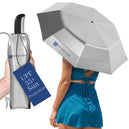
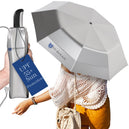
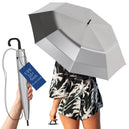
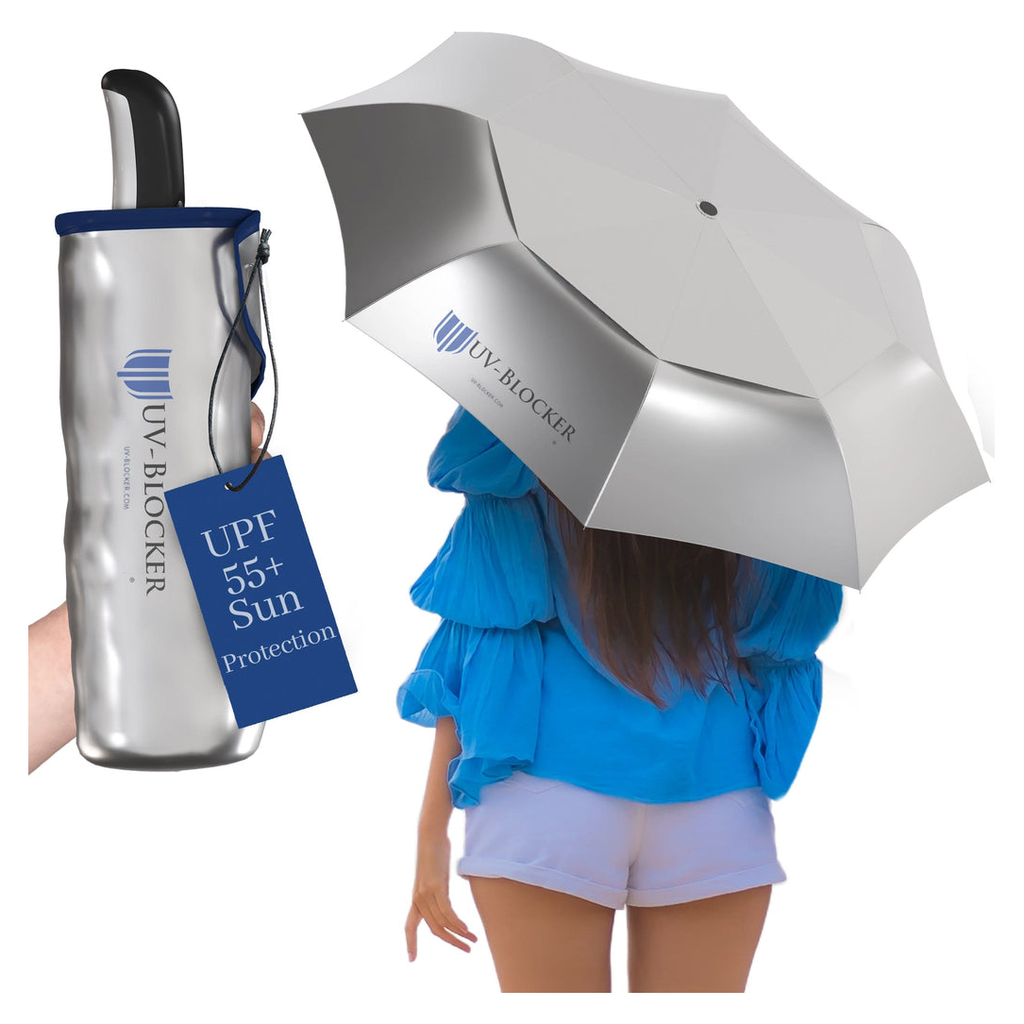
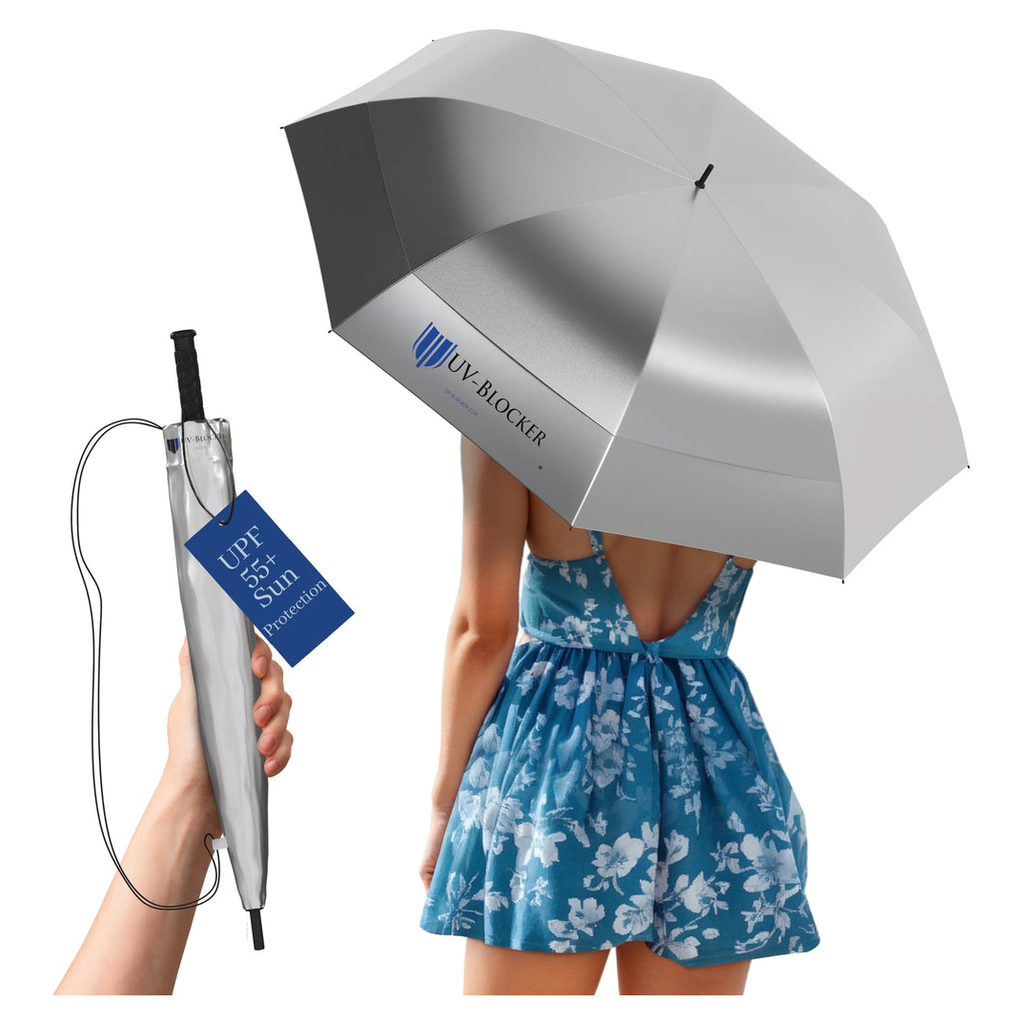
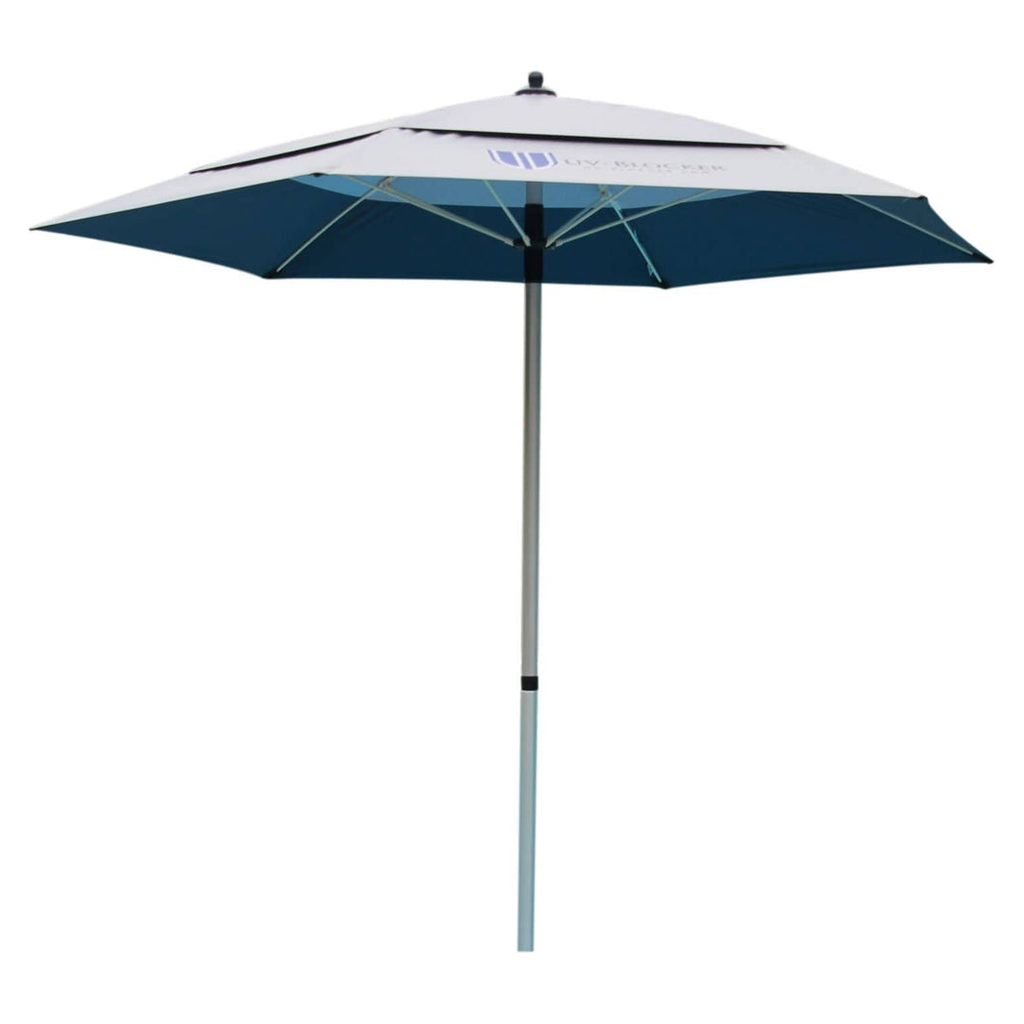
- Layer 1: UV umbrella for shade between shots and on the cart. The UV-Blocker Golf UV Umbrella 62" ($79.95) and 68" ($89.95) feature patented Solarteck silver reflective coating that keeps temperatures up to 15°F cooler underneath. Both are UPF 50+ rated (AATCC TM183-2020 tested: 100% UV-B, 99.97% UV-A block). The 68" model is the only golf umbrella approved by the Melanoma International Foundation. For hands-free cart shade, the Sports Umbrella Holder ($29.95) attaches to most push carts and golf carts.
- Layer 2: SPF 30+ broad-spectrum sunscreen. Apply 15 minutes before tee time. Reapply at the turn after roughly nine holes. Stick or mineral powder formulas avoid the grip problem that lotions cause.
- Layer 3: UPF 50+ clothing. Long-sleeve performance polos wick sweat without trapping heat. A neck gaiter covers the back of the neck, one of the most exposed zones during a round. The sun protection clothing guide covers fabric ratings and options.
- Layer 4: Wide-brim hat (3-inch minimum brim). Baseball caps leave the ears and neck fully exposed. A wide-brim hat with at least a 3-inch brim provides meaningful coverage for both. Straw and ventilated designs work well in the heat.
- Layer 5: Wrap-around UV sunglasses. Standard sunglasses leave UV entering from the sides. Wrap-around frames with Category 3 or 4 lenses block UV from every angle and reduce glare on the fairway.
For golfers comparing umbrella options, the golf umbrella UV protection buying guide breaks down the top picks for 2026.
What Can Golfers Learn From Pro Skin Cancer Stories?
Justin Thomas discovered early-stage melanoma on his calf in 2019. His doctor said he was two years from hospitalization. Randy Jones was diagnosed with Stage II melanoma in 2011, progressing to Stage IV by 2015.
In September 2019, PGA Tour player Justin Thomas found early-stage melanoma on the back of his left calf during a routine skin check. His doctor told him he was "about two years away from potentially being a patient in the hospital." That wake-up call motivated Thomas to launch his own sun protection brand and become an outspoken advocate for skin checks among athletes.
Randy Jones, a PGA professional, was diagnosed with Stage II melanoma in January 2011 at age 33. By 2015, it had progressed to Stage IV, metastasizing to his kidneys and brain. Doctors removed a kidney tumor. Stage IV melanoma carries roughly a 30% five-year survival rate, putting the stakes of golf sun protection into sharp perspective.
Ron Walker, founder of UV-Blocker, was diagnosed with Stage 1 melanoma in 2003. That experience drove him to create a sun protection company focused on medical-grade UV-blocking umbrellas, combining the shade golfers already carry with the protection level dermatologists recommend.
These aren't scare stories. They're data points. And they share a common thread: early detection paired with consistent protection saves lives.
Frequently Asked Questions About Sun Protection for Golf
These are the most common questions golfers ask about UV exposure, sunscreen, and shade on the course.
Do golfers get more skin cancer?
Yes. Australian research found golfers are 2.4x more likely to develop skin cancer than non-golfers due to prolonged UV exposure on open fairways with no natural shade.
What SPF should golfers use?
SPF 30 or higher, broad-spectrum. Apply 15 minutes before tee time and reapply at the turn. Stick or powder formulas avoid the grip problems that lotions create.
How often should golfers reapply sunscreen?
Every two hours or at the turn after nine holes. Research shows only 4.8% of golfers actually reapply during play. Making the turn an automatic reminder is the simplest fix.
Do golf umbrellas block UV rays?
Standard golf umbrellas offer minimal UV protection. A UPF 50+ rated golf umbrella blocks 99% of UV rays. The UV-Blocker 68" Golf Umbrella is the only golf umbrella with Melanoma International Foundation approval, verified by AATCC TM183-2020 testing.
What body parts are most at risk for golfers?
The scalp vertex, ears, upper back, nose, and hands receive the most UV during a round. The forward-leaning swing position and gaps in standard golf attire leave these areas exposed.
Does altitude affect UV exposure on golf courses?
UV radiation increases roughly 10% per 1,000 meters of elevation. Mountain courses sit meaningfully higher on the UV curve than sea-level layouts. Cloudy conditions don't help as much as most golfers assume, either. Up to 80% of UV penetrates cloud cover.
Conclusion
Golf creates one of the highest recreational UV exposure profiles in any sport. Four to six hours on open fairways, reflected UV from sand traps and water hazards, and peak-hour tee times add up faster than most players realize.
The grip problem makes sunscreen-only strategies unreliable. Only 4.8% of golfers reapply during play, and slippery hands remain the number-one barrier. A UPF 50+ UV umbrella solves that problem by providing continuous shade without touching the skin.
The 5-layer protocol covers every gap:
- UV umbrella for shade between shots
- SPF 30+ sunscreen applied before tee time
- UPF 50+ clothing for exposed skin
- Wide-brim hat for ears and neck
- Wrap-around UV sunglasses
Before the next round, the simplest upgrade is adding a UPF 50+ UV umbrella to the golf bag. It provides shade, drops temperatures 15°F, and doesn't affect grip or swing. The UV-Blocker Golf UV Umbrella 62" and 68" are both Melanoma International Foundation approved and built specifically for golfers who take sun protection seriously.
Walking vs. Riding: How UV Exposure Differs Between Formats
Golf format significantly changes UV exposure patterns in ways most players never consider. Walkers and cart riders face different risk profiles, different body zones, and different protection priorities across the same 18-hole round.
Walking golfers cover four to five miles per round. That continuous movement means sustained UV exposure across the entire body, particularly the back of the neck, upper shoulders, and hands. Walking in direct sun between shots delivers more total UV dose than a rider sitting under a partial cart roof. However, walkers using a UPF 50+ UV umbrella while moving can block virtually all overhead UV, making walking the more controllable format for sun protection management.
Cart riders often feel more protected because the roof overhead creates a sense of shade. But standard golf cart roofs are transparent to UV radiation. Most are clear or translucent fiberglass or acrylic — materials with little to no UV blocking capability. A study measuring UV through golf cart roofs found that some transparent roof materials block as little as 20% of UV radiation. Riders sitting under a "clear" cart roof may be receiving 80% of the UV they would get in direct sunlight, without realizing it.
Both formats benefit from a dedicated UV umbrella. The UV-Blocker Sports Umbrella Holder mounts to cart frames and push carts, providing UPF 50+ overhead shade regardless of the cart roof material. For walkers, the standard golf umbrella folds easily into the bag and deploys in seconds at the tee and between shots.
Seasonal Golf Sun Protection: Adapting by Climate and Season
Many golfers mistakenly believe sun protection is only relevant during summer. The data tells a different story. Golf-related UV exposure is a year-round concern in most US markets, and seasonal underestimation is one of the leading causes of cumulative skin damage in regular golfers.
Spring (March–May): UV index climbs faster than most golfers recognize. By April, many US golf markets already hit index 7 to 9 — "Very High" levels. The psychological association between "cold weather" and "safe sun" leads spring golfers to skip protection on brisk days where UV intensity is already severe. Spring rounds often last longer as players enjoy the return to good weather, compounding total exposure time.
Summer (June–August): Peak risk period. Early morning tee times (7–9 AM) dramatically reduce exposure compared to midday rounds. By 10 AM, the UV index in hot-climate golf markets (Arizona, Texas, Florida, California) can already sit at 8 or above. Scheduling rounds for early morning isn't just comfortable — it's a meaningful health decision.
Fall (September–November): UV index drops more slowly than temperature. September in most US markets still delivers "Very High" readings. Cool fall weather reduces the perceived need for protection, creating the same underestimation trap as spring. October golf in Texas, Florida, or Arizona can still involve UV index readings of 7 to 8.
Winter (December–February): Many golfers in sunbelt states continue playing year-round. Winter UV in states like Arizona, California, and Florida still reaches "Moderate" to "High" levels (index 3 to 6). Year-round golfers need year-round protection habits, even if the protocols can be relaxed compared to peak summer.
Course Architecture and UV Exposure: Where Risk Is Highest
Not all holes on a golf course carry the same UV risk. Course architecture, orientation, vegetation, and water features create meaningfully different exposure conditions across an 18-hole layout. Knowing where the high-risk zones are helps golfers allocate shade breaks strategically.
Open fairway holes (no tree lines): These are the highest-risk segments of any round. No overhead trees, no incidental shade — pure direct UV for tee shot, approach, and green. On a typical course, 6 to 10 holes will have open fairway exposure. These are the holes where a UV umbrella provides the most value between shots.
Par 3 tee boxes: Golfers often wait on congested par 3 tees for 5 to 15 minutes while the group ahead clears the green. Standing exposed on an elevated tee with no overhead cover for 10+ minutes is one of the highest cumulative UV moments per round.
Water hazard holes: Water reflects UV upward, delivering rays from a below-horizon angle that standard hat brims and visors don't block. UV bouncing off water hazards strikes the face, chin, and neck from a direction that most protection methods don't address. A UV umbrella covers this reflected angle naturally because the canopy blocks all overhead and angled UV directions.
Elevated courses and mountain layouts: Mountain golf in Colorado, Utah, Arizona, and California combines altitude UV amplification with open terrain. For every 1,000 meters of elevation, UV intensity increases roughly 10 percent. A course at 6,000 feet elevation receives 18 to 20 percent more UV than a sea-level layout on the same calendar day.
The best golf UV umbrella buying guide for 2026 covers which umbrella designs work best for different course types and playing styles.
Golf Course UV Exposure: A Hole-by-Hole Analysis
A round of golf takes 3.5–5 hours across 18 holes — placing golfers among the highest-exposure outdoor athletes. Unlike most sports, golf combines prolonged walking with extended waiting periods (between shots, on tees, waiting for slower groups), creating cumulative UV exposure that rivals lifeguard duty and open-water swimming.
UV Exposure Hotspots on a Golf Course
- Tee boxes: Typically elevated, open, and facing fairways — maximum UV exposure with no overhead shade. Average wait time on a busy weekend round: 5–15 minutes per tee.
- Fairways: Usually unshaded, particularly on newer course designs that prioritise panoramic aesthetics over tree coverage. Walking (vs. riding) amplifies total body UV exposure.
- Greens: Often on elevated positions with 360° sun exposure. Reading putts requires stationary positioning in full sun.
- Sand traps: Light-coloured sand reflects UV significantly (17–25%), amplifying exposure for players spending time in bunkers — already in full sun, with UV reflection from below.
- Water hazard adjacent fairways: Lake and pond surfaces add 5–15% UV reflection, increasing ambient UV near water-adjacent holes.
UV Exposure by Playing Style
| Playing Style | Daily UV Exposure (Summer Round) | Primary Risk Factors |
|---|---|---|
| Walking 18 holes | Very High (4–5 SED on unprotected skin) | Full-body exposure, 5+ hours continuous |
| Cart (18 holes) | High (3–4 SED) | Upper body exposure; cart provides marginal shoulder shade only |
| Practice range only (2 hrs) | Moderate (1.5–2.5 SED) | Stationary facing sun; neck/face/forearm exposed |
| 9 holes (cart) | Moderate-High (2–3 SED) | Peak UV hours often overlap with morning tee times |
The Golf-Specific UV Umbrella Advantage
Golf is the one sport where an umbrella is already part of the game — standard golf bag equipment, acceptable on course, and culturally normalised. Yet most golfers carry rain umbrellas (standard fabric, UPF 5–15) rather than UV-rated models. Upgrading to a UPF 50+ golf umbrella with reflective coating achieves:
- Full-body shade during tee waits, putting, and short-game practice
- Heat rejection (cooler shade zone) during summer rounds — meaningful for performance in heat
- Protection during the cart ride between holes (open cart provides direct overhead sun exposure)
The UV-Blocker 68" Golf Umbrella is the only golf umbrella approved by the Melanoma International Foundation — specifically designed for golfers who want maximum UV protection without compromising the game.
Skin Cancer Rates in Golfers: The Research
Multiple dermatology studies have quantified golf's skin cancer risk:
- A study published in the British Journal of Dermatology found that regular golfers have a significantly elevated lifetime risk of squamous cell carcinoma and basal cell carcinoma compared to matched non-golfing controls
- Golfer-specific lesion patterns typically appear on the left forearm/hand (driver/iron grip), left side of the face, and the back of the neck — consistent with right-handed golfer's chronic UV exposure pattern
- Professional golfers who played primarily in high-UV climates (Arizona, Florida, Australia, South Africa) show the highest incidence rates in retrospective analyses
Frequently Asked Questions: Sun Protection for Golf
What's the most practical sun protection approach for golfers who don't want to slow down play?
The most practical approach: (1) Apply SPF 50+ sport sunscreen before teeing off — 30 minutes before if possible; (2) wear a UPF 30+ performance polo or sun hoodie; (3) wide-brim golf hat (not a visor, which doesn't protect ears/neck); (4) carry your UV golf umbrella and deploy it during tee waits, putting, and between-hole cart rides. Reapply sunscreen at the turn (after holes 9–10) — the single most impactful mid-round step. This protocol adds less than 5 minutes to a round.
Are golf gloves effective UV protection for the left hand?
Standard golf gloves provide modest UV-B protection (the synthetic leather or cabretta leather blocks some UV) but are typically not certified UPF-rated. The back of the gloved hand is the most UV-exposed area for right-handed golfers (grip position means the back of the left hand faces the sky constantly). A UPF-certified golf glove (available from some UV-specialist brands) provides certified protection; alternatively, SPF 50+ sunscreen applied under the standard glove and reapplied at the turn provides effective coverage.
How do early morning tee times affect UV exposure?
7am tee times during summer typically mean the back nine (holes 10–18) are played between 10am–1pm — peak UV hours. Early starts don't avoid high UV unless the entire round is completed before 10am. UV Index is typically 2–3 at 7am, rising to 8–10 by 10am in summer at most US latitudes. The 7am start is beneficial in reducing heat stress but doesn't meaningfully reduce UV exposure for a full 18-hole round.
Should golfers use different sun protection for different climates?
Yes. In high-UV climates (Florida, Arizona, Hawaii, coastal California, Australia), the standard approach should be supplemented with: UPF 50+ long-sleeve base layer even in summer heat, increased sunscreen reapplication frequency (every 60–90 minutes vs. every 2 hours), and UV umbrella deployment even on overcast days (UV penetrates clouds with 80% efficiency). In temperate climates (Pacific Northwest, UK), standard SPF 30+ with protective hat and occasional umbrella use is typically sufficient.
Golf UV Protection: On-Course Quick Reference
Golfers accumulate some of the highest recreational UV exposures of any sport — a standard 18-hole round delivers 4–5 hours of largely uninterrupted UV exposure with minimal shade. Here's what the data shows and what golfers can do:
- 2.4x higher skin cancer risk: Research consistently shows golfers develop skin cancer at significantly higher rates than the general population — primarily because rounds occur during peak UV hours on open, unshaded courses
- Hands and forearms are the highest-risk areas: Golf grip positions expose the backs of both hands and forearms to direct sun for the entirety of a round — UV-protective gloves and UPF sleeves address the highest-exposure zones
- Golf umbrella UPF matters: Standard golf umbrellas block sun and rain but are not UV-certified — an umbrella with AATCC-tested UPF 50+ fabric (like the UV-Blocker Golf Umbrella, the only MIF-approved golf umbrella) provides certified UV blocking alongside shade coverage
- Course design and shade availability: Links-style courses have minimal tree cover; parkland courses offer more shade between holes — course-specific UV strategies should account for shade gaps during the most UV-intense holes (typically holes facing south and west)
- Cart vs. walking UV exposure: Walking golfers accumulate approximately 40% more UV exposure than cart golfers — walking rounds require more comprehensive protection including UPF clothing, not just sunscreen application at the first tee
Sun Protection for Golf: Expert FAQ
How much UV exposure does a typical 18-hole round of golf deliver?
An 18-hole round takes approximately 4–5 hours, typically played between 7 AM and 2 PM — including peak UV hours. UV exposure during a summer golf round can equal 3–5 hours of beach UV exposure. Unlike the beach, golfers move continuously between sun and partial shade, making consistent protection difficult. Golfers without consistent shade have one of the highest UV exposures of any recreational athlete.
What is the best umbrella for golf sun protection?
The ideal golf sun umbrella is: UPF 50+ certified (not just water-resistant), minimum 62-inch canopy for full shoulder coverage, wind-resistant (double canopy design handles golf course winds), and lightweight enough for one-hand carrying. UV-Blocker's 68-inch Golf UV Umbrella is the only golf umbrella approved by the Melanoma International Foundation and provides 15°F temperature reduction under the canopy via Solarteck® silver coating.
Does a golf cap provide adequate sun protection?
A standard golf cap with a 3-inch brim provides partial shade for the face only — UV index beneath a cap brim is approximately 25–50% of open-sun levels, still delivering meaningful exposure over a 4-5 hour round. The back of the neck, ears, and arms receive no protection from a cap. A full brim hat is significantly better; a UPF 50+ umbrella provides full head, neck, and shoulder coverage that no hat can match.
Can UV exposure affect a golfer's performance during a round?
UV-related heat stress directly impairs concentration, fine motor control, and decision-making — all critical for golf. Studies of cognitive performance in high-heat conditions show 3–5% decrements in fine motor tasks above 95°F ambient temperature. A golfer using a UPF 50+ umbrella maintains a lower core temperature throughout the round, preserving performance especially in the back nine.
Are golf courses doing enough to protect players from UV?
Most golf courses provide umbrellas on carts, but these are often rain umbrellas with low or no UPF rating. Pro shop sunscreen offerings and shade structures at tees are improving, but there is no industry-wide UV protection standard for golf courses. Golfers are primarily responsible for their own sun protection. The PGA Tour has increased UV awareness campaigns, but recreational player compliance remains low.
Sun Safety in Australia
Australia has some of the highest UV radiation levels in the world, with the UV Index regularly reaching extreme levels (11 or above) in cities such as Sydney, Melbourne, Brisbane, Perth, and Adelaide for much of the year — including on overcast days. The Cancer Council Australia reports that approximately two in three Australians will be diagnosed with some form of skin cancer by age 70, making sun protection a national health priority.
Key resources and guidelines for Australian sun safety:
- SunSmart Program (Cancer Council Australia): The SunSmart UV Alert is broadcast daily and recommends sun protection whenever the UV Index reaches 3 or above. In most Australian cities, this threshold is met every day of the year, including winter months in northern regions.
- ARPANSA (Australian Radiation Protection and Nuclear Safety Agency): Provides real-time UV monitoring at stations across all states and territories. Australians can access current UV levels at arpansa.gov.au.
- Safe Work Australia — UV Radiation as an Occupational Hazard: Australian workplace health and safety legislation requires employers to assess and manage UV radiation exposure for outdoor workers. Physical shade, including umbrellas rated UPF 50+, is recognised as a primary engineering control under these regulations.
A UPF 50+ UV-blocking umbrella provides the consistent, continuous shade protection that is essential under Australia's intense sun. The UV-Blocker umbrella, with its patented Solarteck® reflective coating, blocks 99% of UV rays and reduces perceived temperature by up to 15°F — a meaningful advantage for outdoor activities in Australia's climate. It is the only umbrella of its kind approved by the Melanoma International Foundation.