

Think about what 8 hours at a parking lot gate actually means. That's roughly the same cumulative UV dose as spending an entire day at the beach, except there's no sunscreen station, no shade tent, and absolutely no option to walk inside when it gets bad.
Here's what most people miss about security work: fixed-post guards can't just "seek shade," which is the standard advice every outdoor safety guide leads with. They're stuck. OSHA doesn't have a specific UV standard for them, either, so the regulatory backup isn't there.
This guide breaks down why stationary sun exposure creates a hazard that's genuinely different from other outdoor jobs, what shade solutions actually work for each type of security post, and what employers owe their teams.
Why Do Security Guards Face Unique UV Risk?
Guards at fixed posts soak up concentrated UV for 4-12 hours straight because they simply can't relocate to shade while they're on duty.
That's the whole problem in one sentence. Compare it to other outdoor jobs: construction crews move between indoor framing and outdoor concrete work. Patrol officers drive routes that naturally alternate between sun and shade. But a gate guard? A parking lot attendant? They're planted in one spot, with UV hammering the same patches of exposed skin hour after hour.
And reflective surfaces pile on. The EPA puts concrete at up to 12% UV reflection, and glass building facades bounce back 20% or more. Picture a guard posted between a parking lot and a glass-fronted office tower. They're catching direct UV from above plus reflected UV bouncing at them from two sides. It's not just "standing in the sun." It's standing in a UV amplifier.
The uniforms don't help, either. Standard-issue black or dark navy polyester looks professional, sure, but it doesn't block much UV. The Skin Cancer Foundation pegs a typical unrated dark fabric at roughly UPF 5-10, meaning 10-20% of UV still gets through to the skin underneath. Clothing rated UPF 50+ blocks 98%+, but good luck finding a security company that issues UPF-rated uniforms. Almost none do.
On the regulatory side, OSHA's General Duty Clause (Section 5(a)(1)) says workplaces must be "free from recognized hazards." But there's no specific UV standard for outdoor workers. Most guards (and frankly, most employers) don't even realize that UV counts as a recognized workplace hazard.
What Does Cumulative Stationary Sun Exposure Do to Skin?
Years of fixed-post UV exposure adds up faster than most guards realize. Outdoor workers develop nonmelanoma skin cancer at 2-3 times the rate of people who work indoors.
The American Academy of Dermatology puts the headline number at 1 in 5 Americans developing skin cancer by age 70. Outdoor workers carry a lopsided share of that figure because their UV exposure stacks up day after day, year after year, in repetitive patterns that overwhelm the skin's ability to repair itself.
The Asymmetric Damage Pattern
There's a specific pattern that shows up in fixed-post workers called unilateral UV damage. Basically, if a guard faces south at the same gate every morning, the left side of the face, neck, and arm takes a beating while the right side stays relatively protected. After a few years, that lopsided exposure shows up as visible asymmetry: deeper wrinkles, more sun spots, and higher precancer risk on the exposed side. Long-haul truck drivers show the exact same pattern from chronic UV through the driver-side window.
Sunscreen Doesn't Solve the Problem
Every dermatologist says the same thing: reapply sunscreen every 2 hours. On an 8-hour shift, that's 3-4 reapplications. How often does that actually happen? Almost never. The guard's hands are busy with credentials, access badges, and radios. And let's be honest, pulling out a bottle of SPF 50 in front of the building entrance doesn't exactly match the professional image most security companies expect. So the sunscreen stays in the locker.
Heat Compounds the Risk
The CDC flags unshaded outdoor posts as high-risk for heat illness, and the connection to UV damage is more direct than most people think. When a guard gets dehydrated, the skin's natural repair mechanisms slow down, which means UV damage accumulates even faster. Stand on dark asphalt that's hitting 130F+ surface temperature while absorbing direct UV overhead, and you've got two problems feeding each other. Sunscreen alone doesn't cut it.
What Sun Protection Works for Every Security Post Type?
It depends entirely on the post type. Gate guards need hands-free shade, parking lot officers need wind-resistant coverage, and rotation guards need something that fits in a bag.
There's no one-size-fits-all answer here, which is actually why most generic "outdoor worker sun safety" guides fall short for security work. A guard's setup varies wildly depending on assignment. Here's what works for each scenario.
Gate and Entrance Posts
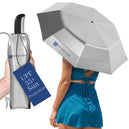
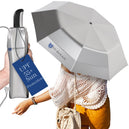
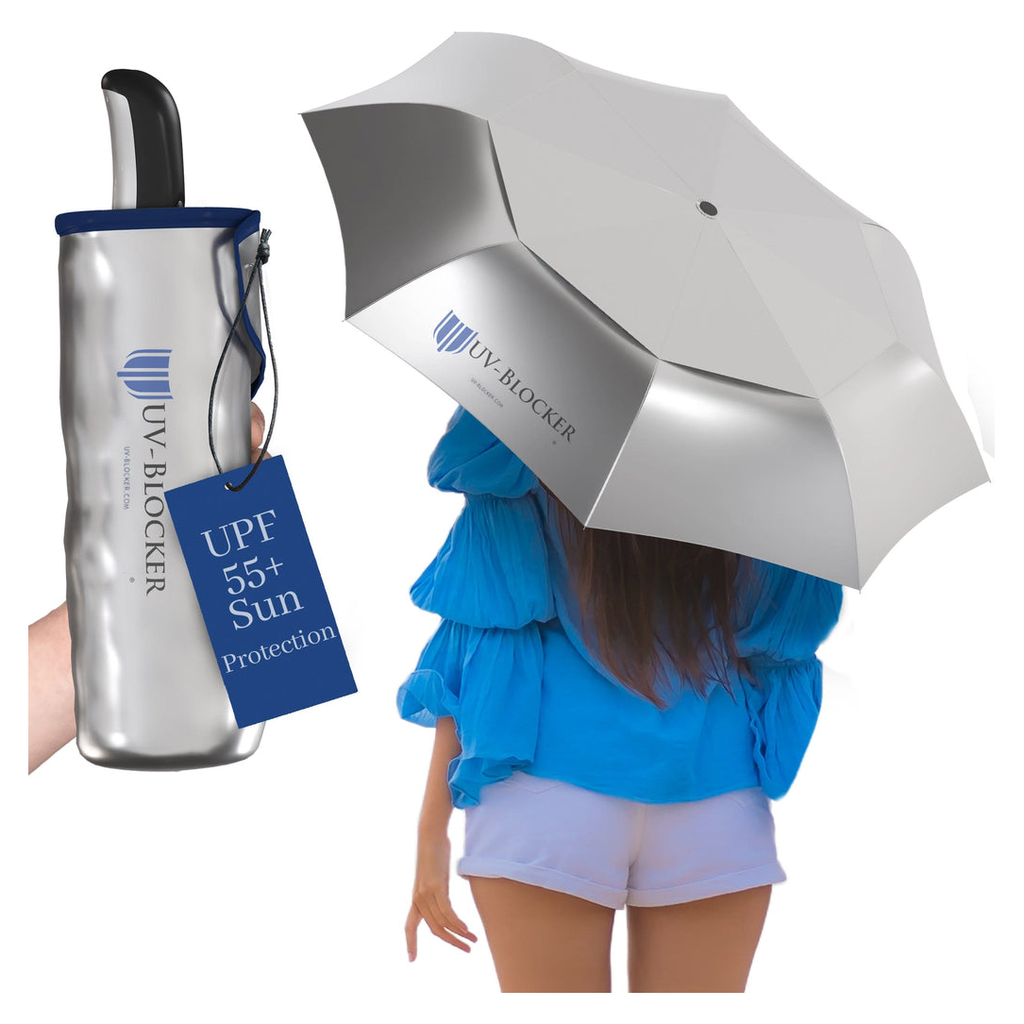
This is the most common fixed-post scenario: a guard sitting or standing at a checkpoint for the full shift. The fix is surprisingly simple: mount a compact UV umbrella to the booth chair, railing, or checkpoint structure so it provides overhead UPF 50+ shade without tying up the guard's hands. The UV-Blocker Compact Umbrella paired with a Chair Umbrella Holder does exactly that, clamping to almost any seating or railing setup.
Parking Lot and Open Area Posts
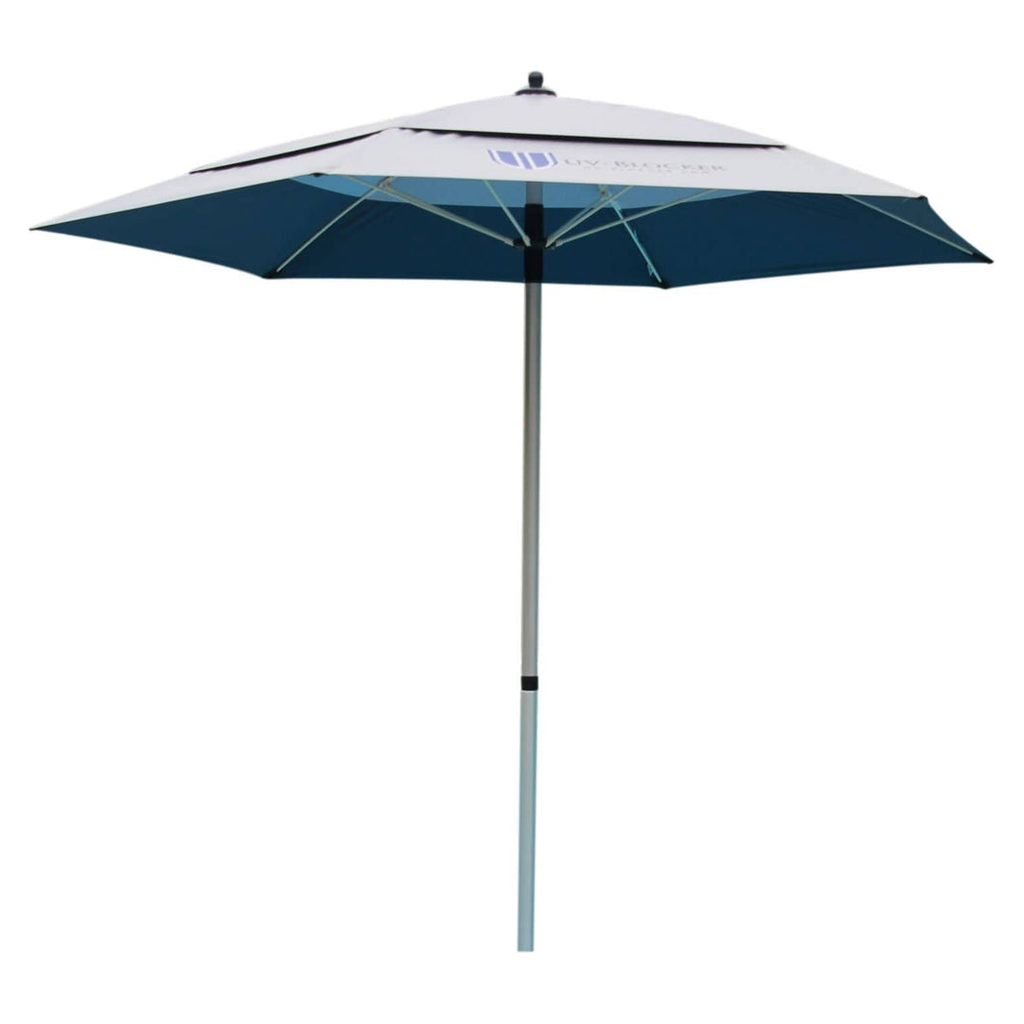
These are the toughest assignments to shade because there's often nothing to mount equipment to. Freestanding systems work best here: commercial UV shade units like the UV-Blocker ServiceShield, pop-up canopy tents rated for UV, or permanent shade structures that the employer installs. One thing that catches people off guard: open parking lots act like wind tunnels. A decorative umbrella will flip inside out in seconds. Whatever goes here needs to be built for wind.
Rooftop Posts
If there's one post that should never go unshaded, it's a rooftop assignment. UV intensity climbs roughly 4% per 1,000 feet of elevation, per the WHO. Then factor in reflective roofing materials (metal panels, light-colored membrane) and a rooftop guard can easily absorb 30-50% more UV than someone doing the same job at ground level. Shade up there shouldn't be optional. It should be standard equipment.
Indoor/Outdoor Rotation Shifts
Rotation guards have it slightly easier because they're not baking in one spot for 8 hours straight. But the outdoor legs of those rotations still add up. A compact UV umbrella that fits in a duty bag covers the outdoor segments without adding bulk. The UV-Blocker Compact folds down to 11.5 inches, so it tucks into a bag alongside a radio and a water bottle without any fuss.

| Post Type | Recommended Shade | Key Feature | Estimated Cost |
|---|---|---|---|
| Gate/Entrance | Compact UV umbrella + holder | Hands-free, UPF 50+, portable | $60-$65 |
| Parking Lot | Commercial UV shade system | Wind-resistant, permanent | $100-$330 |
| Rooftop | Mandatory shade structure | Maximum UV at elevation | Employer-provided |
| Rotation/Mobile | Compact folding UV umbrella | 11.5" folded, fits duty bag | ~$60 |
What Makes a UV Umbrella Guard-Friendly?
It needs to mount hands-free, handle wind, carry a real UPF 50+ rating, fold small enough to transport, and not look like it belongs at the beach. That's the short list.
Most umbrellas fail at least two of those criteria. Here's why each one actually matters for this job.
Both hands stay free, always. A guard juggling IDs, radios, access cards, and incident reports can't hold an umbrella. Full stop. A clamp-style mount that locks onto a chair arm, railing, or post converts the umbrella into a fixed overhead shade. The Chair Umbrella Holder uses a RAM Mount clamp system that was originally designed for heavy-duty equipment mounting, so it stays put.
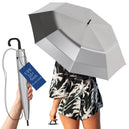
Wind is the #1 umbrella killer at outdoor posts. A standard canopy catches wind like a sail and flips. A vented canopy lets gusts pass through without inverting. UV-Blocker's patented Solarteck vented mesh handles this, but whatever umbrella a guard picks, vented construction is the feature that separates worksite gear from patio decor.
UPF rating isn't optional for all-day use. Here's a number that surprises people: standard rain umbrellas only block 50-77% of UV, per a JAMA Dermatology analysis. A UPF 50+ umbrella tested under AATCC TM183-2020 blocks 98%+. Over an 8-hour shift, that gap is enormous. The Solarteck coating on UV-Blocker umbrellas blocks 100% of UVB and 99.97% of UVA per independent SGS testing. Those numbers matter when a guard's outside for 2,000+ hours a year.
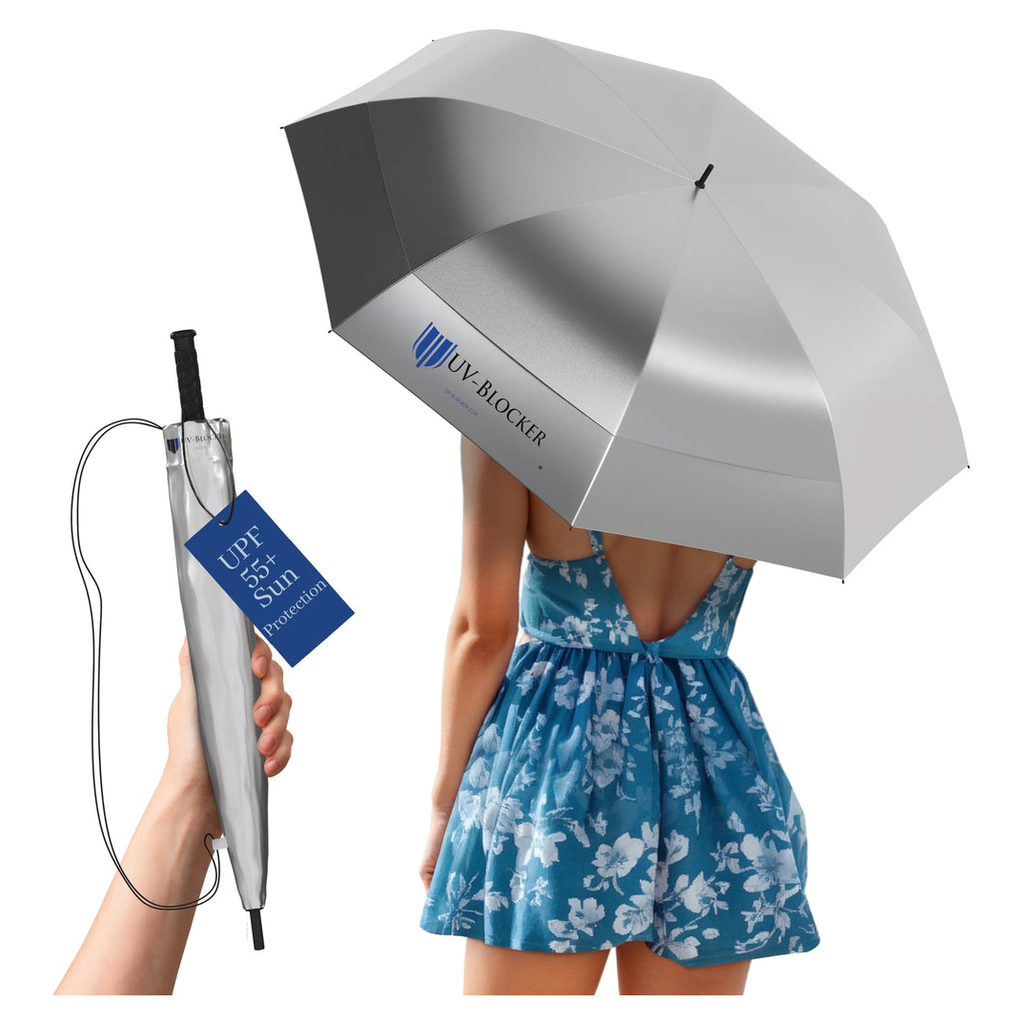
It has to fit in a duty bag. An umbrella that folds to 11-12 inches slides into a standard bag, vehicle console, or locker. Full-size golf umbrellas give better coverage, sure, but try carrying one between three different post assignments in a shift.
Looking the part matters too. A silver exterior with a navy canopy reads as professional at a corporate lobby entrance or residential community gate. Tropical prints and neon beach umbrellas? Not so much.
Employer Responsibilities for Guard Sun Safety
Under OSHA's General Duty Clause, employers are responsible for providing a workplace free from recognized hazards, and UV at fixed outdoor posts qualifies.
Now, the clause doesn't specifically say "buy shade equipment." It doesn't mention sunscreen, hats, or UV umbrellas by name. But the legal logic is straightforward: UV radiation is a recognized carcinogen, fixed outdoor posts expose workers to it for extended periods, and the employer controls the work conditions. That's enough for a General Duty citation if something goes wrong.
Here's what smart security companies and facility managers are doing about it:
- Putting shade equipment at every fixed outdoor post. A UPF 50+ umbrella with a clamp mount runs under $65 per guard. For context, that's less than a single uniform shirt at most security companies, and it cuts cumulative UV exposure dramatically.
- Keeping water within arm's reach. The CDC says outdoor workers in heat should be drinking at least 8 oz every 20 minutes. A guard who has to leave the post to get water isn't going to hydrate enough, and dehydration makes UV damage worse.
- Rotating shifts during peak UV. The worst UV hits between 10 AM and 4 PM. When the staffing math works, keeping any single guard off the sunny post for part of that window makes a real difference over the course of a summer.
- Looking at UPF-rated uniforms. Several manufacturers now make UPF 50+ shirts and hats in styles that work for security. They're more expensive than standard polyester, but they add a passive layer of protection that's always on.
- Adding sun safety to annual training. This one's free. Most guards have never heard anyone frame UV exposure as a workplace hazard. A quick 15-minute module on UV basics, self-skin-checks, and shade equipment covers the gap.
For security companies managing outdoor teams, the investment per guard is tiny compared to what a single occupational skin cancer claim costs in workers' comp.
Quick Sun Safety Checklist for Security Professionals
Run through this list before heading out to any outdoor assignment. Screenshot it, print it, tape it to the guard booth. Whatever works.
- Look up the UV index at weather.gov or on the EPA UV Index app before clocking in. Anything at 6 or higher means you need active protection, not just a hat and good intentions.
- Set up shade first. Get the umbrella or canopy positioned before you start scanning badges. The sunburn starts before you notice it.
- Put on SPF 30+ sunscreen 15 minutes before walking outside. Yes, even under the umbrella. Reflected UV still reaches exposed arms and hands.
- Phone alarm, every 2 hours. Reapplication doesn't happen on its own, especially when a shift gets hectic. The timer is the difference between doing it and forgetting.
- Wear UV-blocking sunglasses. Concrete and glass throw glare that's rough on unprotected eyes over a full shift.
- Keep drinking water: 8 oz every 20 minutes when it's hot. Dehydrated skin repairs UV damage slower, which compounds the problem.
- Check your skin once a month. Look for new spots, moles that changed shape, or anything that won't heal. The AAD's ABCDE guide walks through what to look for.
- Tell your supervisor if shade equipment is missing, broken, or wasn't provided. That's a safety concern, not a comfort request.
Frequently Asked Questions About Sun Protection for Security Guards
Here are the questions that come up most often from guards, supervisors, and security company owners when this topic surfaces.
Do security guards get skin cancer more often than indoor workers?
The short answer is yes. Outdoor workers develop nonmelanoma skin cancer at 2-3 times the rate of indoor workers. And fixed-post guards likely sit at the higher end of that range because they can't rotate to shade during the day the way a landscaper or roofer might between tasks.
Does a regular rain umbrella protect against UV?
Partially, but not well enough for daily outdoor work. Rain umbrellas block roughly 50-77% of UV depending on the fabric. A UPF 50+ umbrella blocks 98% or more. Over a single shift that gap might seem small, but multiply it across 200+ shifts a year and the cumulative difference is massive. This comparison of compact UV umbrellas digs into the specific numbers.
Can security companies buy UV umbrellas in bulk for their teams?
Yes, and most manufacturers offer volume pricing for commercial accounts. At about $60 per guard for a compact UV umbrella, outfitting a 20-person team costs roughly the same as one uniform refresh cycle. Some companies roll it into their PPE budget.
Is UV exposure covered under workers' compensation?
It can be. Skin cancer tied to documented occupational UV exposure qualifies for workers' comp in most states, though proving workplace causation gets complicated fast without exposure logs. Employers who provide shade equipment and log it create a paper trail that protects the company and the guard.
What UV index level is dangerous for outdoor security shifts?
The EPA breaks it down this way: 3-5 is moderate, 6-7 is high, 8-10 is very high, 11+ is extreme. At 6 and above, anyone standing at a fixed outdoor post needs active shade, not just sunscreen. For reference, most summer days in Texas, Florida, and the Southwest regularly hit 9-11 between 10 AM and 3 PM.
Conclusion
This isn't about comfort or perks. Sun protection for security guards is an occupational health issue that sits right alongside heat illness prevention and slip-and-fall protocols, except almost nobody treats it that way yet.
The takeaway is simple: bring the shade to the guard. When someone can't walk to shade, shade has to come to them. And the cost of doing that (under $65 per guard for a UPF 50+ umbrella with a hands-free mount) is a fraction of what most companies already spend on a single uniform set.
If you're reading this as a guard, check tomorrow's UV index. Anything at 6 or above, and it's worth having a conversation with your supervisor about shade at your post.
If you manage a security team, walk your outdoor posts this week. Count how many have zero shade. The fix is fast and cheap.
The UV-Blocker Compact Umbrella with the Chair Umbrella Holder gives guards hands-free UPF 50+ shade at any fixed post. The Solarteck silver reflective coating keeps things up to 15F cooler underneath, which matters as much on an August parking lot as the UV protection does.
For more on UV safety in specific trades, check out Sun Protection for Construction Workers.
Sun Safety in Australia
Australia has some of the highest UV radiation levels in the world, with the UV Index regularly reaching extreme levels (11 or above) in cities such as Sydney, Melbourne, Brisbane, Perth, and Adelaide for much of the year — including on overcast days. The Cancer Council Australia reports that approximately two in three Australians will be diagnosed with some form of skin cancer by age 70, making sun protection a national health priority.
Key resources and guidelines for Australian sun safety:
- SunSmart Program (Cancer Council Australia): The SunSmart UV Alert is broadcast daily and recommends sun protection whenever the UV Index reaches 3 or above. In most Australian cities, this threshold is met every day of the year, including winter months in northern regions.
- ARPANSA (Australian Radiation Protection and Nuclear Safety Agency): Provides real-time UV monitoring at stations across all states and territories. Australians can access current UV levels at arpansa.gov.au.
- Safe Work Australia — UV Radiation as an Occupational Hazard: Australian workplace health and safety legislation requires employers to assess and manage UV radiation exposure for outdoor workers. Physical shade, including umbrellas rated UPF 50+, is recognised as a primary engineering control under these regulations.
A UPF 50+ UV-blocking umbrella provides the consistent, continuous shade protection that is essential under Australia's intense sun. The UV-Blocker umbrella, with its patented Solarteck® reflective coating, blocks 99% of UV rays and reduces perceived temperature by up to 15°F — a meaningful advantage for outdoor activities in Australia's climate. It is the only umbrella of its kind approved by the Melanoma International Foundation.
Sun Safety in Canada
Canada experiences meaningful UV exposure throughout the year, with UV Index levels regularly reaching 8–10 or higher during summer months in cities such as Vancouver, Calgary, Toronto, and Ottawa. Health Canada and Environment and Climate Change Canada publish daily UV Index forecasts and recommend protective measures whenever the index exceeds 3 — a threshold reached on most clear days between May and August across the country.
Key resources for Canadian sun safety:
- Health Canada UV Index: Published daily via the Environment and Climate Change Canada weather portal (weather.gc.ca). Canadians can track UV levels by city and receive alerts when protection is recommended.
- Canadian Cancer Society: Recommends UPF 50+ clothing, hats, sunscreen, and shade-seeking as primary sun protection strategies. Physical UV barriers — such as UPF 50+ umbrellas — are emphasized for prolonged outdoor exposure.
- Canadian Dermatology Association: Endorses broad-spectrum sun protection strategies, including shade structures and UV-blocking accessories, especially for individuals with fair skin or a personal or family history of skin cancer.
For Canadians spending extended time outdoors — whether working, playing sports, or enjoying recreational activities — a UV-blocking umbrella rated UPF 50+ provides continuous, reapplication-free protection. The UV-Blocker umbrella, independently tested and approved by the Melanoma International Foundation, blocks 99% of UV rays and keeps users up to 15°F cooler — making it a practical and reliable companion for Canadian summers.
Frequently Asked Questions
What are the specific UV risks for Sun Protection for Security Guards?
Outdoor workers like Sun Protection for Security Guards typically accumulate 2–3× more UV exposure than indoor office workers. Chronic UV exposure increases melanoma and non-melanoma skin cancer risk significantly. OSHA recognizes UV radiation as a workplace hazard, and workers' compensation claims related to occupational UV exposure are rising. Proper sun protection is both a health and occupational safety requirement.
Does OSHA require sun protection for outdoor workers?
OSHA's General Duty Clause requires employers to protect workers from recognized hazards, including UV radiation. While no specific UV standard exists for most industries, OSHA guidance on heat illness prevention overlaps with UV protection. Several states have stronger outdoor worker heat and UV protection regulations. Employers should provide shade, schedule breaks, and supply sun protection equipment.
What sun protection equipment works best for active outdoor work?
For workers who need freedom of movement, the most effective combination is: (1) UPF 50+ work shirts and pants, (2) wide-brim hard hat or sun-protective hat, (3) SPF 50 water-resistant sunscreen on exposed skin, and (4) a portable clamp or magnetic-base UV umbrella that creates shade at a fixed workstation. UV-Blocker's ServiceShield umbrella was specifically designed for rooftop and outdoor workstation use.
How often should outdoor workers apply sunscreen during a shift?
Sunscreen should be reapplied every 2 hours, and immediately after heavy sweating or toweling off. Most outdoor workers underapply — dermatologists recommend 1 oz (shot glass amount) for full body coverage. Water-resistant SPF 50+ formulas last longer during sweating. Physical (mineral) sunscreens tend to be more stable under direct sun than chemical formulas.
What long-term skin damage should outdoor workers watch for?
Watch for actinic keratoses (rough, scaly patches), unusual moles or growths that change in size, shape, or color, and persistent sores that don't heal. Annual skin cancer screenings with a dermatologist are strongly recommended for outdoor workers with 10+ years of occupational sun exposure. Early detection dramatically improves outcomes.
Professional Sun Safety Protocol for Sun Protection for Security Guards
- Schedule intensive UV work (roof work, outdoor inspections) before 10am or after 4pm when UV index is lowest
- Use UV-blocking umbrella attachments at fixed workstations — they eliminate ambient UV exposure during breaks
- Establish a buddy system: coworkers check each other for missed sunscreen areas and early sunburn signs
- Keep sunscreen in the work vehicle or tool bag — accessibility increases compliance
- Document sun protection training in safety briefings — it creates legal compliance records and reinforces habits
- Consider UV-protective safety eyewear — eyes are often neglected in outdoor worker sun protection protocols