
Sun Umbrella UV Protection: 6 Reasons Dermatologists Recommend Them
TL;DR
- UV sun umbrellas block up to 99% of UVA and UVB according to JAMA Dermatology research
- Rain umbrellas do 77-90%, black ones at the higher end
- Your scalp, hair, eyes? Sunscreen can't reach them. Umbrellas can.
- Good UV umbrellas run 15 degrees F cooler than standing in direct sun
- Here's the kicker: only 20% of umbrella brands actually validate their UPF claims (source)
- Use both: umbrella overhead, sunscreen on exposed skin
- Melanoma survivors and lupus patients get the most from reliable barrier protection
Sun umbrella UV protection is probably the most underrated sun safety tool out there. Dermatologists at Emory tested rain umbrellas and found even basic ones cut 77% of UV. Proper UV umbrellas? 99%. Wild, right? And yet nobody carries one.
I get it. We grew up hearing "wear sunscreen" like gospel. Slather it on, reapply, cross your fingers. But here's what bugs me about that advice.
Sunscreen has issues. Real ones. Reapply every two hours but honestly who does that? It makes some people break out. Your scalp? Your eyes? Good luck getting sunscreen there. Studies showing most people apply maybe half the amount they need... yikes.
Sun umbrella UV protection works differently. Physical barrier between you and the sun. No chemicals touching your skin. No timer. Covers your head in ways sunscreen never could.
What I want to dig into: how UV blocking works in fabric, why some umbrellas keep you cooler, and which features matter versus marketing BS.
How Sun Umbrella UV Protection Actually Works
Quick science refresher. UV comes in two flavors that mess with your skin.
UVA sneaks deep. Ages you. Wrinkles and spots.
UVB sits closer to the surface. Burns you. DNA damage.
Both can cause cancer. You need to block both.
Here's what's happening in the fabric:
Tight weave = less gaps = less UV sneaking through. Pretty intuitive.
Silver or titanium coatings are doing something clever. Instead of absorbing UV and heat, they bounce it away. Silver handles both UV and infrared (that's the heat part).
Black inner lining catches UV bouncing up from the ground. Sand, water, concrete all reflect UV back at you from below.
Good UV umbrellas stack all three. That's how they hit 99%+ blocking. The Emory team confirmed this in their JAMA Dermatology paper.
Here's context that helps. Your white t-shirt? UPF 5-7 maybe. That means 14-20% of UV goes straight through. UPF 50+ blocks all but 2%. Good UV umbrella at 99%? Less than 1% getting through.
Big difference from sunscreen: this protection doesn't degrade. Sunscreen breaks down when you sweat, swim, or just exist for two hours. Umbrella? Same protection at 4pm as noon.
Course, not every umbrella pulls this off.
Rain Umbrella vs Actual UV Umbrella
That Emory study I mentioned tested 23 different umbrellas. UV blocking ranged from 77% to 99%. Big spread.
What your rain umbrella does
Standard rain umbrellas hit 77-90%. Black ones lean toward 90%, white ones closer to 77%.
That's... not terrible actually. Better than nothing by a lot. But 10-23% of UV still reaching your skin adds up over a long beach day.
The thing is, rain umbrellas aren't trying to block UV. They're keeping rain off. Any UV blocking is basically an accident of fabric density.
What dedicated UV umbrellas do
Purpose-built sun umbrellas hit 99%+. Different approach entirely:
- Fabrics chosen specifically for blocking radiation
- Silver coatings that bounce UV
- Independent lab testing with actual UPF verification
- Extras like wind vents and cooling tech

What actually matters when shopping
Look for:
- Reflective outer coat (silver, titanium) bouncing UV and heat
- Black inside catching reflected UV from below
- Dense weave nothing sneaking through
- Real UPF rating from actual testing, not just box claims
- Vented canopy so wind passes through instead of flipping it
About those UPF numbers everyone throws around
There's a 2024 PMC study that made me a bit cynical. Researchers checked umbrella manufacturers' UV claims. What they found: only 20% of handheld umbrella brands actually had test data backing their UPF numbers. Their words: "UPF claim may be more of a promotional tactic than a reliable indicator."
So yeah. Third-party verification isn't optional here. Find the test documentation or you're gambling.
6 Reasons I Think Sun Umbrellas Beat Alternatives
1. No more reapplication hassle
AAD says reapply sunscreen every two hours. After swimming. After sweating. Four hours at the beach means at least two reapplications assuming your first one was thick enough.
Umbrella math is simpler. Hour one protection = hour four protection. No timer needed.
2. Scalp and eyes finally get coverage
Ever tried putting sunscreen on your scalp through hair? I've tried. It's a mess and most people skip it entirely. Scalp burns hurt and melanoma can show up there too.
Eyes are even worse. Can't sunscreen those. UV drives cataracts and macular degeneration over years. Sunglasses help the eyeballs but not skin around them.
Umbrella throws shade over your whole head. Scalp, face, eyes, all handled.
3. Nothing touching your skin
Lots of people react to chemical sunscreens. Rashes, burning sensation, weird sensitivity. Some folks worry about absorption through skin.
Physical barrier sidesteps all of it. Nothing on your skin. Just mechanically blocking radiation.
4. Actually makes you cooler
Good UV umbrellas reflect infrared too. That's heat.
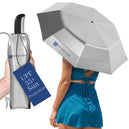
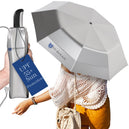
UV-Blocker uses their patented Solarteck fabric with silver coating outside. In testing, temperatures run 15 degrees F cooler underneath versus direct sun.
Tree shade helps some. But reflective umbrella shade actively cuts the thermal radiation reaching you. Different thing entirely.
5. Works for people who can't afford uncertainty
Some folks have real stakes in this:
- Melanoma survivors with recurrence risk
- Lupus patients who flare with sun exposure
- People on photosensitizing meds (certain antibiotics, blood pressure stuff, anti-inflammatories)
- Post-procedure patients after chemical peels or laser work
For these groups, sunscreen's variability is genuinely scary. Did I put enough? Miss a spot? Has it worn off?
Physical barrier kills that uncertainty. Covered or not covered. That's it.
Dermatologists recommend UV umbrellas for high-stakes patients. Melanoma International Foundation approved UV-Blocker specifically for this.
6. Works where sunscreen can't
FDA and AAP say no sunscreen on babies under 6 months. Skin's too permeable, too sensitive.
Babies still need UV protection though. Umbrella handles it without any chemicals touching that delicate skin.
Same applies for elderly with fragile skin, post-surgery patients, anyone with medical reasons to avoid sunscreen.

Okay but what about downsides? Gotta be honest about those.
The Real Limitations
Reflected UV still gets through
Umbrellas block direct overhead UV. They don't catch UV bouncing off sand, water, snow, concrete coming at you from angles.
At the beach, significant UV bounces off sand and surf. Umbrella alone doesn't handle that.
The fix: Combine with sunscreen on exposed areas. Umbrella gets direct UV, sunscreen catches reflected. Research shows combo beats either alone.
Takes a hand to hold
Unless anchored or mounted, you're holding it. Limits what you can do.
Fixes: - Beach umbrellas with sand anchors - Chair-mounted holders - Golf cart umbrella mounts - Stroller attachments for parents
Wind is a problem
Regular umbrellas flip inside-out in moderate wind. Annoying and defeats the purpose.
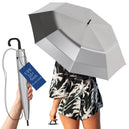
The fix: Quality UV umbrellas vent. UV-Blocker's mesh system lets wind through instead of catching it. Stays stable when standard umbrellas are flying.
No single method is perfect
Sunscreen wears off, misses spots. Hats only cover top of head. Clothing gets hot. Umbrellas miss reflected UV.
Best approach: stack methods. UV umbrella overhead, sunscreen on exposed skin, sun clothing where practical. Each covers what others miss.
Who Gets Most Value Here?
Medical cases
People with serious stakes in reliable protection:
- Melanoma survivors: Ron Walker started UV-Blocker in 2005 after his own 2003 Stage 1 diagnosis. When your life depends on UV protection, you want certainty.
- Lupus patients: Sun triggers flares. Protection isn't optional.
- Post-procedure patients: Chemical peels, laser work leave skin hypersensitive temporarily.
- Photosensitizing medication users: Common drugs amp up UV sensitivity.
Lifestyle fits
Situations where UV umbrellas just make sense:
- Golfers: 4+ hours per round. Cart-mount options for hands-free.
- Beach regulars: Long sessions where reapplication fatigue is real.
- Sideline parents: Hours watching kids' soccer, baseball.
- Theme park visitors: Disney lines mean cumulative hours of exposure.
- Fishermen: Water reflects UV hard. Cooling matters on boats.
Preference matches
People who just prefer this approach:
- Hate reapplying sunscreen
- Sensitive skin or sunscreen allergy
- Parents with young kids
- Anyone wanting simple reliable protection
Shopping Guide
Must-have features:
- UPF 50+ with third-party verification not just claimed
- Reflective outer coat blocking UV and bouncing heat
- Black inner layer catching reflected UV
- Vented canopy for wind stability
- Right size for your use case
Size by use case:
Compact (42" arc): Purse or briefcase. Emergencies and daily carry. UV Protection Compact Umbrella
Travel (44" arc): Theme parks, commuting, trips. UV Protection Travel Umbrella
Large Folding (58" arc): Two-person coverage, still folds. Large Folding UV Umbrella
Golf (62-68" arc): Max coverage, sports, extended outdoor time. 68" Golf UV Umbrella | 62" Golf UV Umbrella
Beach (6-7.5 ft): Anchored stationary use. Personal Beach Umbrella | Large Beach Umbrella
Key Takeaways
- UV sun umbrellas stop up to 99% of UVA and UVB
- Rain umbrellas manage 77-90%, decent but not optimized
- No reapplication, covers scalp/hair/eyes
- Quality ones cool you 15 degrees F
- Best setup: umbrella foundation plus sunscreen on exposed areas
- Get verified UPF 50+, reflective coating, vented design
- Melanoma and lupus patients benefit most from guaranteed barrier
UV-Blocker makes UPF 50+ umbrellas from compact to beach size. Patented Solarteck cooling, vented wind resistance, Melanoma International Foundation approved.
Shop UV Protection Umbrellas | Do Umbrellas Protect Against UV Rays? | Sun vs Regular Umbrella Difference
FAQ
Do regular umbrellas block UV rays?
Yep. Rain umbrellas get 77-90% UV reduction per Emory/JAMA research. Black hit around 90%, white bottom at 77%. Proper UV umbrellas with verified ratings push 99%+.
How much UV does a sun umbrella block?
UPF 50+ rated? Blocks 99%+ of both UVA and UVB. Better than most sunscreens when you consider physical barriers don't degrade with sweat or time.
Can I skip sunscreen if I have a sun umbrella?
For direct overhead UV? Sure. Problem is reflected UV from sand, water, concrete comes at you from angles. Pair umbrella with sunscreen on exposed areas for full coverage.
What features matter in a UV umbrella?
Verified UPF 50+ from independent testing. Silver/reflective outer coat. Black inner layer. Dense weave. Vented canopy for wind. Remember 80% of brands don't validate their UPF claims.
Safe for babies?
Yes. FDA and AAP say avoid sunscreen under 6 months. UV umbrella gives barrier protection without chemicals on infant skin.
Why recommended for melanoma patients?
Melanoma survivors need protection that doesn't depend on reapplying or applying correctly. Physical barrier either covers you or doesn't. Melanoma International Foundation approved UV-Blocker specifically.
Do they keep you cooler?
Good ones do. Reflective coatings bounce heat (infrared) with UV. UV-Blocker Solarteck runs 15 degrees F cooler underneath versus direct sun.
How long do they last?
Years with normal use. UV blocking is in the fabric and coatings, not applied on top. Check for warranties and verified ratings, not just marketing claims.
Author Bio: The UV-Blocker Sun Protection Team combines dermatological research with practical sun safety solutions. UV-Blocker was founded in 2005 by Ron Walker following his melanoma diagnosis, with the mission to provide reliable, effective sun protection for everyone from medical patients to outdoor enthusiasts. All UV-Blocker products are tested and approved by the Melanoma International Foundation and recommended by dermatologists.