

The average American spends $150 to $5,000 on a tattoo. Yet most people have no plan to protect that investment from the thing that damages it most: ultraviolet light.
UV radiation breaks down tattoo pigment particles in the dermis layer, causing irreversible fading. Pew Research reports that 32% of Americans — roughly 82 million people — have at least one tattoo. Millions of them face a protection gap they don't know about: the 4-6 week healing window when sunscreen can't be used safely.
This guide covers the science of UV-ink damage, a week-by-week healing timeline, which ink colors fade fastest, and practical tattoo sun protection strategies for every scenario.
How Does Sunlight Damage Tattoo Ink?
UV radiation penetrates the epidermis and breaks down pigment particles embedded in the dermis, triggering white blood cell activity that carries fragmented ink away from the tattoo site.
The sun emits different types of ultraviolet radiation, and each interacts with tattooed skin differently. UV-A rays (320-400nm) penetrate past the outer epidermis into the dermis layer where tattoo ink sits. UV-B causes surface burns on the top layer. But UV-A reaches deeper — straight to the pigment — and breaks the chemical bonds holding the ink together.
This destruction process mirrors laser tattoo removal. UV exposure triggers an immune response where white blood cells called macrophages attack fragmented pigment particles, consume them, and carry them away through the lymphatic system. Over time, the result is a faded, blurred tattoo. Proper sun protection clothing and physical shade block these rays before they ever reach the dermis.
Different ink colors react differently to UV radiation. Azo pigments — used for reds, oranges, and yellows — are chemically unstable under sustained UV light. In one published study, Pigment Red 22 was destroyed after 110 days of natural sunlight exposure in controlled laboratory conditions. Phthalocyanine pigments (blues and greens) show more photostability. Carbon black resists sun damage better than any other standard tattoo ink.
Understanding the science explains why tattoos fade — but the bigger problem is when they're most vulnerable.
Why Can't You Put Sunscreen on a New Tattoo?
New tattoos are open wounds for 4-6 weeks. Sunscreen chemicals cause irritation, risk infection, and interfere with healing, making physical shade the only safe option during this window.
A fresh tattoo is an open wound. The needle punctures the epidermis 50 to 3,000 times per minute, depositing ink into the dermis. That trauma leaves skin vulnerable to chemicals, debris, and bacteria.
Applying sunscreen to this raw wound creates real medical risks. The Cleveland Clinic advises against using any sunscreen on unhealed tattoos. The primary risks include:
- Contact dermatitis reacting with broken skin
- Bacterial infection trapped inside the wound
- Chemical interference with the ink settling process
- Allergic reactions that worsen inflammation

| Healing Phase | Timeframe | Skin Status | Sun Protection Options |
|---|---|---|---|
| Phase 1: Fresh wound | Days 0-3 | Open, oozing, inflamed | Complete sun avoidance or physical shade only |
| Phase 2: Peeling begins | Days 4-14 | Scabbing, itching, peeling | Physical shade only — no touching the surface |
| Phase 3: Surface heals | Weeks 2-4 | Flaking subsides, skin feels dry | Physical shade; light moisturizer with SPF only if fully closed |
| Phase 4: Deep healing | Weeks 4-6+ | Epidermis rebuilt, still sensitive | Mineral sunscreen (zinc oxide SPF 30+) can begin |
The healing timeline dictates which protection method to use at each stage. During the first two phases, chemicals in both mineral and synthetic sunscreens disrupt the skin's natural recovery process. Sunscreen traps heat, blocks oxygen flow, and introduces foreign compounds into a puncture wound that hasn't closed yet.
Physical shade is the logical alternative — but the most common advice, "wear loose clothing," has its own problems during healing.
Does Clothing Protect a Healing Tattoo from the Sun?
Loose clothing provides some UV protection but causes problems during healing: fabric sticks to oozing skin, irritates peeling areas, and can pull off forming scabs prematurely.
Standard aftercare instructions tell people to cover fresh ink with loose clothing. But during the first two weeks, the tattooed area oozes clear plasma and lymph fluid. Fabric adheres to this wet, sticky surface.
Removing a stuck shirt or pant leg can pull out fresh ink and damage healing tissue underneath. Even UPF-rated clothing makes physical contact with the wound surface. During the peeling phase (days 4-14), forming scabs catch on fabric threads. When scabs get pulled off prematurely, the result is patchy ink loss and potential scarring. Ongoing friction from walking, sitting, or basic movement irritates the sensitive area.
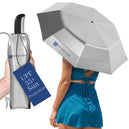
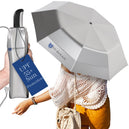
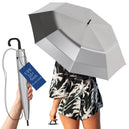
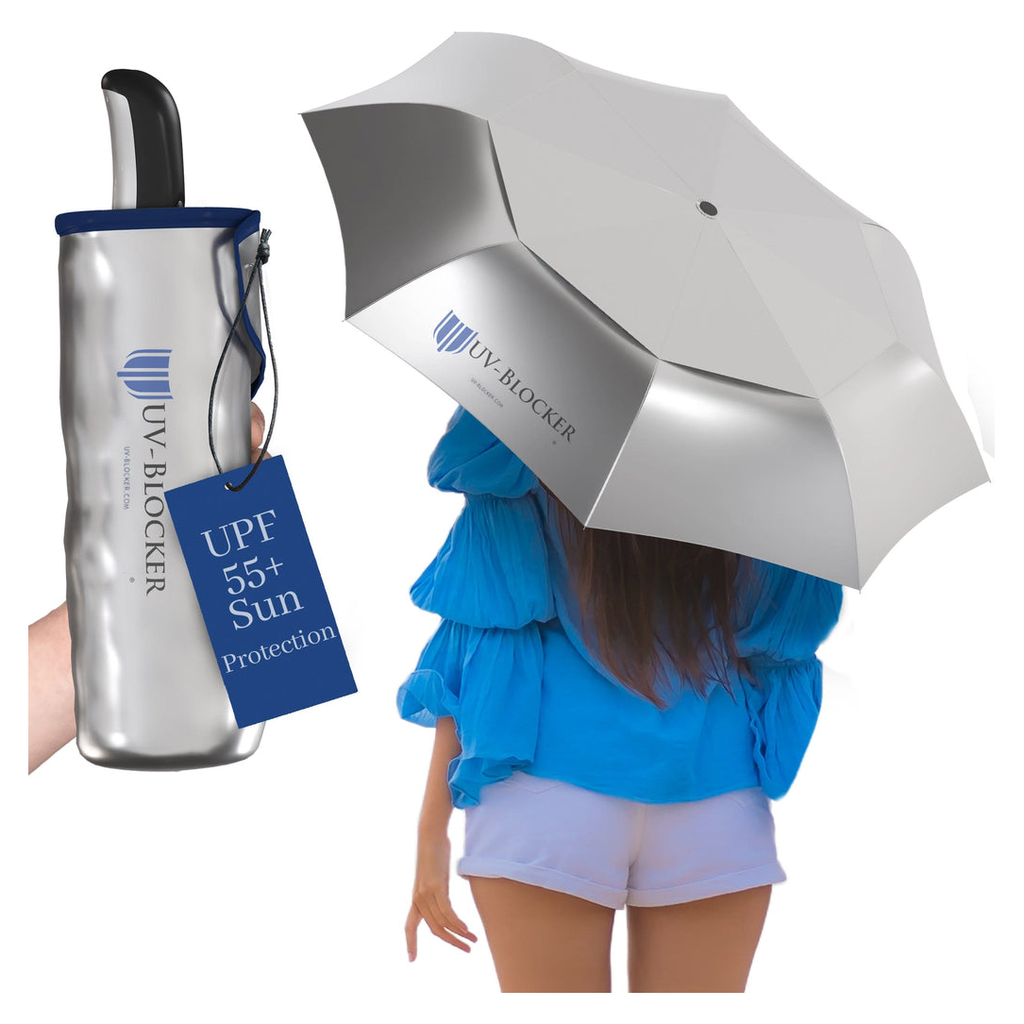
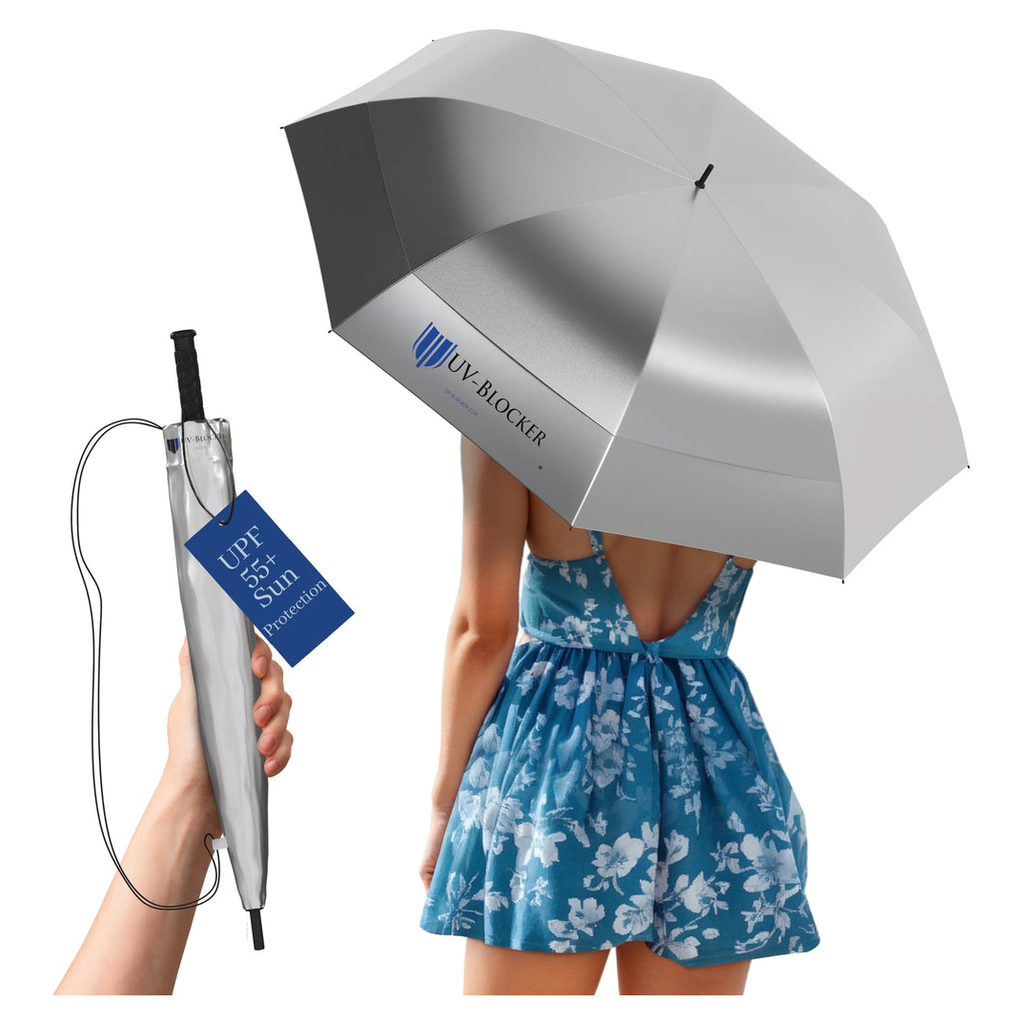
A UPF 50+ compact umbrella provides shade without any surface contact. No sticking, no friction, no scab disruption. It's the only portable option that protects without touching the wound — a controlled shade zone around the healing tattoo.
The healing period is when tattoo sun protection matters most. But what about the real-world scenarios that make sun avoidance hardest?
Tattoo Sun Protection by Scenario
Match the protection strategy to the scenario: beach days need a UPF 50+ beach umbrella and full water avoidance, while daily commutes call for a compact UV umbrella in a bag.
Beach Day with a New Tattoo
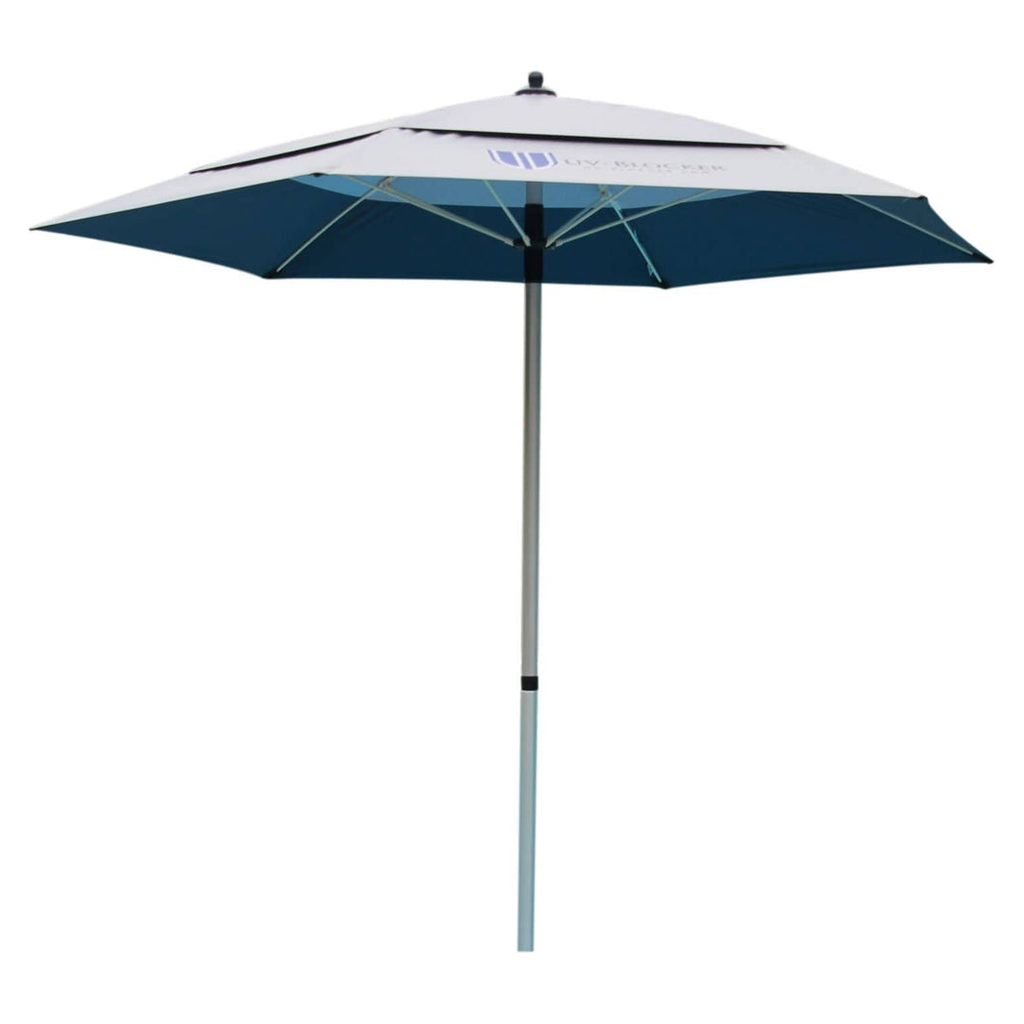
If the tattoo is less than 6 weeks old, keep it bone-dry. Pool chlorine and ocean saltwater damage healing skin. Set up a large beach umbrella for constant shade over the area. Don't apply sunscreen to unhealed ink. Stay cool and shaded under the canopy.
Outdoor Wedding or Formal Event
Nobody wants to bandage an arm tattoo for a wedding. A compact UPF 50+ umbrella provides discreet shade between venue locations. It looks appropriate at an outdoor ceremony and works better than thin dress clothing for UV protection.
Music Festival or All-Day Event
Bring a travel umbrella to block direct sunlight during peak afternoon hours. For healed tattoos, reapply mineral sunscreen every two hours. The umbrella covers the gaps between applications — especially when sweat washes off the sunscreen layer.
Daily Commute
Even 15-20 minutes of daily UV exposure adds up over time. A compact umbrella in a work bag provides on-demand shade year-round. Remember: up to 80% of UV rays penetrate cloud cover. Cloudy days still cause fading over the long term.
Which Tattoo Ink Colors Fade Fastest in the Sun?
Red, orange, and yellow inks made with azo pigments fade fastest under UV exposure. Black and dark blue pigments are the most photostable and resist sun damage longest.

The chemical composition of the ink determines how fast a tattoo fades. Lighter, brighter colors are more vulnerable to UV breakdown.
| Ink Color | Pigment Type | UV Vulnerability | Fading Speed | Protection Priority |
|---|---|---|---|---|
| Red / Orange | Azo pigments | Highest | Noticeable within 1-2 years without protection | Critical — daily UV protection needed |
| Yellow / Pastel | Azo pigments | High | Fades quickly, especially on lighter skin | High — avoid prolonged exposure |
| Green | Phthalocyanine | Medium | Gradual fading over 3-5 years | Moderate |
| Blue | Phthalocyanine | Lower | Slow degradation | Moderate |
| Black | Carbon black | Lowest | Most resistant, 5-10+ years before noticeable fade | Standard sun care |
Lighter skin tones show fading more visibly because there's less melanin to mask pigment loss.
Watercolor Tattoos Face the Highest Risk
Watercolor-style tattoos rely on light washes of pastel pigments with no black outlines to hold the design together. When a watercolor tattoo fades, the entire image blurs into an unrecognizable shape. Owners of these tattoos should treat daily tattoo sun protection as non-negotiable.
How Much Does Tattoo Fading Cost to Fix?
Tattoo touch-ups cost $50-$200+ per session and are needed more frequently when UV damage accelerates fading. A UPF 50+ umbrella costs $60-$130 — a fraction of one touch-up.
Tattoos represent a long-term financial commitment. Average 2025 market prices break down like this:
- Small tattoos: $50-$200
- Medium pieces: $150-$500
- Large custom work: $200-$2,000+
- Full sleeves: $1,500-$6,000 across multiple sessions
Touch-up sessions run $50-$200+ depending on the faded area, with most artists charging $150-$250 per hour. Sun-damaged tattoos need touch-ups every 2-3 years. Well-protected ink can go 5-10 years before any corrective work. Three touch-ups at $150 each equals $450 in maintenance that consistent tattoo sun protection could've delayed or avoided.
UV-Blocker umbrellas range from $59.95 for a compact model to $129.95 for a large beach version — that's 3-10% of the tattoo's cost. You wouldn't leave a $1,000 painting in direct sunlight. Same logic applies to body art that cost just as much.
Frequently Asked Questions About Tattoo Sun Protection
These are the most common questions about protecting tattoos from sun damage, covering healing timelines, sunscreen timing, and long-term care.
How long after a tattoo can you go in the sun?
Most dermatologists recommend avoiding direct sun exposure for at least 4-6 weeks after getting a new tattoo, until the epidermis has fully rebuilt itself.
During this window, rely on physical shade (UPF 50+ umbrella or staying indoors) instead of sunscreen. After 6 weeks, begin applying mineral sunscreen with SPF 30+ to all exposed tattoos.
Can you put sunscreen on a new tattoo?
No. Sunscreen should not be applied to a new tattoo for at least 4-6 weeks. The open wound can react to sunscreen chemicals, risking irritation, infection, and interference with healing.
Once healed, zinc oxide-based mineral sunscreen (SPF 30+) is the recommended formula for tattooed skin. Reapply every 2 hours during sun exposure.
Do tattoos fade in the sun?
Yes. UV radiation breaks down tattoo pigment particles over time, with red, orange, and yellow inks fading fastest. Cumulative daily exposure causes more damage than occasional beach days.
Even on cloudy days, up to 80% of UV rays penetrate cloud cover. Year-round protection matters for long-term tattoo longevity.
How do you protect a new tattoo at the beach?
Use a UPF 50+ beach umbrella for shade, keep the tattoo dry (no swimming), and skip sunscreen on the unhealed area. Physical shade is the only safe option during healing.
After the 6-week healing period, combine umbrella shade with SPF 30+ mineral sunscreen for the best possible protection.
What SPF is best for tattoos?
SPF 30 or higher mineral sunscreen (zinc oxide-based) is recommended for healed tattoos. Apply 15 minutes before sun exposure and reapply every 2 hours.
Chemical sunscreens work too, but mineral formulas are gentler on tattooed skin. Pair with a UPF 50+ umbrella for the gaps between reapplications.
Conclusion
- UV radiation doesn't just fade tattoos — it causes chemical decomposition of embedded ink particles in the dermis.
- The 4-6 week healing period is when tattoos are most vulnerable AND when sunscreen can't be used safely.
- Zero-contact shade from a UPF 50+ umbrella is the only portable protection that works during healing without touching the skin.
- Tattoo sun protection is investment protection. A $60 umbrella saves hundreds in future touch-ups over the life of the ink.
Protect body art during healing and beyond with a compact umbrella designed to block 99% of UV rays.