

Orlando's UV index hits 12 during summer, the maximum level on the EPA scale, where unprotected skin burns in as little as 15 minutes. This extreme exposure is compounded at Universal's newest park, Epic Universe, which visitors have described as "like being out in the desert" due to its reported lack of shade.
Every standard "beat the heat" guide for Universal offers the same generic advice: drink water, wear sunscreen, and find air conditioning. None of them address UV radiation with actual data, and none break down shade conditions on a park-by-park basis. This universal studios sun protection guide covers the UV reality by month, provides a detailed shade assessment for all four Universal parks, and outlines the exact gear stack that blocks 99% of UV rays.
How Dangerous Is Orlando's UV Exposure at Universal Studios?
Orlando's UV index reaches 11-12 from May through August, classified as "extreme" by the EPA, causing unprotected skin to burn in as little as 15 minutes.
Orlando sits at latitude 28.5N, a subtropical location significantly closer to the equator than most major U.S. cities. This geographic positioning results in more direct solar radiation and higher UV intensity than many visitors anticipate.
The data reveals a consistent pattern of high exposure throughout the year. Peak months from May through August consistently hit UV 11-12, which falls into the "extreme" category on the EPA SunWise UV Index scale. Even shoulder season months like March and October reach UV levels of 9-10, considered "very high."
| Month | Peak UV Index | EPA Category | Burn Risk |
|---|---|---|---|
| January | 5 | Moderate | Low |
| February | 8 | Very High | Moderate |
| March | 10 | Very High | High |
| April | 11 | Extreme | Very High |
| May | 11 | Extreme | Very High |
| June | 12 | Extreme | Very High |
| July | 12 | Extreme | Very High |
| August | 11 | Extreme | Very High |
| September | 11 | Extreme | Very High |
| October | 9 | Very High | High |
| November | 7 | High | Moderate |
| December | 5 | Moderate | Low |

While the heat index averages 114.8F in August, temperature is only part of the equation. UV radiation causes invisible cellular damage even during hours when the heat feels manageable. Morning hours often deceive visitors; the air may feel pleasant, but UV levels can already be dangerously high. According to the Skin Cancer Foundation, sunburn can occur in 15-20 minutes at UV index 11+ without adequate protection.
Why Is Epic Universe's Shade Crisis a Sun Protection Emergency?
Epic Universe's Celestial Park has virtually no shade due to heat-reflective pavement, no mature trees, and minimal shade structures, making portable universal studios sun protection gear essential for every visitor.
Visitors have described the experience in Celestial Park as "like being out in the desert." In July 2025, the Disney Food Blog identified the lack of shade as the park's "most glaring problem." This environment creates a significant challenge for guests navigating between themed lands.
The lack of shade is a result of specific design constraints. Permanent shade structures would conflict with clearance requirements for future parade floats, which need 17-20 feet of vertical space. Universal limited permanent coverings to preserve entertainment flexibility, not because they overlooked the issue.
Universal has responded by adding Cool Zones near the Blue Dragon Restaurant, Astronomica, Stardust Racers bathrooms, and Cosmos Fountain. While these areas provide relief with fans and chilled air, they cover only a small fraction of the park's total footprint.
The park also lacks mature trees. Although trees have been planted, they will require years to grow large enough to provide significant canopy. Visitors during the 2026-2028 seasons will encounter the most exposed conditions in the park's history. While themed worlds like the Wizarding World of Harry Potter and How to Train Your Dragon offer shade through architecture, transitions through the central hub remain fully exposed.
What Are the Worst Sun Exposure Spots Across Universal's Parks?
The worst sun exposure spots include Hagrid's outdoor queue at Islands of Adventure, most of Volcano Bay's deck areas, and the open walkways connecting lands at Universal Studios Florida.
Universal Studios Florida Outdoor queue exposure varies significantly across the park. While many attractions have indoor queues, select seasonal queues and open walkways leave guests vulnerable. Visitors should be aware of Cool Zone locations, but moving between attractions often involves extended periods in direct sunlight. Proper universal studios sun protection means knowing which routes offer shade and which leave you exposed.
Islands of Adventure Water rides in this park can create a false sense of security. Attractions like Jurassic Park River Adventure and Popeye and Bluto's Bilge-Rat Barges soak riders, but wet skin does not equate to protected skin. Water reflects 5-10% of UV rays, and sea foam or splash zones can reflect 25-30%. Water also washes off standard sunscreen, and the cooling sensation of wet skin can mask the feeling of active burning.
While Hogsmeade village provides decent shade through its dense, themed architecture, and Jurassic Park offers some tree canopy, the outdoor queue for Hagrid's Magical Creatures Motorbike Adventure remains a significant exposure point.
Volcano Bay Water parks present amplified UV risks. Extended water exposure increases radiation as rays reflect off the water's surface. Sunscreen efficacy is reduced with constant immersion and friction from slides. While many deck and lounging areas feature partial shade, the queues for tube and raft rides are frequently fully exposed to the sun.
What Sun Protection Gear Should You Pack for Universal Studios?
Pack a UPF 50+ folding UV umbrella, broad-spectrum SPF 50+ sunscreen, a UPF-rated hat, a cooling towel, and a refillable water bottle for complete universal studios sun protection.

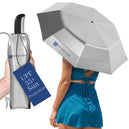
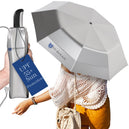
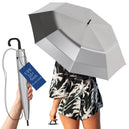
UV Umbrella Most packing guides overlook the UV umbrella, yet it remains the only form of portable shade a guest can control. A quality UPF 50+ umbrella blocks 99% of UV rays and can lower the temperature underneath by up to 15F. Models like the Travel UV Umbrella (17.5 inches folded) or the Compact UV Umbrella (11.5 inches folded) fit easily into a standard park bag and are permitted through security.
SPF 50+ Sunscreen Sunscreen is a non-negotiable layer. A broad-spectrum SPF 50+ formula is required for Orlando's index. Reapplication is necessary every two hours, or every 80 minutes if sweating or swimming. Guests are permitted to bring sunscreen into all Universal parks.
UPF Hat A wide-brimmed hat offers protection for the face, ears, and neck, areas often missed by sunscreen application. It serves as a consistent physical barrier against overhead rays.
Cooling Towel These towels provide evaporative cooling when wet, wrung out, and snapped. While available for purchase at park merchandise locations, bringing one from home is more cost-effective.
Water Bottle Refillable water bottles are allowed and essential. Free water is available at counter-service restaurants, ensuring guests can stay hydrated without constant expense.
Note on Umbrella Policy Small folding umbrellas are explicitly allowed at all Universal Orlando parks. Security personnel permit models like the Compact and Travel versions, provided they are stowed during rides.
| Gear | UV Protection | Cooling Effect | Portability | Reapplication Needed |
|---|---|---|---|---|
| UV Umbrella (UPF 50+) | 99% UV block | 15F cooler | Folds to 11.5-17.5 inches | No |
| SPF 50 Sunscreen | ~98% UVB block | None | Small tube | Every 2 hours |
| UPF Hat | Face/neck only | Minimal | Wearable | No |
| Cooling Towel | None | 20-30F cooler | Compact | Re-wet periodically |
| Poncho (rain) | None | None | Disposable | N/A |
For more on how these products are verified, see the UV umbrella testing methodology or read why they are dermatologist recommended.
How Should You Plan Your Universal Day Around UV Exposure?
Schedule outdoor rides before 10 AM or after 4 PM when UV drops, and reserve the 11 AM to 3 PM peak window for indoor attractions and dining.
Rope Drop to 10 AM (UV Moderate) Prioritize outdoor rides with exposed queues immediately upon arrival. The UV index typically ranges from 3-6 in the early morning, even during summer months. This is the optimal time for attractions like Hagrid's Magical Creatures Motorbike Adventure, VelociCoaster, and outdoor experiences in Jurassic World.
10 AM to 3 PM (UV Peak) Shift focus to indoor attractions, shows, and sit-down dining during these hours. Universal offers numerous climate-controlled options such as Transformers: The Ride 3D, Revenge of the Mummy, Harry Potter and the Escape from Gringotts, The Amazing Adventures of Spider-Man, and The Cat in the Hat. Utilizing this window for indoor activities avoids the most dangerous radiation levels.
After 4 PM (UV Declining) Return to outdoor attractions as the UV index drops rapidly. The evening hours are particularly well-suited for exploring the exposed areas of Epic Universe's Celestial Park, which becomes significantly more comfortable after sunset.
Volcano Bay Special Note At Volcano Bay, UV rays reflect off the water throughout the day. Visitors should reapply water-resistant sunscreen before every water ride and utilize a UV umbrella while at their lounger between attractions.
Frequently Asked Questions About Universal Studios Sun Protection
Universal visitors heading to Orlando have common questions about sun safety rules and gear restrictions. Here are direct answers to the most frequently asked questions about universal studios sun protection.
Are umbrellas allowed at Universal Studios Orlando?
Yes, small folding umbrellas are permitted at all Universal Orlando parks including Epic Universe. Compact models that fold to under 18 inches pass security easily. You will need to stow umbrellas in lockers or bags before boarding rides, but between rides and in queue lines, a UV umbrella provides instant portable shade.
Can you bring sunscreen into Universal Studios?
Yes, Universal allows guests to bring sunscreen into all parks. Aerosol and lotion sunscreens are both permitted through security screening. Bring SPF 50+ broad-spectrum, water-resistant formula. Reapply every 2 hours or after water rides. Universal also sells sunscreen at park shops.
How hot does Universal Studios get in summer?
Orlando summer temperatures average 91F with a heat index reaching 114.8F in August due to extreme humidity. UV index peaks at 12, the maximum EPA rating. The actual temperature matters less than the heat index, which combines temperature and humidity. This level is classified as "dangerous" by the National Weather Service.
Does Epic Universe have shade?
Epic Universe's themed worlds have moderate shade from architecture, but Celestial Park, the central hub connecting all areas, has virtually no shade, with heat-reflective pavement and no mature trees. Universal has added Cool Zones with fans and chilled air near key locations, but these cover a small fraction of the exposed area. Bringing your own portable shade is the most reliable solution.
Can you bring a water bottle to Universal Studios?
Yes, refillable water bottles are allowed at all Universal Orlando parks. You can also get free cups of water at any counter-service restaurant. Stay hydrated with at least one cup per hour in summer. Dehydration amplifies heat exhaustion risk and impairs your body's ability to regulate temperature.
What is the best time to visit Universal Studios to avoid heat?
The mildest months are November through February when UV index drops to 5-7 and temperatures average 70-75F. If visiting in summer, arrive at rope drop and plan indoor activities during 11 AM-3 PM peak UV. Even "cool" months in Orlando can reach UV index 8 in February. Sun protection gear is recommended year-round.
Start Planning Your Sun-Safe Universal Trip
Effective universal studios sun protection requires more than basic preparation.
- Orlando UV reaches extreme levels for more than six months of the year, making it a persistent danger rather than just a summer issue.
- The shade crisis at Epic Universe makes 2026 a critical year to bring portable shade.
- Water rides amplify UV exposure by reflecting rays and washing off topical protection.
- A UV umbrella serves as the single gear upgrade that addresses the gaps left by standard advice.
For a safer and more comfortable trip, add a UPF 50+ folding UV umbrella to your Universal packing list. The Travel UV Umbrella folds to 17.5 inches and blocks 99% of UV rays, offering a practical solution for the exposed conditions of Florida theme parks.
Planning a dual-park vacation? Read the Disney World sun protection guide and the Disney Parks global sun protection guide for tips on managing UV exposure across all Orlando theme parks.