Free Shipping on US Orders!
 Dermatologist Approved
 Designed for Maximum Sun Protection



TL;DR: What You Need to Know
- Universal clamp-style holders fit most wheelchairs, walkers, and rollators with tubes from 0.78" to 1.2" diameter
- Compact umbrellas (42" arc, 15 oz) work best for manual wheelchairs and walkers where weight matters
- Golf umbrellas (62-68" arc) with vented canopies suit mobility scooters that need maximum coverage and wind resistance
- One-handed operation requires automatic push-button open and a pre-positioned mount angle set before leaving home
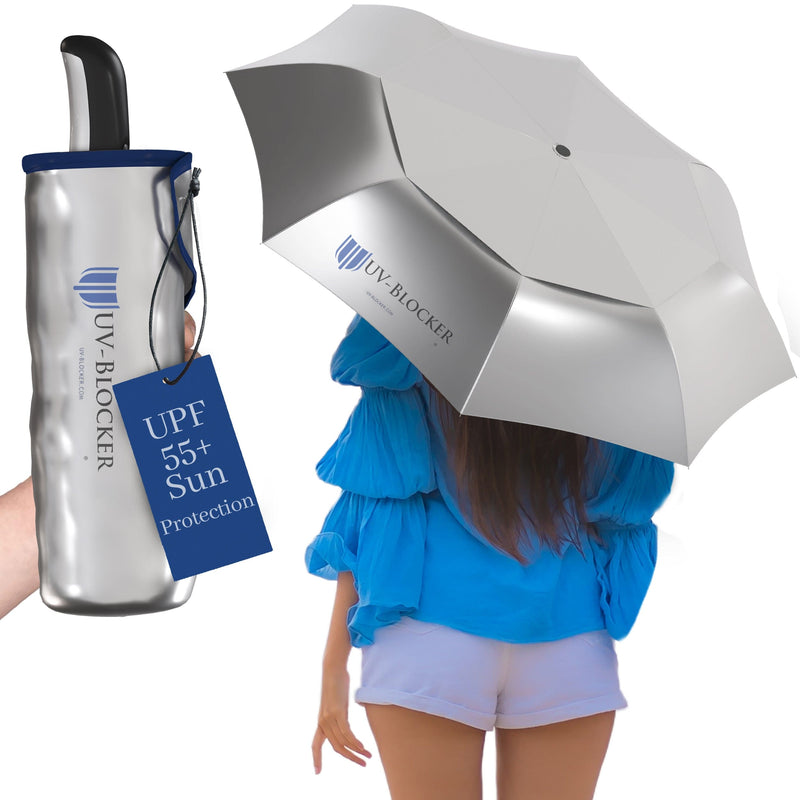
- UPF 50+ umbrellas block 99% of UV rays while regular umbrellas only block 50-75%
- FSA/HSA funds can cover sun protection products; standard Medicare does not cover umbrella accessories
- Caregivers should prioritize universal mounts that transfer between devices as mobility needs change
"Is there a way to attach an umbrella to a wheelchair?"
This wheelchair umbrella question appears across Reddit threads, disability forums, and support groups. The answers? Mostly Amazon links and generic product listings. No guidance. No wheelchair umbrella compatibility information. No consideration for one-handed operation or caregiver needs.
That gap exists because most sun protection products assume you can stand, use two hands, and reposition yourself freely. The reality for mobility device users is different: park visits, medical appointments, family events, daily commutes. Hours in direct sun without the option of quickly ducking into shade.
This wheelchair umbrella guide covers how to choose and mount UV-blocking umbrellas for wheelchairs, power chairs, mobility scooters, walkers, and rollators. We address wheelchair umbrella mounting compatibility, one-handed setup, and the practical considerations that generic product pages ignore.

Why Do Wheelchair Umbrella Protection Matter?
Wheelchair umbrella protection matters because mobility device users face extended UV exposure during outdoor activities, and many cannot quickly move to shade or reposition themselves to avoid direct sunlight.
When you're walking, moving into shade takes seconds. When you're navigating a wheelchair, you need a clear path, possibly a ramp, and maybe assistance. That quick shade break becomes a multi-minute project. Meanwhile, UV exposure accumulates.
According to the CDC Sun Safety Facts, sun exposure damage is cumulative. Every minute adds up, regardless of whether the exposure happens all at once or over time.
Three factors compound the risk for mobility users:
Medication photosensitivity. The CDC Yellow Book lists common photosensitizing medications including doxycycline, fluoroquinolones, and NSAIDs like ibuprofen and naproxen. Many mobility conditions involve long-term use of these medications.
Limited repositioning. You can't simply turn your chair to put your back to the sun or lean under a tree branch. Every position change requires navigating your device.
Heat management challenges. Some mobility conditions impair temperature regulation. Direct sun exposure increases heat exhaustion risk.
The solution isn't avoiding outdoors. It's bringing shade with you, and a quality wheelchair umbrella makes that possible.
What Types of Wheelchair Umbrella Mounting Systems Work?
Three main wheelchair umbrella mounting types exist: clamp-style holders for tubes and armrests, handlebar mounts for scooters, and backrest-mounted systems for maximum coverage.

Clamp-Style Universal Holders
These work with the widest range of devices. A Universal Holder attaches to any tube between 0.78" and 1.2" diameter. That covers most wheelchair armrests, rollator frames, and walker handles.
How they work: Two padded jaws clamp around the tube. Large knobs allow hand-tightening without tools. A flexible arm extends upward to hold the umbrella shaft.
Best for: Users who switch between devices or want a single mount solution. The same holder that works on your wheelchair can move to a rollator or beach chair.
Consideration: Requires some hand strength to tighten the clamp securely. If grip strength is limited, have a caregiver do initial setup.
Handlebar/Tiller Mounts
Designed specifically for mobility scooter tillers and power chair joystick housings. These wrap around or clamp to the control housing directly.
Best for: Daily scooter riders who want the umbrella in their line of sight. The forward position provides good coverage while driving.
Consideration: Positioning matters. A poorly placed mount can obstruct controls or your view. Test placement before tightening fully.
Backrest/Frame-Mounted Systems
These attach to wheelchair push handles or the backrest frame itself. The umbrella extends overhead from behind.
Best for: All-day outdoor events where you want complete hands-free coverage. No forward obstruction, and the umbrella stays completely out of your operational space.
Consideration: Installation is more involved. Some systems require specific chair compatibility. Check your chair's frame dimensions before ordering.
Mount Type Comparison
| Mount Type | Compatible Devices | Ease of Install | Price Range | Best For |
|---|---|---|---|---|
| Clamp/Universal | Wheelchairs, rollators, walkers, strollers | Easy (tool-free) | $15-40 | Most users, device flexibility |
| Handlebar | Mobility scooters, some power chairs | Easy-Medium | $20-50 | Daily scooter riders |
| Backrest | Manual/power wheelchairs | Medium-Hard | $30-80 | All-day outdoor use |
Which Wheelchair Umbrella Is Best for Your Device?
Compact wheelchair umbrella options work best for manual wheelchairs and walkers due to weight constraints, while larger golf umbrellas suit mobility scooters with more mounting stability.

The right umbrella depends on your device type. Here's what works for each:
For Manual Wheelchairs
The challenge: Every ounce affects pushing effort. An armrest mount limits how large an umbrella you can use without creating awkward leverage.
Recommended: Compact Umbrella (42" arc, 15 oz) or Travel Umbrella (44" arc, 1 lb 5 oz).
Why it works: Light enough that it won't affect wheelchair balance or make pushing harder. Folds to 12-17.5" for easy storage in a side pouch or backpack.
For Power Wheelchairs
The challenge: Power handles more weight, so you can prioritize coverage over lightness. But larger umbrellas catch more wind.
Recommended: Travel Umbrella or Large Folding Umbrella (58" arc, 1 lb 11 oz).
Why it works: The 48" shade diameter of the Large Folding covers your entire seated area. Power chairs handle the extra weight without issue.
For Mobility Scooters
The challenge: Forward-facing position, tiller mounting, and higher speeds create wind resistance that can flip regular umbrellas.
Recommended: 62" Golf Umbrella or 68" Golf Umbrella with vented canopy.
Why it works: The vented mesh design lets wind pass through instead of catching and inverting. The 53-58" shade diameter provides full coverage even when sitting upright on a scooter seat.
For Walkers and Rollators
The challenge: Both hands on the walker. The umbrella can't obstruct forward movement or add significant top weight that affects balance.
Recommended: Compact Umbrella (42" arc, 15 oz).
Why it works: Weighs less than a pound. Mounts to the frame and stays out of your walking path. Folds to 12" when you go indoors.
Device Recommendation Summary
| Device | Best Umbrella Size | Key Feature Needed | UV-Blocker Pick |
|---|---|---|---|
| Manual wheelchair | 42-44" Compact/Travel | Lightweight (<1.5 lbs) | Compact Umbrella |
| Power wheelchair | 44-58" Travel/Large Folding | Maximum coverage | Large Folding |
| Mobility scooter | 62-68" Golf | Wind-vented canopy | 62" Golf Umbrella |
| Walker/Rollator | 42" Compact | Ultra-light, small fold | Compact Umbrella |
How Do You Set Up a Wheelchair Umbrella with One Hand?
For one-handed wheelchair umbrella setup, choose automatic-open umbrellas, pre-position the mount angle, and use locking mechanisms that can be operated with a single thumb or palm press.
Most umbrella setup instructions assume two hands. That's not always reality.
Here's how to make one-handed operation work:
1. Pre-setup at home. Before leaving, attach the holder to your device. Adjust the arm angle to where you'll want the umbrella shade to fall. Tighten everything fully. Now you don't have to fiddle with positioning while outdoors.
2. Use automatic open mechanism. Push-button auto-open is essential. Manual spring umbrellas require two hands to extend. All UV-Blocker umbrellas feature single-button opening.
3. Practice the insertion sequence. Open the umbrella first (while holding it). Then slide the shaft into the holder. Then lock. Try this indoors several times until it's muscle memory.
4. Consider holder orientation. If your dominant hand has limited mobility, mount the holder on the opposite side so your stronger hand handles insertion.
One-Handed Setup Checklist
Before purchasing, verify:
- [ ] Automatic push-button open (not manual spring)
- [ ] Umbrella can be inserted into holder while already open
- [ ] Holder locks with single-hand operation (thumb lever or palm press)
- [ ] Umbrella weight under 2 lbs for comfortable one-hand holding
- [ ] Folded size fits your device's storage pouch
A Caregiver's Guide to Choosing a Wheelchair Umbrella
When selecting a wheelchair umbrella for someone you care for, prioritize easy installation, durability, and systems that work across multiple devices if caring for someone with changing mobility needs.
If you're selecting an umbrella system for someone you care for, consider these practical factors:
Buy for future needs, not just today. Mobility situations evolve. The universal holder that mounts on a walker today can move to a wheelchair next month. Avoid device-specific mounts unless you're certain the current device is permanent.
Installation has to work in real conditions. You might need to set this up in a parking lot, at a doctor's office, in light rain. Tool-free installation matters. If it requires an Allen wrench, you'll forget the wrench.
Durability justifies the cost. A $15 plastic clamp from Amazon breaks in 3-6 months of regular outdoor use. A quality mount with replacement parts available lasts years. The math favors durability.
Plan storage when indoors. Where does the umbrella go when you enter a building? Some umbrellas fit in a side pouch. Others need a dedicated bag. Consider storage as part of the purchase.
Can Insurance or FSA/HSA Cover Wheelchair Umbrella Systems?
Standard Medicare does not cover wheelchair umbrella accessories, but FSA/HSA accounts typically accept sun protection products as eligible medical expenses.
Let's be direct about what's covered:
Medicare DME coverage requires equipment to be "medically necessary" and "primarily used in the home." According to Medicare.gov, umbrella attachments don't qualify. They're considered comfort items, not medical equipment, and they're designed for outdoor use.
FSA/HSA accounts are different. Sun protection products generally qualify as preventive healthcare expenses. UV-Blocker products are HSA/FSA eligible.
State Medicaid programs vary. Some have broader accessory coverage than federal Medicare. If you're on Medicaid, check with your state program directly.
Private insurance rarely covers mobility umbrella accessories. If you have documented photosensitivity (from medication or a skin condition), a doctor's letter might support an appeal. Worth trying, but don't count on it.
FAQ: Wheelchair Umbrella Questions Answered
Will a wheelchair umbrella make my chair tip over?
A properly mounted wheelchair umbrella adds minimal weight (15 oz to 2.5 lbs) that won't affect wheelchair stability. For manual chairs, mount the holder on your non-dominant side (the side you lean away from). For maximum stability, use a backrest mount for balanced weight distribution.
Can I use a regular umbrella with a wheelchair umbrella holder?
Yes, most universal wheelchair umbrella holders fit standard umbrella handles. But regular umbrellas only block 50-75% of UV rays, while UPF 50+ umbrellas block 99%. If you're investing in a quality mount, pair it with a UV-blocking umbrella. Learn more about how UV umbrellas work.
What if it gets windy while I'm outside?
Choose an umbrella with a vented canopy design. UV-Blocker's patented vented mesh system allows wind to pass through instead of catching like a sail. In sustained strong wind (over 25 mph), fold the umbrella until conditions calm.
How do I clean and maintain the umbrella and mount?
Wipe the mount clamp with a damp cloth monthly to remove dust and debris. For the umbrella fabric, shake off loose dirt and let air dry completely before storing. Never store wet. Mildew develops fast on damp fabric.
What's the difference between UPF 50+ and regular umbrella fabric?
Standard umbrella fabric blocks roughly 50-77% of UV rays depending on color and density. UPF 50+ fabric blocks 99% of both UVA and UVB rays. UV-Blocker's Solarteck fabric also reflects heat, making it up to 15°F cooler underneath than direct sunlight.
Your Outdoor Freedom, Protected
Finding a wheelchair umbrella solution that works shouldn't require stitching together Amazon listings and forum posts.
Mount selection: Universal clamp holders work for most users. Get one that fits tubes 0.78" to 1.2" and you're covered across wheelchairs, walkers, and rollators.
Umbrella sizing: Match to your device. Compact (15 oz) for manual wheelchairs and walkers. Large Folding or Golf for power chairs and scooters.
One-handed operation: Pre-position your mount at home. Use auto-open umbrellas. Practice the insertion sequence.
UV protection level: Don't settle for regular umbrella fabric. UPF 50+ blocks 99% of harmful rays while keeping you 15°F cooler.
Funding: FSA/HSA accounts cover sun protection products. Medicare doesn't cover accessories.
Your first step: Measure the tube diameter on your wheelchair, walker, or rollator armrest. Most fall between 0.78" and 1.2". That measurement tells you which holder will fit.
Browse the complete UV-Blocker umbrella holder collection to find your match. All products are HSA/FSA eligible.
Written by the UV-Blocker Sun Protection Team. UV-Blocker is recommended by dermatologists and approved by the Melanoma International Foundation.