

The isotretinoin sunscreen question has a short answer: SPF 50+ broad-spectrum mineral, every day, reapplied every two hours — and it still will not be enough on its own.
Isotretinoin thins the skin barrier and lowers the burn threshold for the whole course of treatment and for months afterwards. Generic "wear sunscreen" advice does not cover that. Most people already apply a fraction of the sunscreen they need, and teenagers and young adults on the drug have school, sport and social lives they cannot pause for four to six months.
This guide covers the science behind isotretinoin photosensitivity, why isotretinoin sunscreen alone falls short of the protection the label implies, what Australian regulators and dermatologists actually advise, and how to build a layered strategy for every outdoor scenario during treatment.
TLDR
- Isotretinoin thins the skin barrier, creating systemic photosensitivity that lasts throughout treatment and up to six months after stopping.
- Dermatologists recommend an SPF 50+ broad-spectrum mineral isotretinoin sunscreen — higher than the SPF 15 minimum printed on the Australian Roaccutane label.
- Most people apply only 25 to 50 percent of the sunscreen needed to reach the labelled SPF protection.
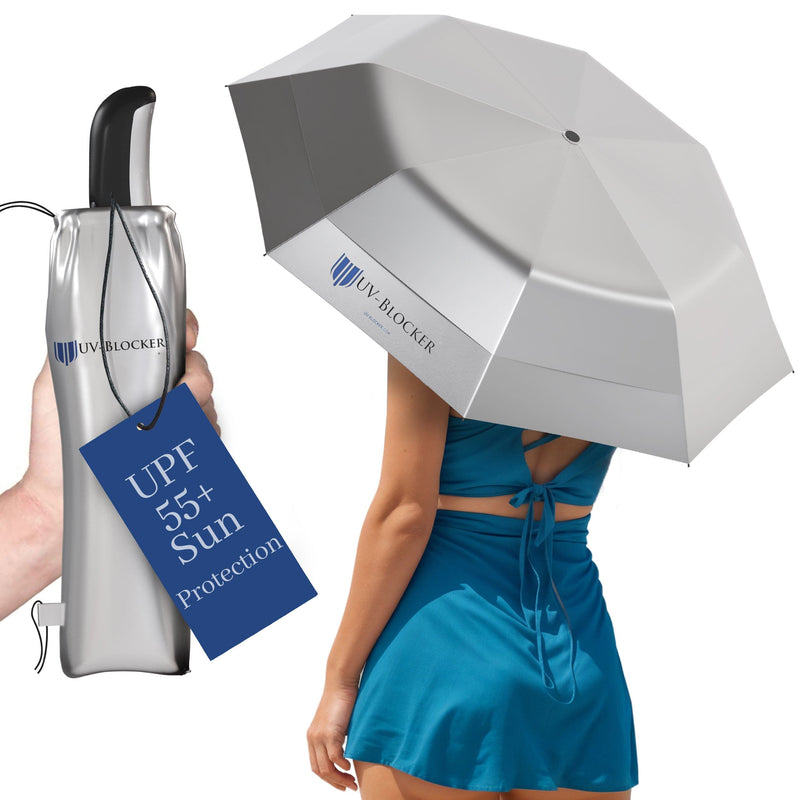
- A complete Accutane sun protection kit pairs mineral sunscreen with physical shade layers, such as a UPF 50+ parasol, to close the application gap.
- Cancer Council Australia advises protection whenever the UV Index reaches 3 or above, when 15 minutes of unprotected exposure is enough to start causing damage.
- Intentional tanning during treatment carries a high risk of permanent hyperpigmentation.
- Up to 80 percent of UV radiation passes through clouds, making protection necessary regardless of weather.

How Does Accutane Make Skin More Sensitive to the Sun?
Isotretinoin thins the stratum corneum and disrupts the skin barrier, allowing more UV radiation to penetrate and lowering the burn threshold during the full treatment course.
Oral isotretinoin reduces sebum production by over 80 percent. Think of it this way: less oil production means thinner, less protected skin. The barrier disruption also increases transepidermal water loss, so skin loses moisture faster and heals slower. UV-triggered inflammation kicks in quicker than it would on untreated skin.
A common source of confusion is the difference between oral and topical retinoids. Topical creams like tretinoin or adapalene only cause sensitivity where they're applied. Oral isotretinoin, on the other hand, affects the entire body. Arms, chest, legs, and every other skin surface become more vulnerable to UV. This reaction also differs from the phototoxic response caused by antibiotics like doxycycline. Both are medications that cause sun sensitivity, but isotretinoin changes the physical barrier of the skin itself.
Here's the part most patients miss: photosensitivity doesn't stop when the pills do. It persists during the full four-to-six-month treatment and continues for up to six months afterward as the stratum corneum rebuilds. The American Academy of Dermatology documents these side effects as directly linked to barrier disruption.
That biological reality is why standard sunscreen habits leave gaps that Accutane patients can't afford.
Why Isn't Isotretinoin Sunscreen Enough on Its Own?
Most people apply only 25 to 50 percent of the sunscreen needed for labelled SPF protection, and Accutane patients with lower burn thresholds can't afford that gap.
While the AAD recommends SPF 30 as a baseline for general use, most dermatologists advise isotretinoin patients to use SPF 50+ broad-spectrum mineral sunscreen. A compromised skin barrier demands a higher starting point. But the SPF number on the bottle only tells part of the story.
The real issue is how much sunscreen people actually apply. Clinical studies show the average application is 0.5 to 0.8 milligrams per square centimeter. Lab testing uses 2 milligrams per square centimeter to generate the SPF rating on the label. In practice, that means someone using an SPF 50 bottle is getting closer to SPF 12 to 25 worth of actual protection. For skin that burns at half the normal threshold, that's a dangerous shortfall.
Mineral formulas with zinc oxide or titanium dioxide are preferred during Accutane treatment. They sit on top of the skin as a physical blocker rather than absorbing in, which reduces irritation on already-dry, barrier-compromised skin. Chemical UV filters like oxybenzone can cause stinging and redness that mineral options avoid.
Reapplication every two hours is critical but rarely happens in practice. Between classes, during sports practice, at the beach, nobody's stopping to reapply on schedule. Even a careful morning application misses spots: hairline, ears, neck, and chest are common gaps.
| Factor | Lab Tested | Real-World | Impact on Accutane Skin |
|---|---|---|---|
| Application amount | 2 mg/cm2 | 0.5-0.8 mg/cm2 | Effective SPF drops 50-75% |
| Reapplication | Every 2 hours | Once (if at all) | Protection fades significantly by hour 3 |
| Coverage areas | Full, even coat | Patchy, missed spots | Ears, neck, hairline left exposed |
| SPF recommendation | SPF 30 (general) | SPF 50+ (Accutane) | Lower burn threshold needs higher baseline |
Physical shade fills the gaps that sunscreen can't. No reapplication, no missed spots, no skin contact on irritated areas.
What Should an Accutane Sun Protection Kit Include?
A complete Accutane sun protection kit includes a compact UV umbrella, mineral SPF 50+ sunscreen, SPF lip balm, a wide-brim hat, and UV-protective sunglasses.

Building a kit removes the daily guesswork. Patients already deal with dry skin and regular blood tests. Sun protection needs to be automatic, not another thing to figure out each morning.
Daily Essentials
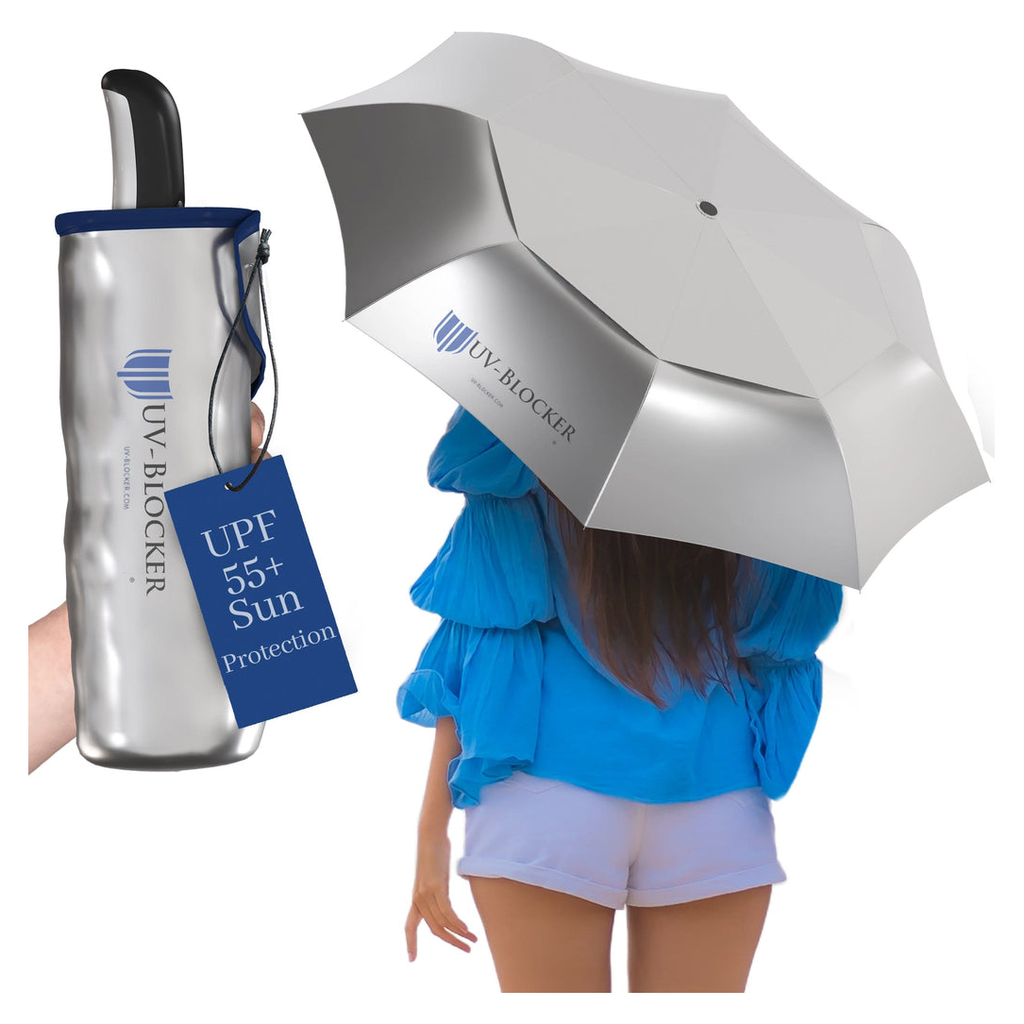
- Compact UV umbrella (UPF 50+) anchors the kit as the primary shade layer. Zero skin contact matters when facial skin feels dry and cracked from the medication. The UV-Blocker Compact UV Umbrella uses Solarteck® fabric that blocks 99 percent of UVA and UVB rays (AATCC TM183-2020 tested). It folds to 30.5cm (12in) for backpack or tote carry. Melanoma International Foundation approved.
- Mineral SPF 50+ sunscreen serves as the secondary layer. Choose fragrance-free formulas designed for sensitive skin. Apply every morning to all exposed areas before heading out.
- SPF lip balm is non-negotiable. Lips crack severely on Accutane, and sun exposure makes it worse. A dedicated SPF lip product prevents burning on the most exposed part of the face.
- Wide-brim hat with at least a 7.5cm (3in) brim shields the face and neck. Adding sun protection clothing covers arms and shoulders without needing more lotion.
- UV-blocking sunglasses protect the eyes, which can also become photosensitive during isotretinoin treatment.
Activity-Specific Add-Ons
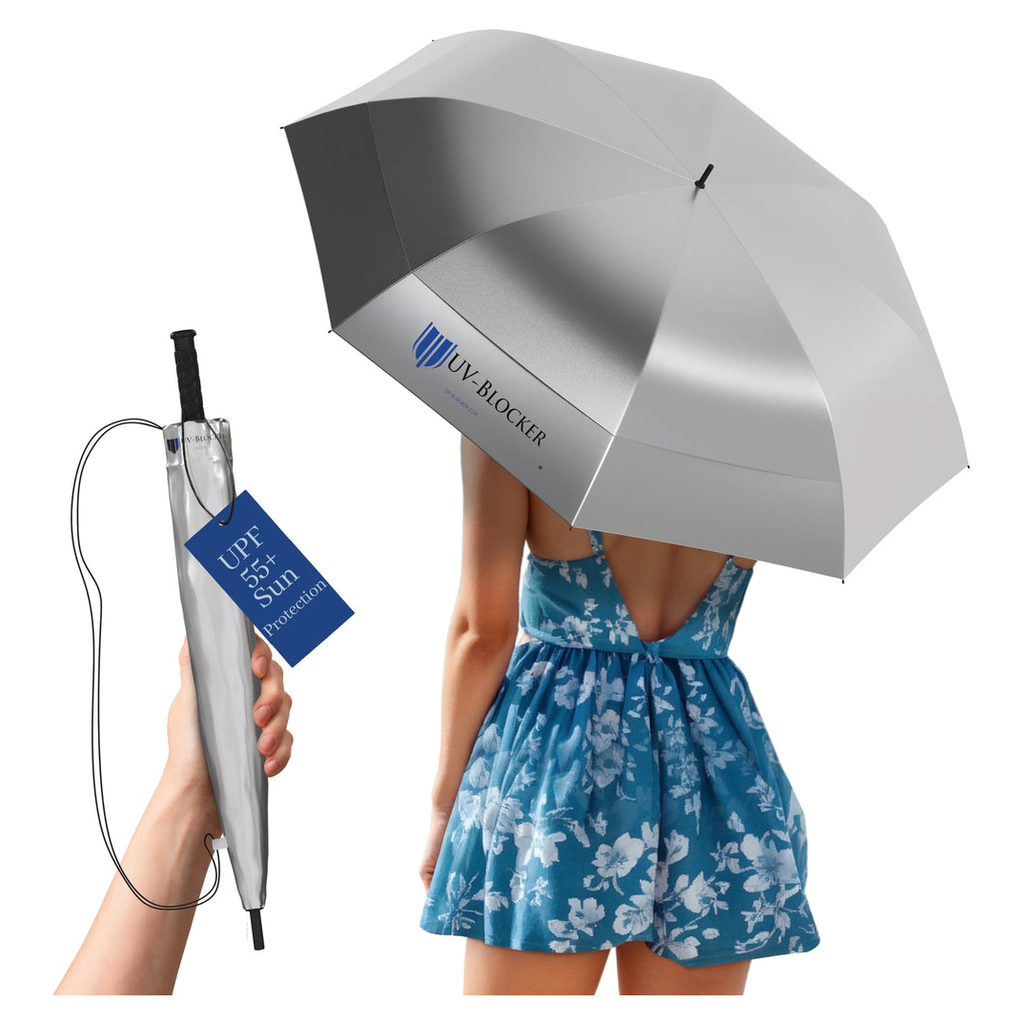
Beach or pool day: The UV-Blocker Travel UV Umbrella provides a larger canopy for extended outdoor time. Reapply mineral sunscreen right after getting out of the water.
Sports practice: Use the umbrella for shade during sideline breaks. Wear a hat during active play when the uniform allows it. Apply sunscreen at least 15 minutes before stepping onto the field.
School or college campus: A compact umbrella covers the walks between buildings. It takes seconds to open, and slips into a backpack between classes.
Road trips: Standard car side windows don't block UVA rays. Temporary window film or a UV shade helps on long drives during treatment.
Isotretinoin Sunscreen in Australia: What the TGA Label and Cancer Council Advise
Australian patients face a gap between two official positions: the TGA-approved Roaccutane label sets a minimum of SPF 15, while the Australasian College of Dermatologists specifies SPF 50 or SPF 50+. Follow the dermatologists, then add shade.
Isotretinoin is sold in Australia mainly as Roaccutane. Its Australian Product Information (version 2025-07, revised 15 July 2025) lists photosensitivity and photoallergic reactions among the drug's skin effects, and instructs that "exposure to intense sunlight or UV rays should be avoided. Where necessary, a sun protection product with a high protection factor of at least SPF 15 should be used."
That SPF 15 floor is a decades-old label convention, not current Australian practice. The Australasian College of Dermatologists' position statement on isotretinoin (October 2024) is explicit: patients "should use effective sun protection, including applying an SPF 50 or SPF50+ broad spectrum sunscreen." Anyone reading the label alone could reasonably buy an SPF 15 product and believe they had complied. Under Australian UV, they have not.
Why the gap matters more in Australia than almost anywhere
Cancer Council Australia advises sun protection whenever the UV Index reaches 3 or above, and notes that just 15 minutes of unprotected exposure at that level is enough to begin damaging skin. For most of the country that threshold is met on most days of the year, not only in summer. Peak UV hours run roughly 10am to 4pm.
Now apply the isotretinoin burn threshold to those numbers. If sensitised skin burns at half the normal rate, the practical margin at UV 3 or above shrinks to a handful of minutes. An isotretinoin sunscreen routine built on a single morning application cannot cover a day shaped like that.
The five SunSmart steps, read through an isotretinoin lens
Cancer Council's SunSmart framework asks for five measures together, not one. For a patient on isotretinoin, each carries extra weight:
- Slip on covering clothing — the layer that needs no reapplication and no skin contact.
- Slop on SPF 50 or higher broad-spectrum, water-resistant sunscreen. This is the isotretinoin sunscreen baseline the dermatology college endorses, not the label's SPF 15.
- Slap on a broad-brimmed hat, minimum 7.5cm brim, shielding the face, ears and neck where sunscreen is most often missed.
- Seek shade, especially during peak UV hours. This is the step a portable parasol turns from a location decision into something carried.
- Slide on sunglasses meeting the Australian standard — relevant because eyes can also become light-sensitive during treatment.
Four of those five steps are physical barriers. Only one is sunscreen. That ratio is the honest answer to patients who assume isotretinoin sunscreen choice is the entire decision.
What UPF 50+ means under the Australian standard
Sun protective fabric in Australia is rated under AS 4399:2020, administered by Standards Australia. Cancer Council notes there are only four ratings — UPF 15, 30, 50 and 50+ — and that UPF 50 and UPF 50+ are the excellent-protection band, blocking 98% of UV radiation.
UPF describes fabric; SPF describes sunscreen on skin. They are not interchangeable, and a patient told to use SPF 50+ has been told nothing about the shade they stand under. UV-Blocker's canopies carry a silver Solarteck® coating independently tested to AATCC TM183-2020, blocking 100% of UVB and 99.97% of UVA. The UV-Blocker Travel UV Umbrella opens to a 112cm (44in) arc and folds to about 44cm (17.5in), which is the difference between shade you planned for and shade you happen to be near.
None of these organisations endorses any umbrella brand, UV-Blocker included. They set the thresholds; meeting them is the manufacturer's job to evidence.
Can You Tan on Accutane?
Tanning on Accutane is dangerous. The thinned skin barrier means UV damage happens faster, healing takes longer, and a single burn can cause permanent hyperpigmentation.
The short answer is no. Intentional tanning (sun or tanning beds) should be avoided during treatment. That's frustrating for young patients who want to look tan, but the medical reality doesn't leave much room for debate.
Tanning beds are especially risky. Concentrated UVA radiation penetrates a compromised skin barrier much faster than natural sunlight. The Skin Cancer Foundation warns against combining photosensitizing medications with artificial UV exposure.
The good news: unintentional daily sun exposure is manageable with proper protection. Walking to class, driving, and playing sports don't have to stop. The goal is managing UV exposure, not eliminating outdoor life.
The real risk with any burn on Accutane is hyperpigmentation. One bad sunburn can leave dark marks that take 6 to 12 months to fade. In some cases, post-inflammatory hyperpigmentation becomes permanent. This is particularly concerning for patients with darker skin tones.
If you do get sunburned on Accutane: 1. Apply a cool compress to the affected area right away 2. Use fragrance-free aloe gel to soothe the skin 3. Call a dermatologist if blistering occurs 4. Don't apply retinoids or acne treatments to burned skin
Knowing how long a sunburn lasts helps set recovery expectations during treatment.
Should You Start Accutane in Summer?
Starting Accutane in summer is manageable with a shade-first protection strategy, though fall or winter starts reduce the daily UV management load during peak sun months.
Summer treatment isn't a dealbreaker. Dermatologists prescribe isotretinoin year-round. With a UV umbrella, mineral sunscreen, and a wide-brim hat, patients can get through the warmest months safely. A shade-first approach makes it practical.
The FDA's iPLEDGE program requires a 30-day qualification period before the first prescription can be filled. Patients can't start the medication the same day they're prescribed. That built-in waiting window is the perfect time to assemble a sun protection kit.
Winter patients still need UV protection, though. Snow reflects up to 80 percent of UV rays, bouncing radiation onto the face from below. Altitude increases UV exposure by 10 to 12 percent per 1,000 metres. Hitting the ski slopes without protection guarantees a burn. And sunburns happen on cloudy days too.
Vacation planning during treatment: - Pre-pack the full UV kit in carry-on luggage - Choose accommodations with shaded outdoor areas when possible - Plan beach and hiking time for early morning or late afternoon when the UV index drops - Bring extra mineral sunscreen for reapplication throughout the day
Patients of all ages can maintain active outdoor lives during treatment. It's about having the right strategy, not avoiding the sun altogether.
Isotretinoin Sunscreen and Sun Protection: Frequently Asked Questions
These are the questions dermatology patients most often ask about sun exposure during isotretinoin treatment.
What SPF should I use on Accutane?
SPF 50+ broad-spectrum mineral sunscreen is the recommended isotretinoin sunscreen choice, applied generously and reapplied every two hours during outdoor exposure. Mineral formulas with zinc oxide or titanium dioxide cause less irritation on Accutane-compromised skin than chemical UV filters. Apply at least 15 minutes before sun exposure. Note that the Australian Roaccutane label names a lower minimum of SPF 15; the Australasian College of Dermatologists recommends SPF 50 or 50+, and that is the figure to follow.
Is SPF 15 enough on isotretinoin in Australia?
No. SPF 15 is the minimum named on the TGA-approved Roaccutane Product Information, but it reflects an older labelling convention rather than current Australian clinical advice. The Australasian College of Dermatologists specifies SPF 50 or SPF 50+ broad-spectrum, matching Cancer Council Australia's general guidance. Under Australian UV conditions, where the UV Index reaches 3 or above on most days in most of the country, an SPF 15 isotretinoin sunscreen leaves sensitised skin well short of protected.
Is mineral or chemical sunscreen better on Accutane?
Mineral sunscreen is generally preferred for Accutane patients because it sits on the skin surface rather than absorbing into an already-compromised barrier. Chemical filters such as oxybenzone and avobenzone can cause stinging and irritation on isotretinoin-sensitised skin. Mineral formulas also provide protection immediately, with no waiting period after application.
Why does isotretinoin make skin so much more susceptible to sun damage?
Isotretinoin thins the stratum corneum, the skin's outermost layer, and suppresses sebum production by more than 80 percent. Both changes weaken the barrier that normally absorbs and scatters part of the incoming UV load, so more radiation reaches living tissue and inflammation starts sooner. The Australian Product Information for Roaccutane lists photosensitivity and photoallergic reactions among the drug's recognised skin effects.
Is ordinary summer clothing enough protection while on Accutane?
Often not. Lightweight, loosely woven cotton can rate as low as UPF 5, letting a meaningful share of UV through, and its performance drops further when the fabric is stretched or wet. Australia rates sun protective fabric under AS 4399:2020, where UPF 50 and 50+ represent the excellent-protection band. Choosing genuinely rated cover — or standing under a UPF 50+ canopy — closes a gap that a summer t-shirt does not.
How long after stopping Accutane am I still sun sensitive?
Photosensitivity typically continues for up to six months after the last isotretinoin dose, as the skin barrier and stratum corneum gradually rebuild. The timeline varies with dosage and individual skin biology. Most dermatologists recommend maintaining full sun protection for at least three to six months after completing treatment. The Roaccutane Product Information separately advises avoiding wax epilation, aggressive dermabrasion and laser treatment for five to six months after the course ends.
Should I stop Accutane before a holiday?
That is a decision for the prescribing dermatologist, not a self-directed one, as interrupting treatment can reduce its effectiveness. Most dermatologists advise continuing the medication while strengthening sun protection instead of pausing. A UV parasol, an SPF 50+ isotretinoin sunscreen and shade-focused planning make a holiday manageable without stopping the course.
Can you tan or use a tanning bed on Accutane?
Neither is advisable during treatment or for several months afterwards. Commercial solariums have been banned across Australia since 1 January 2015, and from 1 January 2016 in Western Australia, though privately owned units remain legal. Concentrated UVA penetrates isotretinoin-thinned skin faster than natural sunlight, and the risk of burning, hyperpigmentation and longer-term cellular damage rises substantially during treatment. The Roaccutane Product Information instructs that exposure to intense sunlight or UV rays should be avoided.
Can you get sunburnt through clouds on Accutane?
Yes. Up to 80 percent of UV radiation passes through cloud cover, and Accutane-sensitised skin burns faster even on overcast days. Cloud creates a false sense of security, and patients routinely skip sunscreen when the sky looks grey. Because the UV Index — not visible brightness — determines risk, protection should be maintained whenever it reads 3 or above, regardless of weather.
Does an umbrella replace sunscreen during isotretinoin treatment?
No — it closes the gaps sunscreen leaves. A UPF 50+ canopy needs no reapplication, misses no spots and makes no contact with dry or irritated skin, but it cannot block UV reflected up from sand, water, concrete or snow. Cancer Council Australia's advice is explicitly to combine measures rather than rely on one, and shade plus an SPF 50+ isotretinoin sunscreen is a far stronger pairing than either alone.
Conclusion
Isotretinoin causes genuine systemic photosensitivity by thinning the skin barrier. That makes sun protection a daily requirement during treatment, not optional advice. Standard sunscreen application carries measurable coverage gaps that leave sensitized skin exposed.
Physical shade fills those gaps without requiring skin contact. A layered strategy combining a compact UV umbrella, mineral SPF 50+, and a wide-brim hat makes active outdoor life safe during the medication course. Treatment timing doesn't need to dictate the calendar when the protection routine is consistent and reliable.
Build an Accutane sun protection kit before the next dermatology appointment. Start with a mineral SPF 50+ sunscreen, an SPF lip balm, and a shade anchor like the UV-Blocker Compact UV Umbrella (UPF 50+, Melanoma International Foundation approved, folds to 30.5cm (12in) for daily carry).